
Kukui hele po or poho kukui are Hawaiian stone oil lamps. They come in many shapes and sizes, but are basically a bowl as a reservoir for the oil, some with a small puka or indentation in the bottom to hold the wick, which is made from tapa.
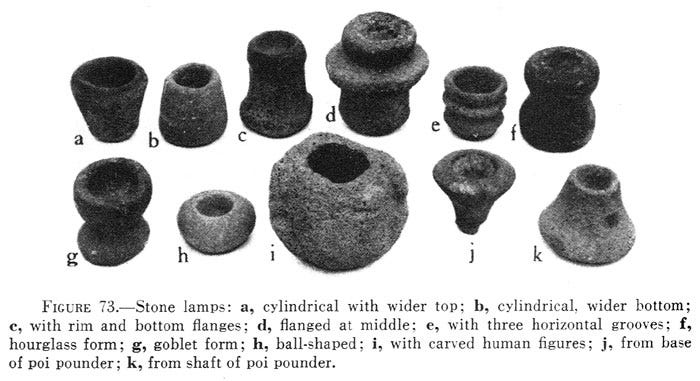
Arts and Crafts of Hawaii, Te Rangi Hiroa (Sir. Peter H. Buck), p 107-09, "stone lamps"
The kukui or candlenut tree (Aleurites moluccana), is the state tree of Hawai‘i. Kukui is a “canoe plant” of ancient Hawai‘i, brought to the islands by the Polynesian voyagers. The word kukui means light, and is a symbol of light and enlightenment, not just because its oil is burned for light (and its oily nuts can also be strung close together on a coconut frond rib and burned as a candle), but also because the tree itself is a very light green, almost silver, and stands out easily among the other trees of the forest shining brightly. Everything about the tree is light—physically, practically and spiritually. The nuts are also used to make leis, and it has many other medicinal and cultural uses.
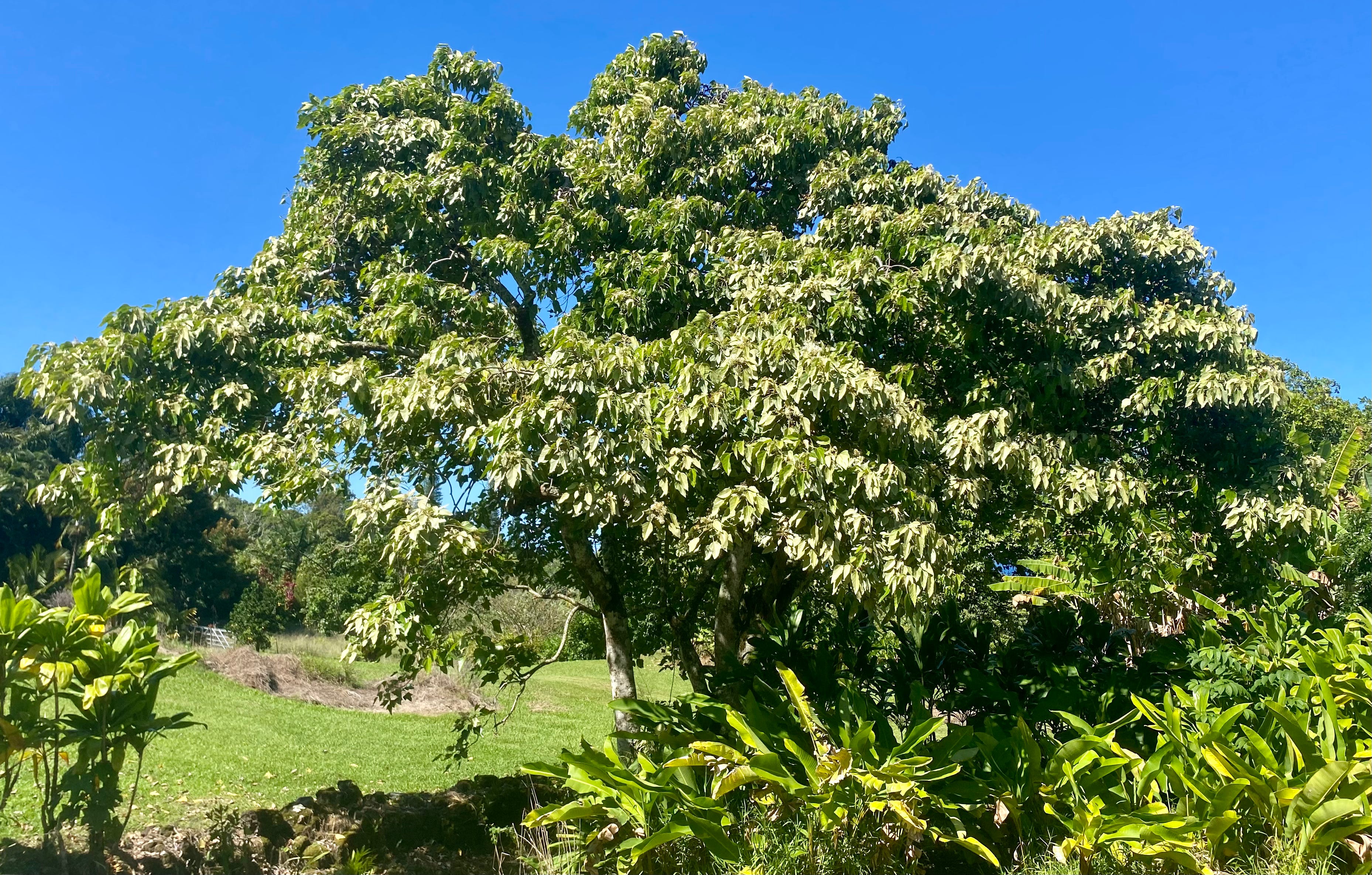
Kukui means light, po means darkness, and hele means go. So I have always thought of it as the light that makes the darkness go. Kukui hele po.
There are some stone lamps on display at the Bishop Museum in Honolulu, and they are labeled as Poho Kukui, so that’s another word for it. But Kekula called them kukui hele po.
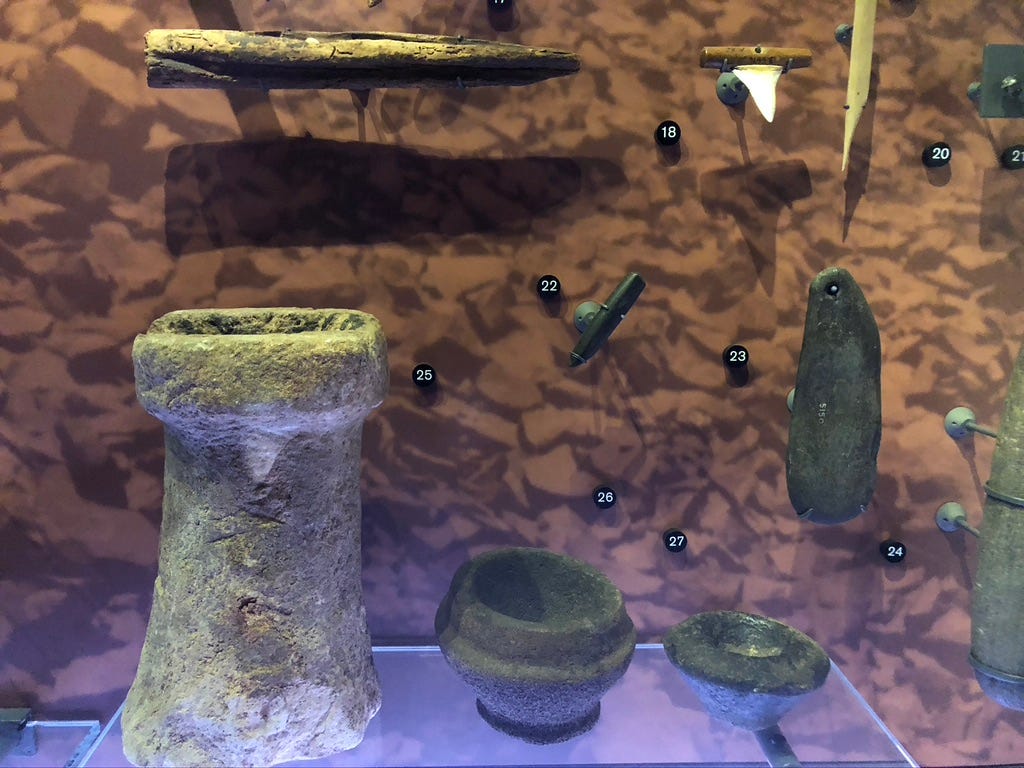
Sometimes the people of old would even repurpose other stone tools into lamps – for example a pohaku ku‘i ‘ai — stone poi pounder — with the top of the handle broken off, and then carved out into a reservoir to serve as an oil lamp (as in c and k above)
Around 1998, Kekula had been making kukui hele po. She would find suitable stones and tap them with another stone to shape them out into a shallow bowl. Hers were fairly rough, but she had just been experimenting with the craft, finding the right porosity of stone and trying to tap them out.
After my mother Judith passed away (on October 14, 1998), Kekula suggested that we should make a kukui hele po for my mom. She took me down to a rocky beach to find a suitable stone. When we got to the beach, she indicated the size and general shape of the stone we were looking for (held out her hands like the size of a large grapefruit), as round and even as possible, and a certain porosity.
I walked down the rocky beach not too far, scanning the stones. The first one I saw that looked similar to what she described, I picked it up and turned it over... and lo and behold it was an actual fully made, perfect ancient kukui hele po, exactly as she had described! It even had a small puka in the bottom of the bowl to stand the wick.
I took it back to her and said "Like this?" Her jaw dropped, and she teasingly said "How come you got to find it?!" (implying the non-Hawaiian). Of course because it was for my mom, and because Kekula sent me to find it. Not only did I find such a beautiful, sacred artifact, but I found it when I was very specifically looking for exactly it, and walked right up to it effortlessly. I have seen other kukui hele po in museums and other people’s collections, and this is by far the most perfectly simple, symmetrical and beautiful one that I have seen. In its concave shape and gentle curves, it is a perfectly feminine form.
I have named it Tutui Tetura, which means Golden Light. She is the most sacred and beautiful object I know, and I consider her an ancient being that I have been blessed to be the caretaker of.
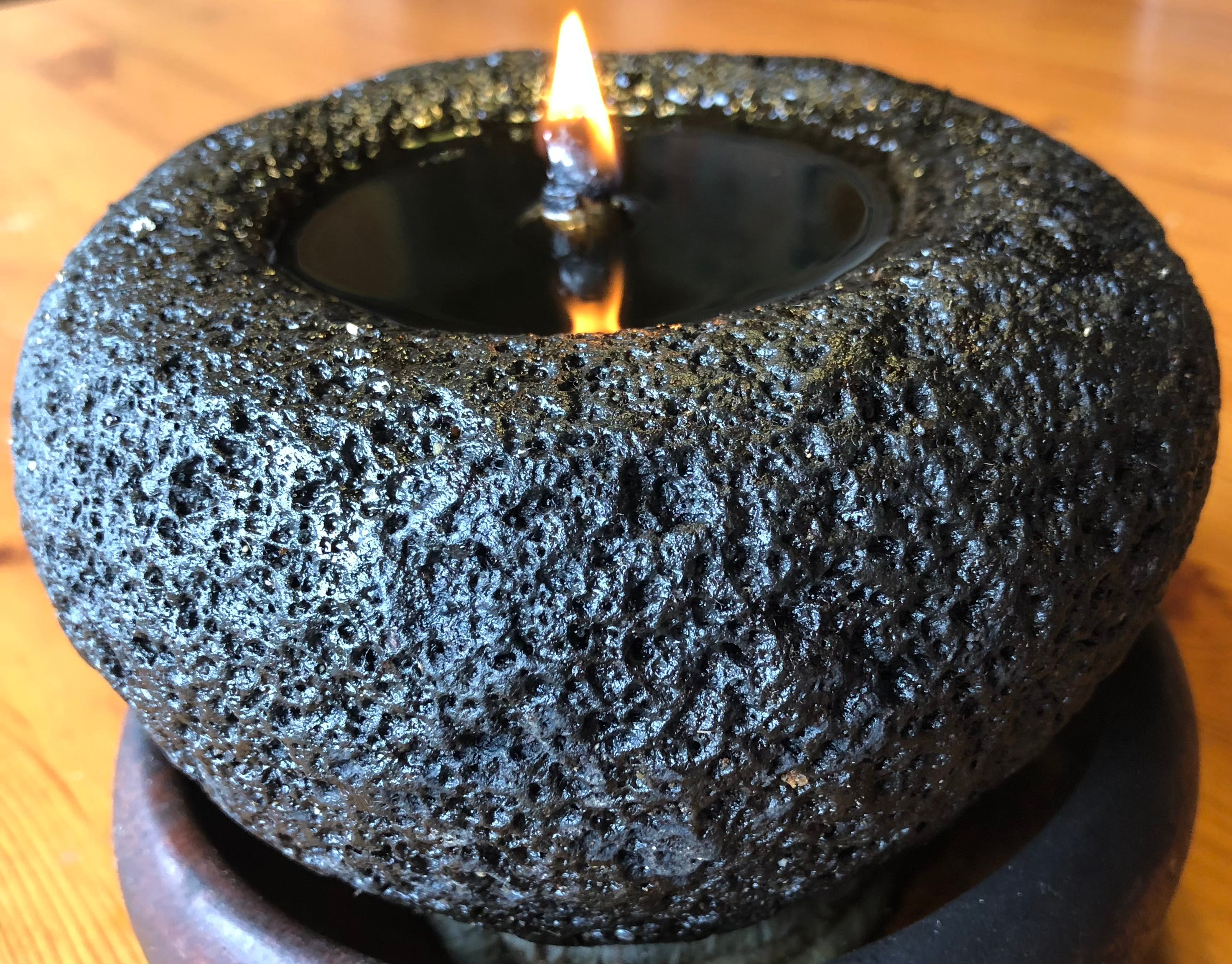
Since that time, I have lit her in ceremonies, I have lit her at funeral services of dear friends, including Pua Mahoe (who introduced Kekula and me), Malia Henderson and John Lono. I have lit it with pule at times of struggle and passage for friends and family, and at significant anniversaries and other markings of time such as solstices and equinoxes. And I have lit it regularly during the times when I am working on organizing and editing Kekula’s journals and writing this book. (I have also learned through experience many practical tips about how to burn it effectively, which I’ll share more in another piece.)
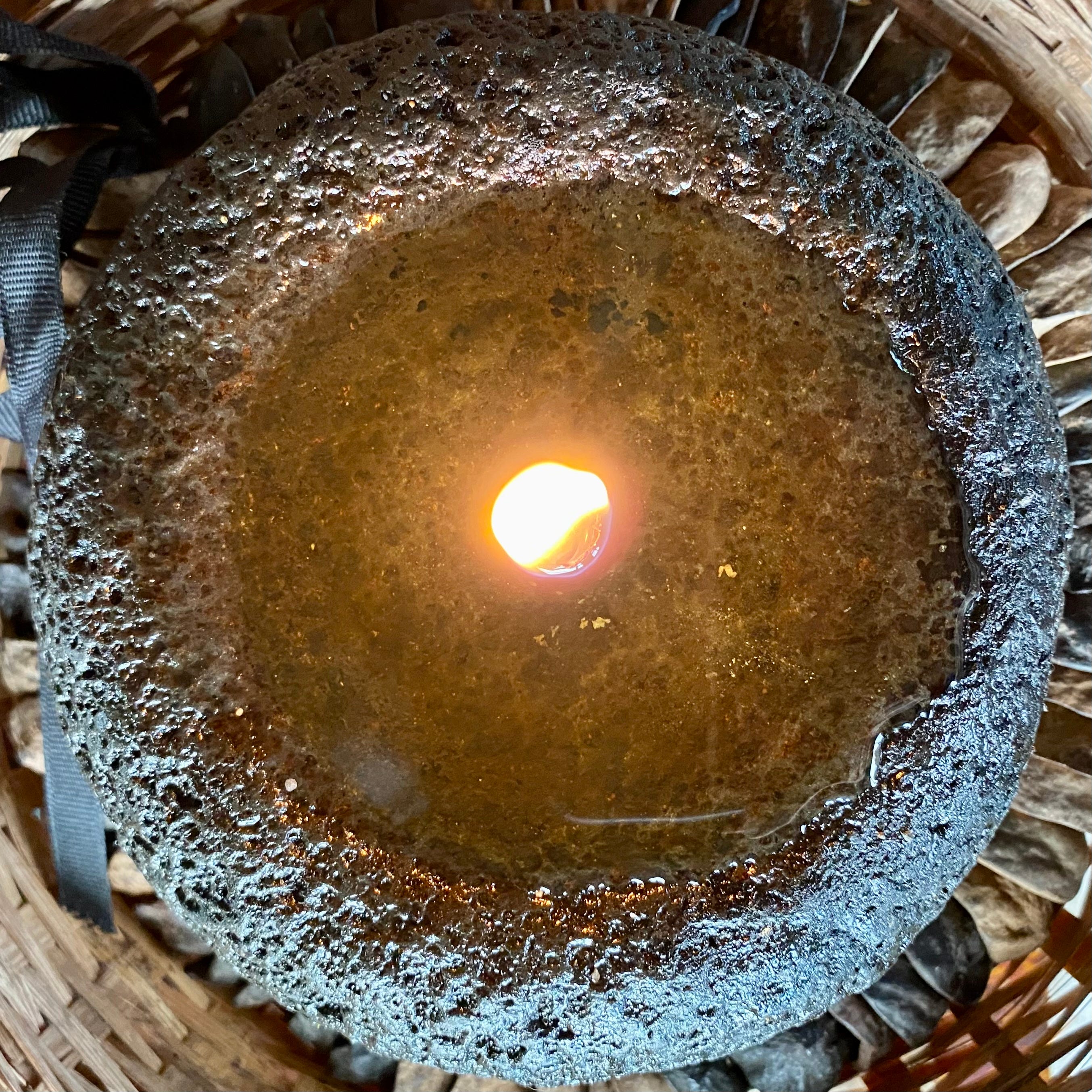
I reflect on how it may have come to be at the place, and its history—the kanaka who carved it out of stone generations ago, and all of the happenings that went on around it in the hale where it provided its warm light.
From a skeptical perspective, it is certainly possible, however improbable, that it was a wonderful coincidence that I happened to find the exact sacred and rare artifact we were looking for a stone to make, walked right up to it and picked it up, already made by the ancestors past! But from a cultural and spiritual perspective, I don't know how there could be more of a confirmation that our ancestors are working together to guide and support and love us in ways that we often don't understand or even perceive. This is something Hawaiians take for granted in everyday life. When we trust and open ourselves to their presence and guidance, the “coincidences” seem too remarkable and unlikely to be only that. And there is no harm and much wonder to gain by living life believing that these things, and the larger cosmological order they signify, are quite real.
To me, finding the Tutui Tetura in this way—for my mom and guided by Kekula— is the singular experience of my life that confirmed to me a belief and acceptance of spiritual guidance and ancestral connection.
Comments
Nothing yet. Say the first thing.
Sign in to join the conversation.