
It is my contention that we have today a culture which is mainly negative, but which, so far as it is positive, is still Christian. I do not think that it can remain negative, because a negative culture has ceased to be efficient in a world where economic as well as spiritual forces are proving the efficiency of cultures which, even when pagan, are positive; and I believe that the choice before us is between the formation of a new Christian culture, and the acceptance of a pagan one.
T. S. Eliot, The Idea of a Christian Society
As spring thrusts itself upon us in fits and spurts, sometimes snowing and at other moments balmy, I find myself reading too many things to bring together as neatly as might be desired. James Tussing has assigned Schelling, of whom I am not at this moment capable of speaking, while following along in the Biographia Literaria to see where the damaged archangel plagiarized. In the meantime conversations with John Encaustum inspired by longstanding political suspicions and a personal fascination with the period have sent me scrambling to read various histories of late antiquity.
The first of these is Peter Brown’s 1978 The Making of Late Antiquity, a collection of lectures largely concerned with a broad cultural view of the transition between what the 19th century historian Theodor Mommsen called the Principate, the cultural and political order of the initial few centuries of the Roman Empire, and the “dominate” of the final century of unified Roman rule, a more dictatorial, proto-feudal and explicitly monarchical state which set the pattern for the theocracy which would persist for another millennia in east Rome and haunt the imagination of the west down to the present.1
The contours of the new situation were unmistakable and are well known. “ Soft” government was replaced by “hard” government. The emperors of the second century had ruled the Mediterranean with “magnificent economy of effort,” through a tacit collusion with the upper classes of the cities. “The one sure maxim of extended Empire, a wise and salutary neglect,” had kept the impingement of taxation and of the direct representatives of the state at a very low level in comparison with the Later Empire. This had left the traditional mechanisms sufficiently intact to transmute philotimia into “ sheer willingness” in its most acceptable and traditional form, “with piety towards the gods, and generosity towards men.”
A system of “hard “ government depleted these mechanisms. The collaborators came to identify their status and power with the position they enjoyed in the imperial government. The delicate balance implied in innumerable inscriptions of the second and early third centuries-“friend of the Emperor, friend of the home-town, friend of [its] gods” was irreversibly upset. Whether it was exercised benignly as patrocinium, or abrasively as potentia, this power drew its raison d’itre from beyond the local community. Its more exalted source made it that much less vulnerable to local pressure; and the power itself-which manipulated a system of taxation and of punishment that had increased in weight could win out in a more unambiguous manner. A fourth century potens did not have to pay the insurance premiums for success which his more evenly balanced predecessors of the second century had done. If he did, he paid them in a different currency, which we do not recognize so easily.
Eventually I plan to write something partly speculative and partly inspired by things I’ve heard about and from some of the smarter silicon valley reactionaries tying in the idea of a new principate/dominate transition occurring within the Rome of our time, but this will have to wait until I’ve actually established the contours of the Entomology Cabinet. Among other things I’d like to first discuss the spread during and after the pandemic of what I tend to call “soft NRX-ism” throughout portions of the intelligentsia.2
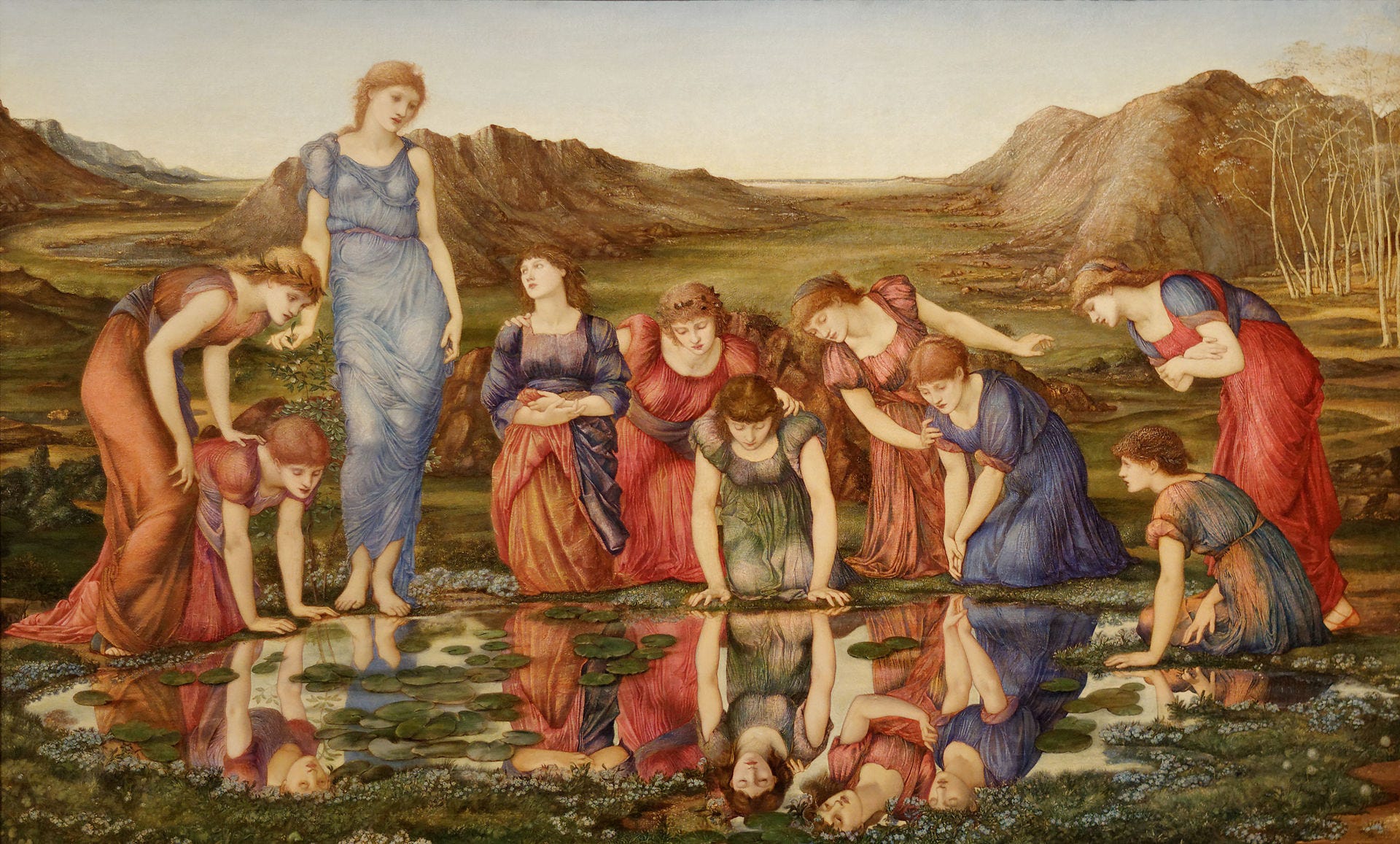
While in the midst of a number of books on classical and late antique religion, most recently I finished Walter Burkert’s Ancient Mystery Cults, a brief series of lectures surveying the mysteries of the classical world, an institution which multiple literary thinkers of the 20th century considered the wellspring of western poetry. I have mixed feelings on this thesis, which I will digress upon at a later date, but nonetheless the mysteries were of great importance for the Platonists of antiquity, with whom I am of course endlessly fascinated.
Following Plutarch, many Platonic writers invoked the mysteries for confirmation of the basic tenets of their philosophy, for illustration, or for the addition of a religious dimension to the exercises of philosophical dialectic. This went so far that Numenius once felt he had betrayed the secret of Eleusis through philosophy. Personal connections began to play a role, too; Plutarchus, the founder of the last Academy of Athens, was the son or grandson of Nestorius the hierophant. We still have only a faint idea of what Platonic Eleusis was about; apparently it was less concerned with the fate of Kore and sowing grain than with some procedures of the hierophant at the great nocturnal festival.
Like The Making of Late Antiquity Burkert’s text is a collection of lectures, but within this concision he does an admirable survey of a vast quantity of material. One gets a sense of the crazy quilt nature of classical and late antique polytheism and the divide between popular and esoteric practices which characterized that world. Burkert also suggests some of the likely reasons why none of these traditions were able to offer anything like an adequate resistance to the rising tide of Christianity which ultimately swept them away:
Mysteries were too fragile to survive as “religions” on their own. They were options within the multiplicity of pagan polytheism, and they disappeared with it There remains a strange fascination even in the glimpses and guesses at evocative fragments: the darkness and the light, the agony and the ecstasy, the wine, the ear of grain. Logoi remained tentative, without reaching for the level of system or creed. It was enough to know there were doors to a secret that might open up for those who earnestly sought it. This meant that there was a chance to break out of the enclosed and barren ways of predictable existence. Such hopes were attempts to create a context of sense in a banal, depressing, and often absurd world, providing the experience of a great rhythm in which the resonances of the individual psyche could be integrated through an amazing event of sympatheia.
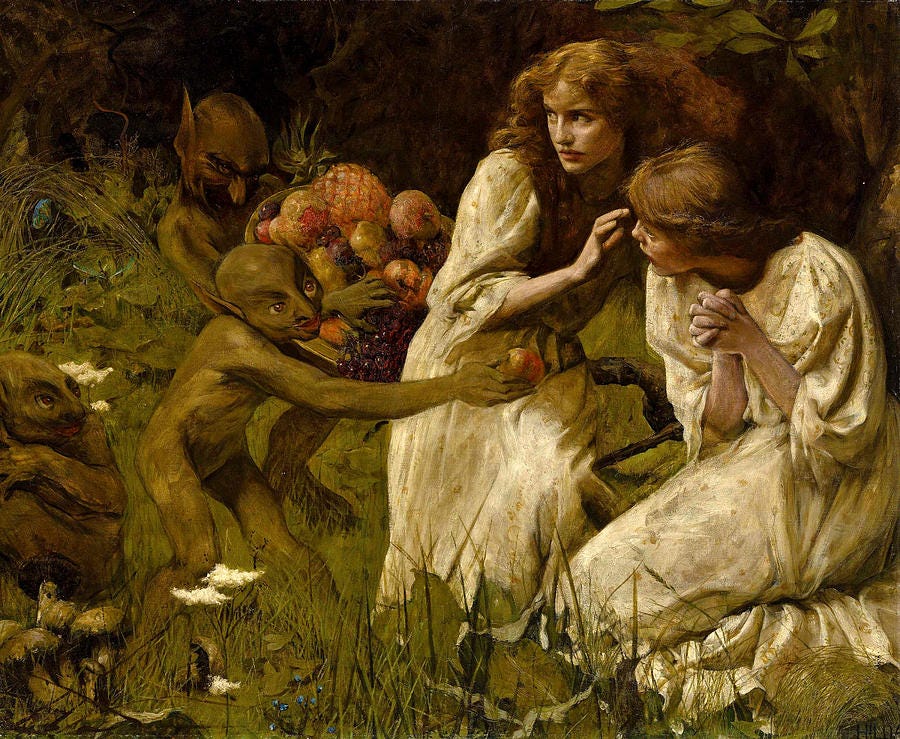
I’ve been watching the responses to Lindy West’s memoir for the last few weeks, despite having neither thoughts nor feelings about Lindy West herself. In classic “Neo Gene” form, the reactions to the thing itself interest me far more than the thing itself, which you can find written about here, here, here, and here. My following this discourse is mostly downstream of what Katherine Dee described before it had quite become a phenomenon as “the coming wave of sex negativity.3” I suspect that many younger millennial women I feel that writers such as Lindy West sold them a false bill of goods, a model of life and sexuality that they now find draining, flawed, worse than the conventional wisdom they grew up with etc. The widespread ogling at her memoir thus seems to me partly derived from a sense of resentful schadenfreude, although of course I wouldn’t ascribe this motive to every writer to survey this particular trainwreck.
This seems related to a broader semi-rejection of the post-1960s revolution in sexual mores amongst portions of the feminine intelligentsia (femtelligentsia?) that has been brewing since sometime in the mid-2010s, although antecedents date back at least to the 1980s.4 In this view the sexual revolution was the liberation not of women’s but men’s appetites and lusts, and the imposition of male patterns of behavior on women as a marker of “liberation.” This is something it seems to me worth having mixed feelings about. Certainly I would not object that what was liberated in the 1960s was very often a specifically male appetitiveness: the preponderance of a certain style in late 20th and early 21st century pop culture is proof enough of that. That the model of adulthood as perpetual adolescence leaves something to be desired we can probably agree, but as to what alternative model should be adopted we have little consensus.
On the other hand, the worldview that is often taken by the advocates of this semi-rejection, which sometimes threatens to approach a neo-Victorian sense that women are delicate beings endangered by the lust of rough, worldly, Men can be difficult to take if one has a familiarity with thinkers such as Nancy Armstrong or Ann Douglass and seen through their various debunkings the steely will to power which the sentimentality of the “angel in the house” could conceal.
This I held because I could think of nothing else. But it was false. For if it were so, a greater part of the earth would have contained a greater part of You, and a lesser a lesser; and all things should be filled with You in such a way that the body of an elephant should contain more of You than the body of a sparrow simply because it is larger and takes up so much more room; and so You would make Your parts present in the parts of the world piece by piece, little pieces in the little pieces, great masses in the great masses. That of course is not the truth of it. But You had not as yet enlightened my darkness.
St. Augustine, Confessions Bk. VII, trans. Frank J. Sheed
Not forgetting one of my ten thousand projects, I’ve been reading T. S. Eliot again, having described him the other day as a “slightly underachieving poet” which I recognized before the sentence was done as a deranged statement, like saying aside from the Last Supper and Mona Lisa Leonardo was just all right, but it is more or less how I feel about Eliot much of the time. The Waste Land is the definitive poem of the 20th century the way Ulysses is the archetypal novel, and my relationship with the poem is much less complicated than with the book. Nonetheless outside of those four great long poems I’ve always felt him somehow more minor than his stature. This I suspect is related to the renunciation of American modernity in favor of a kind of ersatz-medievalism, a charge already brought by a hero of this blog, the critic Albert Murray:
Perhaps the most influential contemporary American statement of these issues is found in The Waste Land and “The Hollow Men.” But in these two unsettling poems, T. S. Eliot implies that the problems of nada are somehow peculiar to contemporary life and that it is essentially a problem of the renewal of lost connections and energies. The title of The Waste Land and the crucial image of the Fisher King clearly establish the fact that Eliot assumes that “things ain’t what they used to be,” that evil days have fallen upon a once prosperous kingdom of once blessed people. And one hastens to concede that his observations, which are not at all like the assumptions of revolutionary politicians, are valid as far as they go. Eliot does not, however, confront the allegation that even in the best of times in the most fruitful lands the winner shall take nothing.5
Those four long poems are the real deal however, and I plan on looking at them in greater detail at a later date.
In the process of sorting through the personal library of my late grandmother (and by extension that of the husband she outlived by nearly five decades) I stumbled across the Selected Poems of another American Catholic Tom, Roman rather than Anglo, a Trappist monk rather than a renouncer merely of America, Thomas Merton. As a first exposure, plus or minus gazing through some of his more explicitly spiritual writings over the years in this or that used bookstore, it makes a good impression, although in general I struggle somewhat to say anything intelligently about poetry.
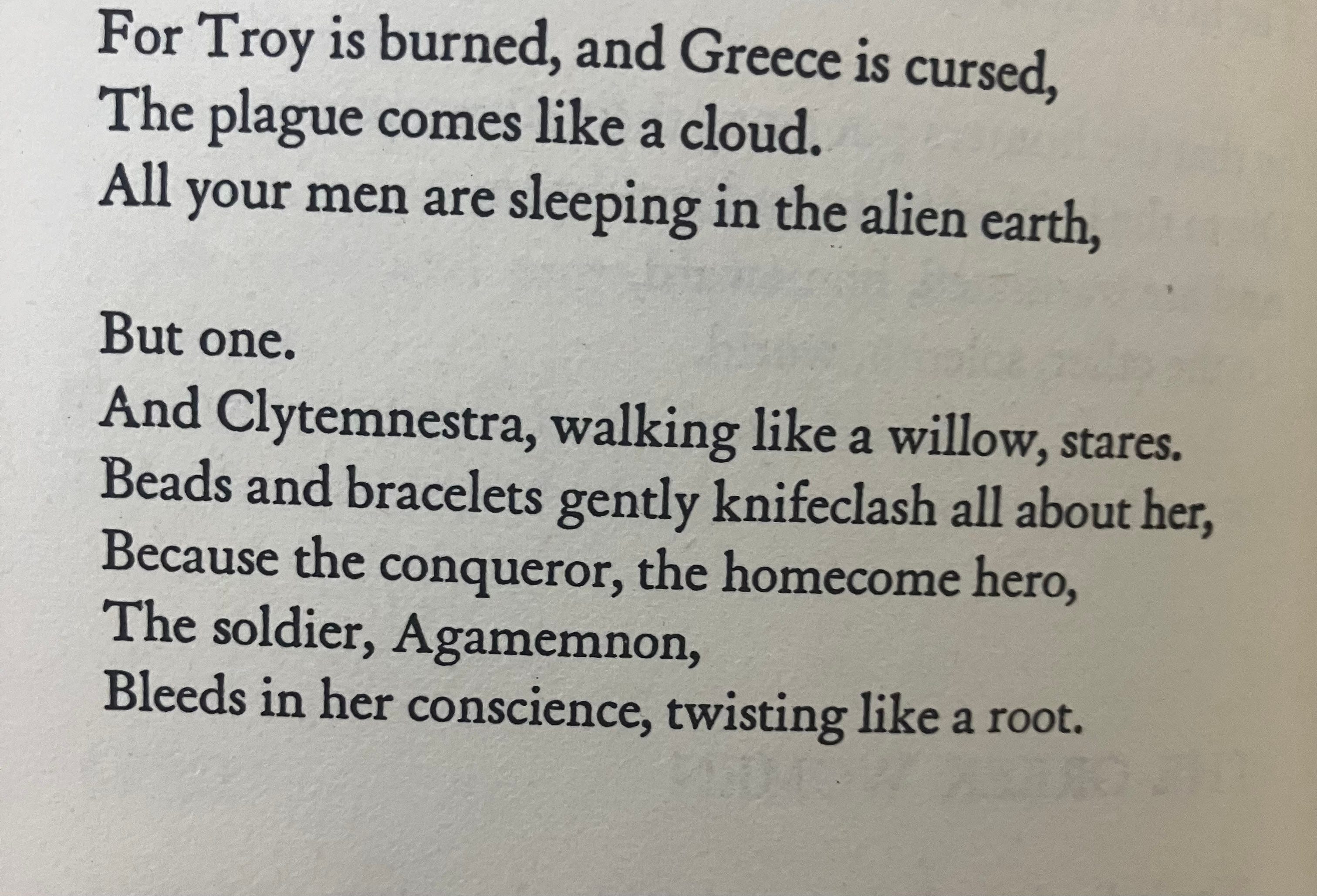
To the extent that I have any sympathy for the esoteric vision of poetry one finds in various 20th century authors, it is perhaps as a form of creative theurgy, a method for our minds to attain in this world, however temporarily, a vision of that state in which “the fire and the rose are one.”
As the Wikipedia article suggests, contemporary historians are less fond of a hard and fast Principate/Dominate distinction than their 19th and early 20th century forebears.
This is again a topic for another day, but by this position I mean the Neo-Ghibelline sense that it might be better, freer for the intelligentsia to be the subjects of a despot than the citizens of a bureaucratic republic. The despot under this logic is at least incapable or unwilling to be everywhere and thus more likely to leave the intelligentsia to their own devices than the bureaucracy of a nominally more democratic state. The deep interest in surveillance technology expressed by our actually-existing body of would-be despots should in my view give those inclined to this particular species of Tory anarchism pause, but this is a contention for another day.
Said interest is of long standing, albeit not something I’ve ever been able to write about at any length (possible upcoming gender slop post about Freudianism, right wing women, and the regime of the brother notwithstanding.)
“Semi” because I don’t think most of the women in question actually want to return to the pre-1960s status quo and what it frequently asked women to accept. I won’t say too much more because the aforementioned gender slop post is largely concerned with this, but I take this qualification to be one of the major drivers of the exodus from the right written up by Sam Adler-Bell here, and which Katherine Dee further discusses here.
I more or less share Eliot’s Anglo-Catholicism, and so in that sense would qualify Murray’s chiding of Eliot for shirking what he, following the less supernaturally-sympathetic tradition of modernism would likely consider the permanent existential dilemma of the human, but all the same, the fall did not occur in time.
No posts
Comments
Nothing yet. Say the first thing.
Sign in to join the conversation.