
We’re halfway through the year, and for the past six months we’ve been gathered in this online space to talk about just one book. Much as I love being so focused on Paradise Lost, I thought I’d take a moment now to talk about the other books I’ve been reading this year! It’s a slightly eclectic list: some short stories, some novels, some classics from the 19th century, some romance novels from the 2020s…some books that overlap thematically with Paradise Lost, and some that are completely unrelated.
I’ve recently been spending time with Italo Calvino’s essay “Why Read the Classics?”,1 a large part of which is dedicated to unraveling the idea of what “classic literature” even is. I’m not sure whether the half-dozen books listed below would all be considered “classics,” or whether some of them are just books by famous dead authors. But Calvino says, and I agree, that “all that can be done is for each one of us to invent our own ideal library of our classics,” so here are some of the titles I’ve added to my personal library this year:
The Diary of Adam and Eve, Mark Twain
The Ballad of the Sad Café I had already read several times (I read something by my namesake Carson McCullers every year on her and my shared birthday) but all these other classics I had never read in full. I was glad to finally read some of Anaïs Nin’s famous erotic short stories, which really felt more like character studies first and erotica second; I found Mark Twain’s twists on Biblical narrative to be charming and unexpectedly poignant; but the real standout for me was The Age of Innocence. Because I did this book as an audiobook, I went through it fairly slowly. The story became my companion while I did the dishes and folded laundry and occasionally even while I was at the gym (leading to a fun moment where I toiled away on the stairmaster while listening to a passage in which a character feels that he is climbing steadily further upwards towards some great precipice). I didn’t know a single thing about the plot of this novel, and it took me on an emotional rollercoaster that genuinely hurt my feelings. It’s a true joy to be punched in the heart by a century-old novel. Thank you, Edith Wharton, and also how dare you?
I buy novels much faster than I read them (I like supporting local bookstores while traveling, is that so wrong?) which means I end up with a big TBR stack that I pull from at random when I’m in the mood to start reading something new without a particular type of novel in mind. With the exception of Katabasis, which a friend gave me because she randomly ended up with two copies, each of the books below was purchased at a different independent bookstore in various cities:
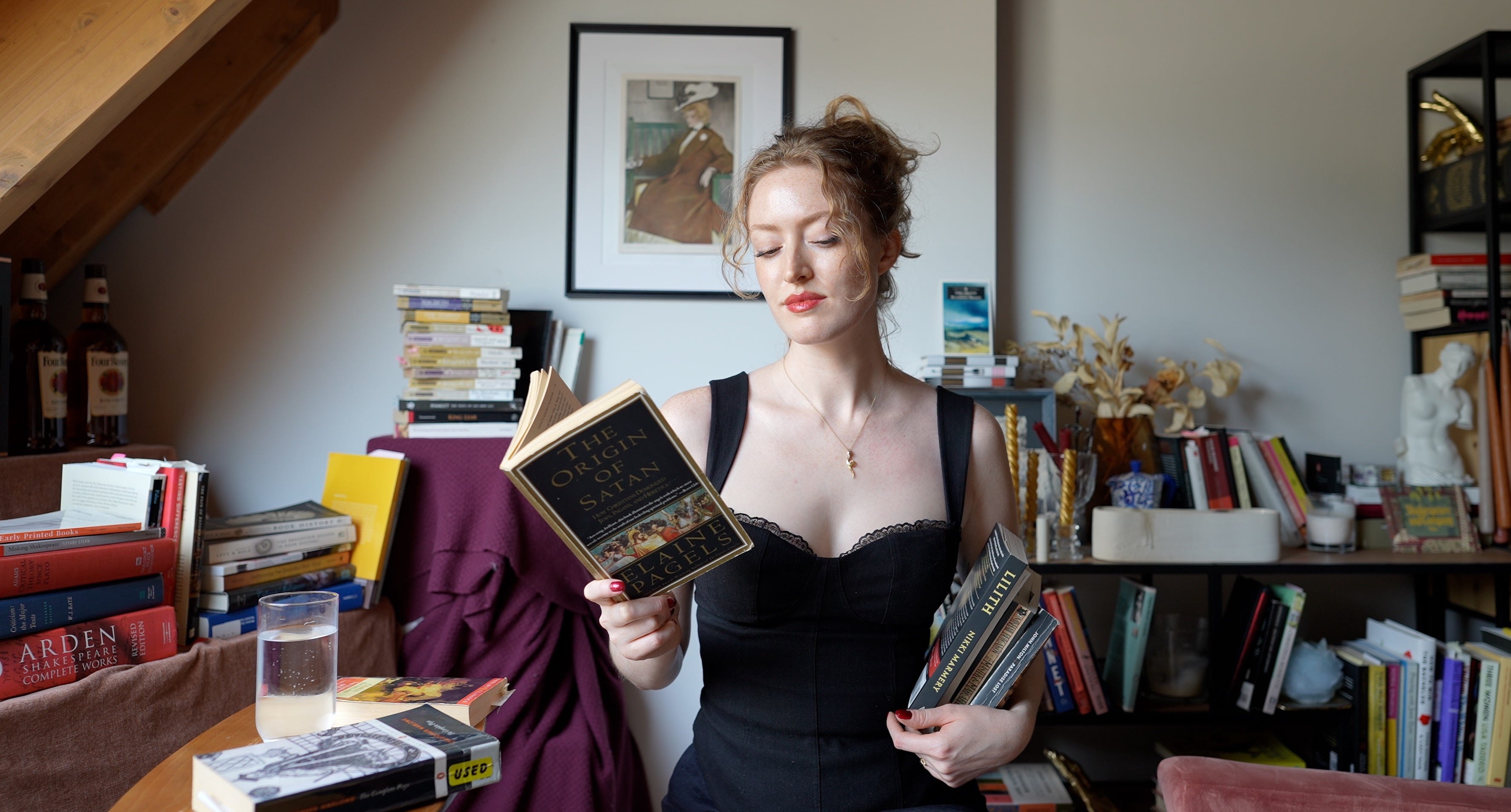
Since Hungerstone is a retelling of Carmilla, I read those novels in connection with each other (you can find the reading vlog here); Lilith I included as part of my pet project to read as many books engaging with the character of Satan as possible this summer (more on that here). I was positively surprised by Ex-Wife, a novel I picked up in shop in Madrid last summer exclusively because I was judging books by their covers. This novel, published in 1929, details a young woman’s deteriorating marriage and her life in the aftermath of divorce. It contained many of the fun things I’d hope for in a depiction of a woman’s life in the 20s - drinking bootleg liquor, wearing chic little hats, somewhat messily pursuing sexual liberation and a career - but also contained some frank discussions of birth control and abortion that I didn’t expect, and really appreciated.
I am a lifelong, unironic, devoted reader of romance. I love a classic mass market paperback with a heaving-bosomed lady swooning into the arms of her bare-chested lover on the cover. I love a contemporary romcom. I’ll dabble in dark romance or monster romance, if the vibes are right. During my PhD, there were years when reading and writing historical romance was the only thing that kept my love of reading and writing alive as those things felt increasingly associated with pressure and burnout. For those years, my leisure reading was almost exclusively comprised of romance; now that I’m outside of academia I’ve started reading more broadly again, but I will never forsake my beloved romance novels. Here are the ones I’ve read so far this year:
The Legend of the Four Soldiers series, Elizabeth Hoyt (four books in total)
Nine Rules to Break when Romancing a Rake, Sarah McLean
Hellishly Ever After, Nadine Mutas
As you can probably tell from this list, I have a preference for historical romance, but I’ve also lately been very uninterested in novels that use a relationship dynamic of “innocent young woman has no concept of sexuality until a worldly, experienced man teaches her about her own body.”2 I understand why this is common in histrom, I just like books that move away from it. The Elizabeth Hoyt series definitely diverged from that dynamic, as did The Gilded Heiress. The latter seemed to be a novel tailor-made for me: Shupe is an author I usually enjoy, the story is based on the animated Anastasia movie (a nostalgic favorite of mine), and the main characters start the story living in Boston (where I lived for many years)…for some reason it fell a bit flat for me, but I do recommend Shupe’s gilded age novels for anyone looking for a new historical romance.
The outlier in this grouping of novels is Hellishly Ever After, which I sought out because I was curious to see what a romance novel set in Hell would be like. The novel was more fun (and more rom-com-y) than I was expecting, and I was glad to include it as part of my Satan Summer Reading, but I wouldn’t say it’s awakened in me an interest for demonic paranormal romances.
I don’t read much nonfiction…or rather, I don’t complete many nonfiction books that aren’t related to literary research. I’ve been constantly reading through books of scholarship related to Paradise Lost in the past six months (all listed in the slow read bibliography!) and will occasionally spend a little time with a book of essays or a historical biography, but it’s rare that I read a nonfiction book from start to finish. There is just one I’ve read in full so far this year:
Okay, yes, this is still related to Paradise Lost. But Pagels’ examination of the character of Satan is historical, not literary: she is tracking how this figure starts as a kind of ambiguous presence in the early composition of the Bible, and eventually coheres during the development of the Gospels and wider Christian tradition into a distinct character. I particularly enjoyed reading this book while also rereading The Master and Margarita, which contains some scenes between Pontius Pilate and Yeshua; it was fun to be reading both a historical review and a literary treatment of these figures simultaneously.
As I mentioned in a recent article, I’d expected that doing this year-long intensive reading of Paradise Lost might mean that I read fewer books overall in 2026, but instead the opposite has been true. Last year, I finished 26 books in total outside of my research-driven reading. In the past six months, I’ve read 24! Once again, I’m reminded of how beneficial consistency and focus are for any habit or skill, including reading. The more you do it…well, the more you do it. Having Paradise Lost as my constant literary companion, and having opted in to constantly talking, researching, and writing about this one book, has only made me more active and consistent in reading other books.
What’s your favorite read of the year so far? Do you feel that the Paradise Lost slow reading project is influencing your general reading habits? Let me know in the comments!
please note: I receive a small commission, at no additional cost to the buyer, from purchases made using these Bookshop affiliate links. I never recommend products or use affiliate links unless it is a product / site that I genuinely use or enjoy.
You can read the short essay online here, or purchase a copy of the essay including Calvino’s discussion of some of his favorite classics here.
Necessary disclaimer: this is a personal preference, not a moral indictment! And I am pretty defensive about the value of romance novels, including romance novels that aren’t my style. I think that the frequency of wide-eyed virgins and rakish men in romance novels is often not about upholding sexual purity so much as it is about telling a story in which a woman’s first experiences with sex get to be safe and exciting and intimacy-building, which unfortunately is not always what women experience in life. I just also am partial to stories that move away from that dynamic.
No posts
Comments
Nothing yet. Say the first thing.
Sign in to join the conversation.