
Editor’s Note:
For decades, Western observers dismissed China’s technology sector as lacking “0-to-1” original DNA. Yet today, China leads globally in green energy, AI applications, and digital infrastructure.
In this exclusive conversation with Guancha.cn’s China Econ-Pulse, Professor Zhang Jun, Dean of Fudan University’s School of Economics, presents a groundbreaking framework: China’s true advantage lies in its Dayitong—a 2,000-year legacy of structural unification that turns a 1.4-billion-person market into an unprecedented engine for “reverse innovation.”
Below is an edited excerpt from the conversation.

Guancha.cn: Among the many explanations for China’s economic and technological rise, why do you zero in on the concept of the "Unified State" (Dayitong)?
Zhang Jun: The term Dayitong (a vast, unified state) captures two crucial elements. First, scale—a vast territory and a massive population. Second, unification—a central government with clear authority and high state capacity. Both elements are vital to understanding modern technology, especially in the digital and AI eras.
In the digital age, the sheer pace of China’s technological technological breakthroughs has shattered longstanding assumptions about its capacity to innovate. For a long time, Western intellectuals believed that China lacked a tradition of “0-to-1” radical innovation, assuming that a unified state structure would restrict the “marketplace of ideas” and hamper novelty. Yet today, intense imitation and original innovation occur simultaneously across China’s tech landscape.
To understand why, we must look at a core characteristic of the digital era: network effects. Whether direct or two-sided, network effects thrive uniquely under a unified state model.
To begin with, sheer scale generates colossal volumes of data and diverse, real-world application scenarios—the very lifeblood of modern tech deployment.
Furthermore, unlike India, which remains structurally fragmented despite a similar population of 1.4 billion, China has maintained a 2,000-year legacy of standardization. Written script, weights and measures, the official language, legal frameworks, and regulatory policies are all unified nationwide.
This structural unity is decisive for technology. Look at the mobile internet landscape: despite India having roughly the same population as China, its active internet user base and monetization lag significantly behind. Why? Because market barriers and regional divides prevent India’s 1.4 billion people from operating as a single, cohesive market. China’s 1.4 billion, by contrast, form a single, frictionless market.
Whether in remote farmland or isolated border posts, live-streaming hubs thrive across China thanks to the nationwide reach of unified mobile internet infrastructure.

Today, no matter which rural corner of China you visit, people use the same language, access the same networks, operate on identical mobile platforms, communicate seamlessly, and participate in the same e-commerce ecosystem. There are zero structural friction points.
When immense scale converges with deep unification, it gives rise to a radically different paradigm of innovation—one that defines China’s modern technological trajectory.
Guancha.cn: Why do existing frameworks—such as the “late-mover advantage,” the “whole-of-nation system,” or the “demographic dividend”—fall short of explaining China’s systematic technological breakthroughs in recent years?
Zhang Jun: Theories like the “late-mover advantage” or the “whole-of-nation system” (Juguo Tizhi) only capture fragments of a broader institutional reality. While a whole-of-nation model allows a unified state to top-down strategically allocate resources, that is only part of the story.
Consider China’s power sector. Why has China built power infrastructure so far ahead of demand? Today, China’s installed power generation capacity exceeds 5 billion kilowatts—surpassing the combined capacity of the United States, Europe, and Japan. This was only possible because a unified state can maintain long-range strategic vision, reallocating resources nationally to front-load investment in critical sectors.
Take the “West-to-East Power Transmission” megaproject. Power generation is heavily concentrated in China’s western and southwestern regions, where hydro, wind, and solar potential are abundant. In a unified state, different regions play to their comparative advantages—some excel in hydro, others in vast solar arrays—while the central authority manages nationwide dispatch.
This structure allows China to bypass the gridlock common in Western democracies, turning electricity into a “lead sector.” Once energy infrastructure is built ahead of the curve, it generates massive positive spillovers for downstream industries like digital technology and AI.
In contrast, AI development in many Western nations is currently bottlenecked by power grid constraints. The EU recognizes this issue and seeks cross-border coordination, but implementing a unified strategy requires buy-in from 27 sovereign member states—each subject to local parliamentary votes and public referendums. The transaction costs of coordination are immense, severely slowing strategic execution.
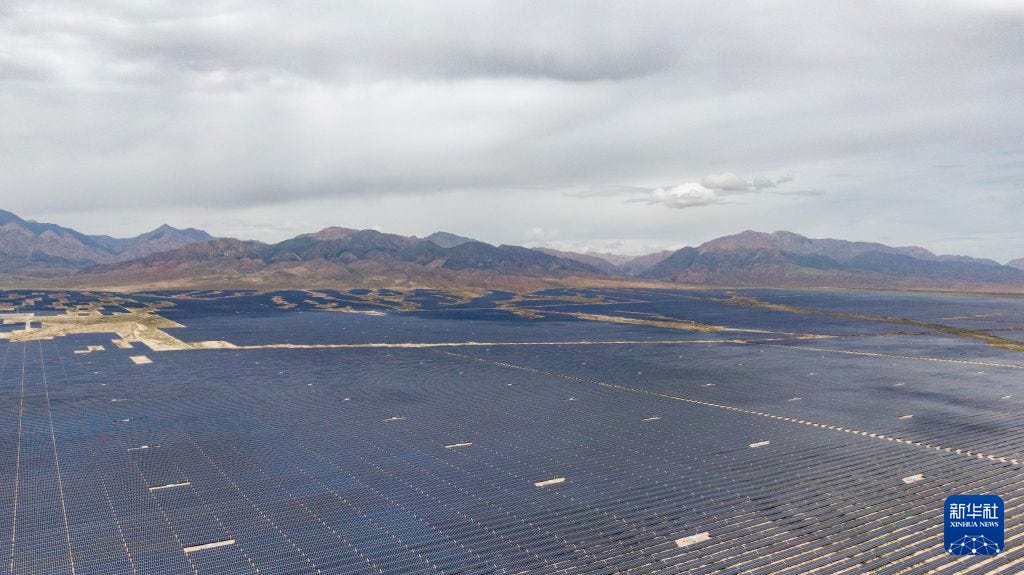
In China, if you travel through Gansu, Ningxia, or Xinjiang, you see endless seas of solar panels and massive wind farms built far ahead of current demand. In Guizhou, abundant hydropower has turned the province into a massive data center hub. Reliable, cheap power yields abundant computing power, giving China’s AI sector a decisive strategic edge.
Framing this purely through the lens of a “late-mover advantage” or a “whole-of-nation system” misses the bigger picture. A late-mover advantage merely offers potential catch-up space; many developing nations possess it, yet few capitalize on it. Turning potential into reality requires a single, cohesive strategic actor—a nation capable of building consensus, formulating forward-looking policies, coordinating across regions and sectors, and maintaining long-term policy continuity. This demands strong state capacity, an inherent feature of a unified state.
In most Western countries, key strategic assets are privately owned, making national coordination extraordinarily difficult. A recent article pointed out a stark contrast: the U.S. can easily build world-class stadiums for the World Cup, yet struggles immensely to construct high-speed rail. Why? It comes down to state capacity and fragmented property rights. Spanning multiple states and municipalities requires navigating complex, conflicting private property claims—at exorbitant financial and political cost.
In my upcoming book on the Economics of Scale, I explore how economics as a discipline has undervalued the macro impact of scale.
China’s tech rise highlights a vital truth: the diffusion and commercial deployment of knowledge are often more critical than its initial creation. Western intellectual tradition heavily emphasizes “0-to-1” breakthroughs. But from a development economics perspective, new knowledge remains useless unless an economy possesses the scale to absorb, test, and deploy it broadly.
This is where scale becomes transformative. In a megamarket, the rapid diffusion and commercialization of technology trigger immense positive network externalities. This, in turn, creates powerful market incentives for further primary innovation. Scale reveals that the economic value of knowledge isn’t dictated by the initial “0 to 1,” but by the leap from “1 to N.”
Guancha.cn: Unlike the Western “linear innovation model” (Basic Research → Applied Research → Product Development → Commercialization), you propose China’s unique paradigm: “1 → N → N+1” (Reverse Innovation), driven by the world’s largest unified market. How does this vast market force original technological breakthroughs from the bottom up?
Zhang Jun: Critics often allege that China lacks original concepts and simply copies Western technology. And historically, there is truth to where it began: early Chinese e-commerce platforms like Taobao undeniably borrowed their foundational architecture from American predecessors like eBay or Amazon.
However, over time, China’s e-commerce trajectory diverged completely from the West. Why? Because the sheer scale of the domestic market forced Chinese platforms to constantly re-engineer—and ultimately revolutionize—their underlying tech stacks.
Take Alibaba’s Double 11 (Singles’ Day) shopping festival. At its peak, transaction volume reached nearly 583,000 orders per second. Standard Western database architectures, such as those built by Oracle, simply could not handle such staggering concurrency. To survive, Alibaba was forced to build an entirely new, home-grown distributed database technology.
This innovation didn’t start in a lab; it was compelled by market stress. The initial step was copying and deploying technology at scale—moving from 1 to N, where N represents an unprecedented volume of end-users.
Once you reach that massive “N,” original technical architectures break down under novel operational challenges. Solving these real-world bottlenecks forces original breakthroughs—moving the technology from N to N+1. This is application-driven reverse innovation.
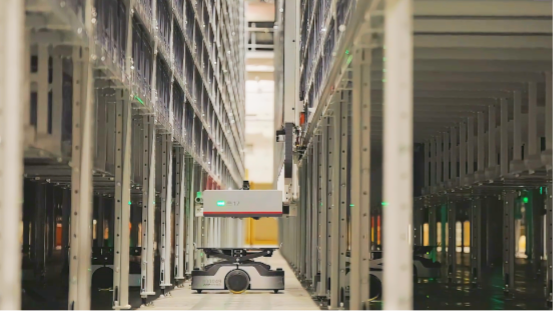
Today, Chinese e-commerce models have evolved into forms rarely seen in the West—from Pinduoduo, the Chinese sibling of Temu, to live-stream commerce reaching every rural village.
This brings us back to the core thesis of the unified state: China achieves "1 → N → N+1" because it commands a friction-free end-user base of unprecedented scale, backed by world-class, state-led infrastructure: uninterrupted power supply, ubiquitous 5G coverage, efficient logistics, and seamless mobile payments
Guancha.cn: Speaking of proactive infrastructure investment, has China’s digital boom rendered the traditional debate over "state-owned vs. private"obsolete?
Zhang Jun: State-owned enterprise (SOE) capital plays an irreplaceable foundational role here. State capital typically operates with lower required rates of return on infrastructure—a feature long criticized by traditional economists, but one that has proven to be a masterstroke for tech catch-up.
Across China’s digital ecosystem, foundational transaction costs are astonishingly low: mobile payment fees, logistics rates, and electricity prices are among the cheapest in the world. Private capital would either demand far higher margins or refuse to build out universal coverage in unprofitable rural areas.
Because Chinese infrastructure is state-led and subject to price caps, it provides what I term a “Universal Base Supply” (Puhui Supply). Low utility and infrastructure costs create massive positive externalities: cheap services attract more users, expanding the digital ecosystem.

As Nobel laureate Jean Tirole demonstrated, digital markets function as two-sided platforms where merchants and consumers generate cross-network externalities. More users attract more merchants, and more merchants offer better services, creating a self-reinforcing feedback loop. In China, low-cost universal infrastructure turbocharged this dynamic from day one.
Guancha.cn: Western critics often attribute the global popularity of Chinese tech products strictly to low labor costs or state subsidies. How does the concept of “Universal Base Supply” reframe this issue?
Zhang Jun: Subsidies exist everywhere; what matters is where and how they are applied.
In China, state participation in infrastructure doesn’t act as a market-distorting subsidy, but as a generator of positive network externalities. Where direct subsidies do exist—such as in the Electric Vehicle (EV) sector—they have largely been targeted at consumers rather than propping up inefficient producers.

Consumer-side subsidies expand the total addressable market. A larger user base accelerates adoption, which in turn drives rapid, competitive iteration among manufacturers. Far from stifling competition, this approach has spawned one of the most fiercely competitive EV markets on the planet, with new models and technological upgrades launching continuously.
Industry players often complain about intense internal competition—what in China is called Neijuan (hyper-competition). But Neijuan in China’s tech sector is simply the engine of rapid technological iteration. Because innovation in China is consumer-driven, companies are locked in a relentless race to deliver superior value to the end-user before their rivals do.
In this sense, Neijuan serves as a powerful mechanism for continuous innovation. It forces firms to constantly reinvent themselves to survive in a market defined by absolute consumer sovereignty.
About the Author:
Zhang Jun is Dean of the School of Economics, Director of the China Center for Economic Studies, Fudan University
No posts
Comments
Nothing yet. Say the first thing.
Sign in to join the conversation.