
By Huang Ziyi
Through four decades of ebbs and flows, the fierce competition in China’s sportswear market has given rise to a distinct industry landscape: “One Ning, Many Jins”—the Li-Ning brand standing alongside numerous local enterprises from Jinjiang.
Among them, Li-Ning, characterized by a strong idealistic undertone, leveraged its status as a national athletic champion to break out early, forging a unique brand path. Meanwhile, a host of local Jinjiang entrepreneurs rooted themselves in their hometowns, relying on their grassroots origins and wolf-like drive to battle it out in lower-tier markets. Today, both have become formidable rivals to global giants like Nike and Adidas.
These two underlying tones and differing origins perfectly outline the parallel growth trajectories of domestic sportswear brands. A past intertwined with the struggle for survival is fully chronicled in The Shoe Gang: Forty Years of Chinese Sportswear Brands by Huang Ziyi(黄子懿), chief writer for Sanlian Lifeweek(三联生活周刊).
This article is adapted from an interview between Guancha.cn and the author. Let us step into the factory streets and alleys to uncover the vivid stories behind the industry, understand the desperate struggles and choices of entrepreneurs, deconstruct the commercial traits shaped by regional culture, and trace how domestic sportswear brands broke through from contract manufacturing to establishing independent brands.
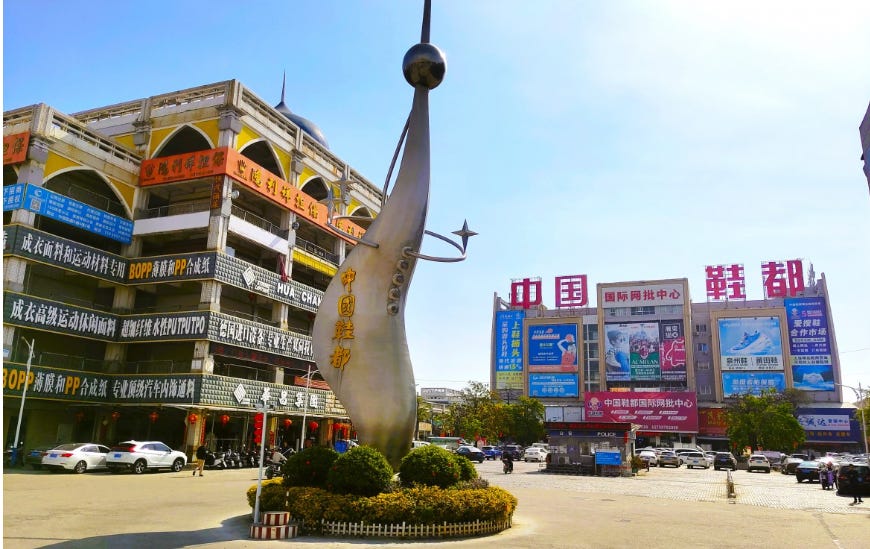
The first time I visited Chendai Town in Jinjiang, the visual impact was striking. I had flown directly into Quanzhou Jinjiang Airport and didn’t expect it to be so close to the bustling downtown. Stepping out of the airport, you are immediately in Jinjiang city proper, followed closely by Chendai Town. The urban interface switches instantly—there are no neatly organized industrial parks common in the Yangtze or Pearl River Deltas. Instead, it is a densely packed cluster of self-built small buildings, with almost every household making shoes inside. Downstairs are shops selling general merchandise, snacks, or even shoe materials; upstairs are bustling workshops operating in full swing.
On the other hand, it also felt somewhat chaotic. A while ago, a shoe factory in Jinjiang caught fire—a typical Chendai Town factory where shoe materials like non-woven fabrics, rubber, and leather were piled high in the workshop, posing massive safety hazards. Walking past residential houses locally, you can frequently smell rubber or leather. Machines run non-stop into the early hours of the morning, and migrant workers crowd the streets. The smoke and fire of everyday life interweaves with a heavy industrial atmosphere; overall, it is an incredibly lively place.
It isn’t like some of the “Top 100 Counties” I’ve visited, such as Kunshan, which feature pristine, modernized new towns and industrial parks. Jinjiang has more raw vitality. Chendai Town retains a complete, grassroots, original form, creating an extreme contrast.
In the early days, all it took to break into the industry chain was an ordinary house and a few sewing machines. This bottom-up economic vitality is something that many of the more standardized top-100 counties simply do not have.
In the late 1980s, after scholars like Fei Xiaotong visited Fujian, they proposed the “Jinjiang Model,” which was officially listed as one of China’s four major economic models by the Chinese Academy of Social Sciences in the mid-1990s. By then, other models had already found their footing: Sunan (Southern Jiangsu) relied on township enterprises and collective economies; Wenzhou relied on individual merchants distributing small commodities nationwide; and the Pearl River Delta relied on foreign, Hong Kong, and Taiwanese capital for processing.
Jinjiang is different. It is neither government-led nor reliant on individual entrepreneurs traveling far and wide. Instead, it is rooted in the clan-based kinship ties of a hometown of overseas Chinese, where neighbors, relatives, and fellow clan members pool funds to set up factories together, ultimately forming a county-level manufacturing cluster.” In a way, it was somewhat like a hybrid of the Wenzhou and Pearl River Delta models.
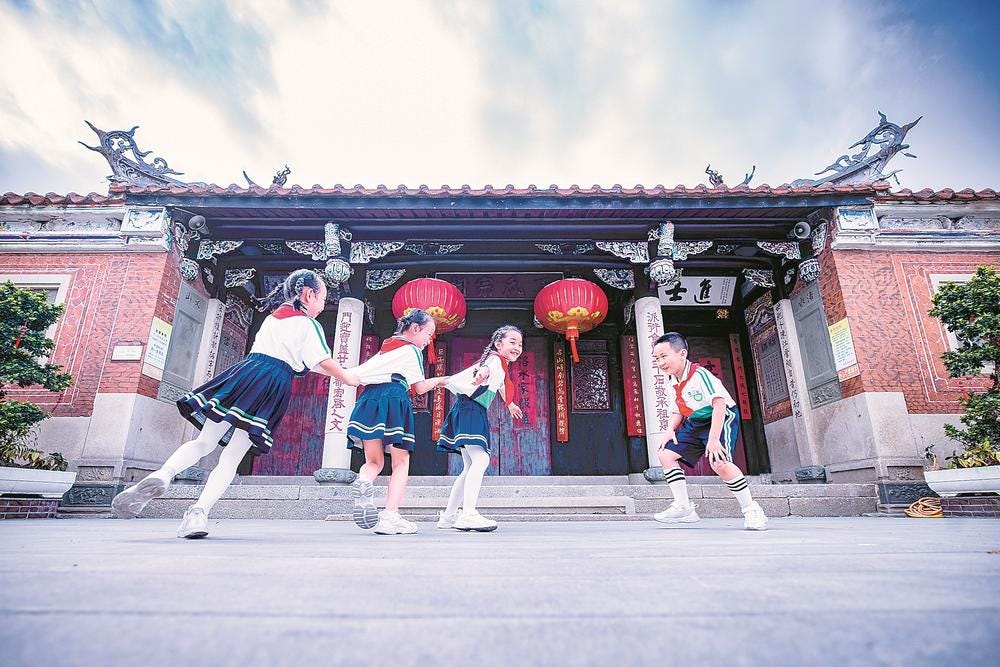
Pooling money from clan relatives allowed the industry to take deep roots locally. By the 1990s, the cluster was already mature: all materials needed for shoemaking could be sourced in a one-stop fashion locally within an hour. Different villages and factories specialized in specific shoe components, creating a tightly interlocked upstream and downstream supply chain.
Using “grassroots” or “rustic” to describe southern Fujian businessmen is indeed accurate; a more colorful term would be “wild.” For a long time, the local land was barren. The pressure to survive and fight for resources like water and land forced locals to develop a daring, pioneering spirit. With no government subsidies and no massive foreign orders initially, they could only rely on their own grit and clan mutual aid.
“Wild” does not equate to barbaric. At the foundational level, there were rules dictated by clan beliefs and civil consensus. Alongside their risk-taking nature, they heavily valued hometown loyalty. For instance, after founders like the boss of Anta made their fortunes, they mostly gave back to their fellow townsfolk through charity, which is quite impressive.
Jinjiang’s industry is highly developed, yet its core remains very traditional—this is the dual nature of southern Fujian’s industrial clusters. In an era of high population and scarce resources, clan conflicts were essentially battles for the right to survive. What seemed chaotic was actually a collective consciousness united by the clan, imposing a positive influence on those inside it. Following the Reform and Opening Up, the clan solidarity once used to fend off external conflicts morphed seamlessly into the foundation of trust needed for joint business ventures. Fellow clan members and relatives pooled money and borrowed funds to start factories, and children apprenticed at each other’s workshops.
The Reform and Opening Up provided the catalyst, transforming a raw instinct for collective survival into an innate talent for industrial development.
The “fight” in the famous local proverb, “Fight to Win,” has always been a double-edged sword. Its positive side is an endurance for hardship and an uncanny ability to seize opportunities; its negative side is pure speculation—even a gambler’s approach to business. Jinjiang brands once sparked a massive branding frenzy, where many founders went heavily into debt to gamble on massive advertising campaigns, celebrity endorsements, and aggressive retail expansion.
While “fighting” still holds meaning today, its definition has completely shifted. The market has entered an era of refinement, becoming increasingly segmented and specialized. In the past, when the market was raw and unpolished, a gambler’s streak paid off—if you dared to risk it all, you could capture market share and cash in. Today, faced with fractured markets and hyper-diverse consumer tastes, relying blindly on a gambler’s mentality will rapidly destroy competitiveness. Instead, enterprises must now wage an all-out battle to pivot toward R&D, deeply cultivate every link of the supply chain, and expand globally. They are shifting away from a high-stakes chase after fleeting, shallow dividends, and moving toward cultivating long-term industrial value.
Throughout this transformation, the drive to “fight” remains the critical engine. Why does Anta’s leadership still relentlessly push to scale the enterprise and seize pivotal moments to elevate the brand today? Because that relentless fighting spirit endures—they want their brands, and their families, to command lasting respect. However, the early days of “pack-hunting” to blindly grab market share have now largely evolved. The focus has shifted toward building sophisticated, modern corporate systems and driving multi-brand synergy, leaving the unbridled, raw competition of the past far behind.
Li-Ning’s starting point indeed benefited from an unreplicable tailwind of the era, or more accurately, a unique historical endowment. As an Olympic champion with built-in star power, backed by the capital of beverage giant Jianlibao, the “Li-Ning” brand carried a powerful narrative of national identity and pride from its very inception. These were rare assets gifted entirely by the times.
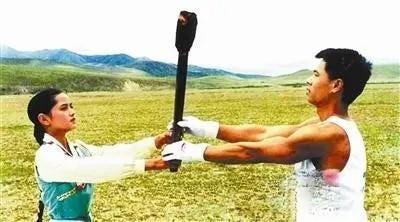
Li Ning himself possessed a deeply idealistic streak; when founding the brand, he set a grand vision to champion Chinese enterprise on the global stage against international giants, refusing to let profit be his sole objective.
Yet, it would be a mistake to credit his success entirely to luck or era-defining dividends. Every turn on his entrepreneurial path demanded immense personal grit. When he first retired from athletics, he had no intention of entering the business world. But once he committed to building a company, he went all in.
He traveled alone to Sanshui, Guangdong, to learn the ropes of manufacturing from scratch. He made high-stakes calls at critical junctures—from the historic Asian Games torch marketing campaign to navigating product defects—and personally stepped onto the front lines to stabilize the company during its inventory crisis. Beneath his idealism lies sharp commercial acumen: a willingness to pour immense mental energy into every strategic decision and shoulder the crushing weight of the outcomes.
A prime example occurred around 2012. As the inventory crisis erupted and company funds were stretched to the brink, Li Ning personally doubled down, securing a high-profile sponsorship of the CBA league and signing NBA superstar Dwyane Wade. These massive moves were the direct result of a founder stepping up to take calculated risks and making bold, definitive bets.
Today, Li-Ning’s basketball footwear is exceptionally premium; international critics and global sneaker communities frequently note that their court-feel and professional performance are squarely on par with Nike. This success tracks directly back to Li Ning’s personal grit and high-stakes decision-making decades ago—proving his brand’s trajectory was never just a matter of historical luck.
In its earliest days, however, Li-Ning owned zero factories, relying entirely on contract manufacturing.
From an industrial strategy perspective, sportswear brands generally split down two paths: heavy-asset and light-asset. The light-asset model—championed by Nike and Adidas—eschews factory ownership entirely. These giants source contract manufacturing in regions with favorable demographic advantages, allowing them to pour their core energy into product R&D and brand marketing.
Founded by runner Phil Knight and his coach, Nike focused squarely on innovation, outsourcing its actual production to emerging hubs like Taiwan. This blueprint yielded immense margins for Nike and nurtured Taiwan’s athletic footwear industry, which later anchored itself across the Taiwan Strait in southern Fujian.
Conversely, Jinjiang brands like Anta and Xtep forged the heavy-asset path: manufacturing first, brand-building second. The edge of this model lies in a remarkably robust manufacturing base, a captive supply chain, and superior risk resilience. By keeping production in-house, Jinjiang brands dictate their own cost structures and profit margins. Even when retailing at lower price points than Nike or Adidas, their net profit margins occasionally outpace the global giants, simply because they capture the entire manufacturing surplus for themselves.
At the time, Li-Ning’s ambition was to build a world-class Chinese national brand. Benchmarking against Nike and Adidas, they chose to focus their core efforts on product, brand narrative, and marketing, choosing to skip the factory floor. They operated under the assumption that with China’s vast domestic factory network and workforce, production could easily be outsourced.
But when the inventory crisis hit, Li-Ning realized this total reliance on outsourcing was a fatal vulnerability. Consequently, after 2019, they broke with past strategy and began building their own manufacturing facilities in Li Ning’s home province of Guangxi, shifting from a pure light-asset model to a hybrid approach. Of course, the scale and output of Li-Ning’s in-house factories still pale in comparison to the massive Jinjiang industrial cluster.
Yet Guangxi’s geography offers a strategic play: its proximity to Vietnam—which has built its own formidable footwear cluster—opens new avenues for cross-border supply chain synergy. Adidas and Nike began migrating their production lines overseas years ago. Today, Vietnam stands as the world’s largest producer of Nike footwear, with Indonesia ranking second, and China slipping to third.
Compared to Li-Ning’s patrician origin, the Southern Fujian business bloc defined itself through pure grit and relentless hustle.
Jinjiang’s founders lacked any athletic halo; they were entirely grassroots entrepreneurs driven initially by a singular motive: escaping poverty. In their startup phase, every corporate objective was strictly market-driven and profit-oriented. These founders practically lived on the factory floors to master shoemaking, spent endless days pounding the pavement to secure offline channels, and manually negotiated with distributors. Every cent of profit was clawed back through a hyper-pragmatic focus on refining production lines and sales networks.
This pragmatism meant that only after surviving and conquering poverty did Jinjiang’s factories begin, one by one, to cultivate independent brands.
Yet, Li-Ning and Jinjiang do not exist in a binary opposition. Li-Ning held fast to its core idealism of premium manufacturing and high-end brand equity. Meanwhile, Jinjiang’s entrepreneurs—having completed the transition from family workshops to modernized corporations—likewise unlocked a grander vision: to build national champions and operate world-class sporting conglomerates. But in terms of initial endowments and underlying logic, “One Ning” and “Many Jins” marched down two entirely different paths.
The rise of Jinjiang was not a linear success story; it was a trial by fire across three systemic industry crises.
1. The Quality and Credibility Crash (Mid-1980s)
In its infancy, Jinjiang was notorious for producing “seven-day shoes” or “cross-the-street shoes”—substandard footwear whose soles would separate or unglue after minimal wear. Compounded by a concurrent local counterfeit medicine scandal, the entire region was branded a hub for knockoffs. This existential crisis forced a brutal realization: survival required discarding fakery in favor of uncompromising quality.
Anta’s Predecessor (1988): Founded by Ding Hemu, the company was named Qiuzhi (”Seeking Quality”). To ensure structural integrity, workers were mandated to manually strike the glued sole and upper exactly thirty times.
Xtep’s Predecessor (Sanxing): Became Jinjiang’s “export king” by doubling the standard industry pressing time from six seconds to twelve seconds, using premium adhesives to guarantee durability.This crisis served as Jinjiang’s first great awakening regarding structural integrity and corporate honor.
2. The Asian Financial Crisis and the Brand Awakening (1997)
When the 1997 financial meltdown devastated domestic foreign-trade original equipment manufacturers (OEMs), Jinjiang realized that relying solely on contract manufacturing left them highly vulnerable to global economic cycles.
Even before the crash, OEM margins were collapsing—Xtep’s founder Ding Shuibo noted that processing profits plummeted from over ten RMB per pair to a mere one or two RMB.
The tipping point came during a German trade exhibition. Local government officials and factory owners discovered a shocking reality: while unbranded Jinjiang shoes sold wholesale for a few dollars, the exact same shoes, stamped with a global logo, retailed for $99.
Deeply moved, Jinjiang launched its landmark “Building the City through Brands” strategy in 1998. Backed by government subsidies and policy directives, a massive brand-building movement swept the region. Merchants realized they needed to own their IP to control their destiny, capture premium value, and weather macro-economic storms.
3. The Great Post-Olympic Inventory Avalanche (2011–2014)
Prior to 2008, the Chinese sports sector rode a massive wave of optimism. Brands universally assumed the Beijing Olympics would trigger an infinite, permanent surge in domestic sportswear consumption. Consequently, every player—including global giants Nike and Adidas—expanded aggressively.
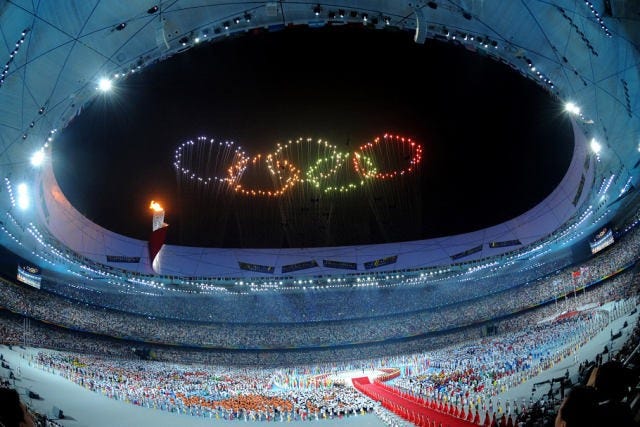
This reckless expansion manifested in two ways: maximizing production capacity and launching hyper-aggressive retail footprints. Domestic players like Anta, Li-Ning, Xidelong, and Peak all launched “10,000-store expansion plans” while rushing to list on stock exchanges in Hong Kong, Singapore, or Germany to fund capital expenditures.
But the market saturated rapidly, and consumer appetite fell far short of projections. By 2010, the inventory crisis fully erupted. The blind expansion was so severe that Jinjiang founders grimly noted: even if every factory stopped operating immediately, existing warehouse inventory was enough to clothe the entire Chinese population for three to four years.
The 2011 crisis permanently shattered the crude, volume-driven growth model. It taught the industry that building a sports brand is a sophisticated, long-term ecosystem. Success required pivoting toward deep R&D, upgrading retail storefront experiences, mastering supply chain mechanics, and deploying data-driven consumer analytics.
Brands abandoned the generic “one-size-fits-all” approach and deeply segmented the market, engineering specialized products tailored strictly to individual disciplines—whether badminton, basketball, or marathon running.
Anta’s Masterstroke: Post-crisis, Anta took over FILA China, using hyper-refined retail operations and sharp trend forecasting to turn it into the fastest-growing premium sportswear brand in the country.
Li-Ning’s Resurgence: Realizing that old-school distribution was dead, Li-Ning birthed the “China Li-Ning” product line, pioneering the Guochao (国潮National Trend) track to capture the cultural pride of younger consumers.
Ultimately, these three systemic crises drove a progressive, evolutionary upgrade for Chinese sportswear: first, you must build a product that doesn’t break; second, you must give that product an independent brand; and finally, you must sustain that brand through sophisticated, long-term strategic execution.
Putian and Jinjiang represent two starkly divergent outcomes of the exact same phenomenon. Both regions initially capitalized on the massive wave of OEM dividends triggered by globalized supply chains.
Jinjiang, scarred early on by its mid-1980s quality crises, the notorious counterfeit medicine scandal, and the sting of the Asian Financial Crisis, engaged in deep corporate soul-searching. Its founders recognized the intrinsic limitations of pure contract manufacturing, prompting a structural shift toward quality control and independent brand equity.
Putian, conversely, became a victim of its own success in the pure OEM space. When Nike migrated its contract manufacturing from Jinjiang to Putian, the local footwear industry experienced an unprecedented boom. Nike established an extensive network of contract facilities in Putian—surpassing its presence in Jinjiang—three of which remain operational to this day.
Having tasted these lucrative dividends, Putian developed a deep path dependency that completely severed its trajectory from Jinjiang. Putian doubled down on long-term, high-volume contract manufacturing for global giants, relying heavily on overseas orders. As a result, the region developed zero expertise in domestic brand operations or distribution networks. Even putting the issue of counterfeits aside, attempting to engineer a legitimate, homegrown brand from scratch today is a monumental challenge.
Building a brand in the current landscape is vastly more unforgiving than it was decades ago. In the industry’s golden era, a founder could simply bankroll a celebrity endorsement, blast television commercials, and rely on eager distributors to aggressively scale retail footprints. Today, while niche professional tracks still offer pockets of opportunity, the barrier to entry regarding product innovation is incredibly high. Launching a high-performance athletic shoe without decades of R&D accumulation or a nuanced understanding of sports science is virtually impossible.
Furthermore, buying brand equity demands colossal financial runway; locked into the razor-thin margins of contract manufacturing, Putian’s localized capital and resources pale in comparison to Jinjiang’s. The region also lacks Jinjiang’s deeply entrenched ecosystem of brand creation and extensive experience in the domestic market. For Putian, breaking into the premium tier is a steep, uphill battle compared to Jinjiang’s trajectory, though carving out a niche in hyper-segmented categories may still hold a glimmer of hope.
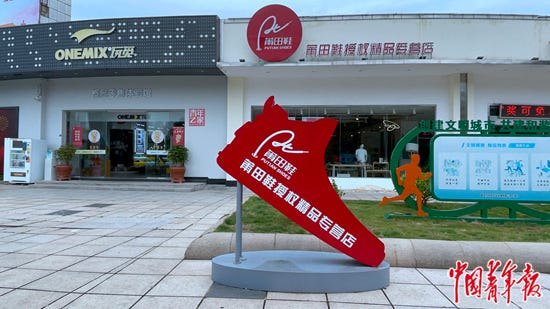
The Putian municipal government has recently diagnosed this structural vulnerability and stepped in directly, officially registering a collective trademark simply titled “Putian Shoes.” While the historical public perception of Putian footwear was tethered to counterfeits and substandard quality, public sentiment is shifting, with growing praise for the region’s undeniable manufacturing solidity.
Local authorities are actively attempting to pivot and rebrand this tarnished reputation under the “Putian Shoes” collective banner—with the strategic goal not necessarily aimed at capturing the luxury high-end, but rather cementing a baseline consumer perception of reliable, “solid quality.”
Through forty years of the shoe capital’s turbulent ups and downs, history has crowned its winners—and inevitably left behind its casualties.
Vanished brands like Deerway were once market leaders, ranking among the top-tier enterprises in Jinjiang. Backed by early local land subsidies, they built a sprawling industrial park of considerable scale. Yet, after the founder passed away, his two brothers failed to turn the tide. Today, Deerway has completely vacated the premises, leasing the industrial park out to various small and medium-sized footwear and textile workshops.
Jinlaike suffered a similar fate. Even now, many Chinese consumers fondly recall the sheer durability of its running shoes. However, amidst the post-Olympic inventory crisis, the brand committed a series of strategic blunders. Today, Jinlaike has sunk into obscurity, reverting to a low-profile processing plant.
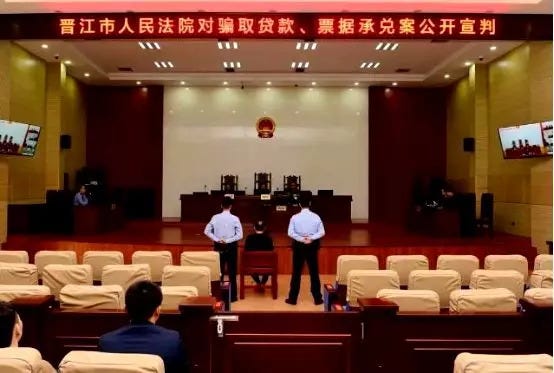
Xidelong vanished entirely from the market, its downfall culminating in the founder being sent to prison.
It is a deeply poignant landscape. Walking down the streets of Chendai Town, the physical architecture of these legacy brands—including Anta’s original factories and worker dormitories—remains intact. The colossal Deerway industrial park sits directly adjacent to the massive Qiaodan (China) complex. The logos of these fallen brands were once household names nationwide, yet their realities today stand in stark, melancholy contrast to the neighboring giants.
Chronicling the history of Jinjiang’s shoe industry is not about writing revisionist history for the victors. The founders of vanished empires like Deerway, Jinlaike, and Xidelong were just as relentlessly hardworking in their early days as any other Jinjiang boss. They lived on the factory floors day and night, obsessively refining their craftsmanship, going to sleep at two or three in the morning, and waking up mere hours later to rush out production orders.
They survived the exact same crucible; they fought with the same ferocity and endured the same hardships. But as the market matured into brand management, some lacked long-term strategic vision and omnichannel planning capabilities, blindly defaulting to raw labor while ignoring top-level governance. Many founders pushed the ethos of “fighting” to an unhealthy extreme. In their desperate bid to win, they resorted to high-stakes speculation, a gambler’s recklessness, and eventually, illicit activities. The founder of Xidelong, for instance, was ultimately sentenced to six years in prison for bank fraud.
A founder’s underlying perception of the market and the industry dictates the direction of their efforts, ultimately altering their destiny. A fierce fighting spirit is merely the baseline, entry-level prerequisite. True endurance requires deep strategic acuity to elevate a brand from a mere workshop into an institution—neither element can be missing.
Today, the domestic market is completely saturated and hyper-commoditized. Industry intelligence is entirely transparent; every competitor understands the exact cost margins of a sneaker and the core technologies involved. Relying solely on raw hustle and an endurance for hardship no longer yields a competitive advantage.
The very definition of “fighting” has fundamentally evolved. It is no longer measured by sleepless nights on the production line or frantically running between wholesale markets across the country. Today, the battle is waged scientifically and rationally. While a calculated appetite for risk remains necessary, the core battlefield has shifted to deep R&D pipelines, hyper-refined retail channel operations, and global supply footprints. The current era tests an enterprise’s strategic clarity, institutional focus, and capital runway. Execution remains vital, but it must be guided by sophisticated commercial insight and long-term vision to withstand the test of time.
Along with the shifting market, there has also been a generational transition among Jinjiang’s business owners.
The older generation of shoe merchants all came from humble, grassroots beginnings, enduring deep poverty and severe hardships before launching their enterprises. For them, entrepreneurship was an all-out battle for survival. Yet, they possessed an audacious, ironclad resolve—never hesitating to take high-stakes gambles to alter their fates, moving forward with incredibly bold, aggressive strides.
The new generation stands in stark contrast. As they grew up, their fathers had already transformed their families’ socioeconomic fortunes. Many of these next-generation entrepreneurs received top-tier higher educations, with a significant number studying abroad at prestigious global universities.
Take Anta and Xtep as prime examples. The sons of Anta’s co-founders are now at the helm of the group’s premium, newly acquired global brands, such as Kolon Sport and Descente.Meanwhile, Ding Jiamin, the second daughter of Xtep founder Ding Shuibo, frequently shares her executive routine on social media. In a recent interview with a digital content creator, she revealed that she cut her teeth in the e-commerce department—focusing on sectors native to younger demographics—and now oversees Saucony, the high-end running shoe brand under Xtep’s umbrella.
This new generation of the “Shoe Gang” is deeply fluent in premium brand operations and China’s digital e-commerce ecosystem. Compared to their predecessors, while they may lack some of the raw, unbridled audacity required for reckless expansion, they place a premium on data-driven management and are dedicated to steering sustainable, long-term brand growth. In these high-end, modern arenas, these next-generation leaders wield significant strategic advantages over the old guard.
Industrial relocation is an issue I monitor closely, but my field visits revealed that, at least locally in Jinjiang, this offshoring trend is not as severe as external headlines suggest.
Because shoemaking remains inherently labor-intensive, wage inflation makes supply chain migration an objective inevitability. However, the industrial offshoring here is clearly stratified. The Jinjiang government demonstrated remarkable foresight: they mastered the art of retention, transferring out only low-margin assembly lines while anchoring high-value core capabilities firmly at home.
Chendai Town alone hosts approximately 7,000 shoemaking-related enterprises, forming an impenetrable industrial ecosystem. Within this cluster, surprisingly few factories actually engage in manual final assembly; instead, an overwhelming majority specialize in the advanced engineering of shoe materials and components.
Manufacturing footwear is notoriously complex. While an article of clothing may only require one or two types of fabric, a sneaker demands an array of materials. The upper requires specific textiles, the sole demands advanced polymers, and the product integrates components from specialized laces to molded logos. Because a single pair of shoes synthesizes a vast bill of materials, it is less of a generic labor industry and more of a material-science hub that relies on precision coordination.
Anticipating this structural shift as early as 2012, the Jinjiang government resolved to fortify its industrial cluster into a mature, irreplaceable ecosystem. Local authorities deployed an 8 billion RMB investment to construct the Jinjiang International Shoe and Textile City—a sprawling, state-of-the-art hub that now consolidates thousands of specialized material suppliers under one roof.
This represents the pinnacle of the “front storefront, back factory” architecture. Jinjiang established this localized marketplace, backed by a sprawling network of processing plants across the county. In this hyper-concentrated market, brands can source virtually every required raw material in a seamless, one-stop fashion. Consequently, even when domestic shoe factories relocate a portion of their assembly capacity to Southeast Asia, they remain shackled to Jinjiang, forced to return home to procure their core raw materials.
Today, innovation in athletic footwear is primarily a “battle of materials.” Midsole compounds directly dictate cushioning and energy return, while engineered uppers determine weight and breathability. Crucially, the R&D and design of these materials remain strictly local.
By laying this groundwork early, Jinjiang successfully retained the crown jewels of its supply chain.
Compared to the early golden era, today’s marketplace is far more cutthroat. These Jinjiang brands enjoyed unique historical tailwinds during their entrepreneurial infancy.
At the dawn of the Reform and Opening Up in the early 1980s, domestic consumer demand for leather and athletic shoes skyrocketed. Families pooled capital through grassroots cooperatives to launch domestic sales, steadily clawing their way out of poverty. By the 1990s, as global supply chains migrated, they cut their teeth as contract manufacturers for global sports giants, transforming informal workshops into modernized industrial powerhouses.
Post-2000, refusing to settle for meager OEM margins, the Jinjiang “Shoe Gang” scrambled to forge independent brands. This phase perfectly synchronized with the peak of China’s national sports enthusiasm and its accession to the WTO, placing their brand-building era on the fast track of China’s historic economic boom.
Looking back at interviews with Jinjiang founders from that era, corporate revenues were essentially doubling year-over-year without exaggeration. Peak founder Xu Jingnan offered a striking metaphor: at the time, running a business was like riding an upward-moving elevator—even if you stood completely still, your performance ascended every year.
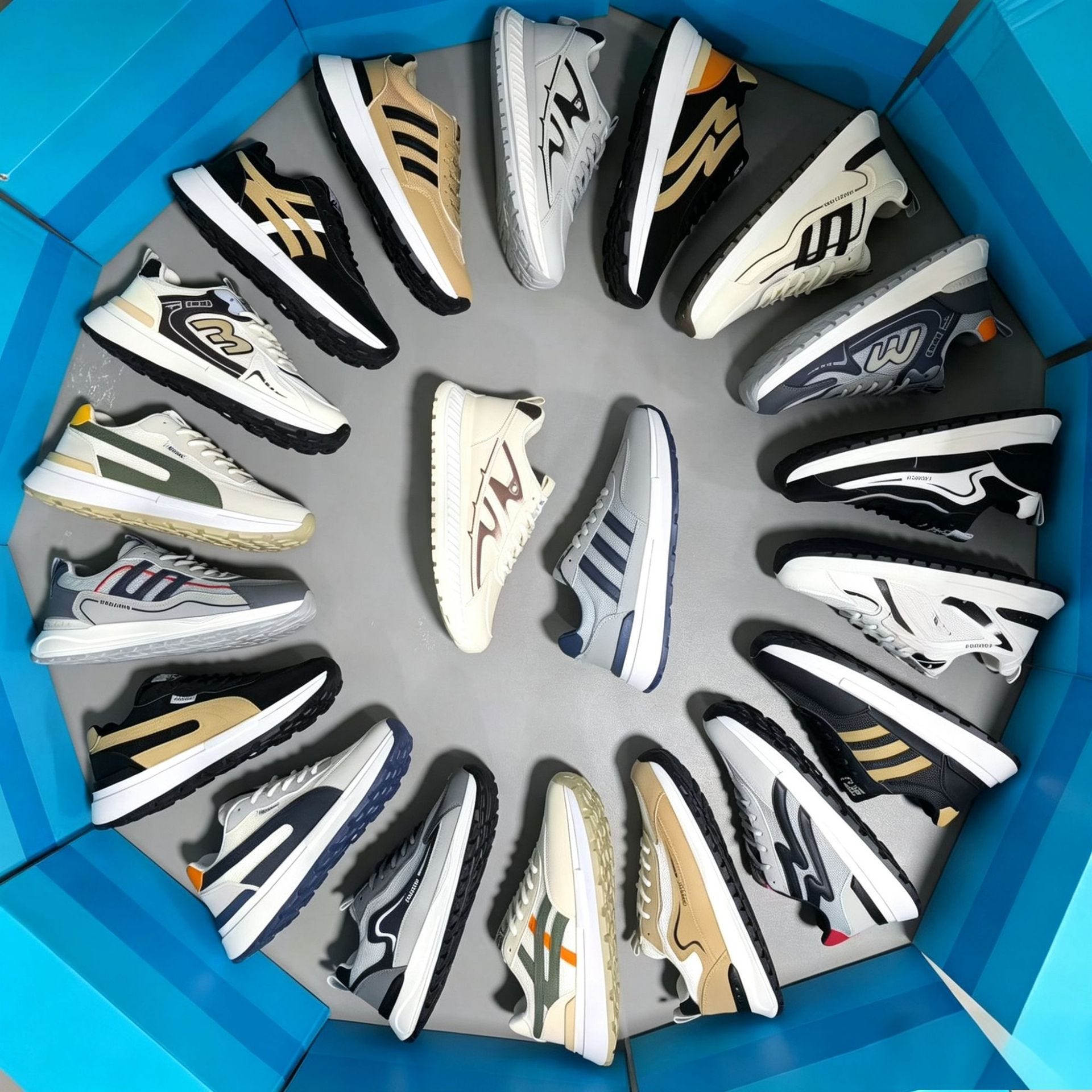
Over the decades, as the macroeconomic landscape matured, consumer tastes became hyper-fragmented and increasingly sophisticated. Beyond incumbent titans like Nike and Adidas, premium niche players like On Running, HOKA, and Lululemon penetrated the Chinese market, aggressively capturing market share. Today, growth rates for established domestic champions like Anta and Li-Ning have begun to plateau, deceleration being particularly stark compared to their early boom years.
This hyper-competitive market has forced a definitive pivot from raw, grassroots volume expansion to deep, long-term industry cultivation: doubling down on technical R&D, optimizing supply chain economics, and absorbing the operational playbooks of global conglomerates.
While the current arena is undeniably harsher than the past, Chinese brands are adapting with remarkable resilience.Today, the product innovation and technical execution of Anta and Li-Ning are fully on par with Adidas and Nike across multiple disciplines; a marginal gap persists only in legacy brand equity.
These domestic champions were all once chasers—humble apprentices to global icons like Nike. Today, they have evolved into formidable challengers. They may not have achieved complete market parity just yet, but they have unequivocally earned their seat at the table.
About the Author:
Huang Ziyi (黄子懿) is the chief writer for Sanlian Lifeweek (三联生活周刊) and the author of the book The Shoe Gang: Forty Years of Chinese Sportswear Brands.
No posts
Comments
Nothing yet. Say the first thing.
Sign in to join the conversation.