

At 11:33 on the morning of 31 July, Reuters caught the American Treasury Secretary’s notepad. Under the heading “To Do”, Scott Bessent had written: “Buy Japanese Yen (JPY) $5-10 bil.”
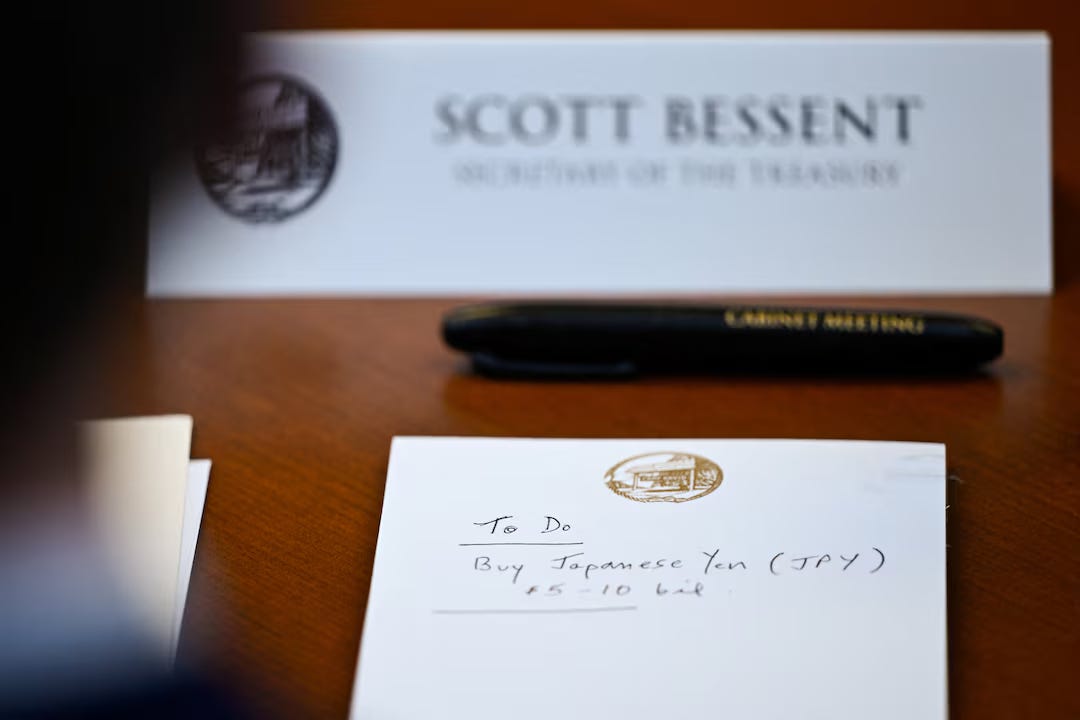
Turns out, he wasn’t bluffing.
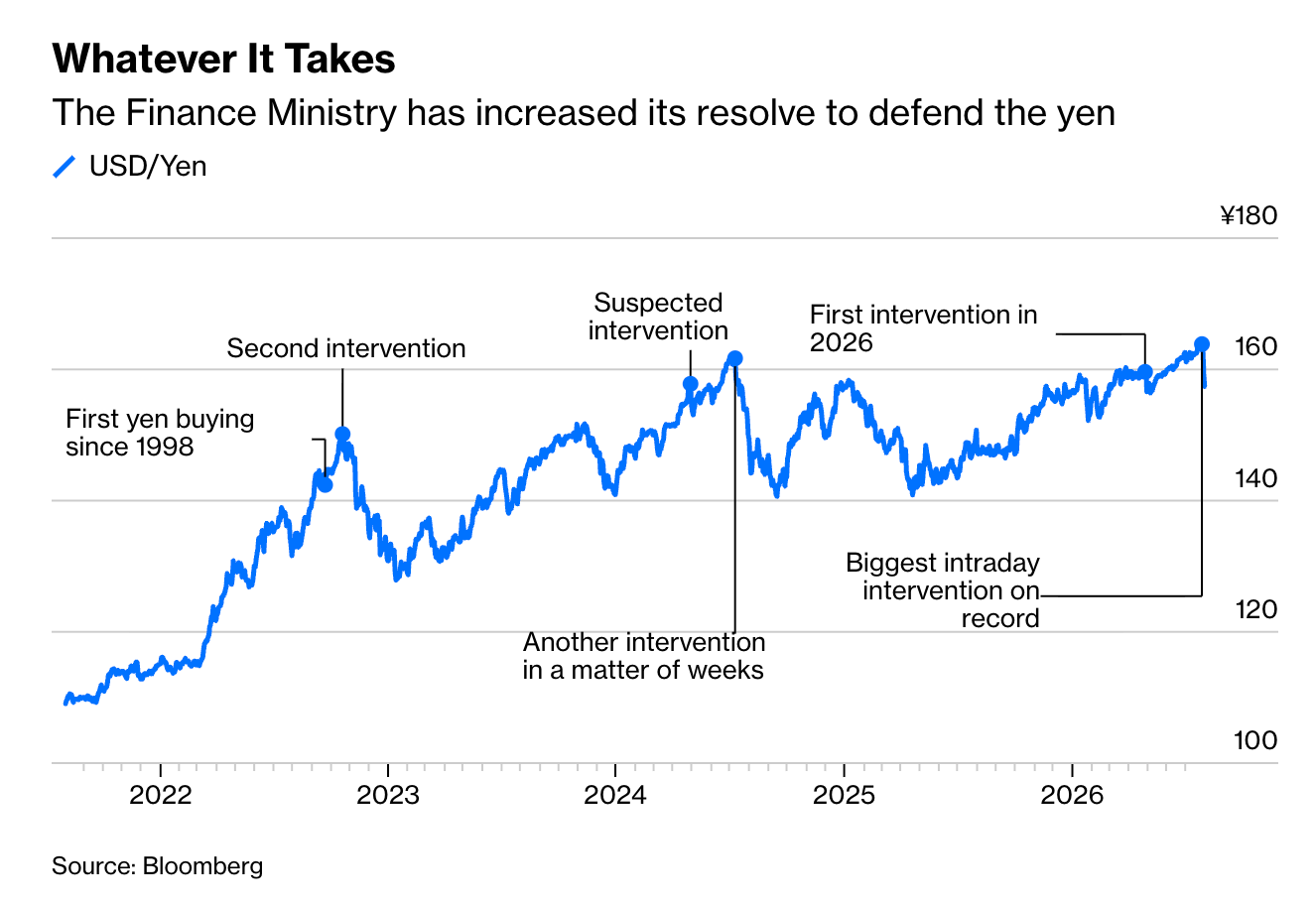
The night before, Tokyo had spent an estimated $54bn (¥8.45tn) buying its own currency, likely the largest single-day intervention in its history.
Hours after the photograph, the New York Fed sold euros through Goldman Sachs and Morgan Stanley to buy yen on Washington’s behalf, the first joint operation between the two countries in 15 years.
That same week, MUFG posted a quarterly profit of $5.2bn (¥809.4bn), up 48%. All three Japanese megabanks are now guiding to record earnings.
Japan is repaying 30 years of free money, and its financiers are collecting the toll.
Because when you spend time funding the rest of the world with your currency, the only way to get repaid is via your banks.
In this edition of Impactfull Weekly, we look at the biggest change in Japanese economics, and find who are the winners of Japan’s return to positive rates. Spoiler alert: the institutions we stress-tested in our January essay are the ones getting paid.
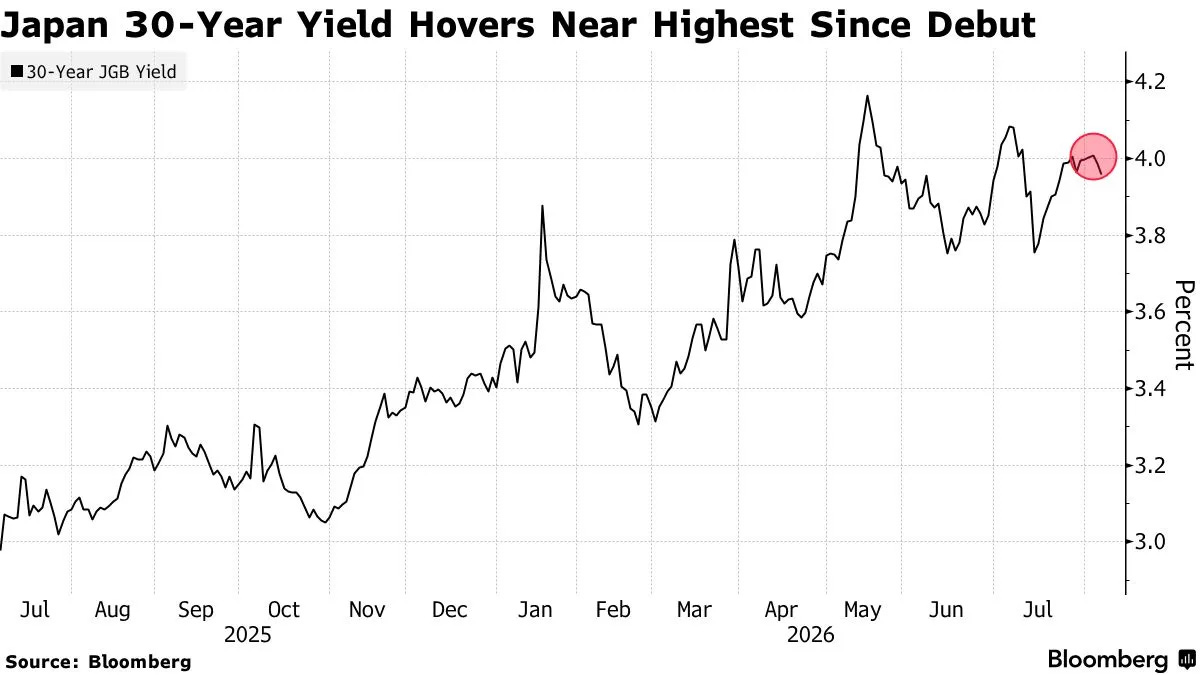
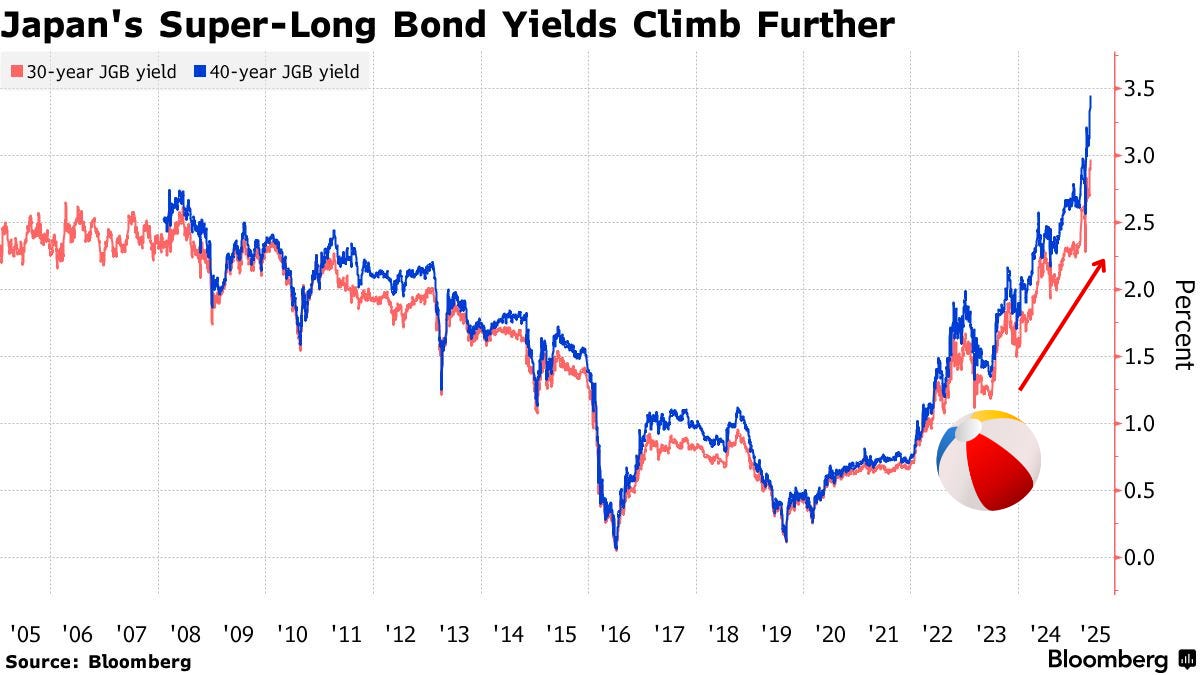
Japan now pays 4% a year to borrow for thirty years, the bonds its life insurers live on.
Last July it paid 3%, the peak in May touched 4.17%, and that’s the highest since Japan first issued a thirty-year bond in 1999.
That price was never really set by the people lending the money.
The Bank of Japan created yen and bought bonds from its financial institutions, year after year, until it owned more than half of every government bond in existence, ¥590 trillion ($3.7 trillion) at the peak.
With the BoJ guaranteed to take those bonds off their hands, the government never had to pay the bondholders, its own banks and insurers, a real return for their money.
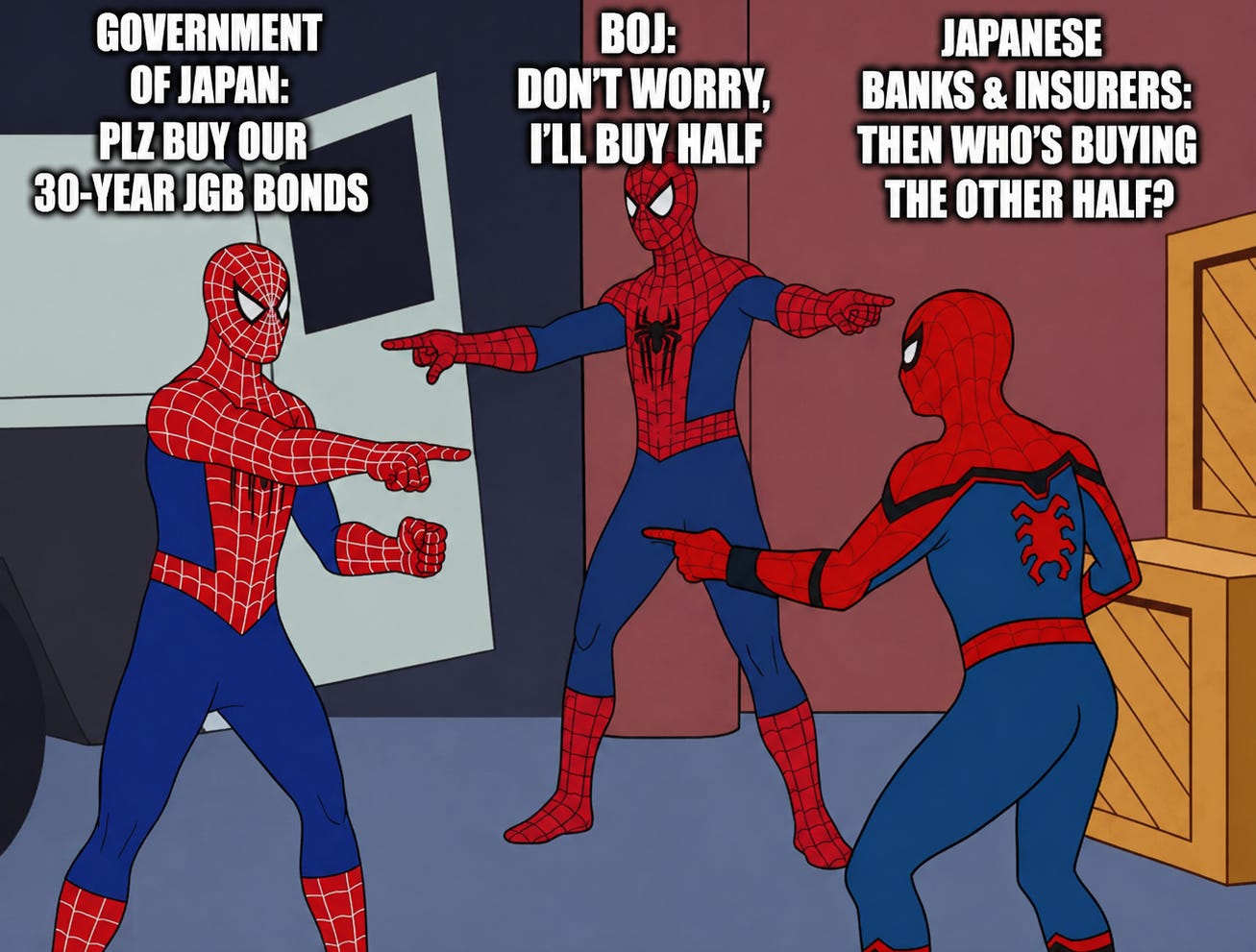
That arrangement is now being wound down, the Bank’s monthly purchases cut from ¥5.7tn towards roughly ¥2tn by early 2027.
Someone else must fund the most indebted major government on earth, and it sure isn’t going to be the financiers anymore. Not for cheap, at least.
On 20th January, the market discovered this new price that the financiers wanted the central bank to pay, and it resulted in a rise of 27 bps in the 30Y and 40Y yields in a single trading session. This was when we asked whether it was time to short Japan?
Impactfull Weekly #24 - Time to short Japan?
·
Jan 29
Japan has defied crisis predictions for thirty years, earning the “widowmaker” nickname for traders who bet against it. But something has fundamentally changed over the past year.
The sequence of events that followed led us to believe that we would be entering into a transition era where Japan finally becomes comfortable with a positive rate environment.
Takaichi had inherited a minority government in October and gambled it on a February snap election, promising voters relief from the cost of living: a suspended sales tax on food and a bigger defence budget, essentially asking permission to borrow more money.
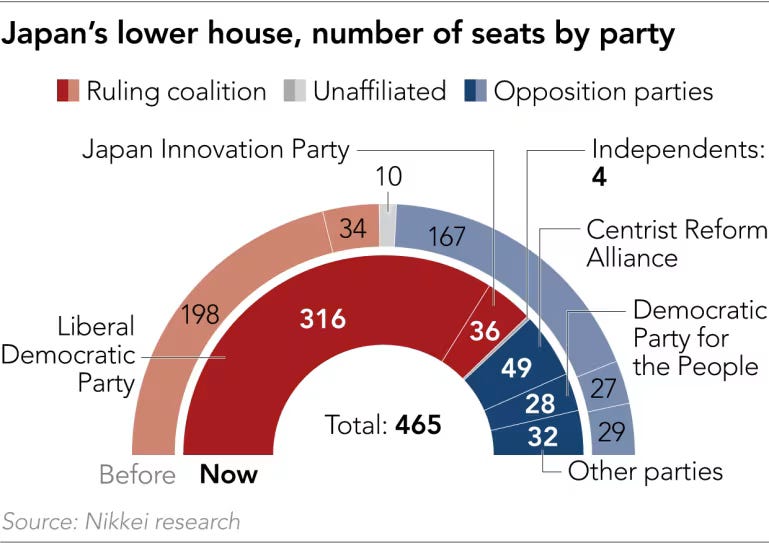
That gamble gave her 316 of 465 seats, the first single-party supermajority since the second World War. For bondholders the message was clear as day: Japan’s answer to the political pain of inflation would be more debt.
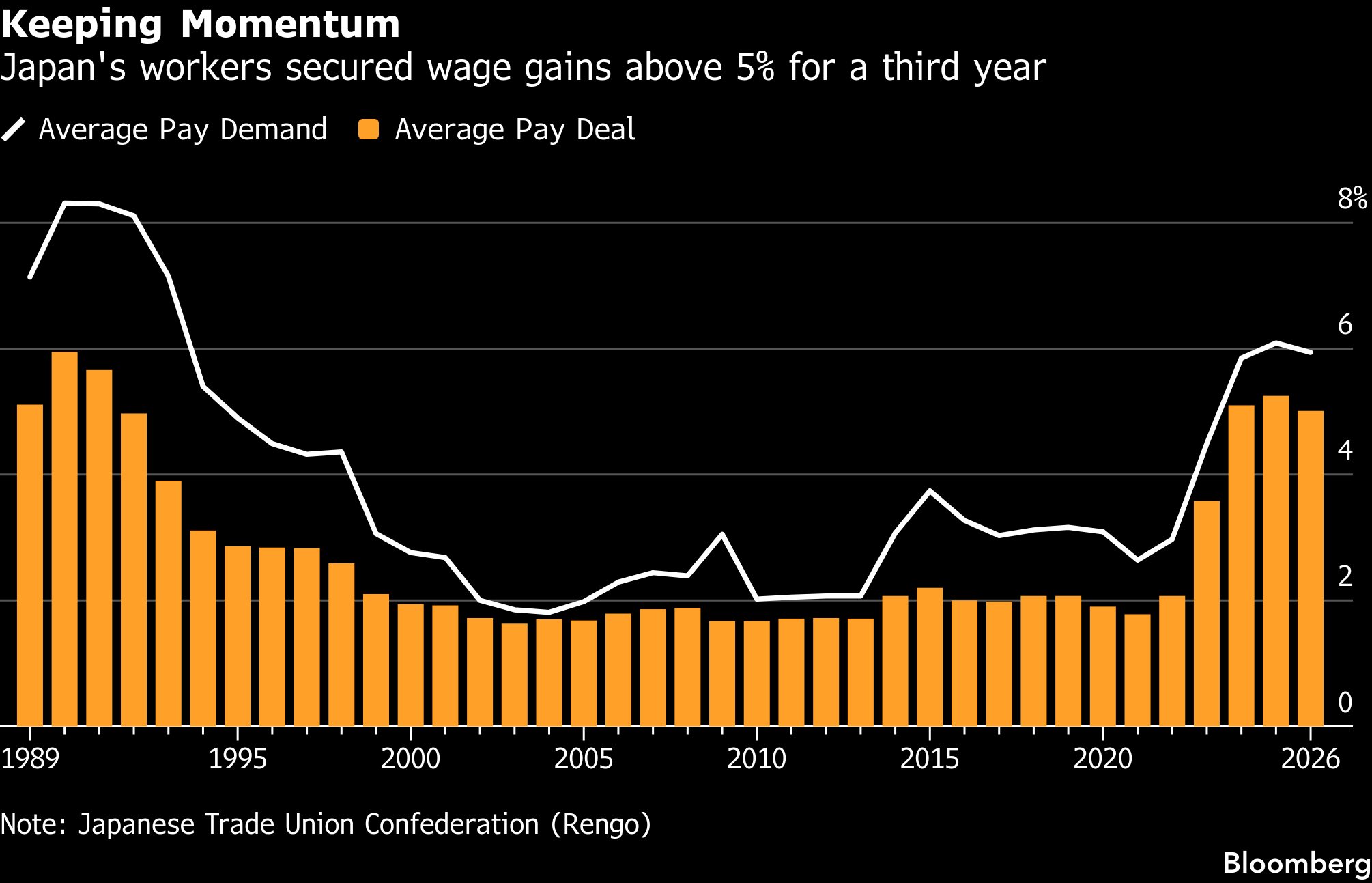
The spring wage negotiations settled at 5.01%, a third consecutive year above 5%, calling the Bank of Japan to exercise its promise of raising rates once wages stabilised.
The Bank of Japan had spent a decade insisting it would raise rates only once wages proved inflation could sustain itself, and three 5% spring wage hikes in a row settled the argument.
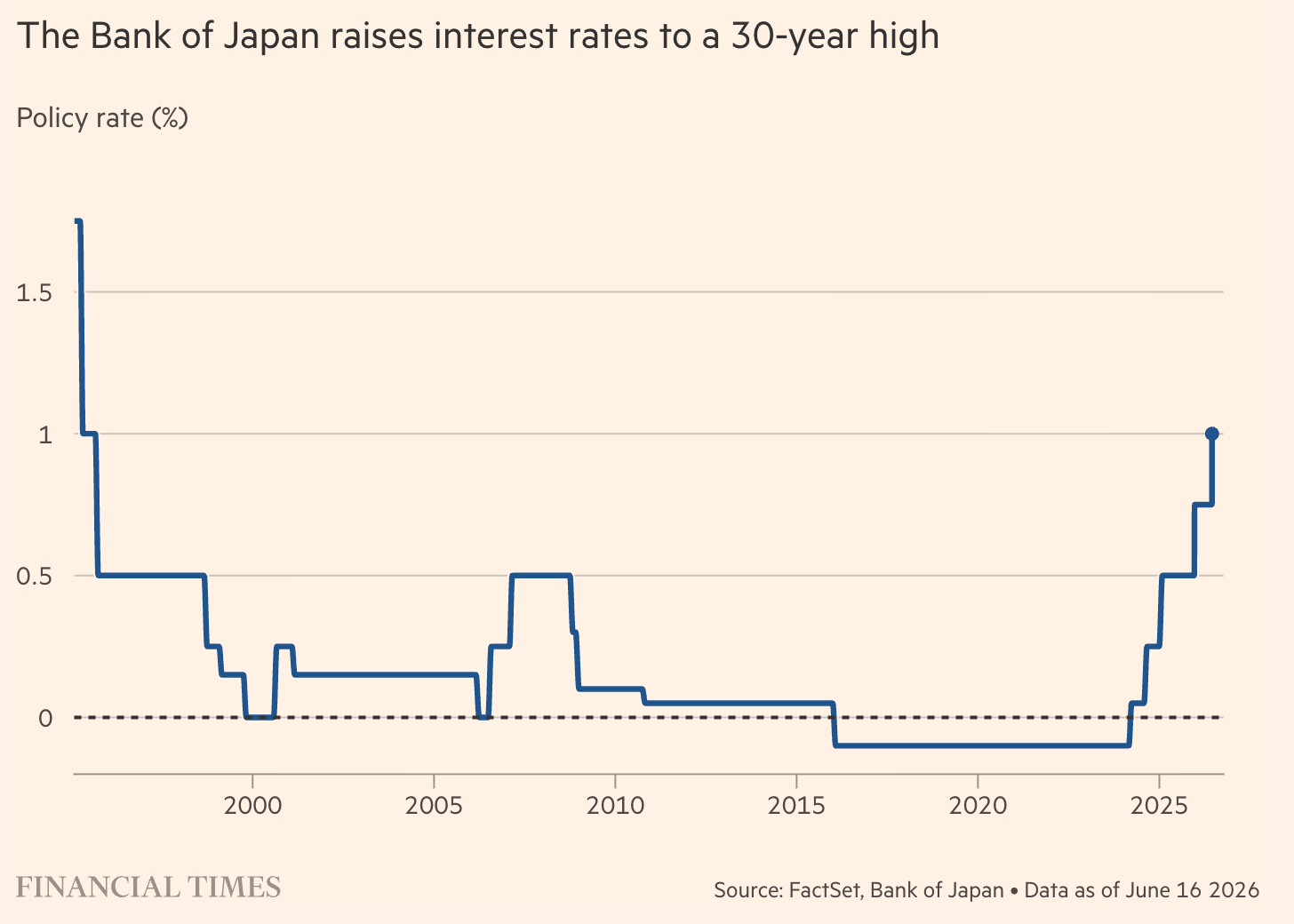
In June the Bank took its policy rate to 1%, the highest since 1995. By July, one member of its board was pushing for 1.25%.
Every step higher in yields cut deeper into the value of bonds bought in the zero interest rate world, and by June the paper losses across Japan’s four largest life insurers had reached an estimated $96bn.
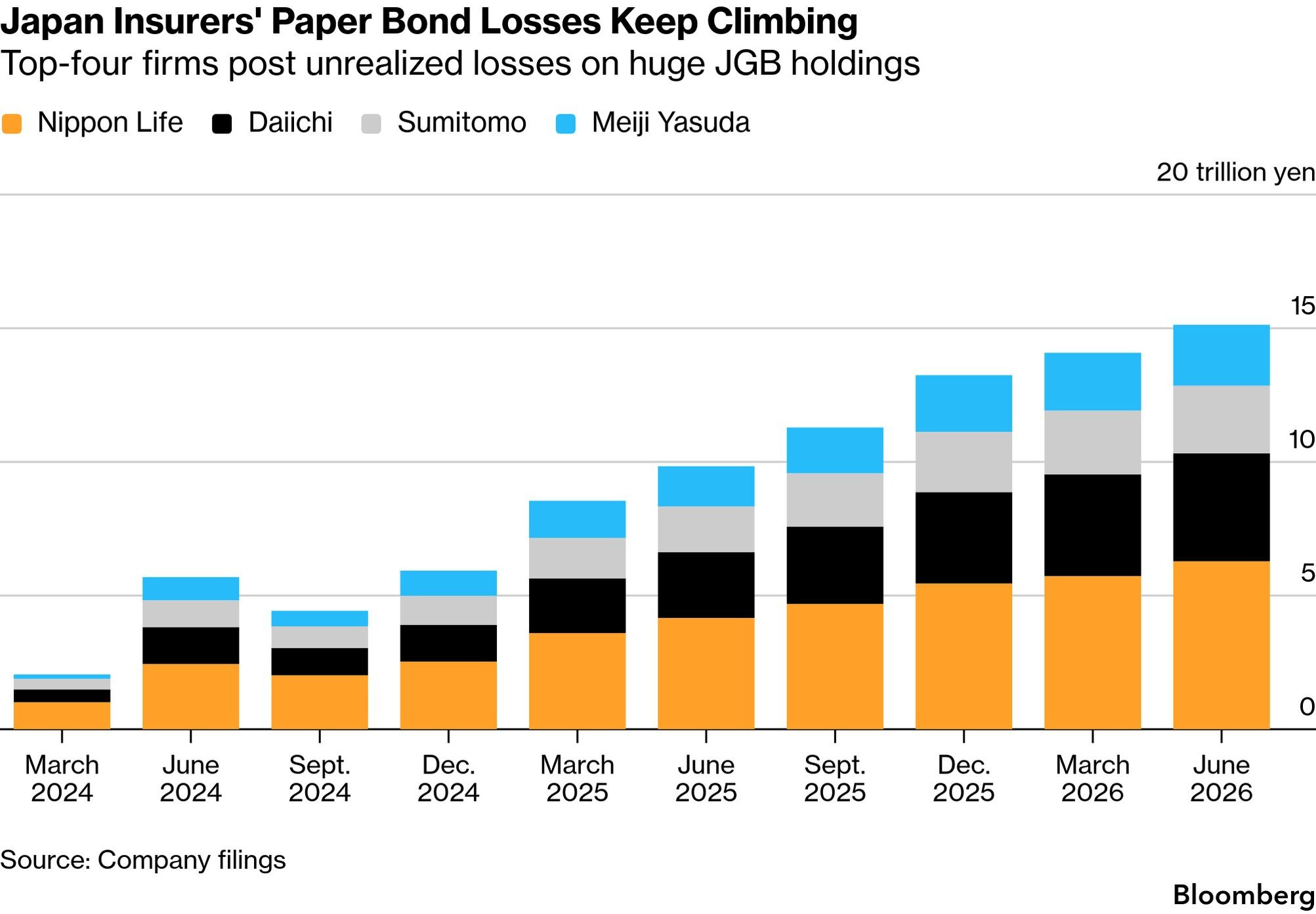
Past a certain size, paper losses stop being paper: someone is forced to sell, selling moves the price, and the price forces the next seller, a meltdown that would run through the regional banks first and the bigger ones next.
All the while the yen kept falling, which looks strange while the central bank is raising rates, until you look at the other side of the trade.
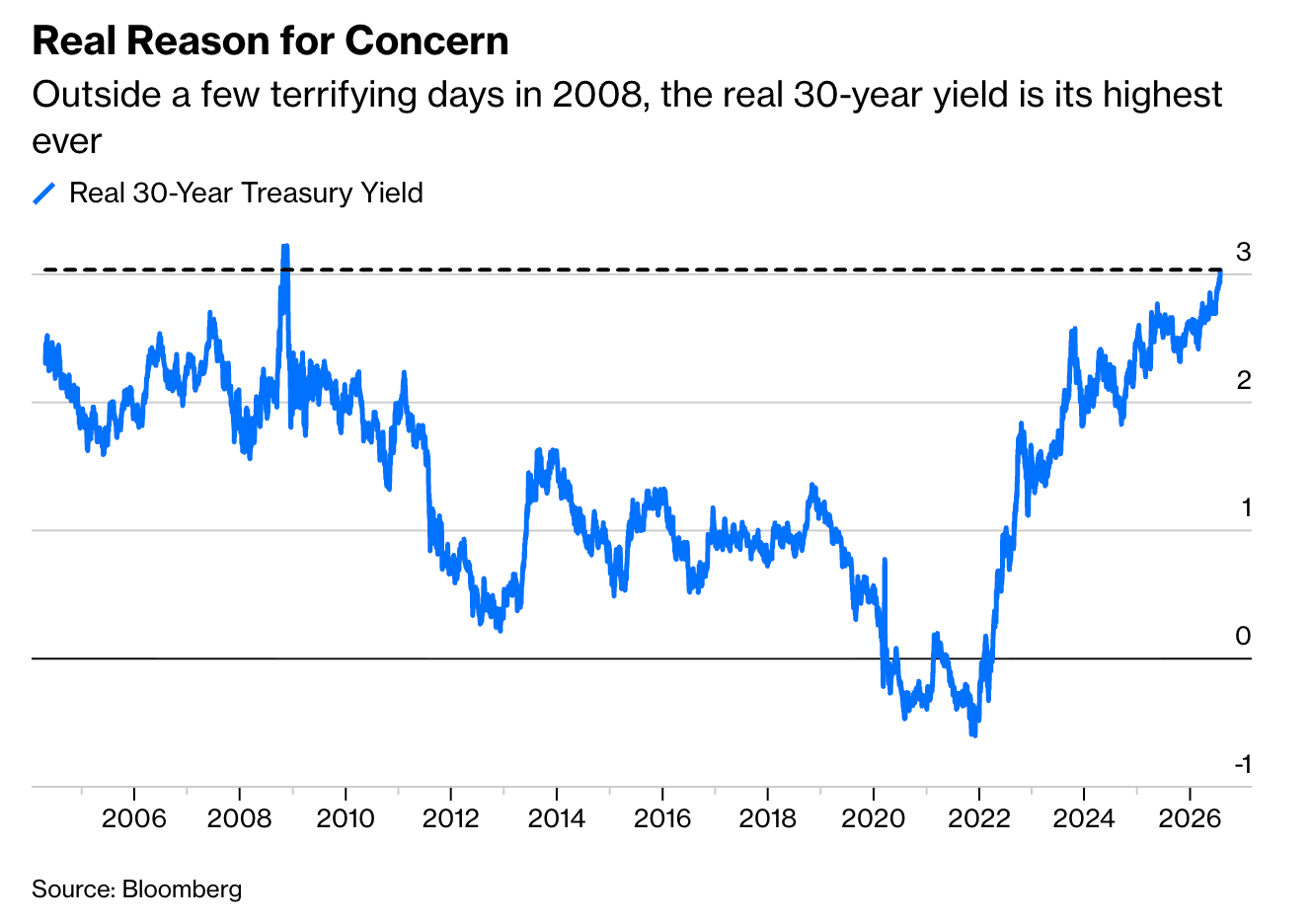
American inflation kept the Federal Reserve from cutting, several of its officials spent the summer arguing the next move should be a hike, and the thirty-year Treasury bond paid 5.27%, a two-decade high.
Yen left for dollars because dollars still paid better, and a government elected on a promise to spend gave the yen sellers even more conviction. It meant import prices rose nearly 30% in yen terms, and producer prices more than doubled their pace inside a single quarter.
In essence, the currency’s weakness was manufacturing its own inflation.
By late July the slide had gone far enough to pull both governments into the market at once, the largest intervention in Japan’s history and the first that the US had joined in fifteen years.
Yet the accident never came.
Through the worst six months this market has seen in a generation, every auction found buyers, nobody sold in a fire sale, and the long end of trades on the JGB cleared at 4% session after session.
This step change meant that lenders had finally woken up to charge the real price to buy the long-dated Japanese Government Bonds.
For a better idea, look at who was buying thirty-year bonds at 4%.
In July, Meiji Yasuda, one of the four insurers nursing that $96bn wound, said it would double its purchases of government bonds this year to more than $12.7bn (¥2tn). Its head of asset management called 4% on thirty-year bonds “a perfect buying opportunity”.

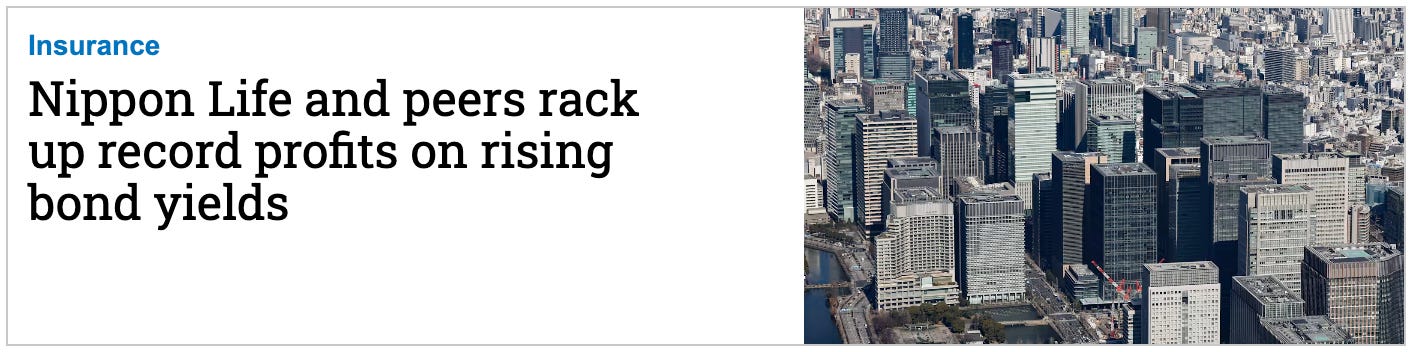
Nippon Life took a different approach. Instead of simply carrying the previous generation of low-coupon bonds as unrealised losses, it has been gradually selling them and crystallising the losses over time. Its Q2 results showed around $1.4 billion of realised losses from bond sales.
In effect, Nippon Life is choosing to take the pain upfront: churning out of its low-coupon legacy bond portfolio, accepting a one-time hit, and reinvesting into a structurally higher 4% yield environment that it expects to persist for decades.
A life insurer is built around promises that may not come due for thirty or forty years, so it needs assets with a similarly long duration.
For almost 20 years, the only yen assets offering that kind of duration paid nothing.
That was survivable in a deflationary world with the BOJ keeping the pressure on the yen, and it pushed Japanese life insurers abroad in search of yield, where they bought US and European bonds while paying heavily to hedge the currency.
That trade is no longer nearly as attractive. A hedged 10-year US Treasury, for example, now delivers less than 2% in yen after hedging costs. A 30-year JGB offers around 4%, with no currency hedge required.
The Bank of Japan is stepping back on a published schedule, with monthly JGB purchases falling from US$38bn (¥5.7tn) towards roughly US$13bn (¥2tn).
Commercial banks left the market years ago, their share of JGB holdings falling from 42% in 2013 to around 12% today.
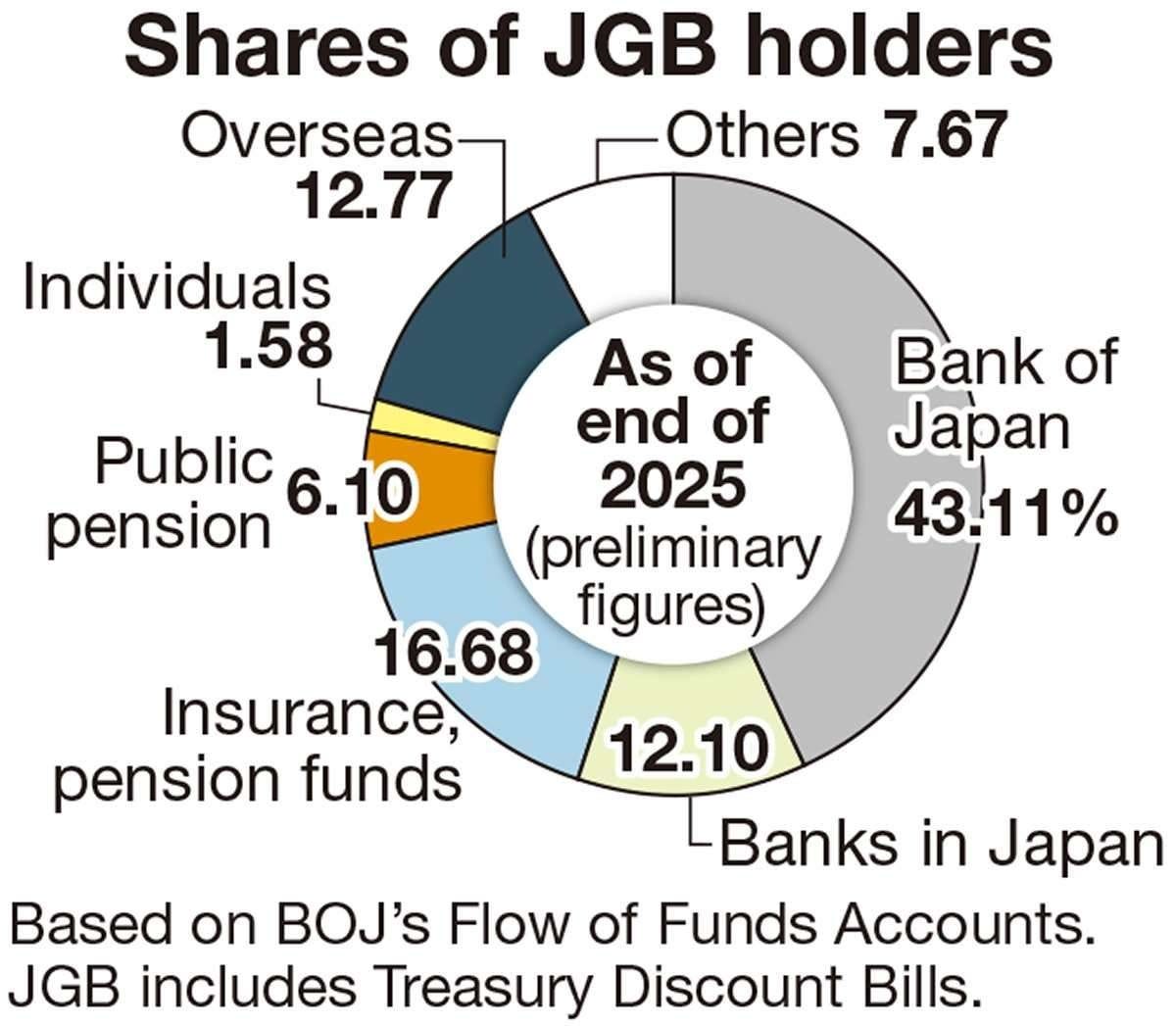
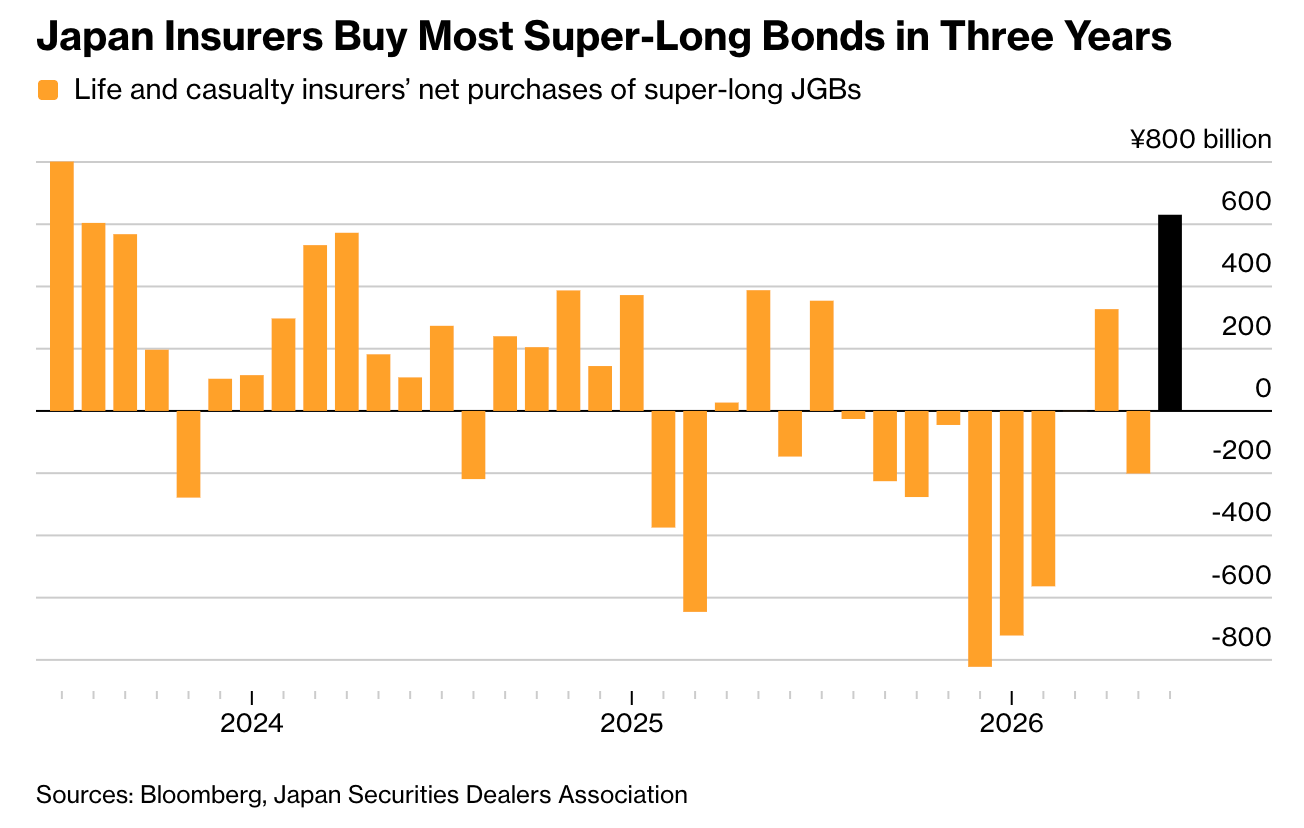
The buyer replacing the commercial banks and the BOJ itself is therefore Japan’s long-term savings complex: insurers bringing money home, alongside pension funds, which in May bought more government bonds than in any month in almost three years.
The seller is retreating too. After January’s rout, the Ministry of Finance cut this year’s super-long JGB issuance from $164bn (¥24.6tn) to $143bn (¥21.4tn), while next year’s plan is around $113bn (¥17tn), the lowest in seventeen years.
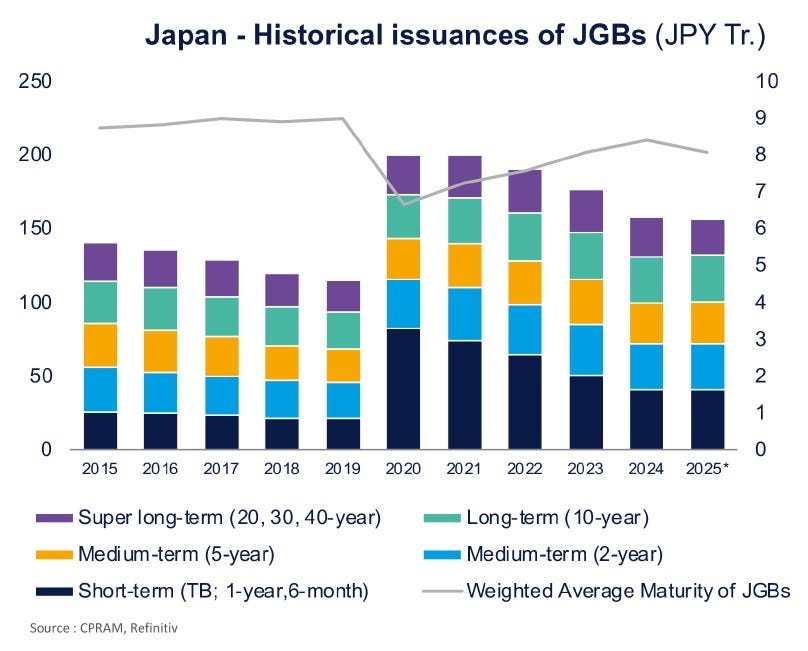
When the bond issuer is shrinking supply while rates are rising, the priorities have clearly shifted to keep the pension funds buying into the JGB and guaranteeing an increasing yield. This is why every bond auction over the summer found a buyer almost immediately.
And the price of bringing demand back is the widest domestic banking margin in a generation.
The policy rate has risen from zero to 1%, ordinary deposit rates have barely moved to around 0.2%, new mortgages are pricing near 3.5%, and lending is growing at more than 6% a year.
TL;DR - Japan is effectively paying its own insurers to absorb its bond market.
This is a domestic Japanese handover. So why is the US Treasury spending its own reserves defending another country’s currency?
Because Japan’s free money never stayed in Japan. Three decades of borrowing the yen at nothing, and buying dollars to make more money, is what made Japan the largest foreign creditor of the United States, worth $1.1 trillion of Treasuries.
As the popular saying goes, if the yen sneezes, the dollar gets sick.
Unwinding that trade in a panic would mean dumping a trillion dollars worth of Treasuries with the American 30Y bond already at 5.27%. The US market cannot absorb it in one go.
So Bessent bought time: Fed intervention to slow the slide, executed in euros to protect the strong dollar position, and a Fed facility (FIMA) being repurposed so Tokyo can borrow dollars against its Treasuries rather than sell them. They all have one job: keep the Treasuries off the market.
This Japan reflation thesis only holds while the 30-year JGB is rising for the right reasons.
If yields are climbing gradually because Japan’s inflation regime is being priced correctly, that is healthy.
Breakevens are already around 2%. Companies expect inflation even higher than that, and bond auctions are still being fully bought. For insurers and pension funds that keep reinvesting, higher yields just mean better returns on the next yen they invest.
The danger is a different kind of repricing: investors demanding a higher yield because they are beginning to doubt the state’s willingness to contain its deficits. That is when fiscal expansion and monetary accommodation become toxic.
When a government is trying to expand fiscal policy while keeping its bond market under control, it is being pulled in two directions. With Japan’s enormous debt pile, that tension can become dangerous very quickly.

That is what you need to watch out for.
A yen falling back towards ¥165, effectively giving back the gains from the BoJ and US Treasury intervention, would be a warning in itself.
But if that happens alongside another sharp rise in 30- and 40-year JGB yields, it would suggest that investors are starting to doubt whether the BoJ can keep long-term borrowing costs under control while fiscal policy remains loose.
The question is whether Japan is repricing its cost of capital, or losing control of it.
Stay invested, cautiously.
Disclaimer: Thoughts are my own and for informational purposes only. Not investment advice. Does not represent the views or strategies of Impactfull Partners. Not an offer to buy/sell securities or UCITS funds. May hold positions in mentioned assets. Do your own research.
No posts
Comments
Nothing yet. Say the first thing.
Sign in to join the conversation.