
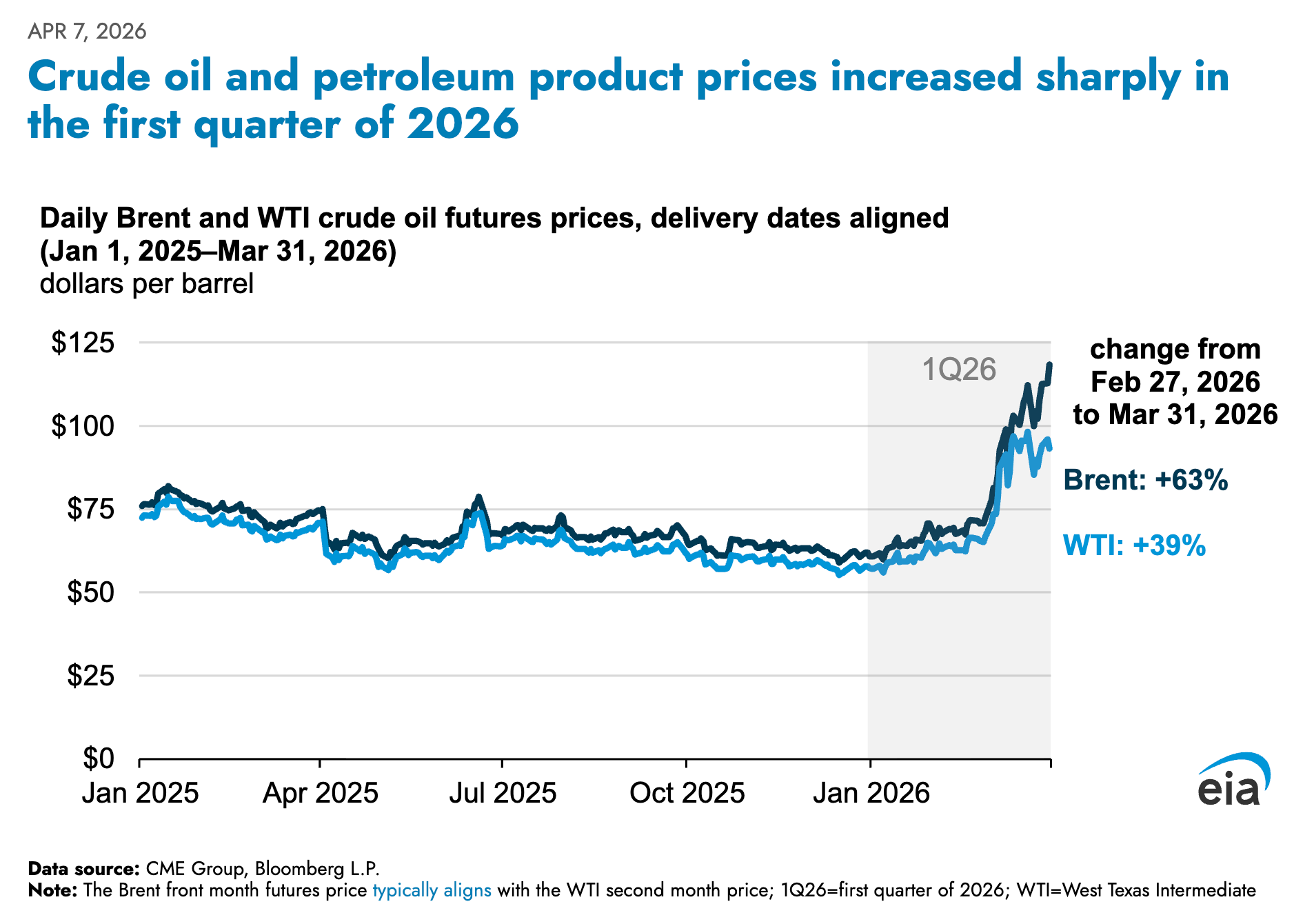
Headlines nowadays are focussed on talking about rising energy prices due to the Iran conflict. But if we take a step back and look at oil & gas beyond the commodity tag, a clearer picture emerges: one about energy security, and who controls the infrastructure behind it.
On one side, you have US natural gas giants operating out of the Permian Basin and oil and gas producers in Latin America ramping production at record pace. ExxonMobil’s Stabroek Block in Guyana went from zero to nearly 1 million barrels per day in three years, as we covered in a previous essay.
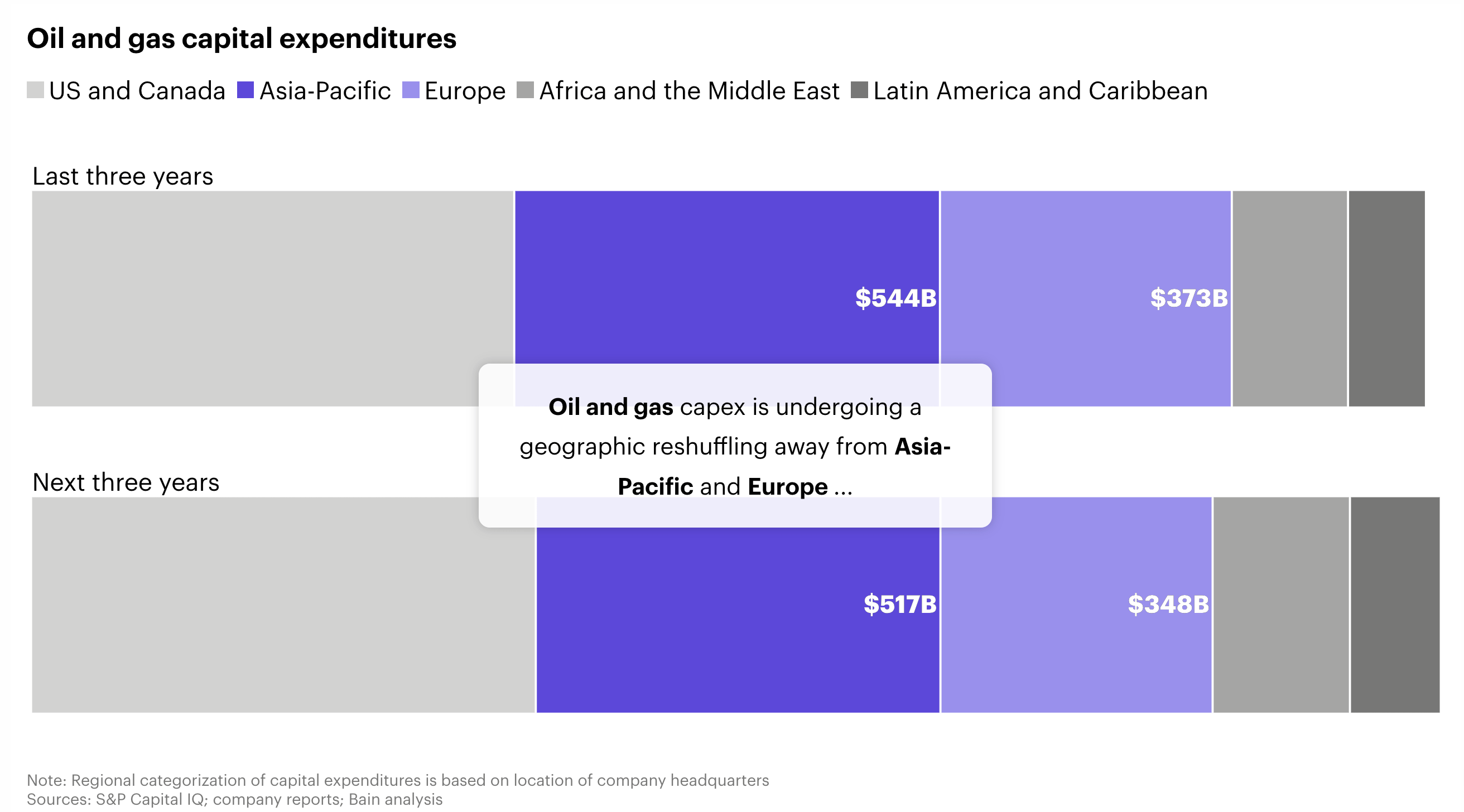
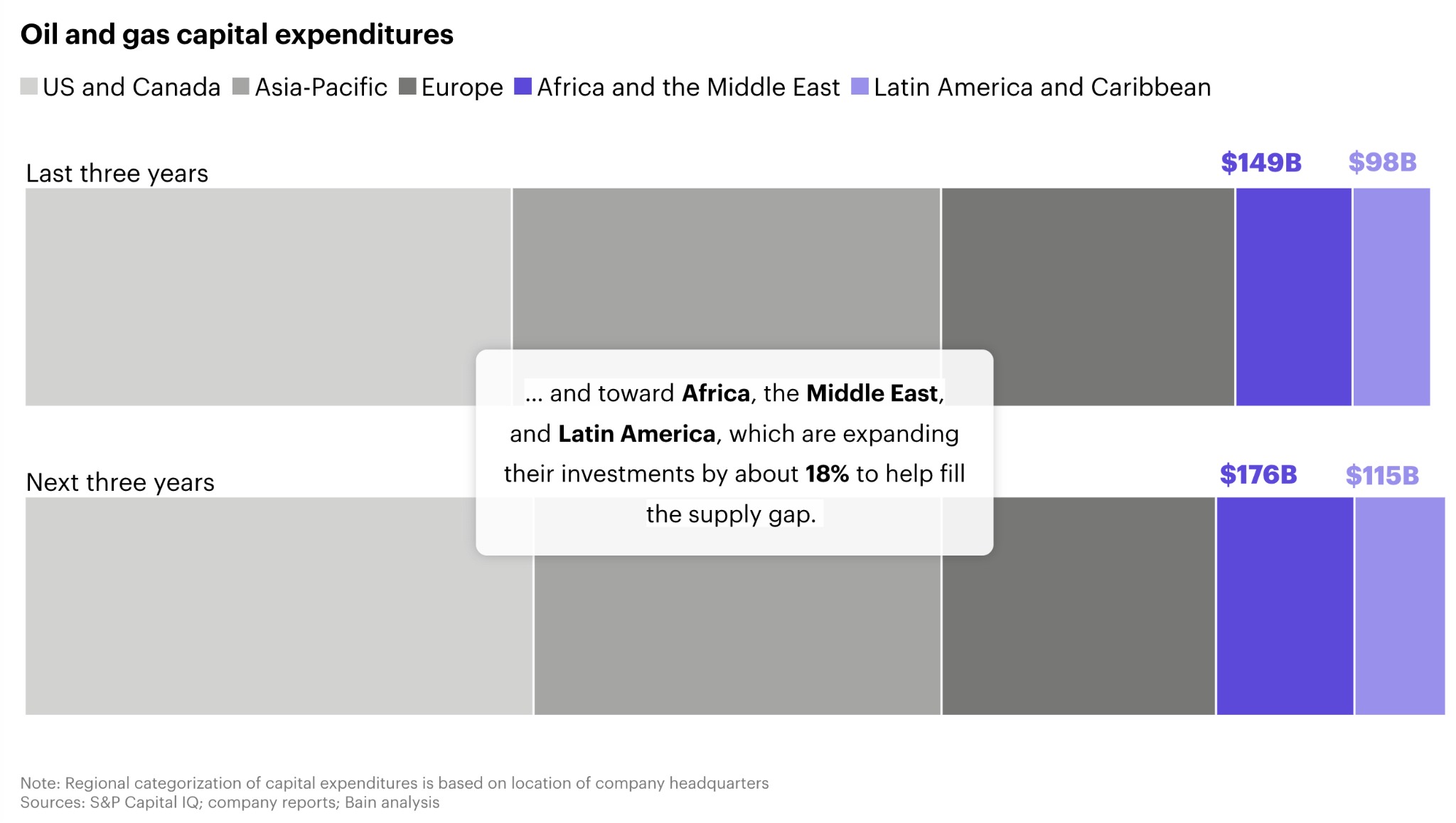
Latin America has been structurally underinvested for decades. That means the upside in production is enormous, and so is the opportunity for anyone helping to build the infrastructure to scale it.
On the other side, rising energy prices are creating a sandwich effect in economies like South Korea and Japan: consumers are being squeezed between higher costs at home and collapsing tourist spending from abroad keeping economies afloat.
In this Impactfull Weekly, we cover the second-order winners of the capital spending boom in oil and gas. US and Latin American companies servicing energy majors, building the pipes and materials to transport crude and natural gas, and the makers of specialised equipment: these are the picks and shovels of an infrastructure transformation happening far from the Strait of Hormuz. We also look at who loses as rising energy costs ripple through consumer demand in Asia.
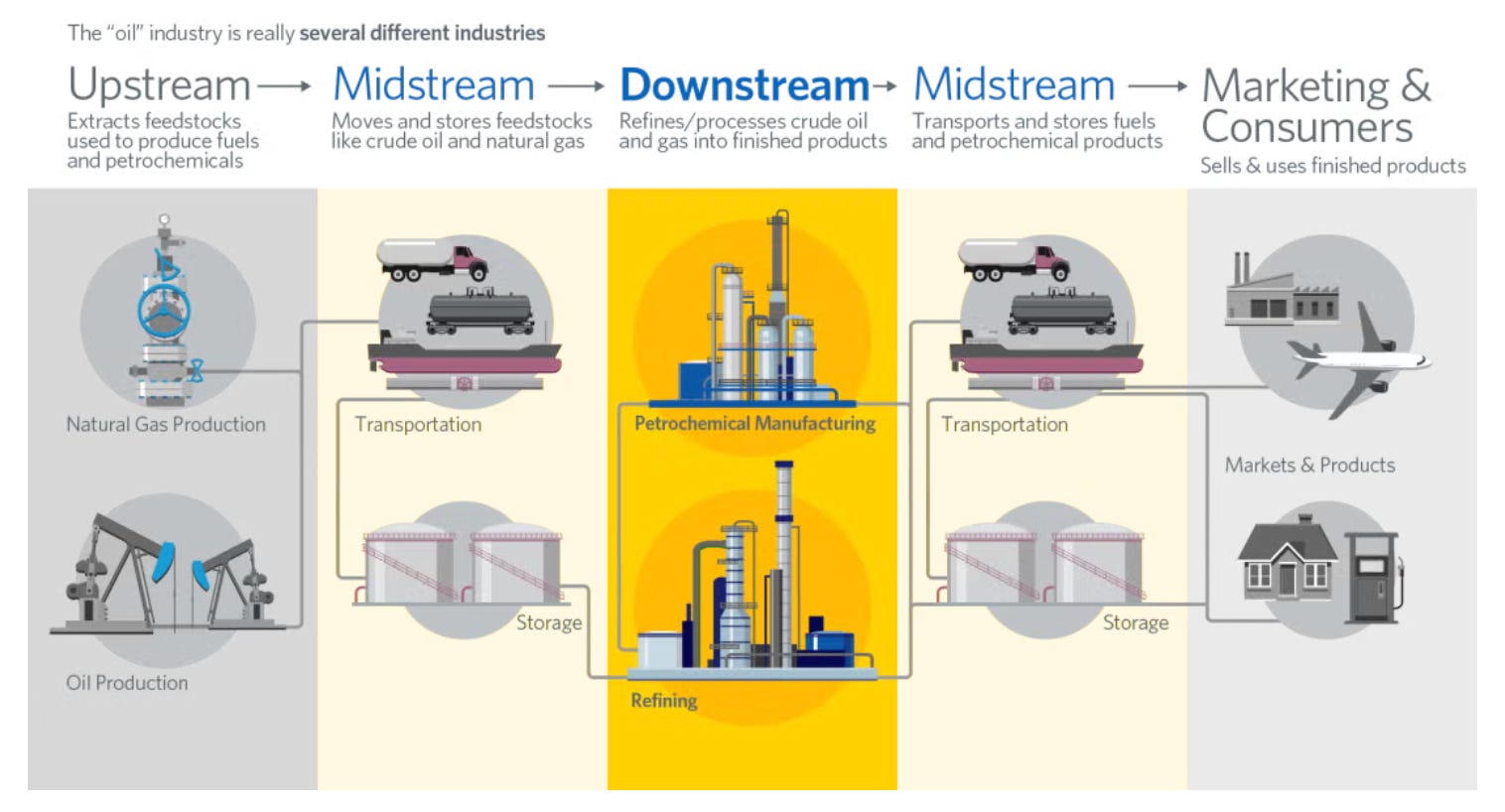
The winners of the cycle sit on two levels. First, the producers providing the energy outside the Gulf conflict zone. Second, and more importantly, the companies selling the equipment and services those producers need to actually get the oil & gas out of the ground and into export terminals.
In Impactfull Weekly #28 we spoke about how investors don’t own enough of Latin American stocks and in #29 We showed how the Hormuz disruption validates the diversification case for non-Gulf energy supply. In both scenarios we outlined (regime change or prolonged blockade), the same stocks would win.
Since then, the numbers have only gotten stronger.
Brazil’s oil production topped 4 million barrels per day at the end of 2025. Petrobras holds 12.1 billion barrels of proven reserves, the lowest-cost offshore barrels on the planet apart from Guyana.
Argentina’s unconventional production in Vaca Muerta hit 550,000 barrels per day in September 2025, a 30% increase compared to the previous year. Domestic companies have raised more than $4 billion in financing to support further development in the basin.
Guyana went from producing zero barrels to nearly 1 million barrels per day in three years through ExxonMobil’s Stabroek block. That is the fastest production ramp of any new crude oil basin in the history of offshore oil.
The producers (Vista Energy, Petrobras, YPF), are providing the molecules that make the case for a long-term systematic upswing, but the asymmetric upside sits in the picks and shovels instead.
In every resource boom in history, the companies that made the most consistent money in the long run were not the miners. They were the ones selling equipment to the miners. For example during the California gold rush, Levi Strauss and the merchants selling picks, shovels, and denim to prospective miners built fortunes that lasted generations, whereas the miners themselves mostly went broke within a generation.
The same logic applies here.
Latin America has been structurally underinvested for decades. The pipelines and compression stations, the drill pipes, the subsea equipment: none of it is in place yet. Every barrel that LatAm produces to replace the at-risk & volatile Gulf supply requires new infrastructure, and the companies selling that infrastructure are the clearest beneficiaries of this cycle.
We break them down into three categories.
Halliburton (HAL) and SLB are the two companies that consistently show up when any basin needs to be developed or rehabilitated. We briefly covered both of them in a previous essay on Venezuela as the “fixers” who would be hired to rebuild PDVSA’s rusted infrastructure.
The same logic now applies across the entirety of LatAm.
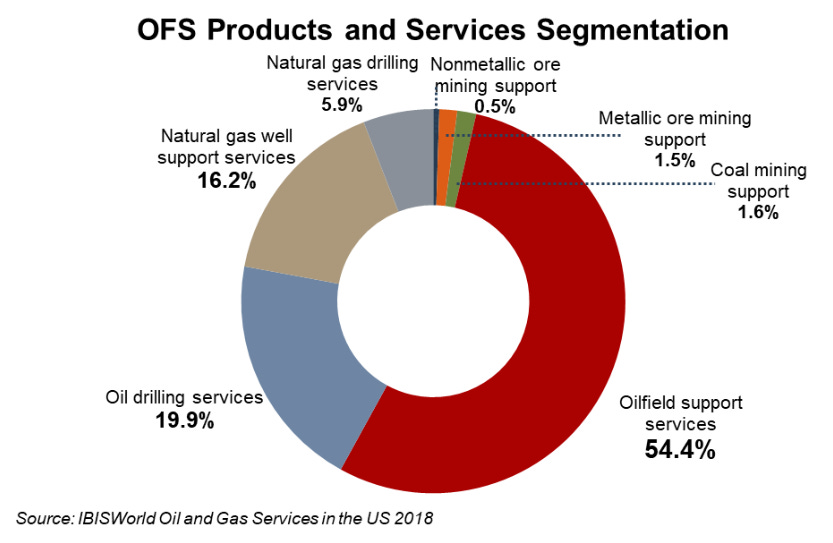
Halliburton’s Latin American revenue was $1.07 billion for Q4 2025, a 7% quarter-on-quarter increase. Growth across the region has been driven by well construction, wire line services, and completion tool sales. International revenue now contributes over 60% of Halliburton’s total, up from previous cycles where North America dominated.
SLB’s Latin American operations showed that their Brazil operations were one of the bigger drivers of growth in the market, alongside increased offshore activity in Guyana and robust hydraulic fracturing activity in Argentina. This comes in contrast to a significant reduction in land activity, reducing sales in Mexico.
The company’s collaborative contract model (where SLB shares in the efficiency gains it creates for producers), is particularly suited to LatAm’s unconventional development, where reducing cost per barrel is the difference between a viable export business and a stranded asset that needs political will to rescue.
Think of these companies as the general contractors you hire before anything else happens. You cannot have an oil well drilled, completed, or connected to a pipeline without their involvement.

Tenaris and Vallourec are the two companies that dominate the market for OCTG (oil country tubular goods, the steel pipes used in drilling and completing oil and gas wells). If you drill a well in Vaca Muerta, the pipe almost certainly comes from one of these two.
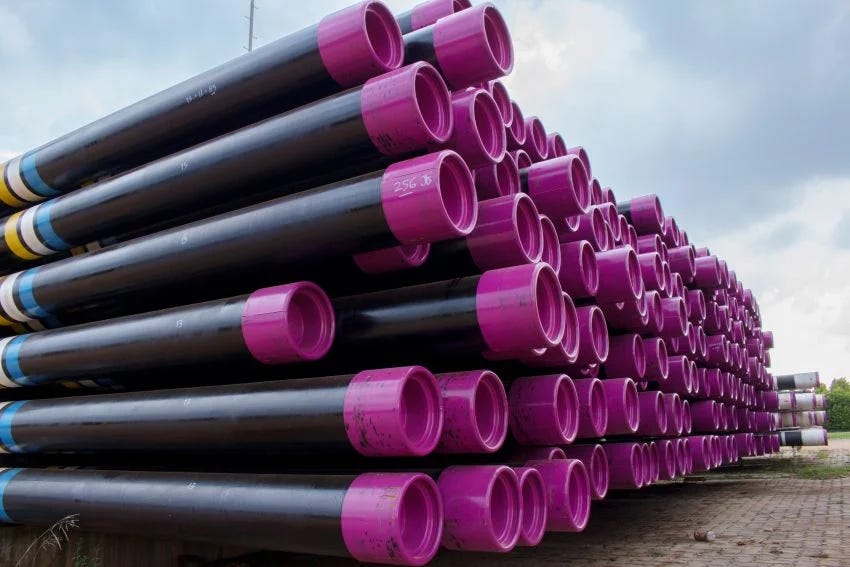
Tenaris has invested more than $240 million in Vaca Muerta services since 2020. It is now the third-largest provider of hydraulic fracturing (fracking) services in the Argentine market and is building a new service center in Vista Alegre to support the basin’s growth. The company expects offshore revenues in the first half of 2026 to exceed the second half of 2025 and is projecting $50 million in Venezuela revenue in 2026 as international operators begin obtaining licenses.
Vallourec, the French premium oil and gas tubes specialist, occupies the same structural position between them. Tenaris and Vallourec form a near-duopoly position for high-spec drill pipe and casing in Latin American deepwater markets. Every well drilled in pre-salt Brazil or Vaca Muerta, Argentina needs their product. Any volume growth in LatAm upstream players (energy companies drilling wells & fracking) translates directly into revenue growth for these two names.
Service companies are general contractors. Pipe makers provide the skeleton of the complex supply chain, but there is a layer of specialised equipment without which oil and gas physically cannot move from underground to a tanker.
There are four types of companies that we will talk about that sit in this layer, and all of them are currently selling into a LatAm build-out that is only beginning.
Gas compression:
Natural gas needs compressors that pressurise gas so that it can travel hundreds of kilometers from a wellhead to an export terminal. In essence, if you don’t have a compressor, you cannot have any gas being exported.
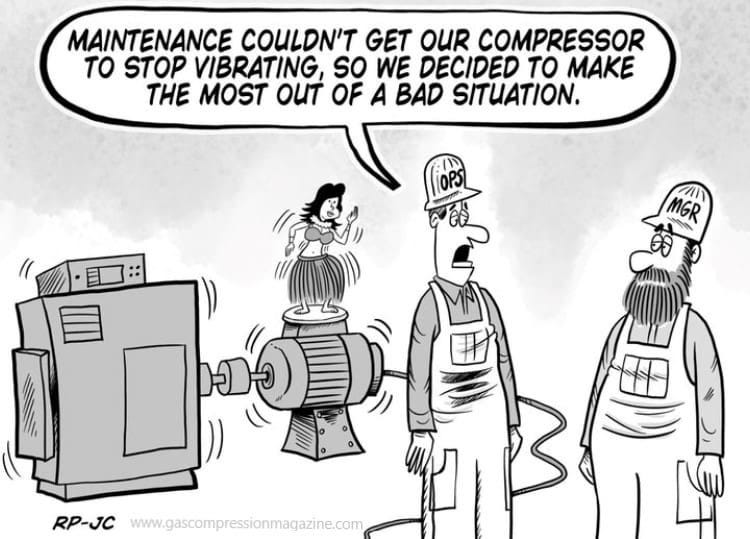
Archrock (AROC) is the largest independent provider in the US, running over 5,300 units at 95% utilization for 11 straight quarters. The structural tailwind here is that US LNG export capacity is set to add 14 billion cubic feet per day through 2030, and every cubic foot needs compression before it is exported.
Valves:
Valves are like the traffic lights of an energy system, where every pipeline junction, every wellhead, every processing plant needs reliable valves to control and shut off the flow of oil or gas.
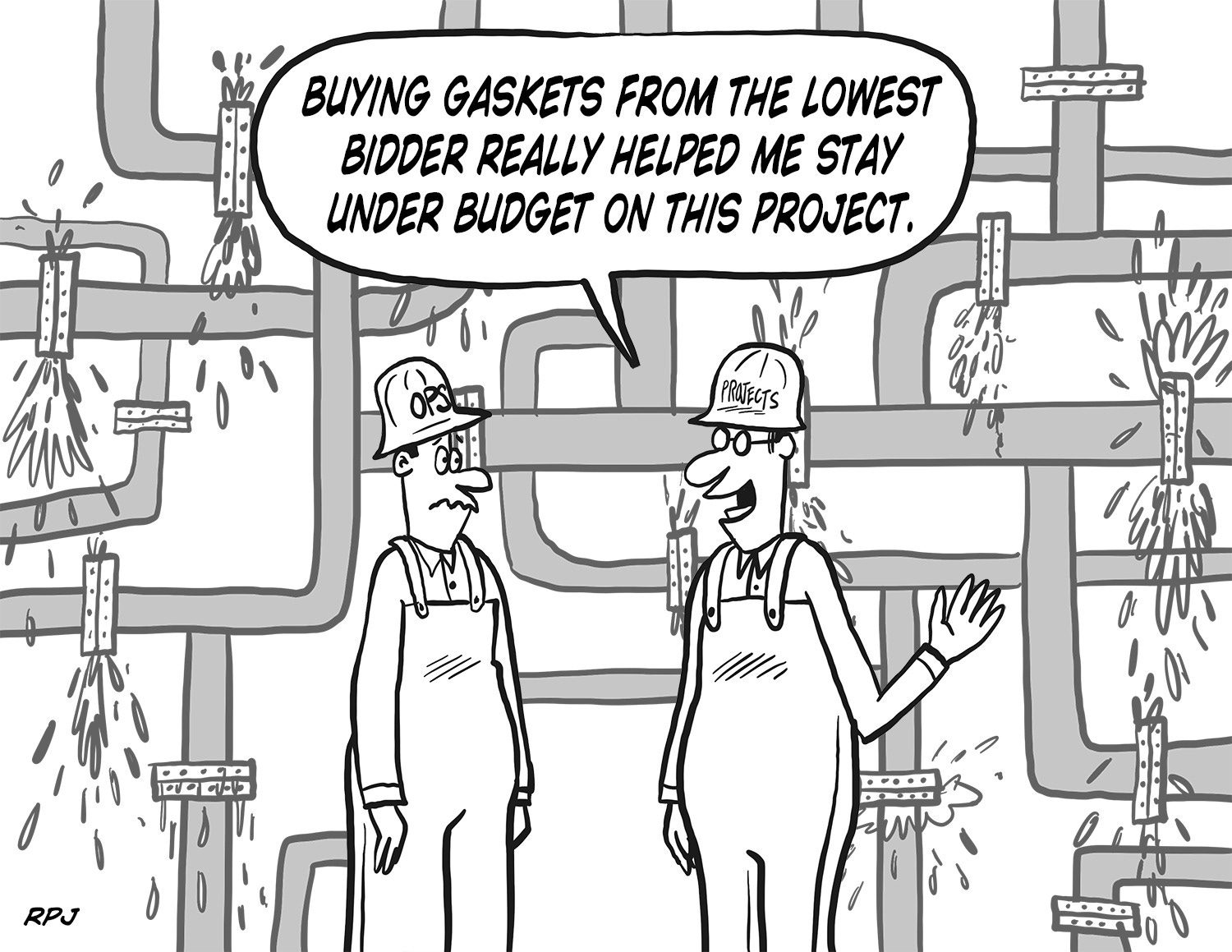
To give you some context, a single deepwater oil & gas platform contains thousands of them, where each of them is engineered for specific pressures and chemical conditions. The two biggest companies here are Emerson Electric (EMR) and FlowServe (FLS). Both of them generate over 40% of their revenue from aftermarket maintenance, which is a recurring income stream that keeps paying even when new projects slow down.
Floating offshore production:
In Brazil’s pre-salt fields, the water is too deep for fixed platforms, sometimes as deep as 2,000 meters. Instead, these oil and gas energy operators use FPSOs (floating factories that sit on the ocean surface) that receive oil from wells on the seabed, process it on board, and offload it onto tankers.

SBM Offshore (SBMO.AS) builds and operates them, and Technip FMC (FTI) builds the underwater equipment connecting them to the wells below.
Surveying and seismic testing:
Before you start drilling for an oil field, you need to know where to drill. Seismic companies like TGS use sound waves to map underground rock formations, and they are the very first link in the capital spending chain. When a new oil & gas block, say in Guyana or Suriname, enters development, the seismic crews arrive before anyone else.

In a nutshell, what we’re saying here is that the “boring” infrastructure players are posting record numbers at record speed because of this demand coming into Latin America. And this wave of capital expenditure heading into this region is unprecedented, especially since the previous oil shock in the 70s.
The companies providing the equipment that upgrades Latin American energy exports in quantity & quality are going to be the winners in the near future.
To understand who actually loses from the disruption in the Strait of Hormuz, as the truce and discussions between the US and Iran lead nowhere for the time being, you need to follow jet fuel.
Over the past two months, jet fuel prices have nearly doubled. IATA data shows that jet fuel reached up to $197 per barrel in the week ending March 20, up from below $100 two months ago.
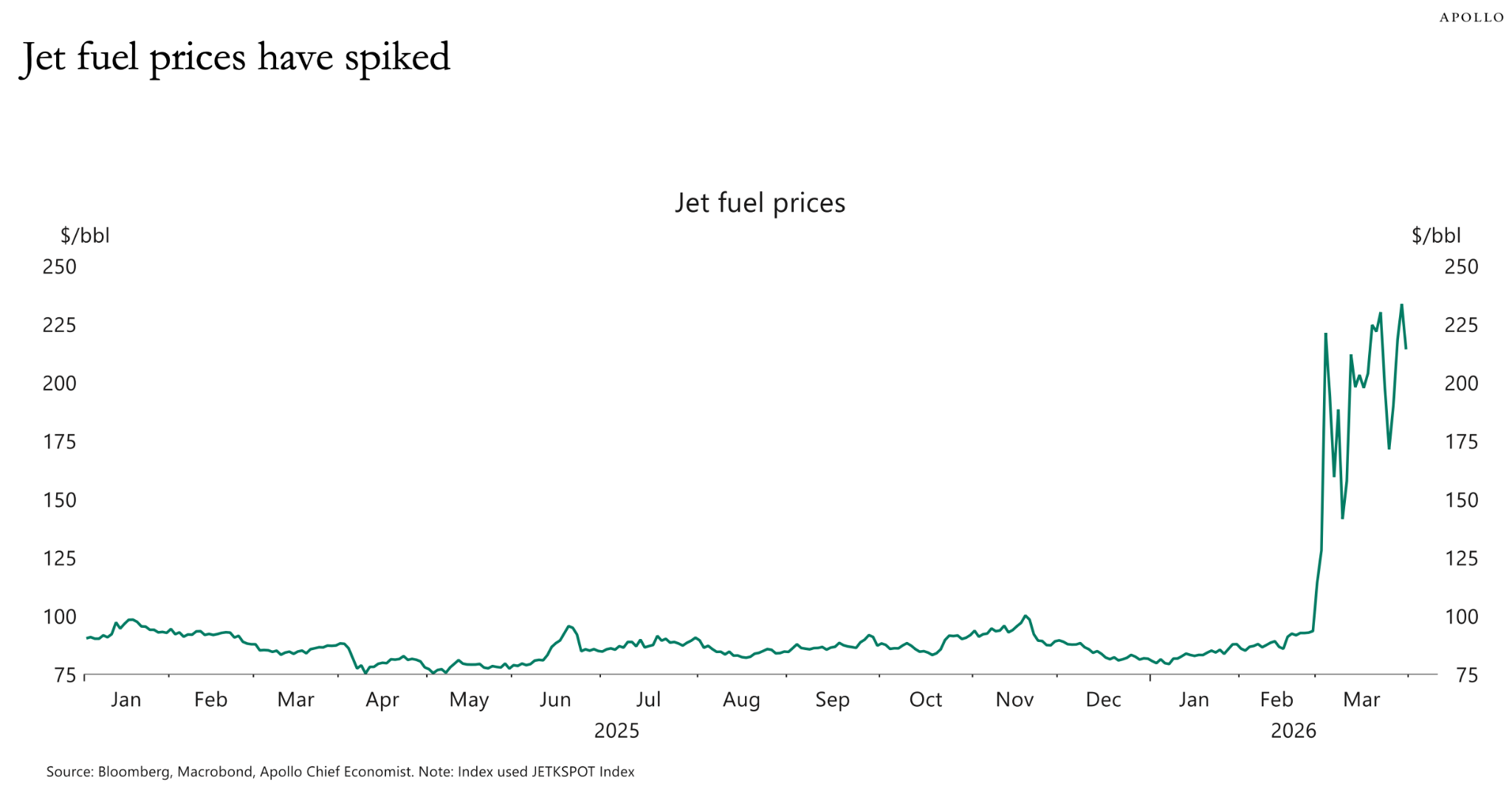
The thing you need to understand is that for airlines, jet fuel typically represents 20 to 25% of operating costs. Airlines, with it famously being a low-margin business, if those cost percentages grow to 45%, as it is now for some carriers, it becomes impossible to maintain air traffic routes between long-haul destinations.
Across Asia, airlines are cutting capacity at a speed that we haven’t seen since the pandemic. Most budget airlines have started limiting the routes they offer to their passengers.
For example, in India, Indigo (the country’s largest domestic and international carrier) implemented fuel surcharges in two phases, adding up to $120 per one-way ticket on routes leading to and from the Gulf.
Fewer flights means fewer tourists, and fewer tourists mean less spending in the cities that depend on them. This is where the falling domino hits luxury and consumer discretionary spending.
Last week, the three most important luxury companies in the world reported their Q1 results. The picture that they painted is the clearest leading indicator of a broad consumer demand problem in net energy importing economies.
LVMH revenue was down 6%, and their fashion and leather goods division, which generates nearly 80% of the group’s operating profit, fell 2%. This trend is visible across the Middle East and Asia.
Kering reported a 6% drop in revenue, despite the new CEO Luca De Meo coming in and announcing a sweeping restructuring plan. It was not enough to keep the macro waves from crashing in. Retail sales fell 3% in Japan, 4% in Asia Pacific, 7% in Western Europe, and 8% in the rest of the world, the Middle East itself declined 11%.
Even Hermès, the most antifragile luxury brand, grew much slower than consensus expected it to. The Asia-Pacific division grew only 2.2%, versus the 8% growth recorded in Q4 2025.

So what, you might ask?
Even if LVMH, Kering and Hermès are seeing their Asia growth collapse, then the demand destruction that we were speaking about is indeed real.
What this tells us is that consumer demand in net energy importing economies (particularly Seoul & Tokyo) is being hit from two directions simultaneously: fewer tourists because jet fuel makes travel outrageously expensive, and weaker local spending because domestic energy prices are squeezing aspirational household budgets.
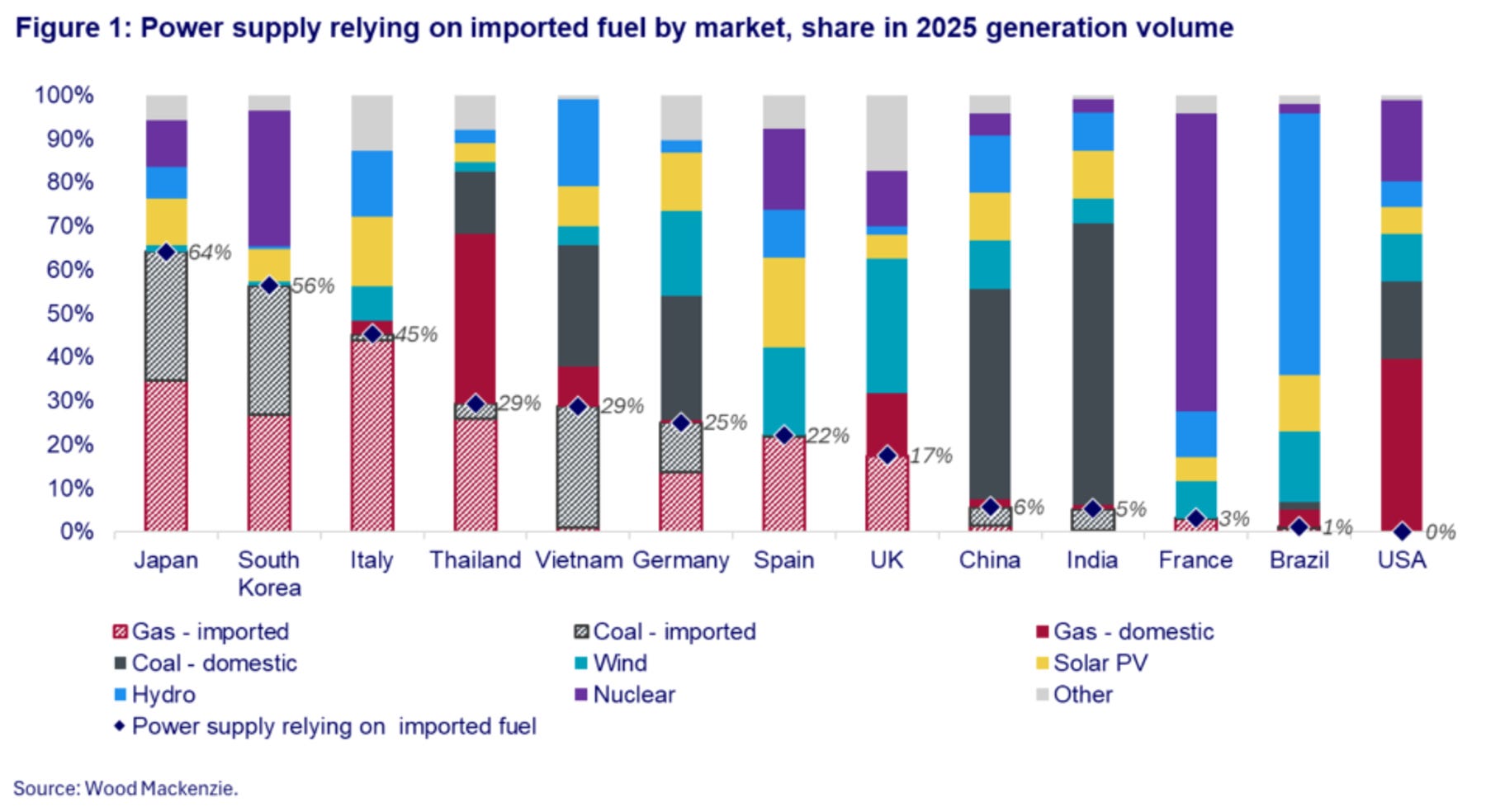
This means that the full effects on tourism bookings, airline route planning, and consumer confidence have not yet completely filtered through to the second half of 2026 earnings.
That’s when the real damage will be seen.
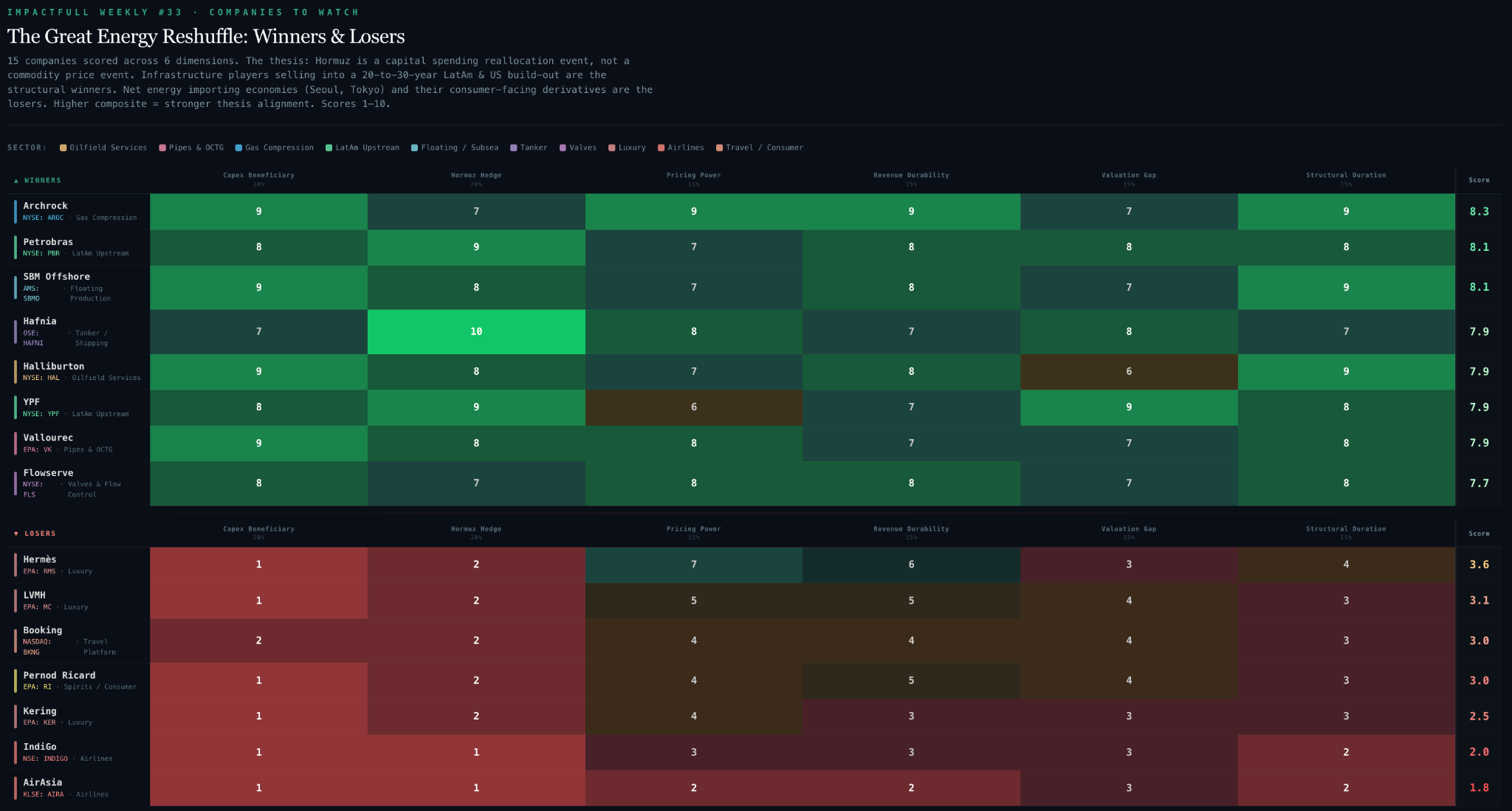
Energy Reshuffle Winners & Losers

We think that the market is pricing the Strait of Hormuz disruption as a commodity price event, but our point of view is that it is a capital spending reallocation event. This distinction is going to be key in reaping the rewards in the near future.
Oil prices will eventually normalise, whether it be through a ceasefire, a regime change in Iran, or just because supply from the Americas (Latin America & USA) fills the gap.
The infrastructure that is being built to support that supply does not get unwound or destroyed when the price of Brent crude comes back down.
The pipelines, compression stations, FPSOs, and export terminals are 20 to 30-year-long assets. The companies selling the equipment and services into this build out are selling into a structural shift about where the world sources its energy, and that shift was already underway even before the Iran conflict.
However, on the losing side, we find everything that is a derivative of rising energy prices.
When Hermès slows down from an 8% to a 2% growth in Asia, and its stock drops 13% in one session, this is the market sending a message that consumer spending power in net energy importing countries is getting thinner than what analysts would like to believe.
The full damage from the doubling in jet fuel prices, airline capacity cuts, and weaker tourism is yet to be seen in the second semester. Time will tell.
Stay invested, cautiously.
Disclaimer: Thoughts are my own and for informational purposes only. Not investment advice. Does not represent the views or strategies of Impactfull Partners. Not an offer to buy/sell securities or UCITS funds. May hold positions in mentioned assets. Do your own research.
No posts
Comments
Nothing yet. Say the first thing.
Sign in to join the conversation.