
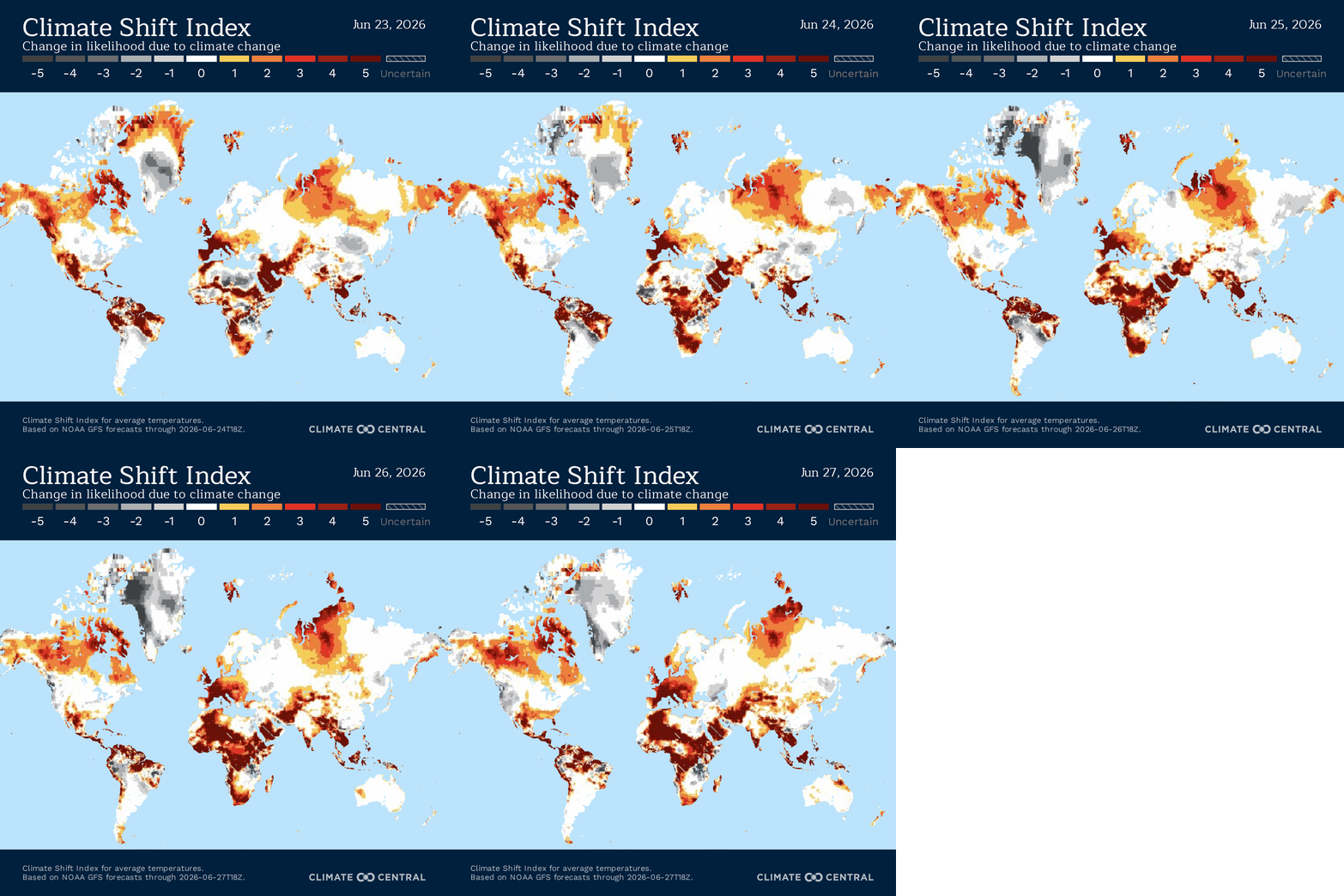
Climate Central’s Climate Shift Index highlights unusual heat across several featured regions, where climate pressures are reaching food systems, health risks, cultural practices, and public budgets. In Somalia and Somaliland, drought and hunger are making it harder to sustain progress against female genital mutilation, while in Ethiopia, hotter days, wetter stretches, and changing cold-season conditions are reshaping the practical risks faced by pilgrims traveling to sacred sites. In Hong Kong, warmer and saltier spring waters are threatening a centuries-old oyster harvest, and in Mongolia, repeated dzud events are pushing herding families toward insecure urban settlements. In northern China, rising temperatures are projected to cut into winter wheat yields later this century, while Kosovo, Serbia, Bulgaria, and Romania face climate-linked risks to health, public finances, and tourism.1
Need to read this in a language other than English? Try OpenL (up to 1,500 characters) or Google Translate—both offer free translations into 100+ languages.
In Somalia and Somaliland, drought and hunger can strengthen the economic pressures that keep girls at risk of female genital mutilation — Female genital mutilation, or FGM, refers to the partial or total removal of external female genitalia for non-medical reasons. In Somalia, where the practice remains widespread, many girls and women undergo Type III FGM, also known as infibulation, which narrows the vaginal opening by cutting and repositioning the labia, with or without removal of the clitoris. The practice can cause lasting physical and psychological harm, including pain during menstruation, sex, and childbirth. Climate shocks do not cause FGM on their own. They make it harder to end the practice in communities where cutting is tied to marriageability, chastity, family honor, social acceptance, and bride wealth. Droughts, floods, crop failures, livestock deaths, and water shortages reduce household income and deepen food insecurity, especially in agriculturally dependent communities. When animals die, harvests fail, and aid programs shrink, families may feel more pressure to protect the marriage prospects they believe will secure a daughter’s future and bring income into the household.
That pressure can weaken progress made through laws, health education, school programs, community dialogues, and youth activism. Young women in Sanaag, Somaliland, described wanting FGM to end while seeing climate stress and conflict make older gender norms more forceful again. As resources become scarce, some elders and community members argue more openly for a return to practices they associate with purity, marriage, and women’s traditional roles. Similar risks have been documented in parts of Kenya. Researchers have linked climate-related hardship to increases in FGM and child marriage in Garissa and Isiolo, where bride wealth traditions exist. During the COVID-19 pandemic, school closures created conditions in which some families used girls’ time at home to carry out FGM, while gender-based violence reports increased sharply. Programs in Kismayo and Baidoa have responded through community outreach, psychosocial support, services for survivors, and dialogues with traditional elders, religious leaders, women, men, boys, and girls. Ending FGM in these settings depends on more than banning the practice. Families also need food security, schooling, livelihoods, social protection, and climate adaptation support, because the same crises that destroy crops and livestock can make harmful practices harder to abandon.
Ethiopia’s major pilgrimages are becoming a climate concern because the journey itself exposes people to cold nights, hot days, rain, and difficult roads — Each year, pilgrims travel to Dirre Sheikh Hussein, an important Islamic shrine in the Oromia region, and to Lalibela, home to the rock-hewn churches visited during Genna, Ethiopian Christmas, and Timket. These journeys can be long and physically demanding. Travel distances of more than 1,000 kilometers are common, and some pilgrims still travel on foot, by mule, by donkey, or by camel, crossing highlands, mountain routes, lowlands, and remote roads before reaching the shrine. The Bega season from December to February is generally cooler and drier, which helps make pilgrimage possible, but it still brings conditions that shape the journey. Pilgrims crossing highland areas can face cold nights, frost, and strong winds, making sleep and shelter harder. Around Debre Birhan, on the route from Addis Ababa toward Lalibela, sub-zero nights have been recorded in the recent past, and the study found that some highland areas can see many nights below 5°C during the pilgrimage season. Travel toward Dirre Sheikh Hussein brings a different kind of exposure. The shrine sits in a warmer, semi-arid lowland area, where average maximum temperatures during the pilgrimage season are around 29°C and spells above 30°C can make walking exhausting without shade, rest, or enough water.
Rain can complicate the journey even during the dry season. Around Addis Ababa, the study found roughly 50 millimeters of rainfall during the 77-day pilgrimage period, with rain sometimes falling on consecutive days. Wet conditions can make paths and roads muddy, slow travel on foot or by vehicle, and increase the risk of landslides along mountain routes. Climate pressures can also affect whether people are able to make the journey at all. The number of pilgrims to Dirre Sheikh Hussein has fluctuated over time, with recent declines linked to conflict, drought, and reduced livestock and crop production. Years with higher agricultural income can leave families and communities with more money for transport, hospitality, and other pilgrimage costs, while drought and poor harvests can narrow that space. Mid-century projections under a high-emissions scenario point to warmer nights, fewer cold conditions in the highlands, hotter travel around Dirre Sheikh Hussein, and more rainy days in parts of the southern highlands. Those changes point to a planning gap for religious tourism and pilgrimage routes. Shelters, shade, water access, road conditions, and accommodation near sacred sites will need to account for hotter days, wetter stretches, and the fact that pilgrims experience weather during specific journeys, not as long-term seasonal averages.
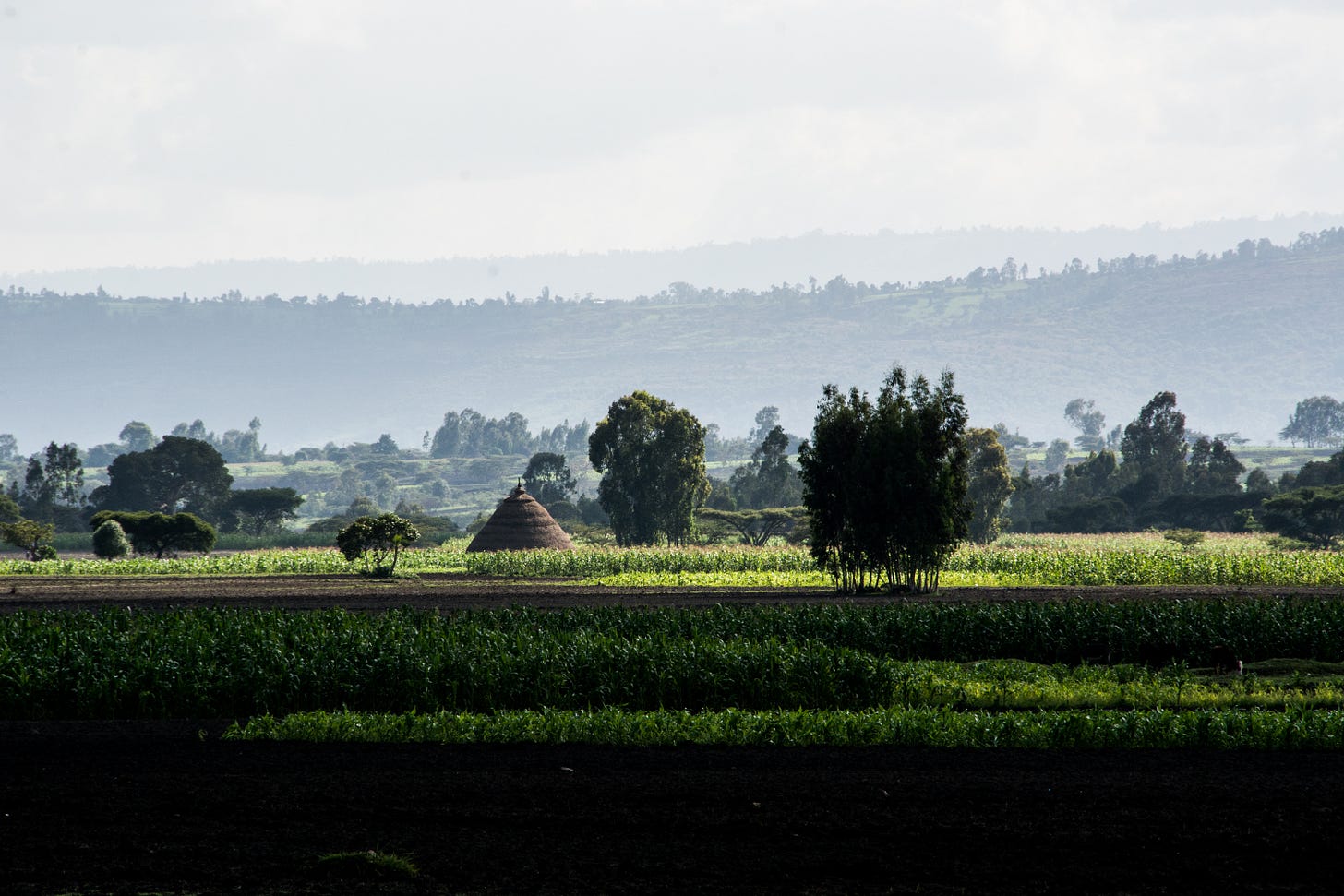
Debre Birhan landscape, Ethiopia by ILRI via flickr (CC BY-NC-ND 2.0)
Hotter, saltier water is putting pressure on one of Hong Kong’s oldest food traditions — In Lau Fau Shan, a fishing village on Deep Bay, oyster farming has been passed through families for generations, with records of the local oyster trade dating back to the 1600s. The oysters grown there, Crassostrea hongkongensis, are especially suited to the lower-salinity waters of the Pearl River Estuary and are prized locally as fresh seafood, dried oysters, and semi-dried “golden oysters” eaten during Lunar New Year. That seasonal cycle is becoming harder to rely on. Warmer winters have delayed the start of harvest from autumn into January or February, cutting what had been a roughly six-month season to about three months. Spring is now especially dangerous. Higher temperatures arrive earlier, while the rainy season often comes later, leaving Deep Bay warmer and saltier than the oysters can easily tolerate. Combined with low oxygen linked to pollution and cloudy spring conditions, that stress can leave oysters more vulnerable to disease. Farmers who once saw severe die-offs about once a decade now report losses of more than 70% every three to six years, while smaller annual die-offs can kill more than 30% of oysters.
Scientists and farmers are trying to keep the industry alive by breeding oysters that can survive the conditions now emerging in Deep Bay. Researchers at the University of Hong Kong have developed a genomic selection approach that uses oyster DNA and survival data to identify parent strains more likely to tolerate high salinity and other stresses. Their “Hong Kong Super Oyster” is still being tested by local growers, but early lab results suggest a survival rate of 30–40% under high-salinity conditions, compared with less than 10% for regular Hong Kong oysters. The goal is to eventually raise survival closer to 80%. That would not solve every threat facing Lau Fau Shan. Severe typhoons have already destroyed rafts and crops, including back-to-back losses from Super Typhoons Hato and Mangkhut in 2017 and 2018, and the number of oyster-farming households has fallen from about 300 at the industry’s peak to around 70 today. A proposed development project could also reshape the village’s future. But the super oyster work gives farmers one concrete tool against the warmer, saltier spring waters that are now killing oysters before they can be harvested.
Mongolia’s herders are being pushed out of pastoral life as climate pressure makes it harder to keep animals alive, repay debts and stay on the land — The country has warmed about three times faster than the global average, and families who rely on livestock are facing harsher winters, drought, desertification, shrinking water sources, and degraded pasture. Dzud events, the extreme winters that often follow dry summers, have become especially destructive. The 2024–2025 dzud killed more than 8 million livestock, about 12.5% of the national herd, and severely affected more than 180,000 herder households. For a herding family, losing animals can mean losing income, food security, transport, savings, and the practical basis of a way of life built over generations. Many families spend more to feed animals through longer and harsher winters while earning less from wool and meat, leaving them in debt and with few forms of support. Mining has fragmented pastureland and dried water sources, further limiting the seasonal movement that herding depends on. The pressure also reaches into family life. Some parents split households so one adult can take the children to school in a town or city while another stays behind with the remaining animals. Others move first to a regional center, then to a provincial town, and eventually to Ulaanbaatar as the chance of returning to herding becomes more remote. By the time many families leave, migration is not a hopeful move toward better work. It is what remains after animals, income, schooling options, and rural safety nets have been worn down at the same time.
Life in the city often brings a different kind of insecurity. Many former herders settle in Ulaanbaatar’s ger districts, where housing is informal, services are limited, and registration problems can block access to schools, healthcare, welfare, and formal work. Families may carry water from communal wells, share makeshift electricity lines, use outdoor pit latrines that freeze in winter, and burn coal to heat poorly insulated homes. Some rely on relatives or informal networks for housing, childcare, paperwork, and low-paid work, while others remain socially and economically unsettled long after they have physically arrived. The move can solve one problem while creating others. Families may be closer to schools and services, but farther from the animals, land, and seasonal movement that structured their lives.
Winter wheat in the North China Plain may see a short-term boost from wetter growing seasons, but rising temperatures become the dominant threat later this century — A 2025 study using the DSSAT crop model and CMIP6 climate data found that winter wheat yields in the region increase by about 1.5% in the 2030s, when projected precipitation gains are large enough to offset some warming-related losses. By the 2080s, that balance changes. Continued warming drives a projected 13.4% yield decline, with higher temperatures shortening growth stages and increasing stress during sensitive parts of crop development. The risk is not the same across farming systems. Irrigated wheat is more strongly shaped by temperature trends, while rainfed wheat is more sensitive to changes in precipitation. That distinction affects what adaptation can realistically do. Delaying planting dates and improving field fertility each reduce some of the projected heat-related losses, while added irrigation provides a much smaller benefit. The finding is especially important for a region that produces a major share of China’s winter wheat and already faces pressure on water resources. In this case, climate adaptation is not just a matter of adding more water. The stronger options are closer to the crop itself, including better timing, soil fertility, heat-tolerant varieties, and management choices that help wheat avoid the most damaging heat during growth.
Wheat’s importance in China comes from a long history of adaptation, processing, and regional food culture. Archaeological and genetic evidence reviewed in a history of wheat utilization in China indicates that wheat was domesticated in West Asia and reached China between about 2500 and 2000 BCE. It did not become important everywhere at once. In northwest China, wheat replaced millet as a primary crop in the Hexi Corridor around 1700 BCE and became a staple in parts of Xinjiang around the same period. In the Central Plains, it remained secondary for much longer, even after it was introduced during the Xia period and widely cultivated during the Shang. Its adoption as a staple came during the Han Dynasty, helped by population pressure, food shortages, irrigation development, and new processing technologies. Early wheat was boiled whole, which made it harder to eat, but stone mills allowed grain to be ground into flour and opened the way for a much wider range of wheat foods. Later advances in fermentation further expanded wheat-based cuisine, and after the Song Dynasty, wheat became a favored staple in northern China. Projected losses in the North China Plain put pressure on more than a commodity crop. They affect a grain tied to regional diets, food processing traditions, and the long history of how northern China came to eat.
Climate change is worsening health risks in Kosovo through heat, air pollution, allergies, flooding, and shifting disease conditions — Kosovo’s National Institute of Public Health found that climate change is worsening respiratory and cardiovascular conditions, which are already among the most common causes of death for people over 65. Children are one of the clearest risk groups. Pediatric clinicians reported more children seeking care for heat-related illness during the past summer, with heatwaves raising the risk of dehydration, heatstroke, and stress on vital organs such as the heart and kidneys. Children are more exposed because their immune and physical systems are still developing, they breathe faster, and they often spend more time outdoors. Poor air quality adds another pathway, especially for asthma, bronchitis, pneumonia, and other respiratory problems. Allergy specialists in Kosovo also link warming, drought, wind, and reduced rainfall to longer pollen seasons, wider allergen distribution, and worsening allergic asthma and rhinitis. These risks fall harder on children, older adults, pregnant women, people with chronic diseases, and people living with limited access to healthcare, clean water, healthy food, and safe housing.
Flooding is adding another health pathway as Kosovo’s rainfall patterns change. Meteorologists expect overall precipitation to decline by the end of the century, while short, intense rainfall events become more common, increasing the risk of flash floods and river overflows. Warmer air can hold more water vapor, allowing heavier bursts of rain when storms form. Kosovo has already seen damaging floods in municipalities along the White Drin River, including January 2023 flooding in Skenderaj that caused unexpected damage in an area not previously known for that scale of flooding. Warmer winters are also bringing more rain instead of snow, with intense winter rainfall reported in January 2021 and 2023. These changes reach beyond immediate flood damage. They affect agriculture through drought, heavy rain, hailstorms, and plant disease, and they can affect energy supply when summer river drying reduces hydropower production. Kosovo passed a Climate Change Law in December 2023, but environmental officials describe the country’s response as partial, with air pollution, heatwaves, floods, droughts, and food safety risks still requiring stronger monitoring and public-health planning.
Kosovo’s health risks are also shaped by gaps in climate-health education. A 2025 survey of pre-service teachers at the University of Prishtina found that nearly all respondents thought climate change was already affecting health, but many still held misconceptions about its causes and health pathways. About 64% incorrectly attributed climate change to natural causes or to equal natural and human causes, and more than 94% were unaware of the scientific consensus on human-caused climate change. Respondents most often recognized illness from reduced air quality as a climate-related health outcome, while mental health conditions, violence, conflict, and displacement were much less likely to be identified. Kosovo has the youngest population in Europe, with 55% of residents under 30. Those gaps affect how climate risks are taught, understood, and acted on by the next generation.
Climate extremes have cost Serbia more than 10 billion euros since 2001, and the recorded losses are dominated by drought — Serbia’s Ministry of Environmental Protection reported to the United Nations that climate extremes caused more than 10 billion euros in damage from 2001 to 2024. Preliminary estimates from the 2025 drought would bring the total to at least 12 billion euros over 25 years, or nearly half a billion euros per year on average. Droughts made up about 70% of the official estimate, with major events in 2003, 2007, 2012, 2017, 2021, 2022, and 2024. The 2012 drought alone accounted for 17% of the total recorded damage, while the May 2014 floods accounted for 16%. Serbia’s losses are not confined to rare disasters that destroy visible infrastructure. A large share comes from repeated agricultural damage, including production that was expected but never realized because heat and dry conditions reduced output. The official total also includes damage to existing property such as buildings, vehicles, and infrastructure, but it leaves out many indirect losses that are harder to count. Climate extremes can disrupt supply chains, traffic, water supply, electricity systems, and human health, while some direct damages are never registered. The official total captures only part of the damage.
Several years of losses were large relative to Serbia’s economy. In nine of the 24 years examined, annual climate damages exceeded 1% of GDP. In 2012 and 2014, damages reached 5.36% and 5.21% of GDP. Four of the last five years in the official record also crossed 1%, including 2021, 2022, and 2024, although the incomplete damage record makes it difficult to read that as a clean trend. Even with that caution, the repeated scale of losses points to a country already exposed to costly extremes and not fully prepared for the damage ahead. Serbia sits in a region with pronounced climate change, while its adaptation capacity remains limited. Better damage records would make adaptation decisions more useful, because missing or underestimated losses make it harder to see which sectors are being hit, where public money is needed, and whether new policies are reducing risk.
Bulgaria’s low public debt does not shield it from climate-driven fiscal risk. The country had a debt-to-GDP ratio of 23.8% in 2024, the lowest in the EU, but climate impacts are already adding costs through heat, water stress, and flooding. In 2024, people in Bulgaria experienced 12 heatwave days, 10 of which would not have been expected without climate change, and potential labor hours lost to heat exposure were 65% higher than in the 1990s. In summer 2025, more than 260,000 people struggled to access clean water during one of the country’s most serious recent water crises, and floods later triggered states of emergency in several towns. Modeling by the New Economics Foundation, a UK think tank, estimates that under current policies, climate impacts could push Bulgaria's debt 49 percentage points above a climate-agnostic baseline by 2050 and 171 percentage points above it by 2070. Early mitigation and adequate adaptation would reduce that long-term debt burden substantially, especially if paired with wider global climate action.
Romania’s tourism economy is exposed to climate change because many of its destinations depend directly on weather, snow, water, forests, and seasonal comfort — A national study of tourism vulnerability examined more than 1,000 local administrative units that recorded overnight stays and assessed exposure, sensitivity, and adaptive capacity for both summer and winter tourism. The most vulnerable summer destinations included Băile Herculane, Sinaia, Călimănești, Moneasa, Geoagiu, Predeal, Băile Govora, Băile Olănești, Băile Tușnad, Vatra Dornei, Slănic-Moldova, Azuga, Mangalia, Constanța, Bucharest, and Brașov. These places are not vulnerable for the same reason. Black Sea destinations such as Constanța, Mangalia, Eforie, Năvodari, and Agigea carry high sensitivity because they concentrate beaches, accommodation, road access, and visitor demand. Mountain and spa resorts carry risk through their dependence on snow, forests, mineral waters, bioclimatic resources, and seasonal tourism flows. In winter, the highest vulnerability was concentrated in major mountain and ski destinations such as Sinaia, Predeal, Brașov, Azuga, and Vatra Dornei, along with spa towns including Băile Herculane and Călimănești. Snow reliability is one of the clearer climate pathways. Several localities with ski slopes have seen decreases in the number of days with at least 30 centimeters of snow cover, with some places losing around seven snow-cover days per decade over 1981 to 2020. Warmer-season risks are also spreading. The duration of warm spells is increasing across almost all of Romania, while heavy precipitation days are becoming more frequent in many areas and can raise flood and flash-flood risks for tourists. For destinations built around beaches, ski slopes, spa landscapes, or mountain recreation, climate change is already altering the conditions that make the tourism season work.
Have you noticed the impacts of climate change in your community? Whether it’s unusual weather patterns or disruptions in local ecosystems, we’d love to hear your thoughts. Share your experiences or observations in the comments below and join the conversation!
At Global Climate Dispatch, we strive to provide accurate and equitable coverage of climate change and its impacts. If you come across anything that seems inaccurate or concerning, please don’t hesitate to let us know. Your insights help us ensure that the information we share remains truthful, balanced, and relevant to all.
Locations featured are chosen based on data from Climate Central’s Climate Shift Index map. Some graphics used may also come from Climate Central’s Climate Shift Index map. Any original analyses contained in this blog or any views expressed in this blog, unless otherwise noted, are solely the expression of its authors and are unaffiliated with Climate Central or any other entity or person referenced within.
Comments
Nothing yet. Say the first thing.
Sign in to join the conversation.