
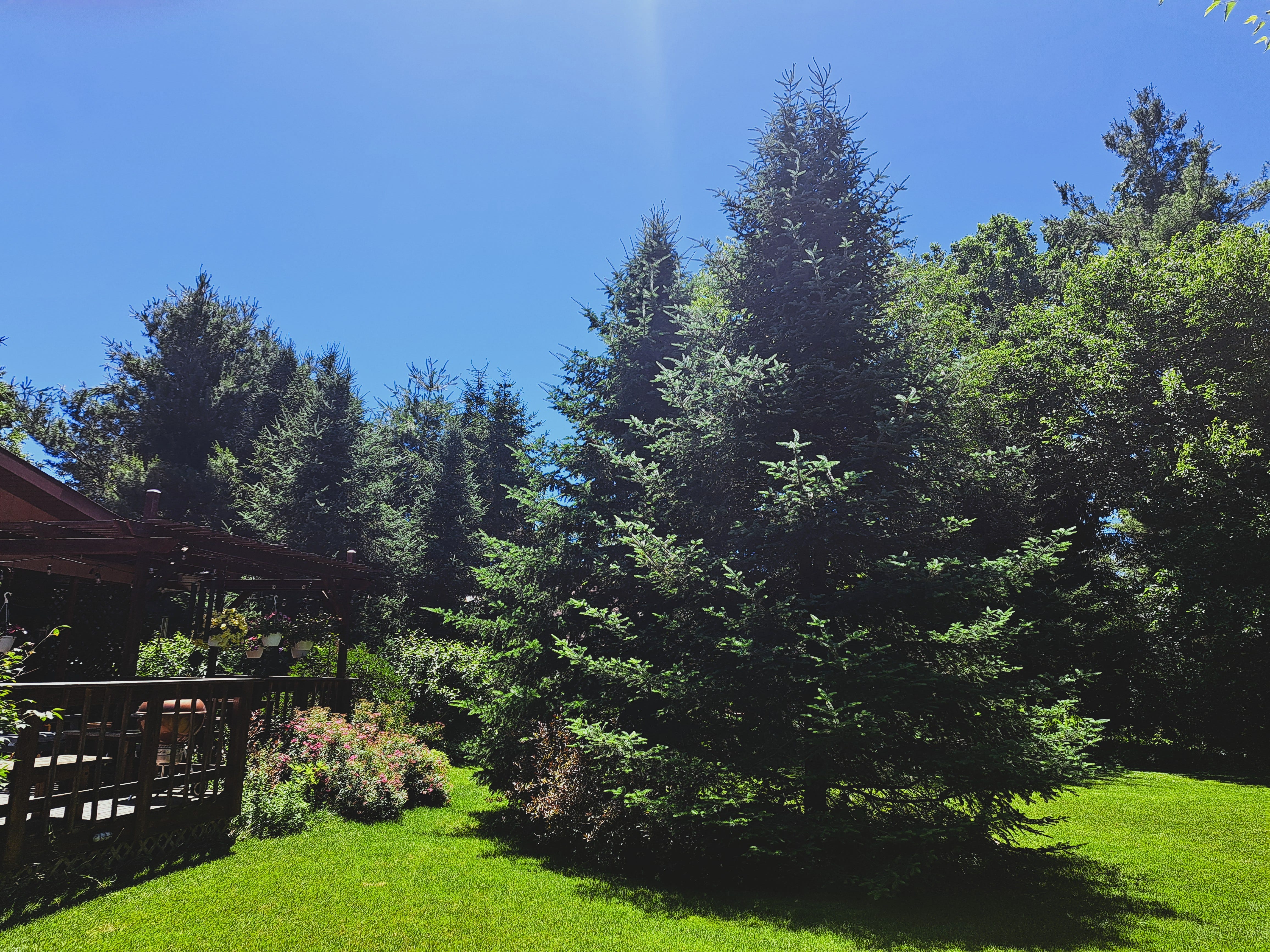
According to my neighbors, my house is built on a former Christmas tree farm. The house is surrounded by pines, spruces, and firs. While I doubt that most of them are older than I am, some in the neighborhood may be. But though they might not be as old as I am, they were here in this place before me and will almost certainly be here long after I am gone.
So who owns the land, me or the trees?
Actually, the answer is neither. The earth is the LORD’s and the fullness thereof. I am a temporary steward of this piece of land, and it is my responsibility to take care of it, recognizing as Calvin said that it is my responsibility to pass it on in as good or better condition than I received it. (Yes, he said that in his commentary on Genesis 2:15. So much for Calvin as responsible for ecological exploitation.)
But what about the trees?
Tolkien had a thing for trees. It turns out that he may have been onto more than he realized.
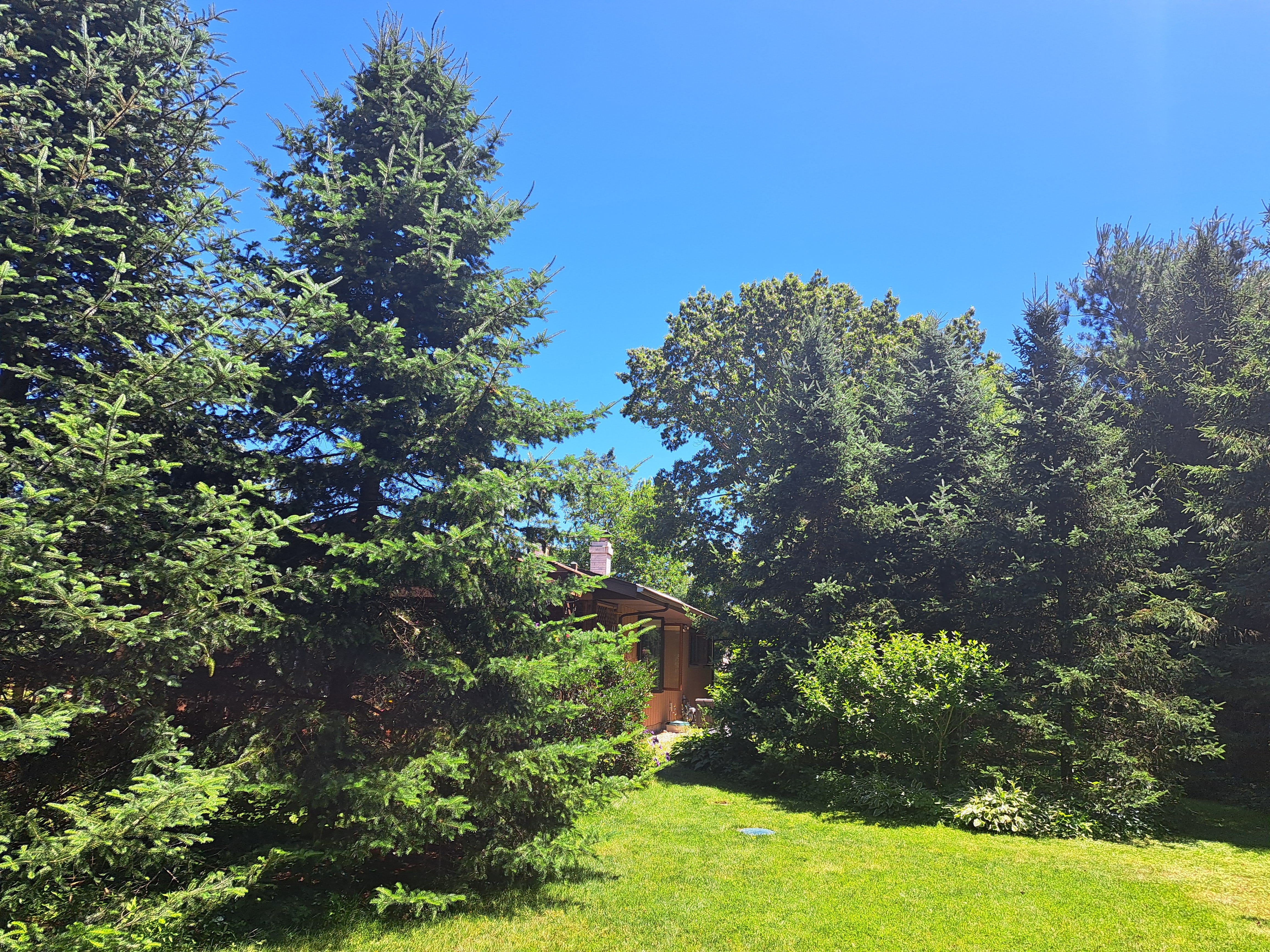
In 2015, German forester Peter Wohlleben published The Hidden Life of Trees: What They Feel, How They Communicate—Discoveries from a Secret World, in which he explained some of what science has discovered about trees.
Trees talk to each other.
Actually, trees have a lot to say. They communicate through scents released through the air and through electrical impulses and chemicals transmitted tree to tree through their roots, sometimes through direct contact but often via mushrooms as intermediaries. Trees also respond to light, sound, and touch and register pain when injured or pruned.
Trees take care of each other. They feed each other, passing on nutrients to the young—often specifically to those genetically related to them—and to sick or injured trees. A grove will actually help regulate the climate to encourage the health of the trees. They thus take care of their families and each other. Some species even pass on nutrients to trees of different species. Much of this happens through mushrooms, which of course take their cut of the nutrients. Trees are even known to work selectively with mushrooms and to punish mushrooms who cheat and keep more than they should by sharing fewer nutrients with them.
Trees also warn each other of trouble. Trees attacked by insects send chemical signals through the mushrooms and through the air to warn other trees, which then ramp up their defenses. When leaves are grazed, a tree could signal other trees to produce bitter compounds in the leaves, making them harder to digest and discouraging further grazing.
And when a tree is dying, it may send out large amounts of carbon into the soil to help other trees and plants before it dies. In this way, it provides for the young and the next generations.
The idea of trees talking to each other and taking care of each other sounds like something out of fantasy, but everything I just described has been documented, not only among trees but among some other plants as well.
And don’t even get me started on mushrooms. They are stranger and spookier than just about anything else on the planet.
Wohlleben concludes from all this that trees are social beings that have feelings, friendships and memories. His critics object that he is anthropomorphizing trees, attributing to them human characteristics that they don’t have.
But is this criticism fair?
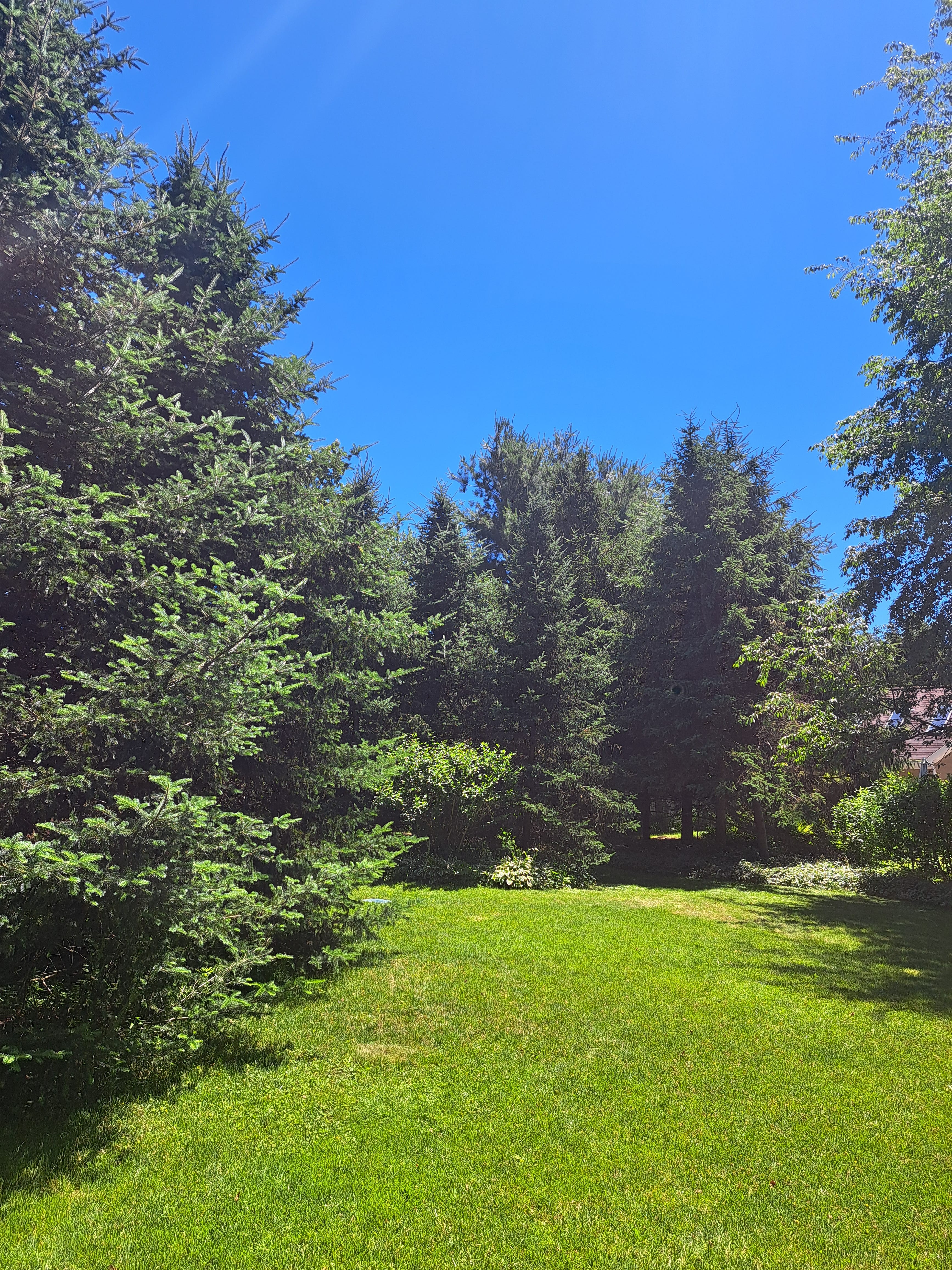
Trees certainly communicate with each other using a language of chemical signals and electrical impulses that is very different from human methods of communication; that does not mean it isn’t a kind of speech. They are clearly sending and receiving messages from each other, often with the mushrooms as an intermediary.
Trees show preferences for related trees much like we do with our own families, though some work altruistically in supporting other species of trees. They feed the young, care for the sick, and warn each other of danger.
In light of all this, isn’t it possible that trees have a kind of consciousness very different from our own but with elements and even motivations we can recognize?
Maybe there are a lot more kinds of consciousness in the world than we can see.
John 1 tells us that God created the world through the Logos, a word that we translate as “Word” but that implies much more than that. Logos is the root word for logic, pointing to divine reason. In Neo-Platonic philosophy, the logos is the creative principle through which the world was made. In Stoic philosophy, it is the law that governs the universe. John is telling us that the world is not an accident, that there is a mind that created and structured it. Further, Paul tells us in Colossians 1 that in Christ, the Logos, all things hold together.
If the Logos holds all things together, doesn’t that imply that everything that exists participates in some way and in some measure in divine reason?
Some Eastern Orthodox thinkers see this in terms of panentheism, in other words, that all things are in God and He penetrates all things through His uncreated energies. (This is different from other forms of panentheism which see the universe as the body of God; that version of panentheism is clearly off the table for Christians.) We cannot participate in God’s essence, which is transcendent and unknowable, but we do participate in His energies. Working from this idea, Maximus the Confessor posits logoi, divine principles, that exist within the Logos and that function like blueprints, giving each thing its identity and purpose. The question then is the extent that a kind of consciousness is part of the logoi or divine energies in the various created beings.
We know that animals communicate and many sustain long-term or permanent relations with each other. The same is true of birds. Some, like crows, are amazingly smart and can develop relationships with people. We know that ants, bees, and other insects communicate. We know that bees can recognize individual people. We also know that trees communicate with each other, as do other kinds of plants. Because they speak, this suggests to me that all these living things have a kind of consciousness.
But Scripture tells us the so-called inanimate world also speaks:
The heavens declare the glory of God,
and the sky above proclaims his handiwork.
Day to day pours out speech,
and night to night reveals knowledge.
There is no speech, nor are there words,
whose voice is not heard.
Their voice goes out through all the earth,
and their words to the end of the world. (Ps. 19:1-4a)
We are quick to dismiss this and similar passages that talk about the rivers and trees clapping their hands and the mountains singing as nothing more than poetic imagery. And no doubt there is some truth to that. But what is the imagery supposed to say to us if not that the Creation itself is alive and responds to God’s purposes?
We even see this in the Gospels: when Jesus speaks to the wind and the waves, they listen. If they were nothing more than moving air and water, how could they hear and respond to Him?
At this point, we are venturing perilously close to panpsychism, the idea that consciousness is at the foundation of reality and that all things have a form of consciousness appropriate to their place in the cosmic order. I don’t think we can go there—the only consciousness at the foundation of reality is the Logos. But I am beginning to suspect that more things in Creation participate in the Logos as the Living Word in ways that give them life and, yes, forms of consciousness so foreign to us as to be unrecognizable apart from deep study and imagination.
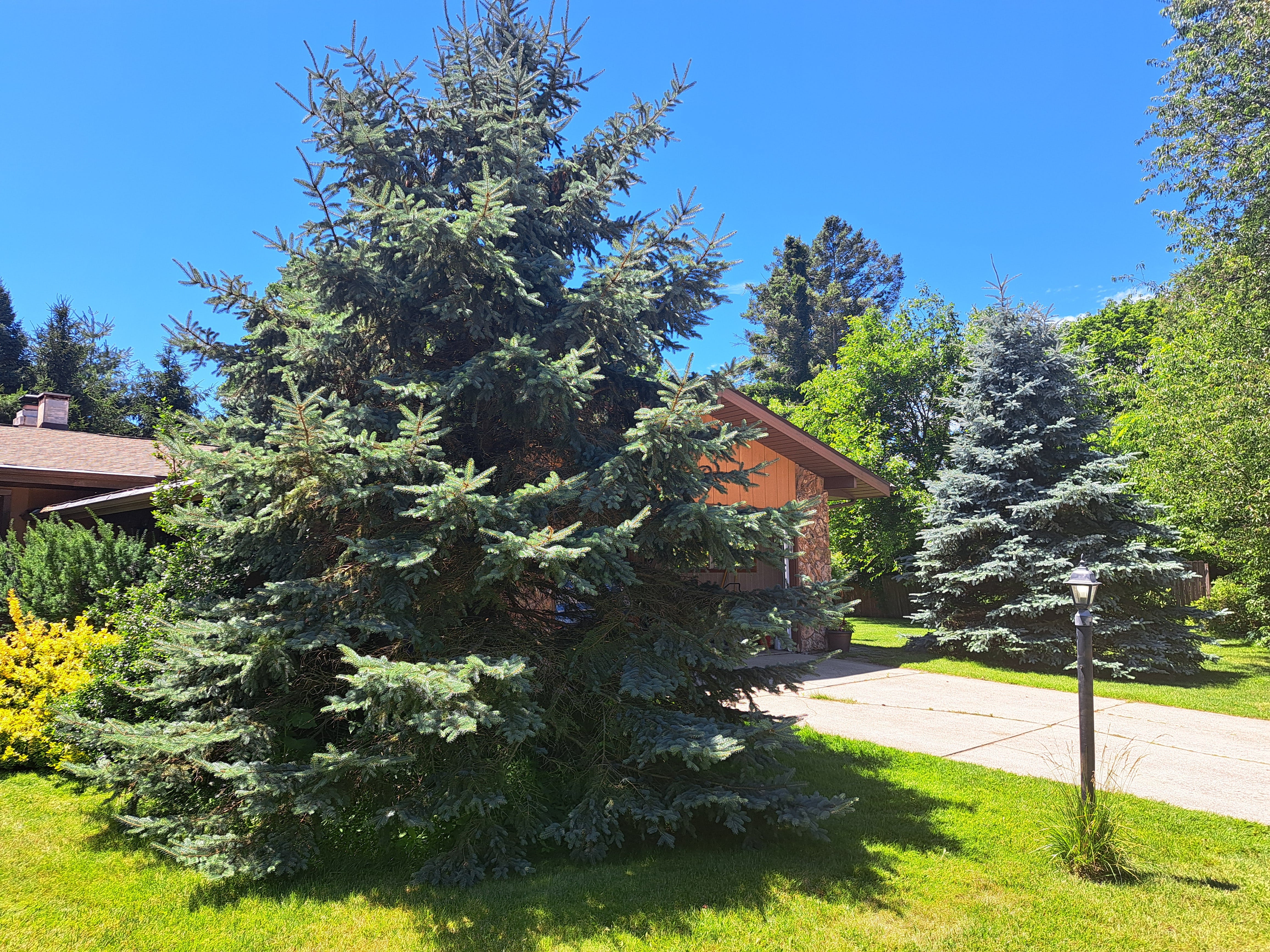
So where does that leave my trees?
They seem to have a for of consciousness and they are doing exactly what God created them to do (unlike me). Still, God assigned to humanity the task of exercising His authority over the earth. Thus, it is my duty to steward the 1/3 acre I have title to, and that means I am responsible for everything in it, including the trees. It may be necessary to take down trees at times to protect the property, to enable other things to grow, or to beautify it or make it more useful as part of my stewardship. But in the end, the trees will be here when I am gone. That gives them a kind of claim that it seems to me hard to dismiss arbitrarily.
At the end of the day, my job is to present all my work, including the yard, to God to inspect my stewardship of what he has entrusted to me. I am not the owner, only the caretaker. And that means I have to take very seriously the interests of the trees and the overall health of the yard. And if that is so, the trees may well have a legitimate claim to the land that I need to take into account in my stewardship.
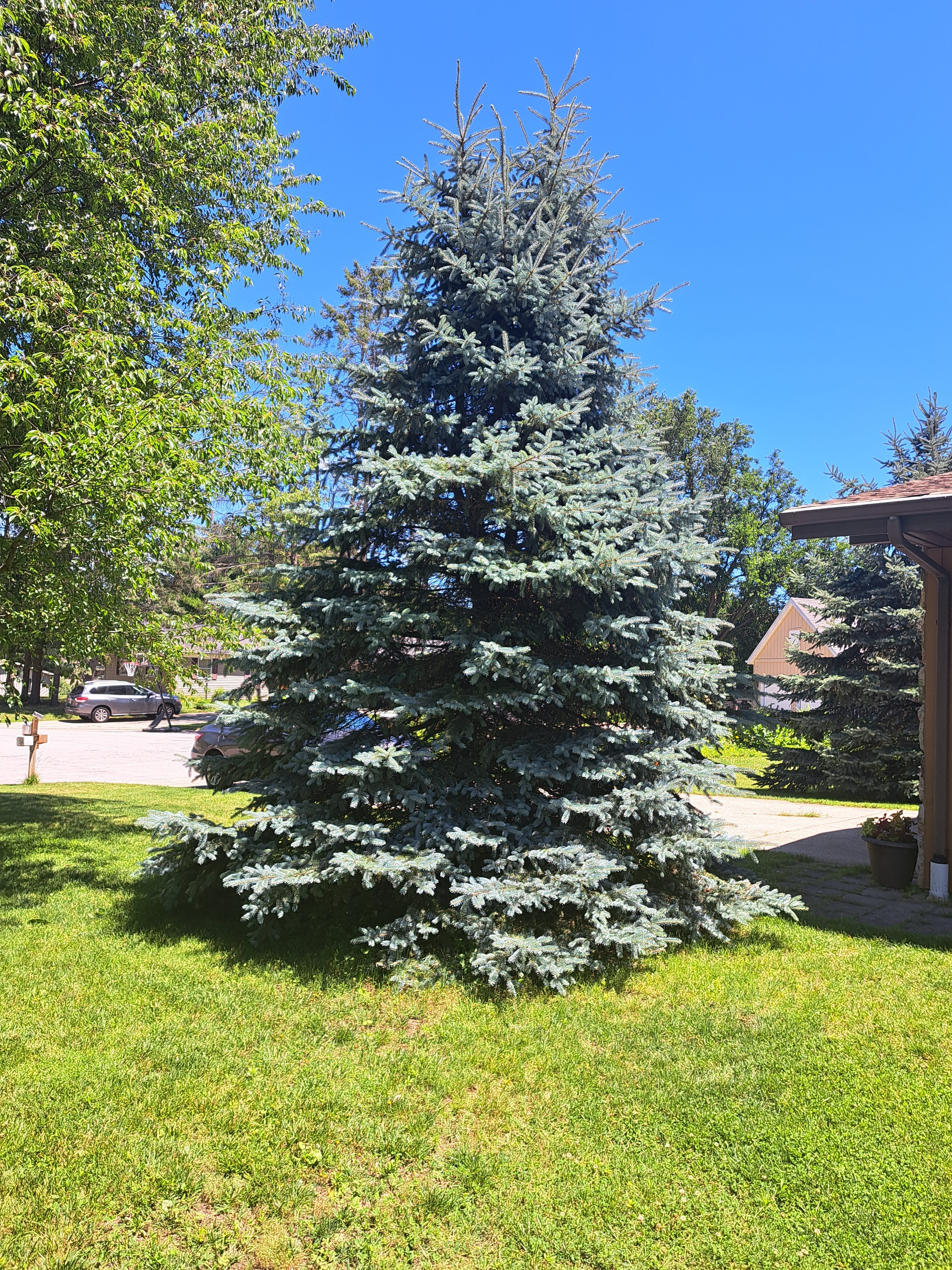
All photos were taken in my yard, June 23, 2026.
No posts
Comments
Nothing yet. Say the first thing.
Sign in to join the conversation.