
I have written several articles covering different aspects of the invisible world revealed in Scripture, supplemented in some cases by church tradition. I want to deal with some of the other inhabitants of the invisible world here, but before I do, it will be helpful to review the key points that I’ve covered so far.
For most Christians, the invisible world consists of angels and demons, the latter of which are identified with fallen angels—meaning that everything in the invisible world is either a holy or an unholy angel. But this is not supported by Scripture.
Angels as beings who at least initially served in the courts of heaven. Scripture lists a variety of types of angels (at least, that’s how the terms have traditionally been understood), some of which rebelled against God. Some angelic beings have spiritual authority over nations—for example the “princes” of Persia and Greece mentioned in Daniel, who are paralleled by the archangel Michael, the “prince” in charge of Israel.
It is tempting to consider these princes the shedim (translated “demons”), which are the gods of the nations. In Second Temple Judaism, however, these were not considered angels but another type of supernatural being. The difference would seem to be that they were closely associated with this world rather than the heavenly courts. Since they were the gods of the nations, these presumably existed in a hierarchy with some more important and powerful than others. It seems likely to me that at the top of these hierarchies were the angelic “princes” mentioned above, but that does not mean everything in the hierarchy was angelic.
That brings us to the evil spirits—also described as demons—in the Gospels. Nowhere are they called fallen angels. In fact, in Second Temple Judaism, they were believed to be the spirits of the Nephilim killed in the Flood. They are under Beelzebul, who is associated with Satan—another example of non-angelic beings under a fallen angel.
Despite objections to this view, Scripture presents the Nephilim as angelic-human hybrids. There are a few possibilities of how this could have happened, but since I have covered this elsewhere I will not go over them again.
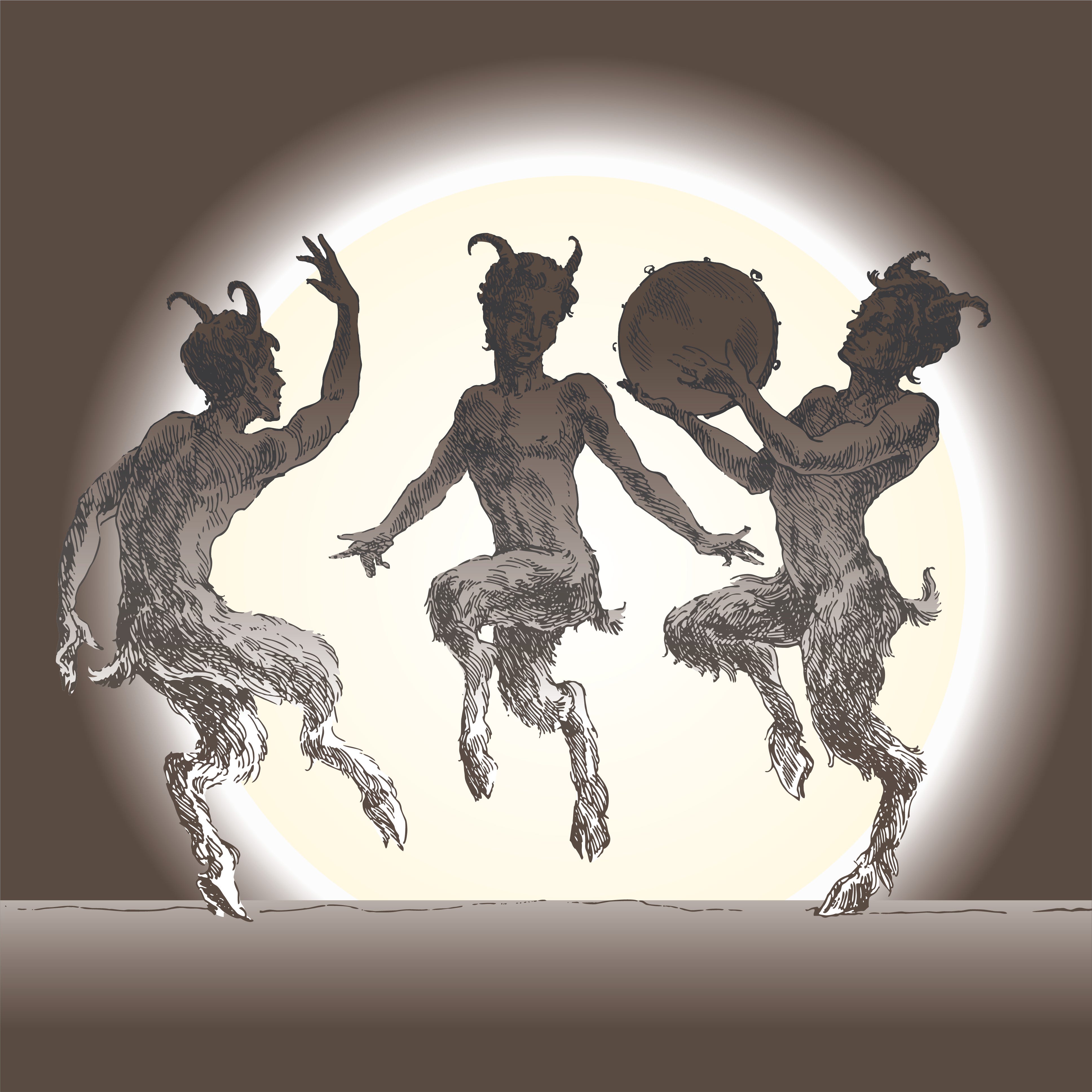
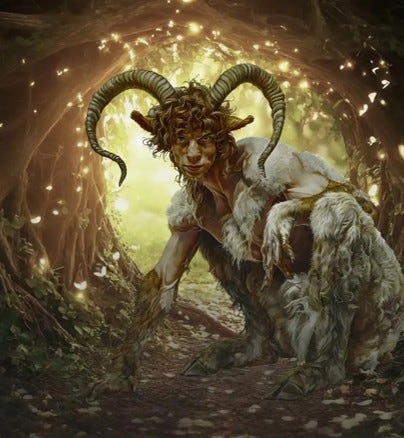
Scripture tells us of other demonic beings that don’t fit any of the categories above. One of these is the sĕʿîrîm, generally translated “goat demon” in Leviticus 17:7 and 2 Chronicles 11:15, where people are warned about sacrificing to or worshipping them. In Isaiah 13:21 sĕʿîrîm are dancing in the ruins of Babylon, though rather than translating it consistently with the earlier usages, modern translations render it “wild goats.” Similarly, in Isaiah 34:14, the sĕʿîrîm call to each other in the ruins of Edom. The only reason I can see for the change in how the term is translated is that other natural animals are mentioned in the passages, probably combined with an assumption that goat demons don’t dance (and maybe don’t exist).
On the other hand, the Septuagint translates sĕʿîrîm as satyrs. In Greek mythology, satyrs were half human, half goat creatures that inhabited wilderness areas and were known among other things for dancing and lust. Conceptually, sĕʿîrîm are very similar to satyrs, and some have even suggested that the Hebrew word may be connected as a loan word to the Greek. So maybe goat demons do dance.
Incidentally, Isaiah 34:17 also refers to lilit, which is sometimes translated as a night bird or screech owl and at other times as a demon. Given that lilitu is a Mesopotamian night demon, it is likely that lilit refers to some kind of night hag or demon in this passage.
In any event, Scripture affirms the existence of satyrs or satyr-like beings. They are seen as demons, but among the church fathers, there was another way of looking at them.
St. Jerome, in the Life of Paul of Thebes, describes a satyr who met St. Antony. This creature says:
I am a mortal being and one of those inhabitants of the desert whom the Gentiles, deluded by various forms of error, worship under the names of Fauns, Satyrs, and Incubi. I am sent to represent my tribe. We pray you in our behalf to entreat the favor of your Lord and ours, who, we have learnt, came once to save the world, and ‘whose sound has gone forth into all the earth.
Hearing this confession of faith from a faun, Anthony’s “cheeks streamed with tears, the marks of his deep feeling, which he shed in the fullness of his joy,” and he called out in prayer that humans might follow this example, forsaking their pagan past and joining in the worship of the true God. At this the satyr, apparently satisfied by the saint’s response, disappears into the wilderness “as if on wings.”
Jerome assures his readers that Anthony’s encounter with this repentant satyr should be understood literally:
Let no one scruple to believe this incident; its truth is supported by what took place when Constantine was on the throne, a matter of which the whole world was witness. For a man of that kind was brought alive to Alexandria and shown as a wonderful sight to the people. Afterwards his lifeless body, to prevent its decay through the summer heat, was preserved in salt and brought to Antioch that the Emperor might see it.
This contrasts with Jerome’s account of a meeting of St. Antony with a donkey-centaur. About this encounter, Jerome is a bit more cautious: “whether the devil took this shape to terrify him, or whether it be that the desert which is known to abound in monstrous animals engenders that kind of creature also, we cannot decide.”
The satyr’s body may have been preserved in salt, but we are entitled to take the whole story with a grain of salt and conclude that Jerome was being too credulous. Whatever we may make of Jerome’s claims, however, Scripture does affirm the existence of some sort of goat demon.
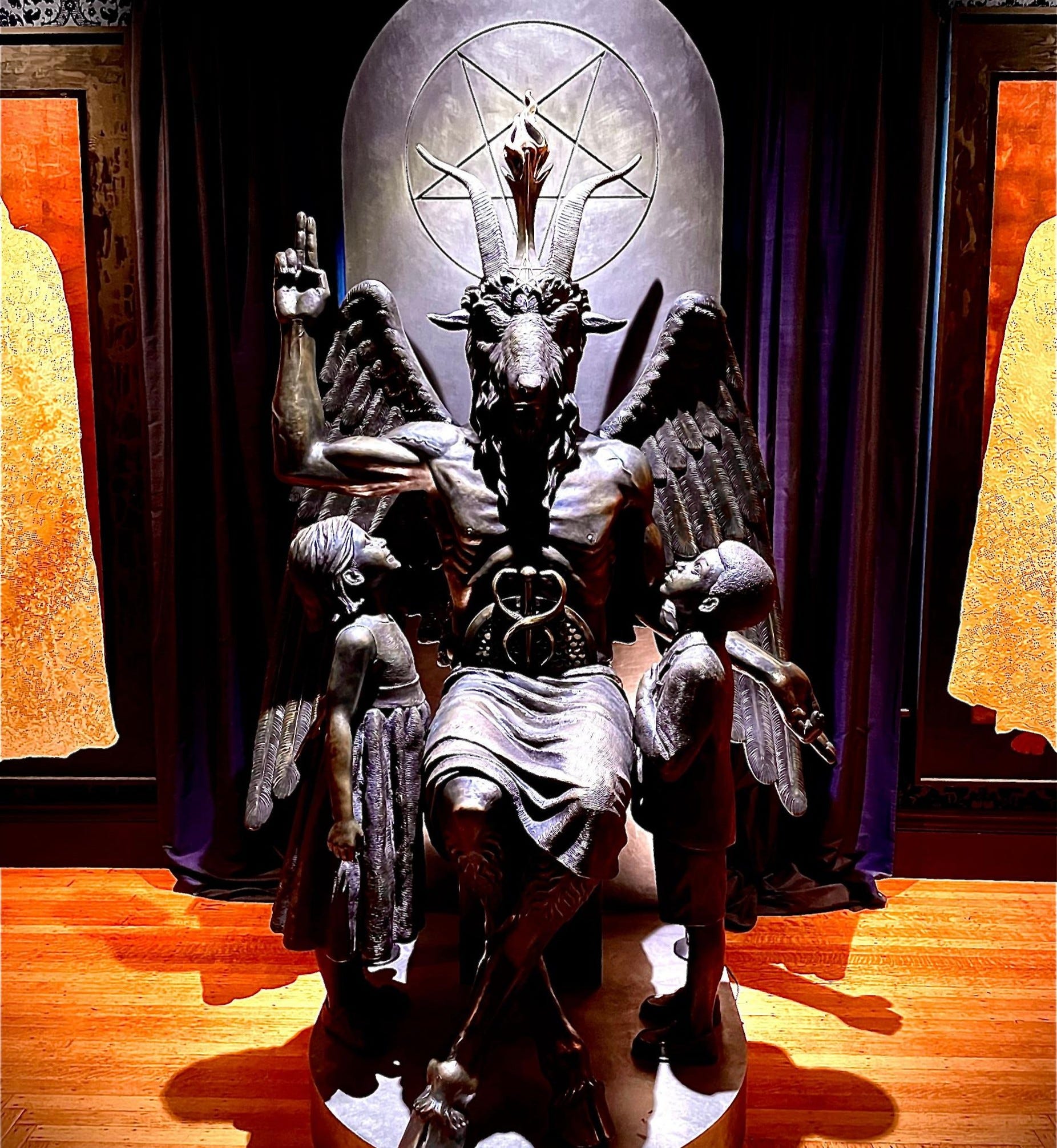
Incidentally, satyrs and goat demons are the basis for the image of Baphomet in modern paganism.
Another demon mentioned in Scripture, perhaps connected to the sĕʿîrîm, is Azazel. In the ritual for the Day of Atonement in Leviticus 16, there are two goats. One is offered as a sacrificed to the LORD, the other is released in the wilderness “for Azazel.” This is sometimes translated as “for a scapegoat.” Others believe Azazel refers to a cliff in the wilderness over which the goat would be thrown. But given the parallel between the goat for Azazel and the goat given to the LORD, it seems likely that it is the name of a demon. The theology of this is murky: why would the sins be sent to a demon? Still, it seems likely that is what Azazel is.
Then there are the stoicheia, translated in Galatians 4:3, 9 and Colossians 2:8, 20 as “elementary principles” or “elementary spirits.” In secular Greek, the word was associated with the basic elements of earth, air, fire, and water. The New Testament term thus might be associated with beings such as the angel of the waters in Revelation 16:5. Stoicheia in secular Greek also referred to astral deities, so it is not surprising that in the New Testament, they are associated with astrology and false philosophy as well as legalism. There are other potential meanings of the term as well. Exactly what it meant in the New Testament is unclear, but the language points to some type of spiritual being that operated at a fundamental level in the world.
Along with these, the Bible refers in a number of passages to what we might call biblical cryptids, notably dragons, including Leviathan and Rahab, and Behemoth. These are creatures of the visible world, so they do not fit the theme of this article. I may write about them later.
This covers the range of demons and beings in the invisible world found in Scripture. Are there others that Scripture doesn’t talk about?
I think it’s very likely. I think that the invisible world is at least as complex as the visible world and Scripture only reveals what we need to know in connection to our relationship with God. So what else might there be? And what is the evidence? That will be the topic of the next article.
No posts
Comments
Nothing yet. Say the first thing.
Sign in to join the conversation.