
Long before I started painting, my creative practice was theatre. It was art that made me alive, happy, and free. It taught me core creative values, like “good art always tells the truth.” As an actor and director, I worked to inhabit vulnerability and possibility. I labored to tell stories with honesty. And to achieve that honesty, rehearsals were an odyssey. Long hours of picking through text, trying to name desires and motivations to understand characters: why are they doing what they’re doing?
Good acting, I thought, meant not only empathizing with why a character might do what they do. It meant standing in solidarity with that character, finding the place within yourself where you, too, might make a similar choice. It was a living laboratory of self-discovery and exploring the human condition.
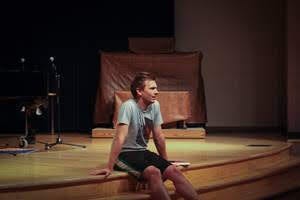
In the initial stages of my training, a friend introduced another way to think about theatre. It was unlike what I had experienced so far, moving away from the interior world of the actor into the external, physical world. It was rigorous and challenging, and I had to learn more.
The Viewpoints, I learned, were a living philosophy of theater that “translates” into a series of techniques and exercises. They are a way to make new discoveries while providing ongoing training for the actor. In the same way a musician might play scales every day, an actor might practice Viewpoints.
I fell in love with this way of thinking about theatre. I sought opportunities to learn and practice, devoting myself to this new grammar of creativity. Along the way, I was introduced to Suzuki, a technique that is often paired with Viewpoints as a dynamic training combination. Together, these techniques formed a whole philosophy aimed at awareness and surrender as a means to discover and communicate the truth.1
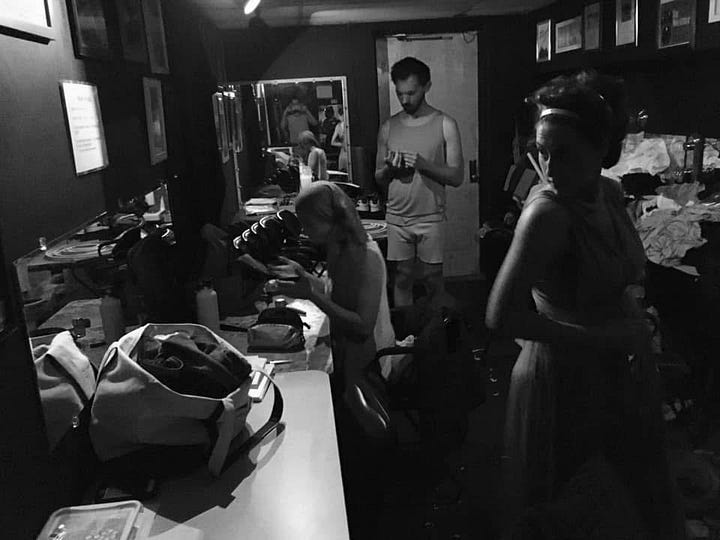
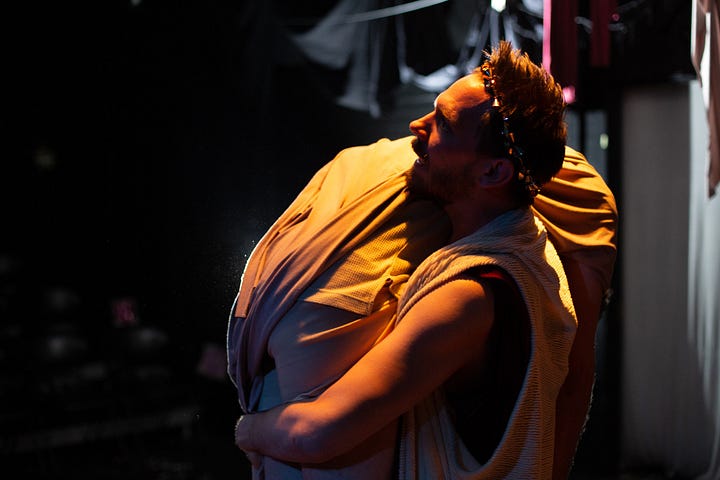
I was in artistic euphoria. I remember floating home from hours-long training sessions only to sit and write pages and pages of notes, questions, and insights. I was clear-eyed and openhearted, ready to receive the whole world and find inspiration at every turn. And it was then, during this time, that I first encountered the full force of abstract painting.
○ ○ ○ ○ ○
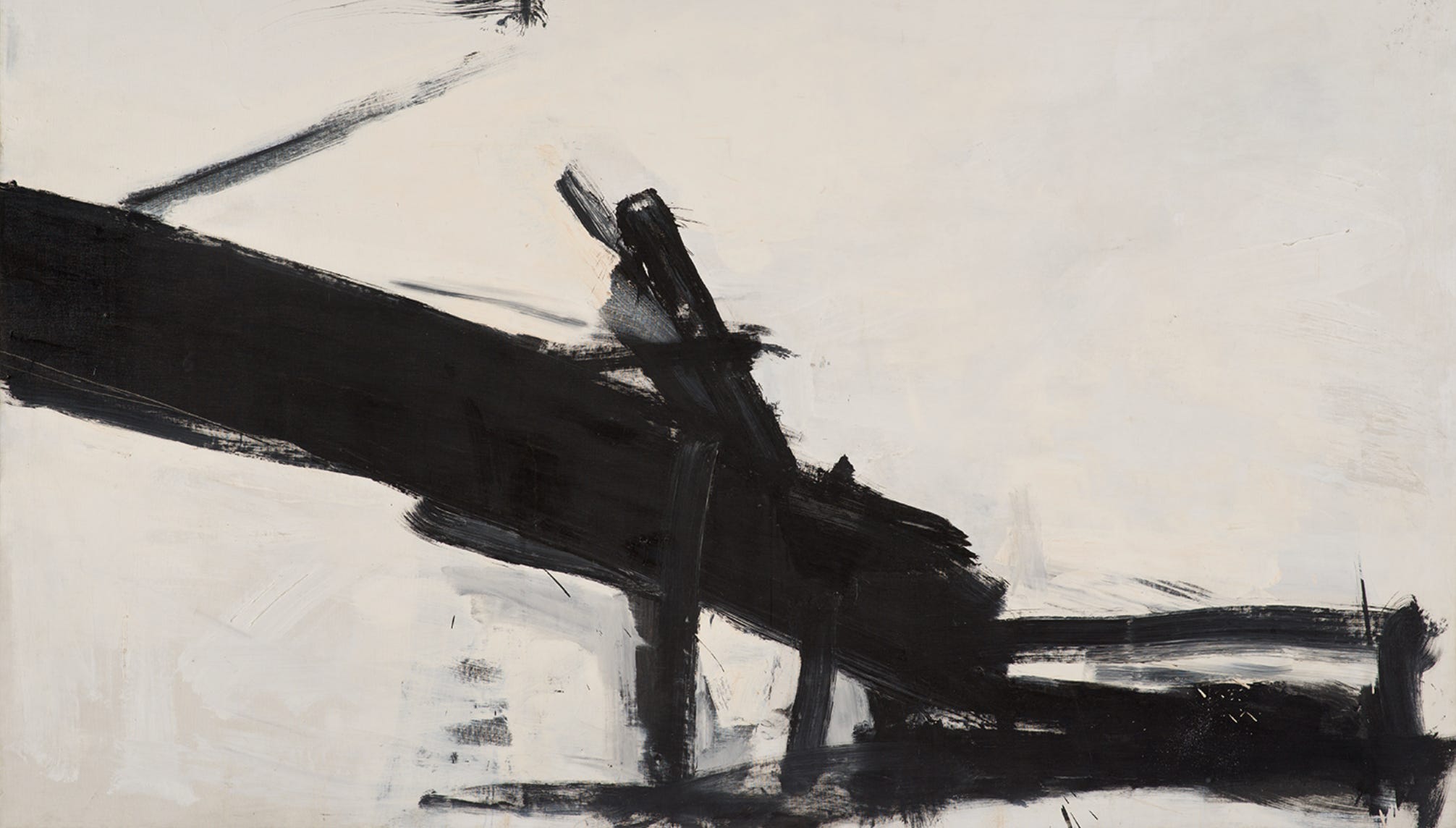
At the time, I didn’t know why Franz Kline’s work stunned me. But standing before Monitor, my body hummed with a recognition that felt strangely theatrical. It was a distinct, but recognizable sensation. I was captivated, feeling the same stupor I might feel watching an incredible performance. I was breathless, energized. Heavy and light. I walked around the museum, experiencing other non-figurative paintings with the same sensations theatre evoked within me. It was electric, but I had no vocabulary to describe what was happening or way to explain it to others.
Now, years later, I know. I can see how training and thinking in theatre uniquely prepared me to grasp abstract art. I see how working in theater laid the groundwork for my painting practice. Suddenly, new ripe and rich questions are emerging, begging to be lived.
I’ve (finally) returned to training in Viewpoints and Suzuki. I’ve found a wonderful, generous group of artists who are committed to this practice with trust and an “anything is possible” tenacity. But I’ve returned to the practice as an abstract painter, carrying new ways of thinking, sensing, seeing, and feeling.
In recent weeks, I’ve become intensely interested obsessed with the creative connections between these two creative streams, these two ways of working that both feel like home.
I’ve been re-reading foundational texts and in the opening pages of The Viewpoints Book, its authors explain the clear historical connection that I’ve intuitively sensed. They write:
“A seismic cultural shift occurred in America during the middle of the last century. It was a shift marked by such events as the protests against the Vietnam War, the marches for civil rights, and the birth of abstract expressionism, postmodernism and minimalism….this sudden eruption of activity was like a breath of fresh air for many young people, including a group of artists–the Judson Church Theater–who united together at the Judson Church on Washington Square in New York City. The group included the young painters Robert Rauschenberg and Jasper Johns, composers John Cage and Philip Corner and dancers…[who] wanted to question the assumptions of their own training and how they approached their work.”2
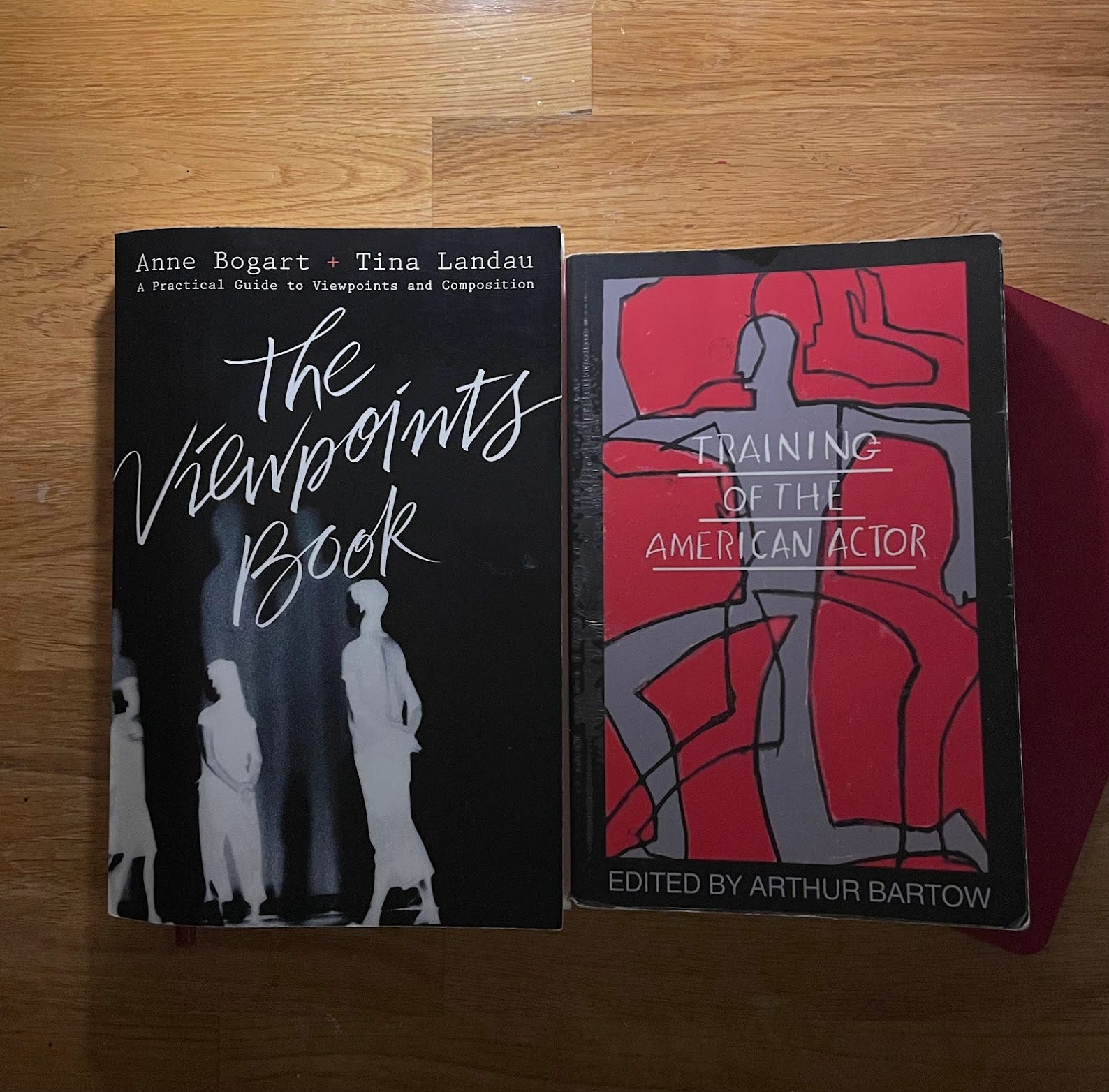
Viewpoints emerged from the artistic moment that also gave rise to abstract expressionism. This creative big bang went out in multiple directions, coalescing through dance and adapting for use in theatre.
Viewpoints is a living practice handed down from artist to artist, evolving along the way. But its roots trace back to the same cultural moment in America and the same creative grandparents. Abstract painting and viewpoints training share a historic lineage. Be still my beating heart.
This matters to me because for the first time in a long time, I feel a sense of integration and coherence. These two creative practices were different chapters in the same story. I wasn’t trading one genre for another; they fit together. No missing pieces, just more puzzle.
As winter begins to give way to spring, my imagination is humming. I feel giddy with questions, concepts, and ideas to explore. And I have a supportive, generative community with which to ask them. It feels like returning to part of myself that I thought I lost long ago.
But nothing was lost. I just grew to be able to hold more.
In the days ahead, I’ll be talking more about theatre and the new ways I’m beginning to think about paintings as objects and artifacts of theatre. I’ll be naming the connections I feel between the two, and the ways their vocabulary might be more similar than first appears. All of it feeding directly into my evolving creative practice, and new lifelong work.
In the same way that abstract art inspired theatre artists, I think theatre can make this form of art more accessible, and inspire painters in whole new ways.
I mean, at least it will inspire me.
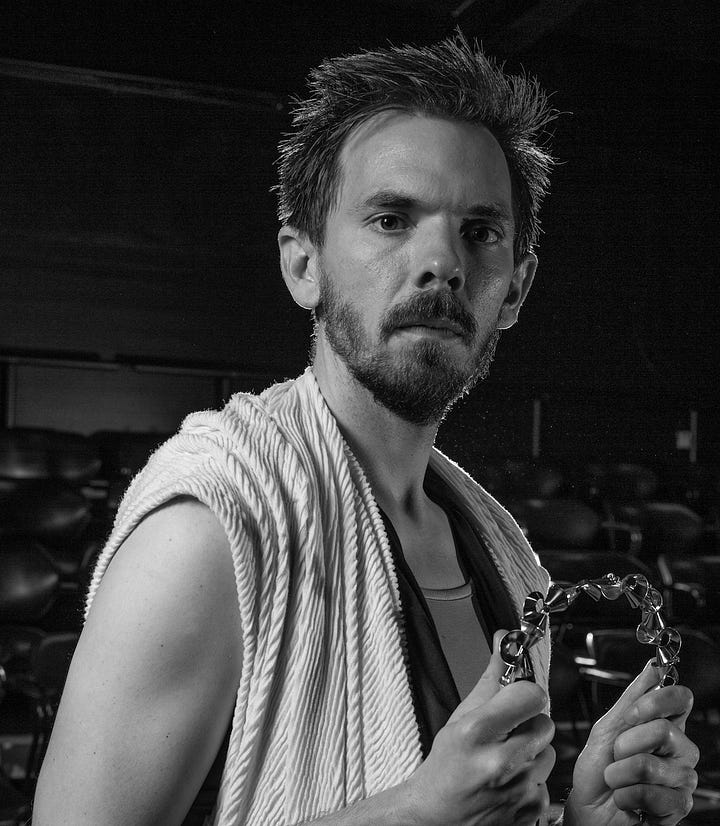
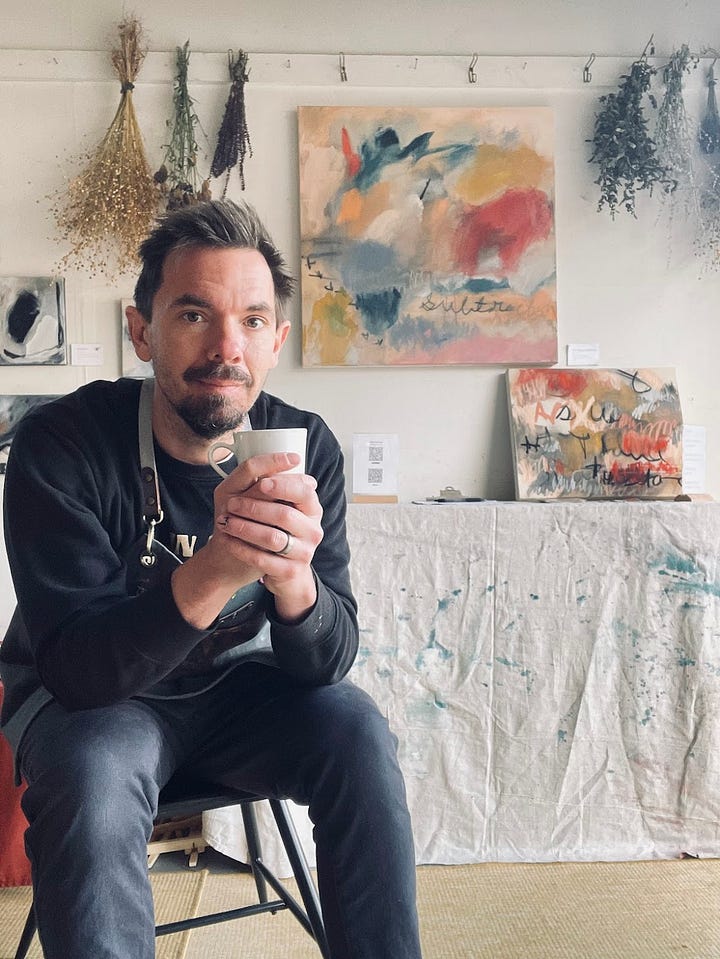
Lots of work available in the studio, including some new pieces. Take a look on my website and let me know if anything calls out to you. I want art to be accessible and affordable for all, so we’ll find a way for a piece you love to make its way home to you.
If you’re looking for a way to access abstract art in the ways I’m describing, let’s work on a commission together. My process is a unique combination of deep listening, story sharing, and mutual care the whole way through. Learn more on this part of my website, and be sure to check out some of the testimonials.
Love you all.
I’m going to be writing about this LOTS so stick around if you want to hear more. Or stick around any way and I think I’ll convince you it’s interesting.
From The Viewpoints Book by Anne Bogart and Tina Landau (pp. 4-5). Lots of artistic cross-pollination at the Judson Church Theatre as well as Black Mountain College, that other incredible experiment in American art.
No posts
Comments
Nothing yet. Say the first thing.
Sign in to join the conversation.