
Paintings are often interpreted as purely visual objects while theatre is assumed to belong to the narrative arts. Even when we acknowledge that paintings may carry narrative suggestions, or that theatre relies on visual composition, we tend to preserve a neat division between them.
Paintings hang. Theatre progresses. One is encountered spatially; the other temporally.
The way we meet these forms reinforces the distinction. We stand before paintings as installed, fixed objects, often in bright rooms where time feels diffuse. In contrast, we sit in the hush of a darkened theatre with other people, all surrendering to story. Something happens, and then it disappears.
And yet, as someone who moves between these disciplines, I have begun to question how stable that division actually is. I find myself increasingly curious about the possibility that painting—particularly abstract painting—may be more theatrical than it first appears. Not theatrical in the sense of spectacle, but in its power to communicate presence. It’s becoming a defining question of my practice: how can techniques of theatre inform the techniques and reception of abstract art?
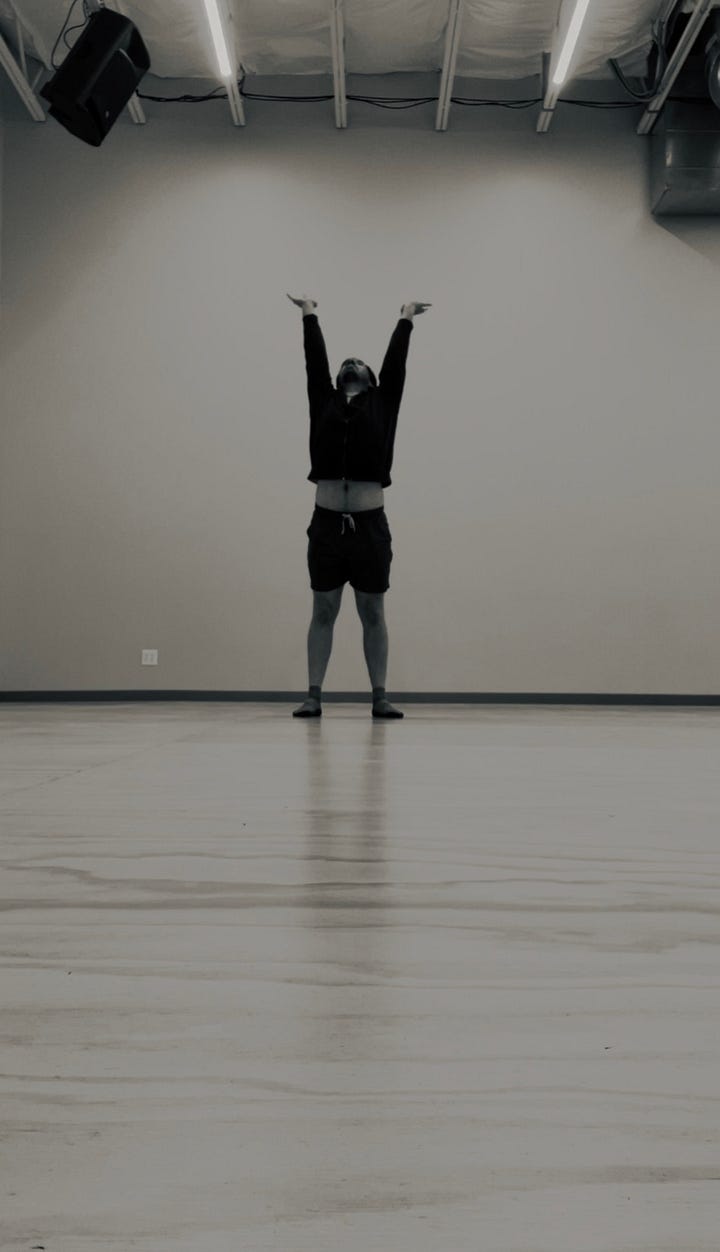
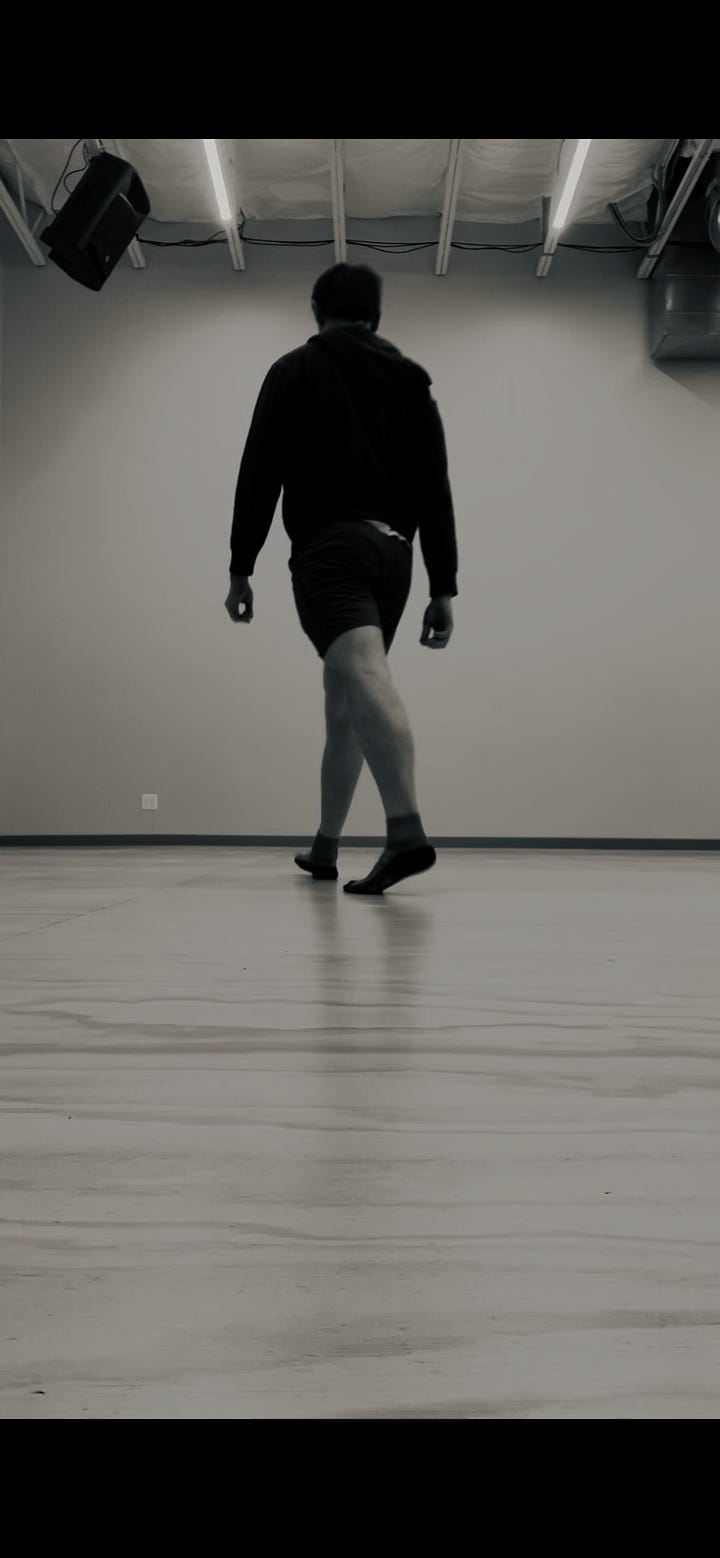
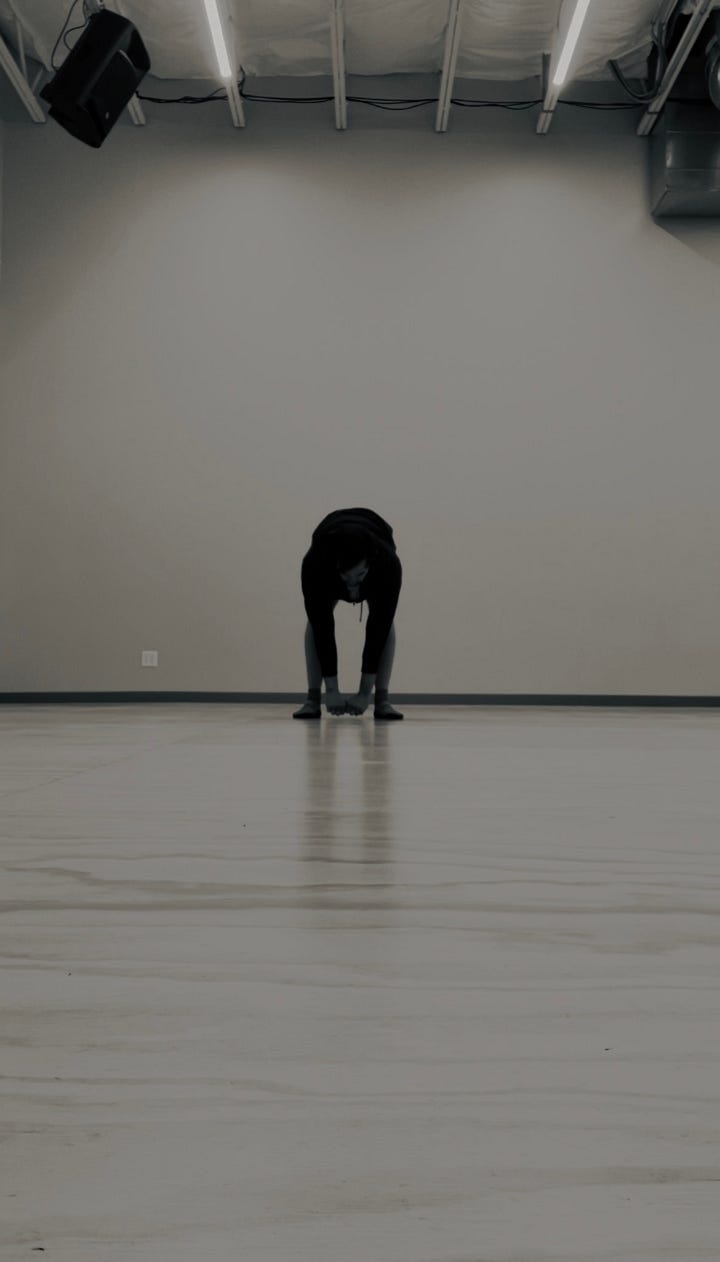
In recent months I have returned to a regular practice of the Viewpoints, a methodology of theatrical training that emerged in the latter half of the twentieth century alongside other radical shifts in American art—abstract expressionism, postmodern music, experimental dance. These shifts were driven by interrogating the premise that art is only art if it met certain formal qualities. What if the definition of art was more dynamic than that?
As I re-enter this training, I have been bringing its questions into my painting studio. What happens if I approach the canvas not as a surface awaiting resolution but as a site of performance? What if the act of painting is less about producing an image and more about entering into a structured improvisation with material, space, and time? These questions have begun to reshape both how I work and how I understand what a painting might be.
The more I sit with this, the more porous the boundary between theatre and abstraction feels. And that in fact, these two forms offer complimentary gifts to the artist and the audience. Those gifts are: mutual witness, the encounter of presence, and the opening of intuitive possibility.
In theatre, trust is a necessary, valuable currency. Over time, an ensemble (or cast) develops a shared capacity to risk. Without that trust, performances remain guarded and technical. With it, something far more vulnerable becomes possible. Actors allow themselves to be seen. They are not simple characters, but human beings inhabiting real time before other human beings. The audience, in turn, is invited into that exposure. When it works, the stage becomes a kind of living mirror in which we recognize aspects of ourselves that are hidden, unacknowledged, or diminished.
It requires an immense amount of courage to stand in that visibility. Yet the power of theatre often resides precisely here: in the consent to be witnessed.
I have come to believe that painting requires a similar form of consent. In the studio, the materials are not inert tools but active partners that must be honored. Paint resists, thins, pools, interrupts intention. The surface holds record. Even the most carefully planned composition becomes an improvisation in practice, because the material world answers back. There is a scene unfolding between the painter and the painting, and that scene cannot be fully scripted in advance. The artist is both revealing her inner world to the materials and allowing the materials to shape the act of communication.
If I remain attentive, resisting the urge to force clarity, something begins to gather. The work takes on a life that exceeds my initial concept. In that moment, I find myself not simply making an image but encountering myself within the process. The canvas becomes a site where inner and outer worlds negotiate form.
And, as in theatre, the encounter is not complete until it is shared. At some point, rehearsal ends. The painting leaves the studio. It enters a space where others will stand before it. This transition carries its own vulnerability. Once released, the work is no longer the private mirror of the painter. Viewers bring their histories, associations, and states of attention into the field of the painting.
Although this exchange lacks the simultaneity of live performance, it is no less relational. A viewer steps into the temporal field the painting holds. They linger or move on. They enter and exit the scene that unfolded between artist and material. If they allow themselves to stay, granting the work the same kind of attention one might give a play, then the truth is revealed. The body perceives.
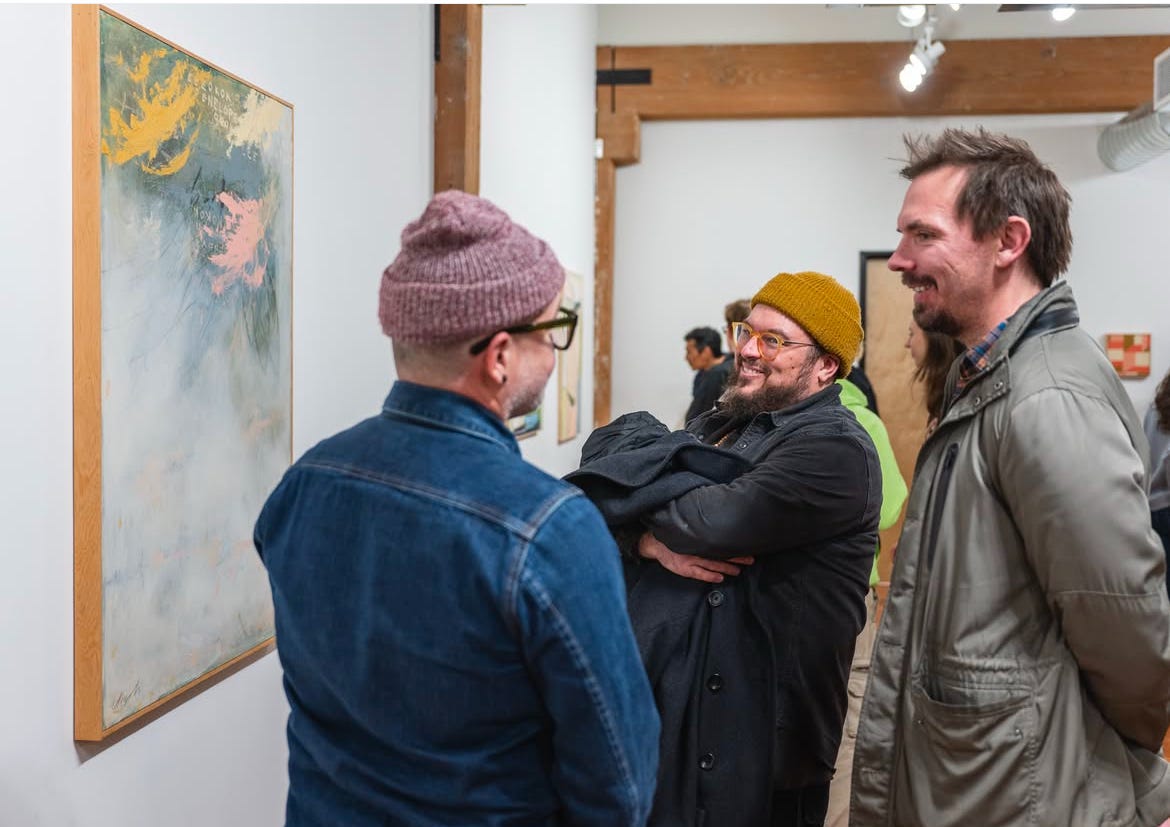
Another one of my central artistic questions is: what does it mean for a piece of art to bear presence? What is it, exactly, that commands attention and leads viewers into stillness and communion?
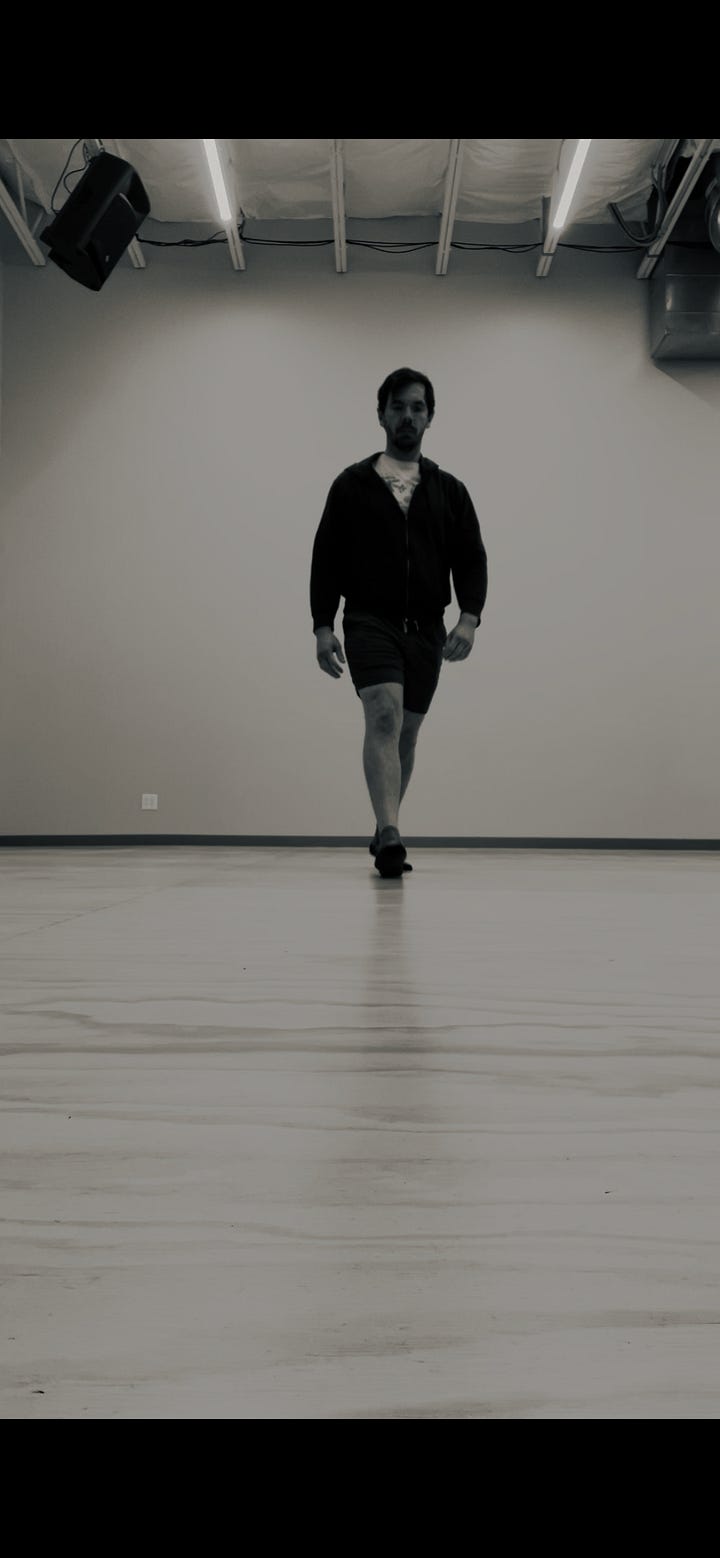
I have felt this presence in theatre, often in moments that are structurally simple: a body standing still, a clear gesture, or silence extending beyond comfort. Nothing “happens” in the conventional sense, and yet the room thickens with attention.
I have also felt it in abstract painting. A field of color that seems to breathe. A line whose weight carries emotional gravity. In both cases, particular materials—bodies and words, pigment and texture—become icons for something larger than themselves. They are concrete and specific, yet they gesture toward a shared human inheritance, a memory that precedes any single story.
In a culture where attention is increasingly fragmented, this capacity to hold focus feels urgent. The familiar phrase “time is money” has quietly given way to a more accurate diagnosis: attention is the commodity. Art, at its best, becomes a training ground for its recovery. When we give sustained attention to a single mark or a sustained movement, we resist the constant pull toward distraction.
This is one reason I question the assumption that painting is merely visual. Theatre engages multiple senses almost by default, but abstract painting, when approached without the anxious need to identify recognizable objects, can evoke a similarly embodied response.
If the viewer softens their gaze, releasing the compulsion to decode, they begin to sense rhythm, weight, temperature, and spatial tension. The painting becomes less a puzzle to solve and more an environment to inhabit.
In this way, abstraction can function much like a charged silence in theatre: it invites the whole body into awareness.
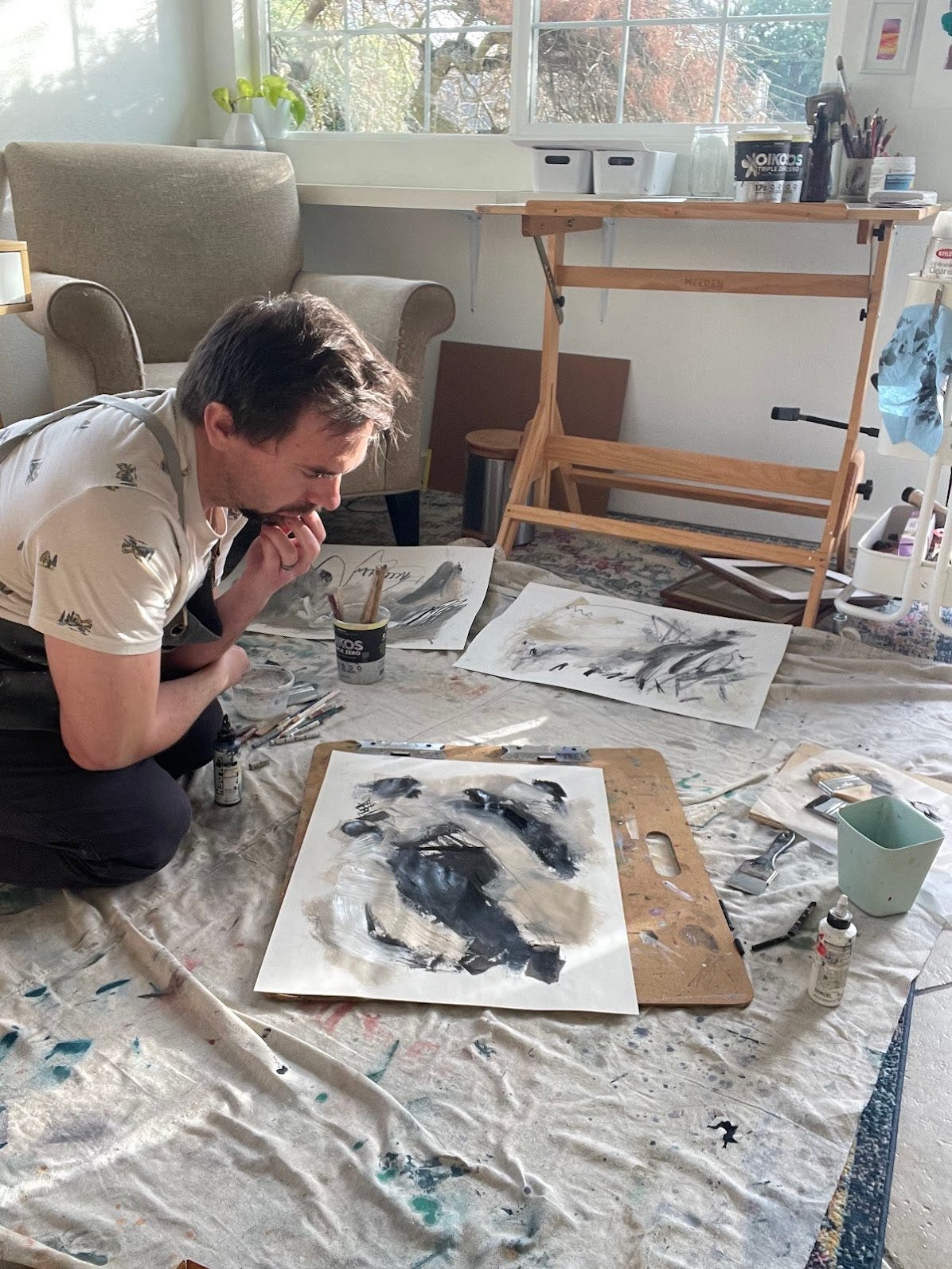
Viewpoints training offers a crucial reorientation around outcome. In this practice, the rehearsal room is not a site of production but of discovery through interest. The emphasis shifts from achieving a masterpiece to participating in a process of shared composition. Artists respond to one another, and to the viewpoints themselves: tempo, duration, repetition, kinesthetic response, shape, gesture, architecture, spatial relationship, and topography. The breath-taking, arresting art emerges from curious attention rather than imposition.
When I bring that orientation into painting, the pressure to produce somewhat dissolves. The canvas is no longer a test of adequacy but a field of inquiry. I begin to experience painting less as self-expression and more as collaboration. Like a theatre ensemble artist, I am one artist in the cast of other artists, materials, space, and time.
This collaborative stance in painting opens possibilities that feel larger. The work moves beyond declaring identity and instead becomes an exercise in presence. The canvas becomes a site where kinship with the physical world is re-established, where imagination operates not as solitary invention but as relational attunement.
Ultimately, what draws me to the intersection of theatre and abstraction is not a desire to collapse them into sameness, but to recognize their shared commitment to presence. Both forms create conditions in which we can practice attention, risk visibility, and encounter one another without the mediation of fixed narrative.
In that sense, they offer more than aesthetic experience. They offer rehearsal for the possibility of being fully human with one another. A rehearsal that, for me, is needed now more than ever.
Spring is coming, and dormant creative ideas are starting to bloom. I need to make some space in my studio for new work and new materials. I also would love to support your entry into Spring by getting some new, fresh art into your home.
Let’s make a win-win!
For the month of March, all of my available works are 25% off. This includes works of all sizes, even works already discounted! You can take a look at what’s available and use the promo code FRESH at checkout and discounts are automatically applied.
I’m also offering a 25% discount for new commissions. If you’re looking for custom artwork that helps you reflect on the thresholds and transitions in your life, I’d love to work with you. You can read more about that process from one of my previous collectors here, or see some of the testimonials here.
No posts
Comments
Nothing yet. Say the first thing.
Sign in to join the conversation.