
In a small cottage on a hill lived a little boy. One fine morning, he was up very early to get ready for school. He was excited, no doubt. Today, his class would be on an outing — a trip to a temple. His mother packed his lunch and dropped him off at school.
Soon, all the children reached the temple with their two teachers. The priests wore clean, white garments around their waists and yellow marks on their foreheads, which aroused the children’s curiosity.
The teachers made all the children sit down in rows. Each received a sheet of paper with a poetry-like text.
“We will recite the 15th chapter of the Bhagavad Gita,” announced one of the priests, “It is on the sheet you have received. There stands the Sanskrit text with translations in English.”
After the recitation, the children came out of the temple to have their lunch in the open grounds. Sitting in the sun while nibbling their sandwiches, the children struck up a conversation.
One girl said, “The chanting was quite indulging. The chants are still resonating in my head.”
“Do you know what they mean?” Asked the little boy. Almost everyone shook their head.
“Something religious, I believe,” said another girl.
“I think it must have some nice meaning. The priests looked serious about it.” Said the little boy.
“We would understand perhaps when we grow up. I am sure it is not for children of our age.” Said another boy.
In the evening, the little boy sat in his study room and opened his backpack. Gently, he took out the sheet and laid it on the study table. He glanced through the translations. Atman, imperishable tree, twigs and branches. Many words looked familiar to him, but the sentences did not seem to make sense to him. After grappling with it for some time, he left the sheet in the drawer and went out.
Off and on, he would open the drawer and return to the sheet to give it another reading. He tried hard every time to construct a meaning, but without much success.
One Saturday afternoon, his father was at home. The little boy walked up to him and narrated his experience at the temple. The father found his curiosity to know what was recited in the temple quite encouraging.
“Let us go out,” said the father. And off they went towards the woods.
After wandering for some time, they came upon a large tree.
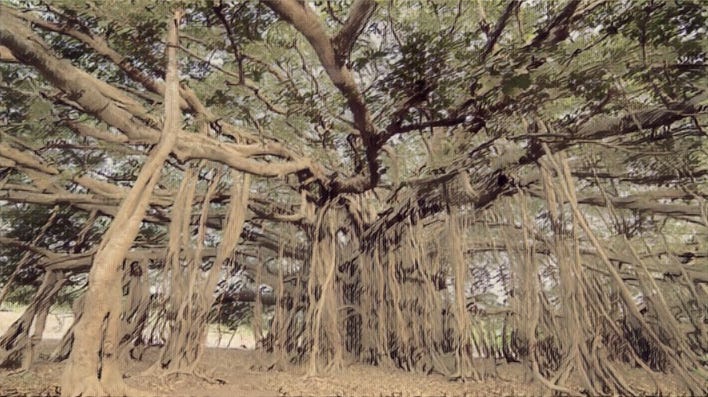
“Do you know this tree?” Asked the father.
“No,” said the little boy.
“This is an Ashwattha tree1. Could you observe it carefully and describe to me what you see?”
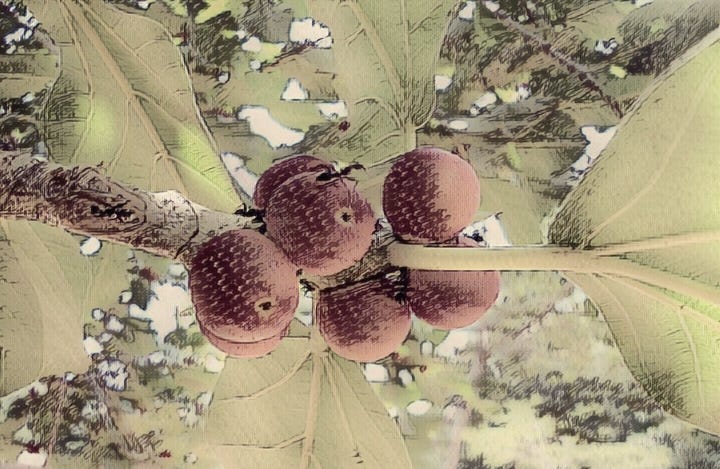
“I can see it is a fruit tree with pretty red fruits,” said the boy.
“Are all of them red?”
“No, some are green, they are raw, and some are brown, probably they are rotten.” Said the boy.
“Indeed,” replied the father. “And some of them are very sweet, some are bitter, while some are sour.”
The child could not contain his excitement and said, “Climbing up the tree and getting them will be fun.”
“Certainly,” said the father with a smile. His simple smile belied deep thoughts. “What else do you find interesting in the tree?”
“The new leaves are pretty. Playing with them would be fun too.”
“Do you know how the tree grows and gets nourishment?” Asked the father.
“Yes. By photosynthesis. Sunlight is absorbed by its leaves, which are food factories. And roots collect water and nutrients from the ground.”
“Excellent,” remarked the father, “Could you find out how you could reach the fruits and leaves?”
“Oh! There seems to be a network of branches. It will be difficult to move through it.” The little boy noticed the complexity of the intertwined branches. “But wait a moment, there seems to be a network of trees.” His amazement turned into awe. Should he call them branches, trunks, roots, or different trees altogether?
“Good observation. It is actually one tree. But there are secondary roots in all directions. These are so immense that it is impossible to find the original roots.”
“A maze,” remarked the boy.
“Certainly. This tree keeps growing over time. An old tree can be really large — maybe of the size of a forest.”
“That sounds scary.” The boy remarked.
“Now imagine if you are stuck in this forest-like tree, which is rightly called the strangler fig. You can play and enjoy the fruits, but cannot come out. What would you do?”
Now the boy had a fearful look on his face. “I would cry! I would miss you. I want to go home!”
“Calm down. Use your intelligence. How would you come out?” The father encouraged him to think through the problem.
“I need a map, perhaps, to know the way home.”
“Good, and how would you move through?”
“An axe may do the job to cut the thick branches and make me a way.”
The father nodded his head in agreement.
“But I will still be very scared alone,” said the boy, “especially in the night.”
“Well, the text you read in the temple compares this world with this strangler fig tree.” The father grinned as he spoke.
The boy was momentarily startled. He just recalled that that was where they started.
The father explained.
“The fruits of the tree are the pleasures and pains of this world.
The soft new leaves are the charming and attractive things — maybe the toys children cry for.
The food factory, leaves, are the morality and religiosity that make it denser, and also more attractive.
The world is continually growing and evolving like this tree. No one seems to know how and where it is evolving, and where it started.
And our situation is that, first, we are bewitched by its charm, and second, we do not know a way out, as it lands us in trouble and frustration.”
“Do you want to say it was not just a scary story, but it is a scary reality?” Murmured the little boy.
“Ha ha ha,” the father was happy that the little one was thinking through. “What if you had a friend to accompany you on this adventure?”
“A friend! OK, maybe then I could call it an adventure.”
Father continued. “You do have a friend who lives in your heart and accompanies you everywhere. So you are not alone!
This friend gives you the knowledge that acts like a map. And detaching yourself from indulgences in this world is like cutting the dense branches with an axe. You can see that this body is different from you. Do you know what air is?”
The boy was excited. “Yes, Papa, the air is 21% oxygen and 78% nitrogen.”
Father smiled, “And oxygen always remains oxygen, no matter whether the air smells pleasant or foul.
You are carrying your body and mind just like oxygen carries aromas for some time and then becomes odourless again. Just like oxygen, you remain the same you, no matter what bodily and mental states you go through as you navigate this world.
Nevertheless, this friend not only accompanies you and helps you get out of this maze-like world, but also takes you back home.”
“Home? Is it also not in this world?”
“Good point. What do you mean by home?” The father prodded again to get him along.
“Home is where there is no fear.
Home is where we always return after our adventures.
Home is where we belong.” Said the little boy.
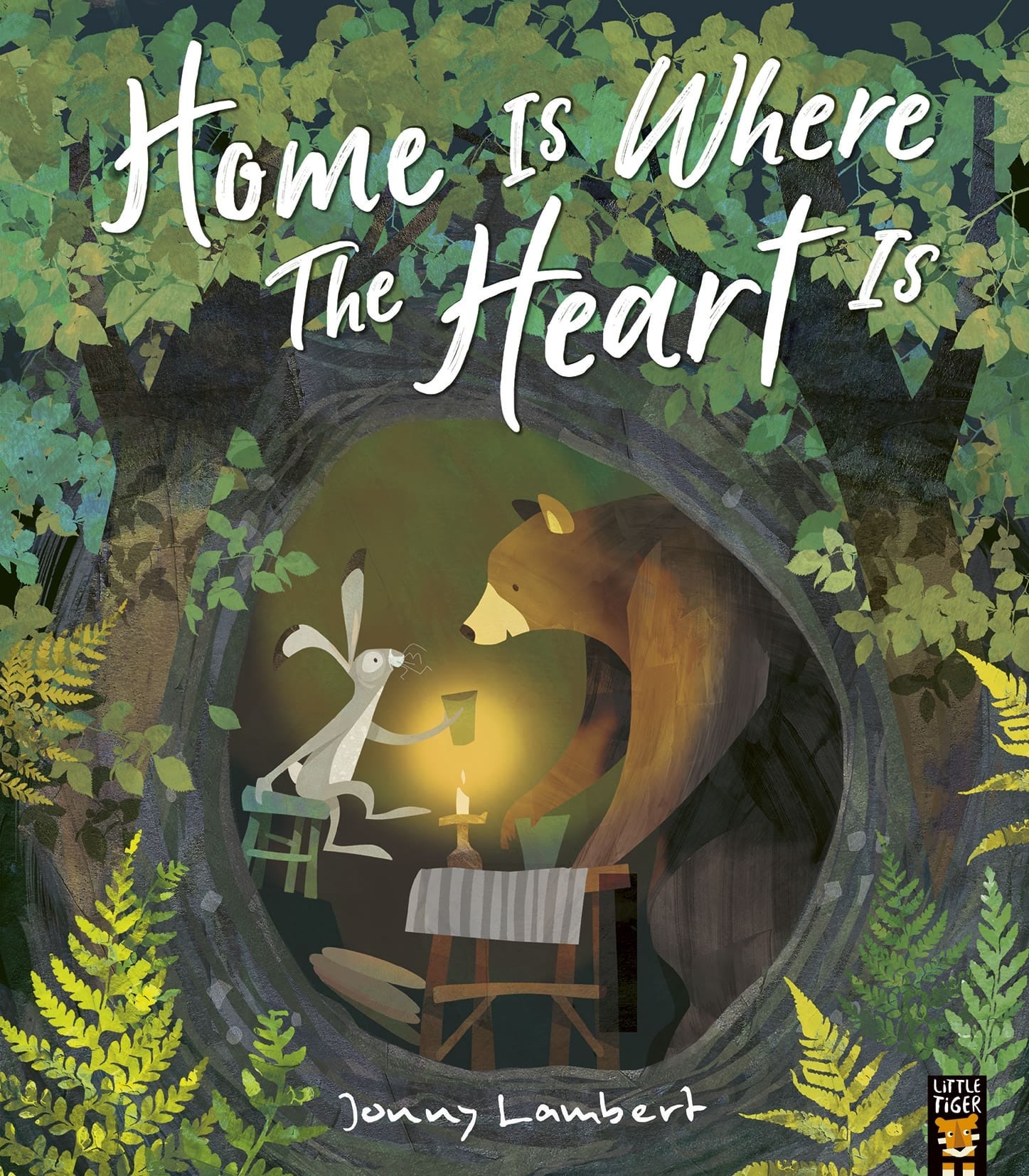
“There must be a place that we can call home, beyond this world. Isn’t it? That is where we belong. And that is where we can have real fun.”
The boy smiled. His fear was gone. “You say this friend is with me, but why don’t I see him?” The boy was thinking aloud.
“Indeed, this friend is unknown to many.” Replied the father while shaking his head. “Only those who want to go home are able to see Him. You see Him in your heart.
Text within this block will maintain its original spacing when published
He gives you sun and moon
And every form of light,
Aromas in the flowers
And tasty, juicy bites.
Then juices in the body,
Digestive energy,
To make you shine and rise,
To help you set you free.
He gives you clever wit,
And power to retain,
While helping you forget,
The thoughts that give you pain.”
The little boy said, “I am worried if He also forgets the way. Then he will be caught, too.”
The father could understand the little one’s concern for his newly discovered friend. “There are two kinds of children in this world — those who are caught up and those who are free. But this friend is neither. He is the Supreme.”
“If he is Supreme, how can he be my friend?” Asked the little one.
“He is your friend, nevertheless, because you belong to each other. While every relationship in this world is transitory, your relationship with Him is the fundamental reality. He is not just accompanying you through the journey but will also be there with you at home, always. If you understand His love for you, you cannot but love Him.”
The boy had a spark in his eyes. Both the father and the son were on their way back home. The sun was setting. The stars were visible. The adventure was over, or rather, the adventure had begun.
Ficus benghalensis
Pictures from the internet, and edited with https://www.fotor.com/goart/
The picture “Home is where the Heart is” is the cover of a beautiful book: https://littletiger.co.uk/product/home-is-where-the-heart-is-2
No posts
Comments
Nothing yet. Say the first thing.
Sign in to join the conversation.