
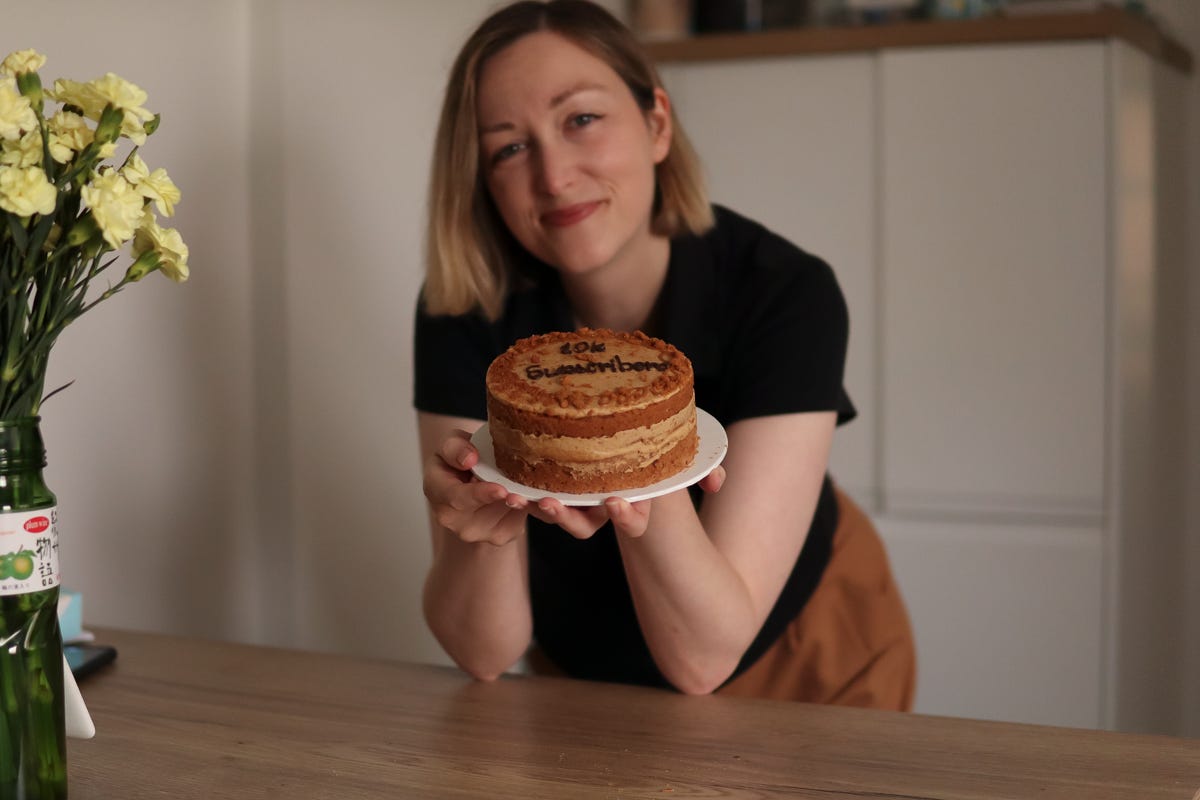
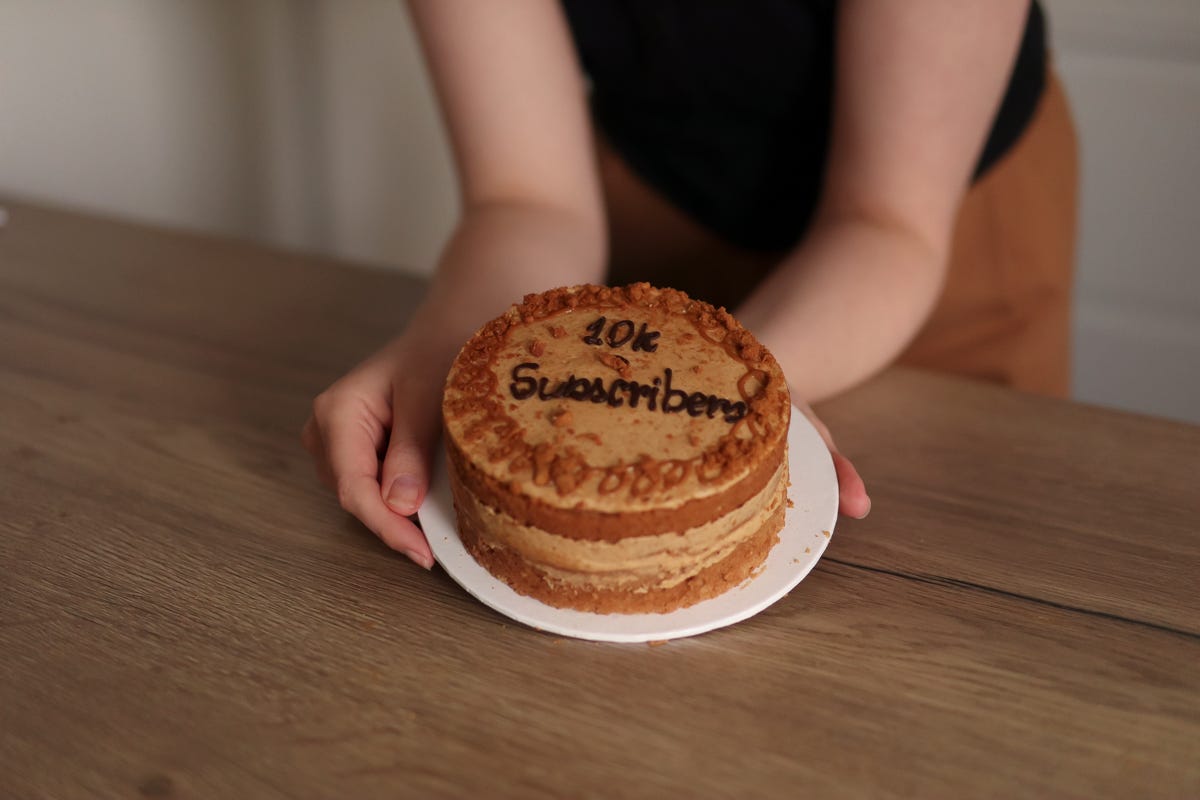
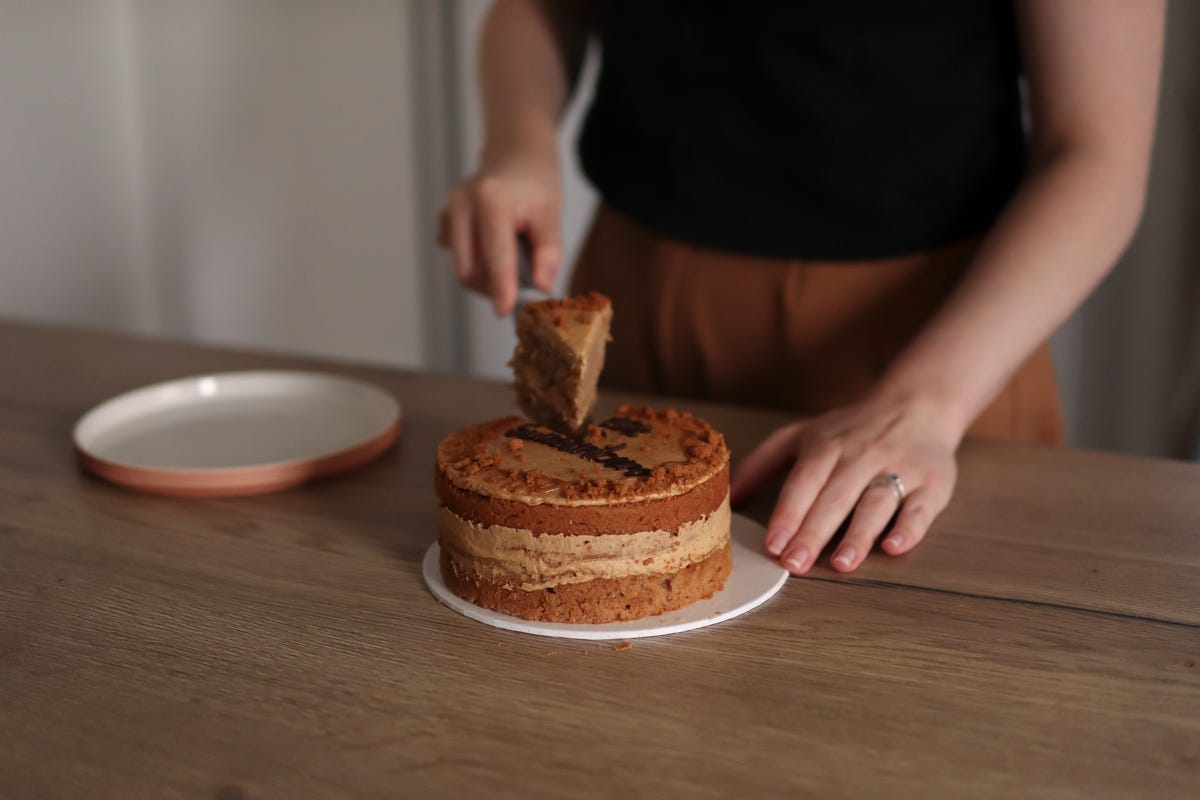
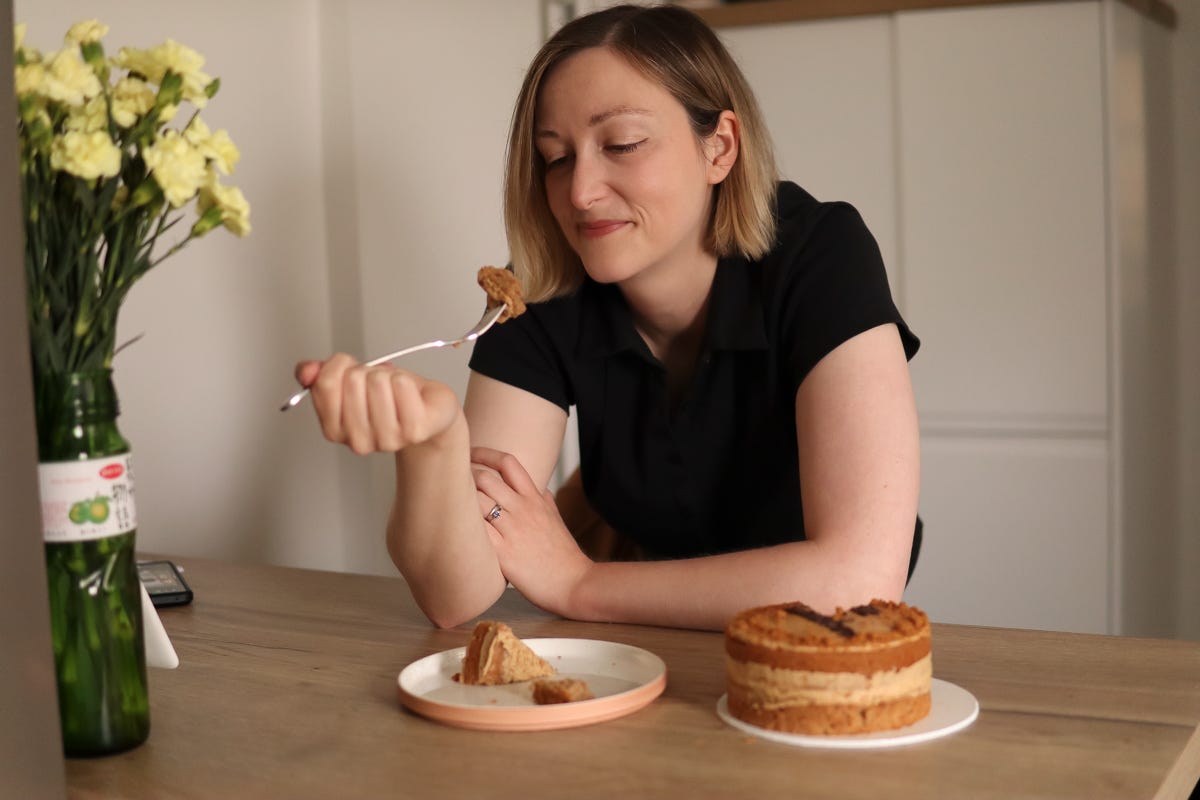
This week, I reached 10,000 subscribers on YouTube. I had planned on being quiet about it, getting myself a cake (because I think we should celebrate things we achieve), and celebrating with my husband privately.
Not because I don’t want to thank anyone or share, but because I didn’t want to feel like I was bragging. However, he bullied me (with love) into sharing with you, so here I am.
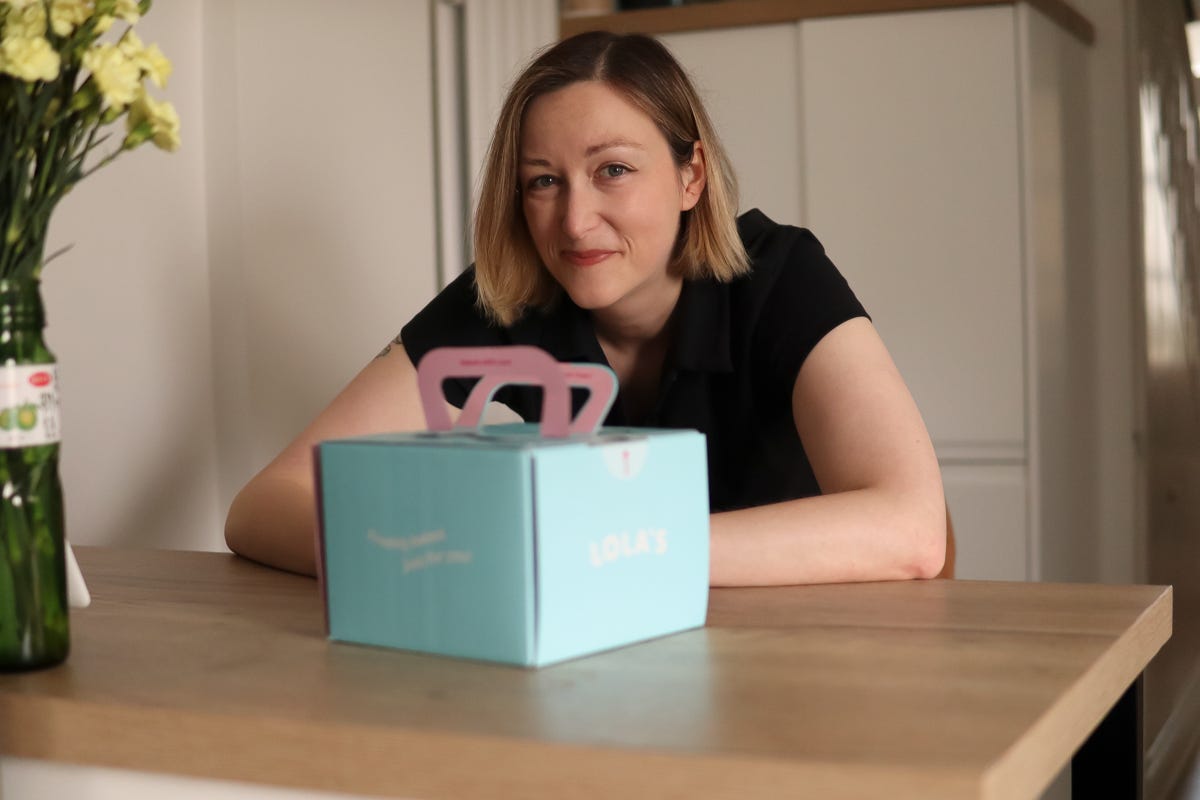
I didn’t just want to share a photo of the achievement and then have done with it. If I was going to share, I wanted to do it in a way that would give a little value back to you.
So, I put together this post. It contains 10 lessons I’ve learned on the road to 10k subscribers on YouTube. It’s rough, raw, and a little vulnerable. So enjoy!
Creating content online is a numbers game. It just is. The platforms you post on make it that way. If it isn’t the number of likes you get on Instagram, it’s views on YouTube, or saves and views on TikTok.
Each platform encourages you to look at these as benchmarks to gague how successful your content is. And even if you start creating content with the intention of never looking at these, I believe they will get you eventually. Not because you have no willpower, but because they bake psychology into them. It’s very hard to resist.
So, I believe, to save your sanity, finding ways to detach from these metrics is so important.
To me, this means:
Looking at views, but feeling very little when I do.
Paying attention to comments instead.
I’ll explain both a little more.
It has taken me a long time to do this, and I’m not perfect. But when I look at a video’s views, I do so with a detached mindset (as much as possible).
Note: This only applies when the video has fewer views than expected. If it has higher views than expected, I can’t stop looking at it. Probably another thing to work on.
The only reason this happens is because I know when I created the video, I did the best job I could at the time of making it. Sure, I can hope it will get more views than it does, but once it’s out there, it’s out of my hands.
In other words, I can’t control it, and there’s nothing worse than getting upset about things you can’t control. I know, I’ve been on that ride for years. The only things I can control are the quality of the video itself. So once it’s on the internet, I have to remove myself from the outcome.
Next, I pay attention to the comments instead. For the most part (I’ll talk about this a little more later), the comments are a positive and uplifting place for me. They’re full of people engaging with the thing I’ve created, the topics I want to discuss.
This is the ‘metric’ that matters most: people’s voices. I focus on that, and my feelings on the other numbers matter a lot less.
When you start a YouTube channel (if you’re anything like me), you’ll start to seek out wise voices and get some tips, tricks, and insights into how to grow a channel on YouTube.
You’ll start looking up microphone tips, thumbnail designs, intro hooks, lighting, and any information you can get your hands on. Your intention is to create better videos so you’ll be seen by more people. We want that when creating videos, otherwise we’d just make them all private.
But once you start looking for these kinds of things, the algorithm kicks in, and it will show you more. You’ll start to see hacks and strategies, ways to ‘break the algorithm’, and get as many views as possible in the shortest time possible.
Some of this advice will include the frequency at which you post. A lot of people will say that if you post every day, or even once a week, you’ll reach more people. After all, the logic is that the more you post, the more chances you have at being picked up.
While I can see the logic in that argument, I don’t think it actually helps smaller creators.
Posting to a schedule that makes you overwork yourself for the sake of views is harmful. It can make you even more frustrated when you’re not getting results, and lead to burnout while you’re grinding away.
Please for the sake of your sanity, take your time. Find a routine and posting schedule that suits you and do that. I used to post a video once per week, but it was exhausting. That schedule made me neglect my other hobbies, my spare time in-general, and I was teetering on the edge of burnout. Not only that, but it made me rush through creating videos that could have been 10x better had I taken a little more time to create them.
To combat all this, I switched to one video every two weeks which gives me way more balance and if I need or want to, I can change that at any time. It’s my channel after all.
Creating content online can sometimes feel like you’re shouting into the void. Sure, you have the comments section, but it’s just not the same as having your own community you can talk to.
I created my Discord server in 2020 (I think), and I’m so, so glad I did. It took a while to build it up to what it is today, but that effort was 1000x worth it.
There is nothing like creating a little community you call home with a bunch of like-minded people who like talking about books. Because you get to know people in a different way, beyond the comments section. People share what they’re up to, photos of their pets, and when it’s time for my monthly readathon, the buzz I get from that is unmatched.
It’s a lot of work, don’t get me wrong, but it has been worth every single hour I’ve put into it.
I include my husband in this, but having friends you can talk to about creating content is invaluable. Especially if they understand what you’re saying, or they create content of some shape or form too.
There have been countless occasions where I have felt impostor syndrome, anxiety, doubt, or uncertainty. Each and every time I’ve reached out to one or more friends and they’ve rationalised those thoughts and given me the pep talk I needed.
I might not have kept going this long without them.
It took me around 5 years to get to 10k subscribers on YouTube. To some, that might seem like a long time. To others, not that long at all.
You’ll see people create videos on the platform that talk about reaching 1,000 followers in a few weeks, or 10,000 in a year. It will make you think you’re doing something wrong. Or, you should be further along than you actually are.
What those videos don’t tell you is they are outliers. They might have been in the right place at the right time, or have existing skills that give them a boost, or they make videos on a niche that typically does well on the platform. The reasons for someone doing well, and faster than you, are endless, complicated, and they might not even know how it happened either.
My point is, there’s a huge element of luck in growing on YouTube. Not because people get picked up by the algorithm by sheer luck, but because creators stumble upon content that works for them, and then it sticks. Most people don’t really know what’s going to work until it happens.
So when you’re feeling a bit low about your progress, please don’t. It takes time to learn skills, to find what you enjoy making, and to find something that others like too. My growth on the platform has been slow and steady, with some bursts from specific videos doing well.
Your journey might look similar or completely different. The point is, the pace at which this happens is neither good nor bad, it just is. As long as you enjoy doing it, the time it takes to get there will be worth it.
At least I have anyway…
For me this means not only watching other book-related content, but taking inspiration from content and media outside of that niche. Especially things that you enjoy.
When you do this, you’ll be exposed to different ways of being creative, different techniques, topics, and content in general. It’s like if you’re a writer working on a manuscript for a fantasy book. Only reading other fantasy books is fine, but you’ll get some of the best inspiration from books outside of that genre.
For me, that means watching video essays on different topics, exploring articles on different topics, generally paying attention to the things I enjoy, and drawing inspiration from those.
Warning: this is the vulnerable section and talks about mental health and the negative side of all this.
The nature of creating content online, especially content that has an opinion in it, means people will tell you theirs in return. Sometimes, these are opinions are of you, and sometimes, they're not nice. Sometimes they accuse you of doing things you would never, nor have ever done. Sometimes they'll question your character, your morals, your intentions. They'll do all this based on one piece of content you create.
They don't know you. They don't know the kinds of things you stand for. They don't know what you’re like in real life. They've not watched any of your other content that might showcase this. They might not have really watched the piece of content they've commented on.
It's human nature to judge someone based on your first interaction with them. It may be cruel and unnecessary to comment in a hurtful way, but it happens. It's also human nature for you, as the creator of that thing, to have a reaction to said comments.
If you're like me (a people pleaser), that reaction might feel like the world is ending, initially. It might feel like anxiety, it might make you want to quit. That is also human nature. You feel rejected and misunderstood. It's difficult to take.
People say you should develop thicker skin, which I feel is a pretty mean way of saying to suck it up and take it. While I do think we all have to navigate this at some point, if we're creating content online, I don't think the issue is solved by 'developing thicker skin'. It's not something you create, and then you never feel bad when you read a nasty comment again. We don't suddenly become robots.
Instead, I think the key is to want to share your opinion, no matter if the comments are bad or not. To know that these comments will likely appear, but because you're solid in your opinion and want to share it, you'll be okay.
As a friend of mine told me when I had a particularly bad anxiety moment in response to comments, the world needs more people sharing alternative opinions. The world would be a worse place if you didn't.
It takes courage to do something like this, especially when there's the potential for something to reach more people (and therefore more comments). But it's absolutely necessary to do so.
I create content that comments on the book world. I talk about issues that are important to me, that I think are worth discussing. I aim to be as well-rounded as I can possibly be, while still being myself. My content rocks the boat even if I don’t intend it to. Yours might not at all.
Everyone sucks when they first start doing something.
I honestly don’t believe that people are born with any real special talent. I think there are, however, people who are lucky to find the thing they love (and have the right brain makeup for) at a young age.
I knew people in school who seemed to be supernaturally talented at things like drawing, athletics, or maths. And people would say, ‘Oh, they’re a natural talent. ’
Not only do I think that’s harmful to the person who is being called a ‘natural talent’ because it casts aside all the work they put into their skill. But it also harms the other people around them because it tells them that they can try to be good at this thing, but they will never be as good as a naturally talented person. Come on, people!
Anyway, my point is, if you’re thinking about starting a YouTube channel, you’re probably going to make some crappy videos to start with. Even if you have skills in specific things like lighting, graphic design, or script writing, your videos likely won’t align with the quality you have in your head. And that’s absolutely fine.
My first videos were terrible. I was speaking at a glacial pace, my eyes were devoid of life, and the footage was so overexposed, I blended into the white walls of my living room. They’re the type of videos I watch now, just to see how far I’ve come.
My motto has been that if I can improve my videos by 1% each time, I’ll make slow and steady progress that won’t overwhelm me, but will make a massive difference over time. If you can have that mindset too, you’ll do just fine.
One of the things I love most about YouTube, is that if you create videos that are relevant no matter when you watch them, they have the potential to gain views for a long period of time.
Some of the content I created years ago is still generating views right now. People are still finding me based on these videos. That’s amazing.
When you create a video, you put a lot of hours into it. It takes ages to script, film, edit, and post. If you create content too, you know exactly what I’m talking about. So if you can create content that doesn’t fall off the face of the internet planet 24 hours after you post it, that’s a huge win.
I’ve had many videos do poorly (by my standards) in the first 24 hours, but a few days later, they start picking up and become some of my most successful videos. So don’t give up hope on some of your content, it has the potential (on YouTube anyway), to pick up later.
I’ve said this a few times in this post, but creating video, or content in general, takes a lot of time.
I’m not sure we can really call this kind of thing a hobby. I think it sits in this in-between space. It’s not a hobby, nor is it work, but it is almost both of those things. That’s what it feels like to me, anyway.
So when you’re dedicating that much time to something ‘in between’, you need to make sure you’re doing it for yourself. Do you do it because you enjoy it? Because it gives you some kind of fulfillment? Or fills a space in your life that work, study, or play just can’t?
If you answered yes to any of those, then you’re good! We don’t have to love every aspect of creating content; that’s impossible, but we should be doing it to make our lives better.
If it starts to become a burden, tips towards burnout, or makes you unhappy, then it’s time to break that down and consider how you can get back to a space where it becomes something for you again.
Note: If you’re reading this and you create content for a job, you can pretty much ignore this lesson. I don’t know what that’s like, so I don’t want to give advice on it. You do you friend.
If you made it to this point, wow, you like to read rambly stuff, huh?! But also, thank you. I’m not sure if you’ll take anything away from this, even if it’s just understanding me better.
I’d love to know your thoughts either way, so leave me some comments!
Comments
Nothing yet. Say the first thing.
Sign in to join the conversation.