

There’s a moment in every industry where the gatekeepers explain their own gate to you, on camera, like it’s a virtue. I watched three editors do exactly that recently — describing, cheerfully, a model built on being first to publish, on celebrity embargoes that can hold a finished project unseen for two years, on a closed loop of relationships that decides who gets the page before anyone’s looked at the work.
I want to be precise about what I’m not saying. I’m not saying editorial judgment is the enemy. A magazine that stands for something needs gatekeepers — that’s the whole job. What I’m saying is that somewhere along the way, exclusivity of timing replaced exclusivity of taste, and nobody in the room seemed to notice the substitution.
Here’s how it actually works, if you haven’t seen it from the inside. A project finishes. It’s good — good enough to publish. And then it waits. Sometimes two years. Not because the work isn’t ready, but because the celebrity attached to it isn’t ready to be seen yet, and the moratorium on any public image of the space runs until someone else’s calendar says otherwise. The designer sits on a body of work finished today, embargoed until some quarter no one’s confirmed.
Meanwhile: sourcing. Open any three major shelter titles in the same month and count the vendors. You’ll run out of fingers before you run out of magazines. The same eleven names, rotating through every “fresh” issue, until the sourcing itself becomes more recognizable than the room it’s furnishing. That’s not curation. That’s a supply chain wearing a designer’s decision matrix and an editor’s byline.
A closed loop of the same handful of vendors, paired with celebrity-embargo publishing that can hold a finished project unseen for years, has replaced editorial judgment with exclusivity of timing.
None of this is a secret, exactly. It's just rarely said plainly, because everyone still needs the access. Well, not exactly everyone. So: plainly. The result is a shelf of magazines that increasingly read like the same magazine, restocked.
It doesn’t have to work this way. It hasn’t always. World of Interiors built forty years of relevance on rooms nobody else would run. Cabana treats a printing error as a design decision. Early Kinfolk made restraint feel like a discovery instead of a trend cycle. None of them needed the same eleven vendors or a two-year hold to matter. They needed a point of view and the nerve to publish it.
So here’s the thought experiment. Not a pitch, not a prediction — a cover cast for the issue that would exist if talent, not timing, decided who got the page.
Ethan Hawke — the artist as observer. Not a designer. That’s the point. Hawke’s public career has spent decades circling the same question from every angle available to him — paint, prose, direction, performance, and increasingly music, having co-founded a label built around unheralded Americana and roots artists and directed a documentary tribute to Merle Haggard — without ever needing to claim expertise in any single one to be taken seriously in all of them. Put him on the cover and the message lands before the first paragraph: craft isn’t a credential, it’s a posture.
Michael Robbins — the furniture maker as editor. This is the cleanest hit on the thesis. Robbins runs a small handmade furniture studio, largely self-taught, who spent years living off the grid building houses before turning to furniture. No showroom, no rep line, no vendor code — made, not sourced. The case makes itself: this is what “editor” means when the editing happens at the bandsaw instead of the mood board.
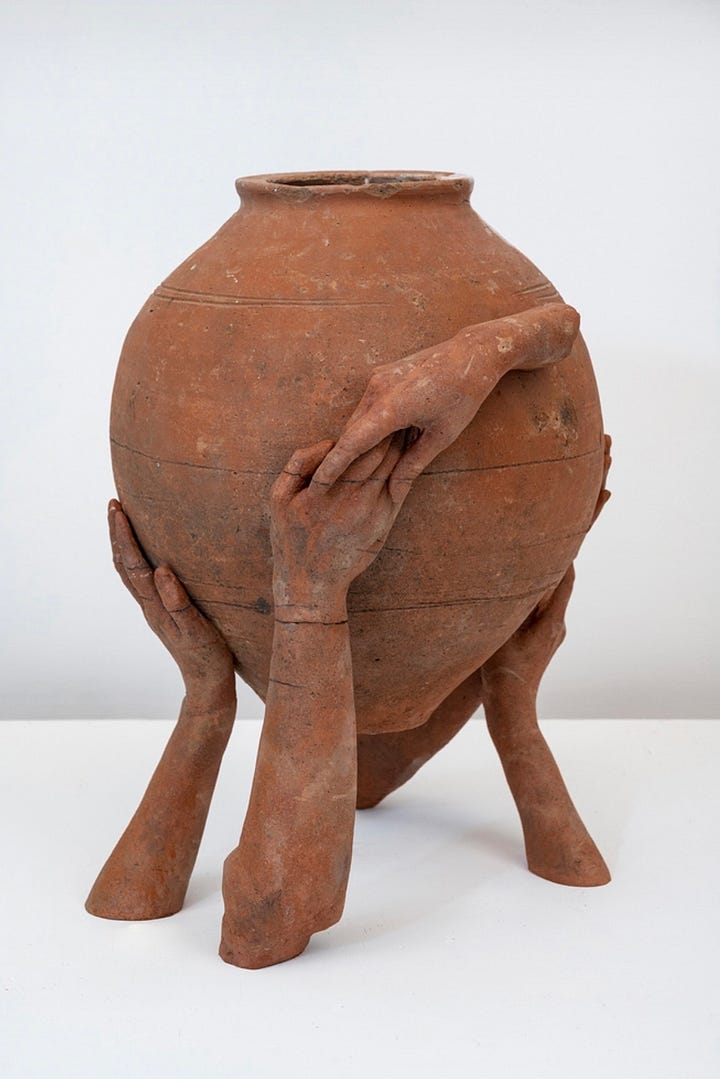
Clementine Keith-Roach — the ceramicist as archaeologist. Her work treats the vessel as body and artifact — casts and impressions that read like something excavated rather than thrown. The archaeologist framing is already built into the object before anyone writes a caption. She widens the issue’s range past pure function into something closer to fine art, and the contrast is exactly what a “curated” issue never risks.
Aaron Levine — the designer as anthropologist. Levine runs his own label with a point of view that doesn’t perform for a season calendar. He studies how people actually dress, then designs from that observation instead of from what already sold last quarter. On this cover, he’s proof that “commercial” and “considered” aren’t opposites — they’re just rarely allowed to share a page.
Four covers. Zero embargoes. Zero overlap in the vendor list, because there isn't one — there's a maker, a ceramicist, an actor, and a designer who all answer the same question differently: where does the work actually come from?
Real luxury. Created. Not sourced. Not embargoed. Not for sale to whoever bought the most pages this quarter.
That’s not a criticism you can run in a trade magazine. It’s the thing the trade magazines can’t say about themselves. So I’m saying it here.
—xG
AUTHOR
Gil Melott is the founder and principal of Gil Melott Studio, a nationally recognized luxury residential and boutique hospitality interior design practice based in Chicago, with presence in New York and select national markets. The studio has received an Interior Design Magazine Best of Year Award, international press recognition in WSJ, AD España, Elle Decor, Veranda, Galerie, and Luxe Interiors, and produces the Bespoke Collections product line including the award-winning LUZ lighting series.
The studio works with a selective roster of clients who understand that a home is not a credential — it is a life, authored. Current availability includes projects in the New York metro, Connecticut, Dallas, and the Bay Area.
Design Alchemy is his ongoing editorial practice — and the basis for a documentary series currently in development — exploring spaces with authorship, interiors with intention, and the design conversation that the industry mostly avoids having.
No posts
Comments
Nothing yet. Say the first thing.
Sign in to join the conversation.