
There was a time when a wealthy client walked into a room and told you what they’d seen — a hotel in Marrakech, their grandmother’s sunporch, a color they couldn’t stop thinking about since a trip in 1994. Something lived-in. Something that had cost them nothing but attention. Now they walk in with a phone. Forty saved images, and I can name the eleven vendors responsible for all of them before they’ve finished scrolling. The plaster. The fluted island. The exact shade of greige that has no name because it was never chosen, it was sourced.
I don’t blame the client.
Nobody sits down and decides to want what everyone else wants. I blame the supply chain that got there first, dressed up as inspiration.
Here’s what nobody tells you about taste at this income level: it used to be slow by necessity. You had to travel to see it, save to buy it, live with a mistake long enough to learn from it. Slowness was the filter. It kept out everything that couldn’t survive a decade of actually being looked at. What we have now is taste with the filter removed — instant, frictionless, infinitely scrollable — and what floods through when you remove a filter is never the rare thing. It’s the median. Forty tabs of the median, agreed upon by forty thousand people who’ve never met, converging on the same plaster wall in Aspen and Palm Beach and a new build outside Nashville, none of whom think of themselves as unoriginal, all of whom are shopping from the same eleven sources.
“That house looks so RH” isn’t a compliment anymore. It’s a diagnosis.
Take the easiest example, because it’s the one everyone already half-knows. A certain quarterly-catalog behemoth spent a decade turning “curated” into a verb you could buy by the square foot — the oversized chandeliers, the symmetrical galleries, the industrial-glam formula so total it became shorthand. “That house looks so RH” isn’t a compliment anymore. It’s a diagnosis. And this year the diagnosis showed up in the numbers, not just the discourse — an earnings miss, a stock down more than 40% since January, a company blaming tariffs and a frozen housing market for what critics have been saying for two years, which is that the aesthetic stopped evolving and the market noticed before the client did.
I bring this up not because RH is uniquely guilty. It isn’t, and making it the villain lets everyone else off the hook. It’s just the most visible organ failure in a body that’s been sick for a while. Serena & Lily did it with coastal grandmother beige. One Kings Lane did it before that, in the years when “shoppable” first started meaning something. Pinterest did it structurally — not by selling anything, but by turning aspiration itself into a feed, which meant taste stopped being something you developed and became something you scrolled past until it looked familiar enough to trust. The mechanism is always the same. Something starts as a point of view. It gets loved for the point of view. Then it gets scaled, and scale requires the point of view to become a formula, and a formula is just a point of view with the risk removed. By the time it reaches a client’s phone, it isn’t a point of view anymore. It’s inventory with good lighting.
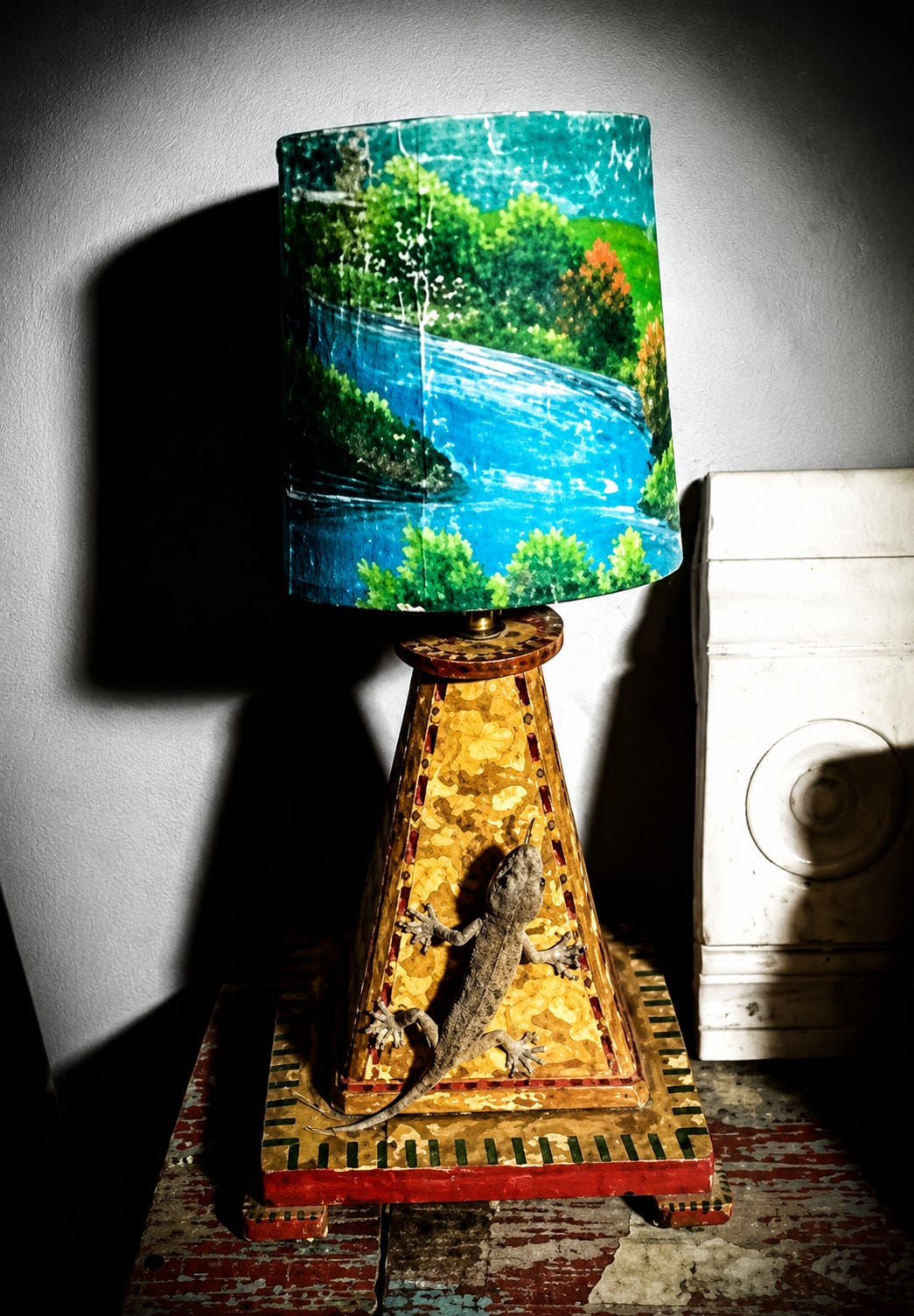
This is what I mean by sourced, not chosen. Taste used to be an accumulation of a life — the things you kept, the things you fought your mother about, the ugly lamp you refused to give up because it was the first thing you ever bought yourself, with your own money, against someone’s advice. That friction was the point. It’s how you knew the choice was actually yours. Now taste arrives pre-cleared, pre-loved, pre-approved by forty thousand strangers, and it has excellent, unimpeachable, thoroughly laundered credentials. That’s the trick of it. Nothing about it looks wrong. It just all looks like it came from the same eleven places, because it did.
I still meet clients who resist this — who bring me the ugly lamp, who fight for the one thing in the room that doesn’t match anything else they own. Those conversations are getting rarer, and I’ve started to notice they correlate with something specific: the clients who resist aren’t the ones with the most money. They’re the ones who still remember choosing something before they knew whether it was correct. Everyone else brings me their forty tabs, and I spend the first meeting doing archaeology — trying to find the one saved image in the pile that isn’t sourced, that’s actually theirs, that they’d defend if I pushed back on it. Sometimes there isn’t one. That’s the meeting that stays with me longest, and not for a good reason.
A house should be able to answer the question “why this, and not the version everyone else has.” If it can’t, it isn’t a home. It’s a very well-lit warehouse with your name on the deed.
Homes as heritage. Not performance.
xG
AUTHORGil Melott
is the founder and principal of Gil Melott Studio, a nationally recognized luxury residential and boutique hospitality interior design practice based in Chicago, with presence in New York and select national markets. The studio has received an Interior Design Magazine Best of Year Award, international press recognition in WSJ, AD España, Elle Decor, Veranda, Galerie, and Luxe Interiors, and produces the Bespoke Collections product line including the award-winning LUZ lighting series.
The studio works with a selective roster of clients who understand that a home is not a credential — it is a life, authored. Current availability includes projects in the New York metro, Connecticut, Dallas, and the Bay Area.
Design Alchemy is his ongoing editorial practice — and the basis for a documentary series currently in development — exploring spaces with authorship, interiors with intention, and the design conversation that the industry mostly avoids having.
No posts
Comments
Nothing yet. Say the first thing.
Sign in to join the conversation.