
Hello and welcome to Inspired, a weekly email for my paid subscribers. In this series I want to explore topics which I hope might spark some inspiration for your own photography. I will talk about my thought process for creating images, both in the field and in post processing. The posts will be linked in some way to the monthly challenges, hopefully giving you all lots of food for thought.
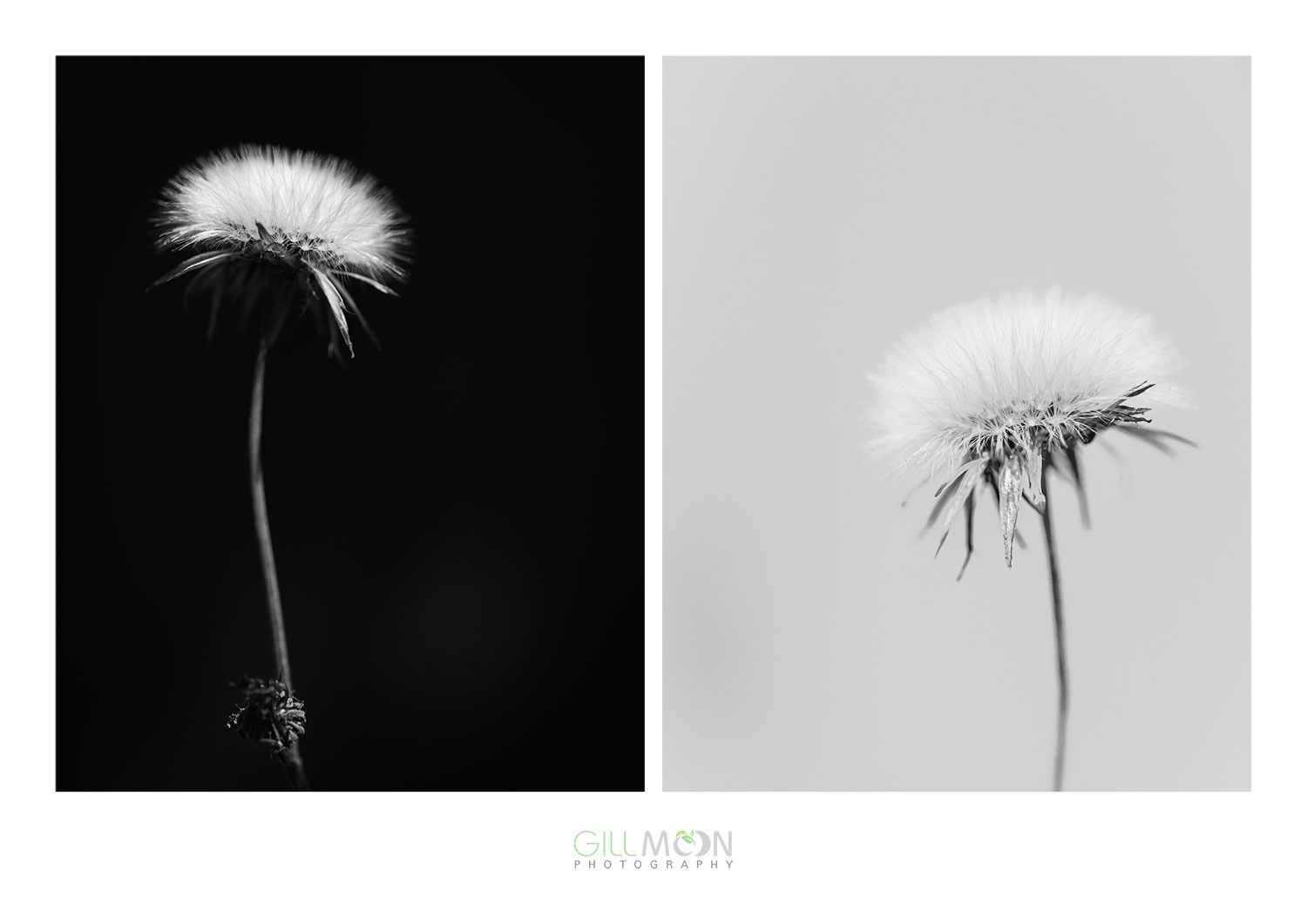
This week I have been working with detail, creating black and white pairs - one dark and moody with plenty of contrast and one much lighter and more high key in appearance. These contrasting pairs were created using natural light working with areas of shade and sunlight. I love the striking opposites that they make so in this weeks post I thought I would discuss how I achieved this effect using a selection of flowers that I photographed in some dappled light in Southwold.
My idea for this challenge was to create sets of images that contained one dark flower with a light background, contrasting with one light flower and a dark background. My challenge was to achieve this in camera by working with areas of shadow and sunlight.
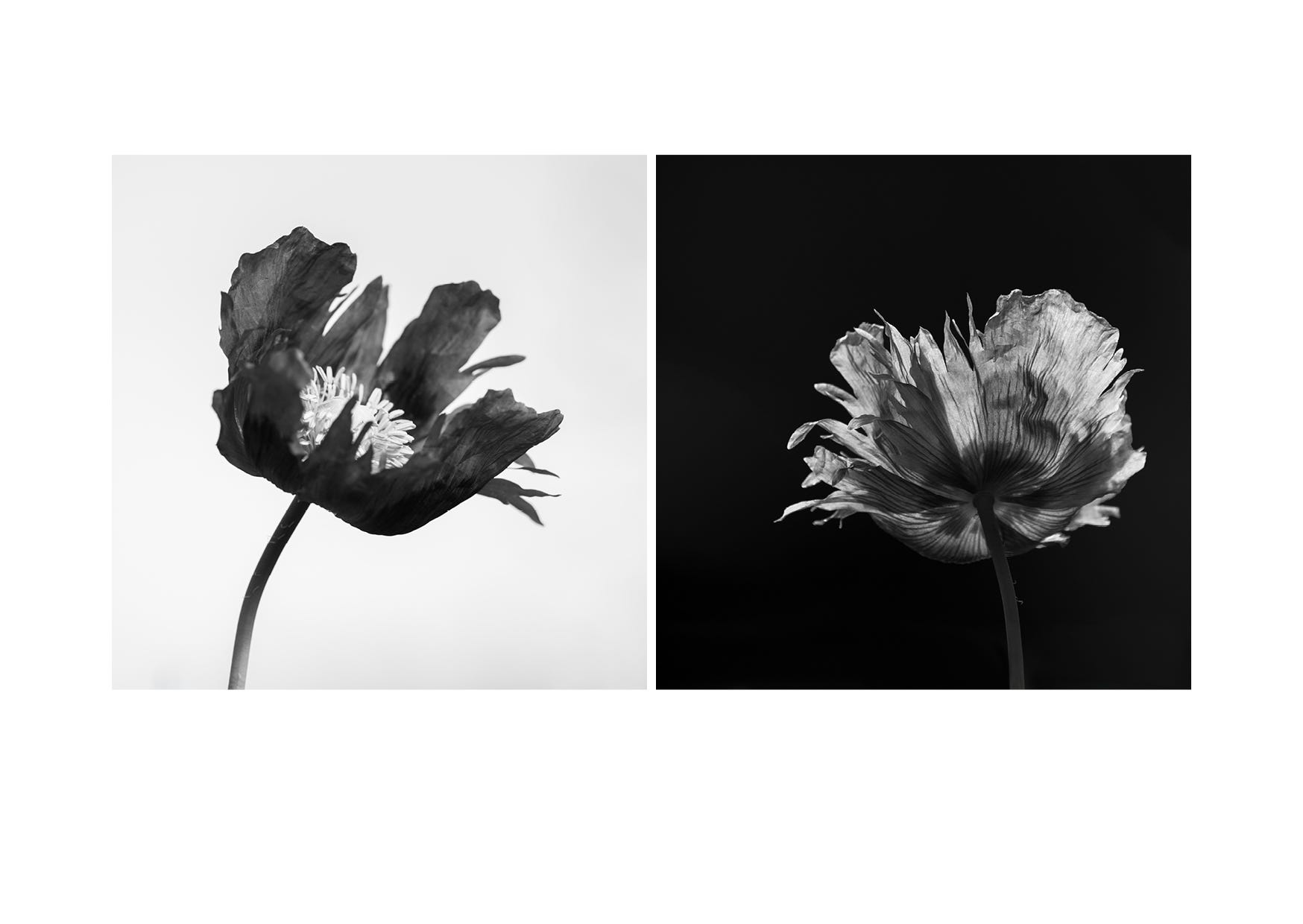
This pairing of poppies were growing in a patch of dappled light - the poppy on the right was lit by the sun and the one of the left was growing in the shade. To create the left hand image I chose a low viewpoint and took the image with the sky as the background. I over exposed this shot as much as I could without blowing the highlights in the poppy.
The poppy on the right was lit by the sun which already gave it some contrast. To achieve the dark background I selected a viewpoint where I could use the dark shadows from a tree as my background. I fine tuned my composition until the background was fairly uniform and then I underexposed the image.
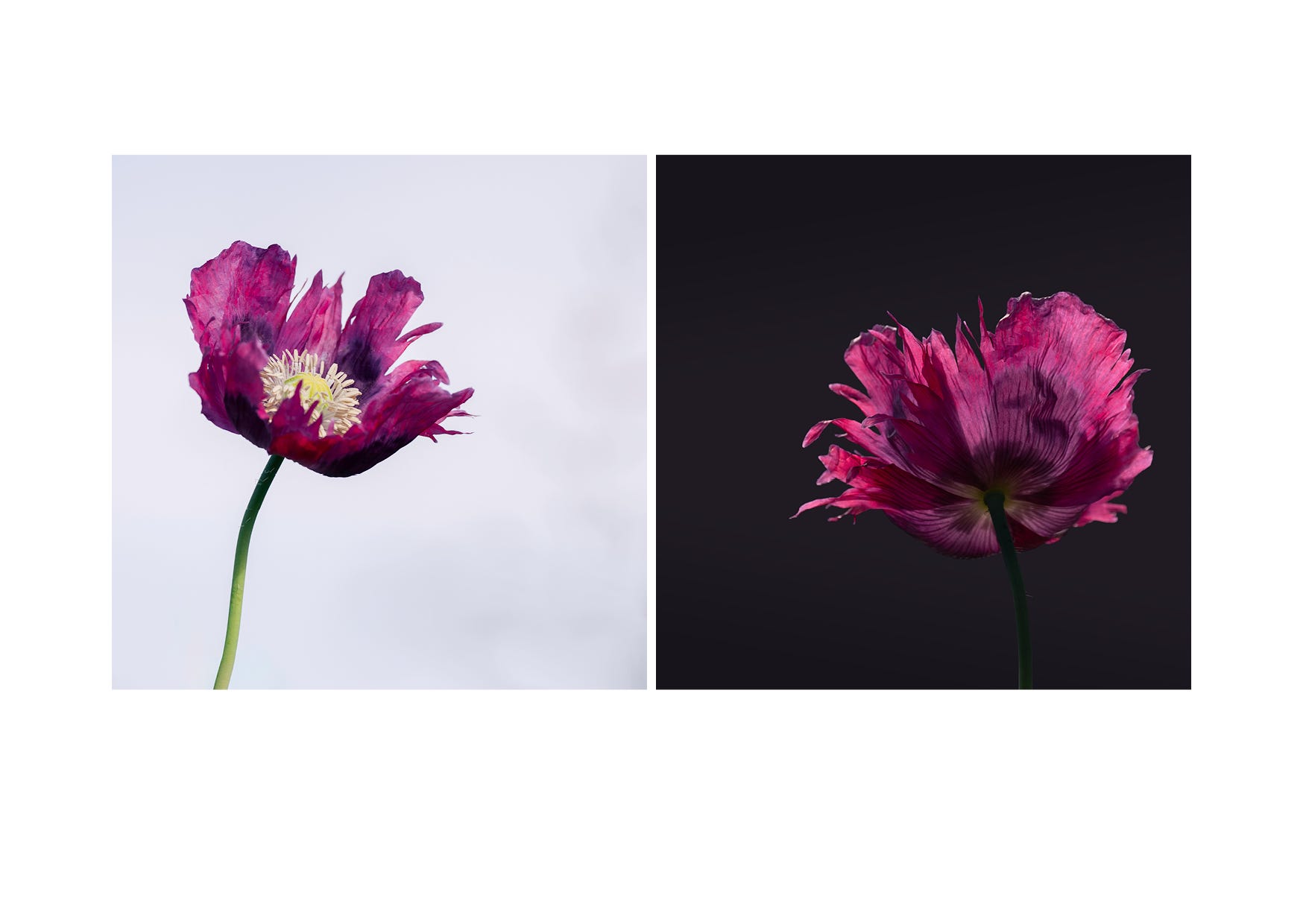
I worked on the contrast of both images in Lightroom. The colour versions of this pairing are shown below.
My next pairing shows what can be achieved by using Lightroom to create the contrasts rather than look for them in the field. For this pairing I used two images that were fairly similar in tonal value, but I have worked on them in different ways to achieve the result below. The differences are mostly due to how I applied the black and white mixer sliders, using the red slider to lighten the poppy significantly on the right hand image.
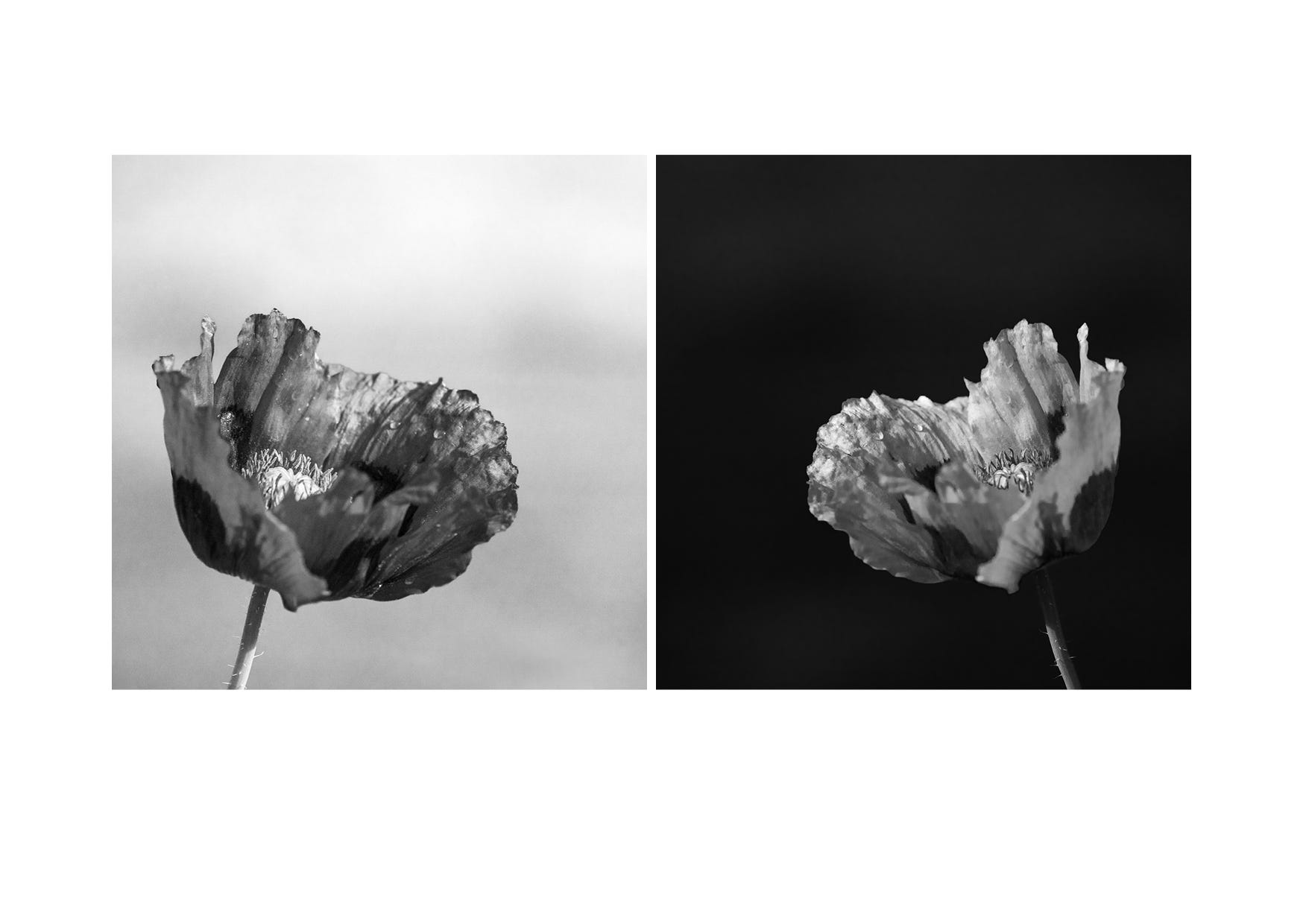
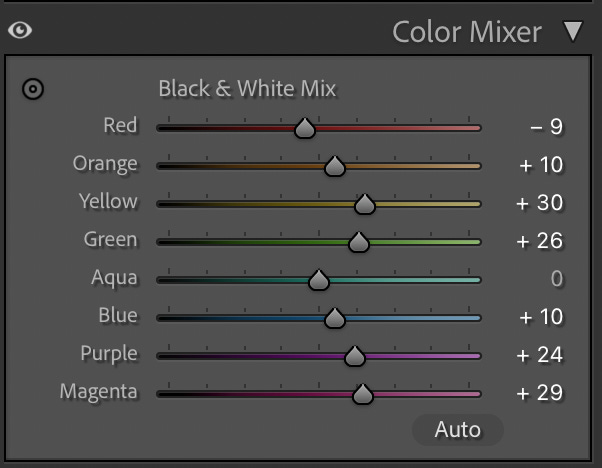
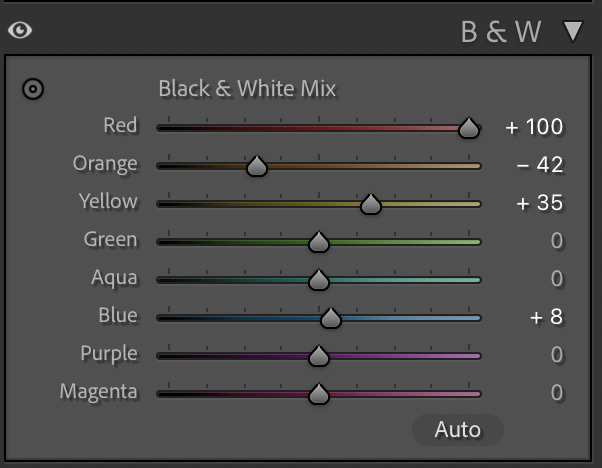
Personally I don’t think this pairing work as well as the first pairing. I think better results will always be achieved by working with sunlight and shadow instead of relying on post processing to create the contrasts. However I wanted to show this pairing to show how much you can change the appearance of an image by your processing choices.
The alliums below were created naturally using light and shade. When I came to pairing these images I decided that I only wanted to show a small portion of the flowers, working instead with negative space, repeating patterns and symmetry to create my diptych.
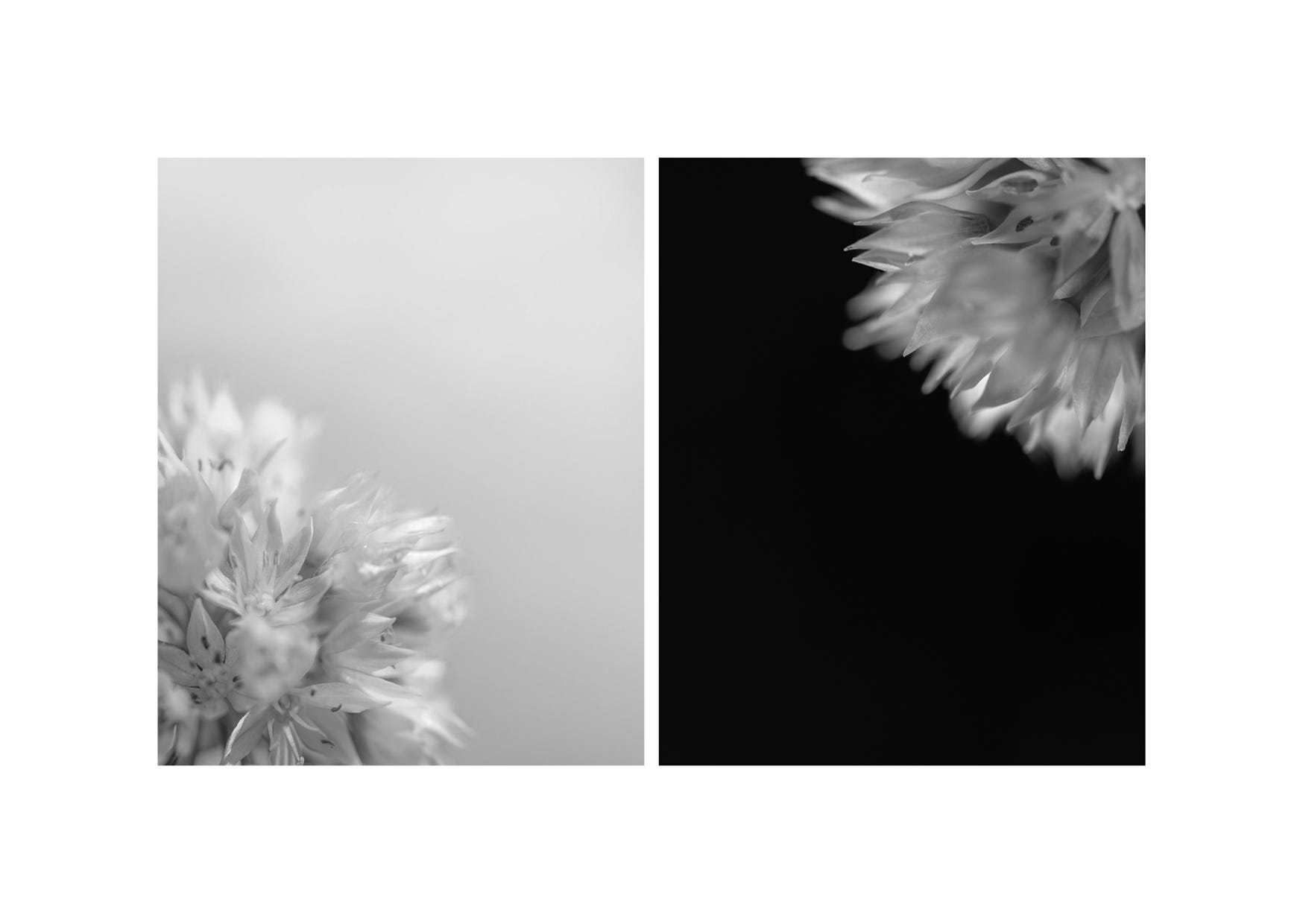
You can use any subjects for these pairings but I have focused on flowers because I particularly like working with them and as they are small it is easier to find areas of shade to use for the backgrounds.
I hope this post has inspired you to have a go with your own contrasting pairings. If so please share the results in the chat.
Thank you again for taking out a paid subscription and please chat or comment to get the most out of it.
Gill
No posts
Comments
Nothing yet. Say the first thing.
Sign in to join the conversation.