
For the last couple of weeks, I’ve been talking about what you need to tell a good story that sells.
A strong sense of your own voice
A great story structure that leads the reader back to where they started but in a new way
And today I want to talk about the 3rd essential: The threads you leave for the reader.
For a story to sell, it’s not enough that it is fun or enjoyable or makes the reader lean in. It also needs to be a vehicle to encourage the reader take action.
But if you’re not aware of where you want your story vehicle to take the reader, then you risk it just driving around aimlessly and wasting the potential you’ve built up. So a good vehicle needs to be paired with a great takeaway if it is to sell.
I heard James Clear talk about this at the Craft and Commerce Conference this year. He keeps a huge bank of story ideas and a huge bank of lessons that he wants to impart. Every few months, he looks through both lists to see if he can match any of them up. Only then will they come out of the banks.
Let me tell you as an editor, not enough writers use the James Clear method.
Stories and lessons are often mismatched or at the least, badly matched.
What I see many writers do is decide they want to write about a lesson or takeaway and just look around for the first story they can find that sort of matches it.
Or they have a fun story they want to tell, and they pair it up with something they want to sell, even if those two things don’t really connect.
And that mismatch, it can hurt the reader’s brain, even if they can’t exactly tell you what went wrong.
A story should feel seamless for the reader, but there is a lot of heavy lifting and planning that needs to be done by the writer for the story to not only engage but also naturally lead the reader to the intended action.
A story that moves the reader to action has a lot of threads woven into it and at the end, the reader themselves ties the important ones into a knot. This knot is the lesson that you want them to take away, the one that causes them to change their thinking and take an action.
And it’s easy to get this wrong in both directions:
The storyteller ties the knot: think of a fable or cautionary story you were told by your parents. They probably hit you over the head with the lesson, repeatedly. You probably rolled your eyes. There is no chance you walked away from that story without understanding the lesson they were communicating.
But that means you also didn’t come to the understanding yourself. When we join the dots, tie the threads, realize the implications ourselves, then that is insight, because it comes from within.
We had to do some work to reach the lesson. And our brains get mighty pleased when we do that work (like figuring out the murderer in an Agatha Christie before the last chapter).
This is why we take action, not because our parents told us we better (or else).
And note: AI is a terrible over-explainer. It almost always will tie the knot in your story.
Not pulling out the threads: it’s also easy to go too far in the other direction. The threads of the lesson you want the reader to take away are in the story, but they are jumbled, brought up just once near the beginning and then never mentioned again, and the reader is left with, well, a big ball of yarn with no idea what to do with it.
Often writers think that because a good story sounds seamless to the reader, all they have to do is tell a good story to achieve that effect. And it will work, in terms of the reader enjoying the story.
But a story that sells is about what happens next.
Note: AI will sometimes create stories like these, but only when the prompter who gives the story details hasn’t yet understood which threads need to be tied in the story. Usually they have the fun story but no lesson to go with it.
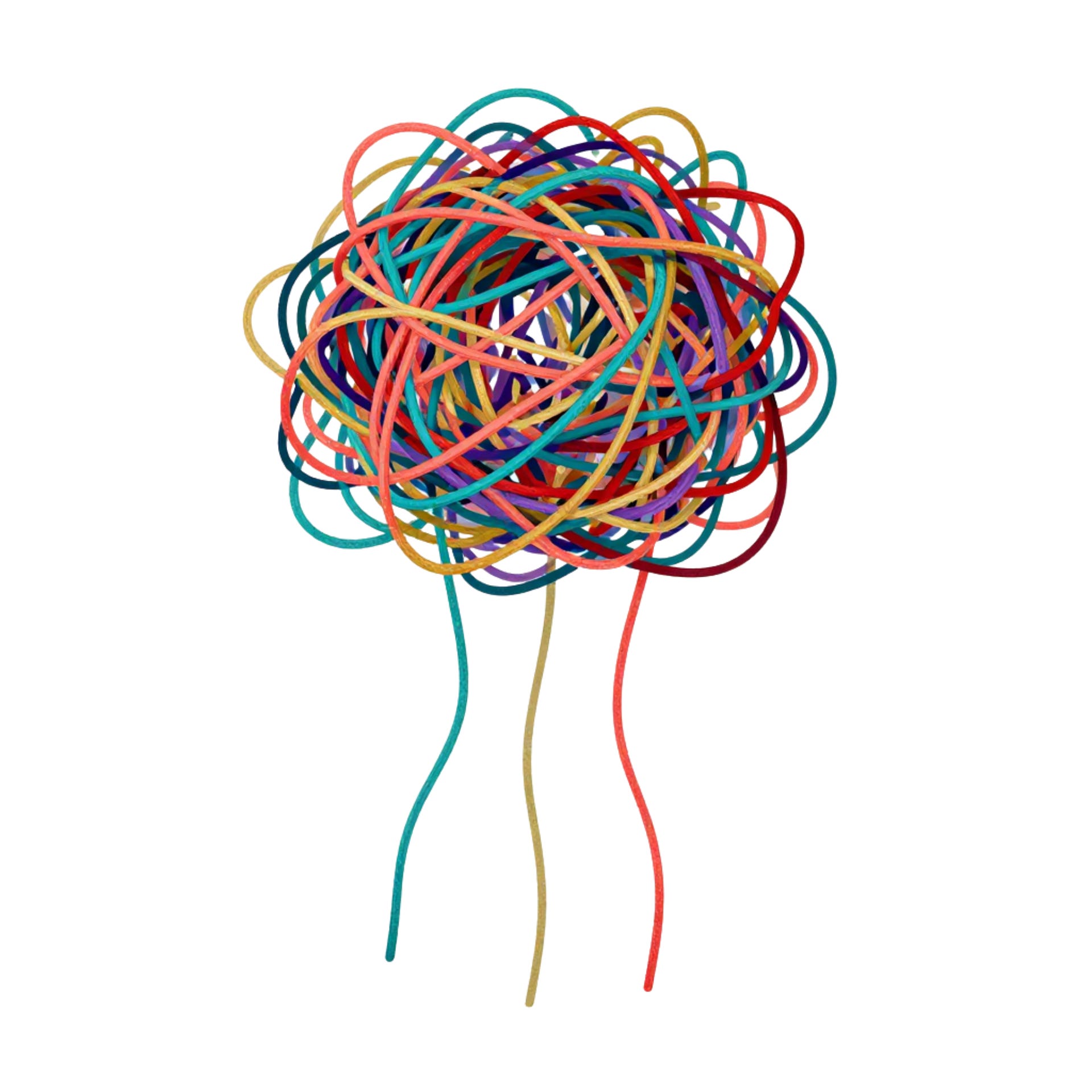
If this sounds harder than you thought; congrats! You are now ready to pull out the threads just a little, enough for the reader to take over.
Once you start to see it in stories, you’ll see it everywhere. And bonus, getting the threads ready happens in really good movies, books, TV series, TED talks, just as much as in stories that sell.
*Want me to break down this happening in a movie or TV series so you can see it? Let me know, I’d love to do it if there’s interest!
I also talk about this more in my Micro Stories that Sell workshop, where we practice building a story for your website where the threads are ready for your reader. I’m running it again on July 24th at 2pm MT and I’d love to see you there!
📖 Influence by Robert Cialdini. It’s been a while since I’ve read this one, but it’s on my business book club list for July, so it’s a great excuse to get it back out. I’m interested to see if/how he adds storytelling as a form of influence.
📺 House of the Dragons Season 3. Now the kids are up late for summer, we get about 17 minutes a night to watch TV, so one episode can last us all week🙃. I am intrigued by the theory that season 2 was cut from 10 episodes to 8 and therefore the first 2 episodes of season 3 should actually be the payoff of the last story arc.
🎧On Story: Michael Arndt Deep Dive. I will for sure be listening to this again, and hopefully breaking it down. Arndt wrote Little Miss Sunshine and Toy Story 3 and his way of explaining story structure and why it’s essential is the best I’ve heard.

Let’s spot some threads
No writing exercises on his holiday weekend! Go watch a movie or TV series or read a book (could be the same one as last week) and see if you can spot the threads.
And don’t forget, if you want to practice writing this way for your website, come to the Micro Stories that Sell workshop. We spend the last hour using my zipper technique to write our stories specifically to lay the threads juuuuust right. I’ll even check their placement for you 😉
Comments
Nothing yet. Say the first thing.
Sign in to join the conversation.