
Over the years, Scott Alexander has become more and more wrong on many topics (ironic considering he started his blogging career on the website LessWrong); this trend has been primarily caused by severe audience capture. He has fully decided to drink his own Kool-Aid. He has always been a weird, neurotic, and extremely dysgenic autist, but his writing used to be a lot more intellectually rigorous and interesting. Lately, he has become more and more obsessed by one of Effective Altruism’s (EAs) most retarded bugbears, AI doomerism. This trend has culminated in Scott lending his support to an extremely stupid project called AI 2027.
I hate the current AI safety ecosystem. Why do so many people insist on putting out fanciful sci-fi stories and calling them AI predictions? These are not predictions, they are wild speculations at best. A great example of this phenomenon was the rambling manifesto titled "Situational Awareness" (a very ironic title) that was put out last year by German stick insect Leopold Aschenbrenner. At one point in his tediously long screed, he says, “We should expect another preschooler-to-high-schooler-sized qualitative jump by 2027.” First of all, what the fuck does this even mean? The average preschooler can’t even read, so comparing it to an LLM makes no sense whatsoever. Second of all, LLMs are still way worse than average high schoolers at certain things (like having a sense of humor). And way better than the average high schooler at others (like naming all the countries on Earth). However, this is not even the biggest issue with his rambling disquisition. The main issue is that every single technology humans have ever invented hits a point of diminishing returns. Exponential trends never stay exponential.

(This Reddit comment sums up what I think of these arguments. For some reason, no one is able to take the idea of diminishing returns seriously.)
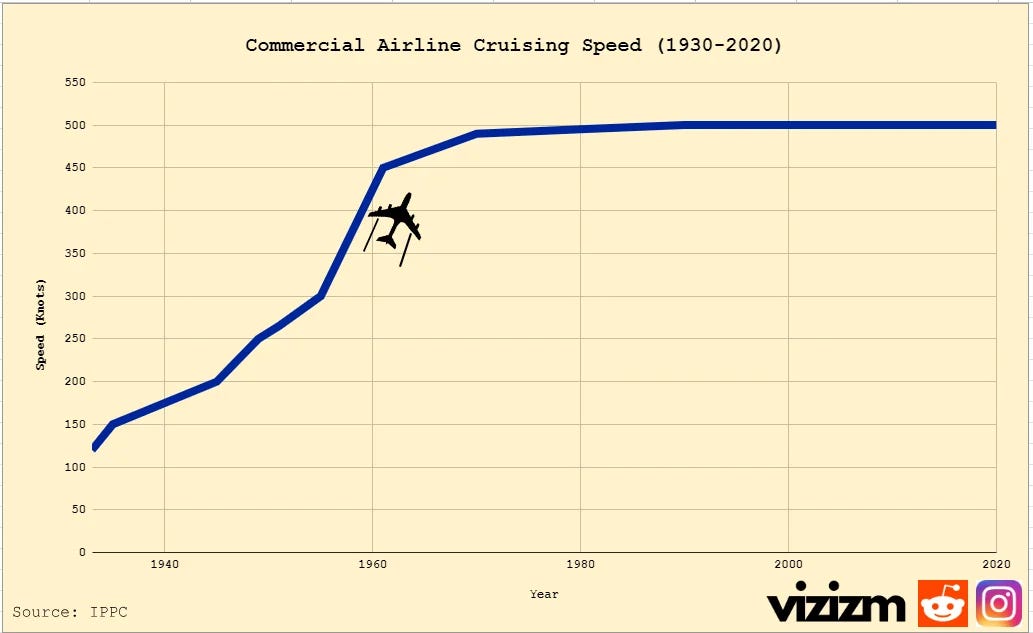
Look at this graph for commercial airplane cruising speed. Looks pretty exponential until 1960? If Scott Alexander had been a tech writer in 1955, he would have probably predicted that planes would be travelling at 99% the speed of light by now.
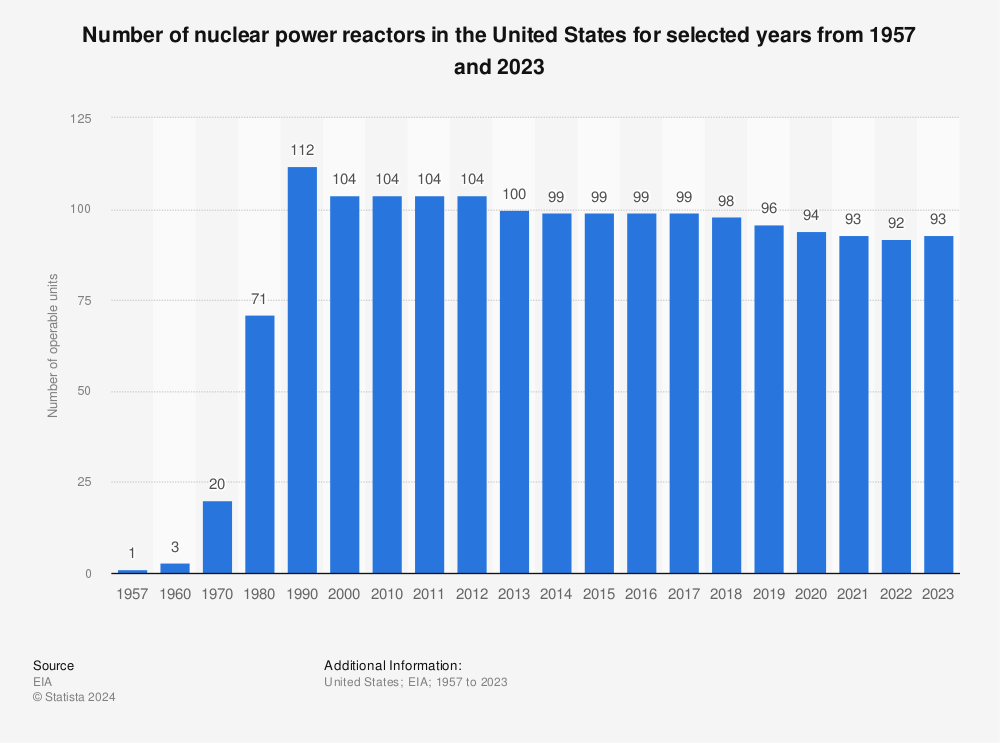
Here is a graph of nuclear generators in the USA. If Scott had been a nuclear power shill in 1985, I’m sure he would have predicted that 99% of our electricity would be provided by nuclear at this point. Instead, the real number is 19%.
In order to shill his AI doomerism, Scott has decided to go on Dwarkesh Patel’s podcast. What are Dwarkesh’s qualifications, you may ask? Well, essentially, he is an extremely obsequious 23-year-old college student with an obnoxious laugh.
Here is an insightful Reddit comment by U/muchcharles
“Within a few minutes the host gets the release date of chatgpt wrong by a year, and the experts who developed a hyper fine-grained month by month timeline to singularity in 2 years don't correct him.
They dedicate about an hour at the end talking about inside baseball about blogging and Livejournal after talking through near certainty of the rapture in 2 years.”
Clearly, we are dealing with some intellectual titans here. But wait, they are also very humble. At the start of the podcast, Scott admits he doesn’t understand anything about AI. Ok, so why lend your credibility to someone else’s prognostication when you can’t judge if what they are saying is bullshit? Scott reveals his reason at the start of the podcast. He says, “I think writing about it is important, but I don’t know. You always regret that you’re not the person who’s the technical alignment genius who’s able to solve everything.” Essentially, he wants clout. He wants to be the guy who popularizes the “dangers of AI” and warns the world about AI takeoff. It’s very tiring how unserious this shit is.
Alright, so Scott has admitted he doesn’t really understand anything about AI. Who has he chosen as his expert that he wants to promote? Daniel Kokotajlo, Scott spends half the podcast with Dwarkesh glazing Daniel. So who is this guy? Well essentially, he is a self-satisfied asshole. This is how he responds the first time Dwarkesh suggests he may be slightly over-optimistic. “I agree that there have been plenty of people who’ve been more bullish than me and have been already proven wrong. But, they’re not me.” What a charming example of intellectual humility.
Daniel is a guy who looks like he could be the final boss of Reddit. And his ideas are just as stupid as one might expect given his physiognomy. Here is a quote from the New York Times article about him.
“In his previous job at an A.I. safety organization, he predicted that A.G.I. might arrive in 2050. But after seeing how quickly A.I. was improving, he shortened his timelines. Now he believes there is a 50 percent chance that A.G.I. will arrive by 2027 — in just three years.”
Wow, what caused him to adjust his prediction by 23 years (92% faster)? Well, unfortunately, he never gives us a detailed answer. But he worked for an A.I. safety organisation. He must have a very accurate and unbiased opinion, right? Let me ask you this: If you asked a student doing their post-doc in climate “science” if we should be worried about global warming and if we should spend a bunch more money on researching its implications, what do you think their answer would be? Do you think they would say that it’s not an immediate issue and that we are already spending plenty of money and resources researching this problem? Somehow, I doubt it.
I can already predict what AI simps will say about this. “Nooooo, you don’t understand AI is a special technology because it has a magic thing called ‘intelligence’. It will be able to improve on itself”. Ok, first of all, as Curtis Yarvin has wisely pointed out, intelligence is not magic. It just entails better and better pattern recognition capabilities. Better patern recognition is cool and can help you to do a lot of usefull shit. But it has diminishing returns. For example, Many groundbreaking discoveries come from individuals with strong but not exceptional intelligence who approach problems with fresh perspectives rather than from the most conventionally intelligent researchers. This is one of the reasons why China has not produced much technological innovation relative to their massive population of scientists/engineers.
Anyway, what frustrates me most about the podcast is that sometimes Dwarkesh does a good job of challenging their arguments. But Scott and Daniel never give him any direct answers to his objections. At one point, Dwarkesh asks them why they believe so strongly in an intelligence explosion; shouldn’t they need extremely strong evidence before making such an assumption? In response, Scott claims that people have a default path where nothing ever happens, and that is an assumption in it of itself. This is obviously a straw man argument. Dwarkesh believes that AI progress will continue. But he also thinks that it will hit many bottlenecks along the way and that diminishing returns will affect every progress vector. Scott and Daniel are making a very strong claim that presupposes that exponential progress will remain exponential. Their viewpoint is the one that needs to be supported by extraordinary proof.
Scott and his ilk like to pride themselves on being “rationalists”. And yet, they are not immune to the ever-present human tendency of getting caught up in hype cycles. They get super excited about some utopian sci-fi narrative and then try to find any piece of information that they can to fit the narrative. This whole AI hype bubble is based on the speculative predictions of People who are heavily invested in AI and spend all day thinking about AI. Asking them if AI will continue to progress exponentially is like asking a Bitcoin hodler in the spring of 2021 what Bitcoin’s price will be in 2025. I guarantee you they would have said at least 1 million dollars. People like Scott are rightly eager to criticize the religious character of wokeism. However, they have such poor self-awareness that they are unable to see how their techno-religionsim fails prey to the same intellectually corrupt “reasoning” and belief formation.
The whole AI industry hype bubbble is retarded baecuase it relies entirely on “pseudo-profound bullshit” (PPBS). Ideas that sound important and sophisticated but are always left vague and undefined. Here are some examples:
Artificial General Intelligence (AGI). what does this term even mean? I have yet to see a reliable non-handwavey definition of AGI. I’ve seen people who say that it means that it will be able to literally do any cognitive task a human can do. Really? Will AI be able to perform a standup comedy routine better than any human by 2027? Do any of you dimwits actually believe this will happen?
Daniel’s AI Scenarios rely on the R&D progress multiplier. This idea is monumentally stupid. It is described as being “How many months of progress without the AI, do you get in one month of progress with all these new AI.” First of all, what the fuck is a “month of progress in R&D?” Do these idiots have any idea about how R&D works? You don’t get linear monthly progress. You make a big breakthrough once every few months/years, and you spend the rest of your time understanding the breakthrough and optimizing its implementation/efficiency. This retarded idea of an R&D progress multiplier is a microcosm of everything that is wrong with Daniels half-baked theories.
Automated coding agents. Daniel’s trump card when Dwarkesh brings up AI limitations is automated coding agents. He believes that once automated coding agents are better than humans, they will be able to iteratively improve the capabilities of LLMs. First of all, even if this were true (which is a big if), How the fuck are we supposed to get to the point where we have coding agents that are better than humans in the first place. His answer (paraphrased): “Well, we just gotta do more scaling. I know building bigger models hasn’t worked so far. But, if we just do even more of it, it will definetly will definetly work, trust me” Are you guys starting to comprehend the level of retardation we are dealing with?
The whole AI takeoff scenario is earily similar to the retarded idea of climate tipping points. climate experts say, “I know that so far cimate change has been mild and gradual but trust us, at some point we wil hit a magical ‘tipping point’ and suddenly all the giant sea turtles that hold up the earth will be choked by giant plastic straws, and the entire planet will fall into a huge vat of oil.”
These EA types love turning the world into data points that their autistic minds can comprehend. Even if the amount of data we collect from the world increases by orders of magnitude, it won't matter. Ultimately, no matter how much data you have, there will always be variables that you aren't capturing.
Throughout the podcast, Dwarkesh brings up some good criticisms about bottlenecks. Scott and Daniel's response always amounts to “Well, we don't know for sure. This particular thing could go a lot slower or a lot faster.” Fine, but then why in God's name do you assholes insist on releasing a hyper specific timeline that includes very precise dates for different events? If even one of the events in your prediction Takes 10 times as long, then the whole fucking timeline becomes useless. How are they not realizing that?
What is hate the most is when Scott tries to cover his ass by saying that the scenario is only 20% likely. He pulls the 20% number right out of his ass. It is based solely on his gut feeling/intuition. Unfortunately, human intuition has not evolved to be good at predicting such wide-ranging scenarios that involve the global economy and millions of interacting systems. This is why people very rarely are able to predict stock market collapses (something that is, on the whole, way more simple than runaway AI). Human intuition evolved to be good at predicting observable things on a local scale. For example: Is my neighbor trustworthy? Is my wife cheating on me? However, even in these simple scenarios, human intuition often goes wrong. And yet, Scott thinks that his intuition is so good that he is able to predict the likelihood of a specific future scenario involving technology that doesn't even exist yet so well that he can give it a specific percentage. This is so speculative that even calling it a prediction seems insulting to people who actually make informed predictions about things.
Another problem that they don't seem to realize is that you can't create progress in a bunch of separate scientific disciplines in a simulation. AIs hallucinate, and one small hallucination at the start of the simulation will lead to a consequence cascade where the initial corruption caused by the hallucination metastasizes and causes huge compounding errors in the simulation. It's funny because if they took this butterfly effect seriously, they would also realize that it impacts all their predictions in a similar compounding way. Which is why their scenario gets more and more retarded and wrong over time. Their predictions for 2026 are kind of dumb and speculative but probably not that far from reality. But their predictions for 2027 and 2028 go increasingly off-course and veer into the realm of schizoid delusions.
This is what they say about their limitations on the project website:
“Due to time constraints, important dynamics that we weren’t able to model include but aren’t limited to:
Uncertainty over AI R&D progress multipliers.
Training and experiment compute increases.
Future work could improve upon these limitations. We are also excited about other methods of takeoff forecasting which complement the perspective we’ve laid out here.”
This is extremely retarded, because these limitations are literally the most important things that should’ve been quantified before writing any of their sci-fi fan fic.
Let me give you an example of how things work in the real world. I work in forestry. Last week, I was at a meeting with some forest industry bigwigs discussing challenges to the sector. One of them said, “If any of you know how we can use AI in forestry, please tell us.” No one had an answer because there is no simple way to plug AI into a system. It’s like electricity, you have to use AI as the centerpoint and build your whole system around it if you want meaningful results. The idea that you can just “use AI” to automatically make an industry 50% more productive is so stupid that it’s not even worth discussing.
This is what Rodney Brooks (an actual expert in automation and robotics) has to say about midwits like Scott and Daniel who get caught up in the hype cycle.
“I want to be clear, as there has been for almost seventy years now, there has been significant progress in Artificial Intelligence over the last decade. There are new tools, and they are being applied widely in science and technology, and are changing the way we think about ourselves, and how to make further progress.
That being said, we are not on the verge of replacing and eliminating humans in either white collar jobs or blue-collar jobs. Their tasks may shift in both styles of jobs, but the jobs are not going away. We are not on the verge of a revolution in medicine and the role of human doctors. We are not on the verge of the elimination of coding as a job. We are not on the verge of replacing humans with humanoid robots to do jobs that involve physical interactions in the world. We are not on the verge of replacing human automobile and truck drivers worldwide. We are not on the verge of replacing scientists with AI programs.
Breathless predictions such as these have happened for seven decades in a row, and each time, people have thought the end is in sight and that it is all over for humans, that we have figured out the secrets of intelligence and it will all just scale. The only difference this time is that these expectations have leaked out into the world at large. I’ll analyze why this continues to happen below in the section on AI and ML.”
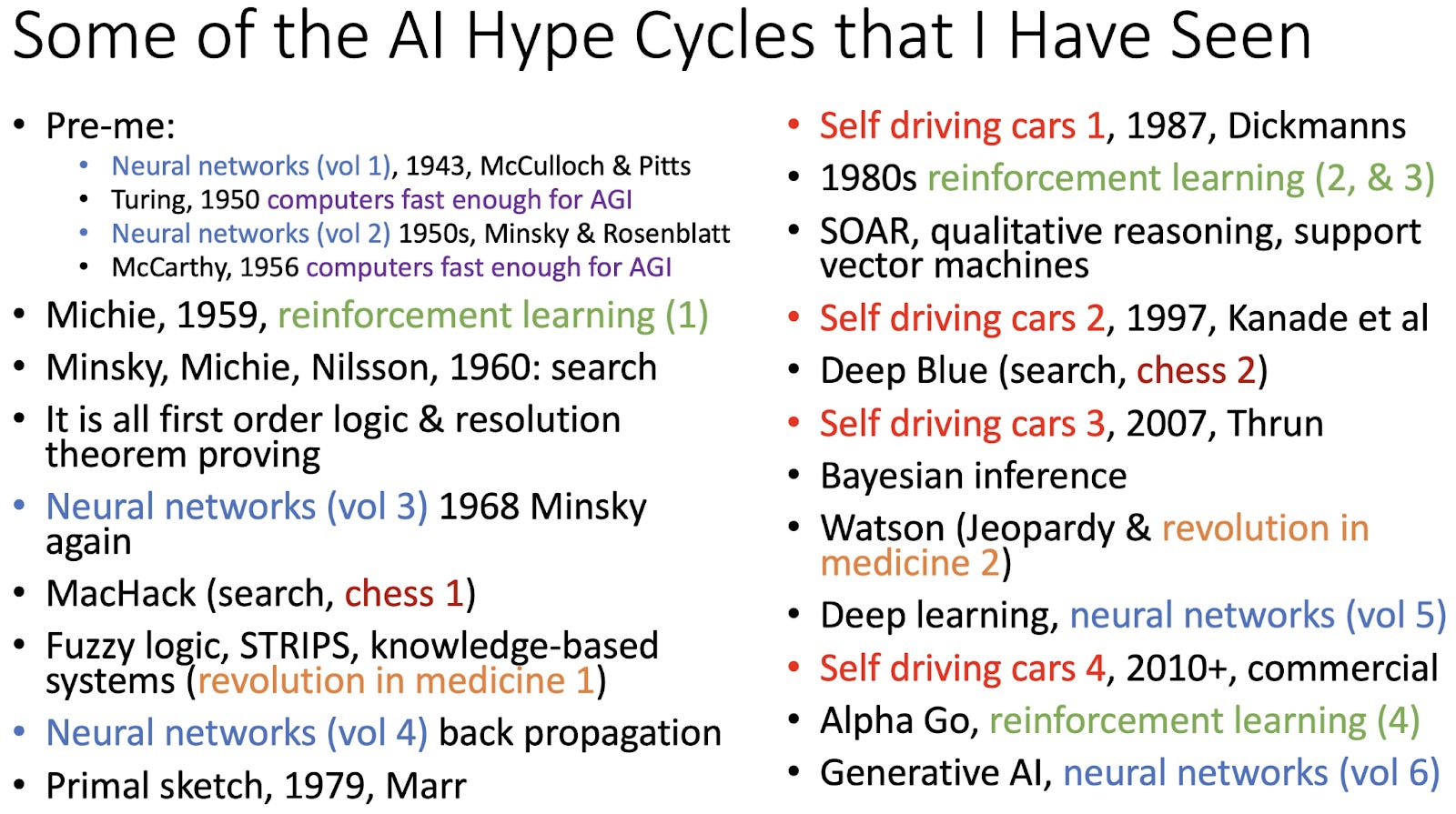
This image from his website shows the various hype cycles he has witnessed. I highly recommend people go read his blog at https://rodneybrooks.com/predictions-scorecard-2025-january-01/
Thankfully, not everyone has AIDS. Some people are starting to see through Scott’s intellectual charlatanism. The following are comments from Scott’s post that I found to be very insightful.
Comment #1 by Timothy M.
“But I'm therefore extremely skeptical about the question of AI accelerating AI research, which is largely about trying to figure out new things, not do stuff it was pre-trained with dozens or hundreds or thousands of examples of, or comprehensive documentation on. And I'm unaware of ANY meaningful example of this - all of the cool "AI figures out novel materials" / "AI solves protein folding" / etc. type things are from datasets that are specific to the domain, and a model that was set up with a structural understanding of the domain (i.e., not general-purpose tools and not devoid of human guidance).”
This is a good comment because it highlights the reality of AI right now. Something that both Daniel and Scott seem to have very little understanding of.
Comment #2 by blank
“It seems to me that the majority of the effort being put into new and better AI models is mostly aimed at maximizing this intelligence factor. Maybe trying to describe it as intelligence is incorrect, and it is more aptly named as better token processing or something else. Whatever this value is, cranking it up so far has had clear effects: the AI runs faster and produces output with greater clarity. You get better images and writing out of prompts.
I don't see maximizing this output as doing anything for many fundamental problems AI already has. There are the infamous hallucinations which persist throughout better and better models. There is AI having very poor vision, which would impede it greatly when trying to do real time processing of real world, real time events. Believers in the AGI singularity think that if you just maximize the AI in that factor, it will suddenly overcome these limitations. I don't think reality so far bears this out, and I am not sure if there are practical ways of making LLMs as they currently exist have reliable error correction.
This only says that AI will not be useful where it needs those things, regardless of its intelligence. A picture is not load-bearing, so an AI can be very useful for making lots of pictures. But in order for someone to trust an AI-generated architectural diagram, it needs not to be hiding some critical flaw the AI missed and can't explain.”
Blank has managed to nail exactly what's wrong with the current AI hype cycle, and the reactionary AI fanboys are too busy jerking off to GPT benchmark scores to notice the obvious truth staring them in the face. What we're witnessing isn't some inevitable march toward artificial general intelligence—it's a classic case of diminishing returns masquerading as revolutionary progress.
Let's be fucking real here. What have the last three years of AI development actually given us besides better autocomplete and fancier image generators? The fundamental limitations the commenter points out—persistent hallucinations, unreliable reasoning, and poor visual understanding—haven't been solved; they've just been papered over with more parameters and training data. This isn't paradigm-shifting innovation; it's just throwing more computational resources at the same fundamental architecture and acting surprised when it gets marginally better.
The architectural diagram example is spot-on. For all the talk about AI revolutionizing creative fields, we're still stuck with tools that can't be trusted in any context where reliability actually matters. The AI evangelists will say, "But it's getting better!" as if linear improvements will somehow magically cross the chasm to trustworthiness. That's not how engineering works. At some point, you hit the limitations of your fundamental approach, and no amount of scale will overcome it.
What the blank understands that the techno-optimists miss is that our current LLM approach has inherent, structural limitations. These models don't have any actual understanding of the world—they're sophisticated pattern-matching engines trained on internet text. Expecting them to suddenly develop genuine reasoning abilities by making them bigger is like expecting a horse to eventually evolve into a helicopter if you just breed it to be fast enough.
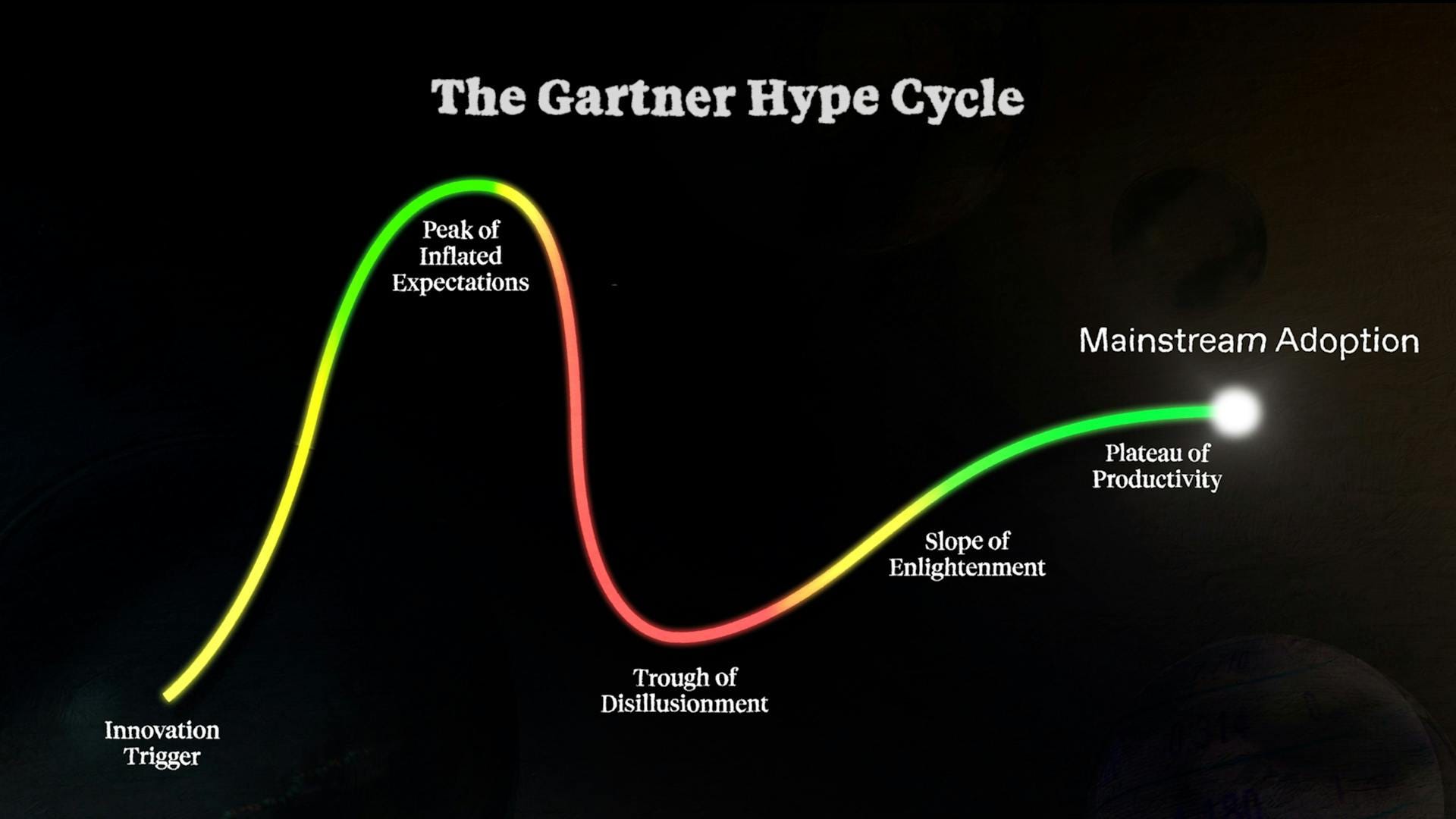
The most laughable part is that we've seen this movie before. The AI winters of the past weren't because people weren't excited enough or didn't invest enough—they happened because the approach of the time hit fundamental limitations that couldn't be overcome by incremental improvements. The neural network hype of the 80s, the expert systems boom of the 90s—all followed the same trajectory we're seeing now: initial excitement, impressive demos, diminishing returns, disillusionment.
So kudos to blank for seeing through the bullshit and calling it like it is. Sometimes the skeptics aren't just being contrarian—they're just the only ones in the room who haven't drunk the Kool-Aid.
Scott ends his post introducing AI 2027 by saying, “Think of it as ‘International aid expert discusses the Ethiopian famine with concerned Hollywood actor,’ with me in the role of the actor, and you won’t be disappointed.” I gotta give him credit, an “expert” in a completely biased and pseudoscientific industry talking to a pompous moron who sniffs his own farts, this is the perfect analogy for their partnership. The only difference is that a Hollywood actor would be way better-looking.
No posts
Comments
Nothing yet. Say the first thing.
Sign in to join the conversation.