
As I near the end of my 8th decade on this planet, my memory is starting to have wrinkles. Someday all of my mental cylinders are firing as expected. Other days I find I am searching for a name, an event or a planned appointment—even forgetting preplanned events. This brings a level of anxiety—but I am just short of thinking I have early on-set dementia. I suspect it is in my future—since it affected my grandmother, my mother and her sister. My mother died from the effects of Alzheimer's disease. I am not panicking—just getting ready for what may be the inevitable. It is just part of my journey towards the end of the journey.
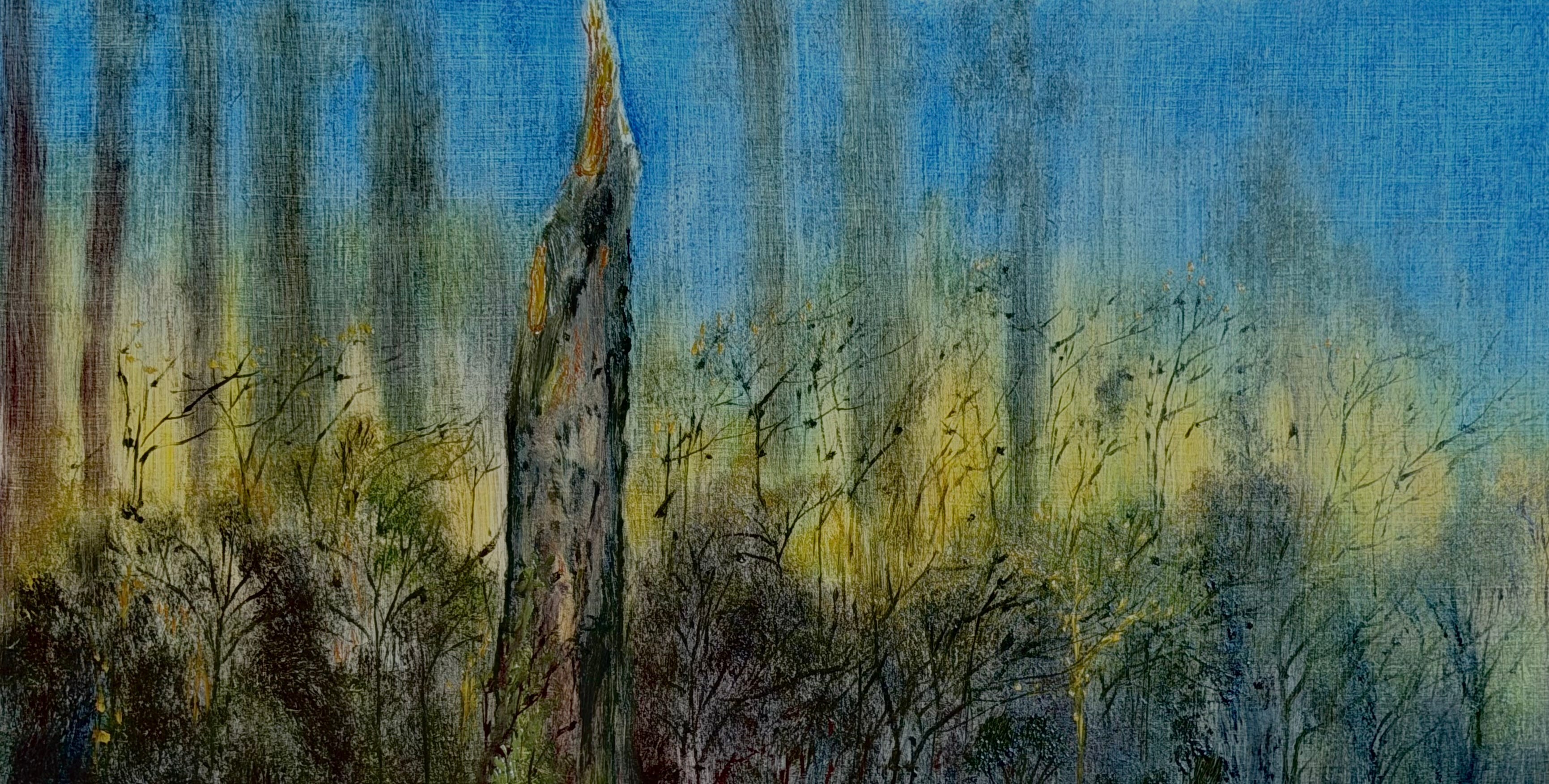
When I am in my studio, my memory takes on a whole new meaning and dimension. As I begin or continue a painting, I am reaching deep inside for something beyond events, dates, and names. I am scanning memories. I am not thinking of anything other than the assortment of memory settings. These memory scans move seamlessly and instantly between a recent walk and an event when I was a little boy. They are most often never exactly has they occurred or observed—rather reconstituted to match what I am trying to paint. They form a memory frame for my conversion of the instance to a painting. As soon as I intuitively choose a paint brush, a mixture of pigments, and the appropriate medium, I enter a different world. The kinesthetics of painting kick into high gear. I would not call it “automatic”—but rather pure intuition. It is a state of pure concentration and, at times, bliss.
My paintings are not trying to be “real”. I am not patient enough to invest the labor and mental gymnastics to create “realism.” For one thing, even “realism” is really a simulacra of something else. Even if it appears hyper-real it is still only a fleeting moment in time. It may elicit a feeling of “wow—how did the artist do this.” I get this. I have experienced this phenomenon many times—especially the early Dutch still life painters. I respect the artists who have invested their careers to make “realistic” art. For me, I need to conjure up a feeling of a place—not a representation of the exact place or set of objects. I paint to remember a feeling of joy.
While creating a work, my brain is moving fast. It is scanning experiences and placing them in a carousel of images. As I draw on one image, the next one queues up. sometimes they overlap and I paint a palimpsest. I find this loop exciting—since I start the painting without an ending in sight. The evolution is visceral and physical. This process will, no doubt, be impacted by whatever deterioration I experience with my memory over the next several years.
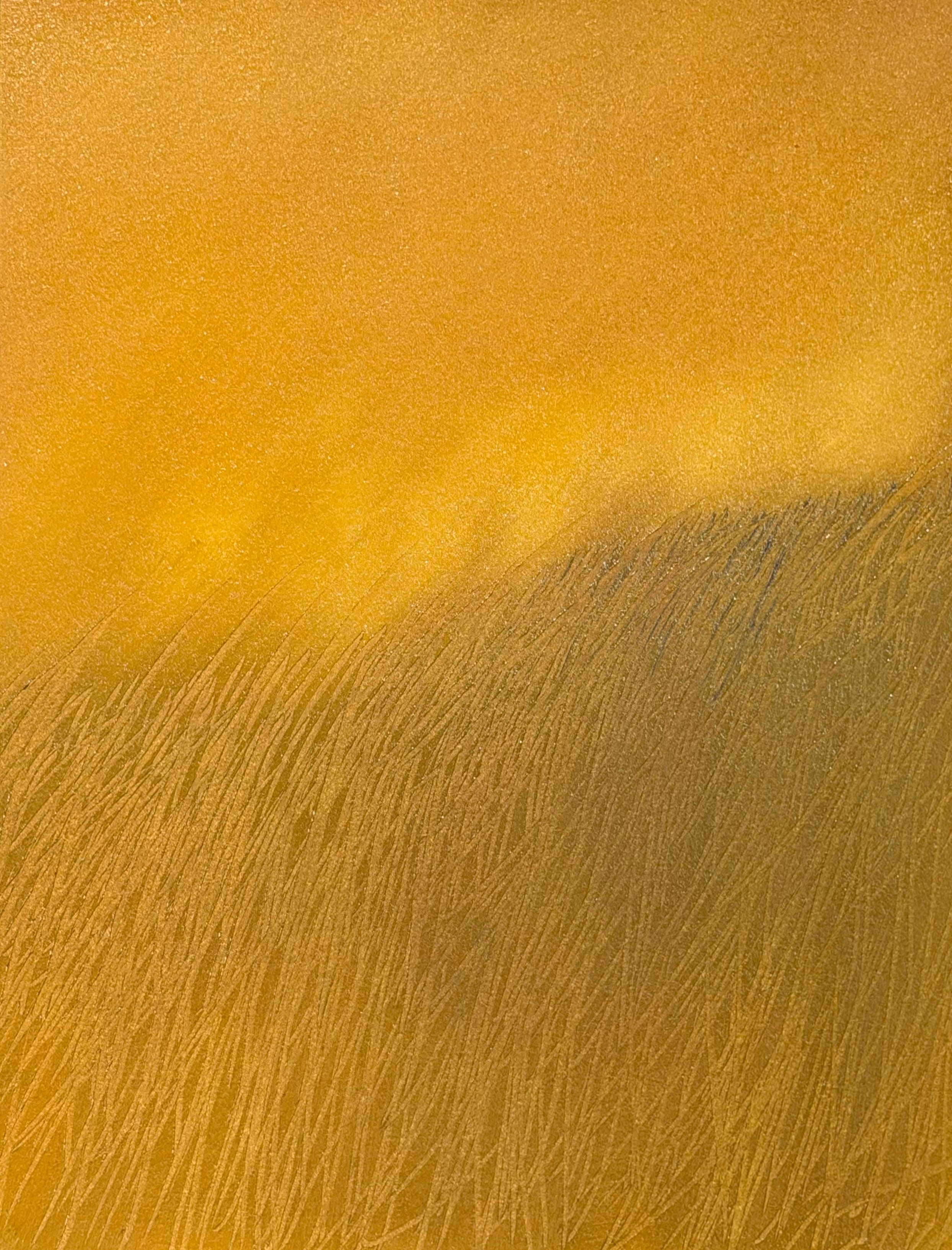
An important question for me is: If I develop dementia, will my painting ability be altered, enhanced or outright diminished. Will the muscle memory enable me to continue to recall scenes that are reinterpreted on the canvas?
One artist that I admire, Willem de Kooning, painted almost to the end of his life. In his final years he was confined to his house and studio and suffered from dementia. Yet he painted nearly everyday. He was born on April 24, 1904, in Rotterdam, Netherlands, and died on March 19, 1997, in East Hampton, New York, USA.
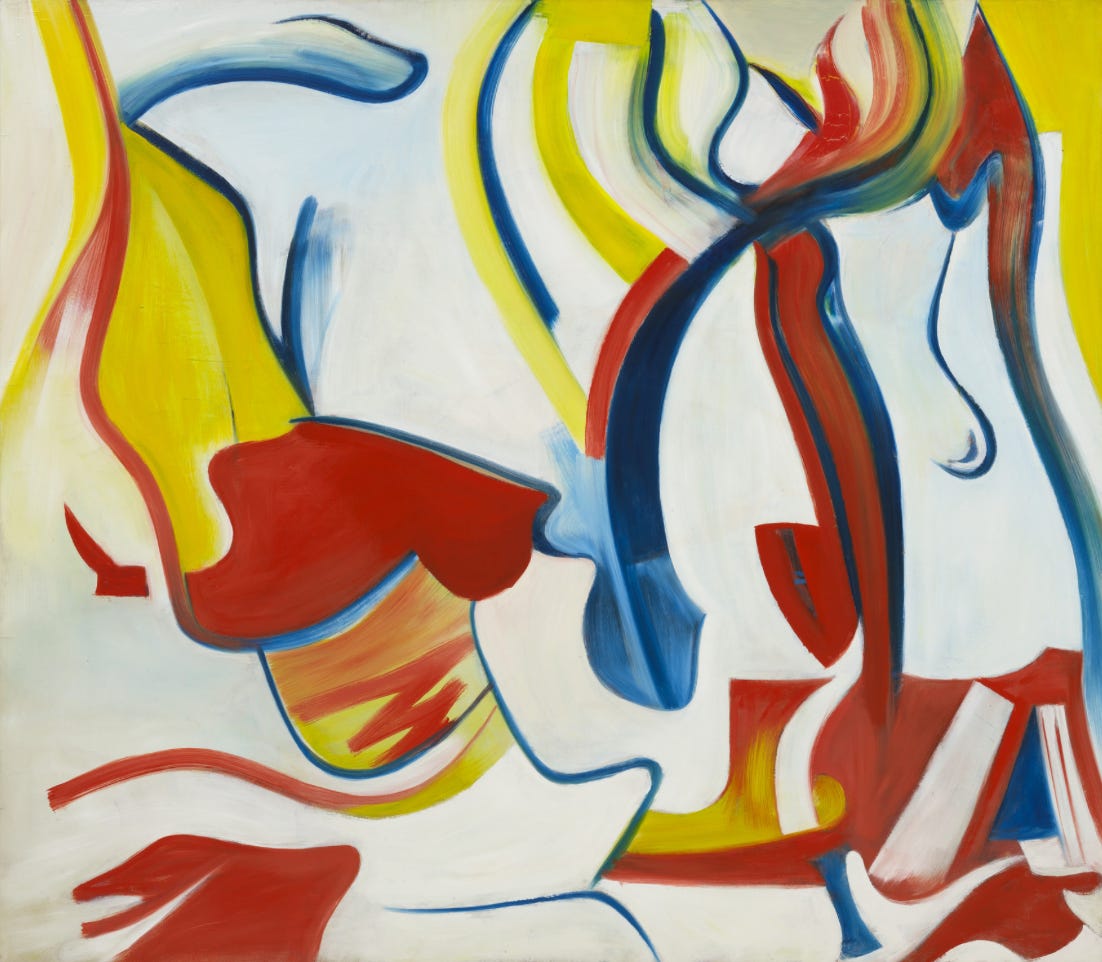
He began showing noticeable signs of cognitive decline in the mid-1980s, when he was in his early 80s. Friends, family members, and studio assistants observed increasing memory problems, confusion, and difficulty managing daily affairs around 1985–1987. However, he produced a series of luminous, pared-down abstract paintings characterized by:
broad ribbons of white,
floating biomorphic forms,
pastel or bright color accents,
more open compositions than his dense earlier works.
These paintings emerged while he was observed developing symptoms later associated with Alzheimer’s disease or another form of dementia. This created a major art-historical controversy:
Were the late works evidence of artistic decline?
Or did they reveal a distilled, essential visual language
Some critics argued:
the paintings lacked the tension and aggression of his earlier masterpieces,
assistants may have exerted excessive influence,
dementia impaired intentionality and judgment.
The late paintings were sometimes dismissed as aesthetically pleasing but intellectually weakened.
Others—including artists, neurologists, and art historians—argued:
the works show remarkable compositional sophistication,
simplification can be an advanced artistic achievement,
procedural and visual creativity can persist even during cognitive decline.
Supporters often compare the late paintings to late-period work by artists such as Claude Monet, Henri Matisse and J. M. W. Turner—where form became freer, lighter, and more essential with age.
Dementia and Creativity
Neurologists studying de Kooning’s late work have noted that:
different brain systems deteriorate unevenly,
language and executive function may decline while visual/spatial or procedural capacities remain relatively intact,
repetitive studio practice can preserve artistic fluency.
This has become an important case study1 in:
neuroaesthetics,
art therapy,
aging and cognition,
the relationship between identity and artistic production.
Is there a “healing power of art” in my context? That phrase usually refers less to curing dementia and more to maintaining identity, emotional regulation, sensory engagement, nonverbal communication, and continuity of meaning and ritual. I trust that painting will be part of journey—whether or not I experience full-blown dementia.
Research in art therapy and dementia care has shown that artistic activity can2:
reduce anxiety and agitation,
stimulate memory and attention,
improve mood and social engagement,
preserve a sense of agency.
Many viewers experience the late de Koonings as:
calmer,
more spacious,
almost lyrical compared with the violent energy of the 1950s works.
These late paintings (including Untitled VII, The Cat’s Meow, Untitled XII) are now widely exhibited and increasingly respected, though debate about authorship, cognition, and artistic intention continues. I find it fascinating that the paintings are now “judged” in the context of the artists state of mind—and not solely on their own merits as a work of art.
My eroding “memory” journey will reveal itself over time. In the meantime, I will continue to pay attention to my output and try to see if the work evolves differently. Certainly, this process will reveal:
What counts as artistic intention?
Can my creativity survive or coexist with dementia—will I be painting “until I drop?”
Is simplification always a sign of decline? Or is it my way of communicating only an underlying structure or “essence”of my memory.
How much cognition will be necessary for to me make my art?
We shall see how this all unfolds. I am ready for the journey. I have also liked surprises…
“de Kooning’s Late Colours and Forms: Dementia, Creativity, and the Healing Power of Art” by C.H. Espinel (1996, The Lancet)
One of the best-known medical/artistic analyses. Espinel argues that even while showing advanced dementia symptoms, de Kooning retained profound artistic capacities.
Several major reviews and meta-analyses report these findings:
A 2021 systematic review in Creative Art Therapy as a Non-Pharmacological Intervention for People with Dementia found improvements across emotional well-being, social engagement, and behavioral symptoms.
A 2023 network meta-analysis in Frontiers in Psychiatry concluded that different forms of art therapy showed measurable effects on:
agitation behavior,
cognitive function,
and quality of life.
A 2016 review titled Advances in Art Therapy for Patients with Dementia reported reductions in “behavioral and psychological symptoms,” including agitation and distress.
No posts
Comments
Nothing yet. Say the first thing.
Sign in to join the conversation.