
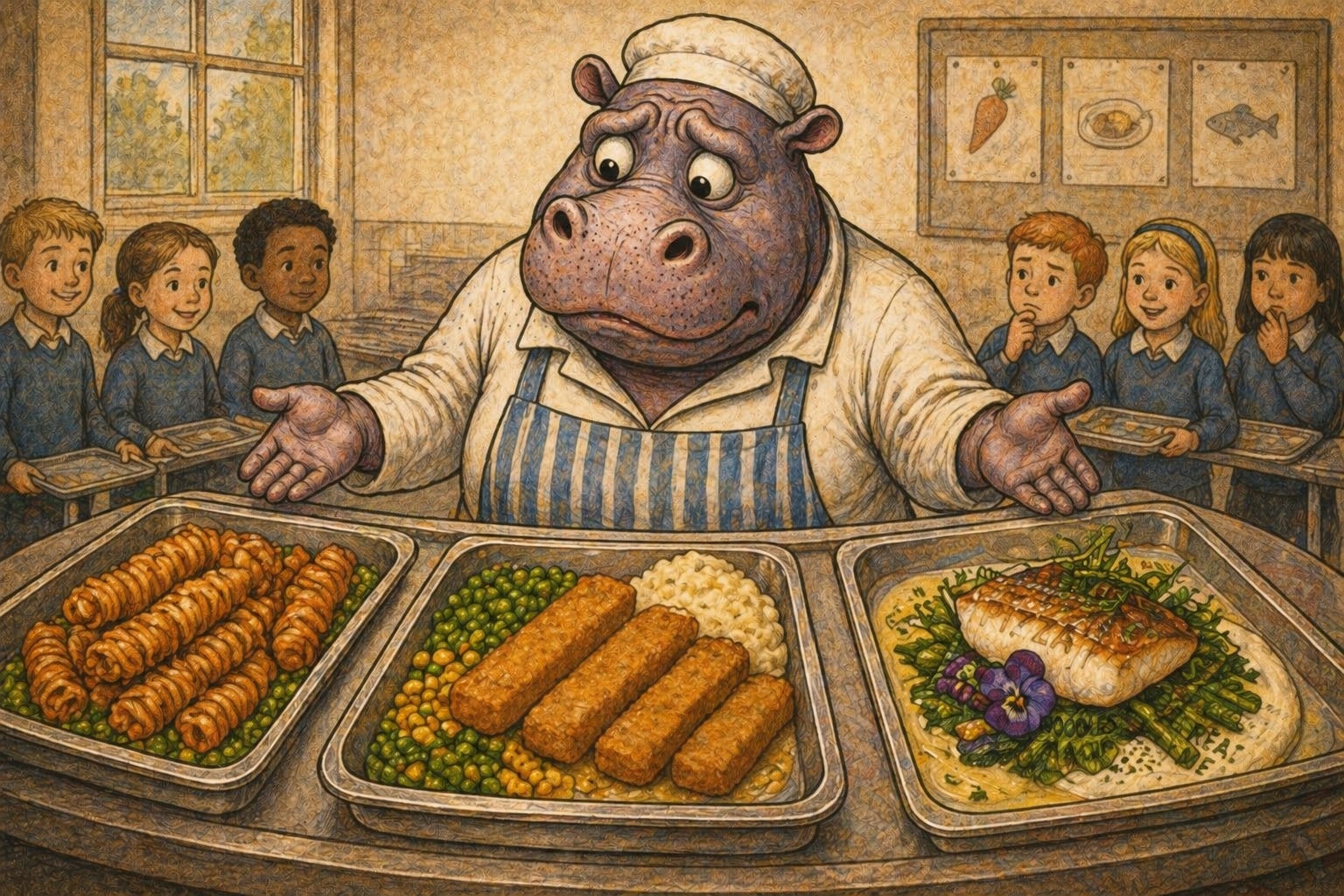
Ultra-processed food is a gift that keeps giving. The latest shocking news has been that school caterers use ultra-processed foods. This must come as a surprise to everyone who knows a little bit about food and the budget schools have to operate under. A meal that appeals to a wide range of tastes, can be prepared on site, meets all government standards and prepared from scratch for £2.70? Not a problem at all.
Of course the definition of ultra-processing is so incredibly vague that can be adjusted to create shocking headlines:
Most children in the UK have ultra-processed foods as packed lunch! Obviously - when all bread is declared ‘ultra-processed’, every home-made sandwich is ultra-processed.
The new concern is that school lunch that is ultra-processed — and parents demand change. It’s no longer important that certain dietary requirements are met or, better, exceeded — there is a new purity threshold.
Why should children get fish fingers (which are sustainable, affordable and which they often like to eat) when they could get a proper cod filet (which is more expensive, often less sustainable and more likely to end up in the new food waste bins? Life would be so much better if every school had their own Michelin starred chef preparing fresh food daily from scratch.
There might be a problem for fussy eaters — some children do struggle with certain textures and tastes. While some people believe that this is the fault of the food industry, the general consensus is that it is considerably more complicated and there are environmental and hereditary factors. But perhaps they will just have to learn to deal with it.
Does ultra-processed food really harm children, as long as it meets the school standards? There’s no evidence it does. Observational studies are notoriously unreliable and intervention studies have largely failed to show adverse health effects that can be attributed to ultra-processing.
Obviously, most parents want the best for their children — and it is very difficult to resist the panic created by activists and influencers. Very much like the ongoing discussion about the risk of MMR sowed the seeds of doubt even in parents who did not believe in any link at all (after all, many activists and people in the media did take it seriously), the discussion about the dangers of ultra-processed foods creates doubt. Most people will not consider bread or fish-fingers to be harmful, but … better safe than sorry!
And once doubt takes hold, the goalposts shift: it is no longer enough for a school meal to be nutritious, balanced, and eaten, but they also have to meet additional purity standards. A fish finger that meet every nutritional standards become suspect not because of what they contain but because of how they were made. There is the risk of a slippery slope when we abandon honest and admittedly often boring science in favour of gut instinct: food that is seen as perfectly fine today might be declared dangerous tomorrow.
No posts
Comments
Nothing yet. Say the first thing.
Sign in to join the conversation.