
In our continuous research on identity and belonging, we expanded our scope to a group of people who are not often spoken about. The Third Culture Kids—or adults, if you will.
Historically, conversations around migration and identity in Nigeria have been pretty black and white. The entire cultural imagination is gripped by the Japa phenomenon—the idea that moving abroad is a clean break, a straight line from point A to point B. But there is a whole generation whose lives completely spill out of these neat little boxes.
Third Culture Kids (TCKs) are people who grew up outside their parents’ passport countries, constantly floating in the space between the culture they live in and the heritage they go home to at night. It is a reality that applies to thousands of people worldwide, whether they are navigating the tension between a traditional West African upbringing and life in London or balancing East Asian family expectations with a childhood spent in Dubai or Geneva.
When you look into their actual experiences, it becomes clear that this is not just a story about feeling displaced. Growing up between worlds gives people an incredible, almost instinctive set of strengths. It builds a rare form of cultural fluency—an ability to read a room, pick up on unwritten social codes, and see the world from a genuinely global perspective. TCKs have an emotional flexibility that lets them find their footing where others might see chaos.
But beneath that effortless adaptability, there is a lot of internal renegotiation happening. What happens when home stops being a spot on a map and turns into something you have to carry around inside yourself?
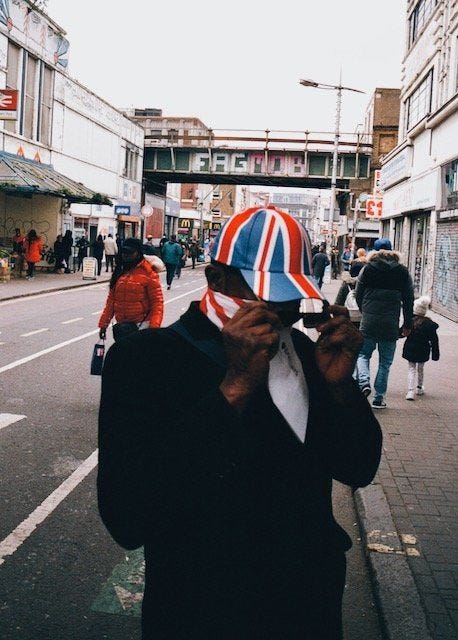
For most people, the question “Where are you from?” is a simple, one-word answer. For a TCK, it triggers an immediate mental calculation. Do they want the short version or the long version? The passport country, the birthplace, or the city where they actually went to high school?
*Jeremy, product designer, spent his childhood moving between Lagos, Malaysia, and Houston.
“When people ask where home is, I never really know what to say,” he says. “Like, if I’m being honest, home isn’t a specific house or even a city. It’s more of a feeling, you know? Like remembering the way my mum’s kitchen smells, while playing old records in a house that happened to be in Texas at the time. It’s a collection of small habits, not a place.”
This is the baseline reality for cross-cultural kids. When you take away geographic permanence, the idea of home has to be completely reconstructed. It becomes about sensory markers, family rituals, and emotional ties rather than a physical address.
*Lauretta, a postgraduate student who grew up in Johannesburg before moving to London, felt that pressure early on.
“For a long time, I felt so guilty that I didn’t feel this profound, spiritual connection to my parents’ hometown when we went back for holidays,” she admits. “My cousins would go on about how lit the place was, and I just felt… hot and bitten by mosquitoes. But then I realised that my identity isn’t any less authentic just because it was nurtured somewhere else. Home for me is where my books are, and where my friends understand me for me.”
Despite the high level of cultural fluency TCKs develop, that feeling of being an outsider never fully goes away. Instead, it becomes a familiar shadow, showing up in different ways depending on where they land.
Interestingly, the sharpest sense of alienation often hits when they return to their parents’ homelands. There is vulnerability in looking like you belong to a place, carrying the family names, but completely lacking the local context needed to survive everyday life.
“It’s the small things that trip you up,” Jeremy says. “It’s not knowing how to bargain at the Eko markets without the sellers instantly knowing you’re an Aje-butter (someone perceived as pampered or accustomed to a life of luxury). It’s the way you pronounce certain words or the fact that you don’t know some inside jokes. In Houston, I’m the African guy. In Lagos, I’m the American boy. You end up being a foreigner everywhere and a local nowhere.”
This creates a strange psychological split. In Western environments, being an outsider is explicit—usually tied to race or nationality. But in your parents’ home country, the outsider status is subtle, hidden in the nuance of your cadence, your posture, and the unspoken social rules you keep breaking.
“You learn to become a chameleon,” Lauretta notes. “When I’m around my British friends, my accent just shifts? It’s not even a conscious thing; it just happens, so things roll more smoothly. But then the minute I’m with my Nigerian family, my whole posture changes, my tone drops, everything. It’s wild because there’s always this tiny part of your brain that’s just sitting back, watching you do it, like… look at you performing right now.”
Living between cultures also means constantly dealing with other people’s assumptions. The global perception of any heritage is often monolithic, shaped by media narratives that stick to predictable scripts. TCKs frequently find themselves serving as reluctant translators or living contradictions to these stereotypes.
*Chidi, a financial analyst living in Dubai, spent his formative years moving between Enugu, the Netherlands, and England. He knows the weight of those projections all too well.
“People expect you to fit a very specific mould,” Chidi says. “In Europe, they’d expect me to have some intense, dramatic back-story about escaping hardship, or they’d be shocked that my parents were highly educated professionals. Then you meet locals from back home who assume you’re spoiled, soft, or completely disconnected from reality because you didn’t grow up facing the same struggles they did.”
These assumptions completely ignore how layered the cross-cultural experience actually is. The TCK reality often involves a high degree of material comfort—access to international schooling, global travel, and economic stability—coexisting with a very real sense of emotional fragmentation. It is a life that can be incredibly comfortable on the outside, but deeply complex on the inside.
The assumption that cultural identity is an all-or-nothing equation creates unnecessary pressure to prove one’s authenticity. TCKs are often tasked with validating their identity to both the world they left behind and the world they currently inhabit.
The real heart of the TCK experience is the constant tug-of-war between adaptability and uncertainty. On one hand, moving around so much creates incredibly resilient, empathetic people who can connect with almost anyone. On the other hand, it leaves a lingering question mark over who they actually are at their core.
When asked whether this lifestyle makes people more adaptable or just permanently unsure of themselves, Chidi responds.
“Honestly? Both. It’s a package deal,” he says. “I can walk into a boardroom in London, a restaurant in Dubai, or a family gathering back home and find a way to vibe with people. That’s a superpower. But the flip side is that sometimes you wonder who you are when nobody is watching.”
This uncertainty easily bleeds into long-term choices, from career paths to relationships. When your default setting is change, permanence can start to feel a bit like a trap.
“There’s a restlessness to it,” Lauretta adds. “I get anxious if I’ve been in one city for too long. I start thinking, Okay, what’s next? Where am I moving to? You become addicted to the fresh start because the process of reinventing yourself is more comfortable than staying still and figuring out who you are in the quiet.”
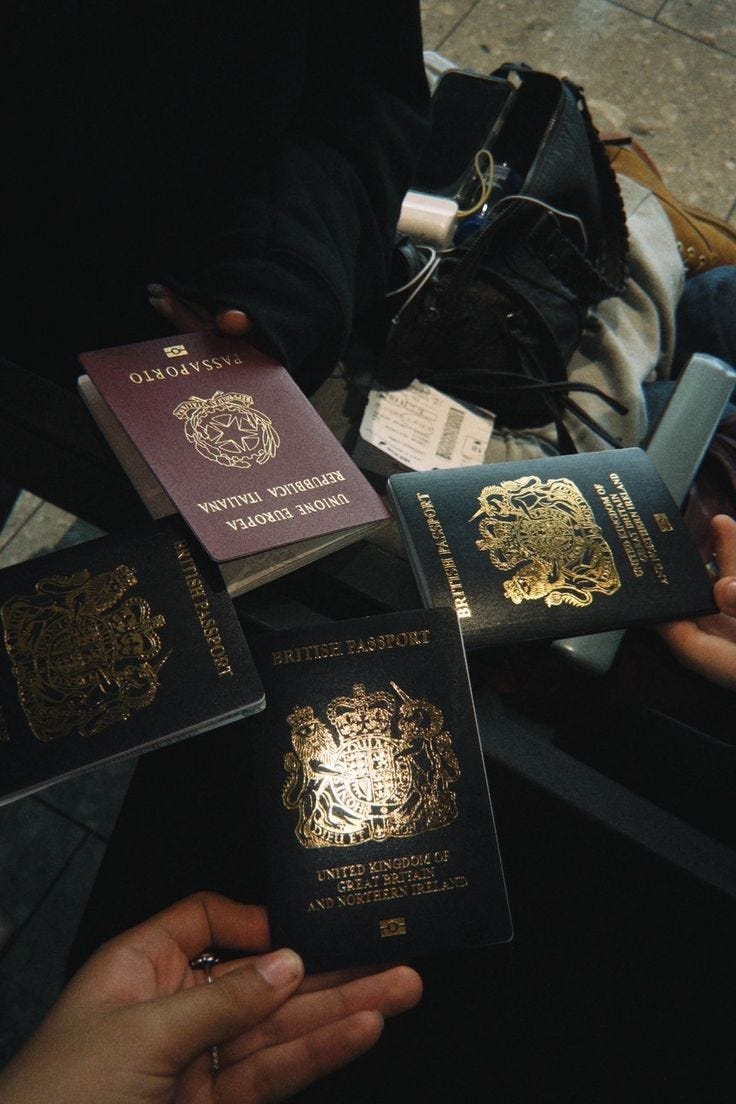
But when you look at the big picture, the Third Culture Kid experience isn’t defined by what is missing. The identities formed in these middle spaces are incredibly distinct, creative, and tough. There are parts of the self that can only exist because of this exact upbringing.
Think about the fluid way TCKs use language by blending local dialects, Western slang, and regional accents without even thinking about it. Or their humour, which is usually irony-rich, highly observational, and perfectly capable of translating across cultural lines. There is also an intuitive empathy there—a deep understanding that human behaviour depends entirely on context.
“The way I create comes from this,” Jeremy says. “When combining clean Western minimalism with the chaotic functionality of the storytelling I grew up with—that only happens because my brain functions in both worlds simultaneously. I don’t see them as conflicting; I see them as a conversation.”
For Lauretta, the real payoff is the community you find along the way.
“You recognise other TCKs instantly,” she says. “It doesn’t matter if they are Nigerian-American, Indian-Canadian, or French-Egyptian. There’s this immediate understanding of what it feels like to live in the margins. You skip the small talk and go straight to the deep stuff. My community isn’t defined by a passport, but by how I share my experience of the world.”
The old-school idea of belonging relies heavily on borders, flags, and picking a side. But the lived reality of anyone growing up between cultures proves that the old model doesn’t work anymore.
Belonging, for a TCK, is not something you inherit; it is something you actively build. It is made up of chosen relationships, preserved traditions, and learning how to find stability while things are moving around you. The real strength of a Third Culture Kid is not about having one specific place to call home but the capacity to feel completely grounded in your own self, no matter where you happen to land.
No posts
Comments
Nothing yet. Say the first thing.
Sign in to join the conversation.