
Ottawa announced the six pillars that is focused on protecting Canadians and helping companies with AI. [Link] While this is the government’s strategy for AI, and a useful frame, it is not yet a plan.
Ottawa is opening applications for a $2.4 billion sovereign compute strategy. [Link] It might be the most important thing this government does. Let’s be honest, almost no one fully understands it and that makes sense. The hard parts have not been done before, and the project is wildly complicated.
While a sovereign cloud barely touches the disinformation problem, it is a declaration that Canada is finally taking its digital space seriously.

Mélanie Joly, Minister of Industry, the department that houses Canada's AI portfolio.
Right now, when you fill a prescription at Shoppers, file your taxes, vote in a federal election, or get an MRI in a Canadian hospital, the digital record sits on a computer owned by an American company, Amazon, Microsoft, or Google. Regardless of the paperwork, it answers to U.S. law.
Sovereign cloud is the project of changing that problem. Canadian-owned, Canadian-located, Canadian-governed computers, big enough to hold the country’s most important information and run the next generation of artificial intelligence on it.
Think of it as a highway system, a power grid, a railway but the infrastructure that quietly carries everything else. You do not see it but we will depend on it completely.
The Minister of Artificial Intelligence says a national AI strategy with six pillars is on the way and the most recent announcement is light on details.
This may be the most important and most complicated public build Canada has attempted in a generation, because this is many projects at once, all of them landing together.
The plan has not been released but so many questions already have.
The chips are not ours. Every GPU of consequence in every Canadian AI data centre is designed by Nvidia, manufactured in Taiwan, and exported under U.S. licence. Canadian AI compute commitments, Cohere, ServiceNow, Telus, the AI Compute Access Fund partners, all point to Nvidia hardware. Washington rewrote that licence twice in the last twelve months and added a 25 percent tariff on covered chips in January. We need the silicon to build this.
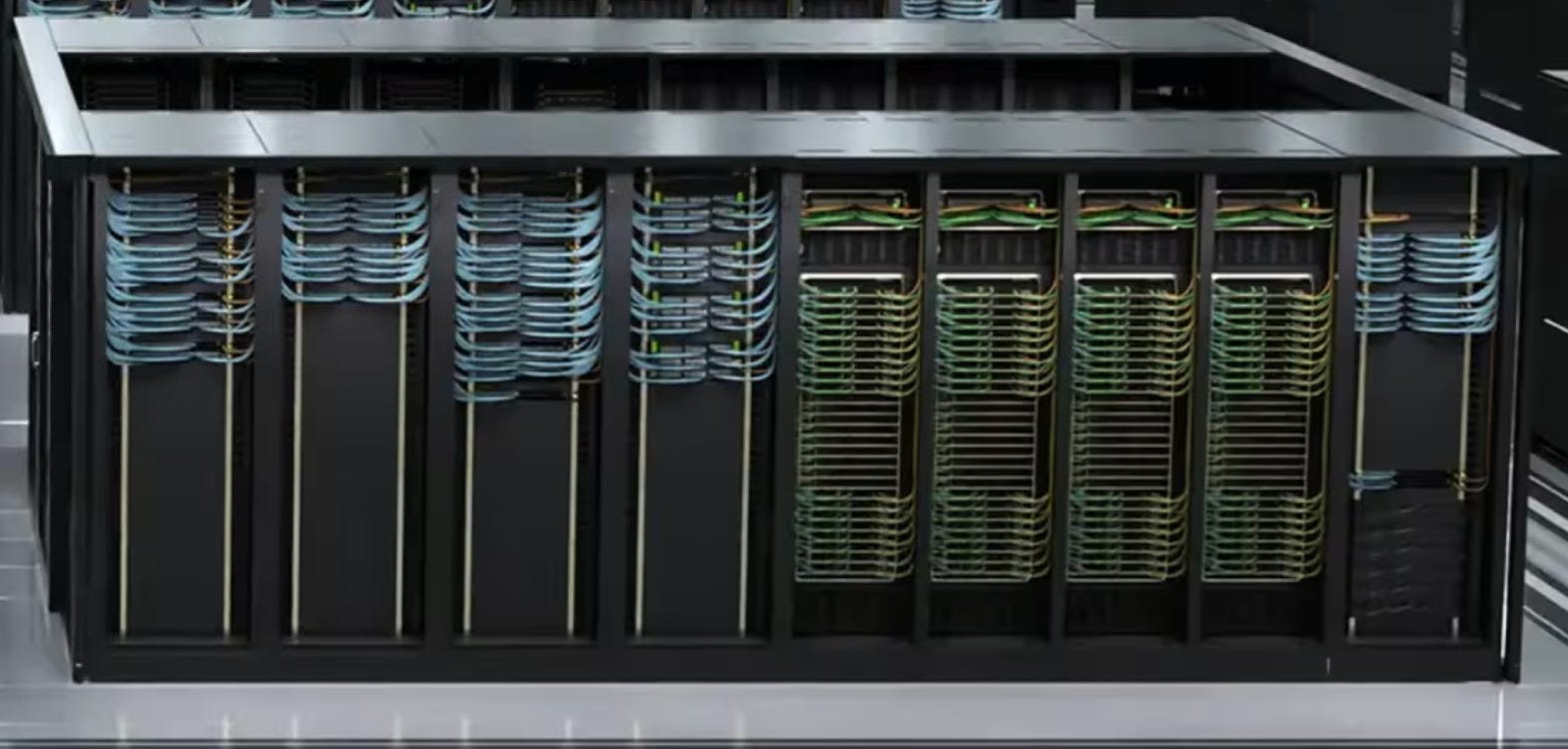
Do we have the power? An AI data centre eats the electricity of a mid-sized city. Power is provincial in this country. Link. The federal government cannot keep this humming without the provinces, and the demand will be massive. That is going to take serious coordination, and Canada has not always done coordination well.
As of now, our talent is thin. Our AI researchers are world-class. Our data centre operators are not. Most of that bench works at Amazon, Microsoft, or Google. We have to bring them home, train new ones, and partner with the same hyperscalers we are trying to reduce our dependence on. Link
The money is enormous, and still small. Two billion dollars sounds like a lot, until you read that Microsoft announced a single AI data centre in Wisconsin this year for $4 billion. Are we spending enough? Is the government being honest about what this buys? Our entire national strategy is half of one American facility. We are not going to outspend them. We had better outwork them and outsmart them.
And the legal gap is the one that should keep us up at night. The execution challenges are big, but they are knowable. The legal vacuum is something different. When something goes wrong, a hiring tool discriminates, a medical AI leaks patient records, will there be a clear answer for who is responsible? Without a law that governs what runs on the system, who can use it, what penalties apply for misuse, and how those penalties are enforced… the supercomputer is, at best, an expensive box. At worst, it is a machine the public has no reason to trust.
This is where Canada has repeatedly failed. The U.S. has executive orders. The EU has the AI Act in force. The UK has a regulatory framework. Canada has a decades-old voluntary code of conduct that companies sign and ignore.
Finally, we need to be aware, that at this point, the sovereign cloud does not protect you on your phone. Your feed runs on Meta, TikTok, X, Google, Microsoft. We need to know if synthetic content, foreign interference, deepfakes, election manipulation, operates outside the sovereign perimeter we are building?
Here is the part worth holding onto. A sovereign compute base, even an imperfect one, is leverage. It is insurance and starts the desperately needed conversations about how artificial intelligence gets built and governed.
The next two years will be a very difficult path, and we need the work of an informed public to make sure this government is held to account at every step.

AI has changed what misinformation can do. Challenging it is now everyone's work, in every room, every feed, every conversation. Send this to someone who needs to be in it.
Let us know if you see anything worth sharing, Canadians pushing back against attacks, misinformation, or disinformation.
Did we got something wrong? Tell us. It happens. We correct it.
Get Fact. Verification, information integrity, misinformation and the threats worth understanding, direct to your inbox.
No posts
Comments
Nothing yet. Say the first thing.
Sign in to join the conversation.