
Microsoft, Amazon, Meta, and Google are committing roughly three quarters of a trillion dollars to AI in a single year.
This past week, the largest companies on earth reported quarterly earnings within days of each other.
Microsoft. $190 billion this year on AI infrastructure, up 61 percent. The day before earnings, OpenAI committed another $250 billion in future business.
Amazon. $200 billion on AI in 2026 alone.
Meta. $135 billion this year, most of it AI. Already raised from $120 billion.
Alphabet. $175 to $185 billion on AI infrastructure in 2026.
Add it up and those four companies are committing roughly $700 billion to AI infrastructure in a single year. That is more than Canada’s entire federal budget and well, more than the GDP of many countries.
It is also more, in twelve months, than the United States spent on the Apollo program, the Manhattan Project, and the Interstate Highway System combined (adjusted for inflation).
Apollo cost roughly $300 billion in today’s money. The Manhattan Project, which built the atomic bomb, came in around $30 billion. The Interstate Highway System, the largest public works project in American history, totalled about $600 billion across more than three decades. All three together cost under a trillion dollars, spread across two thirds of a century.
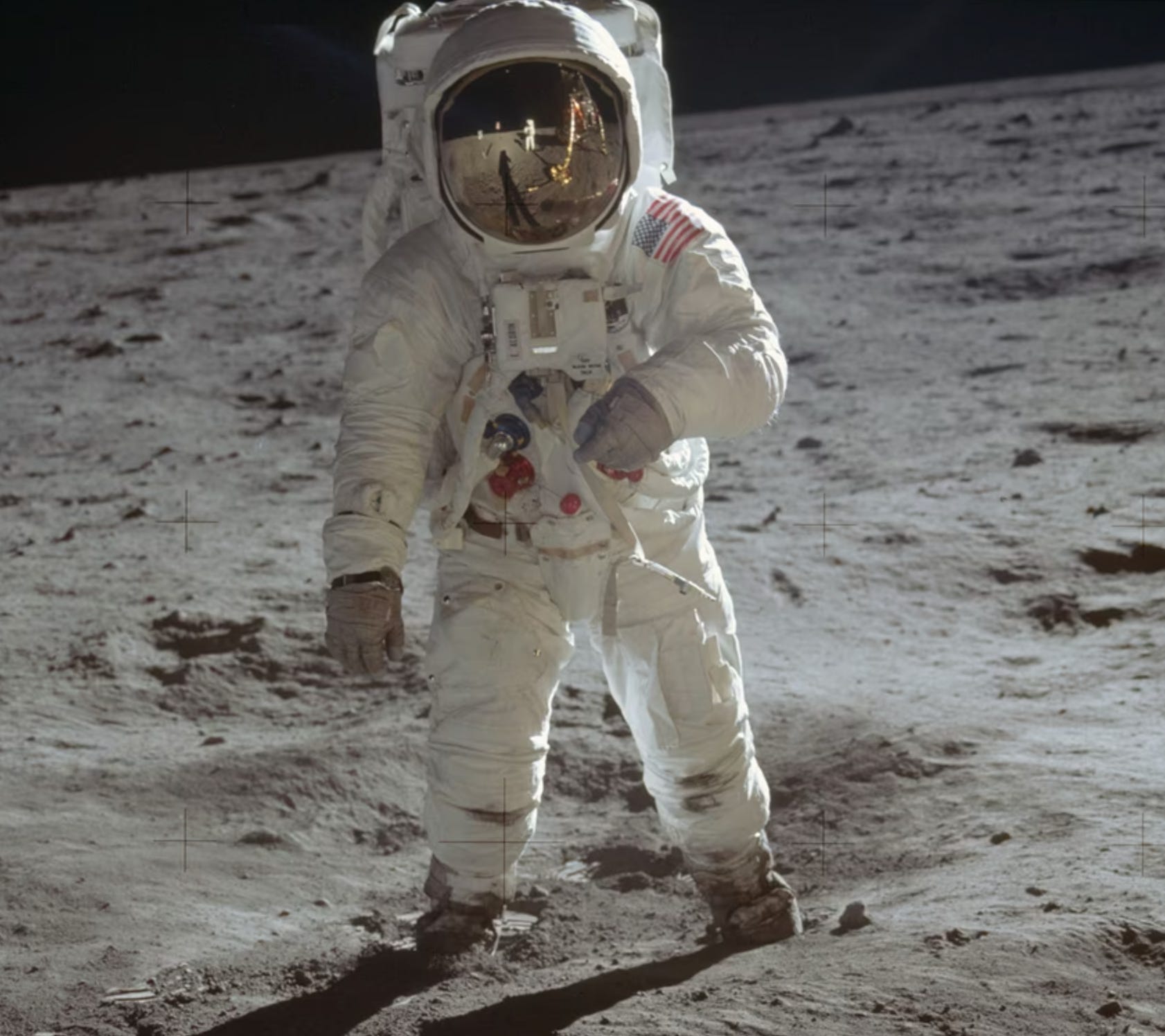
Four companies will spend nearly that much in the next twelve months.
It is the most consequential build-out in history and while absolutely thrilling, never has so much has been bet by so few, so fast, with so little oversight.
We are fans of this technology and use it every day. We are building Laura with it because we believe in what it can do. But this is not Big Tech’s bet alone. It is ours, and well beyond Silicon Valley and the United States.
There is no shortage of articles about what happens if this bet stumbles. The costs to retirement portfolios or fiscal plans built around aging populations and ballooning deficits. All of it is now quietly priced on the assumption that AI will deliver.
That conversation is happening everywhere. Another one is not.
The railroads had land grants, federal charters, and eventually trust-busters. Electrification had public utility commissions. The telecoms had the FCC. Apollo had NASA. The Interstate Highway System had the Federal Highway Administration. Even the Manhattan Project, the most secret of them all, was built by a government accountable to its citizens. AI has none of that.
Imagine pharma in the US spending this fast with no FDA. Banks deploying this capital with no regulator. Aviation scaling with no certification, no transparency, no recourse. We would not accept it anywhere else. Yet here it is, because AI with no accountability is embedded in our search results, our medical advice, our legal documents, our kids’ homework, and our democracy.
There are no meaningful guardrails on how these systems are trained, deployed, or held accountable. There is no public verification infrastructure for what they tell us. And the companies making the bet are the same ones writing the rules.
Capital, capability, and political distraction have collided and clearly, we are not stopping to consider it.
Every democracy in the world is now living the same story. Can this deliver us all a trusted way to verify what we see, hear, and read in a world increasingly mediated by machines we cannot question.
The numbers will keep getting bigger. The deployment will keep getting faster. The dependence will keep getting deeper.
What does it cost a democracy to take a bet this size on faith?
AI has changed what misinformation can do. Challenging it is now everyone's work, in every room, every feed, every conversation. Send this to someone who needs to be in it.
Let us know if you see anything worth sharing, Canadians pushing back against attacks, misinformation, or disinformation.
Did we got something wrong? Tell us. It happens. We correct it.
Get Fact. Verification, information integrity, misinformation and the threats worth understanding, direct to your inbox.
No posts
Comments
Nothing yet. Say the first thing.
Sign in to join the conversation.