
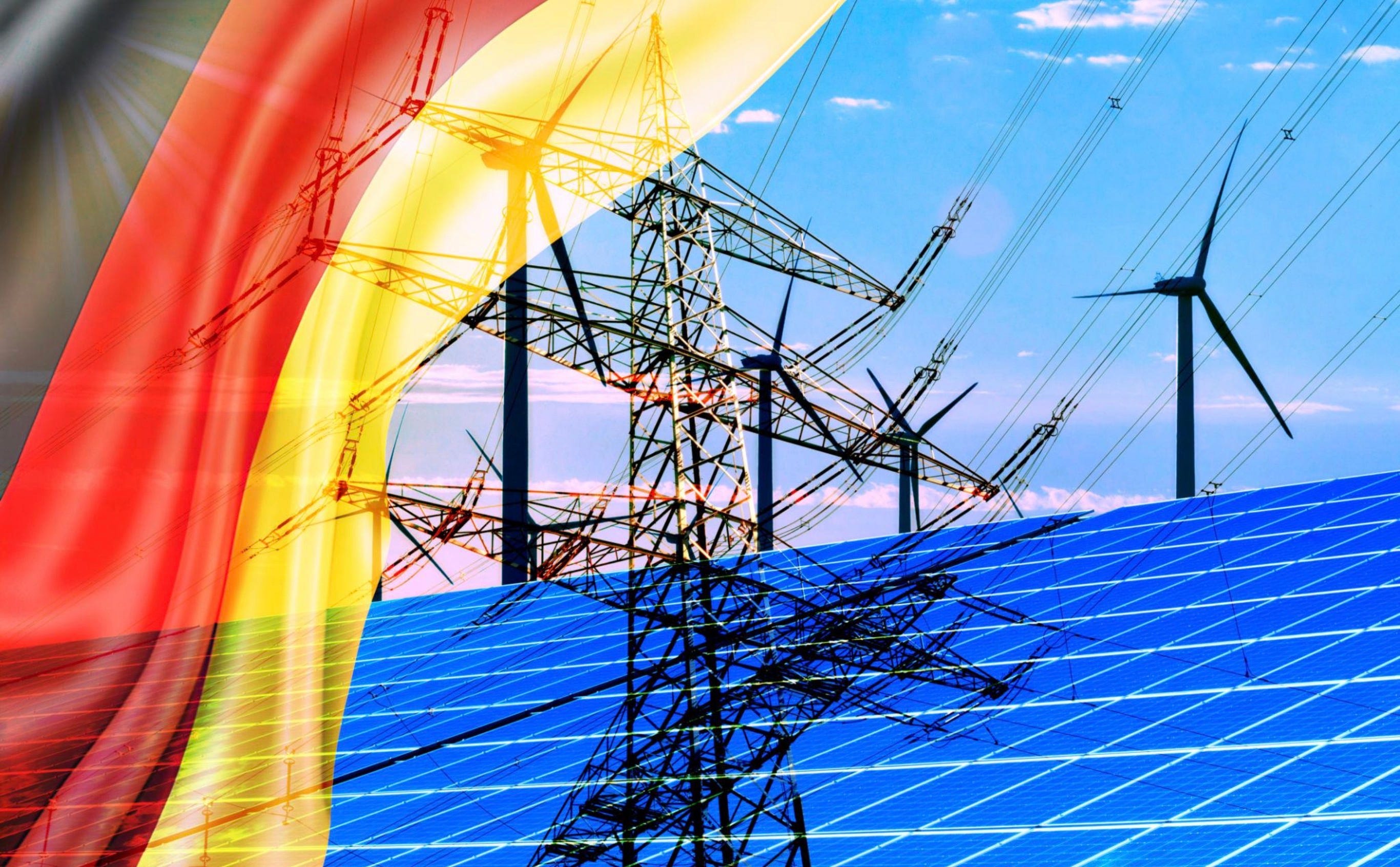
Germany’s Energy Choice: Petrostate or Electrostate
Germany finds itself at a moment of strategic choice with regards its energy policy and the debate is now increasingly visible in public as the pressure builds across industry, households and politics. The German Economic Affairs Minister Katherina Reiche argues that Germany must focus on ensuring reliable power supply and that this means building new gas fired power plants to stabilise the electricity system, which on the surface sounds entirely reasonable given that Germany is closing coal plants, has already shut down nuclear and electricity demand is set to rise as transport, heating and parts of industry electrify, not to mention the rapid growth in demand from AI and data centres which is now beginning to reshape the entire system. The problem however is that the answer cannot be natural gas which has now become prohibitively expensive in Germany and is already forcing industrial production to close across the country, because what looks like a short term solution is in reality locking in a long term structural weakness. For decades the German economy rested on the availability of cheap imported fossil fuels, particularly Russian natural gas, which powered industry, heated buildings and stabilised the electricity system, but that model has now broken down following the outbreak of Russian hostilities in Ukraine and the increasing dependence on expensive LNG, much of it coming from the United States, and now with the conflict in the Gulf we are seeing once again how fragile that system really is as LNG, oil and other raw materials struggle to make their way through the Strait of Hormuz.
Two black swan events in Germany’s energy system in the space of five years should be more than enough to trigger a fundamental rethink because they underline a simple reality which is that an economic system built on imported fossil fuels is structurally vulnerable to geopolitical disruption and price volatility. This is the core weakness of the petrostate model and it means that Germany is not simply facing a question of how to stabilise its power system but rather how to redesign its entire energy architecture for a very different world. The real challenge is how to build an energy system that is cheaper, more resilient and future proof, and the answer to that is electrification at scale delivered quickly and at low cost. That is what an electrostate is, and just as Germany led the renewables revolution in Europe over the last twenty years it now has the opportunity, with the right policy framework, to lead the next phase of the transition toward an electricity based economy, even as others, particularly China, are already moving at extraordinary speed.
The question now is how.
The first step is to bring down the cost of electricity because without cheap electricity none of this works. At present the European power market still operates on a fossil era logic in which the most expensive generator, usually a gas plant, sets the price for the entire market, which means that even when large volumes of cheap renewable electricity are available consumers still pay prices linked to gas. The merit order system does what it was designed to do which is signal scarcity and coordinate dispatch, but in a world of growing low marginal cost generation the outcome is increasingly distorted because gas continues to influence prices far beyond its actual role in the system. Over time this will change as more renewables and especially storage enter the system and push gas further out of the merit order, but getting there requires speed, scale and capital, which means accelerating the deployment of both renewables and storage so that electricity prices begin to reflect the reality of a system dominated by low marginal cost power.
Secondly Germany needs to rethink how its grid works, not just in terms of regulation but in terms of execution, because while it already has one of the most sophisticated power systems in the world it is now being held back by the pace at which it can adapt. The current framework still incentivises network operators to build more physical infrastructure when in many cases the faster and cheaper solution lies in non wire alternatives such as batteries, demand response, smart charging, thermal storage and digital control systems which can relieve congestion without the need for large scale build out. At the same time one of the biggest bottlenecks in the system today is simply speed, with connection queues stretching out for years, permitting processes moving too slowly and the digital management of the grid lagging behind what modern technology now allows. Electrification will not happen at scale if the grid cannot keep up.
At the same time connectivity across Europe must improve because Germany does not operate in isolation but sits at the centre of a much larger system. Stronger interconnection with neighbouring countries such as Poland, France, Denmark and the Netherlands is essential, while increasing transmission capacity between Iberia and France is equally important so that the vast renewable resources of Spain and Portugal can flow into the rest of Europe. A well connected European grid allows surplus renewable electricity in one region to balance shortages in another, smoothing volatility and lowering overall system costs while increasing resilience.
This connectivity will also change how existing assets are used because in a system with very high solar penetration the economics begin to shift in quite a fundamental way. In summer abundant solar generation will increasingly drive prices down during the day and this will naturally push maintenance and refuelling of assets such as French nuclear into those periods, while in winter when demand rises and solar falls those same assets will run at higher utilisation to support the wider system. At times France itself will need imports when parts of its nuclear fleet are offline which again reinforces the point that this is no longer about national systems but about a fully interconnected European electricity market.
Flexibility then becomes central because the entire logic of the system begins to reverse. In the fossil fuel world supply followed demand, but in a renewable system demand must increasingly follow supply. That means encouraging households, vehicles and industry to use electricity when it is abundant and cheap rather than curtailing it when generation exceeds demand. Germany already sees many periods from spring to autumn where power prices fall close to zero and sometimes below, and instead of wasting that energy it should be used to drive demand across the system. Dynamic tariffs, smart meters and flexibility markets can turn consumers into active participants while improving system efficiency and lowering overall costs.
Finally Germany needs to accelerate electrification across the economy because this is where the real prize lies. Transport, heating and large parts of industry still depend on fossil fuels and replacing those with electricity shifts the system from one based on imported fuels to one based on domestic energy. The key is not ideology but economics because electrification will only scale if electricity becomes cheap enough that industry and households see it as the obvious choice.
When these pieces come together something important begins to happen because cheap electricity stops being a problem to manage and becomes a strategic advantage. Industry begins to reorganise itself around access to low cost power, data centres, advanced manufacturing and new energy intensive sectors cluster around it, and the economy shifts from combustion to electrons. At that point Germany is no longer exposed to global fuel markets in the same way and the entire system becomes more stable, more competitive and more resilient. Germany therefore faces a clear choice, it can continue down the path of the petrostate and remain exposed to geopolitical shocks and volatile fuel prices, or it can move decisively toward an electrostate built on abundant domestically and regionally produced electricity. The direction is clear, the question is whether it moves fast enough.
No posts
Comments
Nothing yet. Say the first thing.
Sign in to join the conversation.