
Welcome to the 167th Edition of the Geowizard Biweekly Global Business Update –
This issue is being sent entirely free to all of our 5,000 subscribers.
Putting this issue together felt like watching six chess games at once. The Middle East conflict keeps rewriting energy markets (diesel is trading near record premiums over crude even as crude prices retreat), forcing new pipeline investment through Iraq, Syria, and the UAE, and quietly making Incheon the world’s busiest international airport as travelers route around the Gulf. Meanwhile the World Bank has trimmed its 2026 global growth forecast to 2.5%, the slowest pace since COVID, largely because of that same conflict.
And yet, right in the middle of all that ‘excitement’, capital keeps moving. Businesses in several companies spent US$300 million on quantum computing last year, outpacing government and research-lab spending combined. Asian households are shifting savings out of gold and real estate into stocks. South American tourists are propping up US travel numbers even as Europeans and Canadians stay home.
The franchise world had one of its busiest two-week periods in a while too. Bain Capital buying Gong Cha, Yum China taking full ownership of Pizza Hut China, Krispy Kreme slashing capital spending by franchising its network, and reports that Nelson Peltz may take Wendy’s private.
If you needed a reminder that global business has never had so many moving pieces at once, this issue is it. As always, we have three curated quotes and a book pick to close things out.
The book review for this edition is “Leadership: In Turbulent Times” by Doris Kearns Goodwin. This book studies four American presidents - Abraham Lincoln, Theodore Roosevelt, Franklin Roosevelt, and Lyndon Johnson - not through the usual chronological biography, but through the lens of how each man became a leader, and how each led through genuine crisis. problems in healthcare, education, public services, logistics and scientific research.
Global Franchise & Brand Sector News: Golden Corral®, Gong Ca®, Krispy Kreme®, Luckin Coffee®, Pizza Hut®, Planet Fitness®, STRONG Pilates®, TGI Fridays®. Wagamama® and Wendy’s®.
The mission of this newsletter, started in March 2020 during the COVID business slowdown, is to use trusted global and regional information sources plus our global network to update our subscribers on key global and local trends that can impact the success of their businesses at home and abroad. We do not get involved with or report on politics!
This newsletter has been assembled, edited and curated by William (Bill) Edwards who has more than five decades of experience helping companies enter and scale in international markets. He has guided over 50 brands across multiple sectors into more than 35 countries. Bill’s experience includes living and working in 7 countries, and leading projects across more than 50 countries worldwide. Contact Bill with questions, comments and contributions. Bedwards@edwardsglobal.com, +1 949 375 1896
Please note that to create this newsletter we subscribe to almost 40 international information sources. The live links in each section may take the reader to a paid webpage.
“A desk is a dangerous place from which to view the world.”, John LeCarre’
“The only constant in life is change.”, Heraclitus, c. 500 BC
“Change before you have to.”, Jack Welch, CEO, General Electric
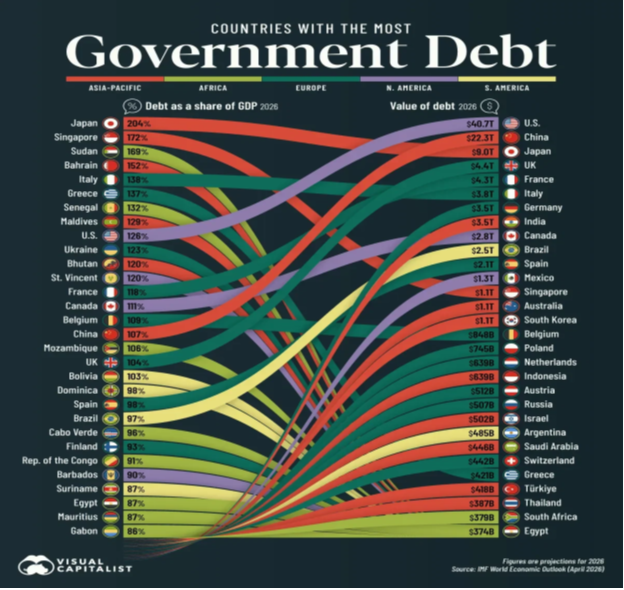
“Countries With the Most Government Debt in 2026 - The U.S. is projected to hold $40.7 trillion in government debt in 2026, the highest total worldwide. Japan has the world’s highest government debt relative to the size of its economy, at 204% of GDP. Several European economies rank among the world’s most indebted by GDP despite carrying much smaller total debt than the U.S. or China. The countries with the largest government debt totals are not necessarily those carrying the heaviest debt burdens. The picture changes considerably depending on whether debt is measured in dollar terms or relative to the size of a country’s economy. This graphic uses 2026 projections from the International Monetary Fund (IMF) to compare the world’s 30 most indebted governments using both measures.”, Visual Capitalist & the International Monetary Fund, August 3, 2026
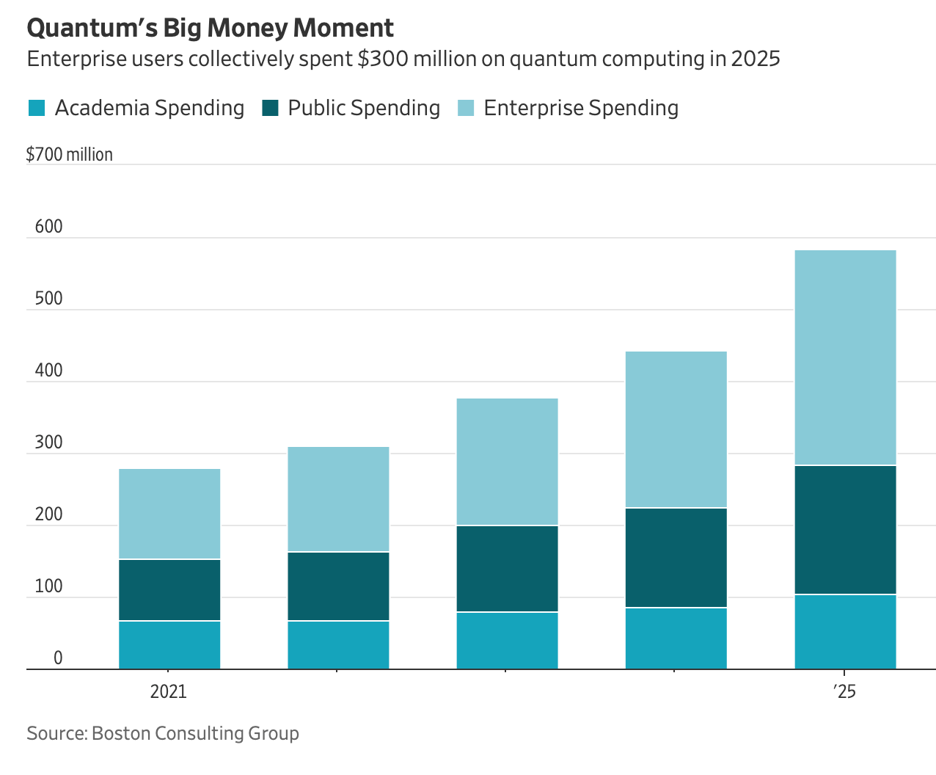
“Businesses Are Spending Big on Quantum - Many companies are pouring millions into quantum computing programs to gain a competitive edge and prepare for future encryption threats. Exactly when quantum computing will start disrupting billion-dollar industries remains hazy. But many businesses—some still smarting from being late to the AI boom—are spending big on the technology today. Enterprise users collectively spent $300 million on quantum in 2025, for the first time outranking the combined spending of research labs and governments, and signaling an inflection point in commercial interest in the technology, according to a report from Boston Consulting Group. Businesses like HSBC, Allstate and EY all say now is the right time to invest so that they hit the ground running with the right talent, data infrastructure and use cases when the technology ultimately matures for commercialization.”, The Wall Street Journal, August 14, 2026
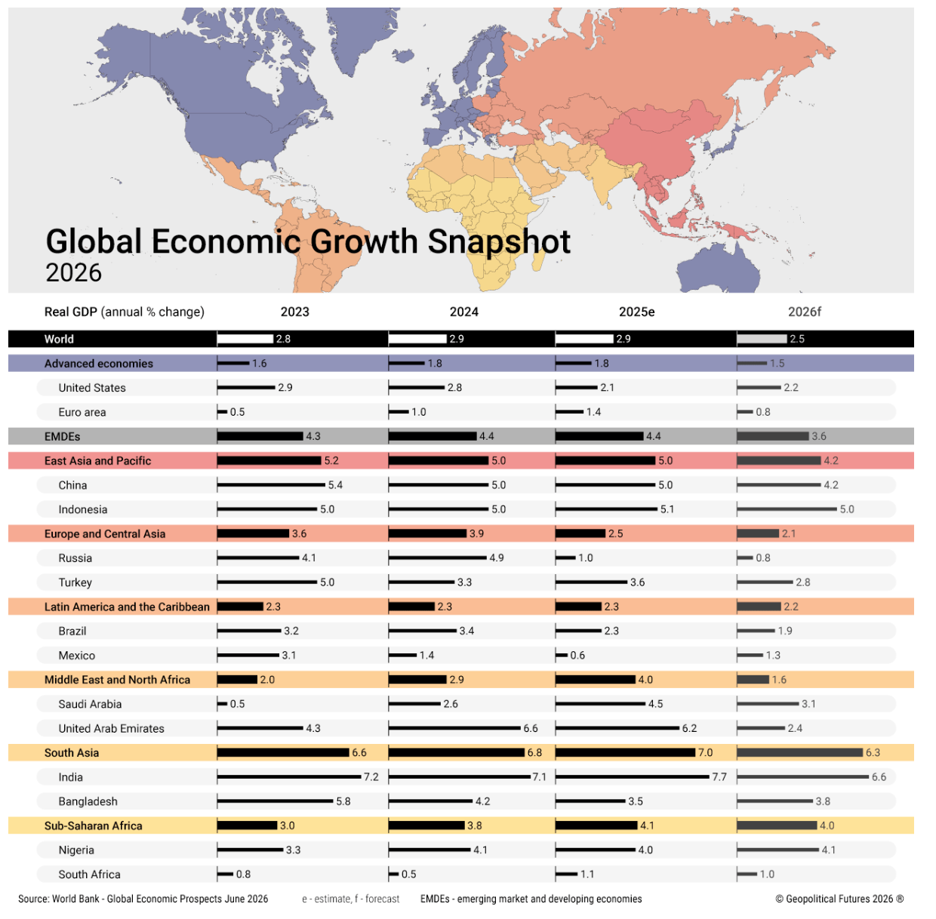
“Diminished Expectations for 2026 Economic Growth - AI investment and related trade could reduce the risk of a deep contraction. The World Bank’s January forecast, which had expected the global economy to maintain relatively strong growth momentum, has been revised downward. The main reason for the adjustment is the impact of the escalating Middle East conflict, which has disrupted regional energy supplies, increased inflationary pressures and heightened expectations of monetary policy tightening. Global growth is now expected to slow to 2.5 percent in 2026 from 2.9 percent in 2025, the lowest since the onset of the COVID-19 pandemic.”, Geopolitical Futures, August 14, 2026
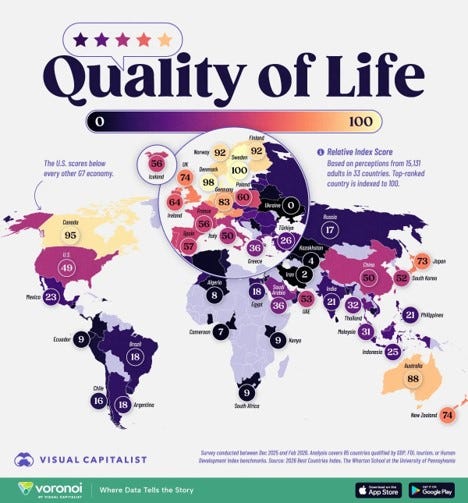
“Where People Think Quality of Life Is Best - Sweden ranks first for perceived quality of life in the 2026 Best Countries Index, ahead of Denmark and Canada. Canada is the highest-ranked country in the Americas, while the U.S. ranks below every other G7 nation. Eight of the world’s top 10 countries are in Europe, reflecting the region’s strong global reputation for quality of life. The 2026 Best Countries Index from The Wharton School reveals where people around the world believe quality of life is highest. Based on responses from more than 15,000 adults across 33 countries, the rankings measure international perceptions of 85 nations. Rather than relying solely on economic or demographic indicators, the index reflects how countries are viewed across factors including affordability, job opportunities, family friendliness, political stability, and overall well-being.”, Visual Capitalist & the Wharton School of the University of Pennsylvania, July 16, 2026
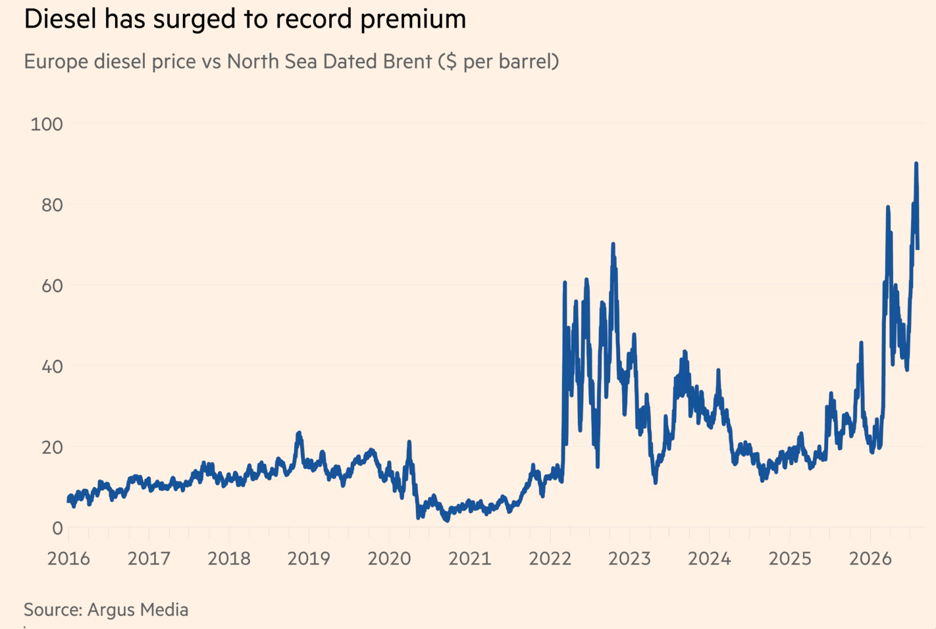
“Refining crunch keeps fuel prices high as crude retreats - Lost capacity in Russia and the Gulf is a boon to US refiners but a political problem for Donald Trump. Diesel and petrol prices are trading close to record premiums over crude oil, fuelling concerns that consumers and industrial users may see little immediate relief from a reopening of the Strait of Hormuz. The gap between refined products and crude has ballooned in recent weeks and has narrowed only slightly as a deal between Iran and Oman promises to restore the flow of oil through the crucial energy market chokepoint. Diesel currently trades at a premium of around $70 a barrel to crude, close to last week’s record high of $90 and many times larger than typical levels of about $20 a barrel, according to price tracker Argus.”, The Financial Times, August 6, 2026
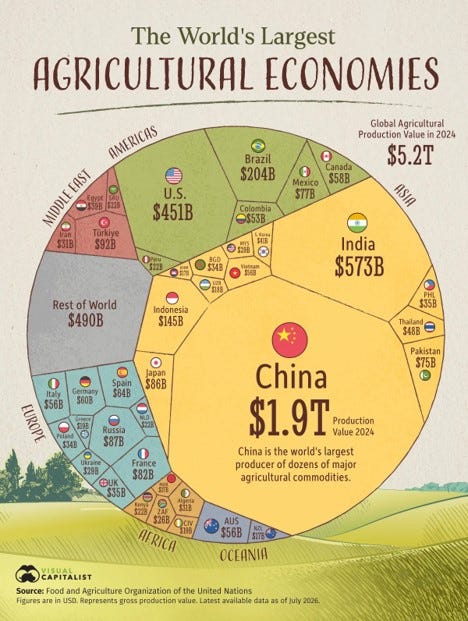
“The World’s Largest Agricultural Economies - China is the world’s largest agricultural economy, generating $1.9 trillion in production value, or 36% of the global total. India ranks second at $573 billion, followed by the U.S. ($451 billion) and Brazil ($204 billion). Together, the top four countries account for nearly 60% of global agricultural production value. Global agriculture generated $5.2 trillion in production value in 2024, making it one of the world’s largest industries. This graphic ranks the world’s largest agricultural economies by production value, based on data from the UN Food and Agriculture Organization (FAO).”, Visual Capitalist & The FAO, August 3, 2026
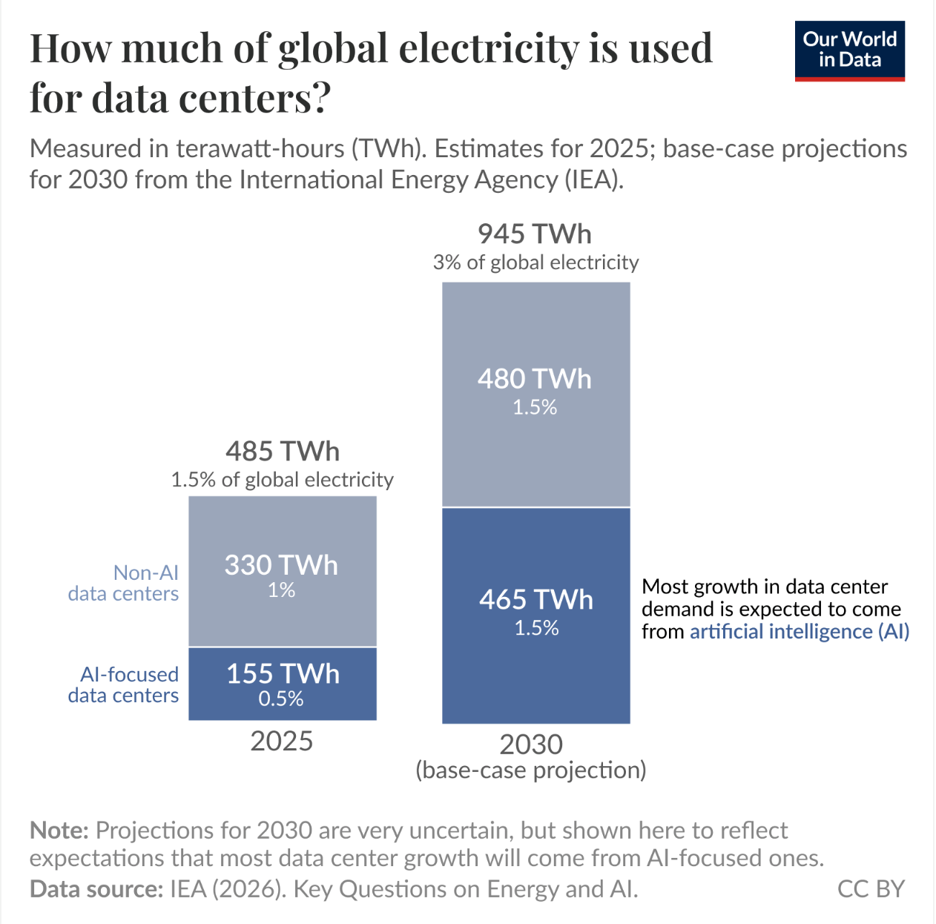
“How much energy do data centers and artificial intelligence use? Data centers consume around 1.5% of global electricity, but demand is very geographically concentrated. Few - if any - technologies have been adopted as quickly as artificial intelligence (AI). Since that computation runs on electricity, discussions around AI often return to what this means for energy demand. How much energy, then, does AI consume? We can look at this question on two levels. The first is the total amount of electricity AI uses. The second is about individual impact, or how much electricity each query consumes. Electricity currently accounts for around one-fifth of the world’s primary energy……… AI likely consumed around 0.1% of total primary energy in 2025.”, Our World In Data, July 20, 2026
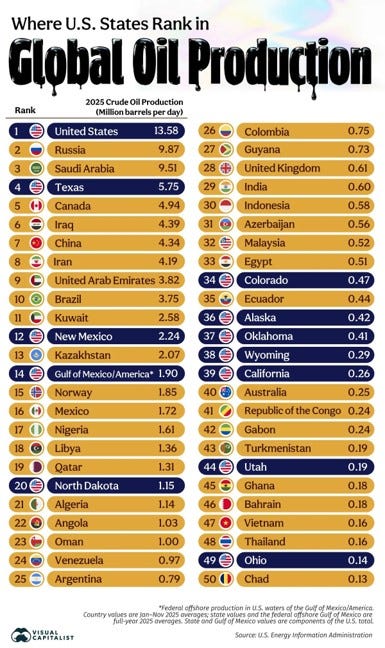
“If U.S. States Were Countries, Texas Would Rank #4 in Oil Production - Texas alone would rank fourth globally in crude oil production, behind only the U.S., Russia, and Saudi Arabia. New Mexico would rank 12th, producing more crude oil than Kazakhstan, Norway, Mexico, and Nigeria. Even smaller U.S. producers stand out globally, with Wyoming and California both surpassing Australia’s 250,000 barrels per day. The United States is the world’s largest crude oil producer, but several individual states produce volumes comparable to major oil-producing nations. This visualization ranks major U.S. oil-producing states and federal offshore production alongside leading oil-producing countries. The data comes from the U.S. Energy Information Administration. Country figures represent average daily crude oil production from January through November, while U.S. state figures are full-year 2025 averages.”, Visual Capitalist & U.S. Energy Information Administration, August 13, 2026
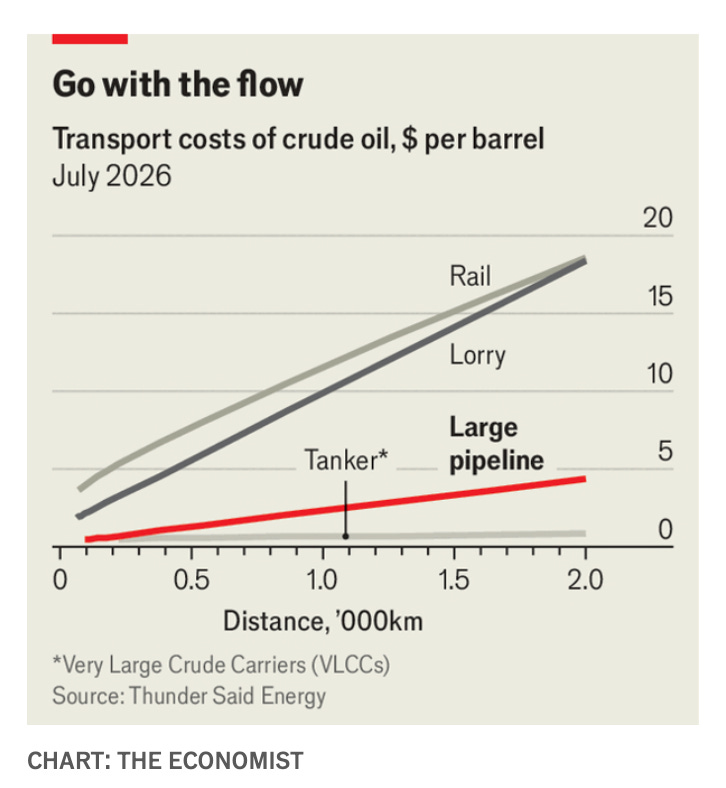
“A global pipeline-investment boom is under way - New conduits for oil will improve energy security, but come at a cost. Among the legacies of the Middle East’s decades of conflict is a network of pipelines that seeks to divert the region’s oil to safer harbours. Today, with the Strait of Hormuz choked off, the various pipelines criss-crossing the region are of vital importance. The United Arab Emirates is looking to add one that will run alongside its Habshan-Fujairah pipeline, doubling its capacity. Last month America, Iraq and Qatar announced plans to upgrade a pipeline from Iraq to Syria. Chevron, an American oil major, is considering a series of pipelines from Iraq to Syria and Turkey. Aramco is also exploring investments. ll this will add to the pipeline boom under way across the globe. According to Global Energy Monitor, a research firm, about 12,300km of oil pipelines are under construction at present, with an additional 20,100km proposed, representing a significant expansion of the 350,000km of pipelines currently webbed around the world.”, The Economist, August 5, 2026
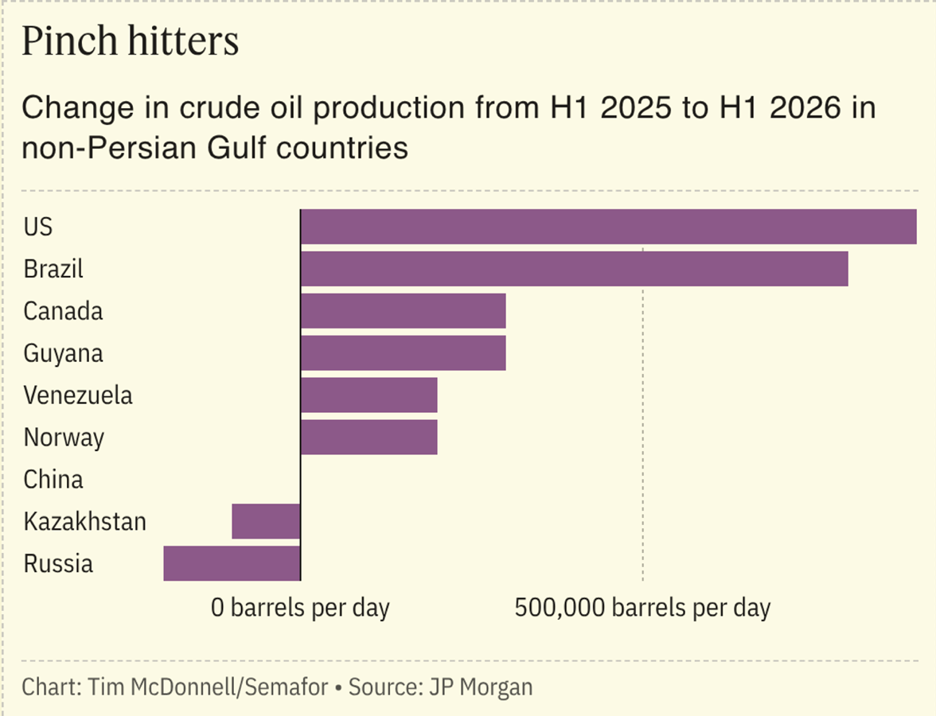
“Rise of the LatAm petrostates - Many factors have helped offset the dropoff in crude tankers exiting the Persian Gulf since the Iran war began in February. Gulf exporters ramped up alternative routes, China slashed imports, the US and Europe drew on strategic reserves, and higher prices cut into demand. But it’s becoming clear that another vital, if relatively modest, boost came from increased production in a handful of Western-hemisphere countries outside the top tier of global petrostates. Brazil, Guyana, Venezuela, and Argentina all posted production gains in the first half of this year that outpaced analysts’ prewar forecasts, underscoring how the ongoing blockage of the Strait of Hormuz is proving a moment to shine for smaller oil-producing countries that are capitalizing on being far away from active warzones……… China is already benefitting from Latin America’s oil boom: It bought nearly half of Brazil’s exports in the past few months and about 8% of Guyana’s, according to data firm Vortexa.”, Semafor, August 11, 2026
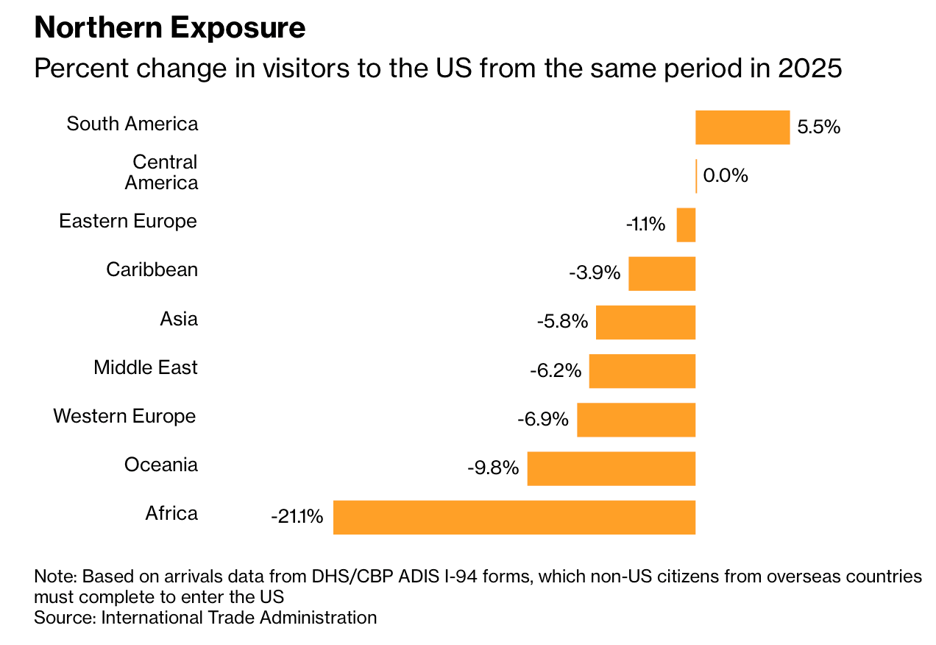
“South Americans Offer US Tourism a Lifeline as Others Stay Away - Visits from the region jumped 5.5% in the first half of the year, in contrast to sharp downturns from Europe and Canada. More than 2.7 million South Americans visited the US in the first six months of 2026, a 5.5% increase from a year earlier, according to the US International Trade Administration. The pickup in arrivals from South America has been helped by more efficient US visa processing, with travelers from Brazil, Argentina, Colombia, and Ecuador waiting an average of 80 days to schedule an interview for tourism and business visas in July.”, Bloomberg, August 13, 2026
“South Korea’s Incheon airport becomes world’s busiest for global traffic - Incheon International Airport, the main gateway to South Korea, served 38.4 million international passengers for the first six months of this year, according to preliminary data from the Airports Council International. London Heathrow Airport ranked second with 37.79 million passengers, followed by Singapore’s Changi Airport with 34.53 million. Incheon’s airport attributed its rise partly to the diversion of passengers from aviation hubs in the Middle East because of the conflict between the US and Iran. Dubai International Airport, which ranked second both in 2024 and 2025 based on full-year statistics, is expected to fall outside the top five this time.”, BBC News, August 12, 2026
“Traveling to Europe This Year? You Won’t Need ETIAS—Yet - ETIAS entry requirements were scheduled to launch by the end of 2026. For now, the standard entry rules for US passport holders remain unchanged. The European Travel Information and Authorization System (better known as ETIAS), a long-planned entry requirement for visa-exempt visitors, was supposed to launch in the final quarter of 2026. As of July 2026, that timeline has disappeared from the EU’s official ETIAS website, which now states that ‘ETIAS is currently not in operation’ and that the EU will announce the new start date ‘several months prior to its launch.’ While the change leaves travelers without a firm date to plan around, it also means those heading to Europe in the coming months don’t have another form to fill out just yet.”, Conde Nast Traveler, August 13, 2026
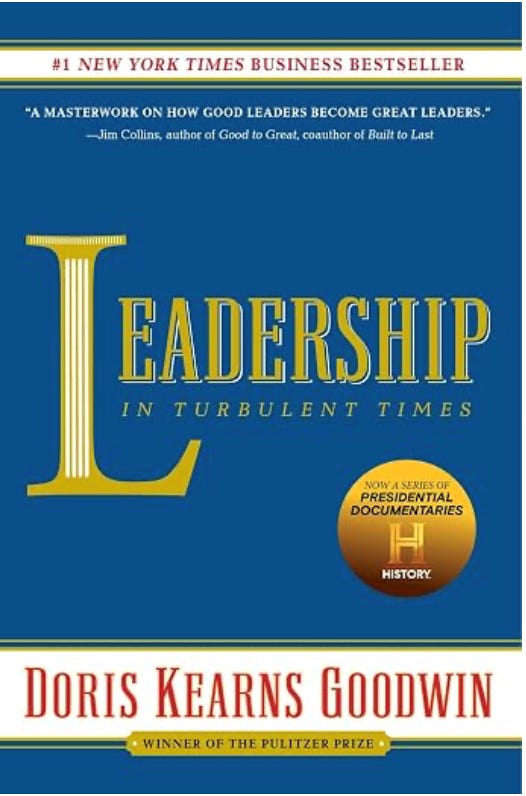
Book Review: “Leadership: In Turbulent Times” by Doris Kearns Goodwin
Doris Kearns Goodwin’s Leadership: In Turbulent Times studies four American presidents - Abraham Lincoln, Theodore Roosevelt, Franklin Roosevelt, and Lyndon Johnson - not through the usual chronological biography, but through the lens of how each man became a leader, and how each led through genuine crisis. Goodwin groups her analysis into three phases: the ambition and early setbacks that shaped each man well before he held power, the specific crisis that tested him once he did, and the leadership style he ultimately relied on — transformational, crisis management, turnaround, or visionary.
What makes the book valuable well beyond presidential history is Goodwin’s insistence that leadership is built, not born. Lincoln’s repeated political failures, Theodore Roosevelt’s grief and physical collapse, FDR’s polio, and Johnson’s early legislative frustrations all read less as obstacles overcome than as the actual material leadership was constructed from. Each man’s effectiveness in crisis traces directly back to something he survived earlier, not to any innate gift.
I picked this book because so much of what I discuss in this newsletter - companies navigating tariff shocks, currency swings, and geopolitical disruption simultaneously - is fundamentally a leadership problem before it’s a strategy problem. Goodwin’s four case studies are, in effect, four different playbooks for leading an organization through conditions nobody planned for. For anyone running a business across borders right now, that makes this less a history book than a field manual.
Ms. Kearns Goodwin also wrote one of my all-time favorite books and one of the most influential books of the past fifty years, Team of Rivals about the political genius of Abraham Lincoln, his unlikely presidency, and his cabinet of former political foes.
Five takeaways for global businesspeople:
1. Crisis reveals whichever leadership style you actually have, not the one you claim. Lincoln’s patient coalition-building, FDR’s bold experimentation, and Johnson’s legislative arm-twisting were each authentic to the man. Know your own style before the crisis forces it into the open.
2. Early failure is preparation, not disqualification. Every leader Goodwin profiles was tested and found wanting before he was tested and succeeded. The setback that feels disqualifying now may be exactly what makes the eventual response possible.
3. Communication during a crisis is a leadership act in itself, not just a byproduct of decisions already made — how you explain a disruption to your team or partners shapes whether they follow you through it.
4. Build your coalition before you need it. Each president relied on relationships built well before the crisis arrived. The international partners and local allies who matter most in a disruption are the ones you invested in beforehand.
5. Turnaround leadership and visionary leadership are different skills: know which one the moment actually calls for, because applying the wrong one (steadying the ship when you need to reinvent it, or the reverse) can cost you the recovery entirely.

Taking Businesses Global Profitably
Asia
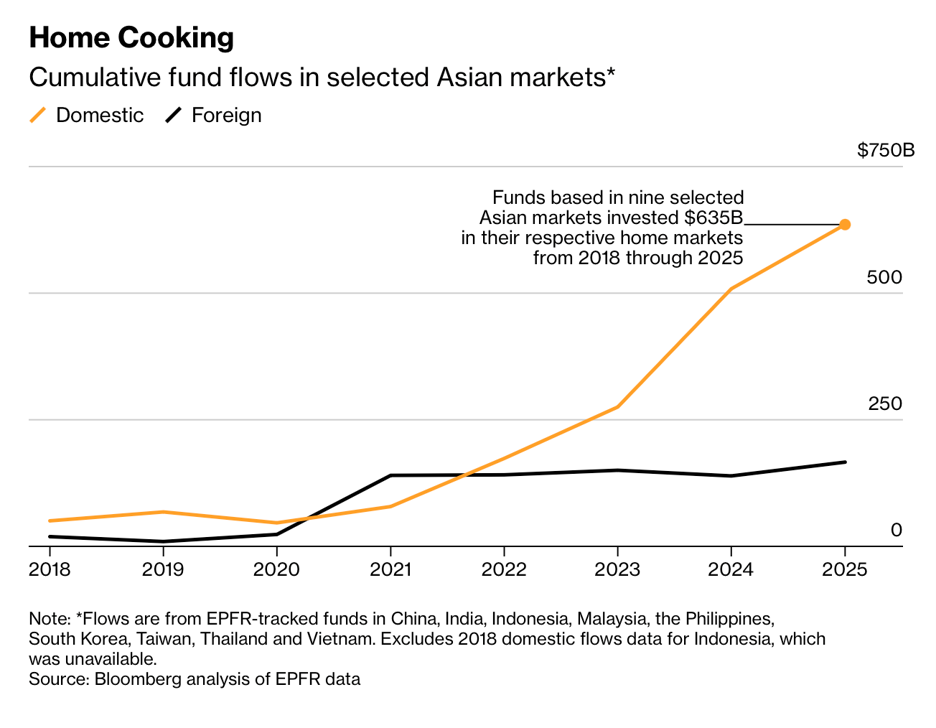
“Asia’s Savers Piled Into Stocks and Reshaped Their Home Markets - A wave of domestic investment makes Asia’s equities less dependent on foreign money but also introduces new risks. Homegrown investors are becoming the primary source of capital in Asia, shifting their savings from gold and real estate toward stocks, bonds and other financial assets. Governments in countries such as India, Japan and South Korea are encouraging households to take more risk by improving corporate governance and boosting shareholder returns. The growing prominence of domestic investors means markets in Asia have become less sensitive to the whims of overseas traders, but also raises concerns about overheating valuations and speculative trading. The shift has broad implications because Asia accounts for 56% of the world’s listed companies—shares valued at $43.5 trillion, including those at the heart of the artificial intelligence boom.”, Bloomberg, August 6, 2026
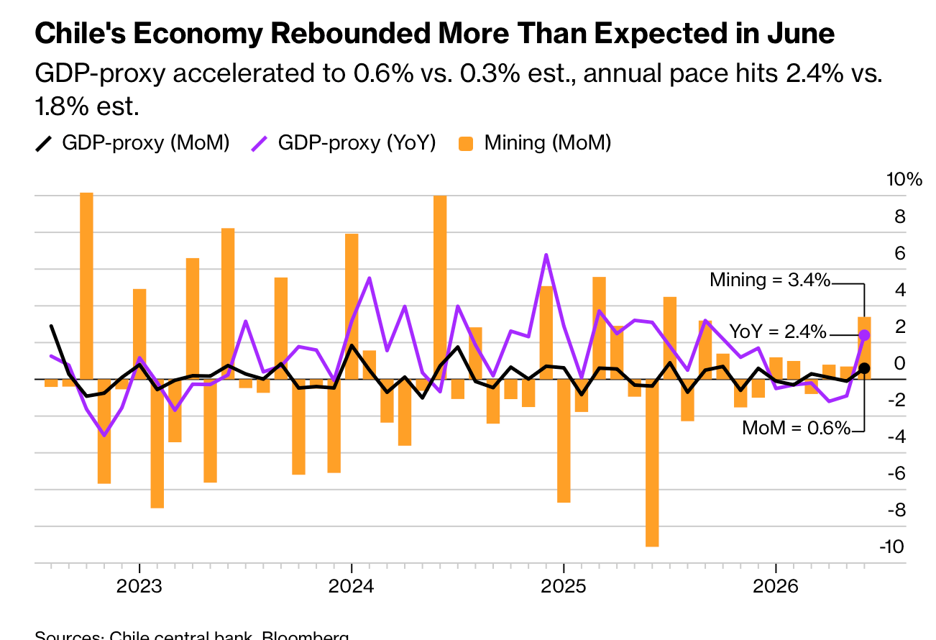
“Chile Economic Activity Caps Second Quarter on Stronger Note - Chile’s economic activity grew more than expected in June, with the Imacec index rising 0.6% from May. The economy grew 2.4% from the same period in 2025, marking the first increase in the annual figure so far this year. Chile analysts have slashed their 2026 gross domestic product forecasts to near 1% due to factors including high unemployment and a near-term slowdown in investment. Chile’s business confidence in July fell for the fifth straight month to the lowest point since December 2024, according to the Institute for Quality Business Management, known as ICARE. Chile’s central bank lowered its 2026 GDP growth forecast to between 1% and 1.75%, down from a range of 1.5% to 2.5% in March, according to its quarterly monetary report published June 17.”, Bloomberg, August 3, 2026
China
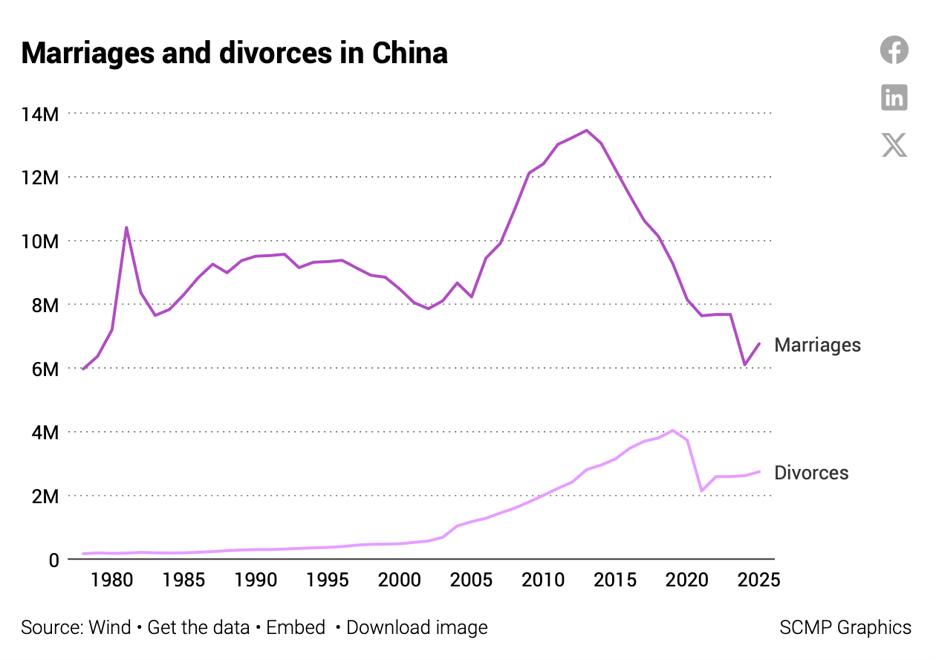
“China’s marriages fell 7.5% in the first half of 2026. What does it spell for the economy? Fewer weddings, rising divorces and plunging birth rates risk exacerbating the fallout from a rapidly ageing population. China’s marriage registrations fell 7.5 per cent year on year in the first half of 2026, underscoring the demographic challenges authorities face as they step up efforts to encourage nuptials and childbearing. Nearly 3.28 million couples in China tied the knot between January and June, down 264,000 from the same period last year, according to data released by the Ministry of Civil Affairs on Wednesday. Divorce registrations also rose 3.9 per cent to 1.38 million. The nation’s shrinking and rapidly ageing population risks complicating Beijing’s efforts to sustain economic growth. Economists and demographers warn that a smaller workforce and fewer workers supporting retirees could weigh on productivity, raise pension and healthcare costs and prolong weakness in domestic demand.”, South China Morning Post, August 13, 2026
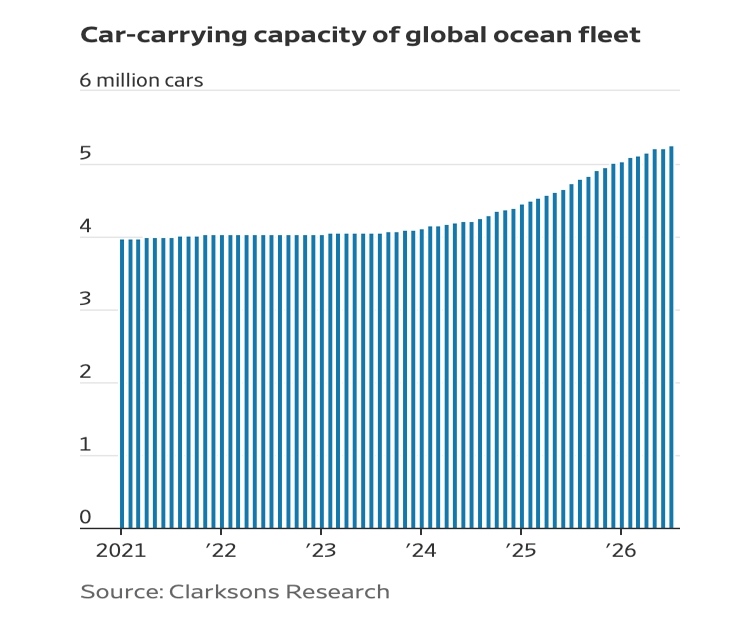
“There Aren’t Enough Ships to Handle China’s Booming Car Exports - As demand slumps at home, Chinese cars are flooding other markets and testing the shipping industry. Specialized car carriers, essentially floating parking garages, are booked out years ahead to export cars from Chinese factories. Rates to charter ships are up 65% this year on the surging demand to move vehicles out of China. Chinese carmakers are flooding foreign markets because of fierce competition between more than 100 domestic auto brands, overproduction and a sluggish economy. China exported just under 600,000 cars and vans in 2019, according to research group Mobility Global. This year, the group forecasts China could ship up to 10 million vehicles.”, The Wall Street Journal, August 13, 2026
Europe
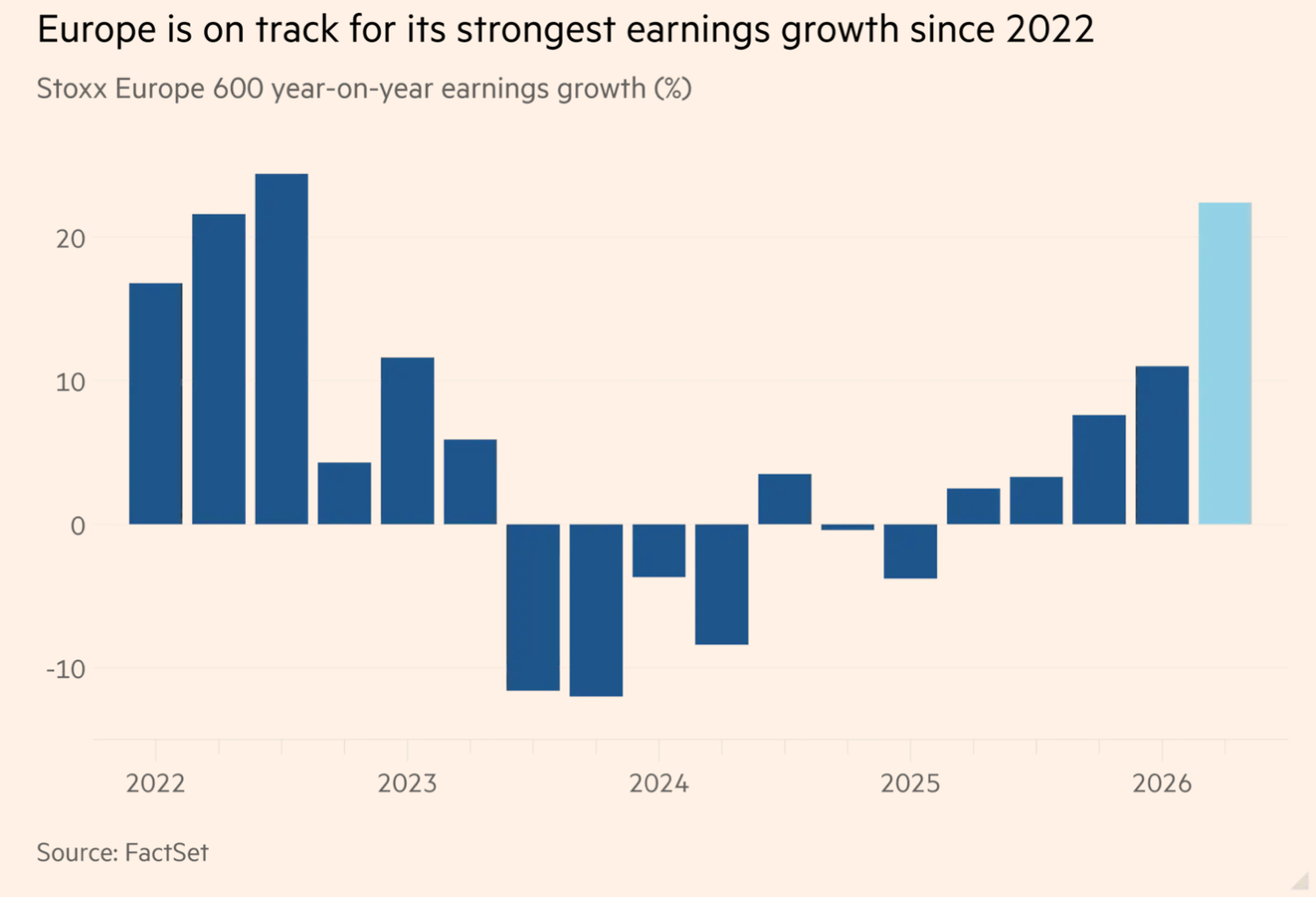
“Investors return to European stocks as strong earnings lift Iran war gloom - Companies in the Stoxx Europe 600 are on track to deliver a 22% increase in profits in the second quarter. European companies are on track to deliver 22 per cent year-on-year earnings growth in the second quarter this year, according to FactSet data, defying a period of higher energy prices to record their best growth since 2022, when global markets were rebounding from the Covid-19 crisis. Technology stocks in Europe were also some of the biggest contributors to index earnings growth, with chipmakers ASML and Infineon both raising their revenue forecasts for the rest of the year. Energy stocks, too, were responsible for a large part of Europe’s earnings growth in the second quarter, a period of high oil and gas prices.”, The Financial Times, August 8, 2026
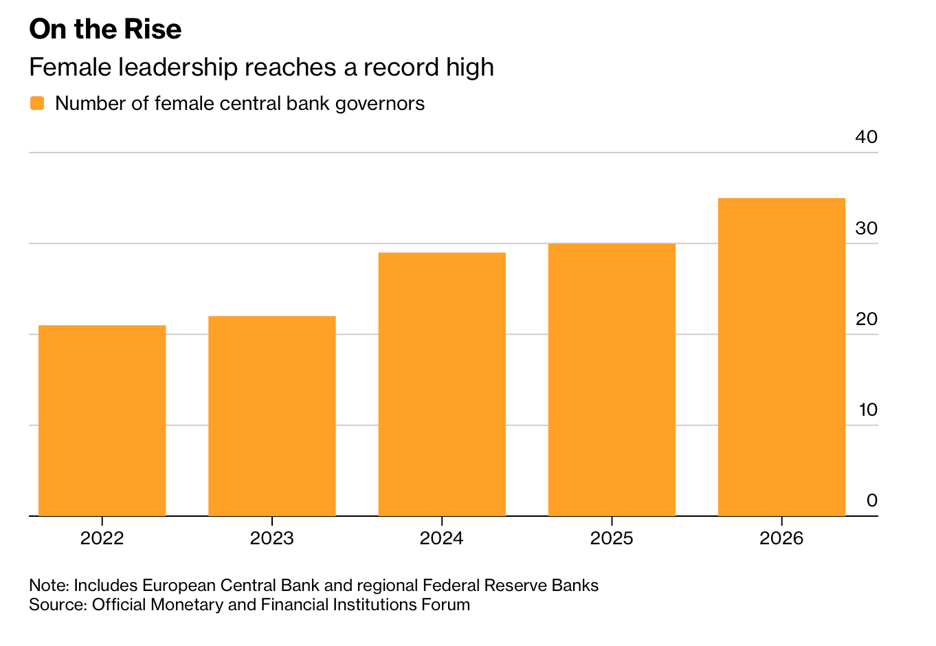
“Bank Indonesia’s Historic First Comes at a Crucial Moment - Indonesia is about to get something it has never had in 73 years: a woman running its central bank. Destry Damayanti is set to usher in a new era at the Indonesian central bank amid pressure on the rupiah and questions over its independence. She wouldn’t be Southeast Asia’s first female central-bank governor, but the club is still an exclusive one. The global tally is getting higher, though: the number of female central-bank governors hit a record 35 in 2026, up from 21 in 2022, according to the Official Monetary and Financial Institutions Forum.”, Bloomberg, August 14, 2026
The Philippines
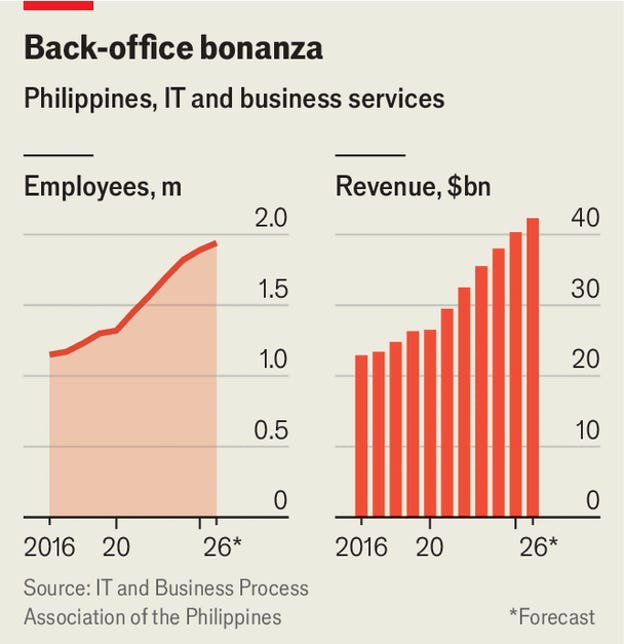
“The Philippines’ big offshoring industry is growing despite AI - How long will that last? Handling complaints in call centres is an “incredibly messy end of a business” involving lots of processes that can’t all be replicated by ai, says Derek Gallimore, who runs Outsource Accelerator, an advisory firm in Manila. This is in part because there remain limits to what ai can automate. Many people still want to speak to humans; Filipinos stand out as empathetic listeners who speak English well. And in any case, lots of customers are old people who struggle to use online chatbots. Moreover, ai is helping offshore workers in the Philippines do new, more complex jobs.”, The Economist, August 6, 2026
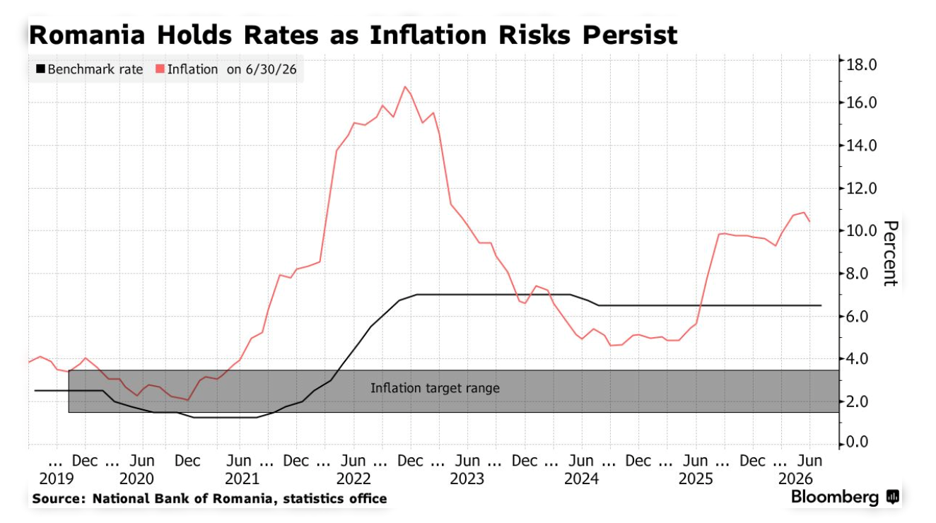
“Romania Keeps EU’s Highest Rates as Political Woes Cloud Outlook - Romania’s central bank left the benchmark interest rate at 6.5% as it waits for inflation to slow below 10% and political turmoil to subside. The bank sees risks from developments in electricity and food costs, as well as global oil prices, and the current political situation remains a source of “heightened uncertainties”. The central bank forecasts that the annual inflation rate will show a “substantial downward correction” in the third quarter and will fall inside the 1.5%-3.5% target range at the end of next year. The central bank sees risks stemming from developments in electricity and food costs, due to this year’s severe drought, as well as from global oil prices, according to a statement. The current political situation remains a source of “heightened uncertainties” related to potential future fiscal consolidation measures beyond this year.”, Bloomberg, August 10, 2026
United States
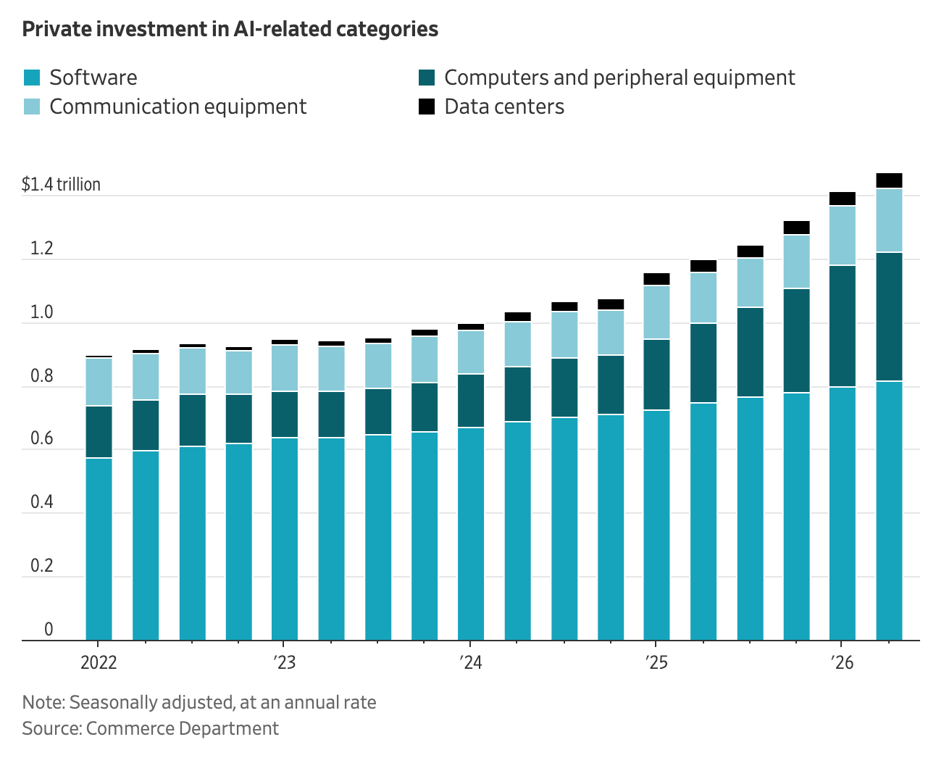
“The AI Boom Is Transforming the American Economy Beyond Recognition - AI has rapidly become a huge economic factor while affecting everything from capital investment to how much you pay for an iPhone. Tech companies are spending hundreds of billions of dollars to meet AI computing needs and issuing billions of dollars of debt to help make those purchases. The rapid data-center build-out is powering construction spending, hiring and municipal revenues. Details of last week’s gross domestic product report, which measures economic growth based on what the country produces, showed that business investment in AI-related categories continues to swell.”, The Wall Street Journal, August 3, 2026
Vietnam
“Vietnam Trade Deficit Reaches $3.59 Billion as Imports Surge - Vietnam posted an eighth straight monthly trade deficit in July as factories continue to ramp up capacity, even as the export-reliant economy comes under renewed pressure from US tariffs. Vietnam’s exports jumped 25% to $53.1 billion in July from a year earlier, while imports rose 41.4%, with the trade deficit coming in at $3.59 billion. The nation’s consumer prices climbed 4.45% in July from a year earlier, close to the government target of around 4.5% for the year. The data show Vietnam’s export-led economy is maintaining momentum despite renewed US trade pressure and the impact of the war in the Middle East, which has spiked energy and fertilizer costs. Authorities are trying to accelerate overall economic growth to 10% a year, from 8% in 2025, by expanding exports and boosting investment.”, Bloomberg, August 2, 2026

The Place To Find Your Accredited Franchise Suppliers
Global Franchise & Brand Sector News
“Bain Capital is buying Gong Cha - The private-equity firm is acquiring the 2,200-unit bubble tea chain from TA Associates. Gong Cha is one of the biggest bubble tea chains in the U.S. The company has 2,200 locations globally, including 289 locations in the U.S. and Canada. Gong Cha has slowed its unit count expansion, having added 12 total locations over the past two years after averaging more than 30 per year over the previous seven years, according to Technomic data. The company has recently shifted its franchising strategy and is taking steps to pick that growth up again. Gong Cha recently acquired the master franchisee rights in both Eastern U.S. states and along the West Coast.”, Restaurant Business / NRN, August 5, 2026
“Why the World’s Largest Franchisee Doesn’t Bet on One Brand - Greg Flynn built the largest franchise operation in the world, and when Forbes asked him why he spread it across seven brands instead of concentrating on the best one, his answer was refreshingly humble. He said his portfolio was intentionally composed to mirror the composition of the restaurant industry, because he doesn’t have a crystal ball — no segment stays dominant forever, and if you’re playing a long game, you need to be in all of them. That’s a $5 billion revenue operator with more than 3,000 restaurants telling you that the core skill isn’t picking winners. It’s building an operating platform durable enough that you don’t have to.”, LinkedIn post by James Walker, August 5, 2026
“How TGI Fridays CEO Ray Blanchette plans to keep the 61-year-old brand ‘young and fresh’. Two years after bankruptcy, he is betting on global expansion, digital engagement, and a people-first attitude to revive the casual-dining brand. The company plans on expanding again in the U.S. soon, but over the past several years, has increased its development in new and growing international markets. But global store growth is not the only way Friday’s plans to expand its reach. Blanchette’s leadership team has also doubled down on the brand’s social media voice and digital advertising.”, Restaurant Business, August 11, 2026
“Golden Corral Tackles Affordability and Widening Growth Strategy - Golden Corral has long built its identity around a simple promise to give customers a lot of choices at a price that feels difficult to beat. That proposition has become more complicated in an inflationary restaurant environment, even for a chain synonymous with value. Golden Corral CEO Lance Trenary sees a consumer who still appreciates what the buffet offers but may not have enough discretionary income to visit as often as before. The distinction between value and affordability has become critical. International development represents another growth lane. Golden Corral recently partnered with a firm to evaluate markets and has received interest from Mexico, Brazil, Canada, the U.K., and the Middle East. No development agreement has been completed yet, but Trenary says potential partners are already expressing interest.”, FSR Magazine, August 2026
“Luckin Coffee added 2 714 net new stores in Q2 2026 bringing its total number of stores worldwide to 36310 - As of the end of the second quarter, the total number of stores globally reached 36,310; of which, the total number of stores in the Chinese market (including Hong Kong) reached 36,087, including 23,625 self-operated stores and 12,462 joint venture stores. As of the end of the second quarter, the company had a total of 223 overseas stores, including 89 self-operated stores in Singapore, 20 self-operated stores in the United States, and 114 franchised stores in Malaysia. “, Caijing.com, August 3, 2026. Compliments of Paul Jones, Jones & Co., Toronto
“Yum China officially takes ownership of Pizza Hut China - The sale closed last week for $1.2 billion, allowing Yum China to be more flexible with the brand to meet market-specific preferences. The transaction represents one of two previously announced definitive agreements to sell Pizza Hut for $2.7 billion in the aggregate. The second transaction to sell Pizza Hut, excluding Mainland China, to LongRange Capital remains on track to close this month. Yum China currently has about 4,500 Pizza Hut restaurants in over 1,200 cities. Analysts have viewed the acquisition of the Pizza Hut business as generally positive. In a note, Jefferies analyst Anne Ling wrote that it should “optimize its balance sheet and enhance return on equity over time.” The acquisition should also give Yum China more flexibility over the brand’s strategy in the market. Pizza Hut operates primarily as a full-service concept in China and has a broader menu, including pasta, rice dishes, and appetizers. Pizza only accounts for about 40% of the brand’s sales in the market.”, Nation’s Restaurant News, August 10, 2026
“Wendy’s could be bought by top shareholder and billionaire Nelson Peltz - Peltz’s investment firm, Trian Fund Management, is reportedly organizing a bid to buy Dublin-based Wendy’s and take it private, according to the Financial Times. This isn’t the first time that Trian has considered taking Wendy’s private, CNBC reports. The firm previously explored a takeover of Wendy’s in 2022. Peltz is a longtime shareholder who has been involved with Wendy’s for decades and previously served as chairman. Regulatory filings cited by the publication show Trian and Peltz already own a significant portion of Wendy’s stock. Trian owns about 8 percent of the company while Peltz owns about 16 percent.”, Cincinnati.com, August 13, 2026
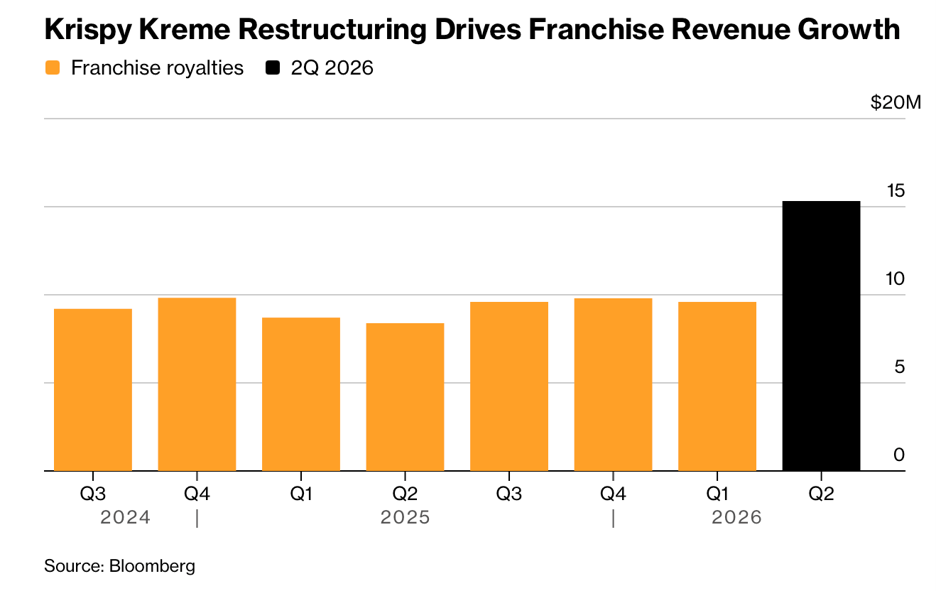
“Krispy Kreme Slashes Spending 70% by Franchising Store Network - Krispy Kreme Inc. slashed first-half capital spending by 70% through franchising much of its store network in a continued effort to bring down debt while revamping its operations. Approximately 42% of sales are currently generated through franchised locations, and the company aims to have half its sales come from franchisees beginning next year. Krispy Kreme has been trying to turn around its business and boost profitability by shifting most of its international operations to franchisees and growing sales by selling its donuts and baked goods to grocery stores and big-box retailers. The Charlotte, North Carolina-based donut chain aims to have half its sales come from franchisees beginning next year, executives said on the company’s earnings call, adding that company has continued discussions about re-franchising its operations in markets outside the US.”, Bloomberg, August 6, 2026
“STRONG Pilates strikes Central and Eastern Europe expansion with Polish fitness giant Xtreme Brands - Melbourne-based fitness franchise STRONG Pilates has partnered with Poland’s largest wellness franchise operator Xtreme Brands to expand into Central and Eastern Europe, starting with studios in Poland and the Czech Republic. The master franchise deal marks STRONG Pilates’ first move into the region and will bring its global footprint to 16 countries as the reformer Pilates brand continues an aggressive international rollout that has seen it grow from 82 studios in early 2025 to more than 125 operating locations today. Xtreme Brands operates 189 clubs across Central and Eastern Europe (CEE) and is currently adding about three new locations per week.”, Business New Australia, August 5, 2026
“Wagamama accelerates India growth with expanded Charcoal Concepts JV - The partners aim to open at least 100 wagamama restaurants over the next decade. The announcement comes as wagamama opens its fourth Indian restaurant in Mumbai.Top of Form Bottom of Form Charcoal Concepts is the multi-brand restaurant platform owned by K Hospitality Corp. Its portfolio includes Indian brands Copper Chimney and Bombay Brasserie, as well as international brands including wagamama. TRG operates several restaurant and pub brands in the UK, with wagamama, Barburrito, and Brunning & Price amongst its principal trading brands.”, QSR Media, August 12, 2026
“Franchise Equity Partners Acquires Bravo Fit, Planet Fitness’ Australian Franchisee - Planet Fitness, Inc. (NYSE: PLNT), one of the largest and fastest-growing franchisors and operators of fitness centers with more members than any other fitness brand, and Franchise Equity Partners (FEP), a private investment firm on a mission to create long-term partnerships with quality franchisees and franchisors, today announced that FEP has acquired Bravo Fit, the Planet Fitness franchisee in Australia, from existing shareholders including Planet Fitness, which has exited its minority ownership position as a result of the transaction. Bravo Fit, which has been central to bringing the brand’s Judgement Free® model to members across the country, currently operates 32 Planet Fitness clubs and holds exclusive area development rights for up to approximately 100 clubs across Victoria, New South Wales, South Australia, Queensland, and the Australian Capital Territory.”, Franchising.com, August 14, 2026. Compliments of Kevin Behan.
Our Mission, Information Sources & Who We Are
Our biweekly global business update newsletter focuses on what is happening around the world that impacts new trends, health, consumer spending, business investment, the franchise sector, economic development, and travel. We daily monitor ~40+ international information sources and six business sectors to keep up with what is going on in this ever-changing business environment. And our GlobalTeam™ on the ground covering 25+ countries provide us with updates about what is actually happening in their specific countries. We do not get involved in or report on politics!
William “Bill” Edwards, Chief Global Development Officer, “Is Uniquely Qualified to Steer Sr. Executives Successfully Through the Complex Waters of Going Global”. With five decades of successful international business experience spanning virtually every corner of the world and many business sectors, Bill Edwards understands the global business landscape like no other. He has been a County Master Franchisee in five countries in Asia, Europe, and the Middle East; the Senior VP for a franchisor operating in 15 countries and a full-service global management consultant since 2001 helping 40+ franchisors expand into new countries. Bill knows how to turn the challenges in taking a brand global into opportunities. ‘Franchise Times’ magazine says, “For his clients, Bill oversees overseas”.
For a complimentary 30-minute consultation on how to take your business into new countries and make money doing it, click on the QR code for a call with Bill Edwards at bedwards@edwardsglobal.com or +1 949 224 3896.
And download our latest chart ranking 40+ countries as places to do business, used by many companies for strategic planning, at this link:
Comments
Nothing yet. Say the first thing.
Sign in to join the conversation.