In Greece there is a proverb that goes: “the river of history never flows backwards” - meaning, what’s done is done, it can never be undone. The proverb is an apt metaphor for the geological history of the planet as the climate crisis unfolds, but also a tragic irony given that it is a literal description of what is happening on the ground.
The world keeps going about its daily business like a zombie pretending it hasn’t burned out yet. But as it whispers to itself through the flames “this is fine”, the corrosive fumes of an industrial civilisation undergoing autophagy become potent hallucinogens.
Given that all economic, political and social systems consider change their worst enemy, and considering that all forms of power eventually become incredibly corrupt, the question that comes back to haunt our civilisations, again and again, is: how on Earth does one change the system?
I was once asked during an interview: “how do you reform a broken system?” - in other words, how do you change everything? The timeless popularity of this naïve question is evident in the scores of book titles available that promise to literally change the world in 10 steps.
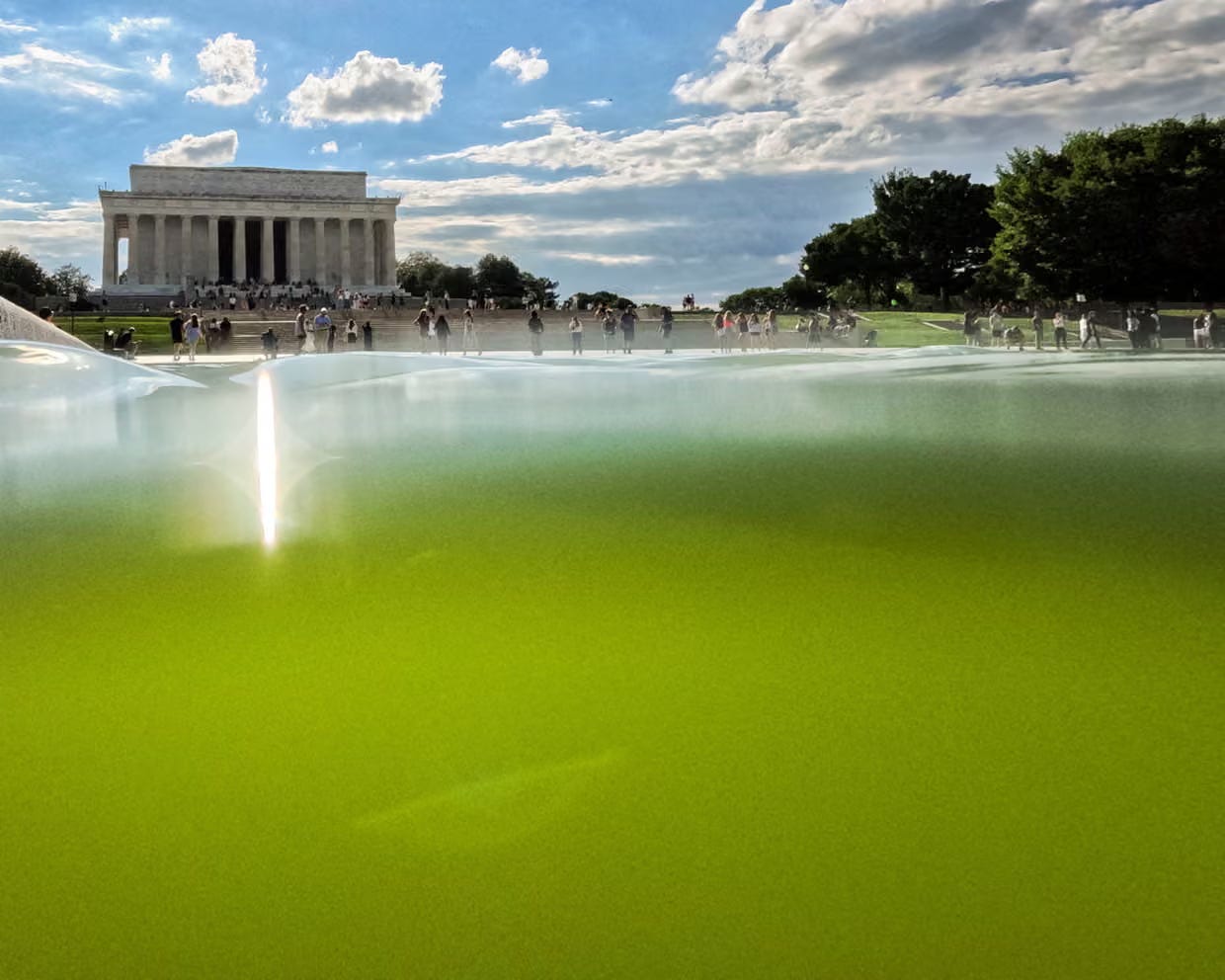
When back in July the Washington Monument’s Reflective Pool turned green right before national Independence Day celebrations, the phenomenon attracted little media attention – and rightly so, in the context of the wars, heat domes, dictatorship shenanigans and genocides that have now become a regular occurrence in late-stage industrial civilisation (early-stage post-Anthropocene).
Capitalism is revered by its own victims because it is a master of deception, pretending to celebrate the individual through the very activities that ultimately undermine all individuality: consumption, occupation, recreation. Each of these activities comes with its own sales margin, ROI, profit forecast and, most importantly, terms of service.