
About a month ago a regular reader of these essays sent me an email with a suggestion for a post: “What was life like in the Blood Run area on July 4, 1776?” That sounded like a pretty timely question, so I started looking into it. The most immediate problem was that Blood Run site was probably unoccupied in 1776! So, what can we say about the area in 1776? Maybe review some history for other centuries?
That was an idea anyway. But then reality set in and things started to get a little crazy in the run up to the July 4, 2026, celebrations. Cage fights on the White House lawn; high court “hijinks”; Air Force One making two trips to the Dakotas; and a general underlying “kerfuffle” all across the United States. And that was all before July 4! However, I decided to just ignore those distractions and focus on tracking Blood Run through four or five centuries of change. We’ll start with 1776, go back to 1676, and then move forward through time to look at 1876, 1976, and 2026.
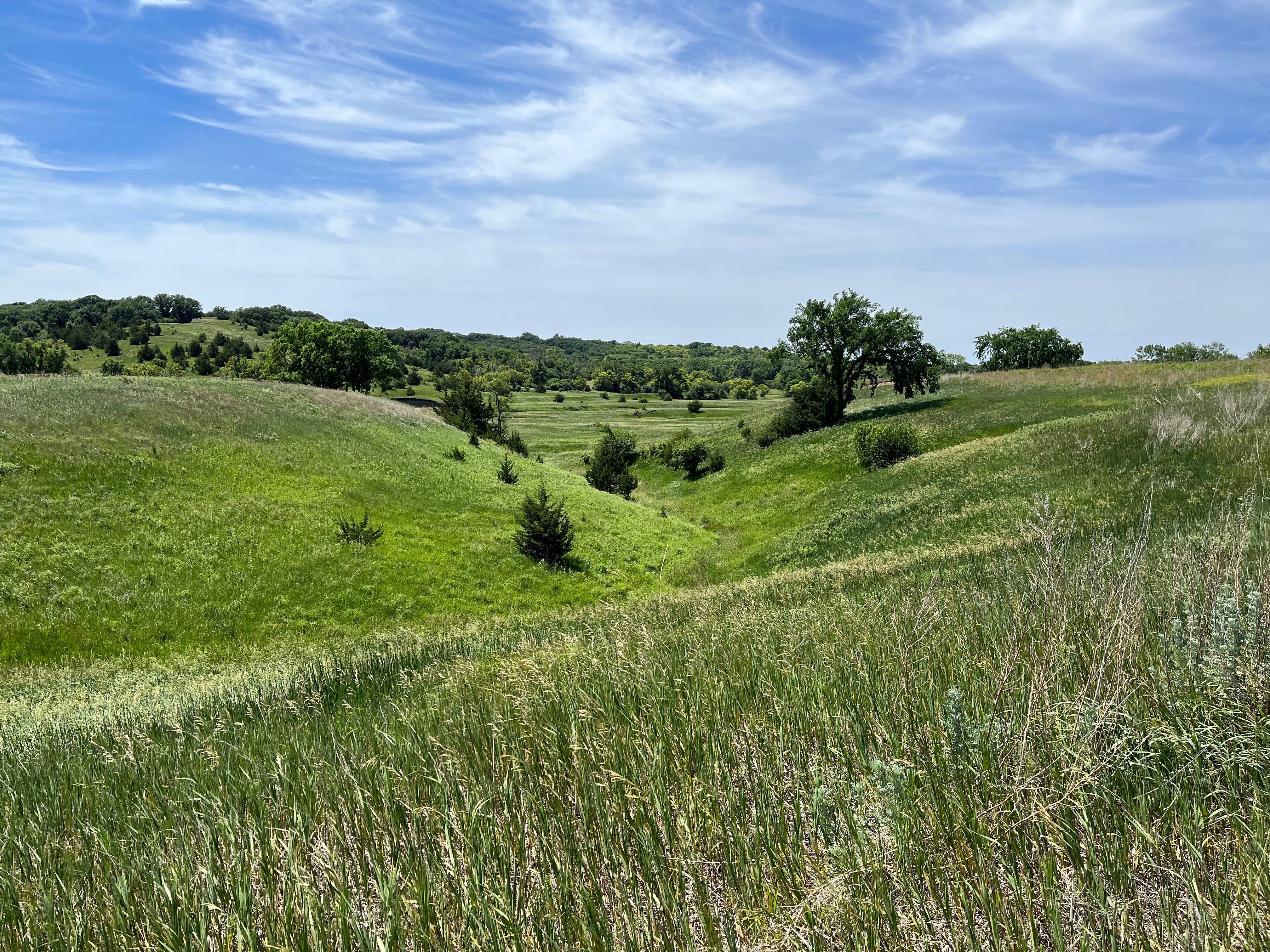
Figure 1----1776. Is this what Blood Run looked like? Actually, this photo of the floodplain along Blood Run Creek was taken earlier this month. The view is from the location of the spring that was recently documented in the biology report.
It’s generally thought that the “Silent City” had been abandoned by July 4, 1776, so things were probably pretty quiet. The conventional interpretation is that the Dakota Nation had moved in and displaced the people who had been living in the Blood Run area. That classic Euro-American perspective tends to emphasize fighting and competition. However, there are no known battle sites near Blood Run and the familiar competition for trade goods may not be appropriate here. Based mainly on early European publications, one scholar from the West Coast has suggested that Blood Run was abandoned because European trade goods, especially weapons, took over an earlier indigenous trade network based mainly on pipestone. However, I’ve heard a Midwestern archaeologist who has done extensive work on Blood Run seriously question that speculation. And that speculation is totally without input from the Tribal Nations that descended from the Oneota cultural tradition.
Is this (Figure 1) maybe what Blood Run looked like in the 1700s? We don’t really know. Ecologists think that the heavily wooded areas may have developed after Euro-Americans suppressed the prairie fires. Or possibly the centuries of occupation depleted the supply of wood along the rivers and the prairie grasses took over. In any case, in 1776 there was probably a mix of prairie and woodland environments that looked somewhat like the present day.
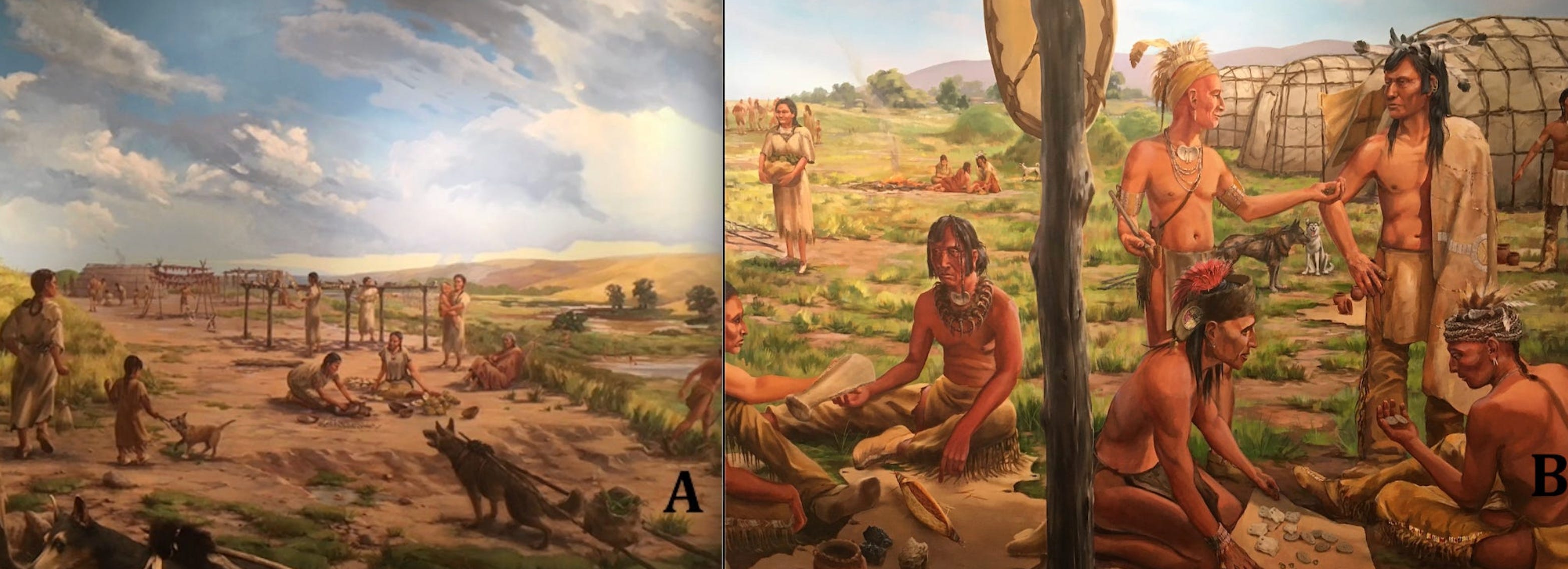
Figure 2----1676. Is this what life was like when Blood Run was occupied? A) Domestic activities like food preparation and childcare went on around the mounds visible on the left side of the image. B) Trade negotiations also were done within sight of the grassed mounds shown in the background at the center of the image.
So, let’s go back to the 1600s. These panels (Figure 2) from the diorama in the Visitors’ Center at Good Earth State Park are our best guess about how things looked on July 4, 1676, when Blood Run was occupied by people of the Oneota cultural tradition. A Tribal History Preservation Officer (THPO) for one of the descendant Tribal Nations was once asked why the people had their dwellings in and among the mounds. The THPO explained: “We like to live close to our ancestors.”
Dogs helped out with the every-day activities (Figure 2-A) because horses had not yet been introduced in the region. Notice the valley of the Big Sioux River is depicted along the right side of the image. Traders probably did travel some distance to get to this trade center in the 1600s (Figure 2-B). But the commerce may have involved more than just simple trade goods. There are teachings that say songs and ceremonies were also exchanged and shared.
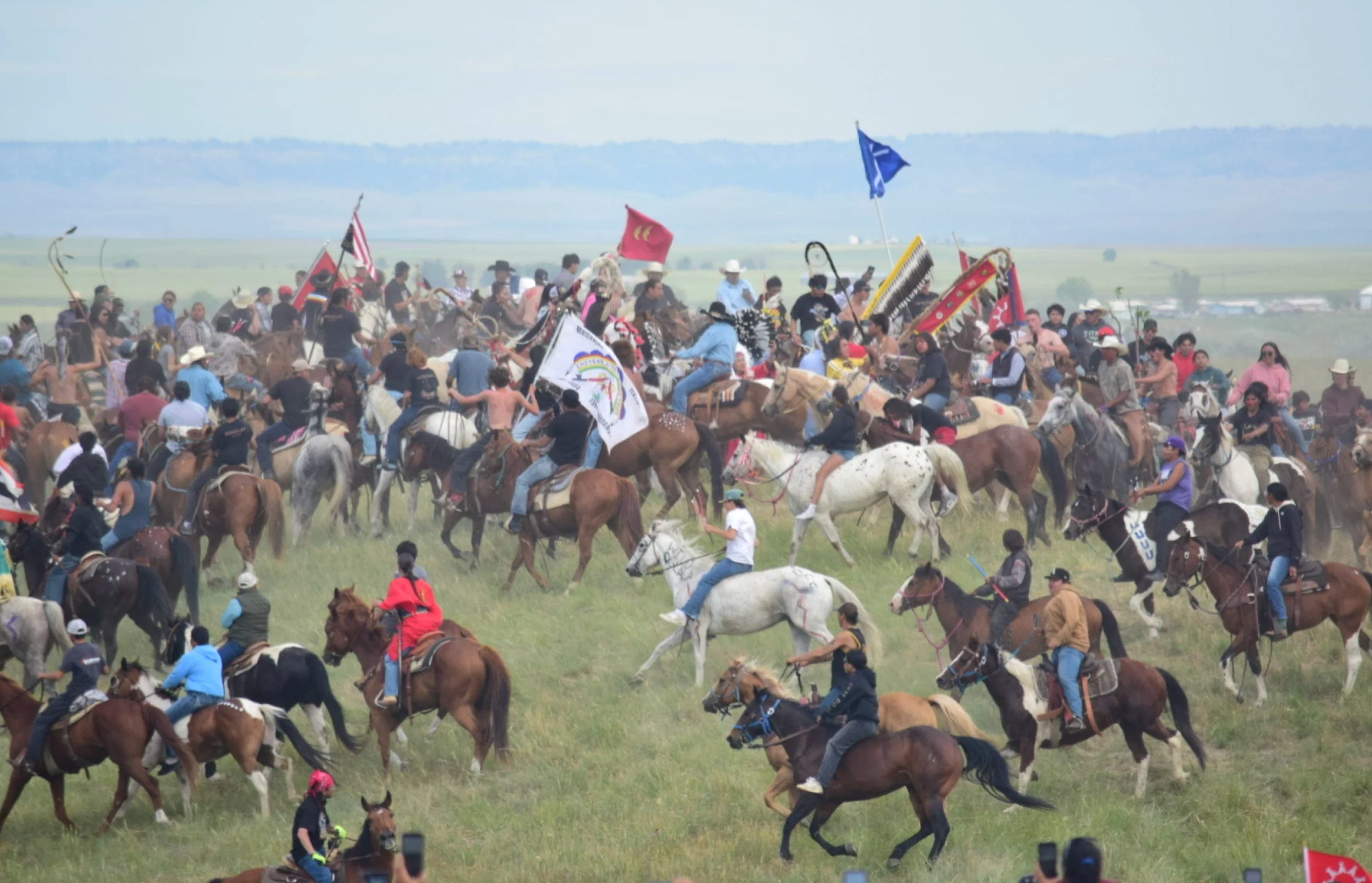
Figure 3----1876. Reenactment of the Native American charge up “Last Stand Hill” at Greasy Grass on June 29,2026. Photo is a screen shot from coverage provided by National Public Radio.
Now let’s jump forward in time to the 1800s. The city of Sioux Falls just west of Blood Run was incorporated as a village in the Centennial year of 1876. About 30 miles to the east, my ancestors on the family farm observed the Centennial on July 4, 1876. But all of the Centennial celebrations across the country were tempered with the news from the Greasy Grass River (AKA Little Bighorn River). On June 25 and 26, 1876, the United States Army experienced a staggering defeat that seriously diluted the Centennial festivities. In the years after the Civil War, Euro-Americans had invaded the West chasing land and gold. By 1876 Native Americans were responding with a stiff resistance that included the battle that humiliated the US 7th Cavalry.
That Native American victory was celebrated this year with a major reenactment of that decisive engagement (Figure 3). However, the backlash to the defeat in 1876 was a brutal campaign of genocide by the US Army that continued throughout the rest of the century. That campaign culminated when the US 7th Cavalry got their revenge at the Wounded Knee Massacre in 1892. News coverage of Wounded Knee included a lot of conspiracy language about an “uprising”, but we don’t really know how my relatives or the population of Sioux Falls perceived the event. In any case, it’s worth remembering the irony of the earlier defeat at Greasy Grass during the Centennial Year celebrations in 1876. But we’ve sorta wandered away from Blood Run.
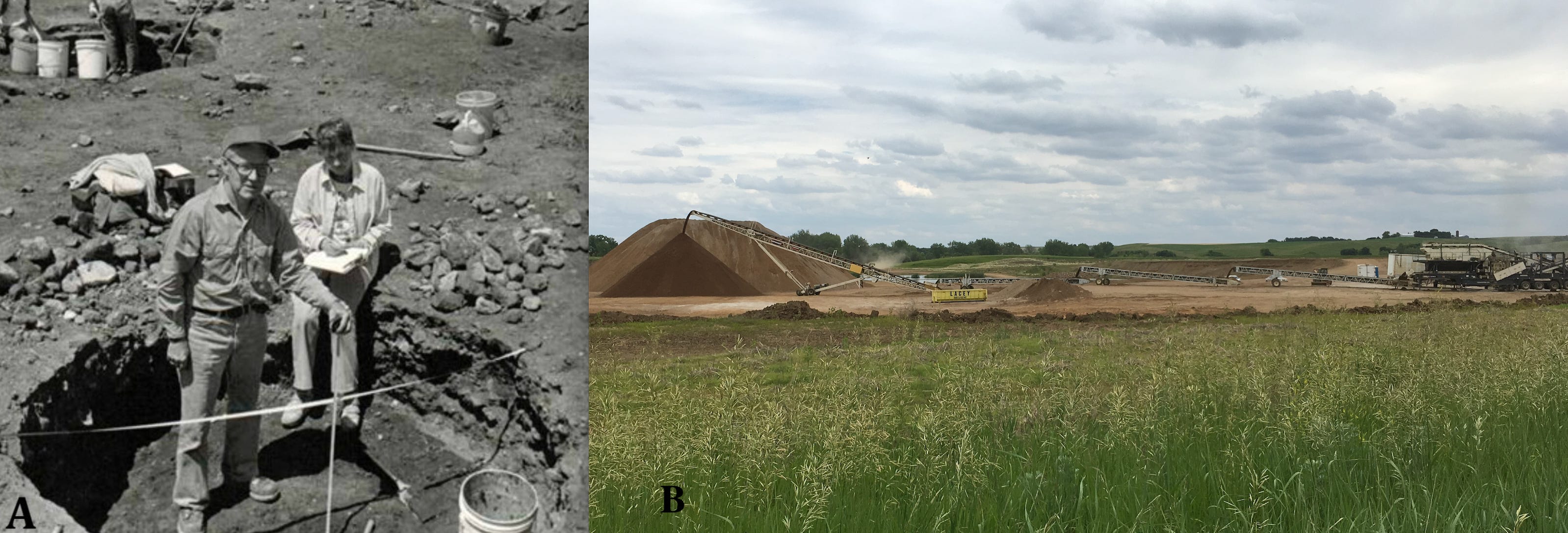
Figure 4----1976. A) Archaeology led attempts to understand and protect Blood Run. B) Contemporary gravel operations continue adjacent to the site.
Let’s get back to Blood Run in the 1900s. During the early part of this Bicentennial Century, pot hunters and grave robbers were digging up the mounds looking for souvenirs. That mischief was replaced by sober and careful science done by archaeologists into the middle part of the century. The work eventually resulted in the designation of Blood Run as a National Historic Landmark in 1970. Systematic excavations (Figure 4-A) continued into the 1980s when gravel operations threatened the mounds.
Those gravel operations are still going on in 2026 (Figure 4-B). Although they currently don’t pose a direct threat to any mounds, the hydrology may be impacting the natural springs that are a hallmark of the site. There is, however, an immediate and on-going threat to the main mound group located in a farm field. I’ve written about this in the past and will continue to draw attention to this problem. Another concern that I have about activities at the site is the nature of consultation with the descendant Tribal Nations. During the later part of the 1990s, there were initial attempts at establishing communications. But like the efforts to buy the agricultural land and protect the mounds, the contacts with descendant Tribal Nations often times seem to be pretty perfunctory and ineffective.
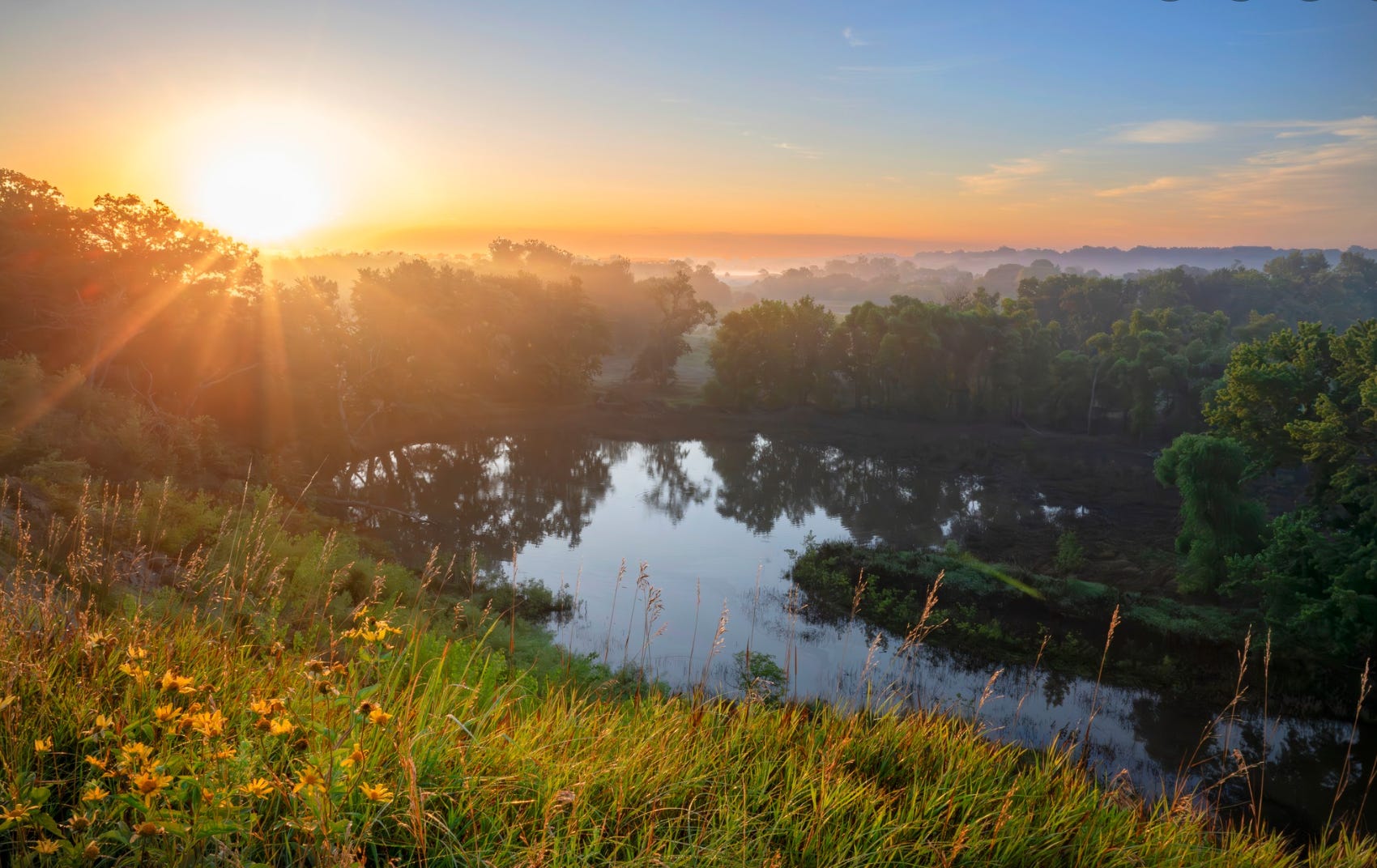
Figure 5----2026. Foggy sunrise over the valley of the Big Sioux River. This view is from Good Earth State Park on the west side of the river and generally looks east into Blood Run National Historic Landmark. The image was taken by Steve Johnson who won the 2024 photo contest sponsored by the Park.
There are, however, some reasons for optimism in 2026. Acquisition of land adjacent to the boundaries of the National Historic Landmark is still under consideration. The Sacred Spring has been set free and there’s now a bridge across Blood Run Creek. The total area of Good Earth State Park has expanded to the south and new trails have been added. The fifth annual Indigenous Artists of the Prairie is scheduled for this Fall and descendant Tribal Nations routinely participate in events at the Park. That includes ceremonies that bring singing and drumming back to the Big Sioux Watershed. The sounds reflect memories that can also be experienced by a visit to this place (Figure 5).
Blood Run National Historic Landmark and Good Earth State Park truly do help to protect and preserve the Native American traditions that are rooted in the Land. On this 250th anniversary of the founding of our country, I am proud to acknowledge the Native Americans who were living here at that time. And, I am honored to remind you that their descendants are still living here!
Happy Birthday, America!
Suggested Resources
Davis, Matthew (2025) A Biography of a Mountain, St. Martin’s Press, 313 p. One Book South Dakota selection for 2026.
Estes, Nick (2019) Our History is the Future, Verso, 310 p. One Book South Dakota selection for 2022.
Richardson, Heather Cox (2010) Wounded Knee: Party Politics and the Road to an American Massacre, 392 p.
Richardson, Heather Cox (2007) West from Appomattox: The Reconstruction of America after the Civil War, Yale University Press, 416 p.
No posts
Comments
Nothing yet. Say the first thing.
Sign in to join the conversation.