
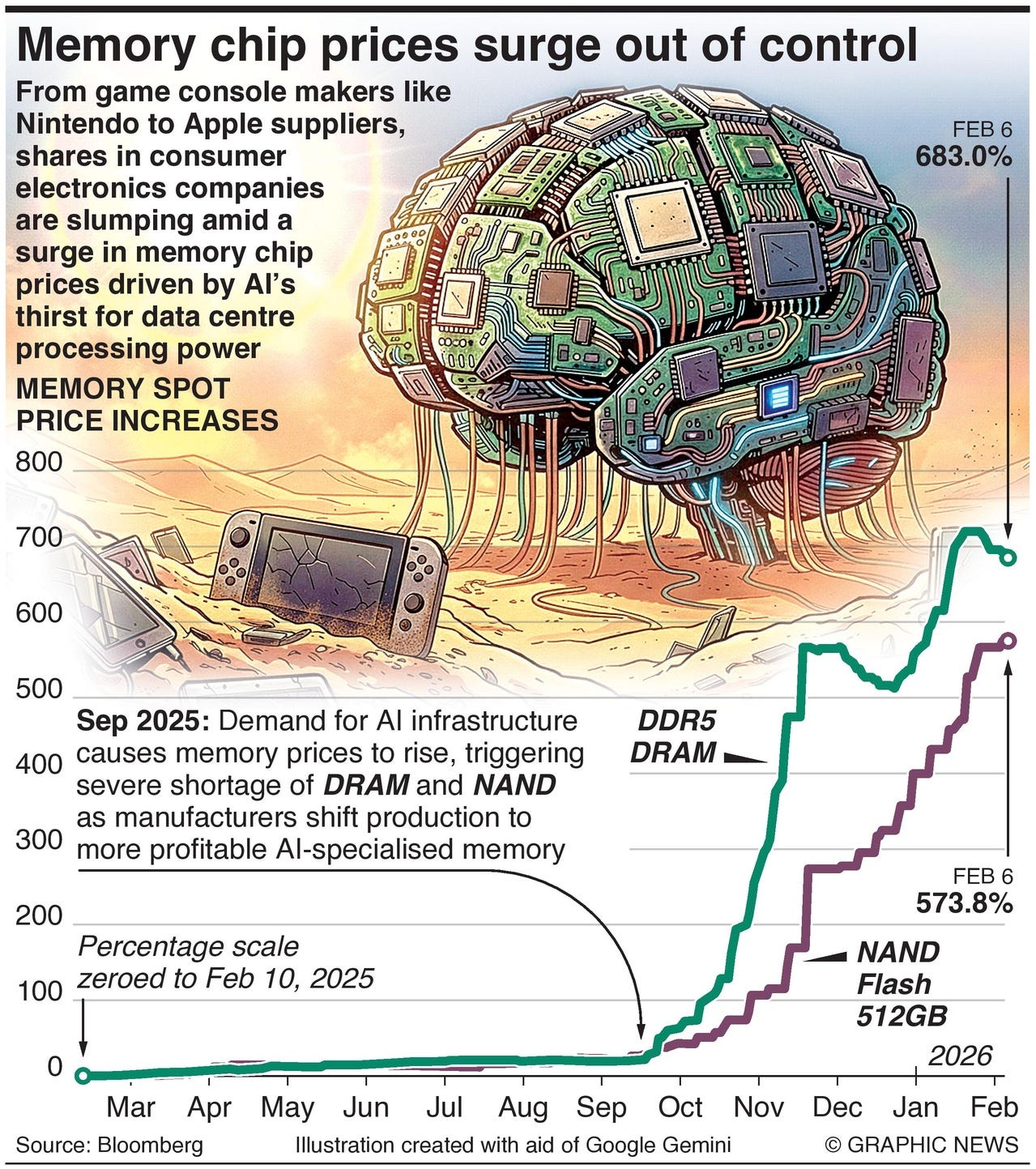
The tensions in the Middle East have played havoc with global commodity prices. Memory chip prices have jumped, and Apple has already raised prices on Macs and iPads to cover surging component costs. iPhones could be next.
But the fallout isn’t confined to memory chips. It has spread through electronic components, plastics, food, and textiles; in short, manufacturing broadly. Asia has felt this most acutely, as the Strait of Hormuz has opened and closed intermittently, disrupting shipping routes and driving up costs and delays. The pain isn’t limited to China, the traditional “factory of the world.” It extends to the very countries that were meant to be the beneficiaries of the China+1 strategy.
During President Trump’s first term, punitive tariffs on China sent investors scrambling toward alternatives such as Vietnam, Indonesia, and India. In his second term, those same countries are now facing tariffs of their own; this time over trade surpluses, forced labor allegations, and transshipment concerns.
Globalization has always been shaped by geopolitics, national interest, regional trade initiatives, and the policymaking of major trade bodies. What’s changed is the intensity. Geopolitics is no longer a peripheral risk for Asian supply chains; it is increasingly the variable that decides where factories can and can’t operate.
Asia’s factories once hummed along a straightforward model: produce everything from machinery and textiles to chips and components, ship it globally, and let export-led growth do the rest. That model worked well until tariffs, driven by geopolitics rather than economics, began to disrupt it.
Supply chains are now, in effect, tied to political will. The IMF has warned that trade barriers and supply chain disruption are weighing heavily on manufacturing bases worldwide. The US has imposed tariffs of up to 40% on goods deemed to contain Chinese inputs, a policy that hits many Asian economies hard given how dependent their production lines remain on Chinese components. The result: higher compliance burdens and higher input costs across the board.
The past few years have tested manufacturing in Asia. Foreign investors looking to diversify into the region are often unfamiliar with its markets to begin with, and layering geopolitical tension, trade disputes, pandemics, and economic downturns on top only adds to the volatility they have to navigate.
Every China+1 location comes with its own political system, labor market, infrastructure, and regulatory environment. That complexity is exactly what makes due diligence essential before choosing a market. The factors that typically drive a location decision include:
• Political environment
• Economic environment
• Regulatory environment
• Availability of manufacturing locations
• Operating costs
• Labor costs
• Logistics costs
Of these, the Political Environment factor has become the most consequential in a period of heightened geopolitical tension. A country’s political stability shapes business and investment prospects and, ultimately, its long-term growth trajectory. Just as important is how that country manages its foreign relations, its diplomacy is now a competitive advantage in its own right.
Vietnam is the clearest example. Its “bamboo diplomacy” approach balances relations with the US, China, and Russia, and the country once hosted heads of state from all three within a period of ten months. That balancing act occasionally puts Vietnam in the crosshairs of great-power rivalry, but it has generally allowed Hanoi to navigate political headwinds and negotiate favorable outcomes rather than being forced to pick a side.
Comments
Nothing yet. Say the first thing.
Sign in to join the conversation.