
For much of the past two years, the global AI narrative has been relatively straightforward.
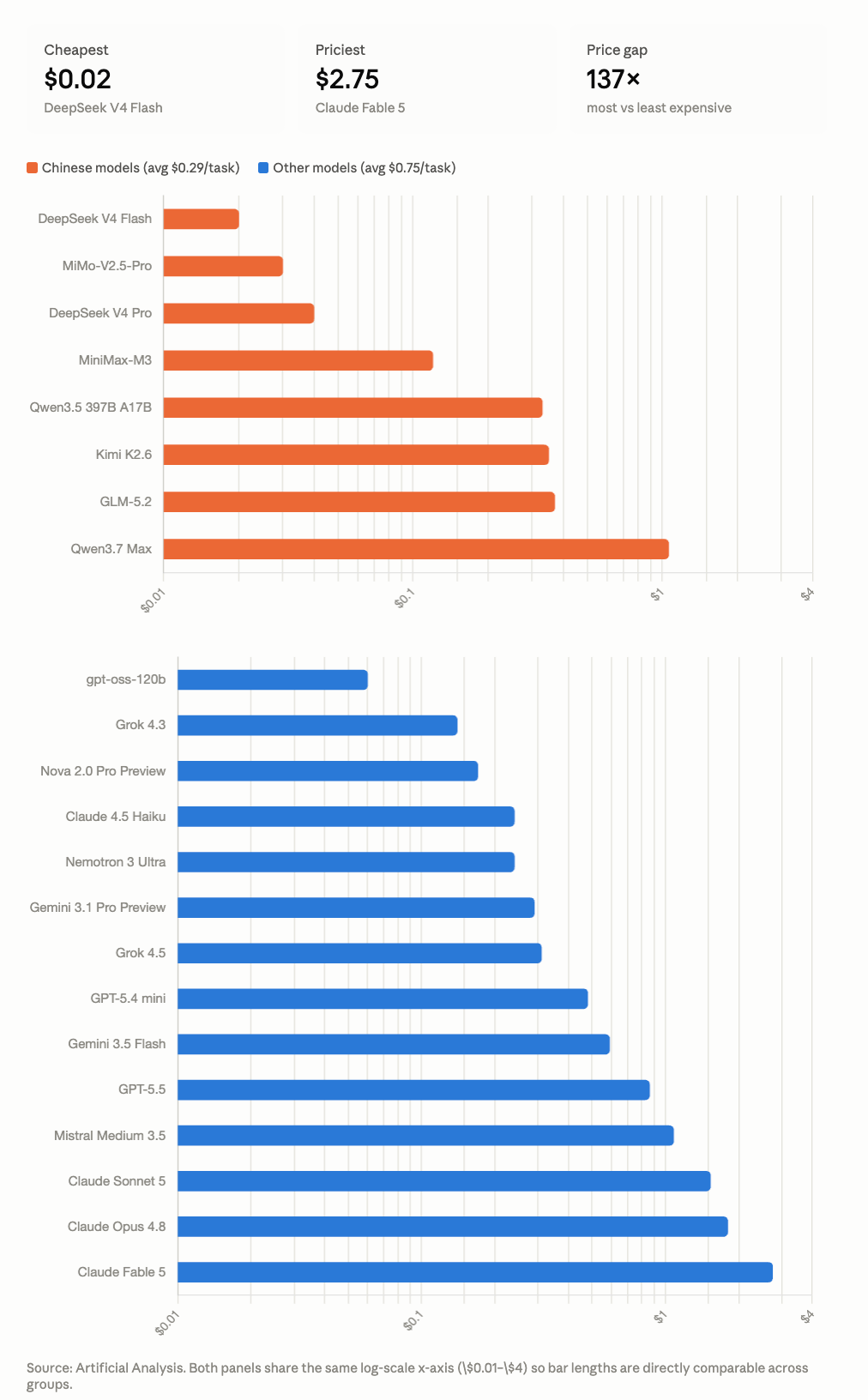
The United States built the frontier models. China built the affordable alternatives.
That distinction is becoming increasingly difficult to defend.
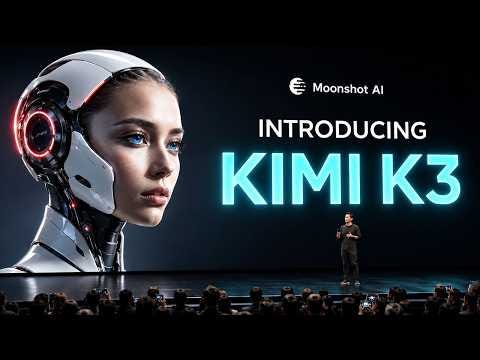
This week, Chinese AI startup Moonshot AI released Kimi K3, a new open-weight large language model that the company says performs alongside the latest frontier systems from OpenAI and Anthropic. While independent benchmarks are still emerging, the launch has already shifted the conversation from “How cheap are Chinese models?” to “How close are they to the frontier?”
And that is a far more significant question.
The first generation of China’s AI challengers largely competed on economics.
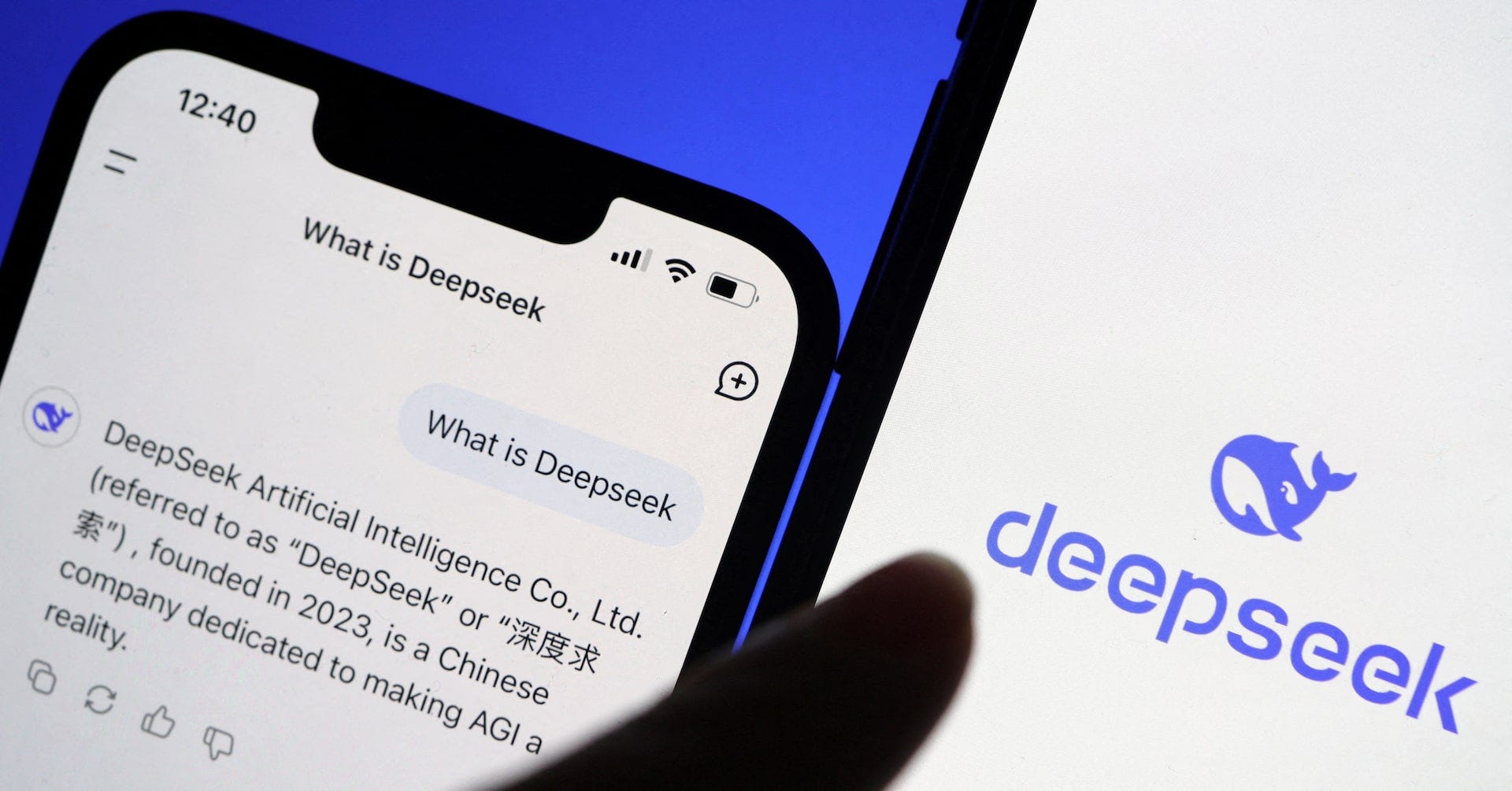
DeepSeek, Qwen and others demonstrated that frontier-level reasoning could be delivered at dramatically lower inference costs than many Western models. Their success pressured API pricing across the industry and challenged the assumption that the most expensive models would always dominate.
Moonshot’s latest release suggests the competitive landscape is evolving again.
Rather than positioning Kimi K3 purely as a lower-cost alternative, Moonshot has priced it roughly alongside Anthropic’s Sonnet family—signalling confidence that capability, rather than price alone, now justifies a premium.

That represents an important strategic shift.
The competition is no longer:
“We’re cheaper.”
It is increasingly:
“We’re just as capable.”

Technically, Kimi K3 is an ambitious release.
According to Moonshot, the model features:
2.8 trillion parameters, making it one of the largest open-weight models announced to date
A one-million-token context window
Native multimodal capabilities
Strong coding and agentic workflow performance
Open-weight architecture allowing developers to download and customise the model
Perhaps more importantly, several independent benchmark providers have ranked Kimi K3 surprisingly close to the latest proprietary frontier models, with particularly strong performance in software engineering tasks. While results vary across benchmarks—and leading closed models still outperform it overall—the performance gap has narrowed considerably.
For many developers, that changes the economic equation.
The more important story may not be benchmark rankings.
It is openness.
Unlike proprietary systems such as GPT or Claude, open-weight models allow organisations to deploy, fine-tune and customise the model within their own infrastructure.
That matters because enterprise AI increasingly revolves around:
security
compliance
proprietary data
workflow integration
Many companies simply cannot send sensitive data to public APIs.
Running models privately solves that problem.
Historically, organisations accepted lower model quality in exchange for greater control.
If frontier-level capability becomes available in open-weight form, that trade-off begins to disappear.
The competitive battlefield shifts from:
Who owns the smartest model?
to
Who enables the largest AI ecosystem?
Markets understood the implications almost instantly.
Shares of several Chinese AI companies fell sharply following Kimi K3’s launch, including Z.AI and MiniMax, as investors reassessed their competitive positioning. The sell-off reflected concerns that the industry may be entering another phase of rapid consolidation, where only a handful of companies can continue funding frontier-scale research.
The reaction extended beyond China.
The Nasdaq also weakened as investors questioned whether the AI rally—already driven by exceptionally high expectations—could sustain further compression in model economics.
Ironically, every major AI breakthrough now creates two opposing forces:
technology improves;
competitive advantage becomes harder to maintain.
Kimi K3 also illustrates something broader about China’s AI strategy.
Rather than focusing exclusively on model leadership, Chinese companies increasingly appear to be building an integrated AI ecosystem.
Across the sector we now see:
increasingly competitive frontier models;
lower inference costs;
open-weight releases;
vertically integrated cloud deployment;
enterprise AI products;
enormous domestic user bases;
strong policy support from Beijing.
This resembles the strategy China successfully employed in electric vehicles:
not necessarily inventing every technology first,
but industrialising it faster, cheaper and at greater scale.
For investors, the key takeaway is not whether Kimi K3 is definitively “better” than GPT or Claude.
That question will continue to evolve with every new release.
The more important observation is that the structure of AI competition is changing.
Three years ago, investors debated whether China could reach the frontier.
Today, the debate has shifted toward:
how quickly Chinese models can commercialise,
whether open-weight ecosystems will outgrow proprietary ones,
and whether pricing power across the AI industry can remain intact.
If multiple frontier-quality models become widely available at substantially lower cost, the winners may not simply be the model builders.
Increasingly, value may migrate toward:
AI infrastructure,
cloud platforms,
enterprise deployment,
semiconductors,
power and data-centre operators,
and application companies capable of monetising AI at scale.
In other words, the AI race is gradually becoming less about who builds the smartest model—
and more about who builds the most valuable ecosystem around it.
This information is for guidance purposes and may become out of date at any given time. It is not investment advice. Investments can rise and fall in value. Genuine Impact won’t make any assessment of whether the investments you choose are appropriate or suitable for you. If you are unsure of the suitability of any investment, investment service or strategy, you should seek independent financial advice. Past performance does not indicate future results. Your capital is at risk.
Love what you’re reading? Share this newsletter with your network and help them stay ahead of market trends. 💼📈
Keep in touch with Genuine Impact!
Instagram | X/Twitter | LinkedIn
Created by Arya
Comments
Nothing yet. Say the first thing.
Sign in to join the conversation.