
“If life wasn’t real, it would be the craziest psychedelic trip ever.”
— Joe Rogan
“To fathom hell, or soar angelic, just take a pinch of psychedelic.”
— Humphry Osmond
A man comes home from a war we sent him to.
He survived the thing that was supposed to kill him. For this, he feels guilty. Guilt has always been a powerful emotion for him. But that’s his normal. He thinks everyone feels that way and that he is just weak. So he buries the guilt any way he can.
Years later, terrified, he’s standing in his own kitchen and swallowing a handful of psilocybin cubensis, magic mushrooms a friend let him have, because the pills the VA gave him make him feel numb, booze makes him angry, and weed makes him paranoid.
Nobody understands what he needs because he doesn’t even understand what he needs. And he certainly can’t talk about what’s going on inside him. He’s far too ashamed of his weakness and he’s lost all trust in the system that put him here in the first place.
Nothing they ever gave him touched what followed him home. They just told him to take his medicine, draw his curtains, don’t go out in public, and come back next month for his check-in to adjust the dosage.
So fuck it. Here goes nothin’. Gulp. Down the hatch. 3 grams of shrooms. I hope this works. I don’t know what I’m gonna do if it doesn’t.
You know what he’s definitely not going to do? Tell his doctor about it.
Because he’s deathly afraid it will cost him his benefits, the compensation he earned overseas in the great beastly war machine that is the American military.
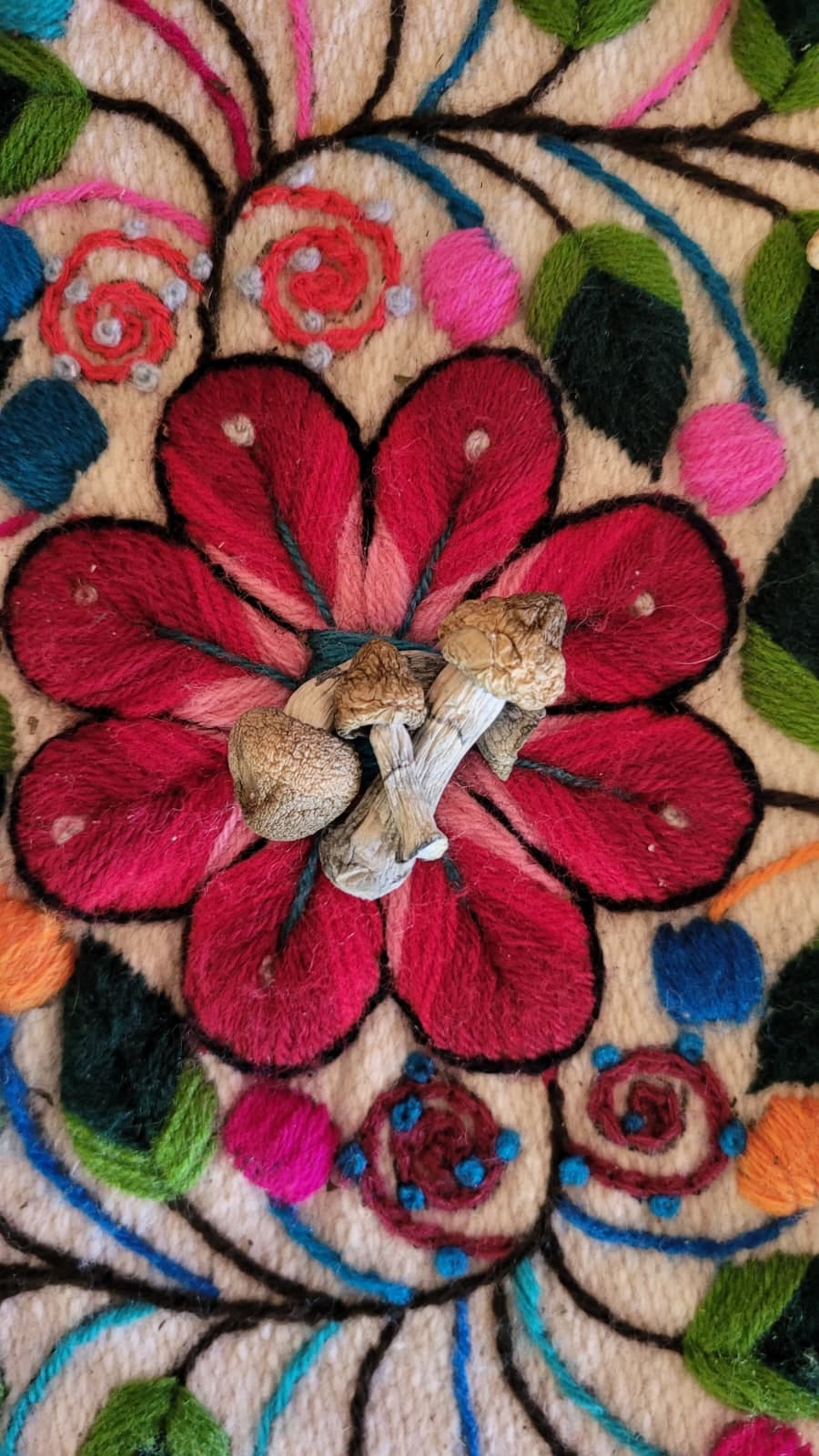
My teeth itch as I write this.
The same government that signs that man’s disability check signed an order this April to fast-track those exact, life-saving mushrooms. The VA already runs more than twenty psychedelic studies and has trained around two hundred and fifty of its own clinicians to administer them. And a recent RAND survey found nearly half of veterans still aren’t sure whether telling their VA doctor about a psychedelic could cost them their benefits. The VA’s official line “strongly discourages” their use.
So the government studies it, funds it, and signs orders about it. They celebrate a triumphant new approach to healing our nation’s warriors.
All while the soldier in the kitchen still eats his medicine alone. In the dark. Afraid.
This is far beyond a policy problem. It’s an American culture that has lost the ability to hold true two things at once.
The medical camp. Clinicians, biotech desks, pharma sponsors, the investors who spent a decade watching this move toward the FDA licking their chops.
Watch how fast the money moved. Within six days of that April order, the FDA handed out three priority-review vouchers. Not to the soldier in the kitchen nor to the indigenous people who protect these plant medicines. To Compass Pathways, Usona, and Transcend, whose PTSD compound is expected to get swallowed by a pharmaceutical giant in Japan named Otsuka. Psychedelic stocks jumped as much as 25% the Monday after.
There’s a perfect quote from Jack Nicholson to capture what’s happening at the federal level here:
“You can follow the action... or, you can follow the money, which nine times out of ten will get you closer to the truth.”
But please hear me clearly, because this gets misinterpreted constantly: people should get paid for this work. The guides who spent years learning to hold a human being through the hardest night of their life deserve to be paid well. That’s called the circulation of value.
Value in, value back out.
Extraction is the other animal. Extraction is when The Shareholder stands upstream of your suffering. And the worse you feel, the better the quarter’s earning report looks. That’s the model our medical system already runs on. And as long as somebody’s dividend depends on your problem remaining a problem, plant medicine won’t survive its stay in the West with its soul intact.
Which is just a polite way of saying they’re going to try and strip it for parts.
The plant medicine community itself sees the western medical system coming a mile away. So they plant their flag and refuse to move. They remain looking backward on purpose, toward ceremony, lineage, the indigenous peoples who protected these medicines for centuries while the West called them witchcraft.
They’re right to be defensive.
There’s ancient wisdom in the ground they’ve walked that cannot be denied and must not be paved over. If you’ve sat in a real ceremony held by people carrying a real tradition, you know the clinical fantasy of a fluorescent-lit psilocybin appointment with a fifteen-minute follow-up is not just theft, it’s ridiculous.
The medical camp looks back at every drug it ever tamed and says: we’ll do to this one what we did to all the others.
Diagnose, dose, and discharge.
The traditional camp looks backward in time and says: it was perfect before you got here, leave it exactly as it was.
Neither camp attempts to answer the one forward-facing question in the whole conversation.
Where are we going?
The answer cannot be backward. Ancient wisdom, yes, but carried into a container the West has not yet built. The western nervous system walking into this medicine today isn’t the one those traditions were built to hold. We’re more fried, more medicated, more alone. We aren’t exiting ceremony and bathing in the river the next day. We’re going back to high-pressure jobs, a litany of information and responsibilities, and the noise of modern civilization.
Both camps are missing the point because neither can see past its own reflection. Watch who’s actually steering this thing on both sides, and you’ll notice most of them don’t live what they prescribe.
Go to the plant medicine side and you find the integration coach whose entire existence is the retreat center. Ocean air, farm food, three hours of meditation a day, a nervous system kept smooth by a life with almost nothing abrasive left in it.
Beautiful.
And close to useless for the guy flying home to a mortgage, two kids, and a job that emails him at nine at night.
I’ve watched these same coaches come unglued the moment their environment changes, the moment the container they preach about gets taken away from them. They can hold the space. They cannot hold the world. And many are trying to teach reentry to a life they’ve arranged to never live, themselves.
Then walk over to the clinical side. The doctors being handed these trials to run have, for the most part, never been anywhere near a psychedelic. Experiential learning is standard in plenty of professions, but it has never been part of physician training, and the field’s own leading educators, the people writing the competency standards, treat firsthand experience with psychedelic states as a basic qualification. There’s no documented record that the researchers now running these studies carry any of it.
Neither camp is outright lying. They’re both doing the most human thing there is, something you and I have probably both done in our lives:
Giving advice they don’t take.
There’s a name for that.
Psychologists Igor Grossmann and Ethan Kross documented something in 2014 they called Solomon’s Paradox.
They ran nearly seven hundred people through a set of experiments and found something that should embarrass all of us. We reason wisely about other people’s problems and stupidly about our own. Hand someone a friend’s dilemma and they turn into a sage. Considered, patient, able to hold both sides. Hand them their own version of that same dilemma and the wisdom evaporates into excuses.
They named it after Solomon because he’s the case study. The wisest man in the ancient world. Kings traveled to sit at his feet. And his own life came apart because he couldn’t take an ounce of his own advice.
Sound like anyone you might know?
The unhealthy doctor. The strength coach carrying forty extra pounds. The friend who’s an expert on your relationship but keeps choosing toxic partners for herself. Everyone who performs their expertise for an audience while quietly failing to live it. It’s literally everywhere, and some mornings it’s the face in our own mirrors.
We give the best advice. We just can’t take it.
Grossmann and Kross found the way out though:
The fix is self-distancing.
Step back and look at your own life the way you’d look at a stranger’s, and the wisdom switches back on.
By now, you might be asking why I’ve taken this slight detour into Solomon’s Paradox. Well, baby bird, I hope you’re still hanging around because it’s time for breakfast.
What is it that plant medicine actually does?
It distances you from the self that’s been running the show. For a few hours it dissolves the “you” that’s too invested to think straight, and lets you see your own life from the outside, like it belongs to someone else. That’s not hippie nonsense either (though the hippies got quite a lot right in their day). It’s the exact mechanism the researchers found for wise reasoning, thrown wide open by chemistry of all things!
It turns out that the medicine is a machine for defying Solomon.
But only if someone’s there to help you carry what you saw back into your life.
And that’s exactly what a western dose-and-discharge system can never provide. You can’t hold a container for someone else that you’ve never held for yourself. You may as well ask your cardiologist to suit up for the Nuggets in the fourth. A system that has never sat in its own dark night can’t walk a veteran through his. Period.
So we rage against Solomon and his damned, difficult paradox. That is our work.
You prepare. You don’t walk into the most important eight hours of your interior life cold, off a red-eye, with a stranger you met that morning. You regulate your nervous system first. You get clear on why you came. You build a relationship with a guide who knows your name before you ever lie down.
You have the experience, and do not shrink from it. This is where the door is. Without the medicine there’s no neuroplastic window, no open state where the brain can rewire. Without the non-ordinary state there’s no self-distancing, no seeing your life from outside, no defiance of Solomon. Your whole concept of reality breaking open and coming back together isn’t a side effect of the work. It is the psychological event horizon. Everything else is built to protect it.
You integrate. Here’s where the West falls flat on its face. You can’t have your reality cracked open Saturday and slide coolly back in front of the laptop Monday like nothing happened. Do that and you don’t just lose the insight. You teach your nervous system the old patterns won again, and you re-carve the exact groove you went all that way to fill. Even a veterans’ publication covering the order admitted it: access without integration is just exposure.
This is what emergent qualities in the presence of their opposite means. You don’t build courage by feeling safe. You build it by facing the precise thing you’ve been avoiding, then facing it again. Purpose doesn’t arrive in comfort. It arrives when you stop running.
So you look.
And you look.
And you keep on looking.
Four questions before you spend a dollar.
Before any immersion, mine or anyone’s, run yourself through these. They’re built on the four pillars this whole publication stands on.
Awareness. Can you feel the thing you’re avoiding, even if you can’t name it yet? If something’s been knocking a while, that knock is your answer.
Alignment. Are you doing this to change how you live, or to collect an interesting experience? One’s a door. The other’s a vacation with better lighting.
Acceptance. Can you meet whatever surfaces without needing it to be beautiful? The medicine doesn’t negotiate. It shows you what’s there.
Integration. Do you have a container waiting on the other side, real preparation before and real support after? Or are you about to dose and discharge yourself? If the honest answer is neither, that’s not a reason to skip the work. It’s the reason to choose something built around it.

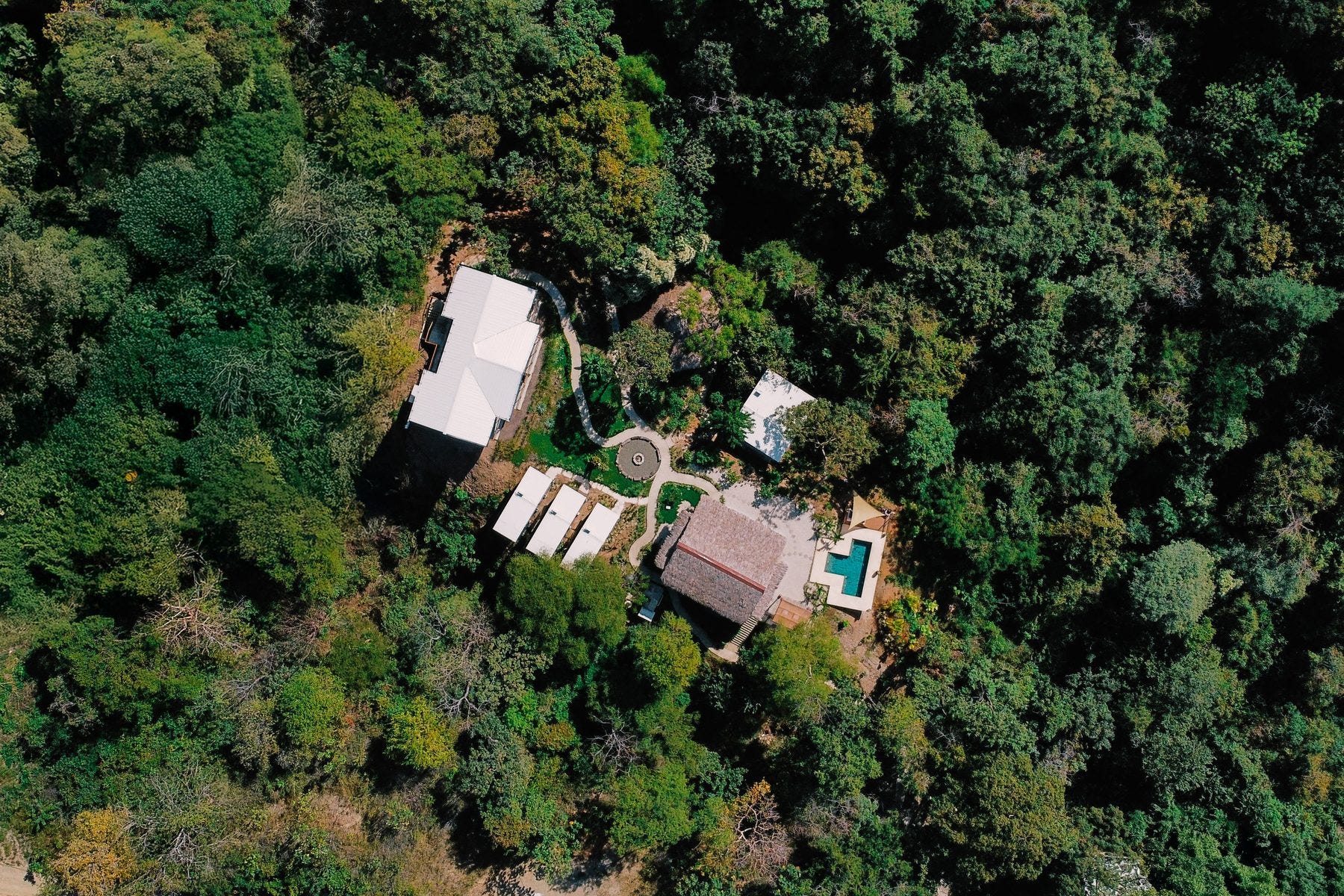
I’m writing this article today because I was lucky enough to meet a couple folks who feel the same way I do and who are interested only in doing this the right way. I am so proud to say I have teamed up with the Ananda Lodge in Costa Rica, and I will be there in late August to participate in a first of its kind psilocybin experience.
Their program is called The Empowered Path, run by Dana Mistretta and Kimberly Ocana. Kimberly walked out of corporate burnout into this work, so she isn’t guessing about what the Western nervous system carries with it. It’s the first offering I’ve found built entirely around the two things everyone else skips:
four weeks of preparation and microdosing before you sit down, and
twelve weeks of integration after.
Check out my previous post on my preferred Microdosing Protocol in my Premium Content Library
Eight people, maximum. One guardian who knows your story from day one and is still there at the end. Three ceremonies, with the experience at the center, never bolted on.
It’s the best-designed program I’ve ever seen, and I’ve seen a lot of them.
The preparation phase for this first cohort begins at the end of July, so if this opportunity has been knocking for you, the knock does indeed have a deadline. There is a massive 22% discount code through the end of July to celebrate Ananda’s 2nd year in operation. Use the code ‘HappyBirthday!’ when signing up for any retreat. If you’re looking to attend the same retreat I will be at in August, there are a few spots left, use this link to secure yours.
Learn more, or book an alignment call with Kimberly and Dana here or at the links below. Or reach out to me directly and I’ll give it to you straight.
Maybe I’ll even see you in Costa Rica.
And if I don’t, keep the movement on your radar, and rage, rage against Solomon.
Be whoever you wish to be.
With gratitude and curiosity,
-Rich
Executive Order: Accelerating Medical Treatments for Serious Mental Illness. The April 18, 2026 order fast-tracking psychedelic review, and the source for the VA and funding provisions. https://www.whitehouse.gov/presidential-actions/2026/04/accelerating-medical-treatments-for-serious-mental-illness/
RAND / Stars and Stripes reporting on veteran disclosure fears. The survey finding nearly half of veterans are unsure whether disclosing psychedelic use could jeopardize their VA benefits. https://www.stripes.com/veterans/2026-06-30/mushrooms-psychedelics-veterans-ptsd-22114292.html
“Exploring Solomon’s Paradox,” Grossmann & Kross (2014). The study on the self-other asymmetry in wise reasoning, and the finding that self-distancing dissolves it. https://uwaterloo.ca/wisdom-and-culture-lab/sites/default/files/uploads/files/grossmann_kross_-_exploring_solomons_paradox_-_article_proof.pdf
“Why Psychedelics Alone Won’t Save Veterans,” Armed Forces Press. A veteran-facing argument that access without integration becomes exposure rather than treatment. https://armedforces.press/opinion/2026/04/29/opening-the-door-why-psychedelics-alone-wont-save-veterans-and-what-must-be-built-around-them/
“Personal Psychedelic Use Is Common Among a Sample of Psychedelic Therapists.” Notes that experiential learning, standard in many disciplines, is not part of physician training. https://pmc.ncbi.nlm.nih.gov/articles/PMC11658662/
Nielson & Guss (2018), Journal of Psychedelic Studies. On the lack of any documented record of firsthand psychedelic experience among the clinicians and researchers conducting these trials. https://www.akjournals.com/view/journals/2054/2/2/article-p64.xml
Ananda Lodge, The Empowered Path. The 16-week trauma-informed psilocybin program in Costa Rica I’ll be attending. https://anandalodgecr.secure.retreat.guru/program/discover-the-medicine-a-psilocybin-immersion-for-beginners/
Follow Gentle Discipline on Substack, Spotify, and YouTube.
Comments
Nothing yet. Say the first thing.
Sign in to join the conversation.