
With the prolonged heat wave it feels like the summer started months ago, and a little odd that the kids have only just finished school for the holidays. We haven’t planned a big holiday this year, instead we have a few nice little mini breaks throughout July and August dotted around England. In recent years, holidaying in England wasn’t really the norm. Foreign climes normally called. But so much has changed in recent decades. The rock-bottom airfares of the Noughties have jetted away, Covid intervened, fuel crises recur, the cost of living spirals, and people’s consciousness of the climactic cost of burning jet fuel has all ensured that people often think twice about heading to the airport. And that’s before you factor in war and wildfires… So, holidays at home, even with our potholed roads and uncertain weather, don’t seem such a bad idea…
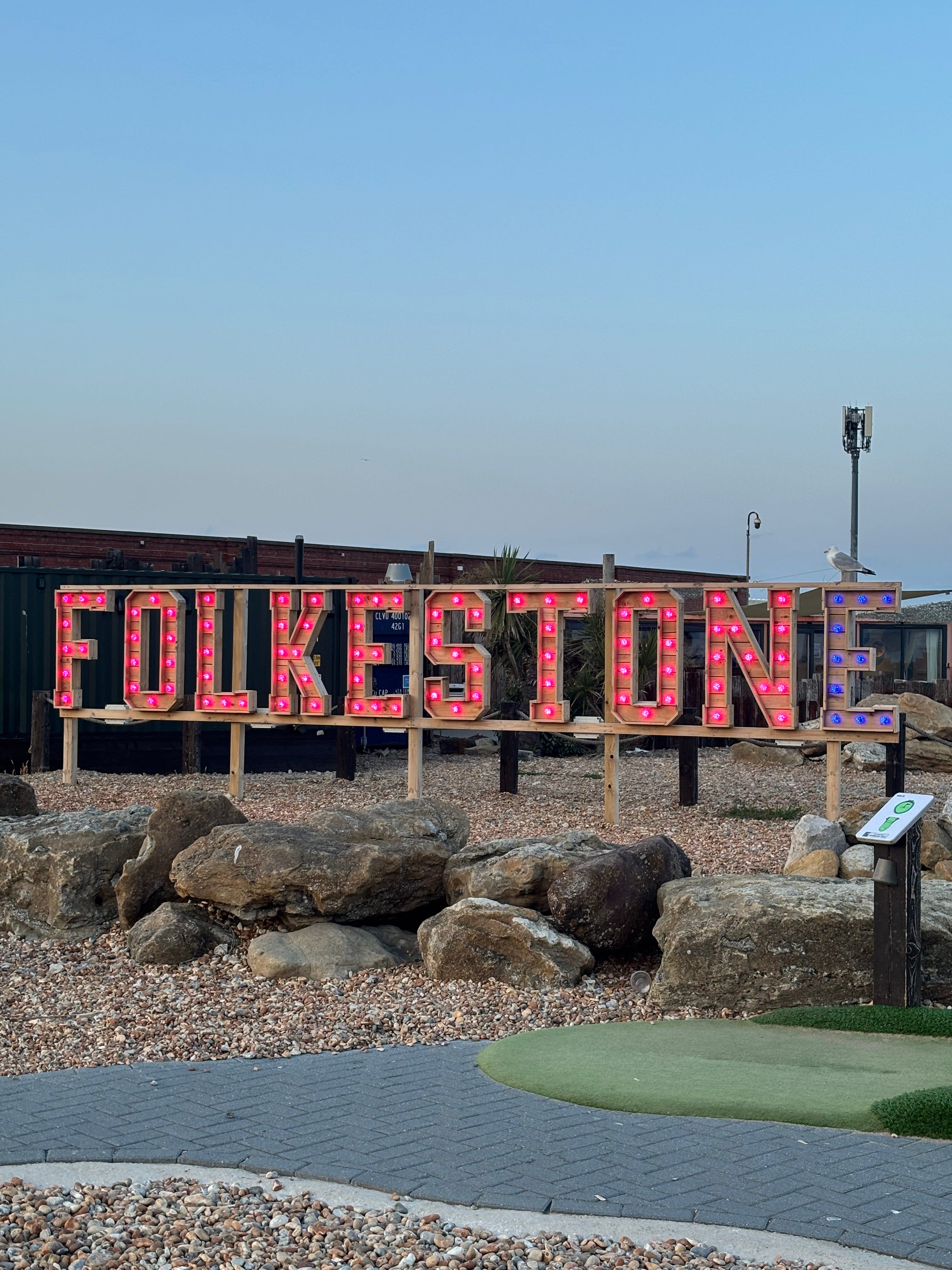
Last Monday, my husband, son, and I visited Folkestone for a few nights. It’s a town I’ve heard so many great things about but had not yet visited, which is ridiculous because It’s only an hour’s drive down the coast from us.
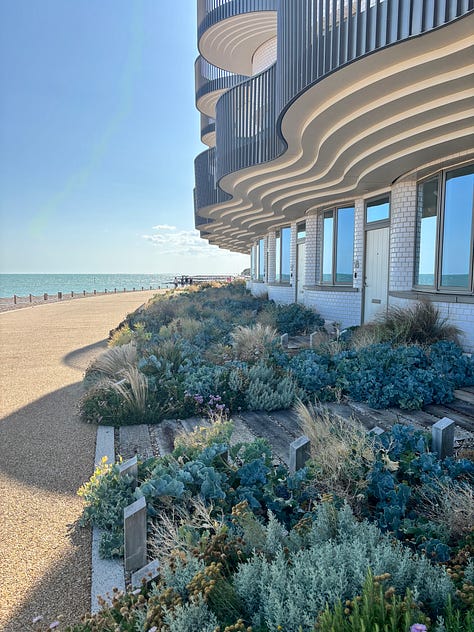
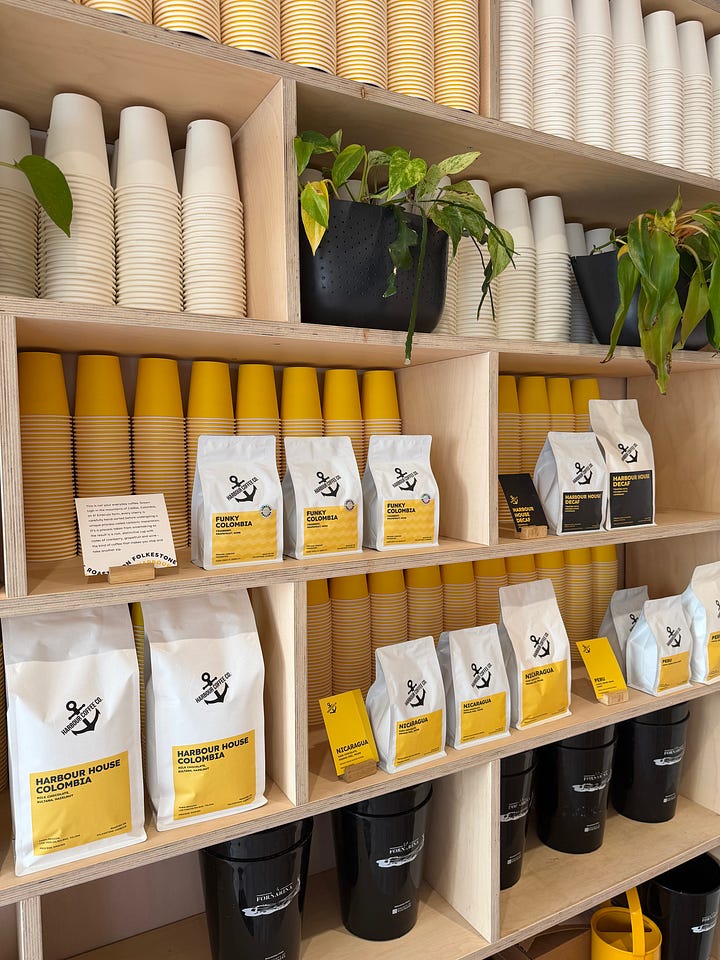
Like so many coastal towns, it’s in a phase of transition. The architecture in Folkestone, historically an important harbour and shipping port, eloquently tells the story. The faded grandeur of Victorian stucco fronted villas sits alongside spectacular contemporary architecture like Shoreline, which describes an optimistic new phase in the tale of this Kentish seaside town. Reminiscent of Gaudi’s sensuous and organic architecture, Shoreline represents an ambitious project to revitalise the old harbour and beach-front and draw the rest of the town along with it. What’s so striking about Folkestone’s beach is how broad, beautiful, and clean it is. The old harbour and station have also been transformed , and little restaurants, cafes and entertainment venues sit in the revamped shipping containers which were once stacked along the old industrial quayside. In the hot July sun, sitting at a quayside table with a coffee, it could have been Spain. Though there’s still a bit of Bohemian edge to Folkestone, like the Victorian Leas Lift, a water-balanced funicular that’s being beautifully restored, hopefully the town is going up in the world.
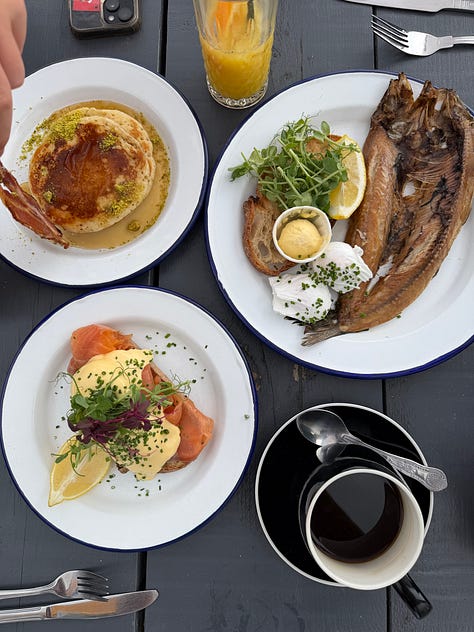
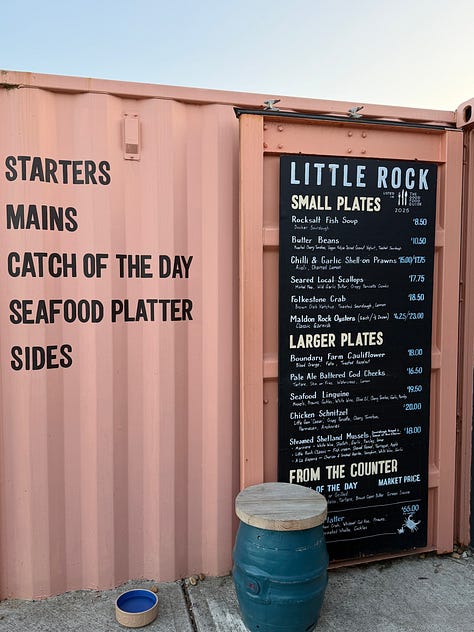
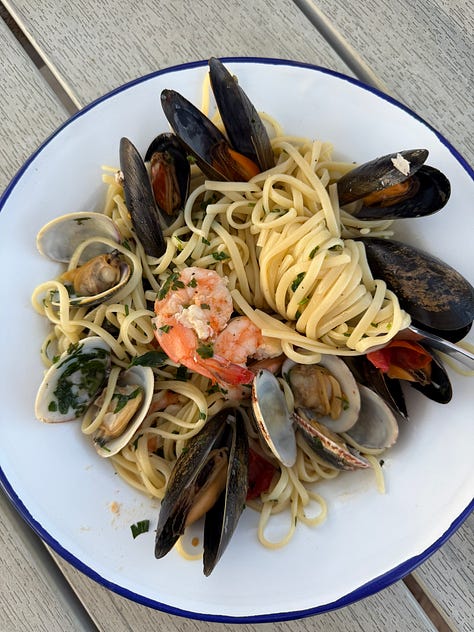
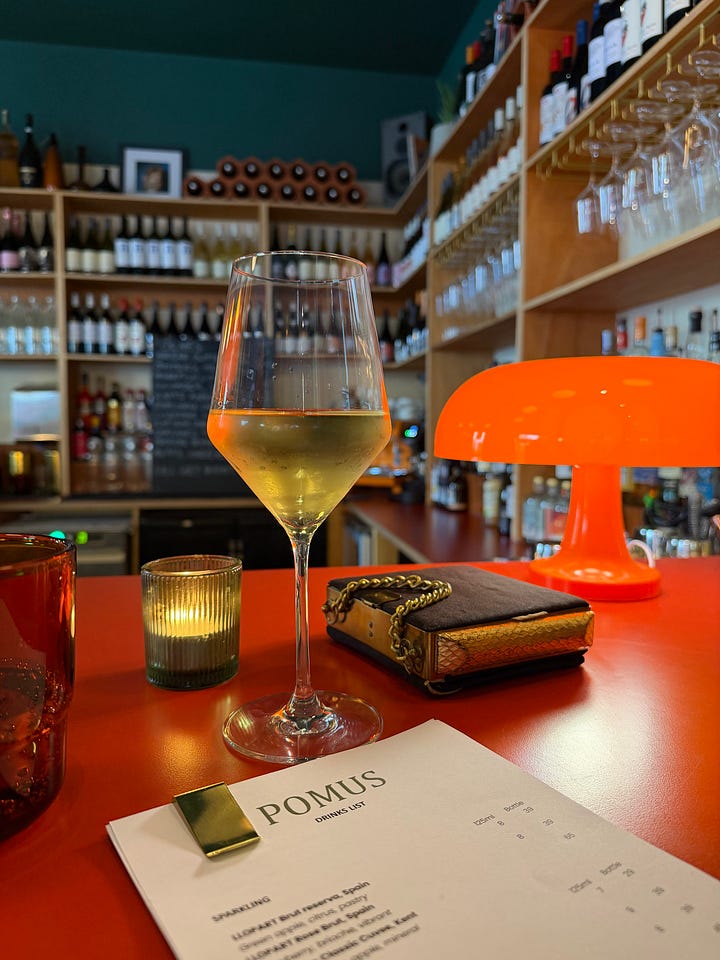
Folkestone restaurant recommendations Pomus , Rocksalt Little Rock , Sailbox

Post war, cheap package tourism meant more and more British families could afford to travel abroad, where the weather was more dependable. This had a big impact on coastal towns from Brighton to Bridlington, and the domestic tourism upon which many had been built since the advent of railways, steeply declined. Even ten or fifteen years ago, many South Coast resorts were like former Gold Rush towns, nose diving like a gull on a discarded chip wrapper. Things are changing slowly, but poverty is still very present, with areas like Hastings suffering the third worst deprivation in the UK and even superficially affluent places like Rye having real problems. However, there are signs of hope, and the much maligned ‘DFL’s (Down From London*) have collaborated with locals in many places to reinvigorate the spirit of these wonderful coastal communities. Gentrification brings its own problems, as established families are priced out and high streets cater more for tourists than locals, but with councils so strapped for cash, regeneration often has to be a grass roots endeavour fuelled by creatives, entrepreneurs, and in-comers with purses swollen by the London property market… Rising property prices are a sore point, and understandably so if you suddenly can’t afford to live in the town generations of your family have grown up in, but hopefully tax premiums and second home surcharges will gradually rebalance the Air BnB effect…
Independent businesses, restaurants and art galleries have often led attempts to bring back pride and positivity to South Coast towns, so for the visitor, insulated from the realities of life in small towns outside of the M25, there’s an awful lot to see, do and eat in places like Folkestone. And the good news is for anyone coming to Kent or Sussex, there are plenty more towns to see.
Folkestone’s just one of several fabulous towns that we’re lucky enough to have within comfortable driving distance of Rye. Though Brighton, Margate and Whitstable offer the Pier and Pavilion, art and seafood, they’re a bit more of a schlep for us, and our favourite towns are nearby Hastings and St Leonards, Lewes, and Arundel, which is a few hours away but well-worth the trip.
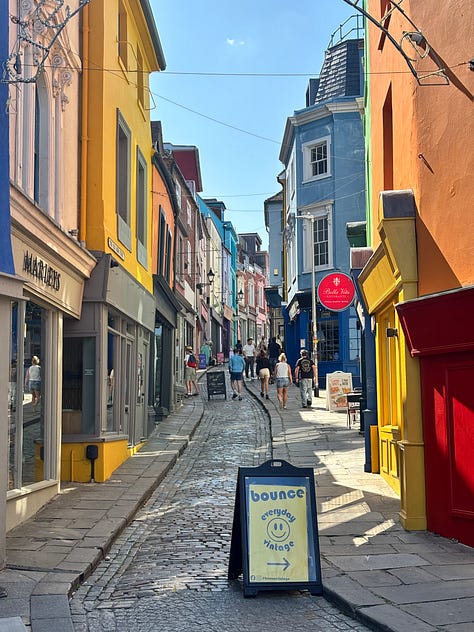
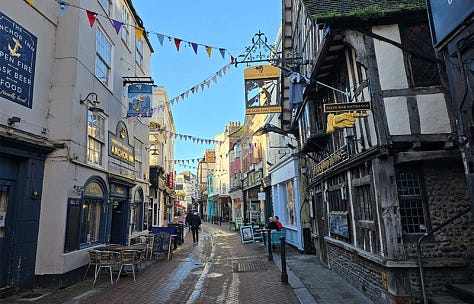
So many seaside towns seem to be in two halves. The modern centre where all the chain stores and fast food joints preside. Some would argue that these areas are essential to a town, after all, you need shops where you can get everyday essentials like chargers and hoovers, but I often find them a bit soulless and depressing. The older parts of such towns tend to house all the independent shops, restaurants and cafes, and are consequently full of character. These areas are often the heart of the town, and the parts that sustain and nurture its identity. They’re places where local artists and craftsman sell their wares, where maritime heritage is curated and where you can really get a sense of the character of the place. When I visit a town for the first time, I want to see things you can’t find anywhere else. If I’m going to make a purchase, I want it to be unique and remind me of my visit. Folkestone’s Creative Quarter is embodied by a few meandering streets where colourful old buildings house an array of vintage clothing shops, galleries, bakeries, cafes and clothing shops. Annoyingly many of the shops aren’t open on Monday or Tuesday mornings (the day we were there!) so If you’re going to visit I’d recommend a day later in the week. We had some really stand out meals in the harbour and town. I loved how most of the restaurants based their menus around the local fresh seafood that came into the harbour. That’s a real expression of how to channel the heritage and tradition of a place into something new and marketable, so communities can be sustained and reinvigorated.
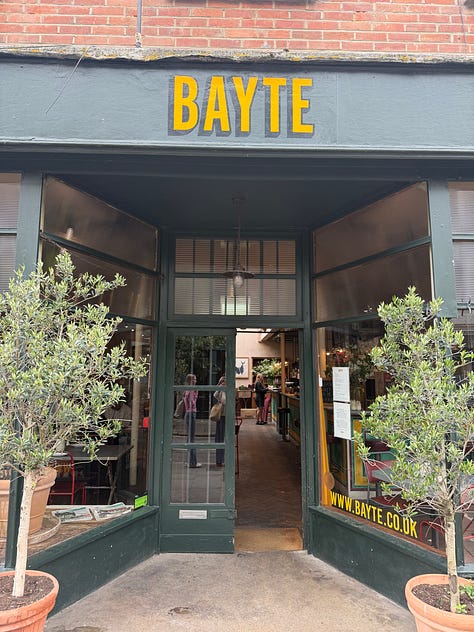
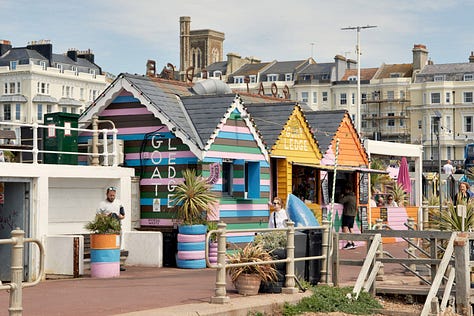
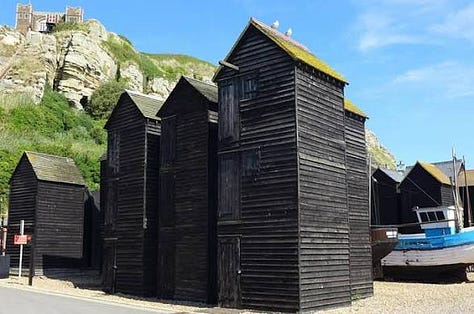
Hastings and St Leonards boasts a similar number of brilliant restaurants (favourites include Bayte , Goat Ledge Coquina and Boulevard Bookshop and Thai Cafe (literally a Thai kitchen inside a cute bookshop!) There are loads of unique independent boutiques, and Mr T can spend hours combing the antique shops. Lewes has its own particular character too – it’s perhaps less youthful in feel than Hastings, but though ‘mature’ and more affluent, it still has a radical feel, perhaps the legacy of local hero, Tom Paine…? We go for antiques and brunch, and it’s perhaps best known locally for the Harvey’s Brewery. Arundel’s another favourite destination. Seat of the Dukes of Norfolk (Yes, Norfolk! In Sussex! It’s a long story…) When the kids were young, they pronounced it ‘Arendelle’, like the Kingdom in Disney’s ‘Frozen’. With the Duke’s castle looming over the town, it does have that fairytale feel…

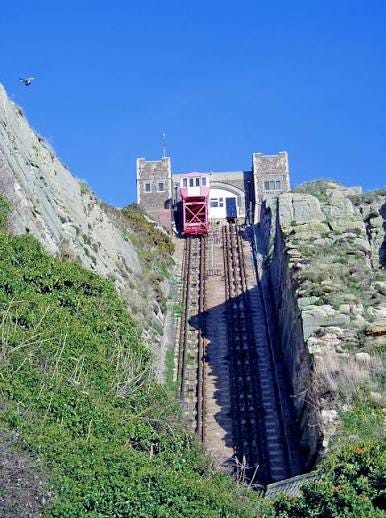
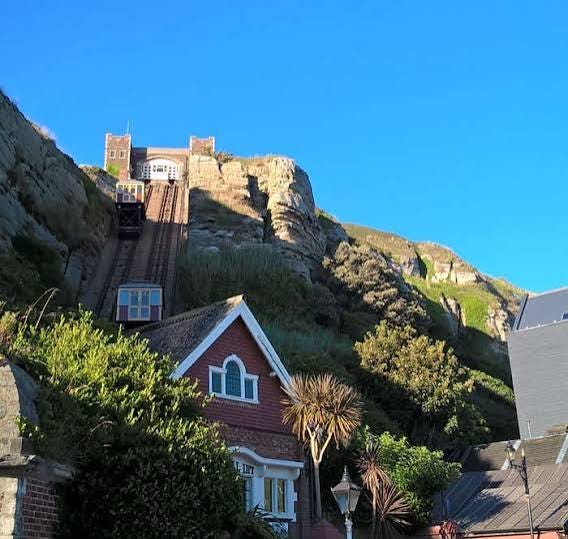
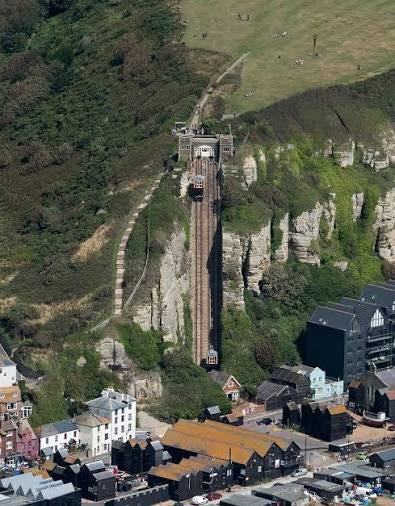
So, if you ‘do love to be beside the seaside’ the South Coast is the obvious place to visit. Just a short hop from London, Heathrow or Gatwick. It’s a great moment to go, as things are changing all along the coast - things are in furious flux, looking forward, but still in touch with their heritage and still keen to tell their story, not to have big multinationals tell it for them. The food story is worth the trip alone, but the scenery, the history, the antiques, the independent shops, and of course, the people, are the reason many visit, many return, and, increasingly, many, like me, stay for good…
Beyond Folkestone!
If you’re in Kent and Sussex, don’t miss, in no particular order:
Picturesque Alfriston and the South Downs, Tenterden in Kent with its vibrant high street, Friday food market and handful of great antique shops. Rye (of course!) with its fabulous pubs (The The Ypres Castle Inn, The Standard Inn Rye and The Waterworks), restaurants, (The Fig, The Union), boutique hotels (The George ), and incredible torchlit bonfire processions. Don’t forget to have an ice cream at the Mermaid Street Cafe, visit The Castle Museum, and a browse at Strand Quay. For shoppers, visit Lion St and the High St, and don’t miss Merchant and Mills for fab furnishings, fabrics and haberdashery. Make sure to visit the ancient churches nestled in the Marshes, see the deer run in the High Weald and walk round beautiful Winchelsea. Rye Harbour, five minutes down the road from Rye proper, has a beautiful nature reserve and cafe, and access to a lovely coastal path. Watch the fishing boats chug in and out and have a pint in the William the Conqueror. There’s so much more to discover, like Brighton, Faversham, Canterbury, and everywhere in between. And I haven’t even mentioned the vineyards, art galleries, farm shops, the 1066 Coastal Path, and the houses and gardens of Sissinghurst, Smallhythe and Great Dixter!
*The other less charitable acronym for DFLs is, “FILTH” – Failed In London Try Hastings…
No posts
Comments
Nothing yet. Say the first thing.
Sign in to join the conversation.