
Have you ever gotten a standard blood test run and noticed ALP (alkaline phosphatase) on the results? ALP is a marker that doctors look at for liver health, and high ALP can be a flag that something is wrong. But what if your ALP is chronically low? Several things can cause ALP to dip low temporarily, but a lifelong low ALP can point to a genetic mutation in the ALPL gene that causes a condition called hypophosphatasia.
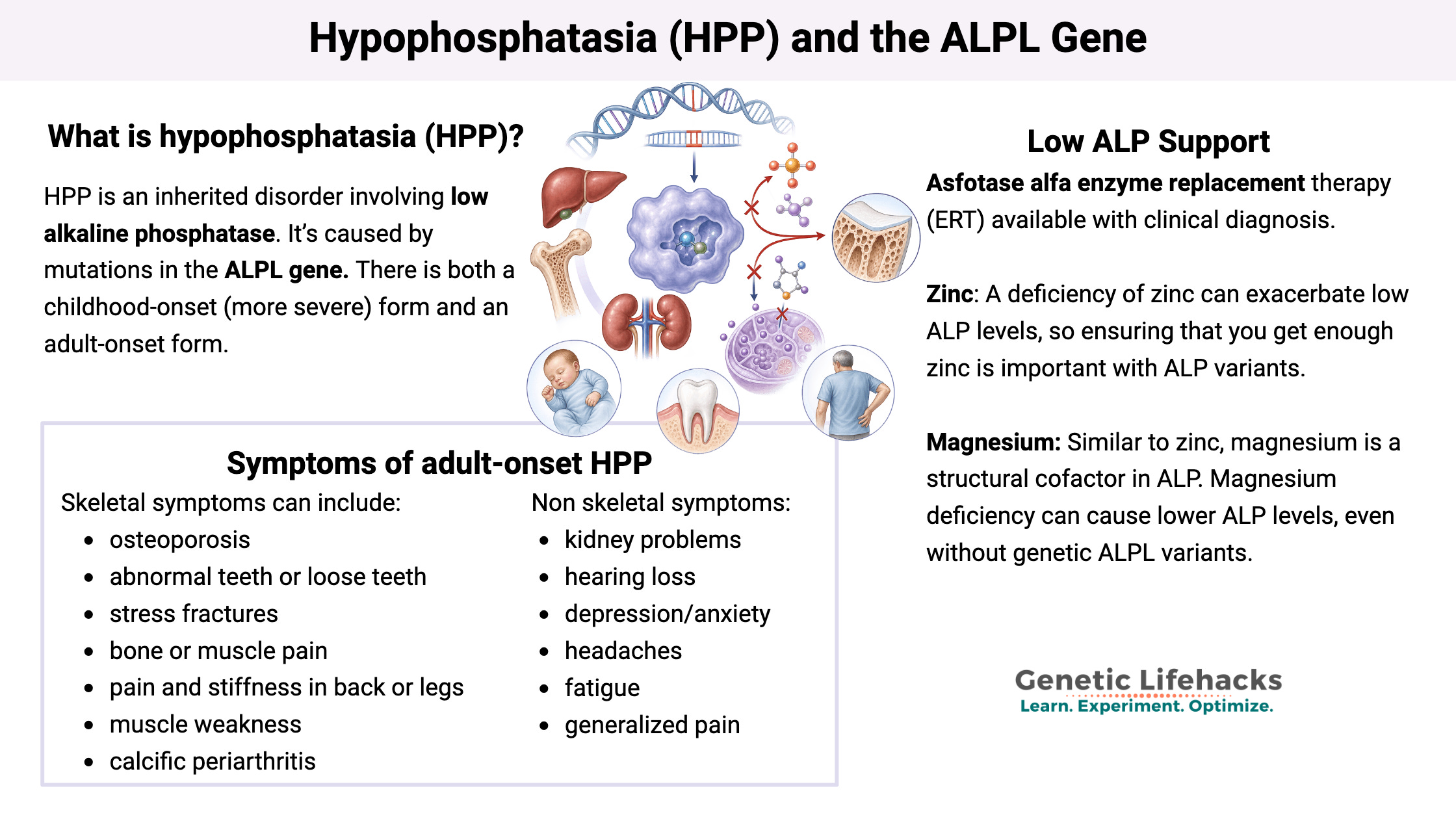
This week I published a new article + genotype report on hypophosphatasia, prompted by questions about the condition from two members. Hypophosphatasia causes inorganic pyrophosphate to build up, interfering with normal bone remineralization. In children with a more severe form, this is noticed in childhood with skeletal and dental problems. The adult form is milder and can cause joint or bone pain, fractures, loss of teeth, and fatigue or generalized pain.
Hypophosphatasia is a rare disease, with the severe form affecting only 2 or 3 in 100,000 children. But statistics like that are misleading, since it is significantly underdiagnosed in the milder adult form. Having one copy of an ALPL mutation may cause symptoms that are misdiagnosed as fibromyalgia, arthritis, or another pain condition. If you’ve had consistently low ALP, check out the article to see if it is something to follow up with your doctor about.
This is a pattern seen over and over: rare mutations cause significant genetic diseases if someone has two copies of the mutations, but for carriers of a single mutation, the effects are more subtle and often end up undiagnosed or misdiagnosed.
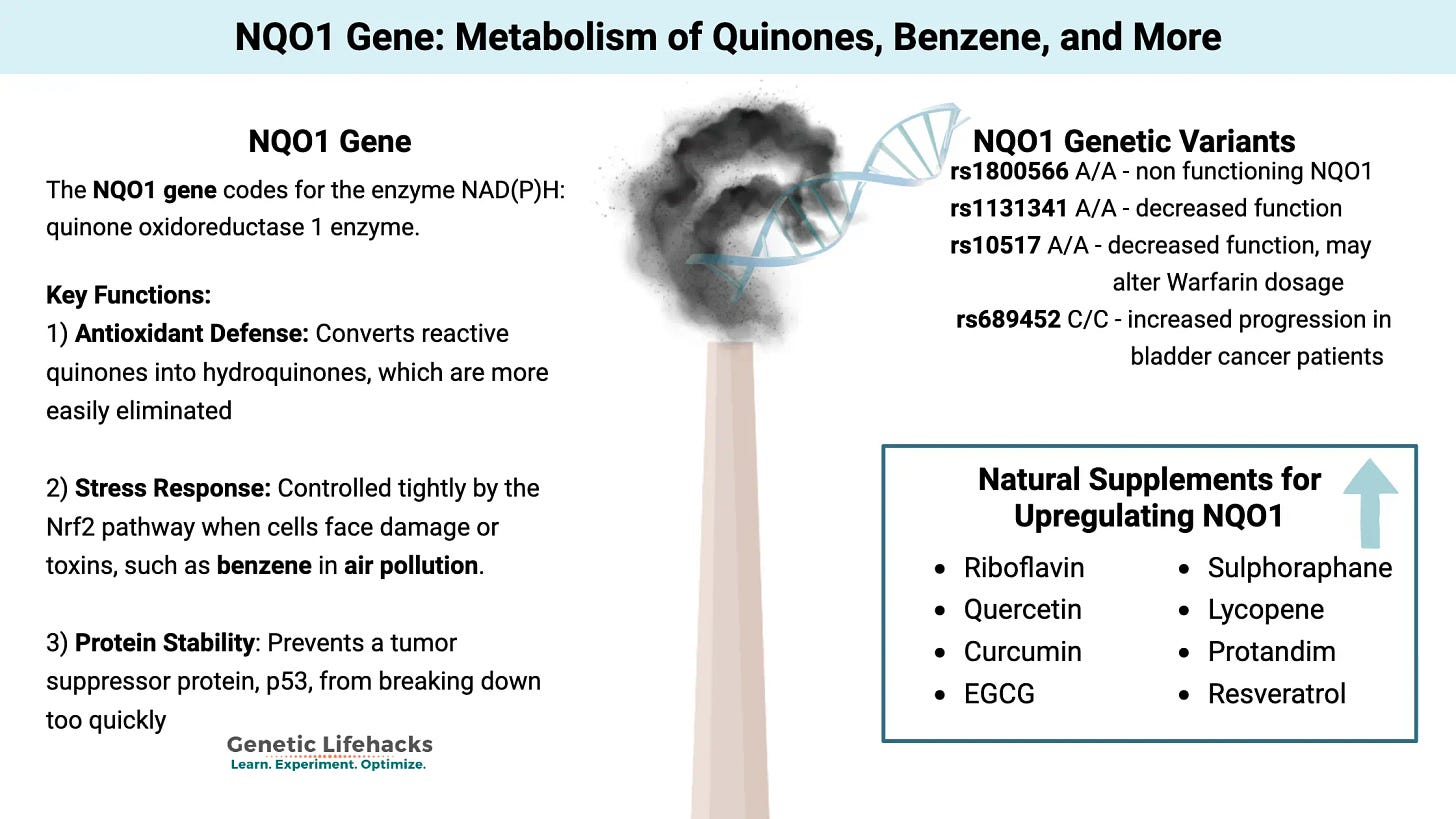
The other article + genotype report that got a major overhaul this week is NQO1, which is an enzyme that metabolizes quinones (like CoQ10 and estrogen metabolites) as well as benzene, a carcinogen found in smog, cigarette smoke, and propellants used for spray sunscreen and dry shampoo. About 25% of the population has impaired NQO1 function, which combines with environmental factors to increase the risk of certain cancers.
One interesting line of research that I came across found that the genetic variants that impair NQO1 function significantly increase what the researchers called ‘premature skin aging’ — essentially having a few more wrinkles and older-looking skin. NQO1 plays an important role in combating UV damage and oxidative stress in skin. Check out the lifehacks section of the article for several ways to boost NQO1 in the skin.
Gratefully yours,
~ Debbie
If you’re a Genetic Lifehacks member and love it, would you consider sharing the site with a friend or leaving a TrustPilot review this week?
Key takeaways:
The NQO1 gene codes for a phase II detoxification enzyme that breaks down quinones, benzene, and some specific chemotherapy drugs, acting as a reducing agent to make certain substances easier for the body to eliminate.
It is also important in metabolizing and removing estrogen quinone metabolites, which are linked to breast cancer risk.
Genetic variants in the NQO1 gene can change its function, increasing or decreasing your risk of cancer or other negative effects from toxins.
In this article, we’ll start with what NQO1 does at the biochemical level, then look at how it protects you from environmental toxins and oxidative stress in the gut, brain, heart, and skin. Next, we’ll dig into common NQO1 genetic variants, and then end with lifehacks that may help if your function is reduced.
Key takeaways:
Hypophosphatasia is caused by mutations in the ALPL gene, which reduce the activity of tissue‑nonspecific alkaline phosphatase (TNAP), an enzyme that’s important for bone, tooth, liver, and kidney health.
Low ALP allows pyrophosphate and active vitamin B6 (P5P) to build up, interfering with normal bone mineralization.
Single ALPL mutations can be associated with low‑normal ALP and higher rates of bone and dental issues, and may underlie osteoporosis in a subset of patients.
Adult-onset HPP symptoms can mimic fibromyalgia.
Longevity Lifehacks is where I write about longevity research that I find interesting, but that doesn’t quite fit on Genetic Lifehacks. Join me there if you’re interested in healthspan or longevity topics.

A new study published in the journal Nature Communications last week has me optimistic about reversing some of the detrimental effects of aging.
The study, titled “Reversal of protein chemical aging by enzymatic deglycation”, explains that the researchers created an enzyme to undo a previously irreversible hallmark of aging.
Comments
Nothing yet. Say the first thing.
Sign in to join the conversation.