
Welcome to a newsletter themed at the intersection of longevity and wine history. 🍷
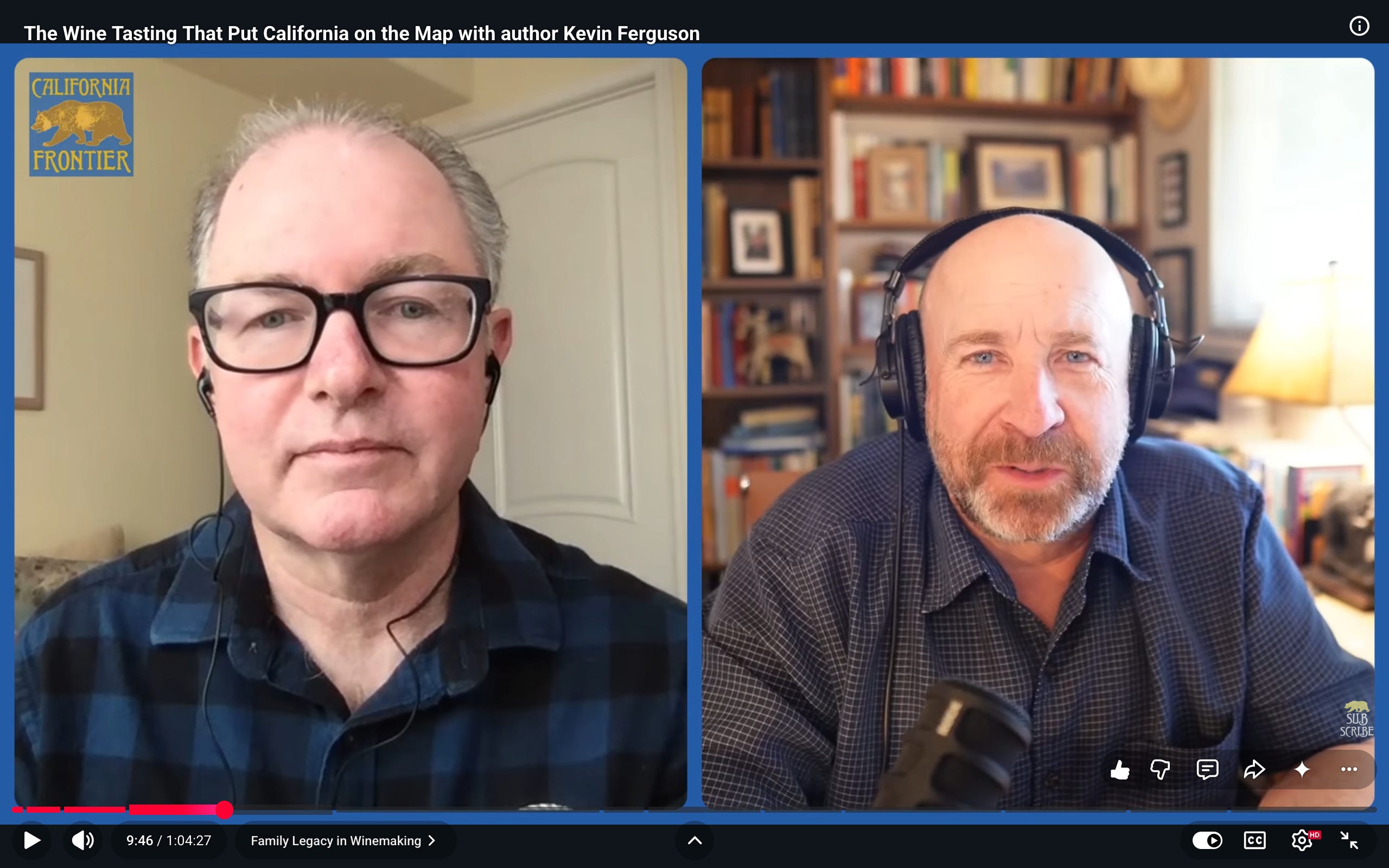
Kevin Ferguson chats with Professor Damian Bacich, host of the California Frontier podcast
The harshest critic you’ll ever face is often the one inside your own head. It shows up when you hear your recorded voice, stumble through a tricky answer, or replay a conversation long after everyone else has forgotten it.
If you’ve ever worked on improving your voice or rapid response answering, you may feel it’s never just right. It can always get better.
For me, it’s not so much the sound of my voice, but my inner critic when I blurt out an answer to a question and fail to articulate my answer just so. Seconds or a minute later, I figure out a much more savvy way to say it, but the moment has passed, and my audience has moved on.
Perhaps that’s why I connected with New Yorker writer Joshua Rothman’s personal dilemma. For fun, he produced some “drifty music” onto an album once and wrote, “It’s decent—which means that, when I listen to it, I can’t enjoy it. I think only of what I might improve.”
Sometimes I cringe listening to a just-released podcast appearance of my own. I’d prefer not to listen to it. But if you don’t listen to your own stumbles or long-winded answers, it delays your improvement.
Over the past year, I’ve been part of a podcast mastermind group whose purpose is to help members become better guests and hosts. Our weekly sessions become a laboratory for testing stories, refining messages, and preparing for interviews.
Being a guest on podcasts in your niche is one of the fastest ways to build credibility with a highly targeted audience. Unlike social media, where you’re often competing for attention, podcast listeners have already chosen to spend 30 minutes or more with a host they trust. When that host introduces you, some of that trust transfers to you.
For writers and subject matter experts, podcast guesting can be a powerful way to introduce your ideas, newsletter, or business to people who are already interested in your topic. The goal isn’t simply to get one interview. It’s to create lasting relationships with listeners who become subscribers, readers, and advocates.
I’ve appeared on nine podcasts in the past six months. Here are four valuable lessons I found from the experience.
Most podcast hosts invite guests because they want insights and stories, not simply facts. Stories are what people remember. They are the emotional connections that make ideas stick.
One of the most valuable exercises in our group has been identifying the handful of ideas we wanted listeners to remember after the interview ended. Once those key messages were clear, the next step was to wrap stories around them.
It’s always good to tailor your stories for different audiences.
When discussing the Judgment of Paris landmark wine event on a wine-related podcast, I often tell colorful stories about the event organizer, Steven Spurrier, and the winemakers of the two Napa Valley wines that won their respective contests. Alternatively, when speaking on a history-focused podcast like the History of California I shift to the California underdog story angle. This gives me an opportunity to talk more about Prohibition and the challenges of rebuilding the California wine industry through and beyond the Great Depression.
One of the benefits of practicing with fellow podcasters was getting feedback on adjusting stories based on potential audiences.
No matter how much preparation you do, every podcast interview eventually moves beyond the planned questions. You need to “think on your feet” while staying aligned with your key messages.
During one of my first interviews, I launched into a story that lasted five to seven minutes before the host asked another question. That might have been my fault because I didn’t leave a pause for him to cut in. Later, I realized the story would have been more effective if it had been broken into two parts.
In our podcast group, I practiced restructuring it. The first part ended with an intriguing detail that naturally invited a follow-up question. If the host picked up on the tease, it created a smoother conversation and led naturally into the second story.
If they didn’t, I could save that second piece for later when hosts often ask, “Is there anything we missed?”
At the end of each interview, I ask the host when they expect the episode to air. I also let them know that I intend to help promote it because I want to be a good podcast partner.
Knowing the launch date at least a week in advance gives me time to prepare social media and other promotional assets.
The host benefits from the additional exposure. Meanwhile, this shows I’m hoping to build a relationship that can lead to future collaborations with the host.
Recently, I appeared on two video podcasts. I shared my great grandfather’s Italian immigration story on the Italian Roots and Genealogy podcast. The video is below.
Last week, I went deep into California history sharing some early California wine making stories, among other things, with Damian Bacich, host of The California Frontier podcast.
📺 Youtube
🎧 Spotify or
I’m the author of 🍷 Rain on the Monte Bello Ridge,🍷 my forthcoming memoir about health, aging and winemaking. (Read the origin story of the book.) 🍇
The Centenarian Playbook is my newsletter, which features:
Healthy aging/longevity tips and stories from Grandma Kay’s long life.
Wine history & stories of the Gemello Winery
Ancestry & family research tips
No posts
Comments
Nothing yet. Say the first thing.
Sign in to join the conversation.