
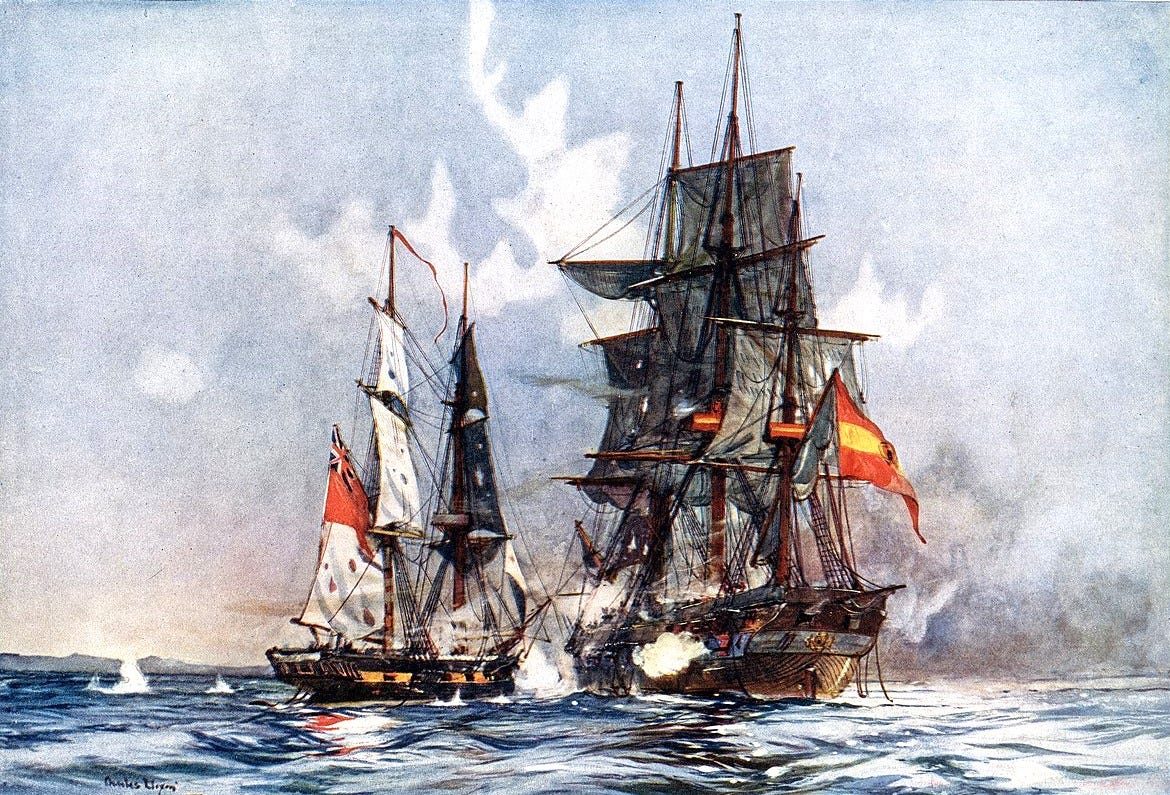
Twin girls were born in Dover in the spring and summer of 1782, in the yard of Thomas King, shipwright. He was their father in the fullest sense, for he had designed them as well as built them, which was not usual. The Admiralty generally handed a private builder someone else’s drawings and told him to get on with it. King drew his own. His trade was cutters, the fast little craft that Dover supplied impartially to the packet service, the revenue and the smugglers the revenue chased, and he gave his daughters cutters’ hulls beneath a brig’s rig. They would be quick, close-winded and small. The Navy Board approved the lines in June 1781 and named them for what they were meant to be. Flirt came first, in March. Speedy followed in June. You could not christen two girls more plainly for trouble. And one maybe the flirt, but the fast one took many lovers.
I began thinking about them at Dundonald, near the Ayrshire coast, standing by the shell of Auld Auchans, the broken baronial pile of dressed stone the Cochranes came from, with a soft breeze coming off the Firth of Clyde. The guidebooks there tell you about the Stewarts, who had it first. They say less than they should about the tenth Earl, Thomas Cochrane, who as a young man of twenty-four commanded a brig so small he once said that he “could carry her whole broadside in his coat pockets”, and who did more with her in thirteen months than most admirals do with fleets in a lifetime. I came home wanting to learn about his ship. What I found was better than one life. It was two, and a family, and through them the whole extraordinary age.
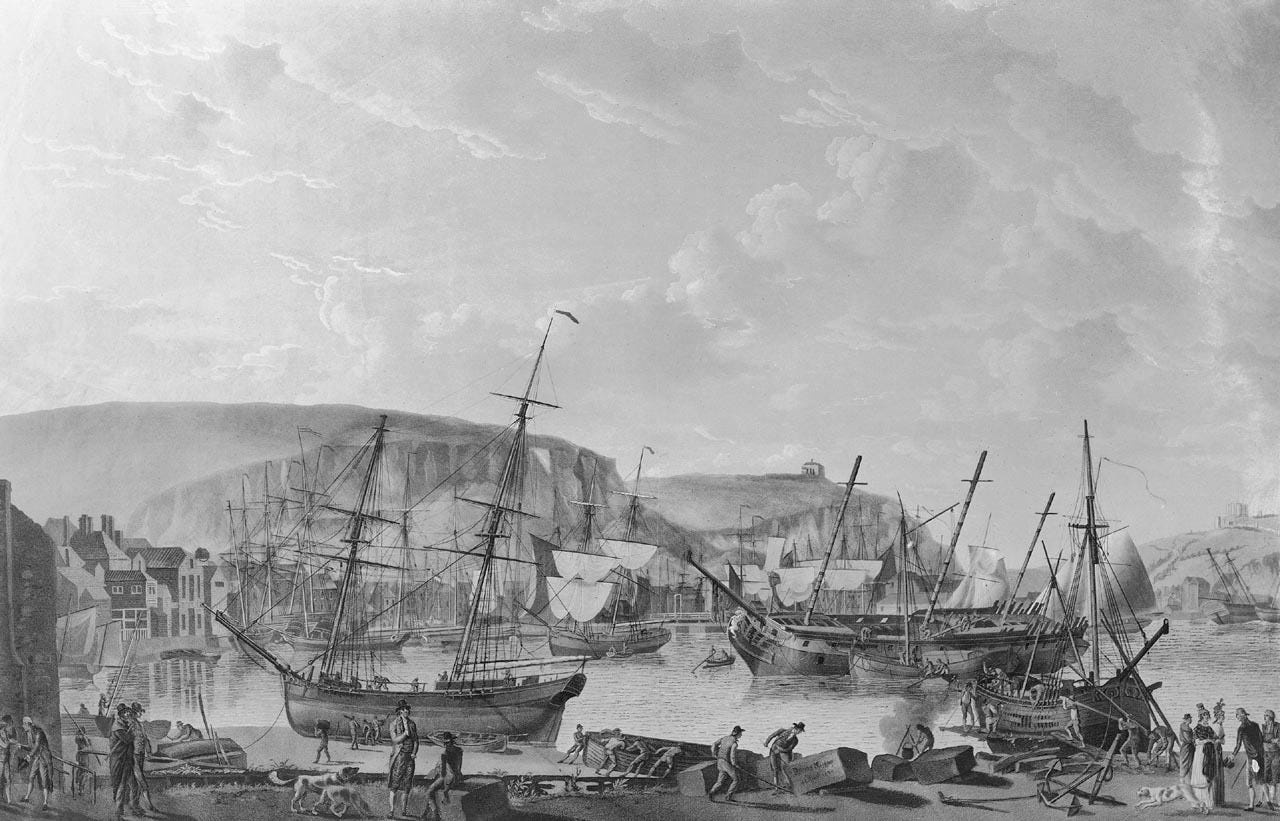
Begin with the timber. The oak came down to the coast from the Weald, the old iron-and-timber country behind the Downs that had been arming England since the Armada, felled in winter when the sap was low and seasoned in the stacks until it rang under the adze. A building slip in the 1780s was a place you smelled before you saw. Pine tar and hot pitch, the wet-penny smell of fresh-cut oak, hemp and linseed and the sour reek of the steam chests where the planks were cooked until they would take the curve of the bilge. Speedy grew on the stocks through the winter of 1781 into ‘82 to the sound of caulking mallets, which is a sound few now living have heard, hundreds of blows a minute, iron on iron, driving prison-picked oakum into her seams. She was seventy-eight feet on the deck, two hundred and seven tons, pierced for fourteen four-pounder guns with a dozen half-pounder swivels along her rails. Her whole broadside weighed twenty-eight pounds, about the weight of a reasonably sized cocker spaniel. A single ball from a first-rate’s lower deck weighed thirty-two, that of a large badger.
The bill for building and fitting her came to £4,200 7s 3d (just under £1m in today’s money) and the man who earned it then walked out of history. There is no portrait of Thomas King, no memoir, no anecdote. He built two of the most beguiling small ships of the age and vanished while the young men who loved and commanded them became admirals. The war that made her famous made him nothing at all, and something in that is the whole eighteenth century, which spent craftsmen the way it spent seamen, anonymously and without stint or mercy.
She was launched on 29 June 1782, sliding down the greased ways into Dover harbour with the flags out and the crowd bareheaded, coppered at Deptford against the worm, and completed by October, which was too late. The American war was ending. The guns she had been built for fell silent at the Peace of Paris, and the sisters settled into a long provincial girlhood like second-string sisters in a Jane Austen novel.
Her first commander was Josias Rogers, appointed in May 1783 for the North Sea, a Lymington man who had already had a harder war than most. Wounded and twice taken prisoner in America, he escaped, retook his own captured ship at the head of a boarding party, and was then rewarded with the naval equivalent of a country curacy, convoys and cruising in a navy shrinking by the month. He left her for better things and met the fate that stalked every officer sent west. He died of yellow fever off Grenada in 1795, commanding the frigate Quebec against a slave rebellion, one of the thousands the fever took while the Gazette was busy with battles. After him came Richard Lane, from 1790 to 1791, of whom the record keeps a name and nothing else. Ten years of this. Chalk cliffs, Channel weather, the assembly rooms of Sheerness. Meanwhile Flirt kept her own station between Beachy Head and the Wight under a series of blameless commanders, sailed once to Jamaica, and came home. If the world had stayed quiet the sisters would have grown old exactly so, two ladies of good family married in due course to nobody in particular.
The world did not stay quiet. In November 1792 Flirt was laid up at Deptford. Weeks later France cut off her king’s head, and in February 1793 the long war began, twenty-two years of it with one false dawn. Speedy happened at that precise moment to be recommissioning under a new captain, and she went out to the Mediterranean. That is the entire difference between the two lives, and it is worth being honest about how little of it was chosen. One sister was at home when the music started. The other was already dressed.
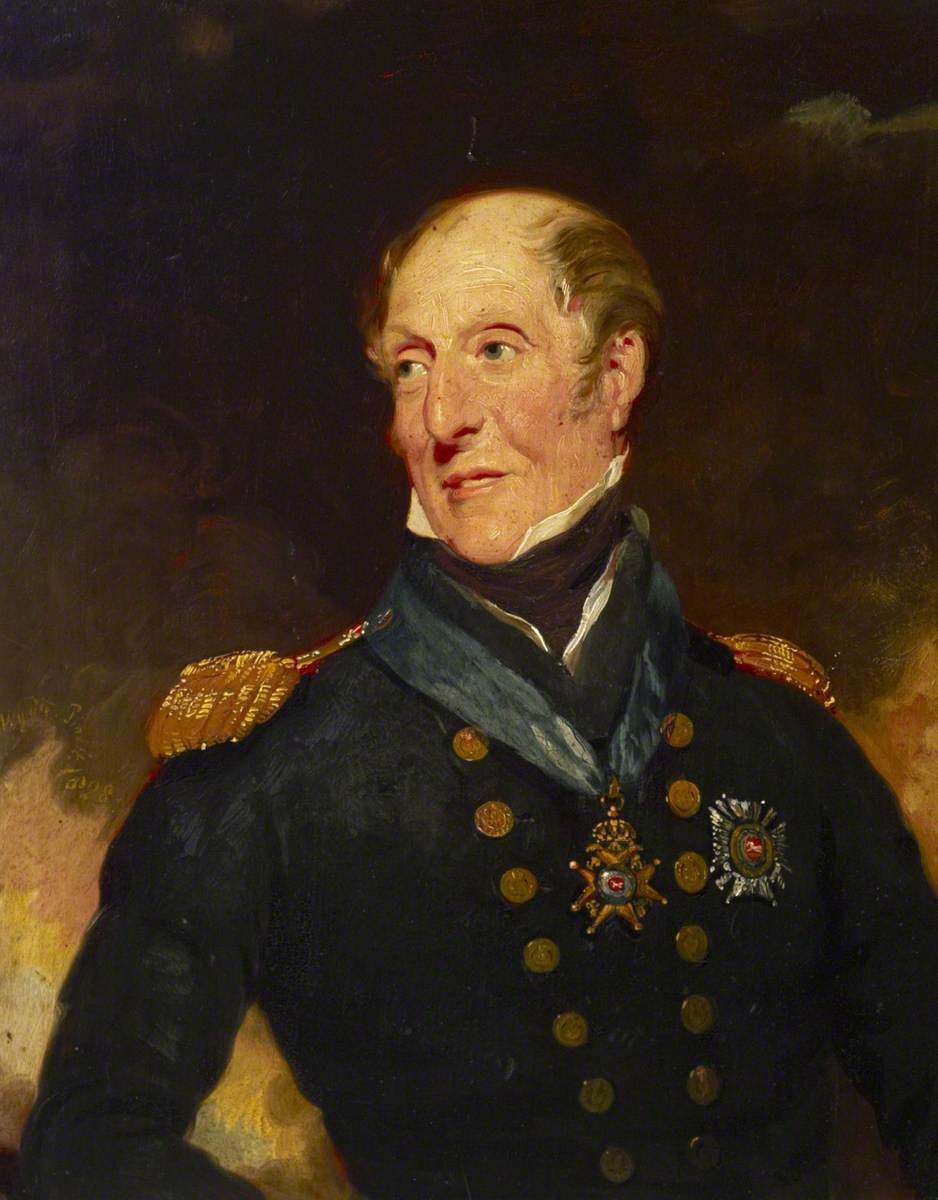
Charles Cunningham took her out. A Suffolk man of no particular interest, whose childhood reading of Robinson Crusoe called him to the sea. There was no war to take him, so he went first in colliers before the quarterdeck claimed him, a man in the Cook tradition rather than the Cochrane one, tarpaulin first and gentleman after. Rapid and deserved promotion brought him, as First Lieutenant of the Hinchinbrook, under one Horatio Nelson. Sent home from the Jamaica station, he was appointed to the Speedy. Under him she joined Hood’s fleet in the extraordinary summer of 1793, when the British were invited into Toulon by French royalists and briefly held the great arsenal of the Mediterranean against the Republic, until a short major of artillery named Buonaparte sited his batteries on the heights and threw them out. Speedy did the small-ship work of that campaign, dispatches, inshore reconnaissance, the fetching and carrying on which fleets float, and on the last night she would have seen the arsenal burning, the French fleet fired at its moorings, flame standing on the water the whole width of the roadstead. Cunningham had a hand in the taking of two French frigates, the Modeste and the Impérieuse, whose names both passed into the Royal Navy. The second matters to this story. Fourteen years later a crack frigate named Imperieuse would be commanded by one Lord Cochrane, who learned his trade aboard the brig that helped catch her namesake. The service was a small world and had its own pentameter and rhymes.
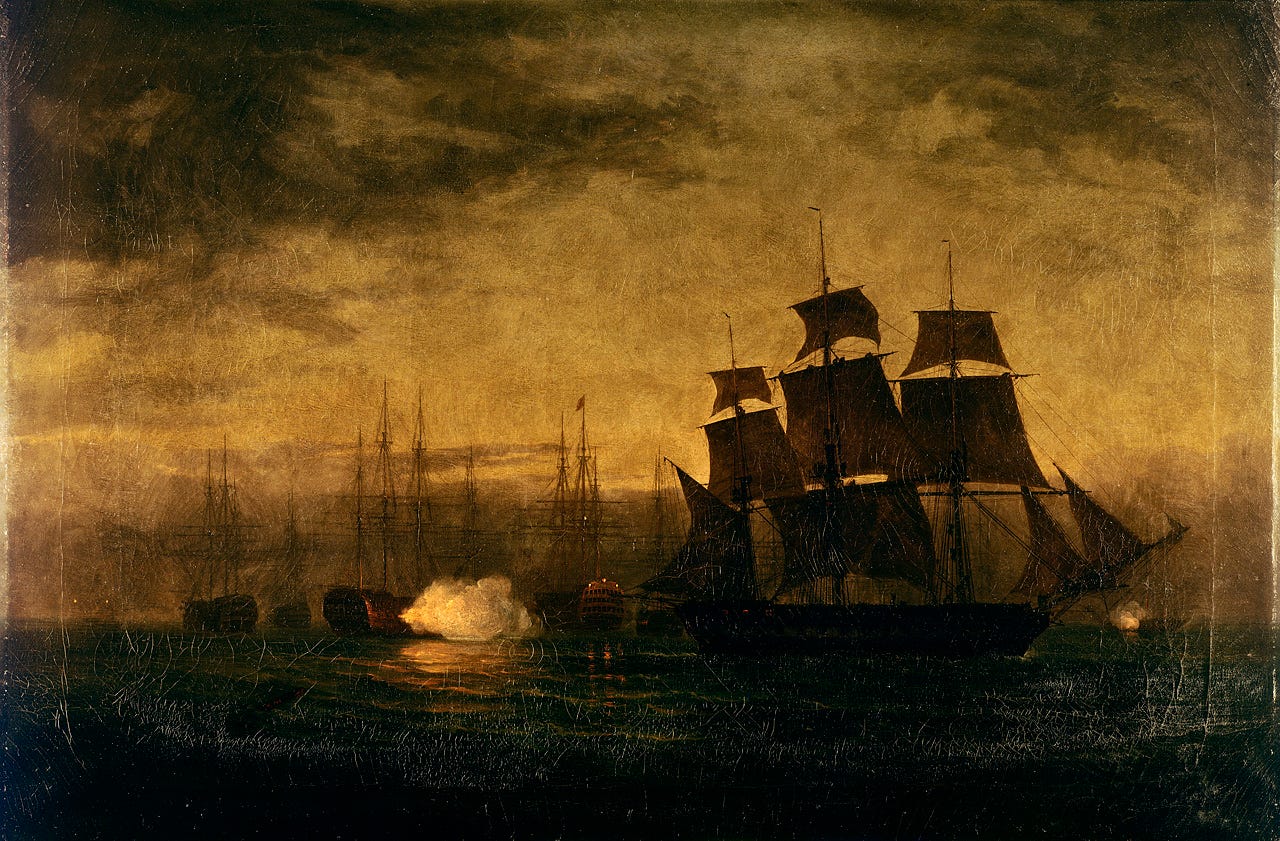
Cunningham’s own hour came in 1797, after he had left her. Commanding the frigate Clyde at the Nore when the fleet mutinied, he talked his ship’s company back to their duty and brought Clyde out from among the red flags, under way and past the guns, the first crack in the mutiny’s wall. It broke soon after. He was knighted in the end, served long as Commissioner of Chatham Dockyard, where the Weald’s oak became walls, and died in his bed in 1834. The colliers’ apprentice did well.
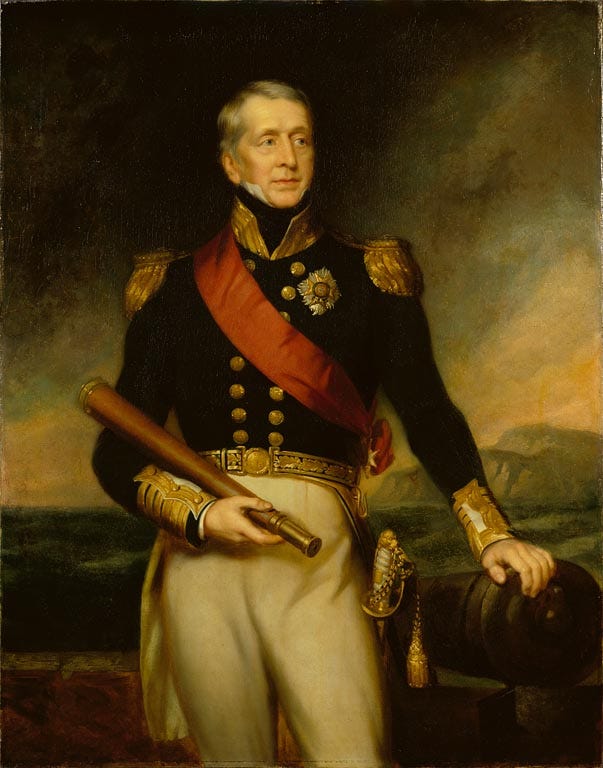
He was followed in Speedy, briefly in 1793, by a young Scot whose name the reader knows without knowing why. George Cockburn, twenty-one years old, minor gentry, all elbows and certainty. The commissioned record says he impressed his superiors with his dogged devotion to duty, which is the Admiralty’s way of describing a man already unbearable and already excellent. Hood pulled him out of the brig within months and promoted him into frigates, where Nelson got hold of him and made him a favourite. In the Minerve in 1796 he fought a celebrated single-ship action with Nelson aboard as commodore, and rose and rose. In August 1814 it was Rear-Admiral George Cockburn who marched into Washington with the army and burned the President’s house, the Capitol and the navy yard, an act Americans have not forgotten and he never regretted. A year later the Admiralty gave him a subtler commission. He carried Napoleon Buonaparte to St Helena in the Northumberland and served as the fallen emperor’s first gaoler, unmoved, correct and impervious to charm. He died in 1853 as Admiral of the Fleet, the professional head of the entire service. His first command had twenty-eight pounds of broadside. Speedy taught him his trade, as older women are said to do. Every officer in the age of sail carried one nightmare, and in June 1794 it came for George Eyre. Cruising off Nice on the 9th, Speedy stood into what resolved out of the haze as a French squadron under Rear-Admiral Martin, ships of the line, against which fourteen four-pounders were not so much a defence as a witticism. He ran, was overhauled, and struck. A court martial acquitted him without a stain, and rightly. There is no shame in that sort of arithmetic. Eyre climbed steadily afterwards, commanded the seventy-four Magnificent for years in the blockades, that grinding, unglamorous Atlantic service of salt beef and short sleep which actually won the war, and died a knighted admiral in 1839. His misfortune was to be the answer to a question nobody asks. The French, for their part, kept Speedy only nine months. In March 1795 the inshore squadron took her back, and she rejoined the service with a Frenchman’s touch in her past, which in a certain kind of lady’s biography never harmed the later chapters.
There followed a quiet interval under Thomas Elphinstone, a Devonian, in whose family’s house it was decided that Napoleon was to be despatched to St Helena. He cruised her with the squadron that included Nelson’s Agamemnon and shared in a scatter of prizes. He is the least remembered of her captains and serves the story as the plain stretch of road serves a journey, by making what follows visible.
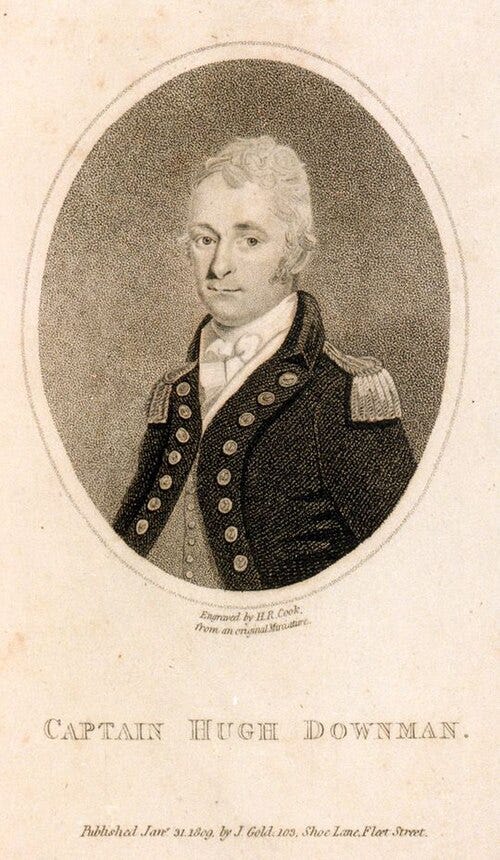
In August 1797 Hugh Downman had her, and under him she stopped being an errand girl and became a predator. The figures deserve setting down plainly, the figures are the point. Between August 1797 and March 1798 she took five privateers, the Domine Lucas, the Palma, the Pilgrim, La Oliva and the San José, mounting between them seventeen guns and twenty-eight swivels and crewed by a hundred and sixty-two men. This was the economy of the small-ship war. Privateering was Spain’s and France’s revenge on British trade, and brigs like Speedy were the police. Every capture was also money, distributed by rigid custom from the captain’s three-eighths down to the seaman’s pittance, and the hope of it was what made men volunteer for vessels the size of a tennis court. And once, off Vigo on 3 February 1798, the trade ran the other way. The French privateer Papillon, eighteen guns and a hundred and sixty men, half again her force, came for Speedy and her prize and pressed the attack for two days, sheering in and away through the winter swell, the four-pounders hot to the touch and the deck sanded against blood. When the shot lockers ran empty Downman fed his guns with nails and lengths of iron hoop, a blacksmith’s broadside shrieking across the water, and threw the boarders back at the rails with pike and cutlass, for five killed and four wounded. Nobody made a print of it. It was simply the work that had to be done.
Comments
Nothing yet. Say the first thing.
Sign in to join the conversation.