
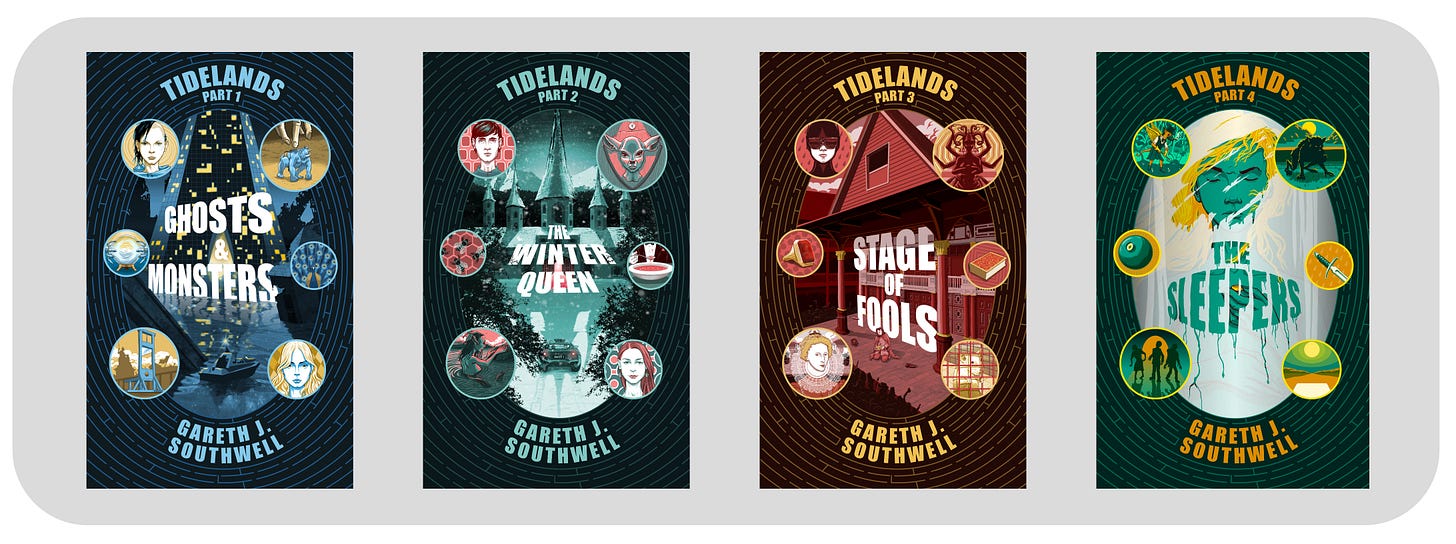
New to Tidelands? Start at the Beginning
It was the summer the roads melted.
I would sit on the kerb, the noon sun baking my bare neck and arms to a bubblegum pink, teasing the tar off with my fingernails – like a scab I had to pick – and day upon day (“Freddy, what the hell have you been doing?”) evidence of my misdeed would accumulate, a cosmic black residue cementing behind the nail-whites, impervious to soapsud and nail brush.
It was as if the very seams of the world were coming apart – which they were about to, though I didn’t yet know that.
I was a shy kid, textbook introvert, and physically also somewhat of a late bloomer. A kid who still preferred his graphical cocoon of comics and computer games to the bawdy company of boys who’d already levelled up – or so they claimed – their first wet dream, their voices broken and their balls dropped (an image that, in my pre-Google innocence, morphed into semi-lucid nightmares of waking to find the little chaps absconded, and send me scrabbling about in the dusty gloom beneath my bed in search of where they’d rolled). But while my peers traded knowing looks and sniggering innuendo, boasts and barefaced lies, I know now that it was more than shyness or sleepy hormones that kept me from joining them.
I was waiting for something else.
That summer was also destined to be a long one – far longer than it should have been. The tail end of 1984’s vintage of chicken pox, a disease successfully sidestepped through my first thirteen years of coddled life, finally caught up with me just four weeks before the end of term. It was a gift I was determined not to waste, and through careful choreography of moping looks and pitiful lassitude I would extend my upcoming statutory holiday into a glorious nine weeks of footloose, school-free leisure time.
Assuming I could defeat the Final Boss.
“I know you’ve still got spots,” my mother said, “but it’s just cosmetic now, my love. You’re not contagious anymore.”
I shrugged and returned my attention to trying to sneak Bilbo through the woods without getting eaten by the trolls for the three-thousand-and-twenty-second time.
Text within this block will maintain its original spacing when published
	> CLIMB THE TREE
		I DO NOT SEE THE TREE HERE
“And they only do fun things, now, don’t they?” she persisted. “Watch videos? Play games?”
I pulled a face: not games like these (The Hobbit, Melbourne House, 1982).
Text within this block will maintain its original spacing when published
	> HIDE FROM TROLLS
		WHAT?
“Be good for you. I don’t think you’ve seen the outside in a month.”
Text within this block will maintain its original spacing when published
	> TELL THORIN TO KILL TROLLS
		I DO NOT KNOW THE WORD “TELL”
She was right, to be fair. Chicken pox aside, I hadn’t been feeling the Call of The Outside particularly strongly that year, and it was the very prospect of those final few weeks of scheduled extracurricular “fun” that steeled my resolve. I threw her one last look of despairing lassitude, coughed twice (a symptom we were both pretty sure wasn’t merited by my illness), and threw myself on the mercy of her vicarious hypochondria.
“I think I might be getting complications.”
She folded her matronly arms over her ample chest in a heaving sigh, topped off with a frown of dubious concern, but she was wavering. Maternal neurosis trumps professional medical knowledge every time. I suppressed a grin. Victory was almost mine – albeit, as I would soon learn, a pyrrhic one.
Text within this block will maintain its original spacing when published
	> SAY TO THORIN “KILL TROLLS”
		YOU TALK TO THORIN.
		THE HIDEOUS TROLL EATS YOU.
		HIS FOUL GLUTTONY HAS KILLED THE HIDEOUS TROLL.
		YOU ARE DEAD.
Three thousand and twenty-two.
But those childhood summers were long enough. Looking back, we didn’t appreciate what we had. Before the world of work, before its miserly allotment of annual leave, their dissatisfying chunklets dotted here and there where staffing levels allowed, like scraps to be politely but fiercely squabbled over with co-workers like pigeons outside a chip shop.
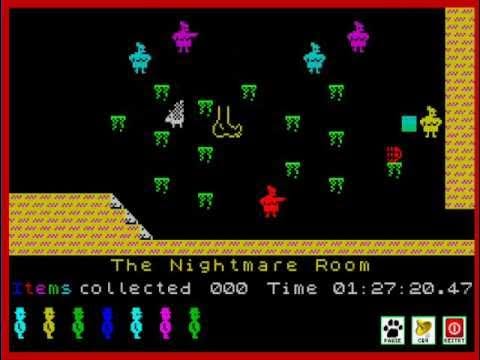
By my fourth week of extended convalescence, I had ridden the chicken-pox train as far as it would go, and my mother was determined that my holidays would not (“And I mean this.”) be taken up with tricking trolls, getting past The Nightmare Room in Jet Set Willy (Software Projects, 1984), or following Peter Parker’s fraught attempts to juggle his crimefighting duties with the university curriculum. I would do something more productive.
“Like what?” I asked.
“I don’t know. A summer job?” She huffed about my room, picking up and tidying with her habitual passive-aggressive bustle. “You can at least ask around.”
But as she and I both knew, there was no asking to be done, and not much of around in which to do it – at least, nowhere local. Our village boasted one school, one chapel, one church, one post office, one pub, one club, and a single shop (there were giddy rumours of a second, but which had so far amounted to no more than that), and none of which promised casual openings for soon to be fourteen-year-olds.
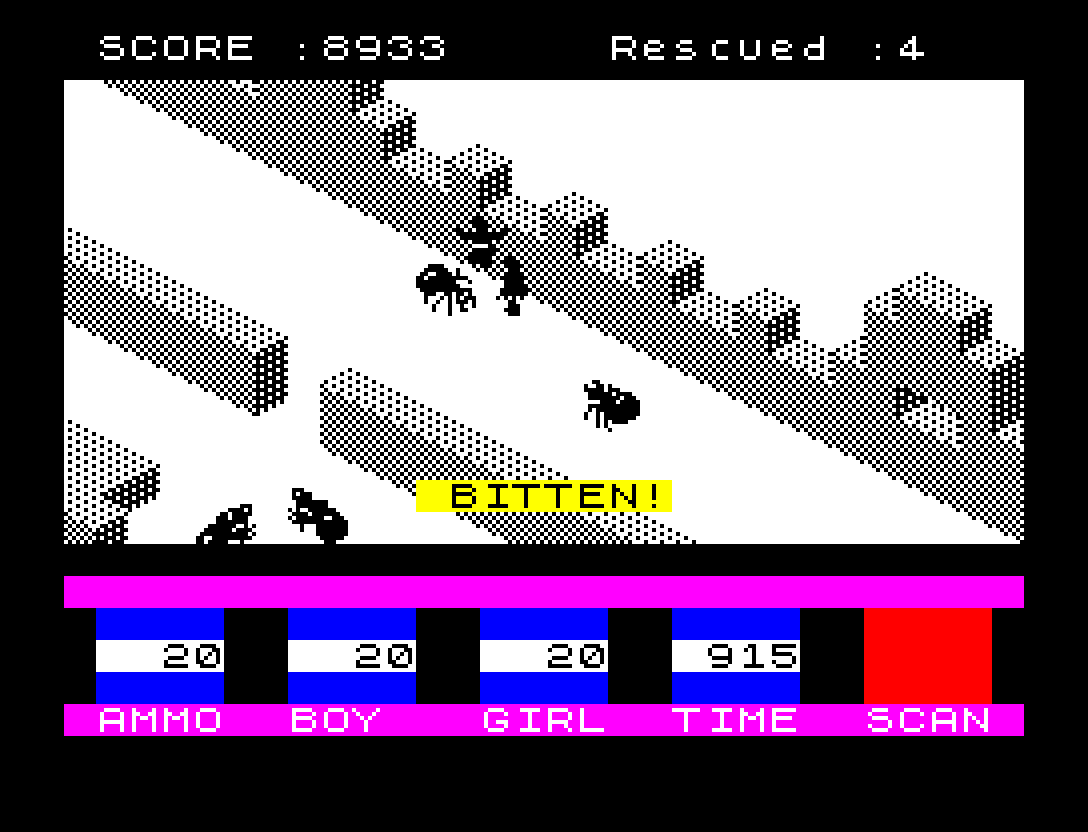
Nonetheless, I nodded ruminatively at her suggestion, hoping this would suffice as a response, and switched my attention to Ant Attack (Quicksilva, 1983), with which I was also struggling to make headway. It was a simple game premise, an old trope with a twist: boy rescues girl – from a city invaded by giant ants! But the controls were too fiddly, the Spectrum’s squidgy keys incapable of the precision movement required to evade my formic pursuers, which kept up a relentless pace. And once they locked on, they never gave up.
A lot like my mother.
“Somewhere in town, then?”
“Hmm?”
You could also choose to play as a girl, to reverse the old trope: girl rescues boy instead. Not that there was much difference between the options, graphically speaking – a few pixels for longer hair, the suggestion of a skirt – and not much difference in any other respect.
Fuck, these ants were fast.
“The cinema in town?” She stopped, mid-tidy, one hand on her hip, the other holding a bunch of scrumpled clothing.
Come to think of it, there were other similarities too: the relentless busyness, always sorting, ferrying things from one place to another (in this instance, a widowed sock and two pairs of underpants to the wash basket in the corner of my room); tireless, never at rest, never daunted. But ants were all male, weren’t they? Or was it all female? Or was that just the queen? Did ants have a queen? Or just bees?
The ants disappeared, the boy and girl too. Just a frenzied snowfall of static.
I swore – (“Freddy!”) – pressed a few keys, wiggled the connections, and was about to get up to check the TV, when I noticed my mother standing by the wall socket, the plug from the Speccy’s power supply dangling limply in her sockless, pantsless other hand.
She was even more determined about this than I was.
And we’re under way! Just a reminder that this is Volume II of Tidelands, so if you want to catch up with previous events, then you can either do that via Substack for free (go here), or you can buy the books (go here).
Right. So first of all I should point out that, while this volume draws quite heavily on my own childhood enthusiasms, this is fiction, and no parental figures or friends are depicted here (should any lawyers – or parents! – get wind of this). Fiction is a playground of the imagination wherein we may explore the themes of our lives, without getting bogged down with facts. Your Honour. So this is and isn’t Port Talbot (though the place is actually never named).
Sticklers with a historical bent may wish to point out that whilst very hot and dry, 1984 wasn’t that hot – at least, not as hot as the summer of 1976 (for instance). So, again, some artistic license here.
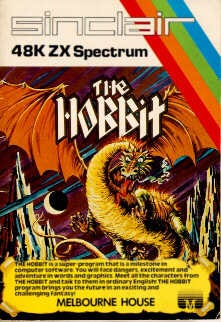
I was obsessed with all things Spectrum, and I did indeed get eaten by trolls not a few times whilst playing Melbourne House’s The Hobbit. Everyone who ever played that game will no doubt remember the admixture of delight, wonder and frustration in trying to get Thorin to do anything useful. I’m not sure of the legal position here in quoting directly from the game. I contacted Veronika Megler, one of the designers who worked on the game, and who confirmed that it is now in a state of “abandonware”, and she’s uncertain where the rights reside. So, I may have to remove it, which would be a shame, but we’ll see.
As for the other games mentioned, Jet Set Willy was the follow up to the hugely popular Manic Miner, programmed by Matthew Smith, and yes, I wasted many an hour trying to get past the notorious “nightmare room”.
Quicksilva’s Ant Attack was a fun game that was the first Spectrum game (I think…) to use isometric projection, which is basically 3D.
No posts
Comments
Nothing yet. Say the first thing.
Sign in to join the conversation.