
As a reminder: This article and all of my articles are written from the perspective of a gardener with a 1/4 acre lot in suburban Philadelphia, Pennsylvania, US, zone 6b/7a, with heavy clay, rocky soil. My garden is typically frost free between May 15th and October 15th.
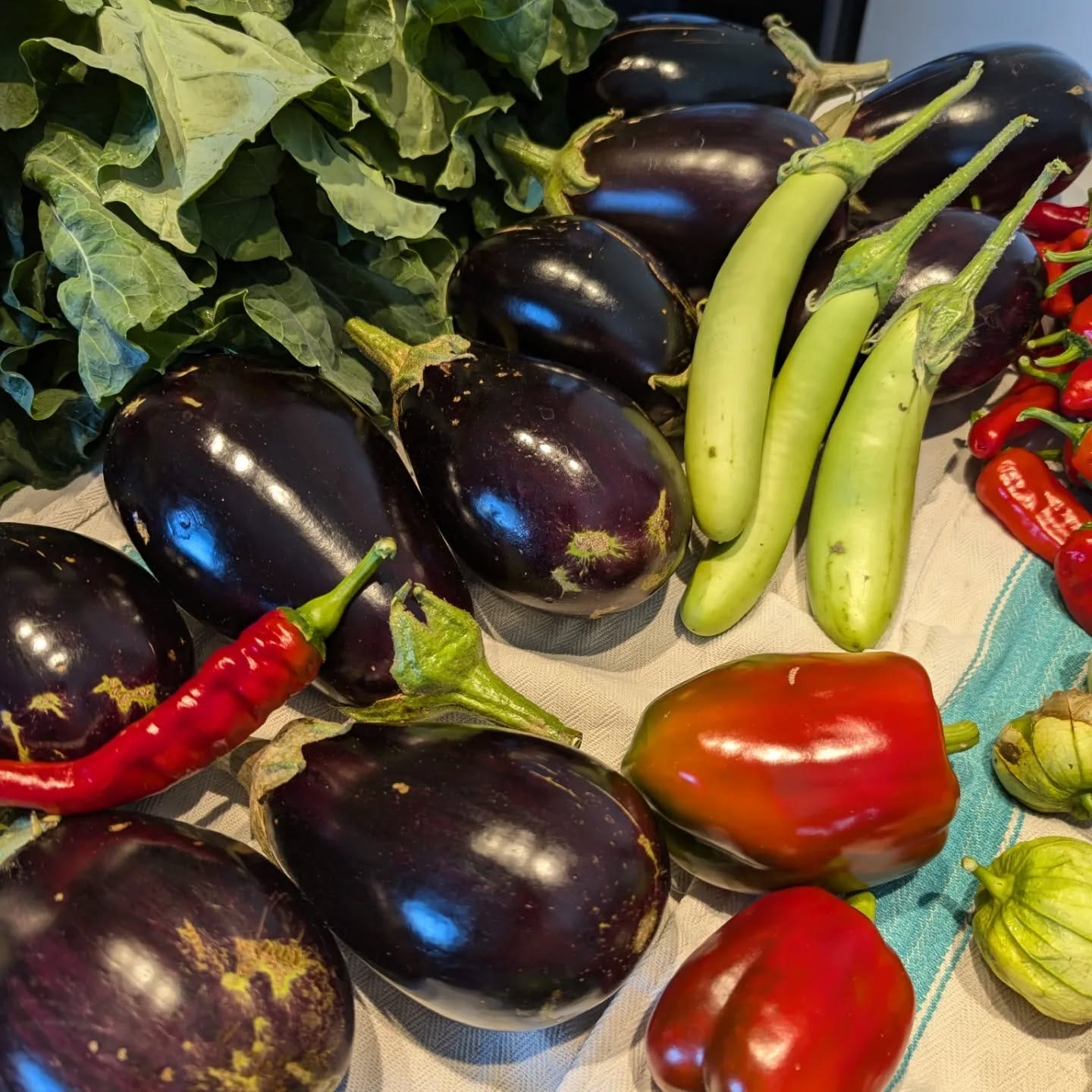
I’ve always loved eggplant. Growing up in central Pennsylvania, in Amish Country, the diner I worked at in high school fed the staff at the end of their shifts. We were allowed to eat anything we wanted. I made the same thing every night I worked. I threw some eggplant slices into the fryer. When they were done, I put them on a broiler plate, topped them with stewed tomatoes from the steam table, covered that with slices of whatever white cheese was in the deli tray in the kitchen, and popped it under the broiler for a teenager-working-in-a-rural-diner take on Eggplant Parmesan. When it was done, I scooped some broccoli onto the plate and ate it with relish. I was always the weird kid who ate vegetables and not hot dogs or fast food.
I moved to Philadelphia for college and eagerly explored the diverse food options the city had to offer. There were food trucks on campus. I made friends with people from across the country and from other countries across the world and we’d eat dinner together and talk about food. I was always happy to try something new to eat. I ate eggplant from the Chinese food truck, looking over my shoulder for my strict and exacting Discrete Math professor who liked to eat there, too. I tried food that friends brought to campus from their home kitchens, prepared by their families for their kids to share with friends. I learned about inexpensive Indian buffets in West Philly where I sampled Baingan Bharta for the first time. My roommate introduced me to a Halal cart on campus she liked where we shared a pita with hummus, fried eggplant, vegetables, and hot sauce.
As a young adult in charge of my own kitchen, living in a bachelorette pad with two other girls, I took on the role of main cook, mostly because I had been cooking most of my life and knew how. My roommate’s mom, who I called Kochamma, sent a lot of food from her Malayali kitchen. Kochamma’s eggplant curry was a favorite. I remember the night we tried to make it ourselves from my roommate’s memory. It didn’t turn out well. It was a gray mess, watery and sandy with untoasted spices. After that disaster, Kochamma started coming over to give us cooking lessons. I still make some recipes that Kochamma showed us during those lessons. Kochamma was a “vibes only” cook like my grandma and my mom. She got frustrated when I asked her to slow down so I could write what she just did. Now, ironically, I’m the same kind of cook. If you come to my house, I’ll show you, and talk you through it, but don’t ask me to write it down concisely with amounts.
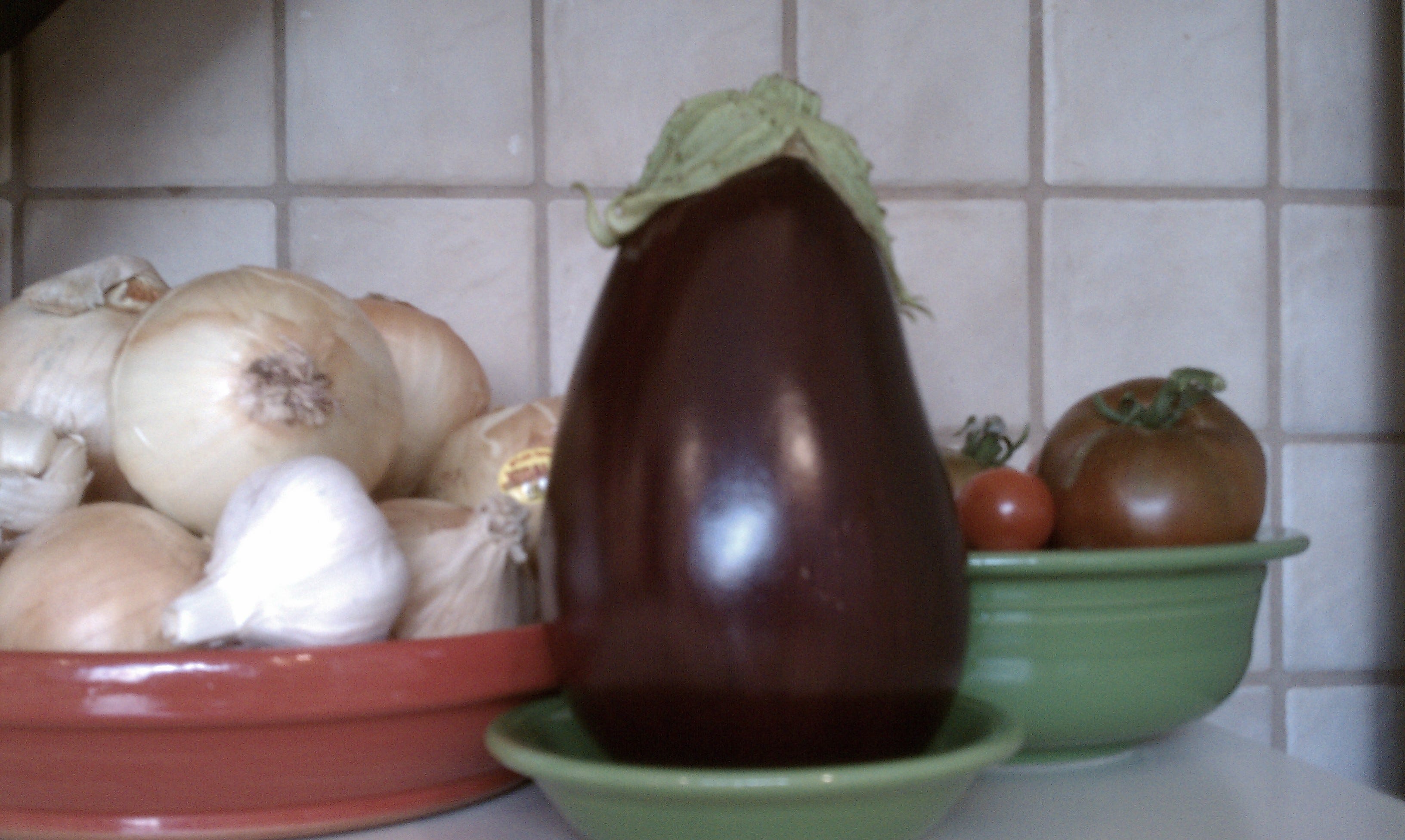
When I started an expanded garden many years later, in a house we rented with more than a postage stamp of ground, I was eager to grow eggplant. I purchased seedlings from a nursery and grew Black Beauty and Orient Express. Eggplant was the crop that took my gardening ambition to the next level. This was the exact vegetable that started my gardening obsession, grown in the summer of 2011. I displayed it in the kitchen in its own little dish, like a pedestal. I grew the tomatoes in the background, too, and I was proud of them, but I had been growing tomatoes for years at that point. This eggplant was a novel achievement.
After the first year of growing eggplant, the Flea Beetles and Japanese Beetles found my garden and I had a tougher time getting a good yield with those Black Beauty seedlings. I cracked the eggplant code when I started shopping regularly at a farmer’s market. The first Saturday morning market in eggplant season, one farmer had a spectacular display of eggplant in many shades of purple, different shapes, and even stripes. My eyes lit up! As I started piling eggplant into my shopping basket I asked questions about two types I found particularly attractive. The farmer told me, “They are Beatrice and Galine from Johnny’s Selected Seeds.” I went home from the market with my beautiful eggplant, purchased some seeds, and looked into buying a grow light. I was inspired to try what worked for the farmer.
I learned an important gardening lesson that day: variety matters. Galine and Beatrice were my ride or die eggplant for years. Beatrice was discontinued by Johnny’s a few years back. This year, my beloved Galine was discontinued and replaced by a variety called Thanos. (I rolled my eyes at the variety name when I read about the change on their website. What sort of name is Thanos for an eggplant?) Frankly, I was scared about the change. I had been relying on Galine for years, and I was worried that Thanos wouldn’t be productive. I’m growing both Galine and Thanos side by side this year and they’re both producing extremely well, as I should have expected. The improvements that Thanos offers over Galine don’t matter to me. I don’t mind spines on the calyx or need a deeper color in my home garden. I’m sure those improvements matter for farmers. I’m just happy Thanos produces as well as Galine. Johnny’s quality is reliable, even though I sometimes clutch my metaphorical pearls at the price of their seed packets and shipping fees. You do get good value for that money, and at my scale, the seed packets last a few years.
I don’t love growing hybrids. I’m a seed saver. I like growing open pollinated varieties. The first year I gardened for a full season at this house, I decided to try open pollinated varieties again. I trialed Black Beauty, Rosa Bianca, Rosita, New York Improved, Aswad, Listada de Gandia, and Casper. They all got the same treatment. They were all planted in the same well composted bed in lovely soil. Some of the eggplant didn’t produce one fruit all season long (Casper and Rosa Bianca.) Some produced one or two fruit. Rosita was the best producing variety that summer. It produced four fruit. I returned to growing Galine and Beatrice.
I have too much insect pressure to grow open pollinated varieties that produce enough fruit to satisfy my appetite for eggplant. I probably would get better results if I picked off the insects every day, used diatomaceous earth on the plants, sprayed Surround, or used pesticide. I don’t do those things, and I won’t do those things, for many reasons. The most practical reason is time. That sort of thing doesn’t bubble up to the top of the “highest-priority-only-gardening-in-triage-mode” lifestyle I embody right now. I have other things to do I care more about than picking bugs off my plants or dusting DE on a schedule or after rain. That’s where Galine, and now Thanos, come in. I still have Flea Beetles, Japanese Beetles, and sometimes, False Potato Beetles, eating my plants to lace. These hybrid varieties don’t care. They produce anyway without any additional effort from me, and that’s what I need right now. From eight plants I harvest five to sixteen eggplant per week all season long. As I mentioned above, I really like eggplant, and I need to grow a year’s supply, because the eggplant at the grocery store is terrible; It’s cold damaged, dull, wrinkly, and has a strange foamy texture that somehow doesn’t soften uniformly when it’s cooked.
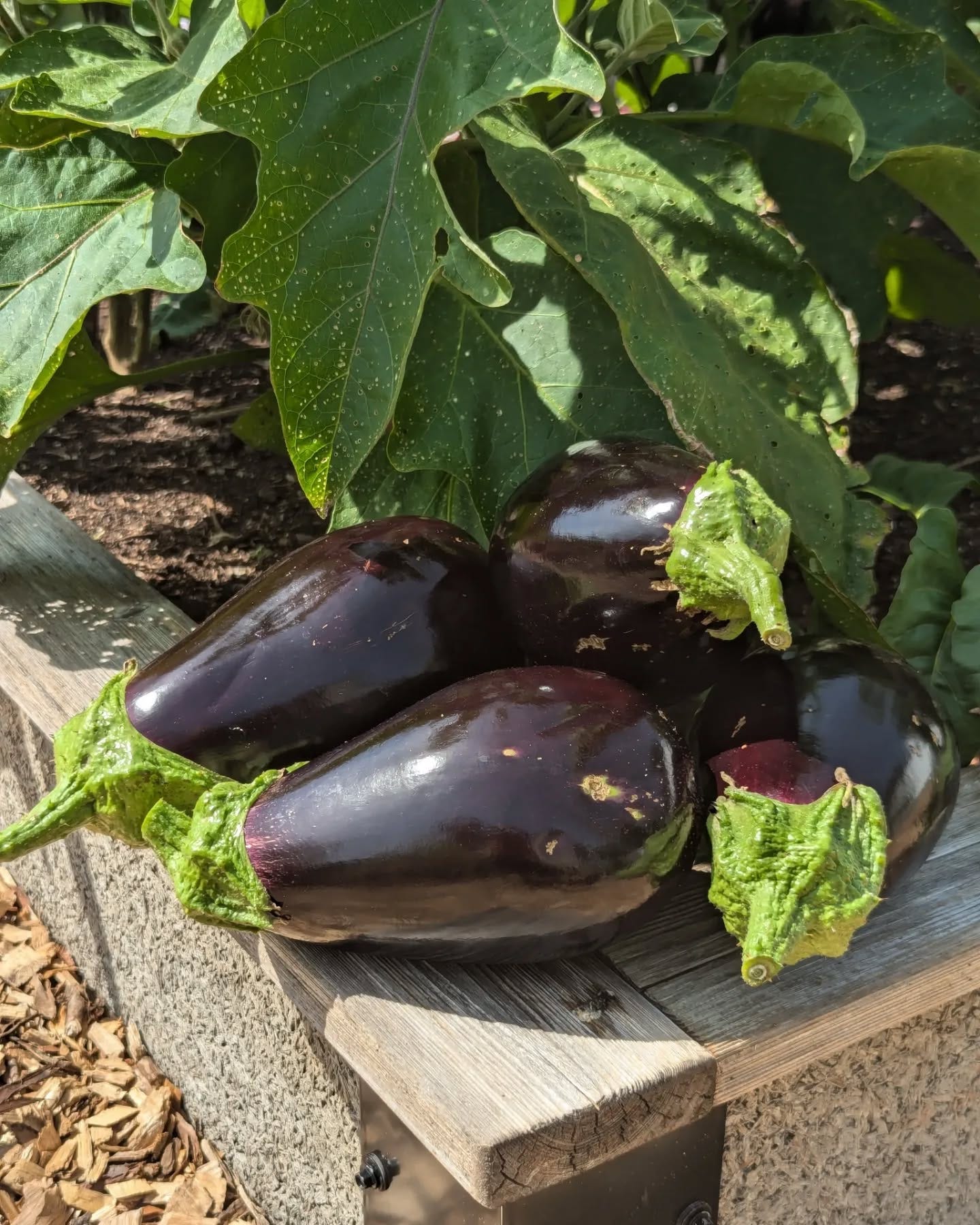
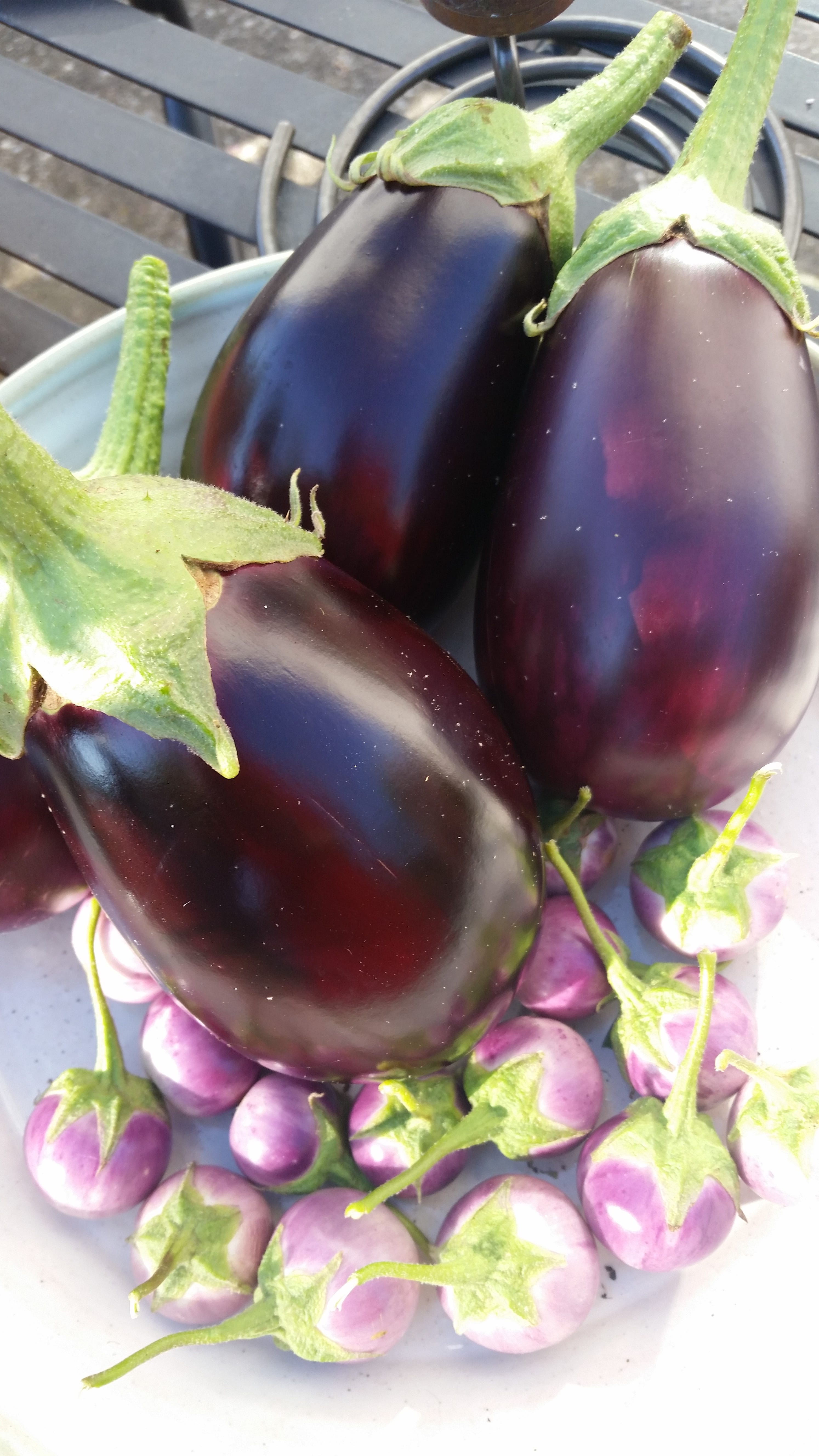
I harvest my eggplants while they’re firm, feel heavy for their size, hard, and mirror shiny. I don’t wait for them to size up past the time when the individual fruit has stopped growing visibly day after day. The eating quality only decreases after that. We eat eggplants before they’re ripe. If you let the skin go dull and brown, the fruit soften, and the seed size increase inside the berry while you’re waiting for the eggplant to grow large, they won’t be good eating. You could save seeds from those eggplant; they’re ripe. It’s best to harvest them smaller for the best quality.
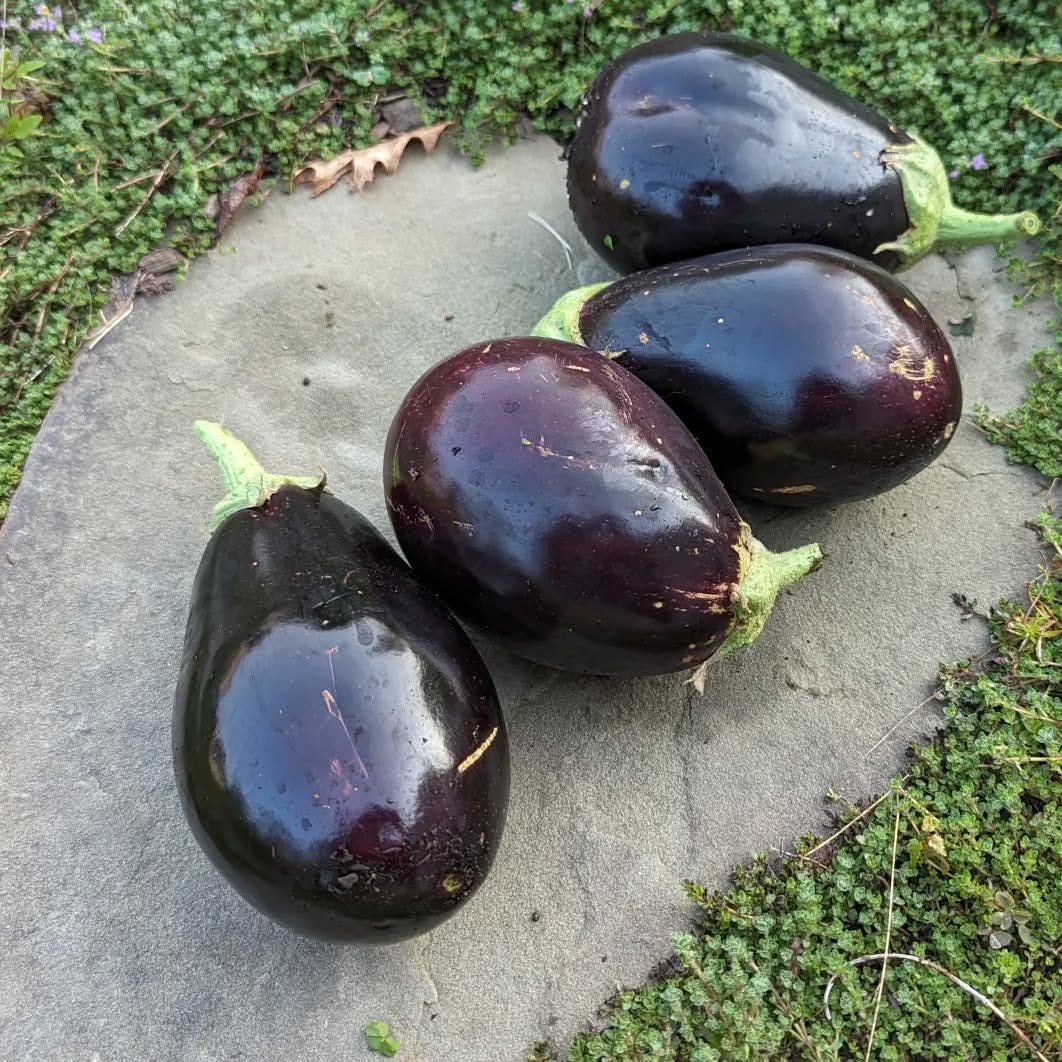
I mainly grow round, bell shaped eggplant. I find them the most versatile for cooking the things I like to eat. Of course, being an eggplant lover, I've tried all sorts of eggplant. I’ve grown long, slender varieties with green, striped, lavender, or purple skin. I’ve grown Superball sized “Frog Egg” varieties and even pea sized eggplant, once. They are novelties in my garden, fun to grow, fun to eat, but not reliable like Galine, and, now, Thanos. These varieties are the work horses. These varieties produce enough to fulfill my desire for year round Baba Ghanouj made with eggplant from my own garden.
I preserve eggplant mainly by burning it, whole, in its skin, and then freezing the soft, buttery, smoke scented flesh. If you look into traditional recipes for things like Baingan Bharta and Baba Ghanouj, you’ll discover that burning the eggplant is the first step in the recipe. The eggplant flesh is lightly flavored by the smoke from the burning skin. Here’s what I do:
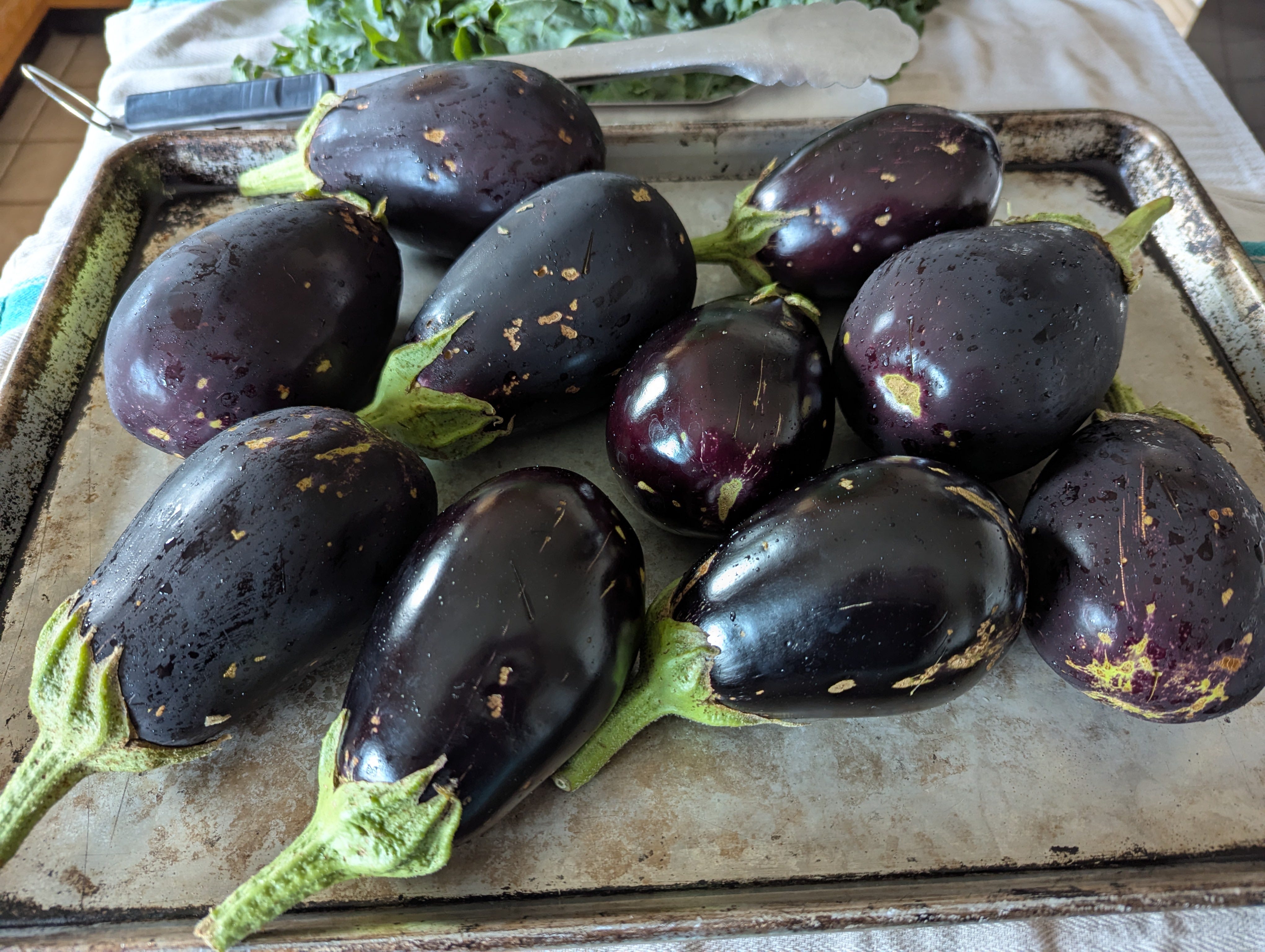
I wash my eggplant and pierce them deeply with a paring knife three or four times. This allows steam to escape as the eggplant cooks. If you don’t do this, the eggplant could explode from the pressure of steam trying to find an escape route.
I line the preheated BBQ grill with the eggplant. You can use a coal fired grill or a propane grill. You could even do this on a grate over the hot ashes of a fire. Use what you have. I’ve read that people do this under their broiler or on top of a gas burner on their stove. That wouldn’t work in my kitchen unless I removed the smoke alarms from my home, which would take a lot of effort. I always burn the eggplant outdoors.
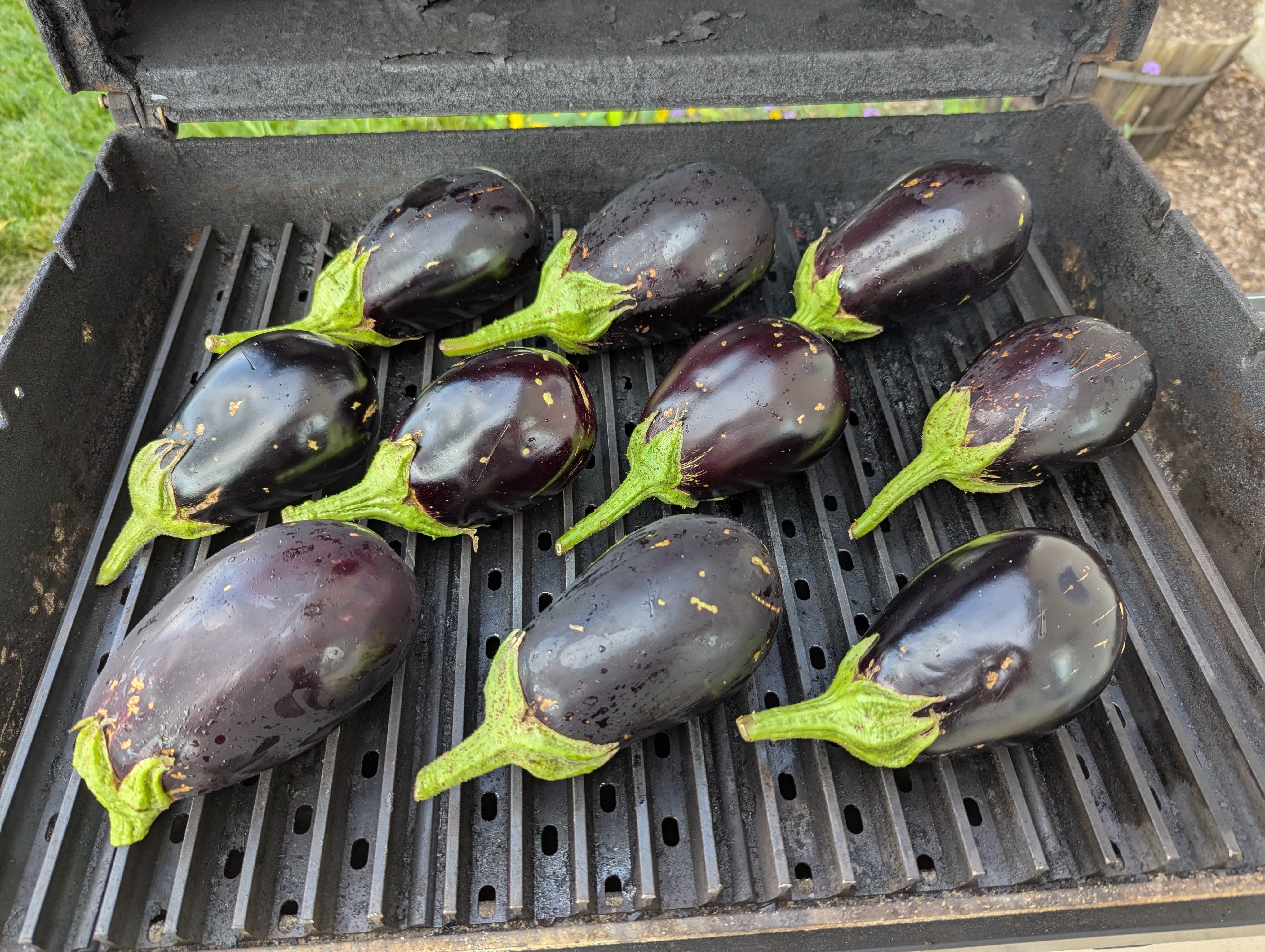
I shut the lid of the BBQ and set a timer for ten minutes. I work nearby in the house or the garden until the timer goes off. After ten minutes, I turn the eggplant so that a new side of the fruit is touching the grill surface. I turn each eggplant so that each of its sides and its bottom get ten minutes in direct contact with the grill surface. It takes almost an hour. The more eggplant I have on the grill, the longer it takes until the eggplant is done. Ten eggplant take about ten minutes per side to properly burn with the grill on high flame. If I squeeze fifteen eggplant on the BBQ, it will take fifteen minutes per side to cook through and char the skin.
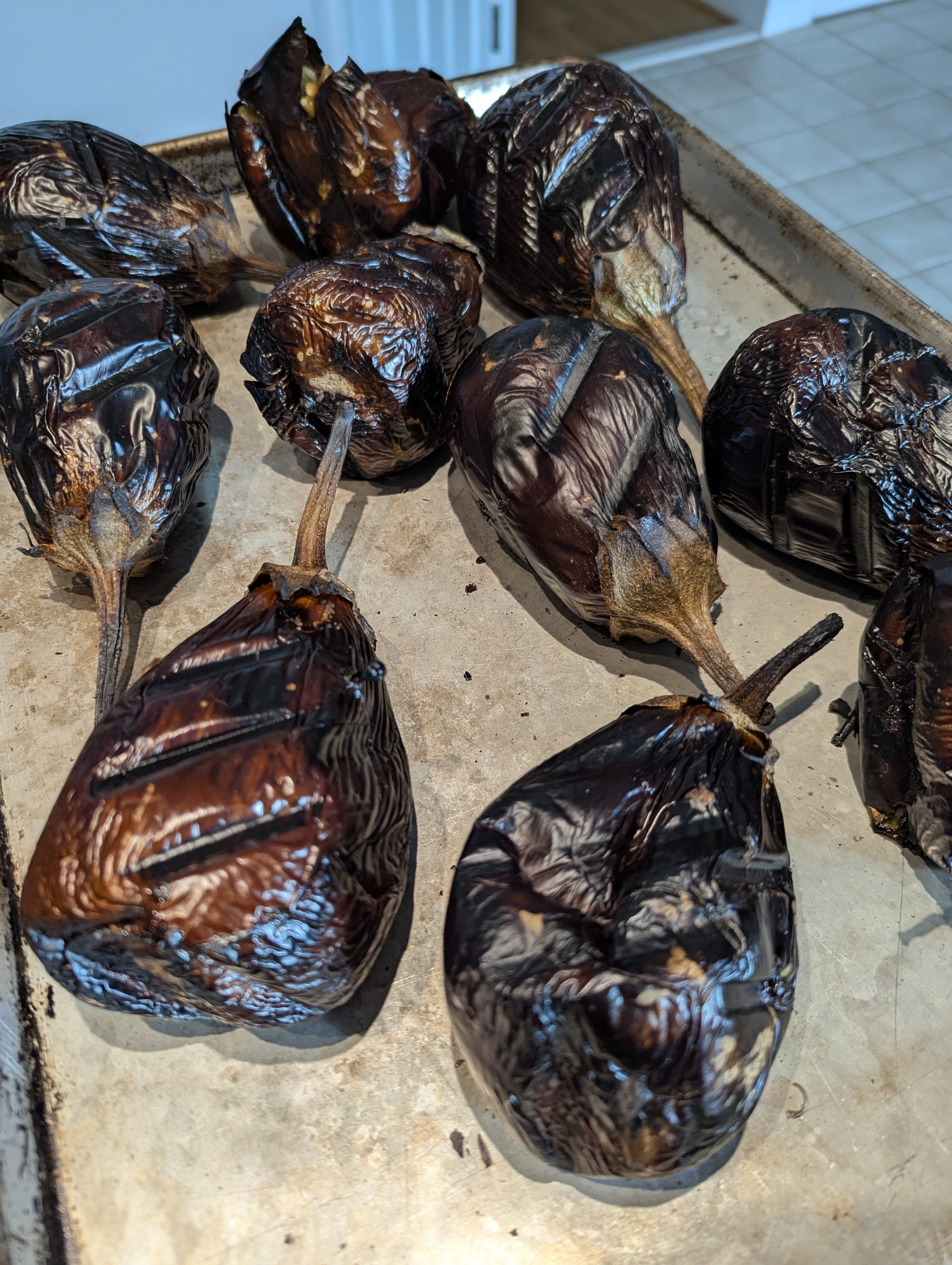
I let the eggplant cool to room temperature, cut it open with a knife, and carefully scoop out the flesh with a spoon, leaving the charred skin behind. The skin has done its job; it’s flavored the delicious flesh with smoke. This burned eggplant is perfect to use right away in Baingan Bharta, Baba Ghanouj, or drizzled with a dressing made from miso, sesame oil, vinegar, and honey, and topped with sesame seeds and finely sliced green onions. You can stuff pasta, mushrooms, or vegetables with this burned eggplant. You can make panini. You can toss it with noodles. There’s no limit beyond your creativity.
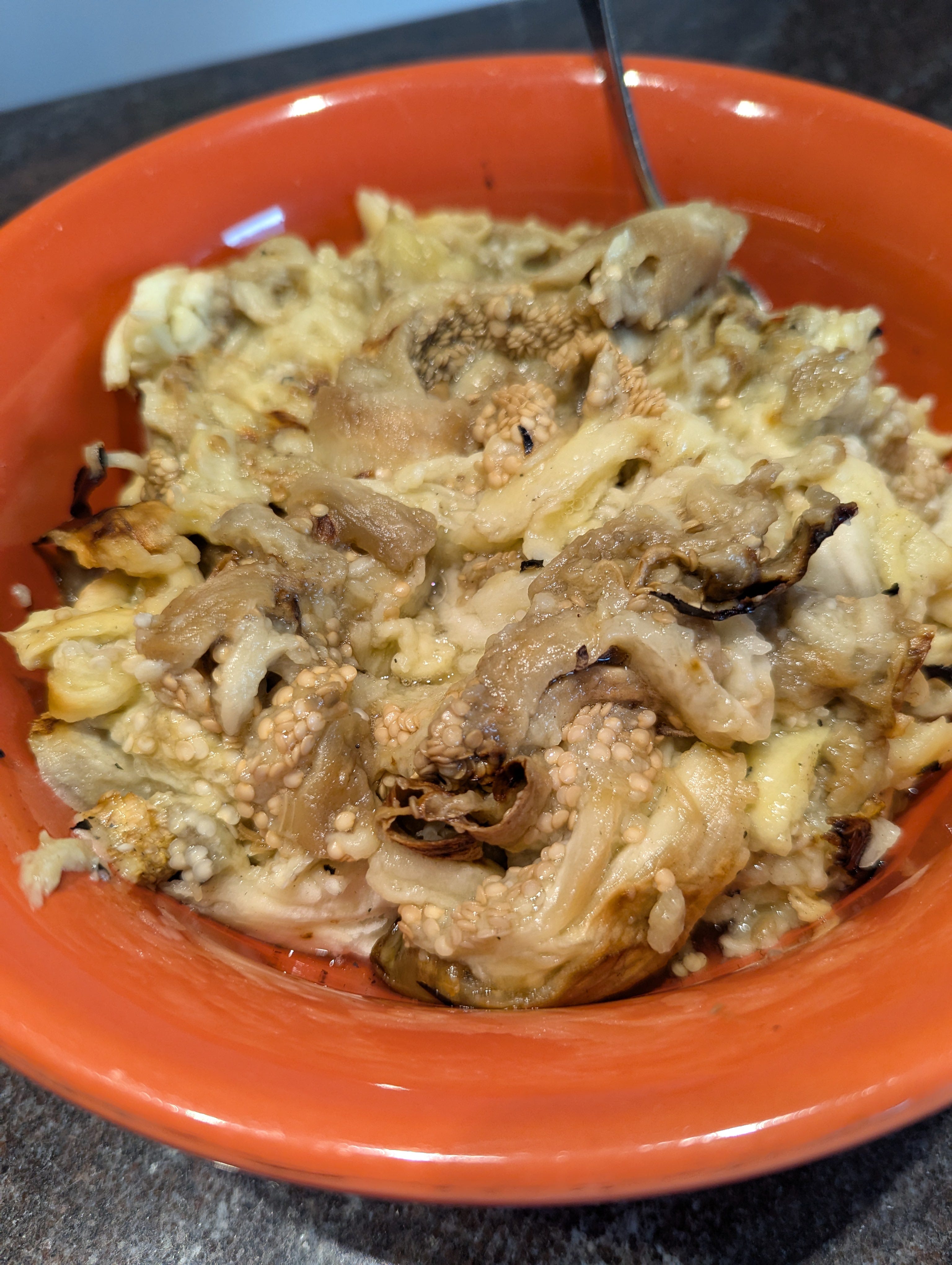
The eggplant, once burned, freezes very well. I use freezer bags for this. You can use what you would like as long as it’s air and water tight. Each of these quart bags was filled more than half way before flattened. I’ll freeze them flat and then stack them vertically, as that works best in my freezer.
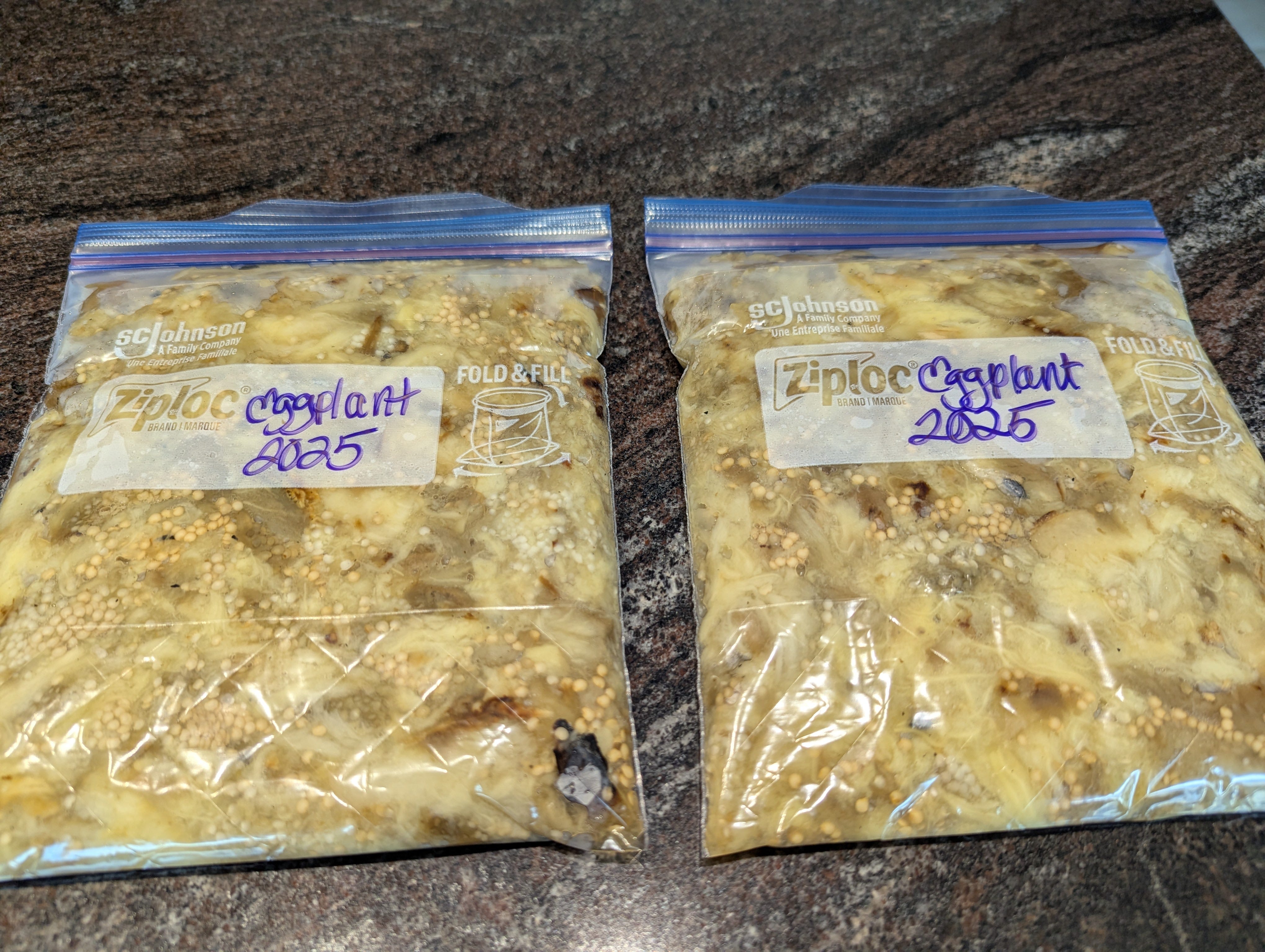
When I thaw this eggplant, I thaw it on a dinner plate in the fridge for two days before I want to use it. The dinner plate catches any drips from the bag. I will drain the thawed flesh in a fine mesh strainer before making something “dry” like Baba Ghanouj, a lasagna, or stuffing a mushroom. If I’m making something “wet” like a curry or pasta sauce, I’ll just dump it into the hot pan with the rest of the ingredients and cook off any extra moisture.
I also freeze sliced, grilled eggplant. I’ll grill a tray of sliced eggplant on the BBQ outside. I’ll freeze the grilled slices flat, individually, on a tray. Once it’s frozen, I’ll stack the eggplant slices in a reusable freezer container that can easily be resealed. I find reusing quart sized deli containers very convenient. Freezing food like this individually first works well for me. If I want a few slices of eggplant for a sandwich, I don’t have to thaw an entire freezer container. I can remove only what I need and keep the rest frozen.
If you’re the sort of cook that follows recipes and you’re looking for eggplant, or any other vegetable recipe inspiration, I recommend checking out the following cookbooks from your library. Each of these cookbooks has a few interesting eggplant recipes, as well as many other vegetable recipes you might be compelled to try.
Essential Pepin by Jacques Pepin
Plenty or Plenty More by Yotam Ottolenghi
Zahav: A World of Israeli Cooking by Michael Solomonov
World Vegetarian by Madhur Jaffrey
How to Cook Everything Vegetarian by Mark Bittman
Vegan Chinese Food by Yang Liu and Katharina Pinczolits
If you’re an experienced cook like me and have a more “vibes only” approach, you may appreciate what I usually do. I like to learn by watching several people cook the same dish online and observing their individual methods. I often read a bunch of recipes, and then, feeling informed, do my own thing, adapted to my tastes and the ingredients I have on hand. If you like cooking this way, too, I recommend doing a search for dishes you might like to try, reading a bunch of recipes, or watching older folks cook them on YouTube. I mention older folks in particular because often, their videos are more about education than flashy production and begging people multiple times to “like and subscribe,” which I find annoying. I frequently do this for dishes I’ve read about in a book, heard about from a friend, or have eaten in a restaurant, and want to learn more about or recreate it at home. Some of my favorite recipes I’ve learned about this way include Egyptian Moussaka, many Indian eggplant recipes, and Ethiopian Eggplant Stew. If you’re looking for Indian recipes, you might search for “brinjal” or “baingan” in addition to “eggplant” to expand your search results.
Simple eggplant preparations are delicious as well. I do love to grill vegetables on the BBQ in the summer. There are fewer dishes to wash, and the grill imparts a lot of flavor. I like grilled eggplant slices topped with any number of things: a luxurious amount of herbs, crumbled cheese, any sort of vinaigrette, a salad of chopped garden tomatoes and minced onions, tahini sauce, a sauce made from grilled ripe bell peppers pureed with basil, vinegar, and oil. The list goes on. I like to cut an eggplant in half, score the cut side deeply in a diamond pattern, brush it with a sweet, miso laden, dressing, and grill it until it’s soft. On a rare occasion, I’ll slice eggplant, bread it, and fry it. It’s delicious, and I love eggplant prepared that way, but I don’t like cleaning up all the dishes from the breading or my greasy kitchen after frying. That’s a rare treat.
Have I made a convincing argument in favor of a much maligned vegetable? I find that many gardeners I speak to don’t know what to cook with their eggplant other than Eggplant Parmesan or Ratatouille, and those are two recipes I rarely ever make. I hope I have encouraged you to try a new eggplant recipe, or given you some new ideas for preserving a bountiful eggplant harvest. Jacques Pepin, a chef I’ve admired since I was a kid, always signs off from his TV shows with the phrase, “Happy Cooking!” I’ll do that here, with a small addition, and sign off by saying, “Happy Eggplant Cooking!”
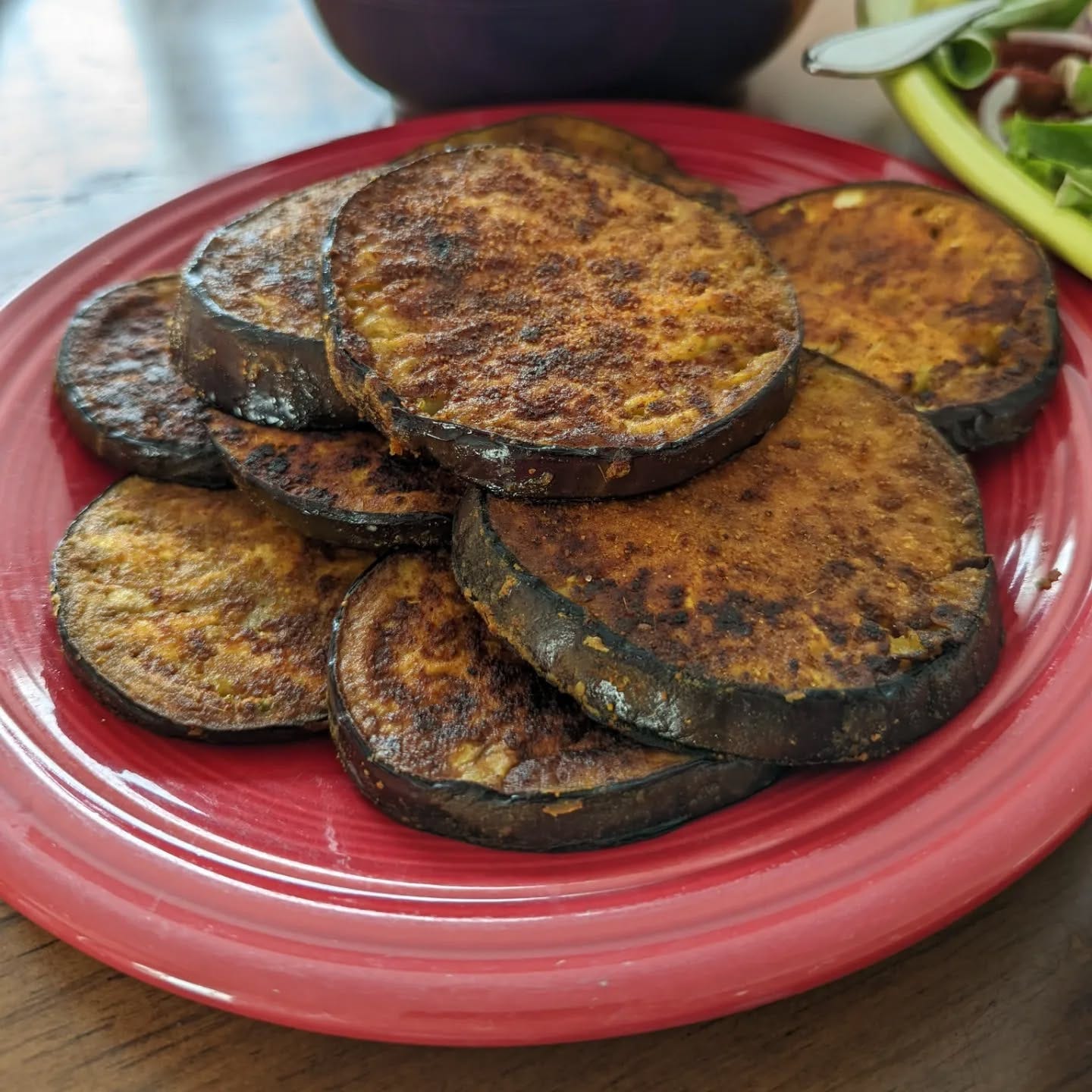
As always, all of the photos were made by me, of my own garden, of my own produce, here in the Philly burbs.
Comments
Nothing yet. Say the first thing.
Sign in to join the conversation.