
“All the flowers of all the tomorrows are in the
seeds of today.”Native American Proverb
There’s a photograph pinned to the cork-tiled wall behind my computer, that is a poignant snapshot of a brief moment in time. In the picture is my mother and me, standing in her garden many moons ago. Neither of us are posing for the camera, we’re not even aware that our picture is being taken, because we are absorbed in a far more important task. We are discussing the saving of seeds. I know this because, firstly it’s autumn (the yellowing leaves behind us are a clue) and secondly, and more importantly, mum has a fat wad of brown paper bags tucked under her arm. These were her seed saving bags. She’s explaining something to me, and I am listening intently while inspecting something small and unseen in my hand, which I know will have been a seedhead. The scenario in this photo is as familiar to me as an old family recipe because we did it pretty much every year. Why anyone thought to take a picture of us in that moment, I’m not sure, but I’m glad they did because I hold this more dear than if we’d been side by side smiling at the camera.
She was a war baby, of that generation who were recycling and reusing, mending and making-do, long before these terms were recycled into current use. She would carefully unwrap any gift given to her and then iron the paper flat again so she could stash it and reuse it. Tissue paper, ribbons, bows, all reused, even birthday cards – repurposed for future gift tags. Tin foil would be wiped clean, flattened and put back in the drawer. She cut up worn-out towels into smaller squares to use for dish cloths, and she had cupboards full of old ice-cream tubs and jam jars, just because - well you never know when you might need them.
So saving money in the garden through propagation was a no-brainer and - apologies for the terrible pun here - she planted the seeds of frugality in me a long time ago. From the day I finally had a garden of my own, I started collecting seeds - initially from mums garden, and then from my own flowers and eventually from my own larder of edible crops on the allotment.
Saving your own seeds, especially from edible crops, in order to grow them the following year to produce more food, essentially for free, feels (for me) like just about the most rebellious thing you can do in these days of late stage capitalism. Don’t get me wrong, I understand that seed companies are necessary and we need them to survive, but a little bit of self-sufficiency goes a long way to helping the planet as well as the bank account.
Of course it’s nature’s way, to produce seed and spread it around to reproduce. Nature relies on the wind, birds and animals to help do this, and I’m sure we are all part of the plan too. As gardeners we have the ability to spread those seeds even further than nature could manage alone, by passing them on to friends and family, who hopefully pass them on even further. So I feel that it’s an important task. On a larger scale it’s obviously way more important, seed savers are keeping plant species from going extinct, and who knows when we might need those vast seed banks around the world.
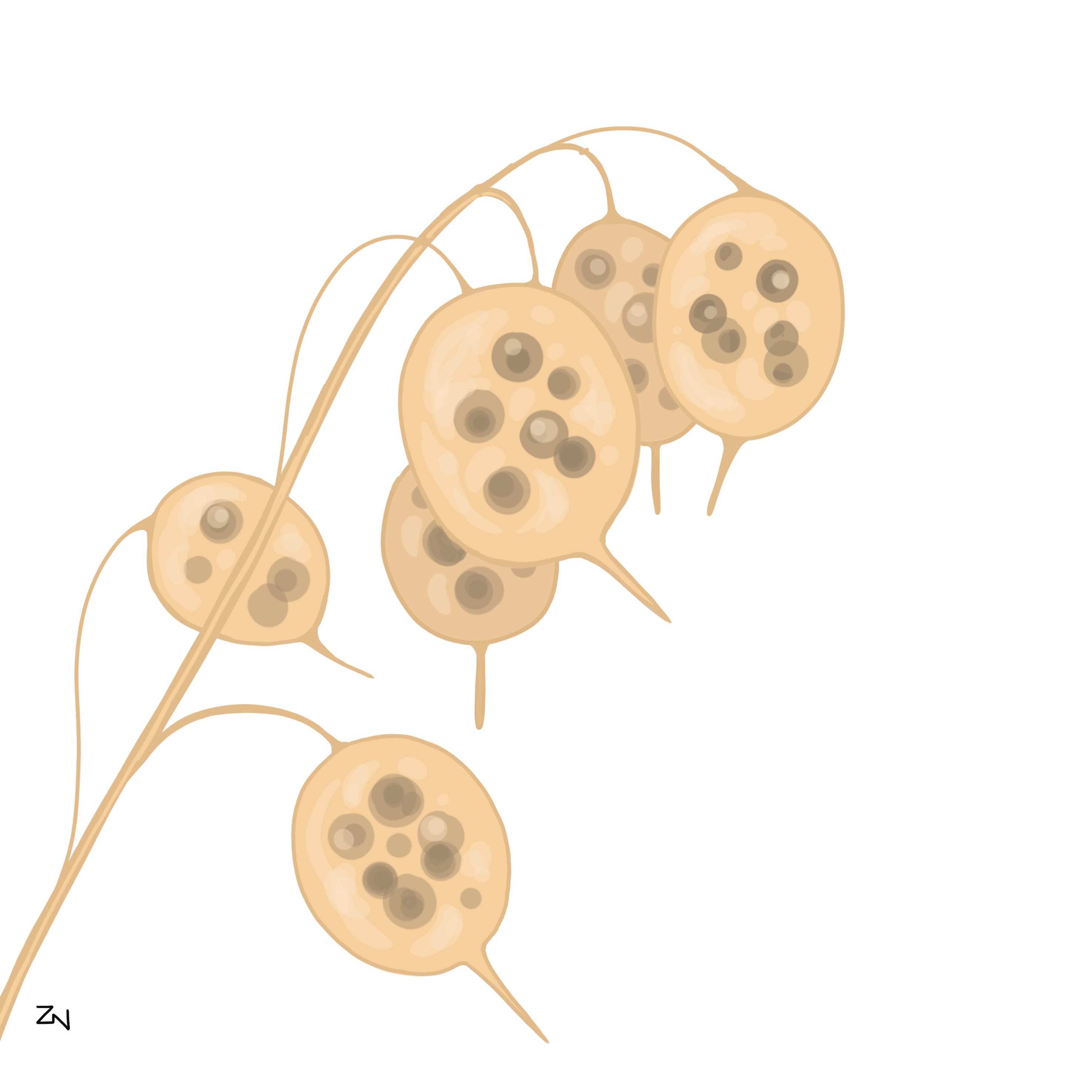
The main flower seeds that I save each year are calendulas and cosmos that self-seed in abundance on my plot. For some reason they rarely self-seed in my garden, so the seeds get passed from one to the other, with any excess passed on to friends, or shared at the allotment. I also save miniscule foxglove seed and the big moon-pennies from honesty (both biennials) in case these also fail to self-seed. Also occasionally the ridiculously long seed heads from california poppies, and the little nobbly seeds from nasturtiums. I save sunflower seeds, even though they also manage without me, but mainly I save them for the birds, and the cheeky gate-crashing squirrel. I don’t really bother with perennials as they return of their own accord, and I also never save the seed from forget-me-nots or feverfew as they are the two flowers that self-seed without fail and to great abundance every year.
I never fail to get great satisfaction from cutting and drying a seed head in the potting shed, and when the time comes, shaking it out or carefully dissecting it to free the seed. There is a very simple yet tactile quality to this that only a gardener would understand (I hope). Shaking the dried seed head of a poppy, like a mini maraca, hearing the sound of the seed rattling inside, is childishly irresistible. In fact maracas were originally dried out gourds filled with dried beans – or maybe their seeds? So perhaps I’m not so crazy afterall. Some seed pods literally explode as you attempt to prise them open, scattering seeds everywhere. Sadly for the flower this is across my potting bench and not the ground. I’m endlessly fascinated by the variety of shapes and sizes of seed, and the various ways that plants hold on to them or share them. It teaches you a lot about a plant.
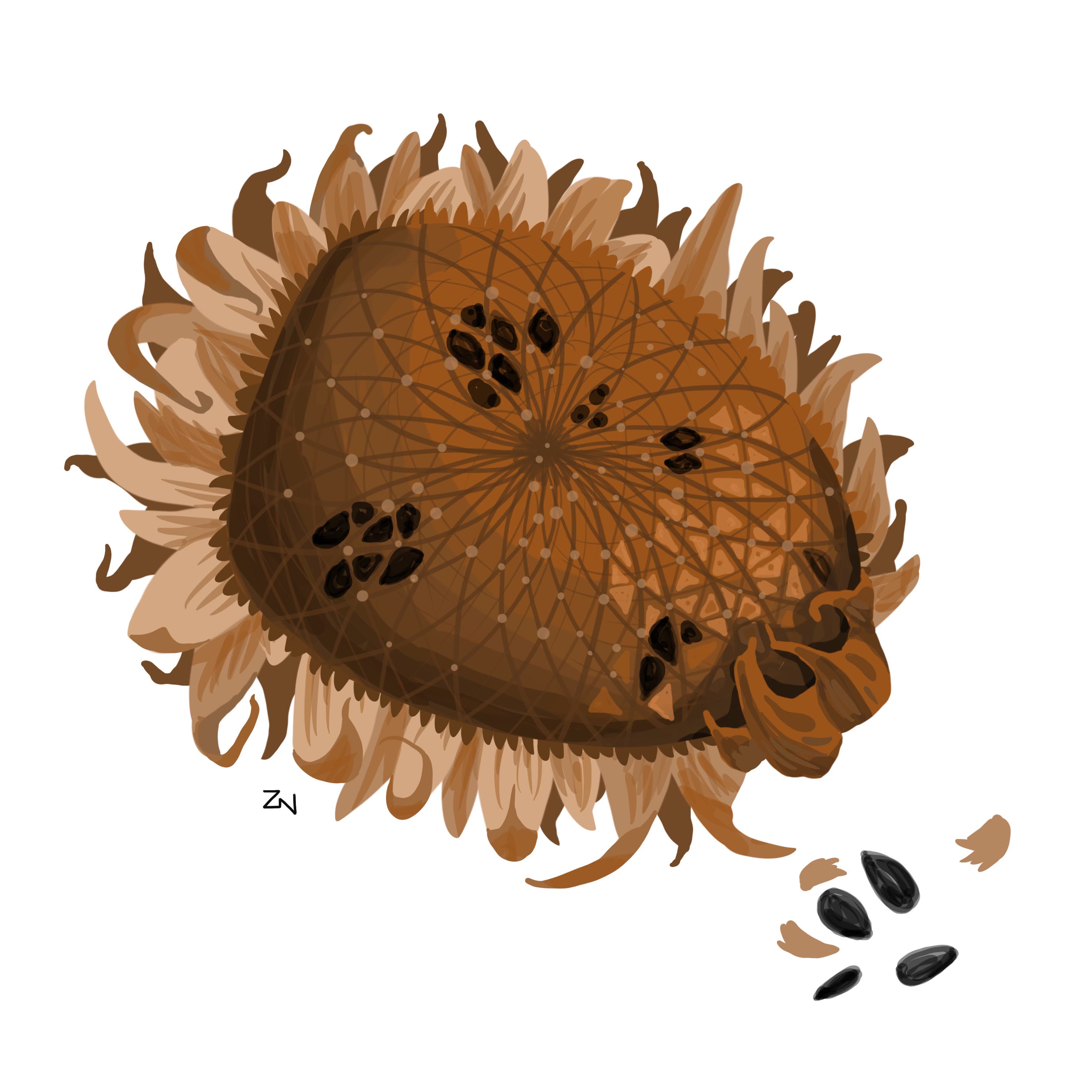
When it comes to saving seed from my edible crops, there’s a further reason why I do this. I find that those seeds germinate quicker, and the crops generally grow better. I learned this after saving and growing my own chilli seeds over a number of years, and I developed a theory that they had genetically adapted to my plot, which I now understand to be true. They have a head start because they already know this soil, this range of bacteria and fungi, the atmosphere and conditions such as temperature, light and shade, wind direction, protection from surrounding trees and buildings, what pests or pathogens they may have to contend with, and they instinctively recognise the sound of my soothing voice … okay, I’m kidding, but I wish this were true like the fig tree in Elif Shafak’s The Island of Missing Trees. They’re like the 3rd or 4th year students returning to a familiar college at the start of a new year, and are brimming with self-assured confidence, knowing exactly what’s what, and who’s who. Newly bought seeds are the freshers who are still trying to figure out where the toilets are.
The only trouble with saving seeds from edible crops is that I often get carried away with harvesting and eating them before remembering to save some for their seed. I completely forget to leave behind a few carrots or those last couple of leeks. Most vegetables are biennial and won’t flower to produce seed until the following year, so you have to be strict in remembering to leave a few in place, but often the desire, not only to eat the crops, but also to clear the beds ready for the next round of planting, kind of takes over. But when I am organised enough, or perhaps not so organised enough in my harvesting / clearing up to leave a few plants behind, I am rewarded with seed heads.
Some seeds of course are already within the harvested crops, such as legumes and fruiting crops, making those very easy to save. Curcubits such as squashes, courgettes and cucumbers are tricky because they cross pollinate freely and you never know what you might get. There are ways around this with hand pollinating and placing bags over the flower, but I’m definitely not that organised, and I also like to change the varieties I grow from year to year, but maybe I’ll try it at some point.
And then of course, some edible crops self-seed as freely as they do in the flower garden, if their seeds (by whatever means) make it back into the ground. Sometimes this happens when a crop such as spinach or lettuce has gone to seed and the wind does its own bit of guerilla gardening behind my back before I get a chance to swipe the seedheads. Sometimes it happens when a fruit such as a tomato has over ripened, split and fallen to the ground – okay, let me be honest here, on my plot this is never just the odd tomato, it’s usually an entire bed. At the beginning of the tomato harvest season, every sacred ripe tomato is picked and eaten like it’s the fruit of the heavens, but by the time we get to late autumn (around now in fact) I’ve had enough of them, my pantry and freezer has enough of them, even the neighbours have had enough of them, so they become slug fodder and the seeds are left to fall to the ground. I actually don’t think I’ll need to sow any come spring, I’ll just let the ‘volunteers’ (as we tend to call self-seeders on allotments) do the work for me. Most of this years crop were volunteers from last year, and they grew perfectly fine. Also, sometimes self-seeders make their journey through my homemade compost - yay more tomatoes!
The saving of seeds is something I hope I (like my late mum) will do until my dying day. Because there is something fiercely optimistic about storing a collection of seeds. If the rest of the world goes tits-up, as long as I have a bit of dirt and a handful of seeds to be able to grow something, surely all will be okay. The mad scramble for veg seeds during the pandemic made me appreciate my own collection all the more, but also wish that I’d saved way more so that I could share more. So please save some seed, just because - well you never know when you might need them.
If you’d like to support my work you can buy me a coffee here which will be very much appreciated. I also have a shop on Etsy called Zoe’s Garden Prints that you might like to mooch through, or you can share this post. Thanks.
No posts
Comments
Nothing yet. Say the first thing.
Sign in to join the conversation.