
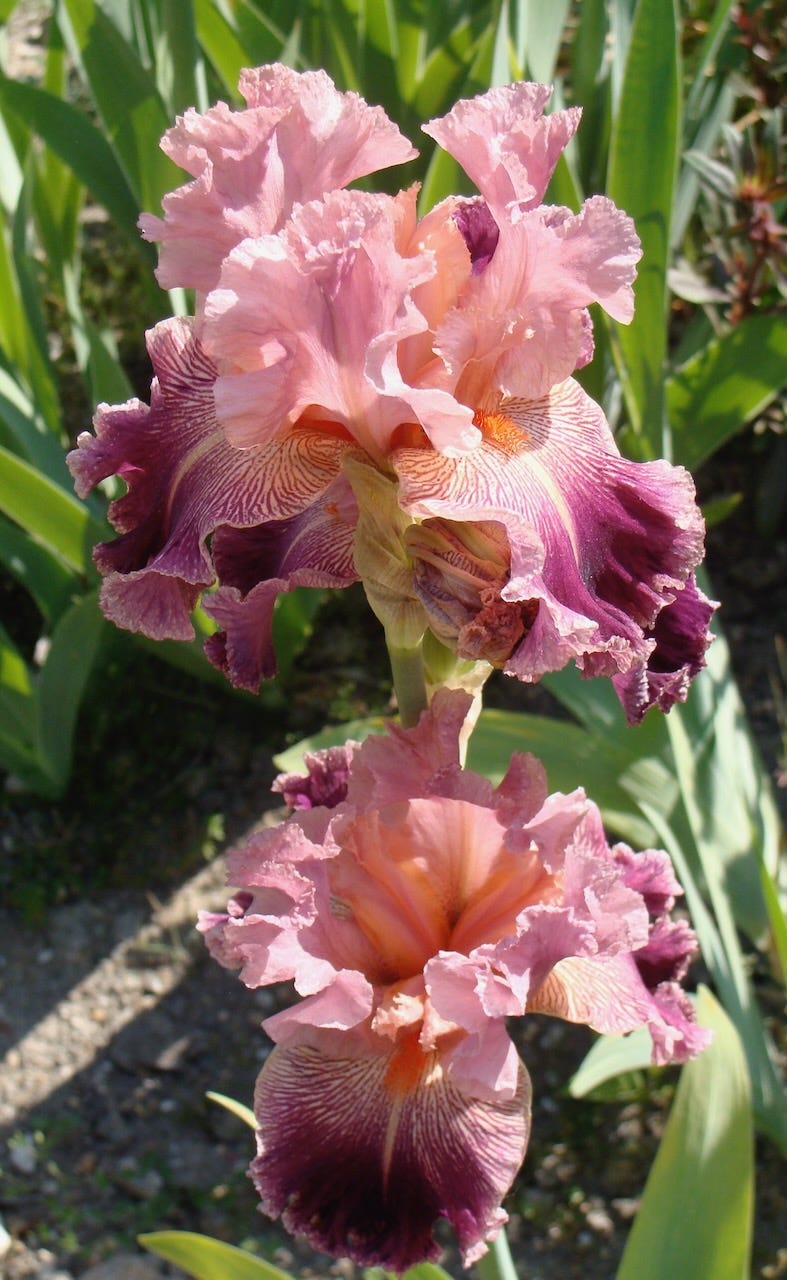
Bearded irises, those widely planted, prolific bloomers of late spring and early summer, are a staple of backyards throughout our area. But now that their colorful show has concluded for 2026, what should you be doing to ensure that they will put on another dazzling display next year? In many cases, the answer is usually “nothing”, but there is one big exception: if the blooms were smaller than usual, that iris may be crowding itself out.
Now through October is a good time for choosing, dividing and replanting bearded iris rhizomes. But don’t be too quick or indiscriminate with the knife when separating crowded irises. According to iris hybridizers, iris rhizomes only need to be separated and transplanted once every three years. And it’s important not to cut the leaves off irises after they bloom. It’s the leaves that provide nourishment for next year’s bloom.
A single rhizome produces new rhizome offshoots many times over the years, developing into a heavy crisscross clump, often choked with old, leafless rhizomes. Eventually the mass of leaves will exclude sun and air from the roots. This will lead to poor flowering and often weakens the plants, making them more susceptible to insects and diseases.
Dig up the entire clump with a garden fork and lift it from the soil. Separate the rhizomes with a knife or by gently pulling them apart. Retain the younger, healthiest three- to four-inch-long rhizomes containing five leaves. Discard the plants that have a bloom stalk as well as those that are leafless, soft, or old.
After the Paywall:
How to trim the lifted iris rhizomes.
Which iris rhizomes are worth replanting?
How-To Pictures
Preferred planting site and planting depth
More iris pictures!
Comments
Nothing yet. Say the first thing.
Sign in to join the conversation.