
I’m writing this on International Beer Day (or so my Dad told me – I haven’t checked), bottle in hand, mid-lunch. I was browsing films that won Oscars over the past 16 years and caught myself thinking that I don’t want to break down most of them. To be fair, some I had already analyzed before, and some I still haven’t seen. So this says more about me than the films.
Anyway. 16th page in, I stumbled across a film I hold dear to my heart, and one I consider perhaps among the best in the history of cinema (and it’s not the Czech lager speaking) – The Social Network.
Below is the sequence I’ll be looking at today.
For those of you who love to read:
The film is coming to a crescendo, the betrayal of Eduardo Saverin (Andrew Garfield) is just around the corner. We’ve been waiting for it the entire movie… and here it comes.
Eduardo is presented with some papers to sign. His face changes.
The employee continues to explain, yet we don’t hear him say a thing, watching him and Eduardo from behind the glass.
Eduardo marches out of the glass office straight to Mark Zuckerberg (Jesse Eisenberg).
SEAN: He’s wired in.
EDUARDO: Sorry?
SEAN: He’s wired in.
EDUARDO: Is he?
SEAN: Yes.
SMASH! Mark’s laptop is in pieces. Sean quietly calls for security.
Eduardo confronts Mark about issuing 24 million new shares.
CUT TO the lawyer’s office where the meeting has been taking place throughout the film.
LAWYER: What was Mr. Zuckerberg’s ownership share diluted down to?
EDUARDO: It wasn’t.
LAWYER: What was Mr. Moskovitz’s ownership share diluted down to?
EDUARDO: It wasn’t.
LAWYER: What was Sean Parker’s ownership share diluted down to?
EDUARDO: It wasn’t.
LAWYER: What was Peter Thiel’s ownership share diluted down to?
EDUARDO: It wasn’t.
LAWYER: And what was your ownership share diluted down to?
EDUARDO: Point-zero-three percent.
BACK TO the Facebook office.
Mark goes on the defensive, trying to explain himself, when Sean Parker takes over as “Mark’s mouthpiece”. Eduardo barely holds it together. Mark remains silent.
Eduardo accuses Mark of letting petty jealousy drive the betrayal and promises to “come back for everything”.
By now, security has arrived.
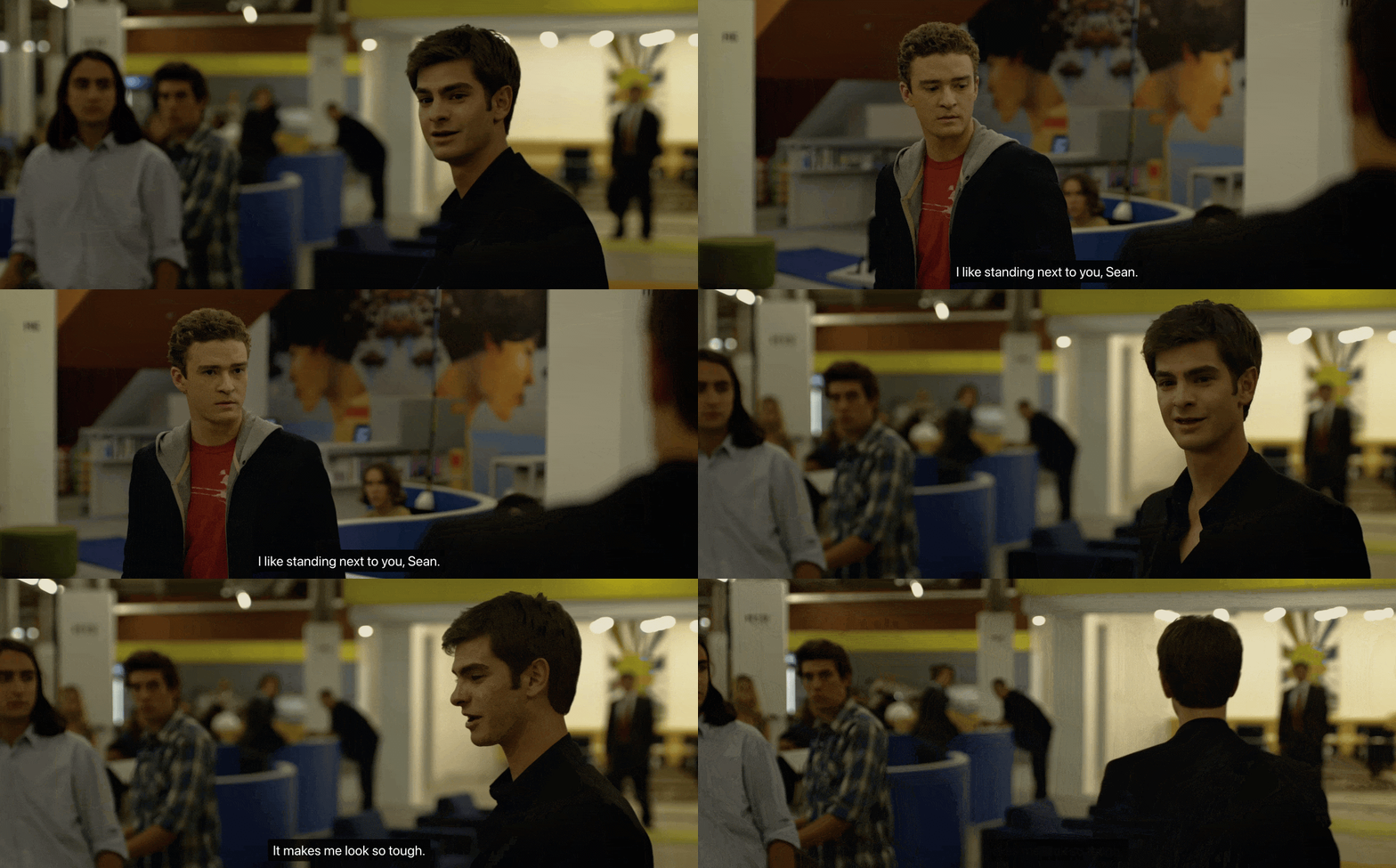
Seemingly getting himself under control, Eduardo heads out. Yet Sean Parker has to have the last word. He tries to humiliate Eduardo, who fakes the intention to punch Sean in the face, scaring him shitless. Exposing him for the coward he is.
EDUARDO: I like standing next to you, Sean. Makes me look so tough.
And off he goes. Like he owns the place, while Sean scrambles trying to save face.
Expressive Suppression & Deserved Comeuppance
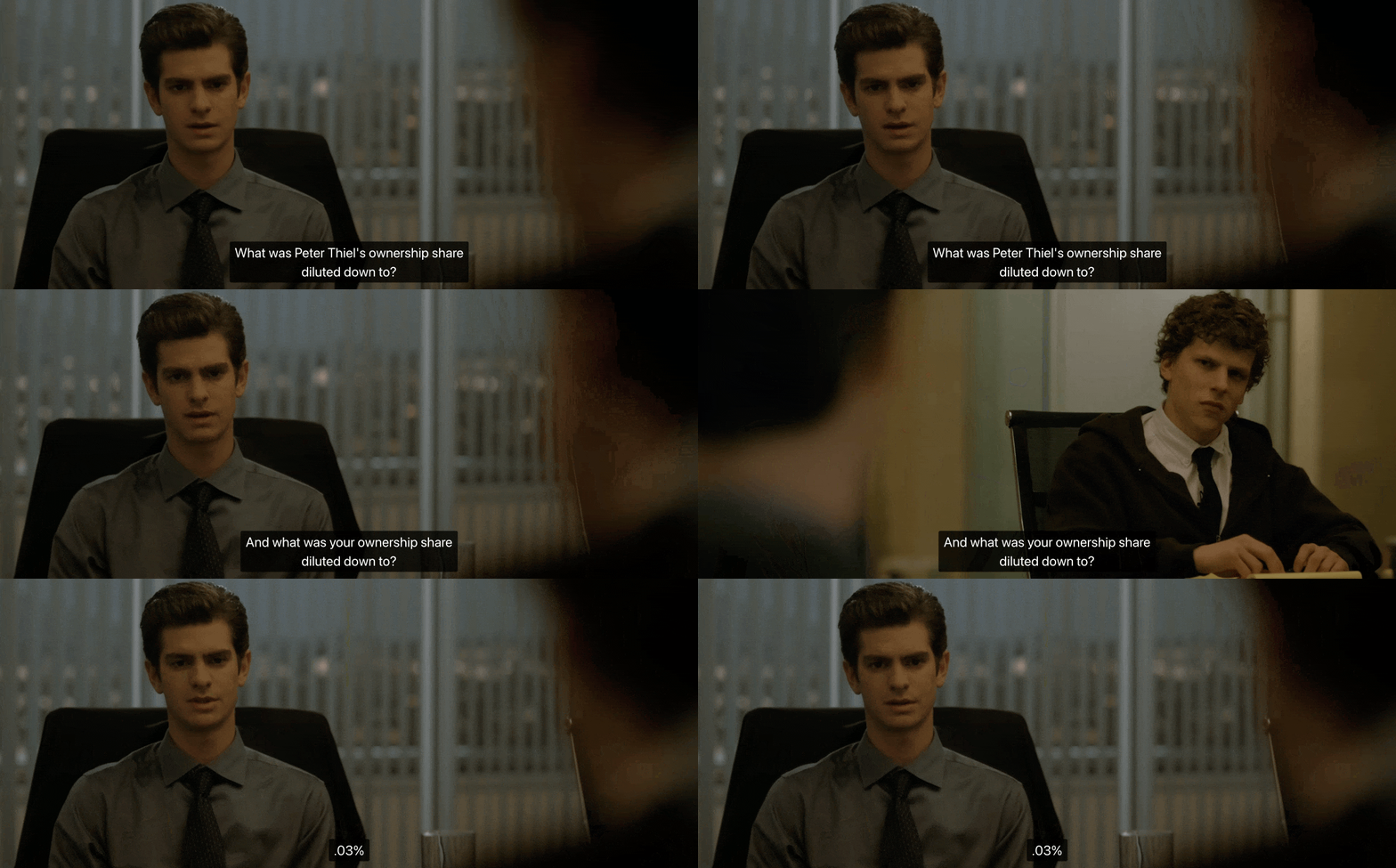
Look at what Eduardo actually does in this sequence. He smashes a laptop, and then he does almost nothing. He gets talked over by Sean Parker, erupts for a split second, and then gets his shit together. In the lawyer’s office he recites the number that seals his fate — point-zero-three percent — and manages to keep his voice level. A man not reacting.
And we’re sitting there with our jaws somewhere near the floor.
James Gross split emotion regulation into two moves. Reappraisal: you change how you’re thinking about the thing before the feeling fully arrives. And expressive suppression: the feeling arrives on schedule and you refuse to let your face host it. Suppression is the expensive one — it doesn’t dial down what you feel, it just clamps how you display it, and it taxes your attention, your memory, your body. Eduardo runs it for us the whole scene.
Now the study that explains why we’re the ones sweating. In 2003, Emily Butler and colleagues sat down pairs of women who’d never met to discuss something upsetting, having quietly instructed one of them to hide her reactions. The suppressor’s partner’s blood pressure went up. The one who’d been told nothing and asked to do nothing. And in the first study the suppressor’s own numbers barely moved — the woman holding it in showed less physiological cost than the woman watching her do it. The pressure doesn’t stay in the pot. It crosses the table.

There’s a catch in that study, and it’s the most important one for writers. Those partners also came away liking the suppressor less — less rapport, less interest in ever seeing her again. Which sounds like it demolishes the point, until you notice what the partners never got: any clue what was being held back. All they met was a woman who seemed flat and unresponsive. Suppression without context doesn’t read as strength. It reads as cold.
Film gets to cheat there. We’ve spent two hours watching Eduardo get frozen out, so we can price every twitch. And the withholding keeps us leaning in on top of that — his face changes behind glass and we don’t get the papers, then twenty-four million shares and still no number, then four flat “it wasn’t”s stacked like a countdown before point-zero-three finally lands. Three gaps opened, none closed early. That’s Loewenstein’s information gap: pose a question in someone’s head and the not-knowing becomes an itch.
(Not the Zeigarnik effect, incidentally — I’ve reached for that one myself. A 2025 meta-analysis pooled 59 studies and found no memory advantage for unfinished tasks whatsoever. What did survive was the pull to return to them. So the open loop works. Just not for the reason everyone cites.)
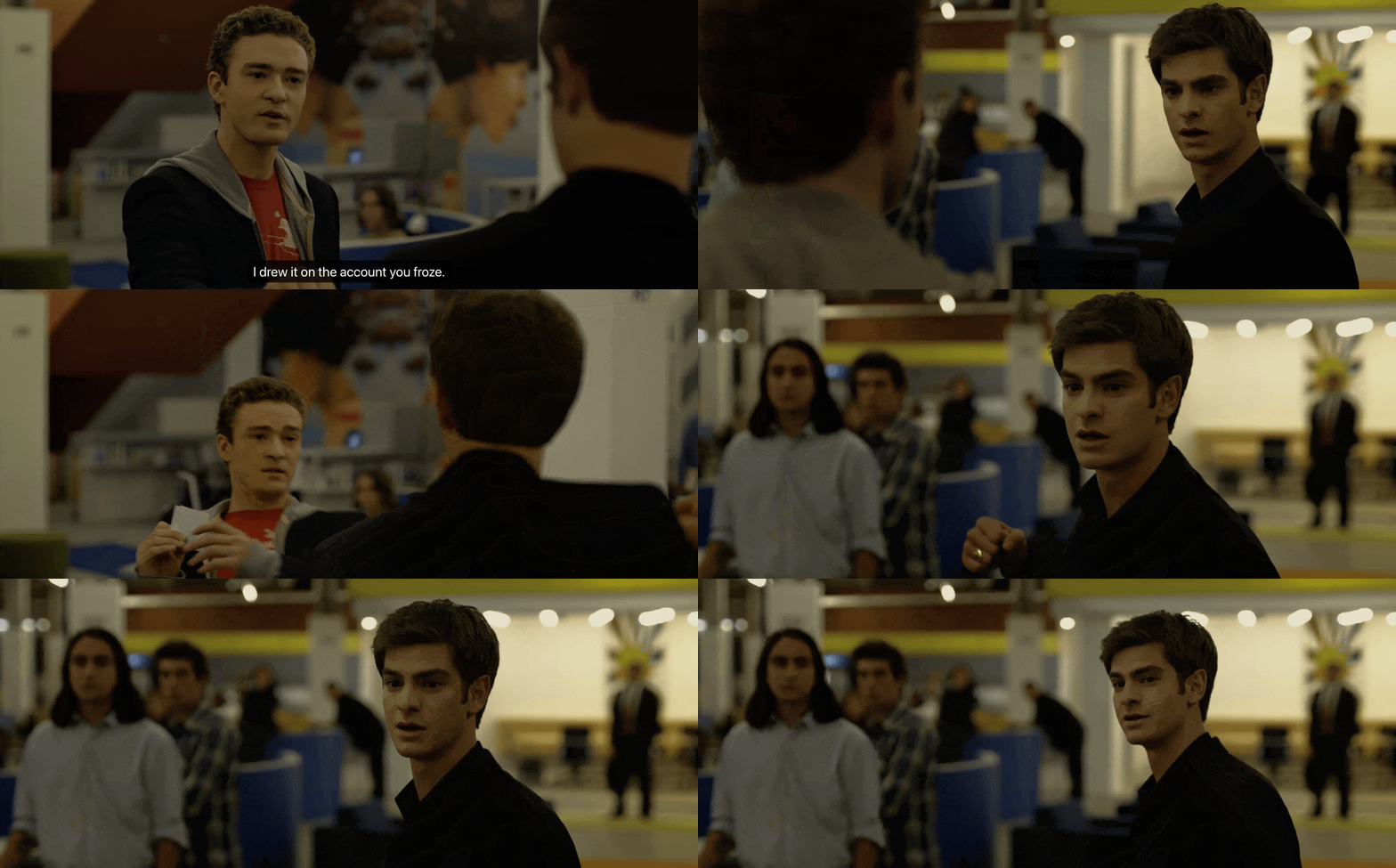
And then the fake punch, which is running on something else.
We keep a moral ledger on everyone on screen. Media psychologists call it affective disposition theory: we judge characters, sort them, and our enjoyment tracks whether the sorting gets honored — good outcomes for the ones we’ve approved, bad ones for the ones we haven’t. Sean Parker has spent the entire film filling in his side of that ledger.
The research on schadenfreude (pleasure at deserved misfortune) is unusually specific about when it fires. It’s strongest when the target is responsible for his own downfall, and when that downfall reads as deserved rather than merely unlucky (van Dijk, Ouwerkerk et al.). Sean qualifies on both counts, and has done since the moment he opened his mouth.
But the size of the payoff is running on a different rule — and it’s the one writers routinely get wrong. It’s not Sean’s ledger anymore. It’s Eduardo’s. Sean isn’t punished. He gets one second of fear and a line about how standing next to him makes Eduardo look tough. Nothing of his is broken, except his own image.
Which is precisely why it plays. Had Eduardo connected, we’d have a bleeding man and a hero who assaulted him — and our disposition toward Eduardo takes a hit (even if minuscule) at the exact moment he’s meant to walk out clean. Instead it costs him nothing, the deservedness stays at maximum, and Sean’s cowardice does all the work. What we’re enjoying isn’t damage. It’s the books being balanced.
Psychology Cheat Sheet:
What it is: Expressive Suppression & Deserved Comeuppance — a character we’re aligned with feels everything and shows almost none of it, and the scene pays out not in violence but in one perfectly aimed humiliation.
What it does: Moves the emotional labor off the screen and onto us for the length of the sequence, then settles the moral account in a single gesture that costs the hero nothing.
Why it works (science): Suppression clamps the display without reducing the feeling, and it’s costly to run (Gross). It also travels — in Butler et al.’s experiments the observer’s blood pressure rose too. But those observers liked the suppressor less when they didn’t know what was being withheld, which is the rule: suppression needs context or it just reads as coldness. Then the payoff: we track characters morally and enjoy seeing the ledger settled (affective disposition theory), and pleasure at deserved misfortune is strongest when the target brought it on himself and is seen to deserve it (van Dijk, Ouwerkerk et al.). Keeping the harm small is what protects our disposition toward the hero — which is why a fake punch beats a real one.
Effect on viewers: We feel more than the character shows, we lean in rather than pull back, and we get a payoff that satisfies without asking us to lower our opinion of the man we’ve been rooting for.
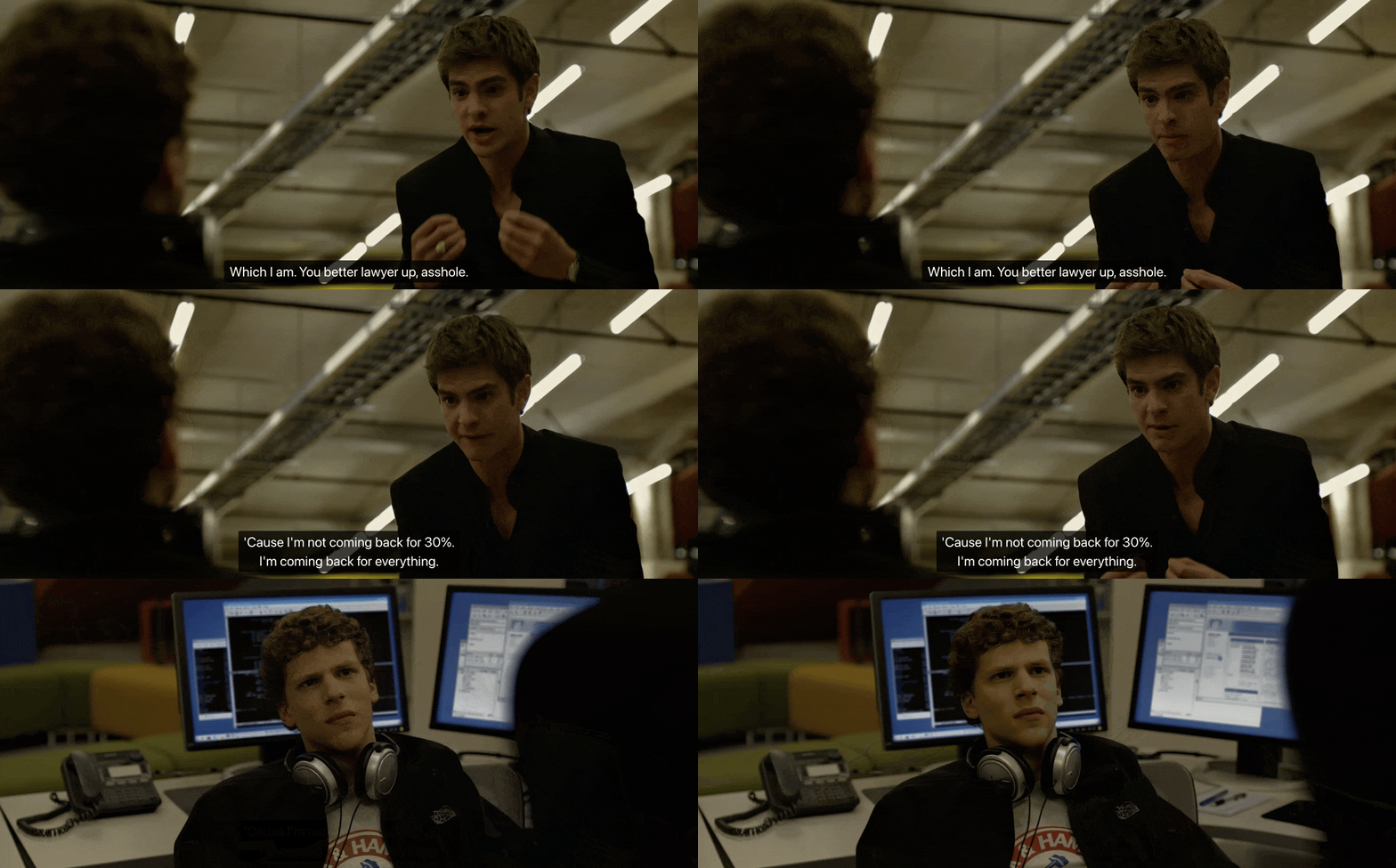
Expressive suppression has many names in writing. I know it as “rising above”, but there are others.
The recipe is straightforward:
Take a character we’re emotionally connected to. Place them in a high-stakes conflict that generates an emotional response. Have them do their best to suppress (”rise above”) their emotions.
The trick here is to find a strong circumstance that would prevent them from erupting. A social circumstance is often a good one – like in The Social Network. Eduardo might have punched Mark if they’d been alone, but he’s in the office. People watching, security coming. He has to behave. The best he can. And it’s really difficult.
A separate example. Imagine your character gets bad news – a close relative died. Where is your character more likely to cry their eyes out? Alone in their car? Or at a very important presentation they have to lead? We know the answer. But note this: the character’s grief doesn’t change. Their attempted behavior does – and that’s what we want.
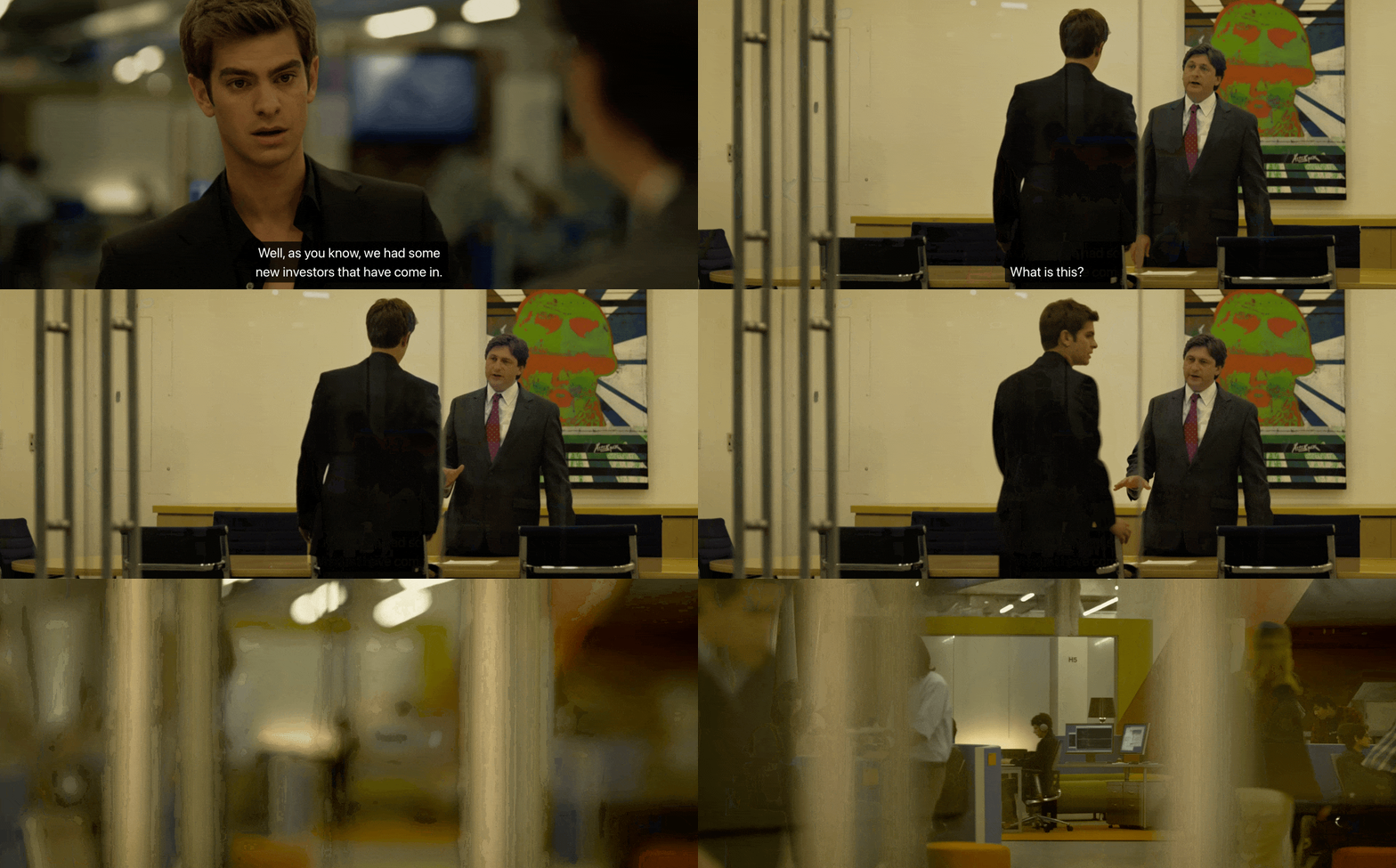
Simplest technique, but soooooo powerful. So powerful you can structure an entire feature film around it. Knives Out, anyone?
Have one scene (or beat in the scene) ask a question, and keep it hanging. Don’t answer it straightaway. RESIST THE URGE. When you do answer it, either don’t provide all the information at once, or have a new question hanging already.
That string of question-answers will become like a well-stitched quilt. Just don’t forget that the question must be emotionally charged for the audience.
A character who gets into a cab at the end of the scene without any context (question: where is he going?) is not interesting. Who cares. Now take a character who is about to decide whether to go after the love of his life or give up and go home. He gets into a cab, opens his mouth to call out the address — and we CUT. Or better, we leave it there as the episode’s cliffhanger. That one is interesting.
Retribution. If your theme allows for it, of course.
There’s a reason why Hollywood loves happy endings, and it’s not just the potential for sequels… I hope. Well, if I’m right, it’s also because seeing the villain get what they deserve feels good.
Create a character whose behavior or moral principles the audience would judge negatively. Often that would be your antagonist, but there are options.
Then have that character be bested by your hero, BUT with only small harm done. No gore, ladies and gentlemen. That’s the key to retribution while keeping your hero unstained. If you do want to kill your villain but still keep your hero clean emotionally-speaking, make the villain an architect of their own destruction.
Or just kill them. But don’t come back here complaining.
The Social Network is a tremendous film. My deepest respect to Fincher and Sorkin and all involved.
That said, I don’t expect anything good (say interesting) from the follow-up. Some stories don't need updates, because the news can change, but human behavior doesn't. And for all Sorkin's gifts as a screenwriter, his directing is mediocre at best.
Here. I said it. And I truly respect the man.
Fun fact: he married two of my classmates at AFI.
Are you excited for the follow-up? Where do you place The Social Network among Fincher's and Sorkin's films? Comment below or reply to this email.
Liked the breakdown? Don’t be a Zuck, share it.

Until next time.
Comments
Nothing yet. Say the first thing.
Sign in to join the conversation.