
We’ve been warned.
A prophet spoke 35 years ago.
AI will be the end of the human race.
But don’t worry.
“We’ll be back.”
It’s the Terminator 2’s 35th anniversary.
Do you really need me to say more?
I’ll, of course, re-tell the scene, but I highly recommend spending a few minutes watching it yourself.
If by some ill turn of fate, your internet sucks (or is blocked by the government, for all of you my homies), here’s what happens.
We've just heard the prologue, voiced by Sarah Connor: in the near future, the war with the machines almost wiped out humanity. But there’s still hope by the name of John Connor, her son. And so the Terminator was sent back in time to wipe him out.
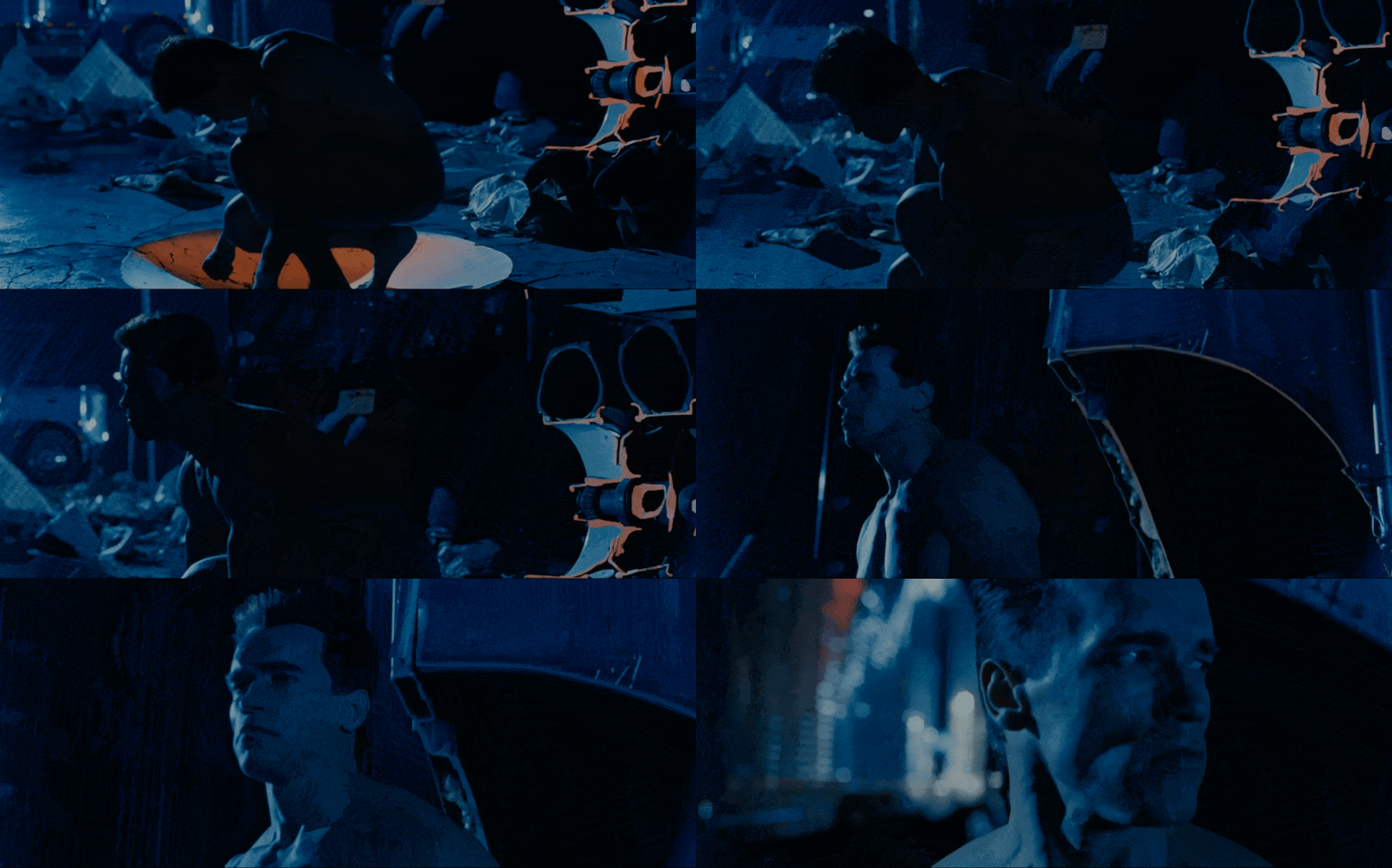
Enter the Terminator. Naked, of course. Cause objectifying Arnie is great fun.
The local dive bar’s stunned. Aroused in all the ways human psychology allows.
Arnie is “assessing fit” as we examine the regulars through his own eyes.
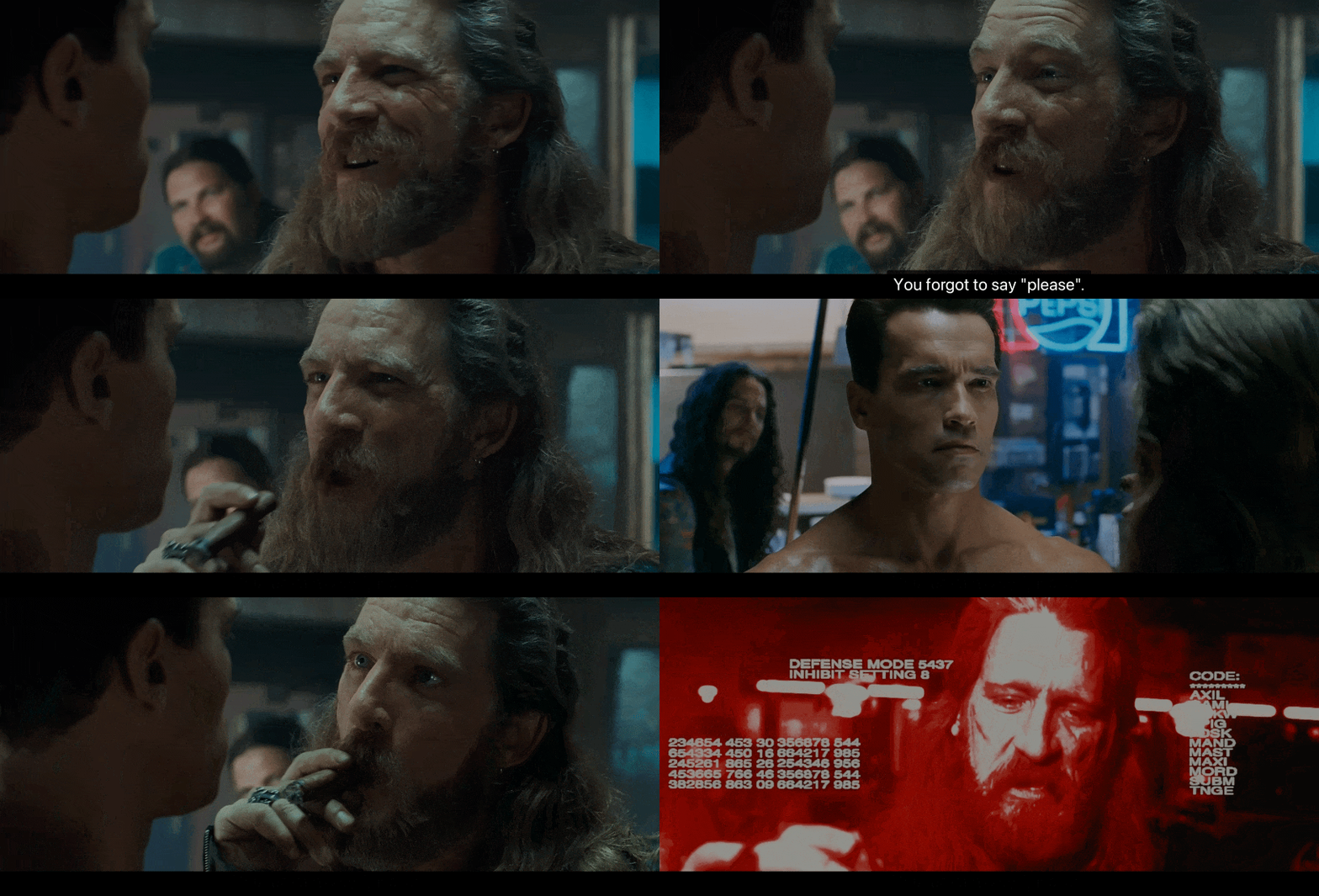
T-800: I need your clothes, your boots, and your motorcycle.
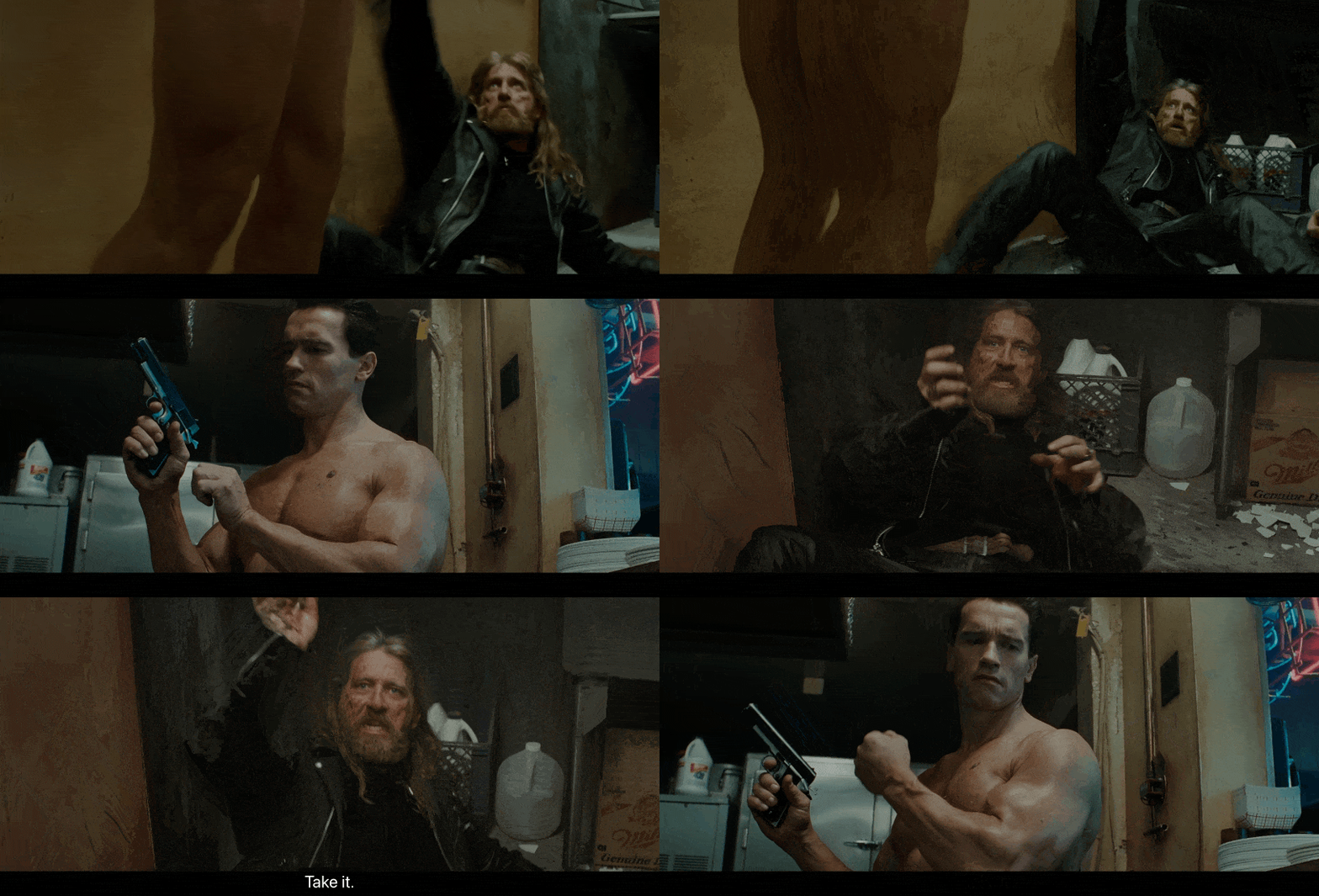
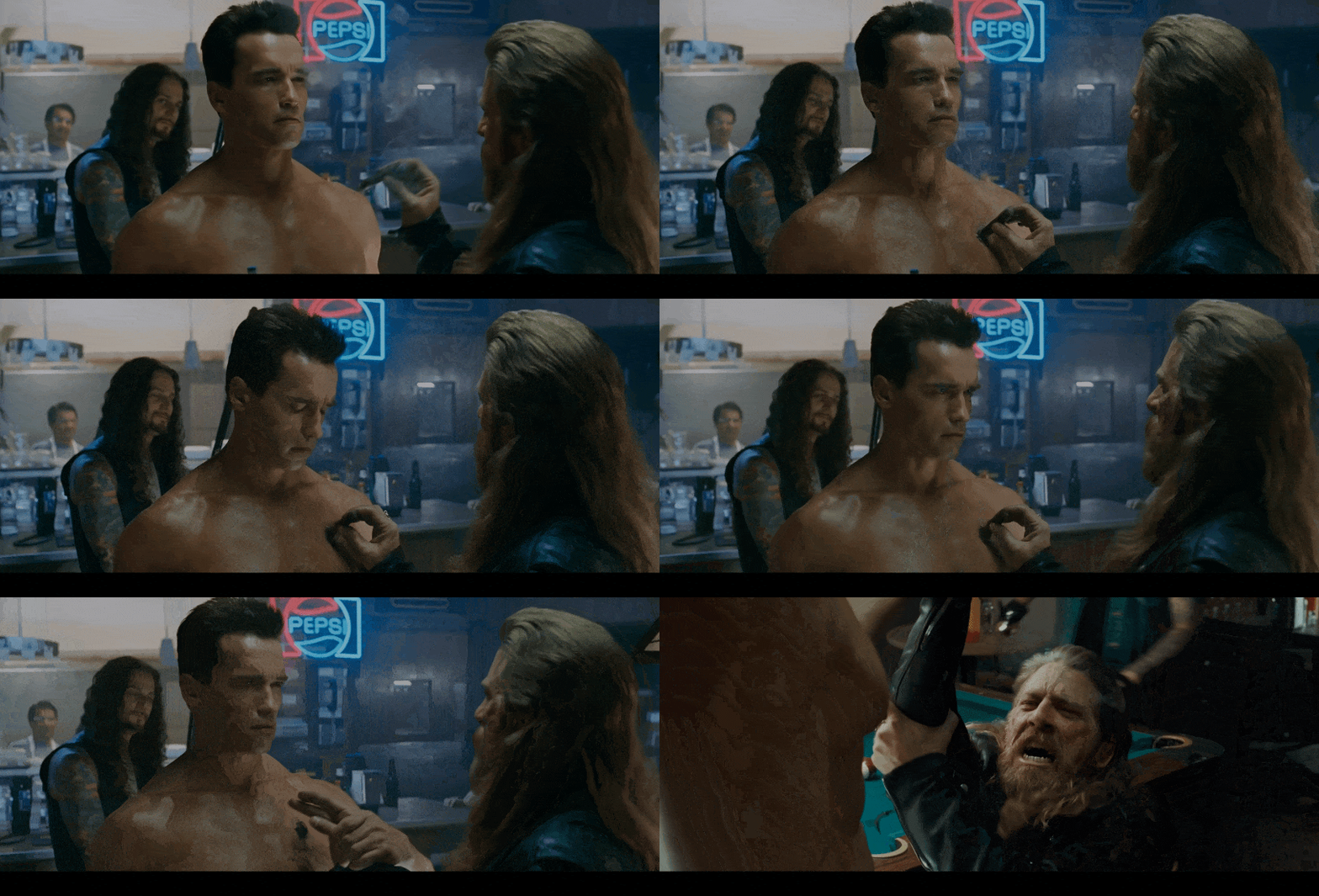
The bar erupts in laughter. The mean-looking guy (whose clothes fit Arnie perfectly) laughs and stubs his cigar out against Arnie’s giant pec. T-800 doesn’t flinch.
CRACK, goes the guy’s wrist.
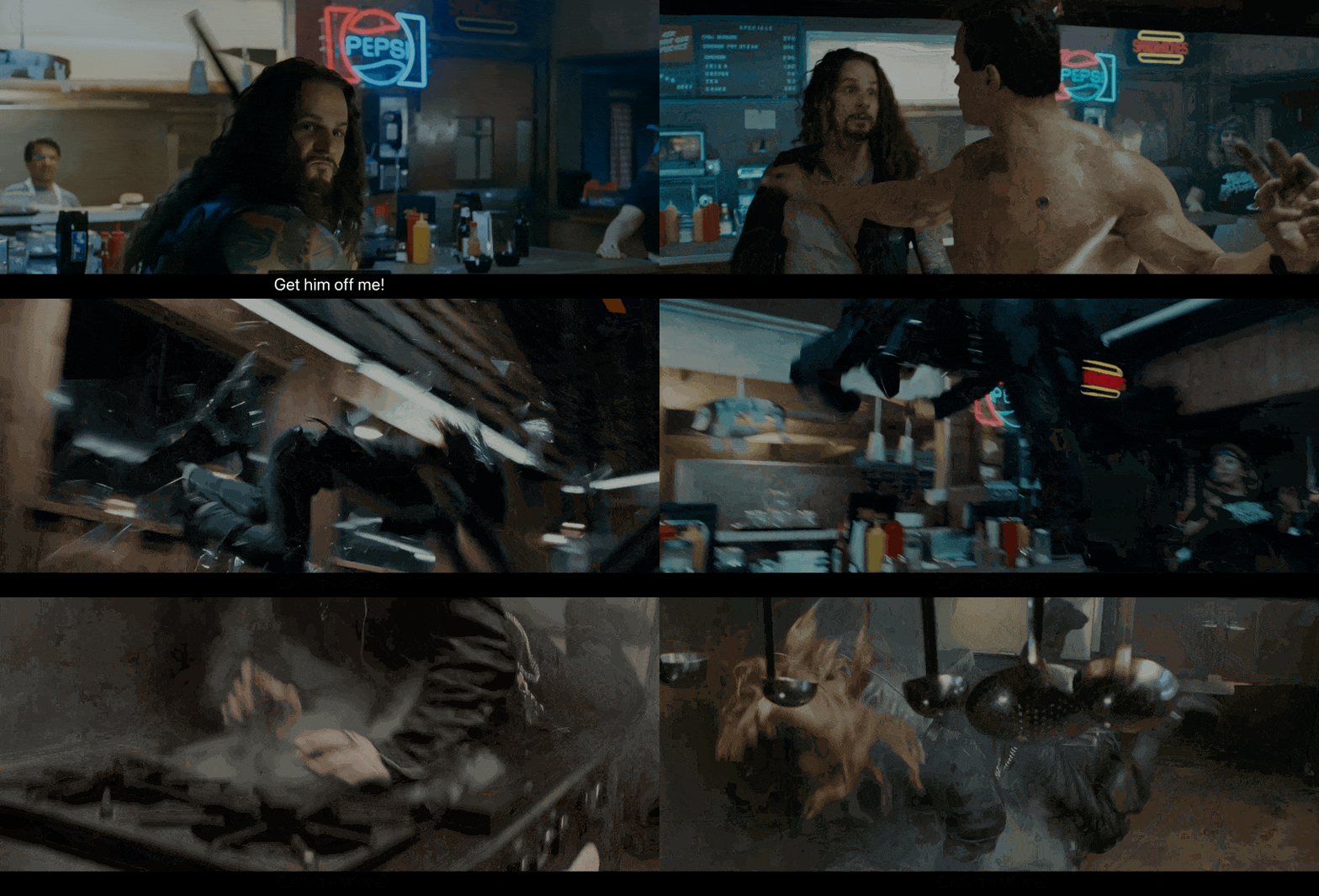
A pool cue smashes against Arnie’s head, and, a second later, the unfortunate pool player flies out the window as his cigar-buddy lands on a hot plancha grill in the kitchen.
The attacker with a knife gets a similar fate, ending up with his own knife nailing him to the pool table.
Scrambling on the kitchen floor and badly burned, the cigar-man tries to pull out a gun, but is easily disarmed by Arnie. Begging for mercy, he throws him the keys from his bike.
CUT and we’re outside. Arnie’s got his new clothes and a ride.
BANG. The bartender’s out with a repeater. First shot up in the air as a warning.
BARTENDER: I can’t let you take the man’s wheels, son. Now get off before I put you down.
Arnie gets off the motorcycle. Walks up to the barrel. And snatches the gun in one motion. Presses on to the scared bartender only to… fish some sunglasses out of his breast pocket.
It’s night by the way.
But Arnie doesn’t care. Cause he’s “Bad to the Bone”.
And why the claim that the marketing made it worse doesn’t hold up scientifically.
Quick disclaimer if you weren’t paying attention 35 years ago. Or weren’t born, just like me. In the first Terminator, Arnie was a bad guy. The second film could’ve played on that and created a reveal - you thought he was bad, but he’s a good guy now. Arguably, that’s what the script had in mind. But the marketing (led by Cameron himself, btw) openly revealed, in the trailers, that Arnie is good.
A lot of people argue that it ruined the film. Well, maybe not ruined, but made it worse.
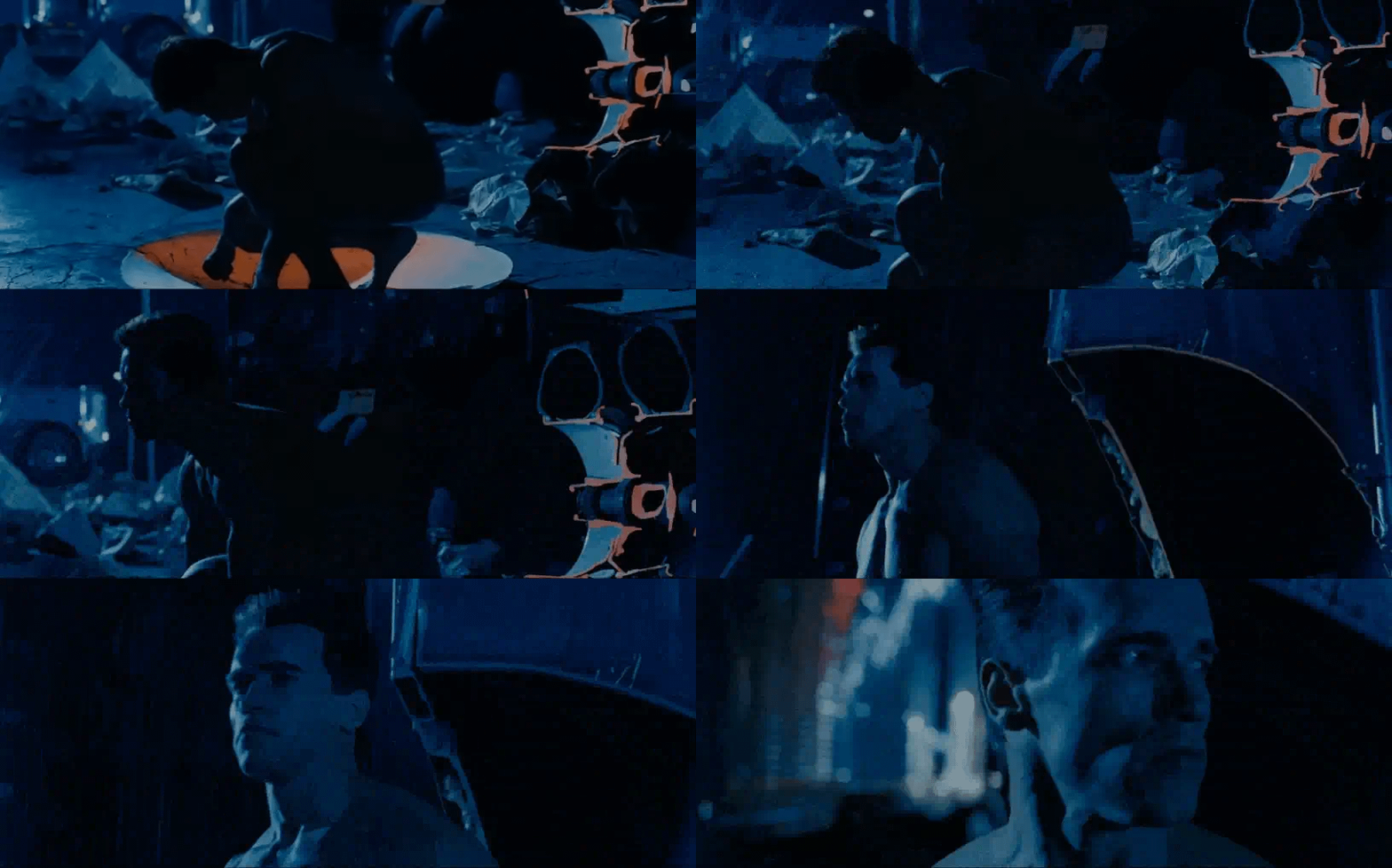
A naked man walks into a bar and puts a few people in hospital. That’s not necessarily funny. We’re grinning because the film has parked us in two seats at once, and neither one is in that bar.
Seat one is the god seat (hence, the “omniscient” above).
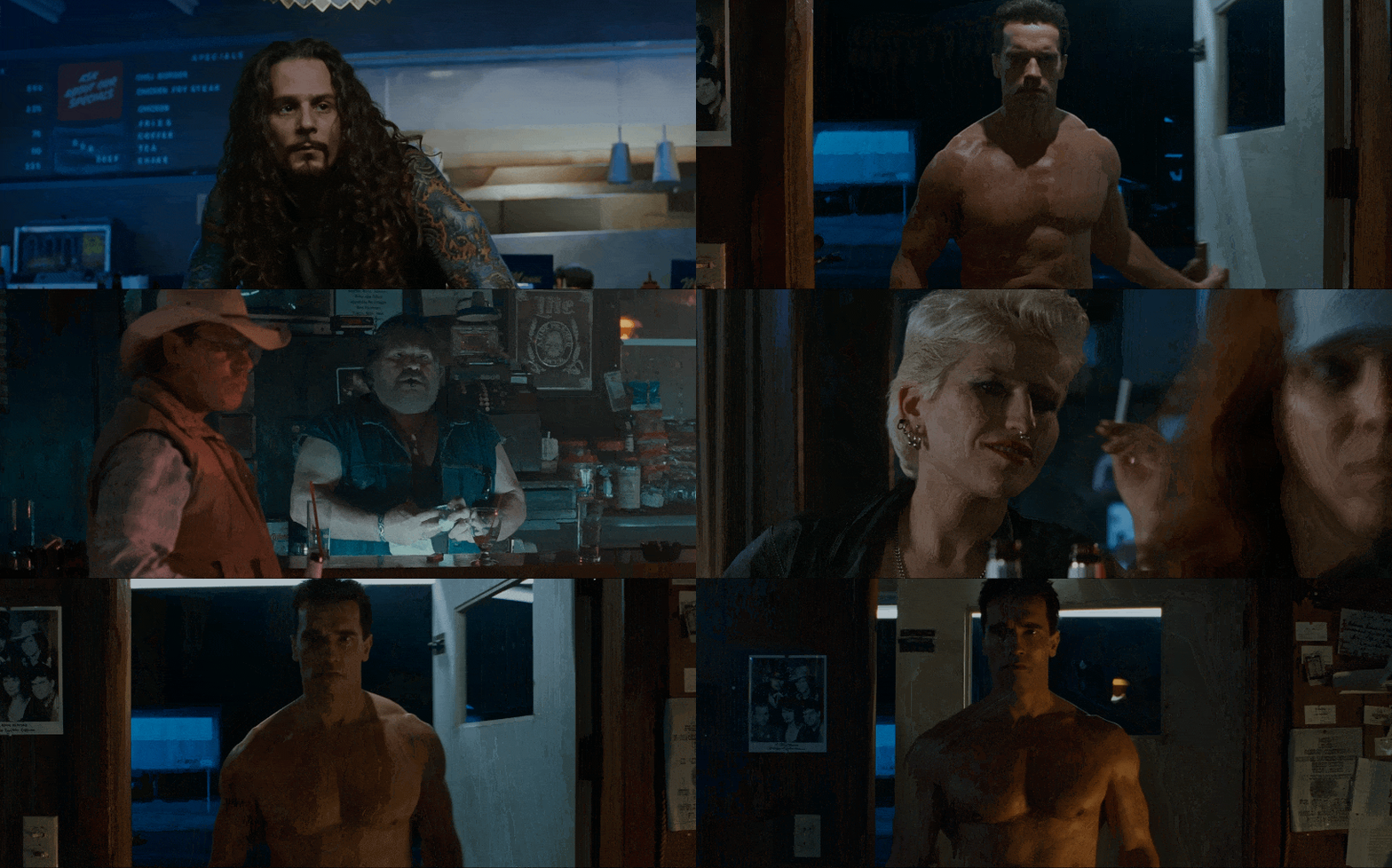
We know what’s standing in the doorway. The regulars see a weirdo-bodybuilder with a dream of becoming the Governor of California. We see a death-machine sent back to protect a child, no matter what. Same naked man, two completely different rooms.
Holding both rooms in your head at once is something you do constantly and for free — running a model of what someone else knows alongside what you know, and keeping the two from contaminating each other. It’s the basis of lying, surprise parties, and most of drama.
But the gap on its own doesn’t tell you how to feel. Run the identical structure in a horror film (we know what’s behind the door, character doesn’t) and it’s unbearable. Here it’s a party. The difference is the verdict we’ve already filed on the man currently stubbing a cigar out on Arnie’s chest. We sort characters morally and our feelings follow the sorting. Which is why this bar isn’t full of victims. It’s full of candidates.
Seat two is inside the machine.
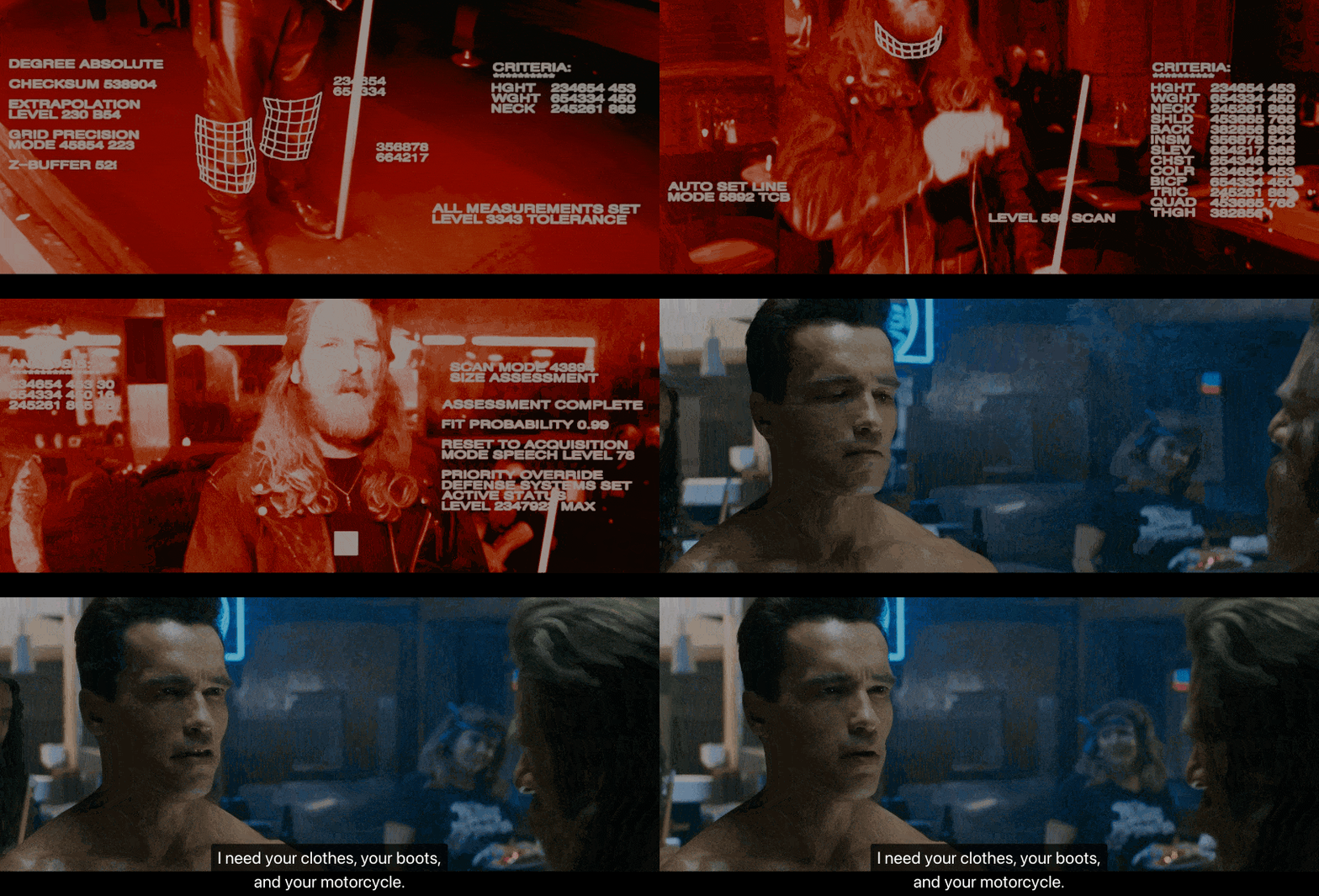
The film keeps cutting to what the T-800 sees, and that shift does more than show us a cool graphic. Brunyé and colleagues at Tufts tested this on the page. Give a reader a sentence using you or I and they mentally simulate the event from inside the actor’s body. Swap in he and they simulate the same event from outside, watching. The pronoun moves where the reader is standing. And a simple POV shot does as well, albeit in a much more subdued way.
So the switch does its job. We genuinely get relocated into the machine’s mind.
Red wash, scrolling text, ASSESSING FIT.
Gray, Gray and Wegner ran a survey with a simple setup. They showed people two characters — a baby and a dog, a robot and a dead man, and other pairs, and asked which of the two is more capable of one specific thing like feeling hungry, making plans, feeling pain, exercising self-control, etc.
Then they looked at how the answers clustered. And they didn’t pile up into a single “how much mind is in there” score, which is what you’d expect. They split clean in two. Agency — planning, self-control, memory, thought. And Experience — hunger, fear, pain, pride, joy. Two separate dials, and a thing can run high on one and empty on the other. Machines land midway on agency and almost nothing on experience.
And the dials do different moral work. Roughly: agency governs who we hold responsible, experience governs who we think can be wronged. So something running full agency with the experience dial at zero is a perfect perpetrator and an impossible victim. Which is exactly why the bar fight is fun in both directions — we don’t wince when the pool cue comes down on Arnie’s skull, because there’s nobody in there to hurt, and we’re not appalled when he snaps a wrist, because we’ve already watched him do the arithmetic.
Then there’s the version of this scene we never got to see.
Everyone walked into that cinema knowing Arnie was the good guy this time, because the trailers said so. So did marketing cost us the fun?
The research genuinely can’t say. Leavitt and Christenfeld at UC San Diego spoiled short stories by Chekhov, Dahl and Carver for readers, and the spoiled versions came back rated more enjoyable. That’s never been independently reproduced, though. Plenty of studies since have tried — some found no difference at all, some found spoilers made things worse. Decades of work, and the field still can’t tell you whether knowing hurts or helps.
So we genuinely don’t know.
Plus, what the trailers gave away wasn’t a plot point. It was a disposition — whose side he’s on. And disposition isn’t one fact among many. It’s the setting that decides what every other moment in the film feels like. “He dies at the end” removes a single uncertainty. “He’s on our side” retunes the whole machine.
The proof is sitting in the first film. Terminator 1 used the identical device: same red wash, same readouts, same cold arithmetic, and it played as pure dread. Nothing about the technique changed in seven years. Only our verdict on whatever was behind the eyes.
Unspoiled, that bar scene is a horror sequence with jokes in it: we’re locked inside a killer’s targeting system with no idea yet whether we’re supposed to want any of this. Spoiled, it’s a power fantasy with a soundtrack.
Marketing didn’t blunt the scene. It picked which of the two films you bought a ticket for. Did they have a right to make that decision? In this particular case – yes, since Cameron led it himself. In other films? Something to think about.
Psychology Cheat Sheet:
What it is: Omniscient Irony & First-Person Access — the scene seats us above the room (we know he’s a machine, the bar doesn’t) while cutting periodically to inside the machine’s eyes.
What it does: Turns a one-sided massacre into comedy, and makes the T-800’s inhumanity something we experience rather than get told.
Why it works (science): We track what others don’t know effortlessly, and the gap creates anticipation — but whether it plays funny or horrifying is set by the moral verdict we’ve already reached on everyone in the room (affective disposition theory). The first-person switches genuinely relocate us: Brunyé et al. found you/I make readers simulate an event from inside the actor’s body, while he keeps them outside watching. And what we find inside is pure agency with zero experience (the two dials we read minds along (Gray, Gray & Wegner)) which makes him a perfect perpetrator and an impossible victim.
Effect on viewers: We’re not frightened, we’re savoring the anticipation. We know what’s coming, we’ve watched him calculate it, and every insult is another fuse being lit.
Discrepancy of information is your best friend. In general we have three main options: the character knows something the audience doesn’t, the character and the audience have the same level of information, and the audience knows more than the character.
Those can be combined and produce different effects:
Character knows more – creates emotional separation. We can’t share the characters experience, but we are intrigued to find out what the character knows. Like watching Sherlock solve a case.
Same level – the closest emotional connection, because the experience is shared. If the character knows he’s entering a killer’s lair (and we do too) we’ll feel our mutual heart rate going up expecting danger from any corner.
Audience knows more – classic dramatic irony. We’re not feeling with the character, we feel FOR the character. Re-imagine the example above. The character walks into a house completely unaware it’s the killer’s lair (but we know it is). Now we’re afraid for their well-being.
Our Arnie scene is a combination of 2 and 3, where we know what Arnie does, but the other characters have no idea of what’s going on. That’s why it’s fun.
All that to say. Always ask yourself what information does the audience and the character have at each particular moment of the script. If you keep track of it, you’ll see multiple opportunities to play with that info.
I’ll keep this short. Different POV’s on the page produce different emotional distance. It’s no coincidence that ads often address you, the viewer, directly. It’s the closest you can get with a narrative POV.
The tip from today: consider moments in your film where a switch from the usual third-person POV, technical term limited third-person POV (we’re watching the main character), can be used for an extra effect, like those above for example.
A shift from your character walking inside a house to a killer hiding somewhere nearby will give the audience the information to set up dramatic irony. Or the classic Hitchcock’s bomb under the table trick (omniscient third-person POV) producing suspense – the characters don’t know the bomb is about to go off (or even exists) , but the audience does.
Same with the first person. It can be jarring for sure, but sometimes that’s what you want. The question to ask yourself is what would the audience feel if I show them this moment through 1st person instead of 3rd per son and why.
On the page we usually write “ARNIE’S POV: the bar is full of disheveled regulars. The text on the screen reads ASSESSING FIT”.
Not the company… I mean it’s important to be aware of the company too, I guess.
Let’s say you’re writing a heist film. Imagine your film’s trailer. It will 100% show the heist, no way around that.
So what’s the point to hold off that info from the audience for the entire first act making it into a reveal? None, really. Yes, the heist needs a setup, sure. But you’d better have something fun going on in those first 20 minutes besides me sitting there waiting for the movie to finally get to the heist setup that I’d been waiting all this time for.
You can use the audiences awareness for your benefit too. Remember Children of Men? Julianne Moore’s character? At the time she was one of the biggest stars out there. Certainly bigger than Clive Owen. And what almost never happens to A listers in movies? They die. The audience doesn’t expect that - they’re not trained for that.
What does Cuaron do? Kills her off in the first act (as we found out above spoilers might not spoil the film. Sorry).
Like the breakdown? Share it.
Do you remember that Sarah Connor was sent to a psych ward for trying to destroy data centers? Yeeeeeeeeah. Some films are truly ahead of their time. And hopefully some are completely fictional…
Question for you. I know the science is not sure about spoilers, but I have a feeling you might have an opinion on those? So. Spoilers? Do they ruin films, or not? Let me know in the comments or by answering this email.
P.S. I’m switching to bi-weekly schedule for the breakdowns. If you wondered where I was last week.

Until next time.
Comments
Nothing yet. Say the first thing.
Sign in to join the conversation.