
It’s been a while (cue tens of you unsubscribing)We’re 6 months into 2026, World Cup is on full display, Arsenal are the Premier League champions after 22 years of waiting (
)…
I had my reasons for absence, but none are good enough to be honest. So I had to make it back with a bang. And what’s more banging than Nazis!?
(for legal purposes it’s a joke people, ok).
Truth is I’m writing this when Obsession and Backrooms are breaking records not just for the horror genre. It felt fitting to break down a very different but perhaps even more effective type of horror.
Oh, yeah. If you haven’t already:
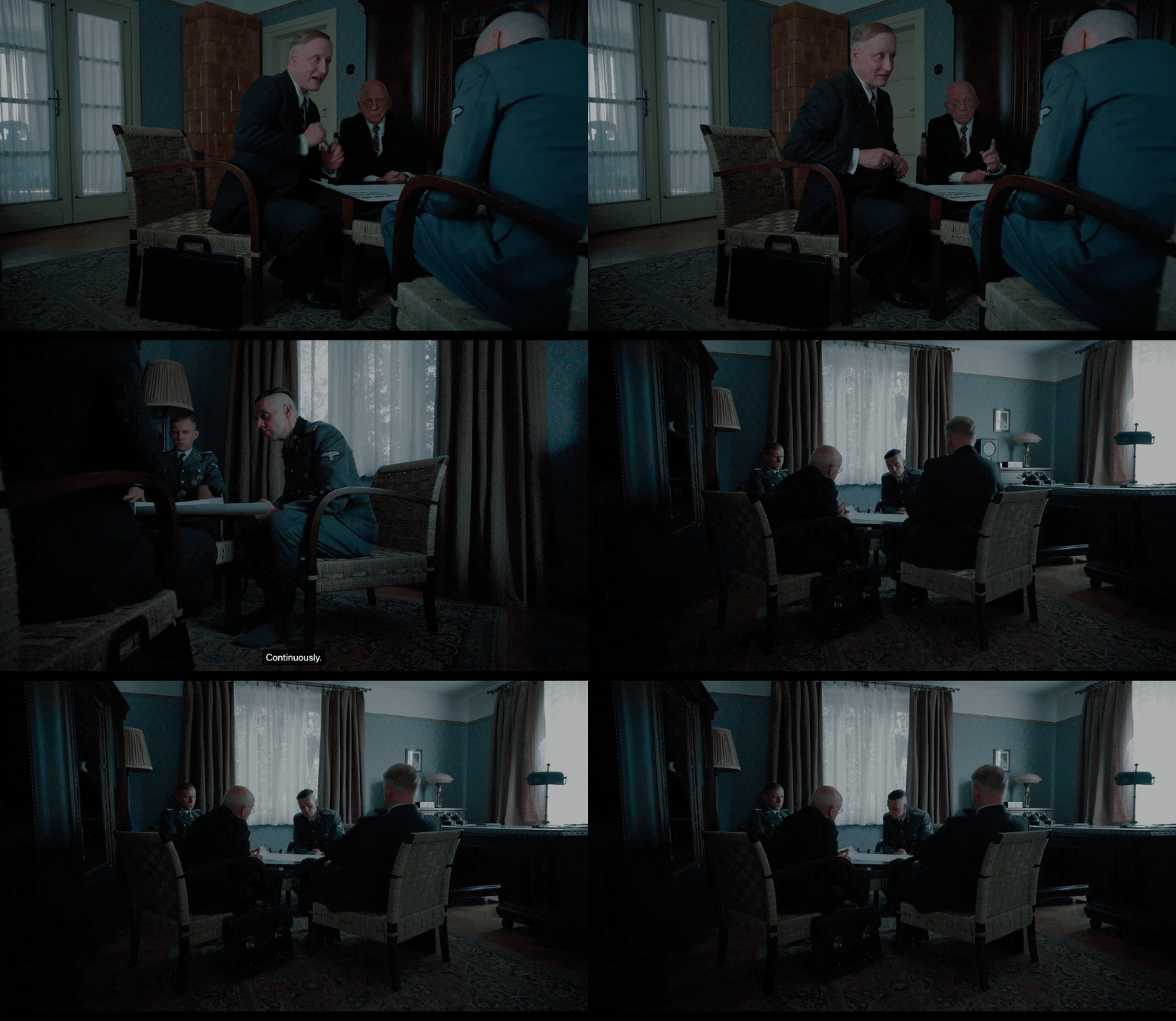
A little bit of context. The movie follows the family life of Rudolf Höss, the commandant of Auschwitz concentration camp that is just one fence away from their lovely villa. In the scene, he’s visited by two engineers who pitch him new and improved technology for the camp.
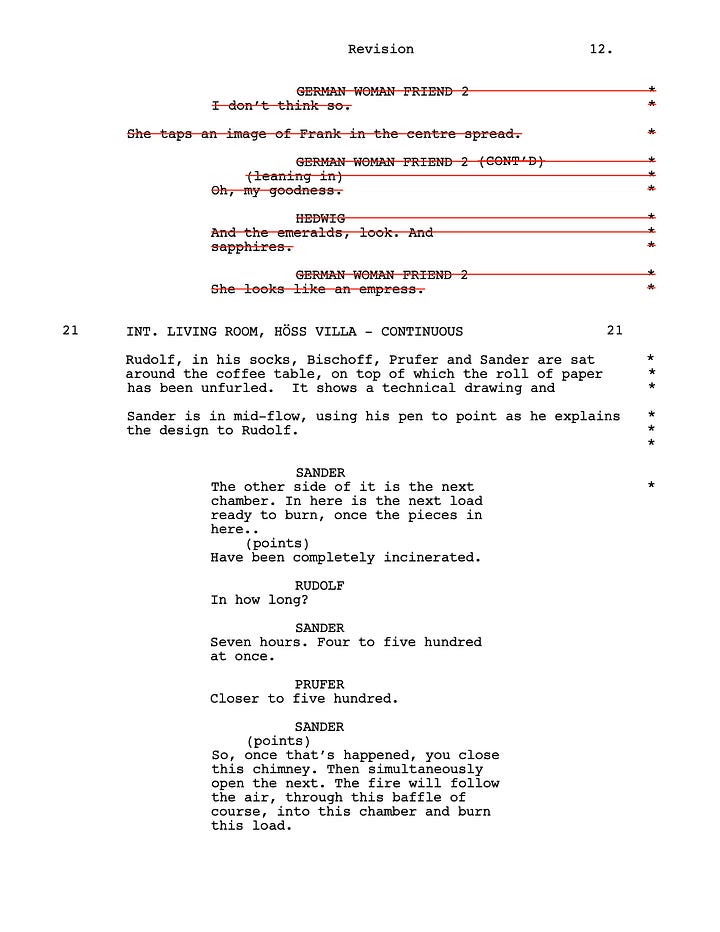
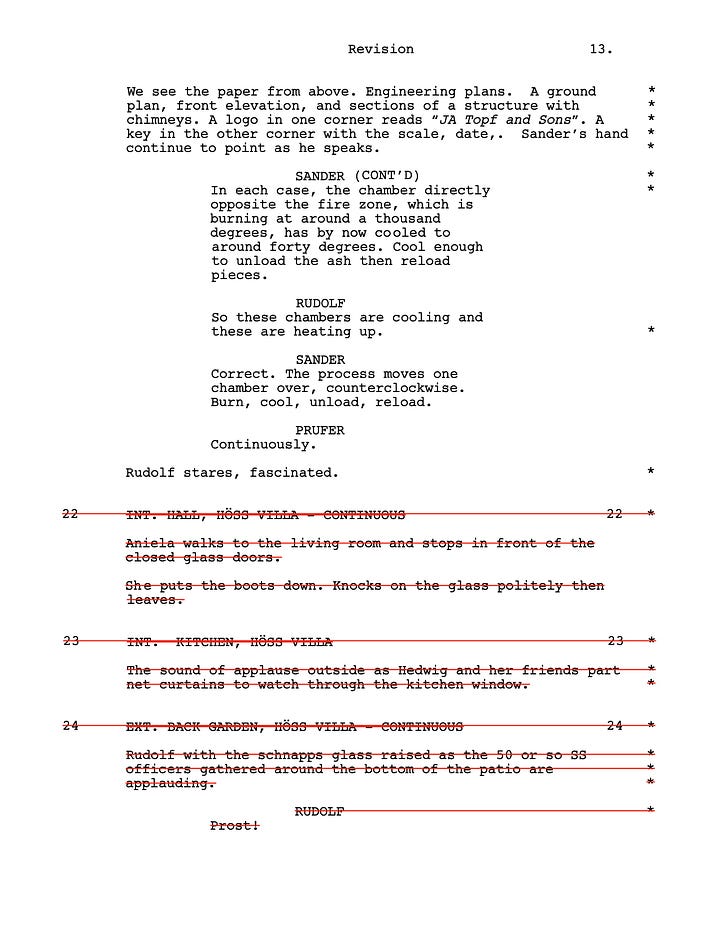
Your classic business meeting scene, isn’t it? So why is it so chilling? And what about relating to the characters, isn’t that supposed to be in play for us to feel something?
Höss and the engineers know exactly what they’re designing. So do you. Nobody in this room is in the dark, which means the usual suspense engine (we know something the character doesn’t) is switched off completely. What’s split is the feeling. Same facts, opposite reaction: Höss is “fascinated,” you’re nauseous. And because you can’t get into Höss’s shoes, the film strands you exactly where it wants you — outside him, watching. Media psychology has a name for that seat: we’re moral monitors. Affective disposition theory describes viewers as constantly, almost automatically, judging whether what’s on screen is right or wrong, with our emotions falling straight out of the verdict.
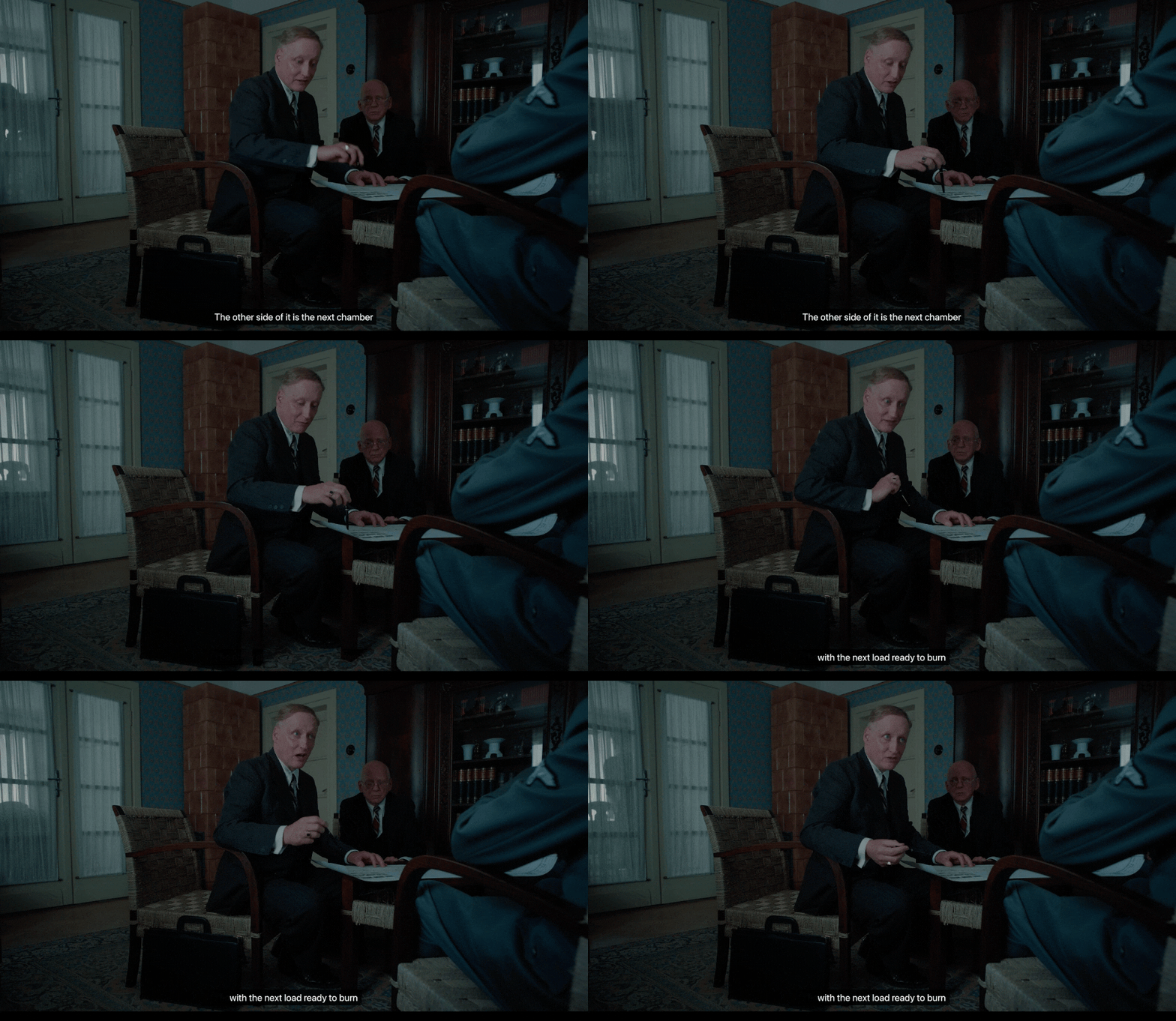
Then there’s the language. “The next load.” “The pieces… completely incinerated.” “Four to five hundred at once.” This isn’t lazy screenwriting euphemism. It’s the actual psychology of atrocity, transcribed. Albert Bandura spent decades mapping how ordinary people do monstrous things without self-disgust, and two of his documented mechanisms are sitting right here on the coffee table: euphemistic labeling (sanitized, technical language that drains an act of its moral weight) and dehumanization (people reduced to objects — here, a load, a throughput figure, tonnage). This is genuinely how the machinery of genocide was administered: in the bloodless register of logistics and airflow. So the dread isn’t despite the flatness — it’s because you’re watching that language do its job, neutralizing mass murder in real time, while you refuse to let it neutralize you.
And finally, what you’re not shown. No bodies, no flames, no victims — just a drawing and four men at a coffee table. So your brain does what brains do with vivid verbal input: it builds the picture itself. Emily Holmes and Andrew Mathews ran the experiments — imagining a described scene produces a noticeably stronger emotional hit than just processing what the words mean. Imagery is the amplifier; words are only the wire. The film hands you the wire and lets you supply the current. And here’s the cruel part: a shown image is finite and external — you can flinch, file it, look away. The one you generate is yours, tuned to your own worst register, and the film never overwrites it with something tamer. Nothing on screen ever caps it.
That’s the entire move. The scene outsources the horror to you. It strips out the emotion (through the disengaged language) and strips out the visuals (through what it refuses to show), then trusts that you — the only one in the room who won’t look away — will pour both back in.
What it is: Euphemistic Distance + Imaginative Completion
What it does: Turns a flat engineering meeting into sustained dread by handing the viewer the moral reaction and the mental picture the scene itself withholds.
Why it works (science): There’s no information gap — the gap is moral/emotional. As “moral monitors” we judge Höss from the outside and feel the horror he doesn’t (affective disposition theory). His clinical language is textbook moral disengagement — euphemistic labeling + dehumanization (Bandura) — and watching it work without adopting it is the engine of dread. With nothing shown, the brain renders the atrocity itself, and self-generated imagery is a stronger emotional channel than the words alone (Holmes & Mathews).
Effect on view ers: We don’t relate to Rudolf — we’re sealed outside him. The unshown horror, built in our own heads and never capped by the screen, hits harder and lingers longer than any explicit image could.
Three tools that make a Nazi, dramaturgically speaking.
First, find a topic universally considered atrocious and undefendable. Cheating, fraud, crime of passion are not enough. Rule of thumb: if it’s polarizing, it’s not it.
Holocaust – definitely. Incest – should work. Pineapple on pizza…
Then, have your characters view this atrocious topic as neutral or even feel positive about it.
Such discrepancy in morals between the characters and the viewer will instantly put them in the observer mode (emotionally separated), which you can then use to build dread.
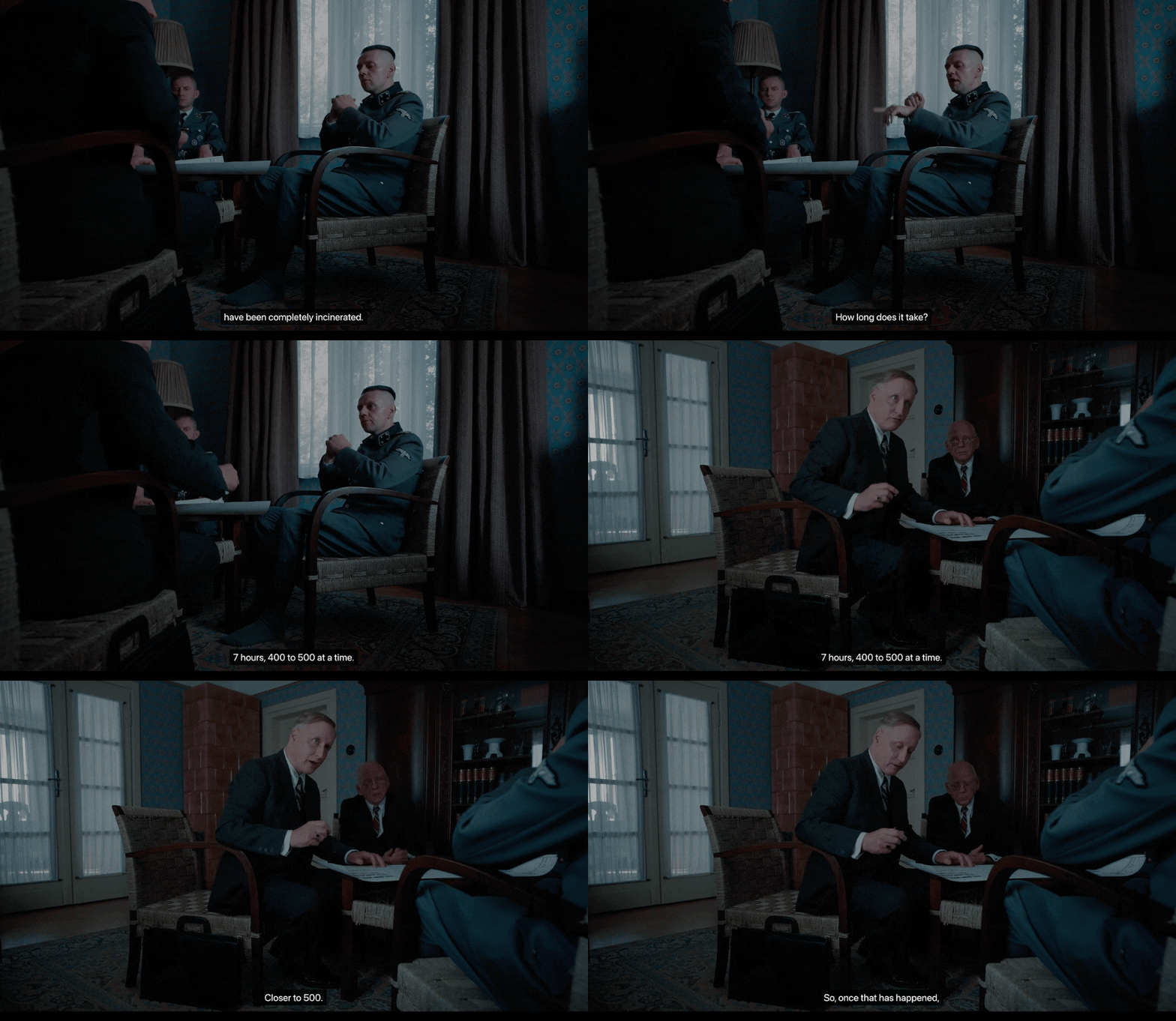
Use legal, technical language or labeling that reduces people to objects.
Ever considered why police detectives refer to murder victims as bodies, not people – same thing. Removing the human element allows them to feel less emotional stress. My dad worked in a homicide unit for a decade, and he is somehow a very cheerful kind of guy (and no, he’s not a psychopath). It works.
But back to writing. Find labels appropriate in your story: make the atrocious (incinerating dead people) into the banal, a procedure, an everyday task.
The important part is the audience must know what’s behind the label.
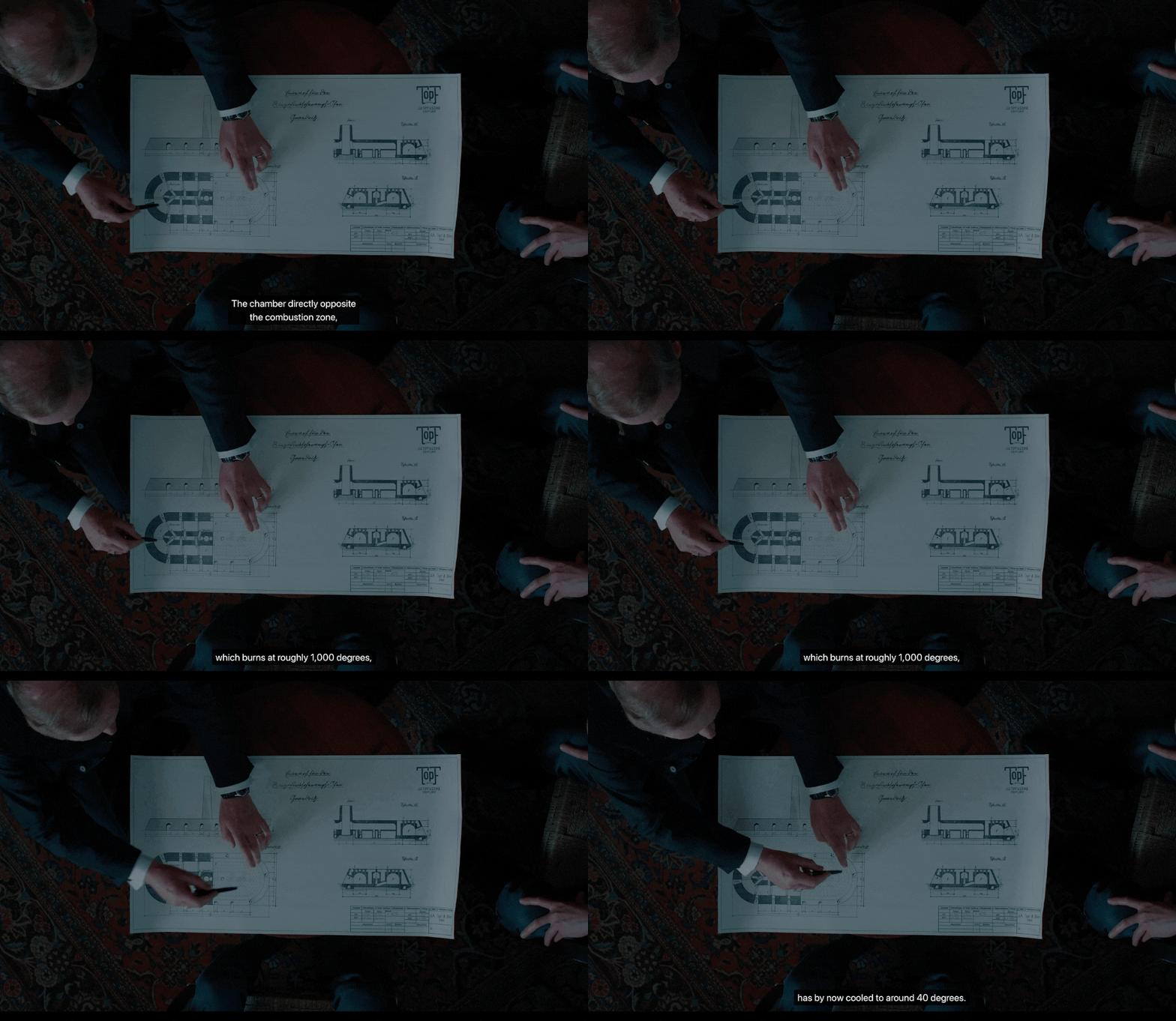
Let the imagination do the work. Give the audience visual clues, but don’t show the violence itself. To do that you’d first need to be very specific on what is really going on.
Only when you have a clear mental picture can you pinpoint what elements to show the audience, and what to leave behind.
We know what happened in Auschwitz and what kind of violence people were exposed to. So when Rudolf takes his boots off at the door, and a prisoner washes the blood off them in the sink, our mind immediately fills in the worst, in full detail.
If this weren’t a film about Nazis and our character had just come home with blood on his boots, it wouldn’t make us feel dread, but rather interest in finding out what happened. It would’ve been an information gap – the character knows more than we do. But here, we know exactly whose blood that is.
Share the post, not fascism.
The Zone of Interest is a fascinating film to break down because it ignores most dramaturgical tools we expect to see (such as high-octane conflict, character arcs, etc.), yet it works better than most films out there by trusting the audience’s own minds. It’s almost a movie from the 70s in that aspect. It outsources the horror to you.
Glazer just films it straight and makes your own mind the special effect. Which is why a quiet conversation about furnace airflow is more harrowing than any amount of gore.
Make good films. Don’t be a Nazi. Hail Felix.

Also, I’m not gonna make an audio version for this one, cause they take me a lot of time. But, if you’d like me to continue making them, let me know below.
Comments
Nothing yet. Say the first thing.
Sign in to join the conversation.