
What do you say when someone doesn’t do their job well? Do you preface with “it’s so hard to make a movie” (which is absolutely true), or you rip into it, pointing fingers? The wise man tries to learn from it. I bitch about it to my barista friend for weeks on end.
So I’m just gonna say it – Devil Wears Prada 2 is textbook screenwriting.
In what not to do in your script, kinda way. Don’t ever write your climax like that, kinda way.
All that's left to figure out is: is that true psychologically, or am I just a jealous loser? (Probably a bit of both).
Oh, how the tables turned. Andy (Anne Hathaway) finds herself crossed by Emily (Emily Blunt) who had cooked up a plan to replace Miranda (Meryl Streep) as the head of the Runway. More to it: all the staff is to be replaced by… (yes, you guessed it, yes. The boogieman of the 21st century, the omnipotent) AI.
And now the climax. The last resort to fix everything and find a different buyer – falls on Andy’s shoulders. Exciting?
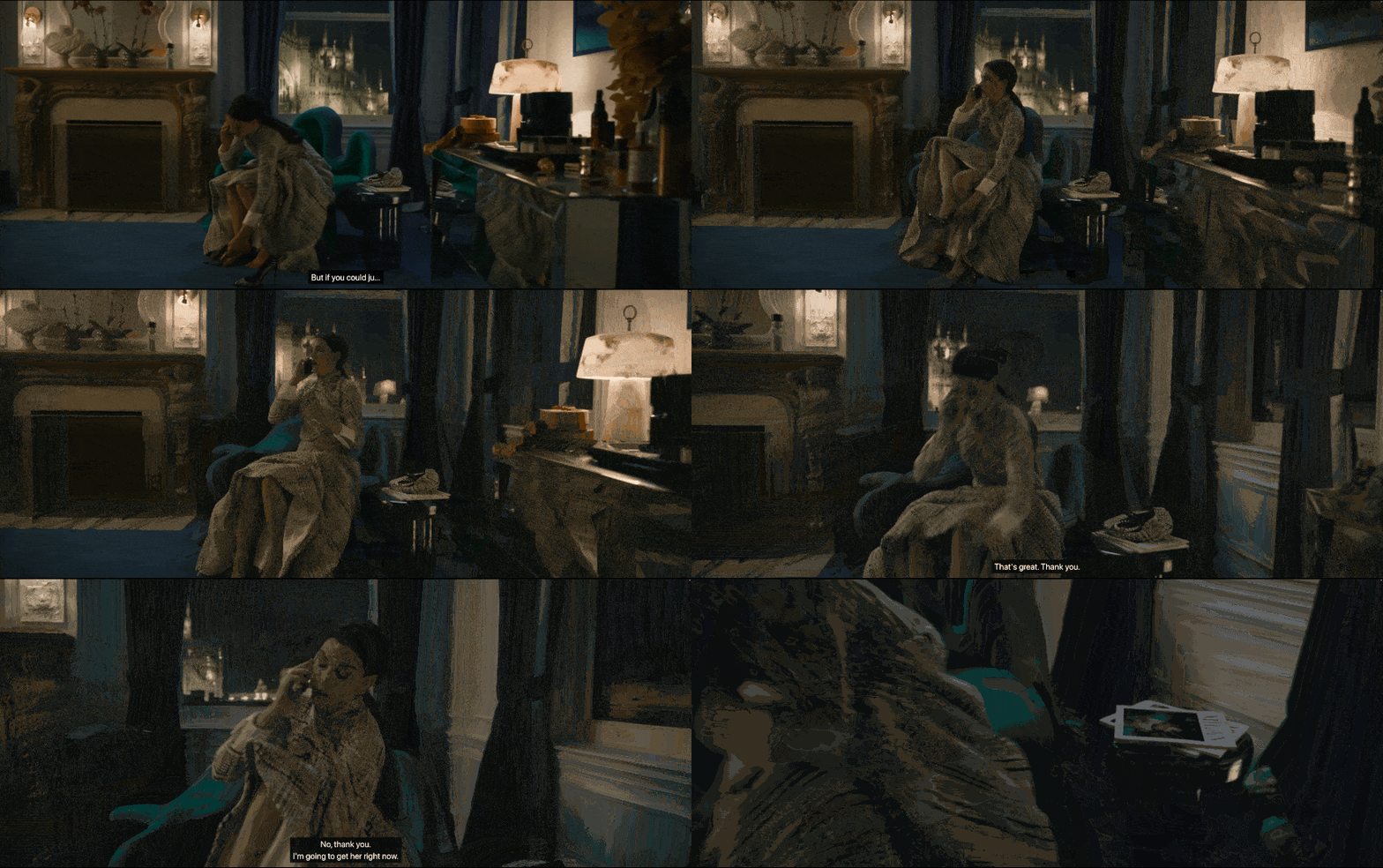
(I couldn’t find the script or the scene anywhere publicly, so here’s the closest rendering by me)
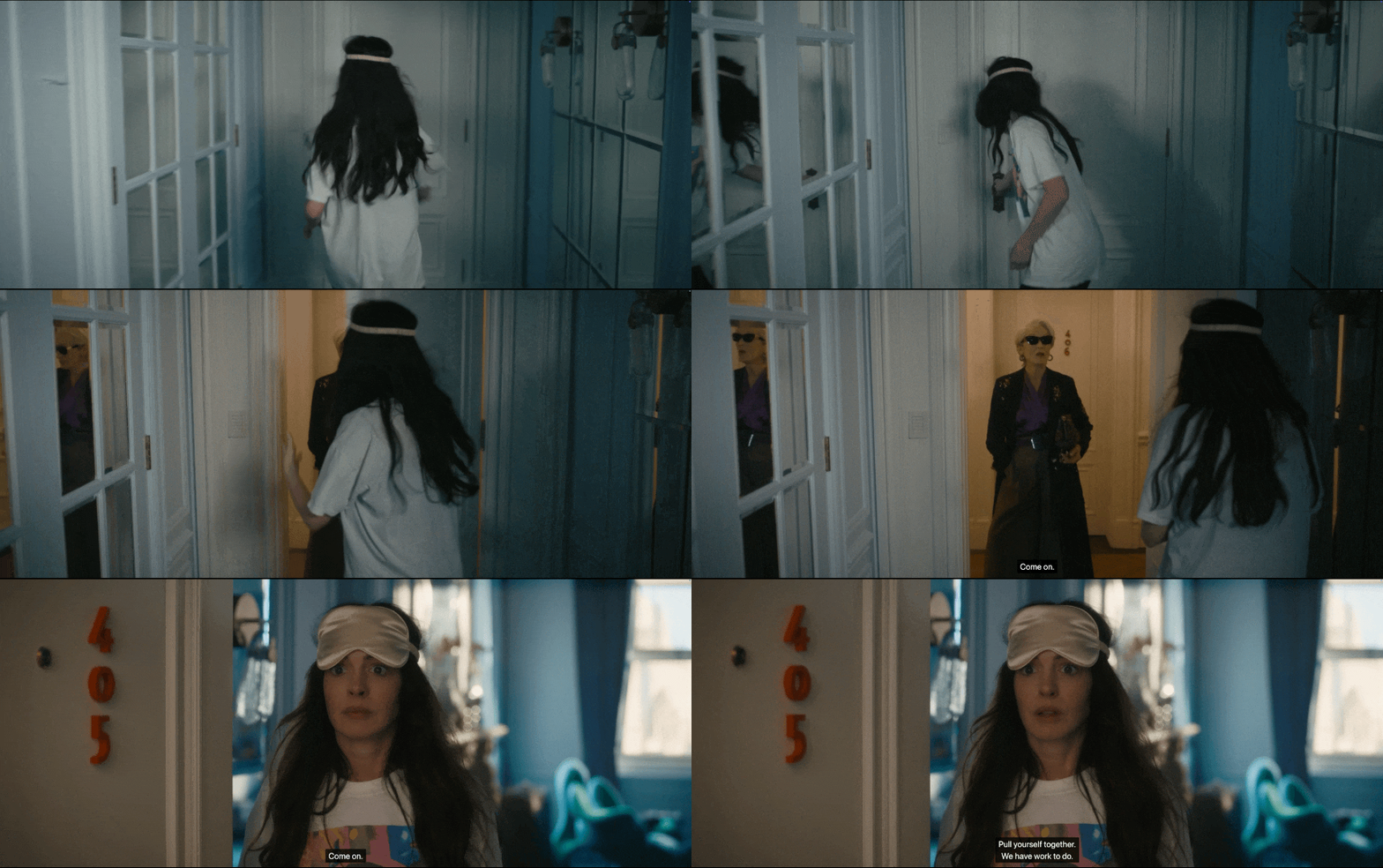
INT. OPULENT HOTEL ROOM - MORNING
A loud knock wakes Andy up.
ANDY
(groggily)
No, grazie.
The knocks continue. Andy opens the door to find… Miranda.
MIRANDA
Come on.
Pull yourself together. We have work to do.
(she lets herself in)
And by we, I mean you. I have shows to attend.
You have phone calls to make. I have a long list
of people for you to wrangle.
CUE FUN MUSICAL MONTAGE
CUT TO THE EVENT.
Strobe lights and well-dressed people. Miranda shaking hands with everyone.
CUT TO ANDY ON THE PHONE.
ANDY
I don’t wanna tell you what to do, but I’m gonna tell you what to do.
Please wake her up.
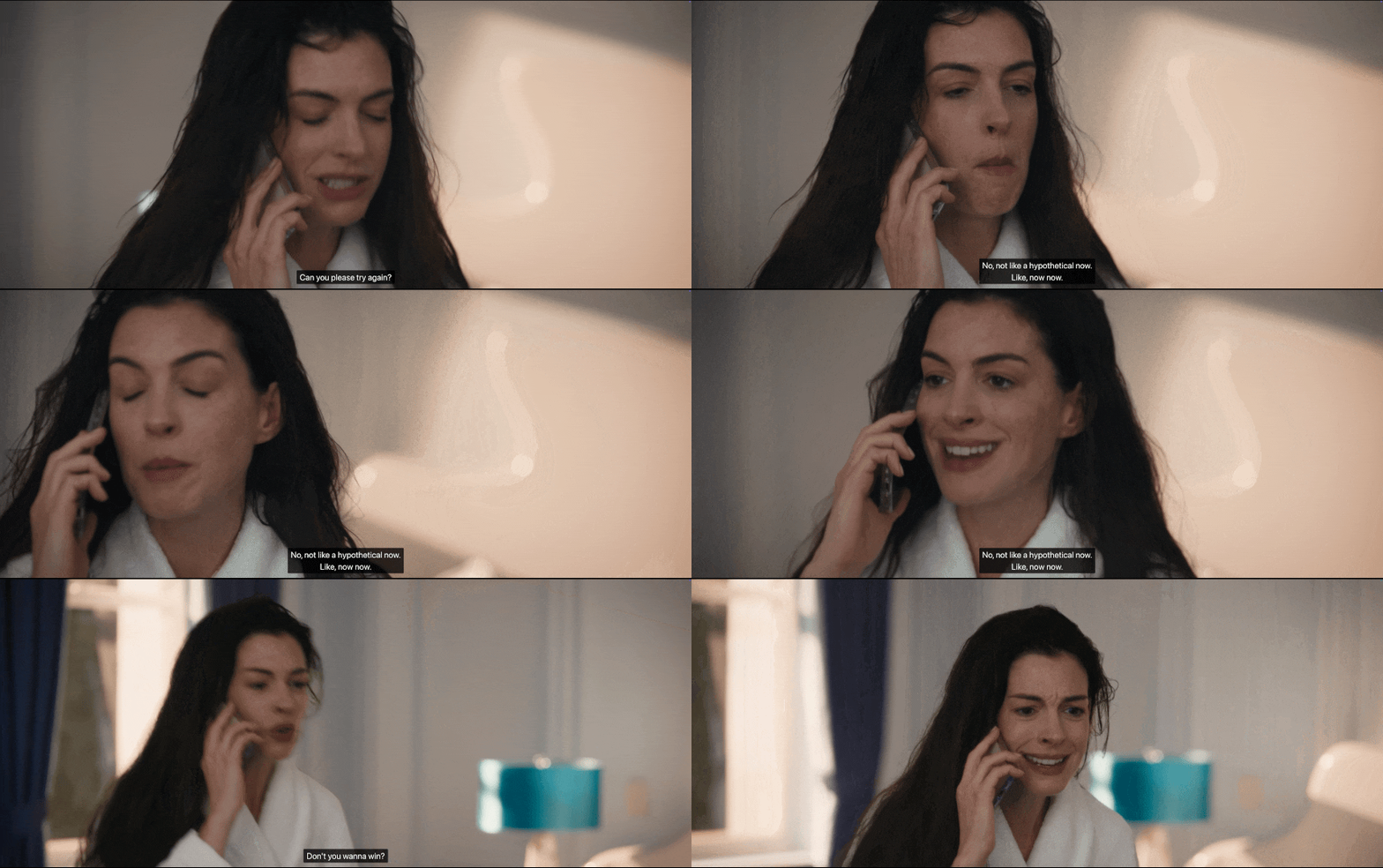
SMASH CUT TO ANDY ON THE PHONE (presumably with someone else now)
ANDY
Wake ‘em up. You can wake her up.
SMASH CUT TO YET ANOTHER PART OF PHONE CONVERSATION
ANDY
This is worth it. You will thank me.
SMASH CUT, SMASH CUT, SMASH CUT.
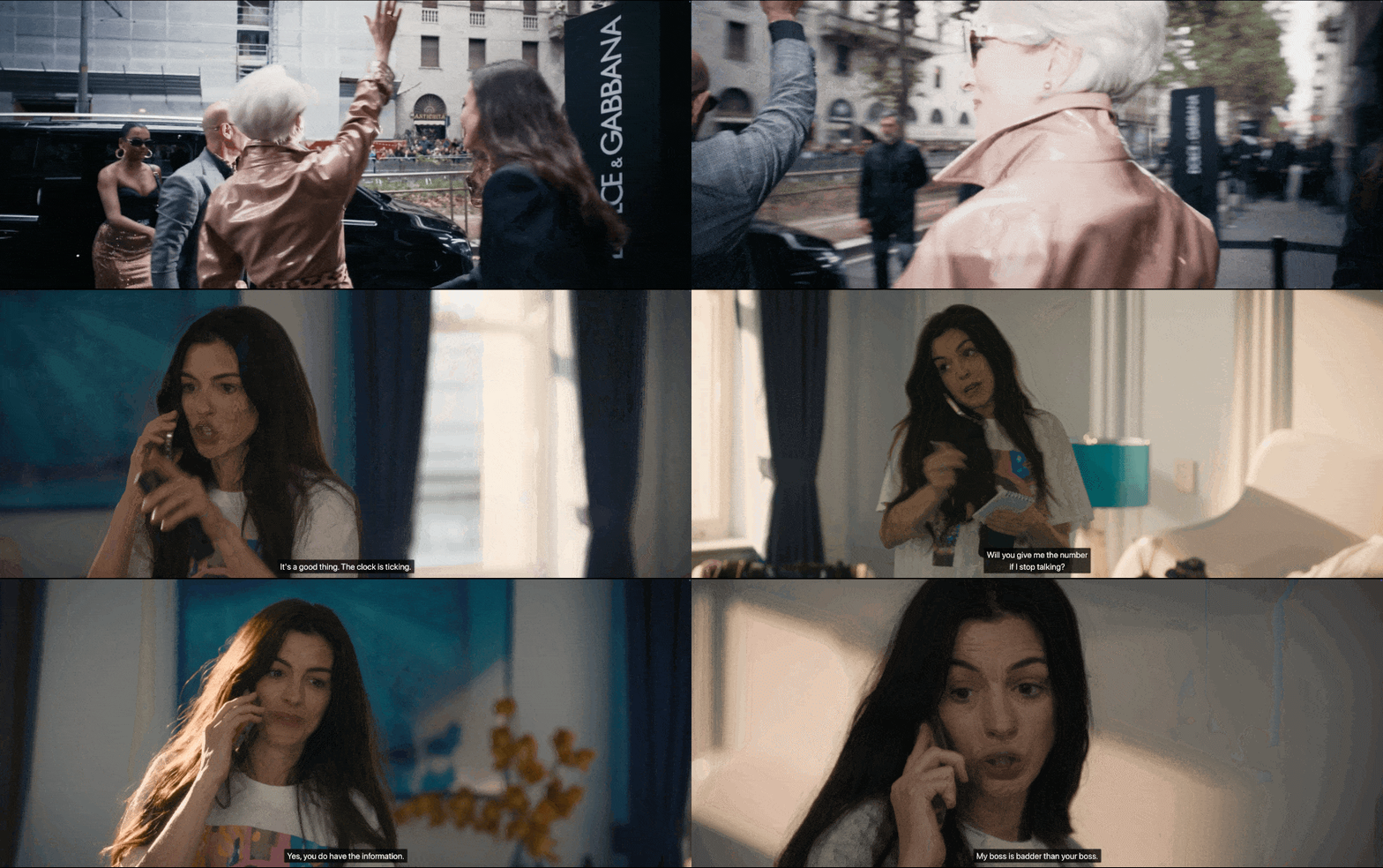
CUT TO THE FASHION EVENT.
SMASH CUT BACK TO ANDY.
ANDY
It’s a good thing. The clock is ticking.
SMASH CUT 4 MORE TIMES.
AND WE’RE BACK TO THE FASHION SHOW…
AND THIS PATTERN REPEATS FOR SOME MORE TIME, WITH MORE LINES FROM ANDY ON THE PHONE UNTIL…
ANDY
(putting her shoes on for the event)
That’s great. Thank you. No, thank you.
I’m going to get her right now. Thank you so much.
Proper climax that, running both a mystery (who is Andy calling) and showing how many urgent calls Andy had to make to save the Runway– a mountain to climb. And on top of it, as Andy says herself, the clock is ticking. Supposedly. Only it ticks for 4 minutes of screentime. And the mountain is conquered (phone in hand). So was it ever a mountain, or a mere speed bump? The script wants us to believe the first, we feel the second. And I got science to back me up.
Here’s the quiet rule your brain runs during every climax: a prize is worth roughly what it looked like it cost. Justin Kruger and colleagues put a name to it — the effort heuristic. In their experiments, people rated a poem, a painting, even a suit of armor as higher in quality and more likeable purely because they were told it took longer to make. Same object, more perceived sweat, higher worth. And crucially, this is a judgment about someone else’s work — which is exactly what an audience does with a protagonist. We aren’t Andy; we’re appraising Andy’s win from the outside, and we quietly set its value by how much struggle we watched it take.
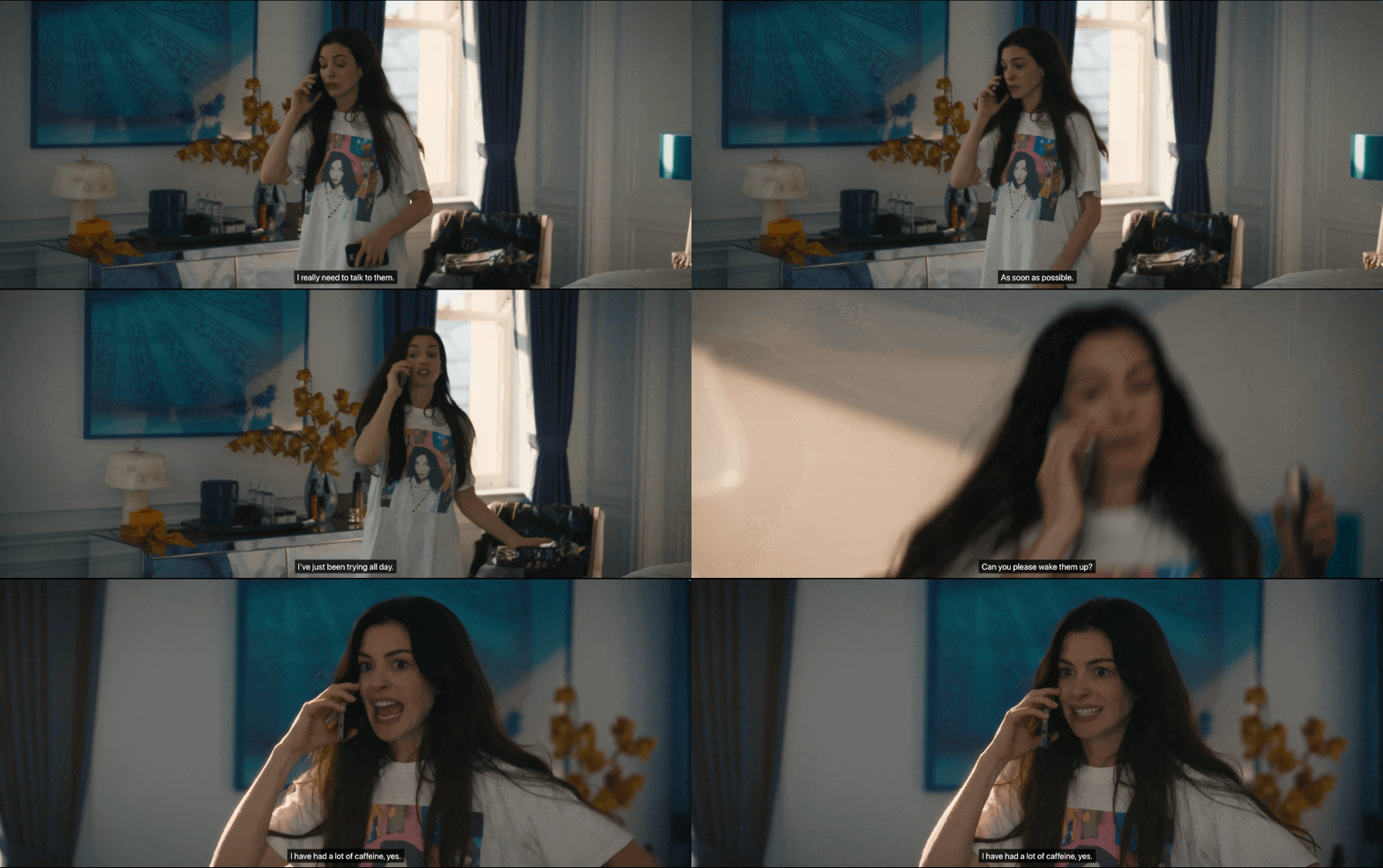
Now watch what the montage actually shows: activity. Buckets of it. Andy dials, Andy insists, Andy dials again — “wake her up,” “this is worth it,” smash cut, smash cut, smash cut. But motion isn’t cost. Not one call actually fails. Nobody says no and means it. There’s no price paid, no setback, no single beat where the plan might genuinely die. The scene is busy, and busy is not the same as hard. So when the buyer materializes four minutes later, your effort-meter has logged almost nothing — and a win that cost nothing is appraised at roughly nothing. The mountain that the dialogue kept promising reveals itself, retroactively, as a speed bump..
There’s a second engine misfiring, and it’s the one climaxes live or die on: suspense. Dolf Zillmann’s decades of work boil it down to a simple condition — suspense is the hope-and-fear you feel when a valued character faces an uncertain outcome with a real possibility of failure. Remove the uncertainty and the suspense goes with it; if the win feels inevitable, there’s nothing to grip. And a montage, by its very grammar, murmurs inevitable — it’s cinema’s shorthand for “we’re compressing time because this stretch is a formality.” Worse, the payoff itself runs on what Zillmann called excitation transfer: the relief you feel at the resolution is powered by the tension you banked beforehand. No tension in, no relief out. You can’t feel the rush of the summit if the film quietly took a chairlift.
So the climax fails twice over from a single root cause. It tells us the stakes are Everest and shows us a to-do list — and our brains price the achievement off what we saw, not what we were told. The intrigue about the mystery buyer is real, sure, but it’s a curiosity, not a stake: it’s wanting to know who picks up, not fearing whether Andy will pull it off. A climax has to cost the character something we can watch it cost. This one just… gets done. And “it got done” is the least cathartic sentence in screenwriting.
What it is: The Effort Gap (Activity ≠ Effort) — a climax that tells us the obstacle is enormous but shows a quick, frictionless montage with no visible cost and no real risk of failure.
What it does: Tries to earn a triumphant payoff by having the hero perform a lot of visible activity, without ever letting that activity be genuinely hard, costly, or uncertain.
Why it fails (science): We gauge the worth of a win by the effort we saw it take (effort heuristic — Kruger et al.), and we appraise a character’s win from the outside, so low visible effort reads as low value. Meanwhile suspense requires an uncertain outcome with a real possibility of failure (Zillmann); a montage signals inevitability, so no tension accrues. And with no tension banked, there’s no relief or catharsis to transfer at the resolution.
Effect on viewers: The “mountain” reads as a bump, the victory feels weightless and unearned, and instead of catharsis we feel a shrug. We check out at the exact moment the film needs us leaning in.
Disclaimer: it's not really a sequence problem but a structural one. Even so, there are ways to improve the sequence itself.
The bigger the goal, the bigger the obstacle (mountain). The taller the mountain, the more effort it requires to hike over it. And effort requires sacrifice – at the very least bursting blisters on the soles of your feet. Taking an elevator up is not it.
If we zoom into the sequence, the least we can do is make Andy sacrifice something: compromise her position, miss the show she so wanted to make it to, anything, something. Of course a real sacrifice is hard to throw into a 4-minutes sequence (see the disclaimer), but still.
Let’s say we need to write a sequence about a person raising money for their business. Which options are more interesting to you: a) the character calls an investor on the phone, the investor is very busy and the character only has a second to pitch their idea, or b) the character meets the investor on the airfield and only has a few seconds to pitch while the investor boards the jet.
Why is B more engaging than A? Cause in A we need to tell the audience directly the investor is busy. There’s nothing to infer or decode. In B, the distance and time it takes to board the plane is the ticking clock. And no one needs to say a word, your brain figured it out.
Do we really feel like Andy might fail in her quest? Like really, truly fail? Not a chance. So – no suspense. Ok, that’s fine. After all we know the lovers will end up together at the end of a rom-com no matter what, and we still love those.
In this case, it’s about the “how”. We know the ending, but the “how”, the twists and turns on the way, is what keeps us engaged.
To put that into practice, when concentrating on the how and writing a sequence try to find unpredictable tactics your character could employ even if the result is ultimately obvious. What if instead of phone calls (which everyone picks up on the other end btw), Andy had to climb over a fence to get face-to-face with someone?
That’s stupid, Mikhail. Andy doesn’t do that.
Ok. Can she pretend to be someone else to sneak in? You get the point.
I can bitch all I want but ultimately the film made $678,222,322 worldwide. So my science can go suck a dick. And that’s fair. Just as it’s fair that the climax of that film objectively doesn’t affect the audience like a climax should.
And since I can’t have a penny out of those millions, I get to have the next best thing - free screenwriting lessons
(cries loudly into his pillow).
Me at the cinema.
Till next time.
P.S. More of you voted for an audio version, so be it. But starting with the next one. I caught a cold, and I doubt you’d want to listen to my “I’m-trying-to-breathe” voice.
Comments
Nothing yet. Say the first thing.
Sign in to join the conversation.