
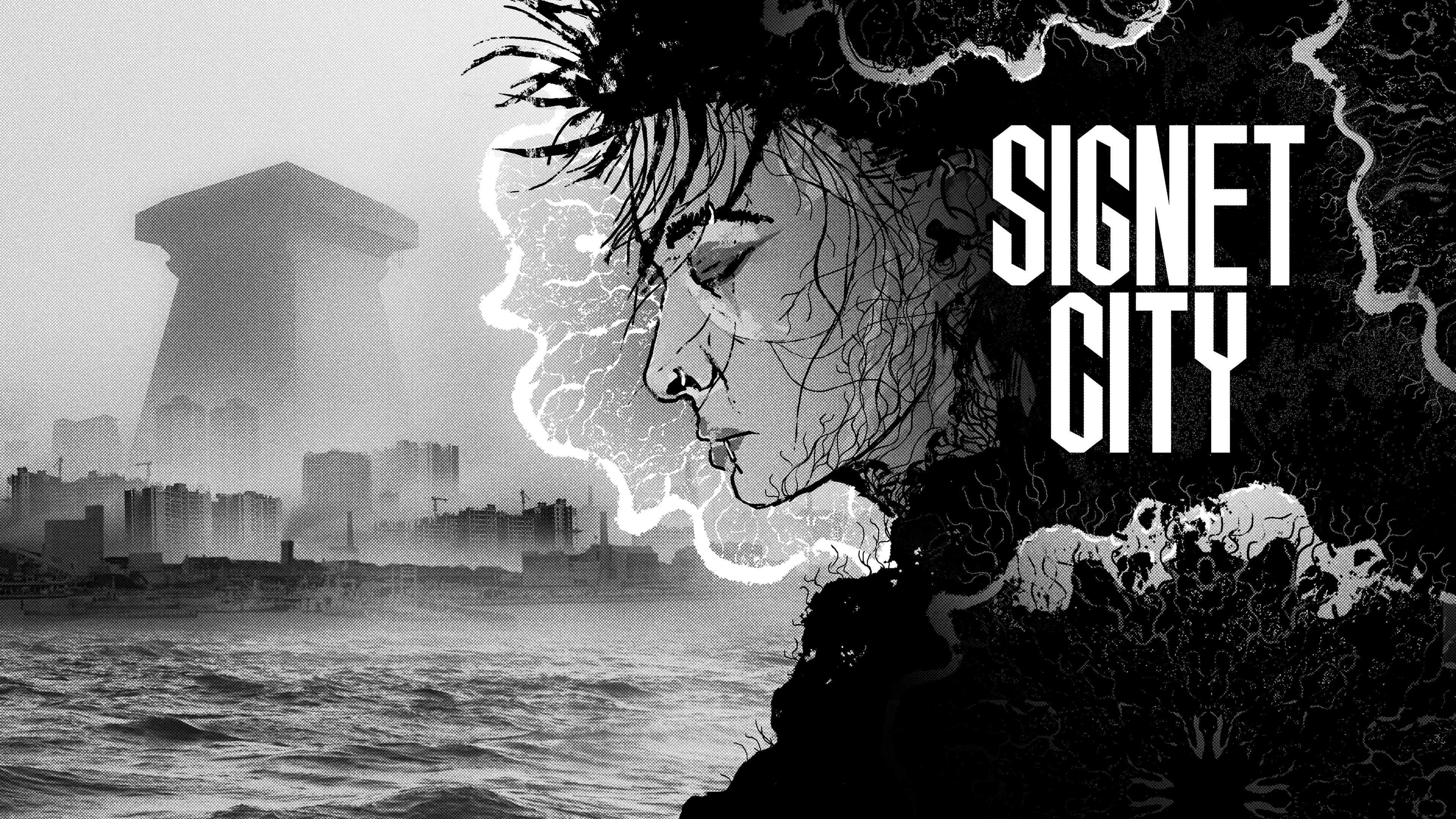
I’ll go wherever Gareth Damian Martin leads. The creator of the Citizen Sleeper series just announced a sci-fi game inspired by fungal networks and post-industrial northern Britain. It sounds like a heady mix of Quantum Leap and The Mushroom at the End of the World.
“We call it a first-person fungalpunk RPG,” Martin told me in an interview conducted late last week. “I've never made a fungalpunk RPG before. I'm not sure anybody has.”
I’ve lightly edited the following transcript for clarity:
What exactly is Signet City?
It’s a game about a strange kind of 1980s northern British city in an alternate universe where biological computers and fungal substances are the key industry of that city. Maybe you could think about it in the way that whale oil is the central industry of Dishonored or that in steampunk steam power becomes the all powerful force of society.
So in this case, this city is based on fungal technology, but it’s also comparable to 1980s deindustrialization, to a northern city like Newcastle or Liverpool or Glasgow. You play as a parasite, which does make the game a little different. You basically feed off the emotions and experiences of your hosts. And through kind of playing as a parasite, you get to experience the different parts of the city through different people’s lives and effect it through the lives of the people that you inhabit.
You can be a benevolent parasite is what you’re saying, which I guess begs the question of what a parasite even is?
Exactly. The classification of parasites is a debatable thing in biology, actually. There’s a big gradient between symbiosis and parasites. A lot of my previous work — especially In Other Waters, my first game — dealt with symbiosis to some extent. It’s in that wheelhouse of thinking about how humans and ecology interact with each other. But I think in a darker, stranger world, something a bit more like the weird fiction of Jeff Vandermeer or China Melville in that tone.
Your work has always explored these kind of boundaries, these fuzzy definitions. What are you bringing to this specific game that’s different than In Other Waters and Citizen Sleeper?
The thing that fascinates me in games is that the player is always different to the characters in the game. I think if you can find ways to make that part of the story of the game, part of the world and the structure of the game, then you tap into something that feels very real to the player. So In Other Waters is that was like the player being an eye inside the suit of the character that that’s the protagonist of the game. In Citizen Sleeper, you were different because you had a kind of questionable non-human body. Is that what it feels like to be a human? You don’t know because you’re artificial. And in this case, I’m casting the players as a kind of fungal intelligence.
I really want the game to explore this idea. If we compare them to a human mind, they’re dispersed, decentralized networks where time and space operate differently to how they operate in our minds. But they’re also creatures of chemical exchange. And I would say that we are internally like chemical creatures. Our brain chemistry is what makes us do various different things. We tend to use parasite, leech these words just like negative implications. But who’s to say that we really have any free will outside of the kind of brain chemistry? Are we just following those chemicals? So is a parasite intervening in our brain chemistry really a kind of manipulator, or could it be benevolent in some sense?
And I think there’s a really interesting space there, but that also there’s a kind of meta story I’m tapping into here, which is in RPGs, both in tabletop and in videogames, we also operate as a kind of parasite to the characters. We’re not really them and we’re also not really not them. Sometimes in a tabletop RPG, you might use your own name. Sometimes you might use the character’s name, sometimes you might really want something to happen because they want something to happen. Sometimes you really might want something really bad that’s super interesting that happened to your character. You might be cruelly poking them and trying to create some cool plot event. So I think there’s also that side of it for me.
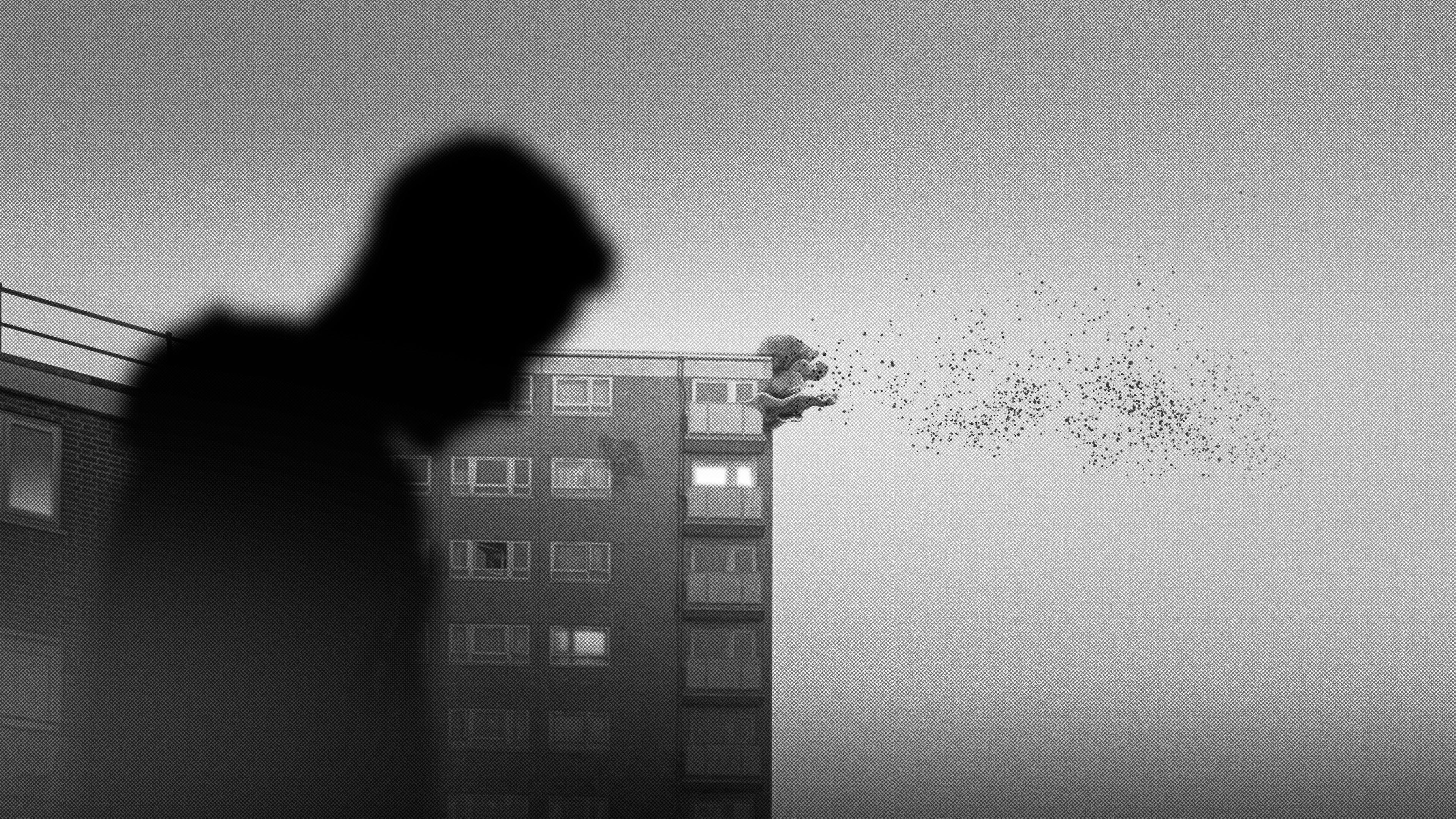
I’m trying to put my head around not just the narrative, but the gameplay. Are you looking to immersive sims? How much agency will the player have to really manipulate this world?
One of the things that I observed when making RPGs that bothered me was the protagonist syndrome of like RPG characters. You know, you walk up into town and someone’s like, Hey, outsider. And then, you know, there’s like quests presented to you, and this is all a necessary part of the form, but it’s something that really limits the possibilities of the storytelling.
So what appealed to me about tapping into this parasite idea was that you’re dropping into the mind of a character, and that character is already in the world with their own tensions and their own concerns, and they’re already part of a story. In that sense, I’m not kind of interested in giving the player like total agency, because I think that’s not what makes for an interesting story. I’m interested instead in getting them in trouble, implicating them. I want the story to feel alive.
The way the game works is when you drop into the mind of a host, you don’t necessarily pick your hosts. They might be like a worker in the middle of like a labor struggle. Each day you have a limited number of actions. So each character comes with a chunk of the city, a little first-person hub, a little bit like an immersive sim level. And you’ll kind of slowly start to explore this character and learn the rhythms.
You’ll also learn what things in that part of the city affect your character’s mood. So it might be that it’s raining one day and that makes the character gloomy, or it might be that you can get the character into a political argument in the pub, and that makes them angry. And those are important because those are modifiers that apply to actions in the game. So if you then you want to kick down the door to get into this factory, then you might need to make your character angry in order to get a better chance of doing that. So you’re instigating things in the character to try and move the story forward.
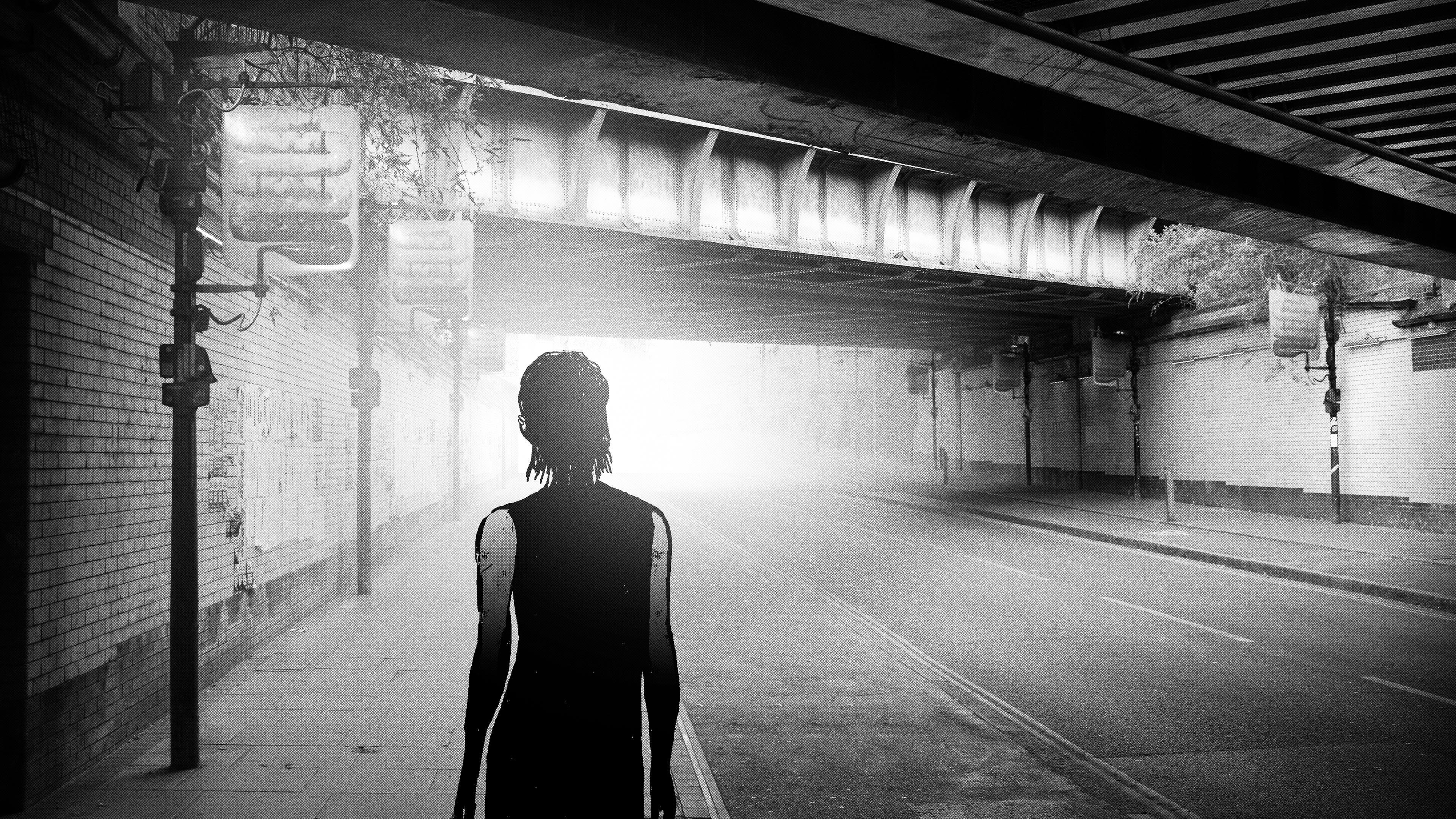
Well, and it pushes players to think systemically, right? How much do you think about this distributed network thinking as a way to inspire different ways of thinking about our world?
Yeah, 100%. I think the eighties in northern UK and late seventies have these really interesting moments like the winter of discontent which was like a big labor struggle that also timed in with one of the coldest winters on record. I like that that was both an ecological and political and social event simultaneously, and that was the kind of thing that I wanted to start with.
Even the miners strike historically is thought of as a labor struggle, obviously. But now from a perhaps more ecologically minded perspective, it’s also a question of how do people relate to their environment. You had miners who were fighting for the heritage of these industries that connected them to the land they lived on. But equally, those industrial processes were both destroying the bodies of those miners and the land itself. So there’s this really knotty quality to that. It becomes really rich and interesting.
It’s not necessarily something that I have an answer to, but it’s a provocation for me as I’m working on the game. When I say to people “parasite,” people have all of these negative associations. The parasite indicates control and power, but it also indicates symbiosis and interconnectedness. So it kind of plays both ways. That’s kind of a core part, I guess, of the game’s wider themes. And what I’m hoping to dig into is this idea of enacting power on others, the ideas that grow like viruses between people.
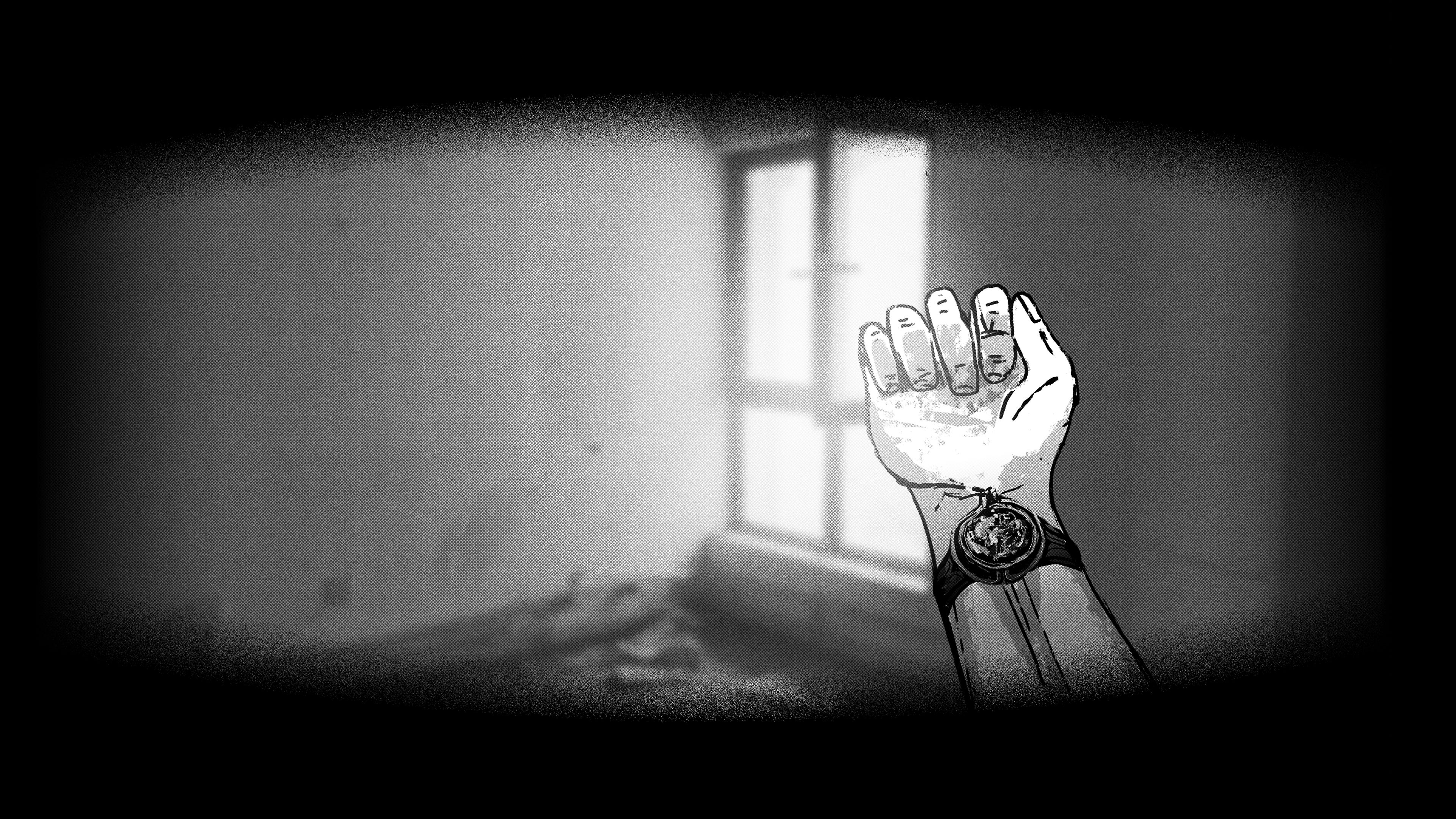
Talk to me about the specific aesthetic choices you’re making because you’re mostly going for black and white. How are you trying to get players in a different headspace?
The visual side of the game takes a lot of inspiration from social photography of the 1980s in the U.K., where you have these grainy black and white photographs of really incredible architectural conflicts. Like tower blocks sitting in the middle of a wasteland of smashed up tenement blocks that got destroyed so they could be built. Massive container ships hanging over terraced houses that are 100 years old with slate roofs.
This was like a really rich starting point, but that was ten years ago when I first started kind of conceiving of this world. I think onto that, the kind of inspirations I looked at were things coming from distant places. There’s a really wonderful film called Tetsuo the Iron Man that’s this incredibly, richly grainy, 60 millimeter black and white film about a Japanese salaryman slowly becoming a kind of metal god. But the directors insist it’s like a it’s a film about it’s a superhero movie in his mind.
And I really like this idea of thinking about the connection between kind of superheroes and body horror in the sense that it implies that power is something that twists and transforms us as we inherit it or take it on. And the idea of a fungal superhero that was being many-bodied and those bodies were all being twisted or changed by this power that was running through them felt really connected.
I also wanted to do a game with my own 2D art to the first time because it’s not something I’ve ever done before. I drew webcomics when I was younger and I’ve always loved doing pen and ink drawings. It just was something that’s slowly developed over the ten ish years that I’ve been working on. It took me a little while to try and work out how I could do that in a game engine. But once I realized there were ways of doing it, that became the main focus, this rich and grainy world.
Signet City doesn’t yet have a release date. You can follow its development on its Steam page. I, for one, am fascinated to see where it goes.
No posts
Comments
Nothing yet. Say the first thing.
Sign in to join the conversation.