
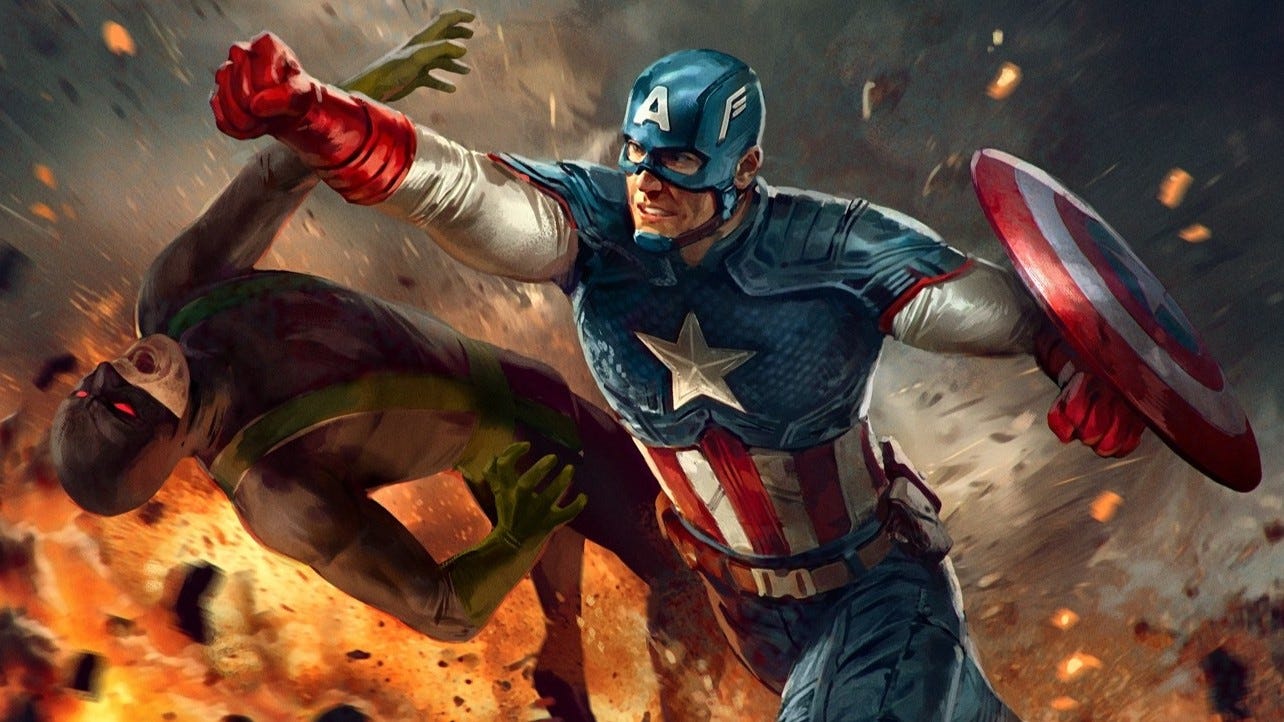
I had something like a Marvel SNAP addiction. I hit the theaters for nearly every MCU movie through Thunderbolts*. I adored Spider-Man as a kid and practically memorized a collected volume of its earliest issues.
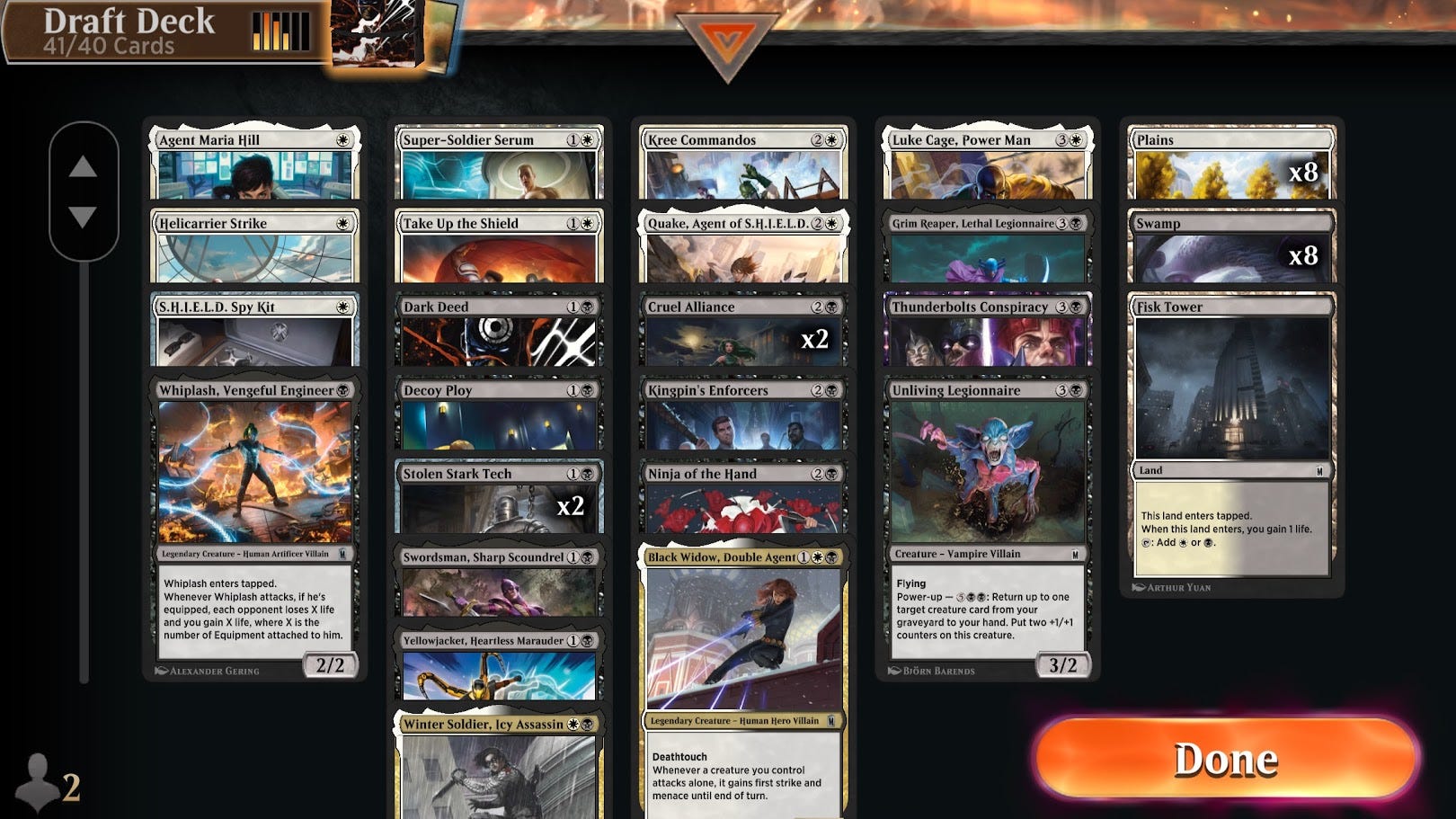
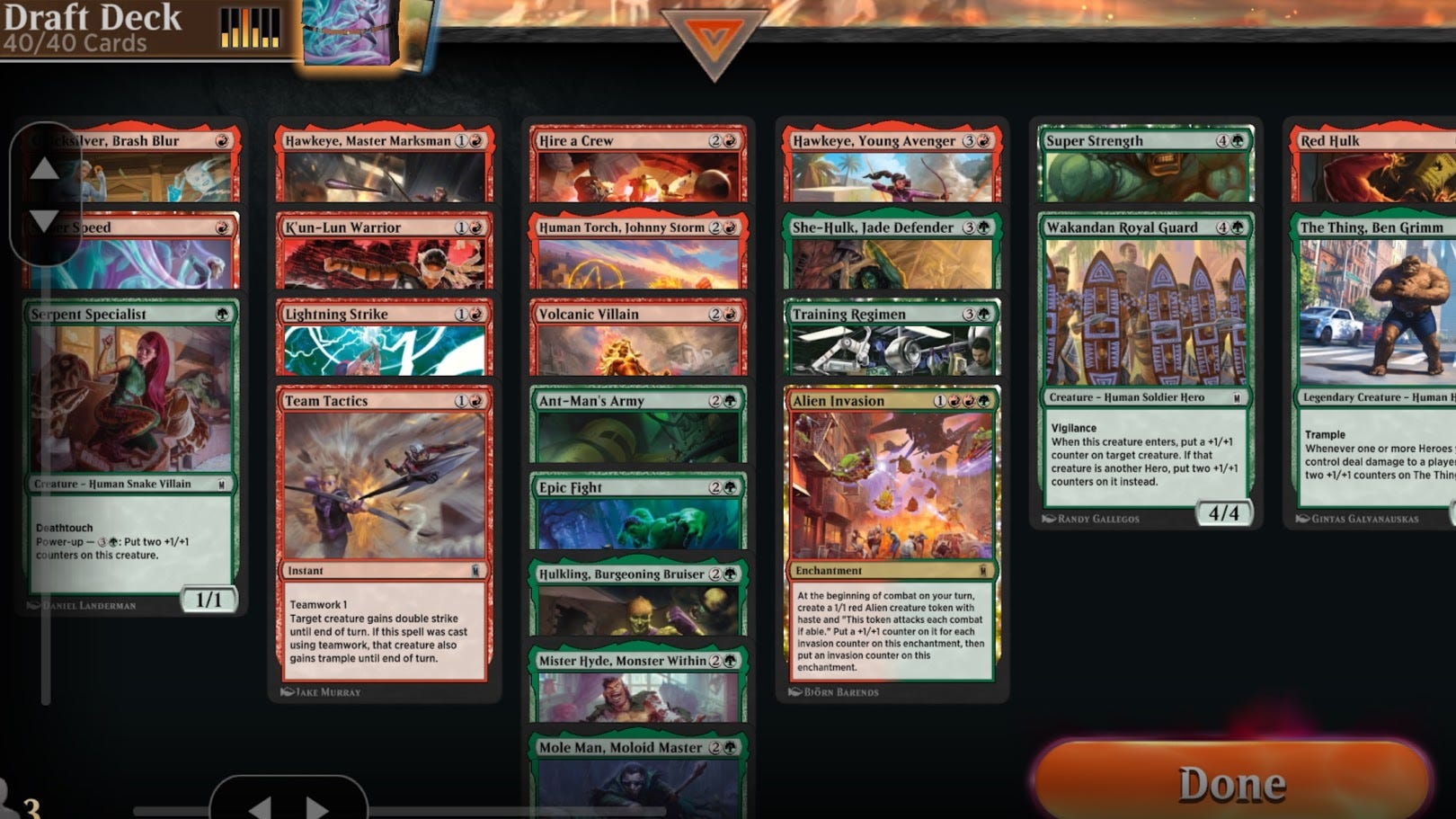
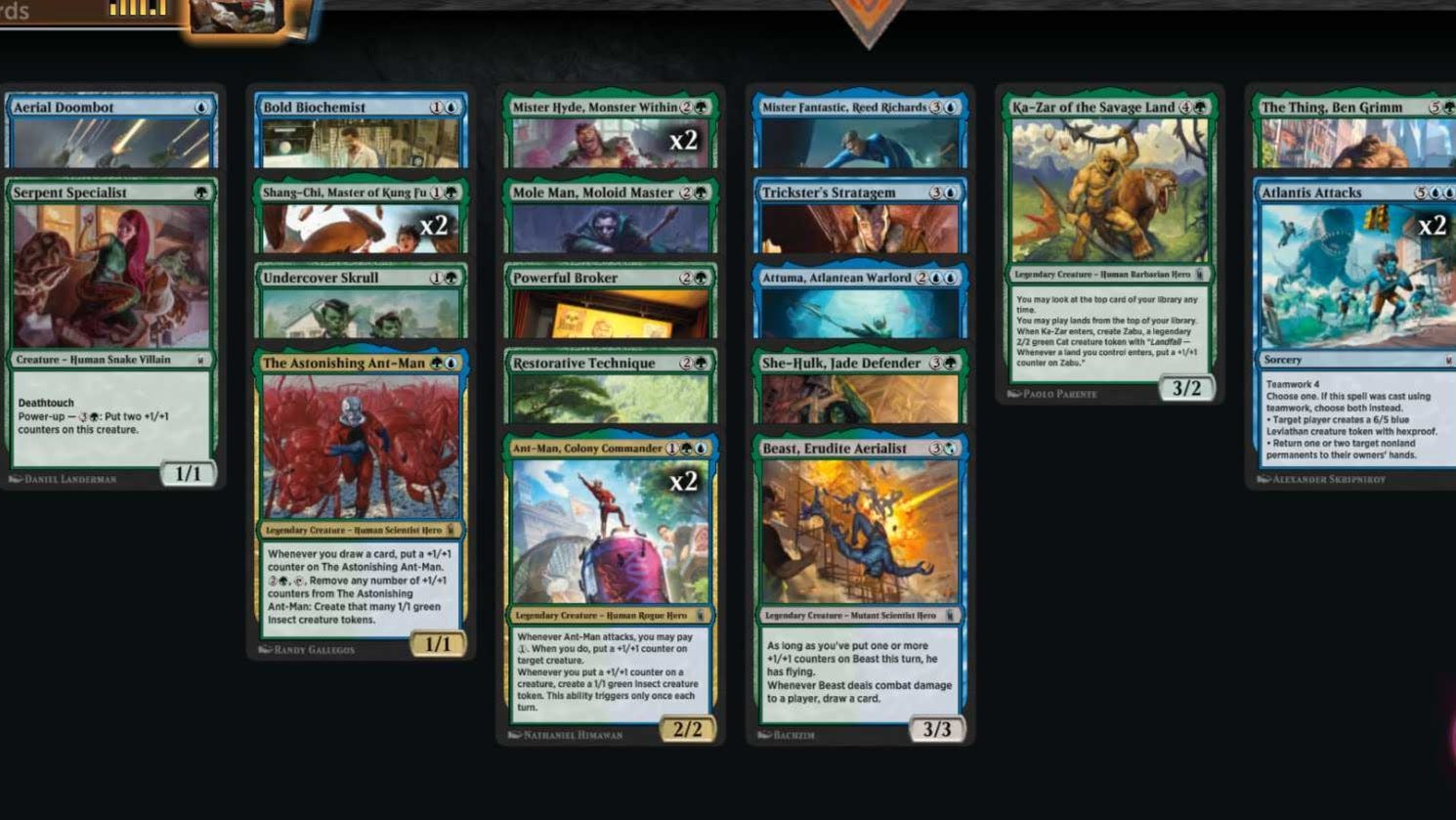
But these days I feel little but exhaustion for the brand. Alas, it’s where my beloved Magic: The Gathering has gone and where it will likely dwell. I reviewed its latest set, Marvel Super Heroes, for WBUR.org and have excerpted the juiciest morsels here. I've added screenshots of my Arena draft decks as a bonus for you, dear reader:
Across its many products, Marvel Super Heroes boasts over 600 unique card designs — more than any other set to date. That doesn’t include hundreds of reprints and fancy collector versions of cards.
The crossover even got its own super team to build it. Mark Rosewater, Magic head designer, pitched Marvel on the collaboration and personally oversaw its development. Dave Humphries, a veteran celebrated for formats like Outlaws of Thunder Junction and March of the Machine, lead the more granular set design.
That golden pedigree roused me out of my Marvel fatigue. But the hours I drafted the set during an early access Magic Arena event left me more ambivalent than hyped.
Stick with any franchise long enough and you’ll feel like an old man yelling at a cloud. I’ve accepted that crossovers will dominate Magic: The Gathering, just as they now do for toys like Lego and games like Fortnite. But the transformation is accelerating. Where Magic players could once expect four to five major releases a year, 2026 features seven, and most are based on other properties.
Unlike the last Marvel tie-in, there isn’t a Through the Omenpaths version to escape to. Magic creator Wizards of the Coast couldn’t secure the digital rights to 2025’s Spider-Man set, resulting in two parallel products: physical Spider-Man cards and digital echoes based in Magic: The Gathering’s multiverse. Many players bemoaned this arrangement because they had to memorize separate names and art for mechanically identical cards as they swapped between in-person and Arena matches. But I loved the improbable spider mash-ups of Through the Omenpaths and hoped the dual arrangement would continue.
The mechanics are tightly bound to their comic book origins. For a game that’s often embraced moral complexity, I’m thrown by the Hero and Villain creature types that run across all five colors in Marvel Super Heroes. These themes rarely focus an entire deck but they’re far from incidental. A few cards reward you for leaning one way or another, with some characters, like Black Widow and White Widow, bearing both Hero and Villain types.
There’s another big “top down” design. Power-up upgrades your creatures with a one-time mana investment. If you pay for it the turn the creature entered, its cost is reduced by the creature’s mana cost. It’s an elegant update to Monstrosity that plays well at all stages of the game. Even modest power-up commons like Brave Brawler make for decent draft picks.
The set’s smaller synergies impress me most. Agent Maria Hill can dominate early if you have enough Teamwork cards to enable her. The intricate Connive and discard strategies return from Spider-Man. Fantastic Four heroes gel in subtle ways, though you’d be hard-pressed to include all four since they’re different colors. The set’s version of Blue-Red artifacts — a popular archetype last explored in Teenage Mutant Ninja Turtles — deserves special mention: it’s chock-a-block with powerful commons and uncommons that Shuri, Wakandan Inventor can easily abuse.
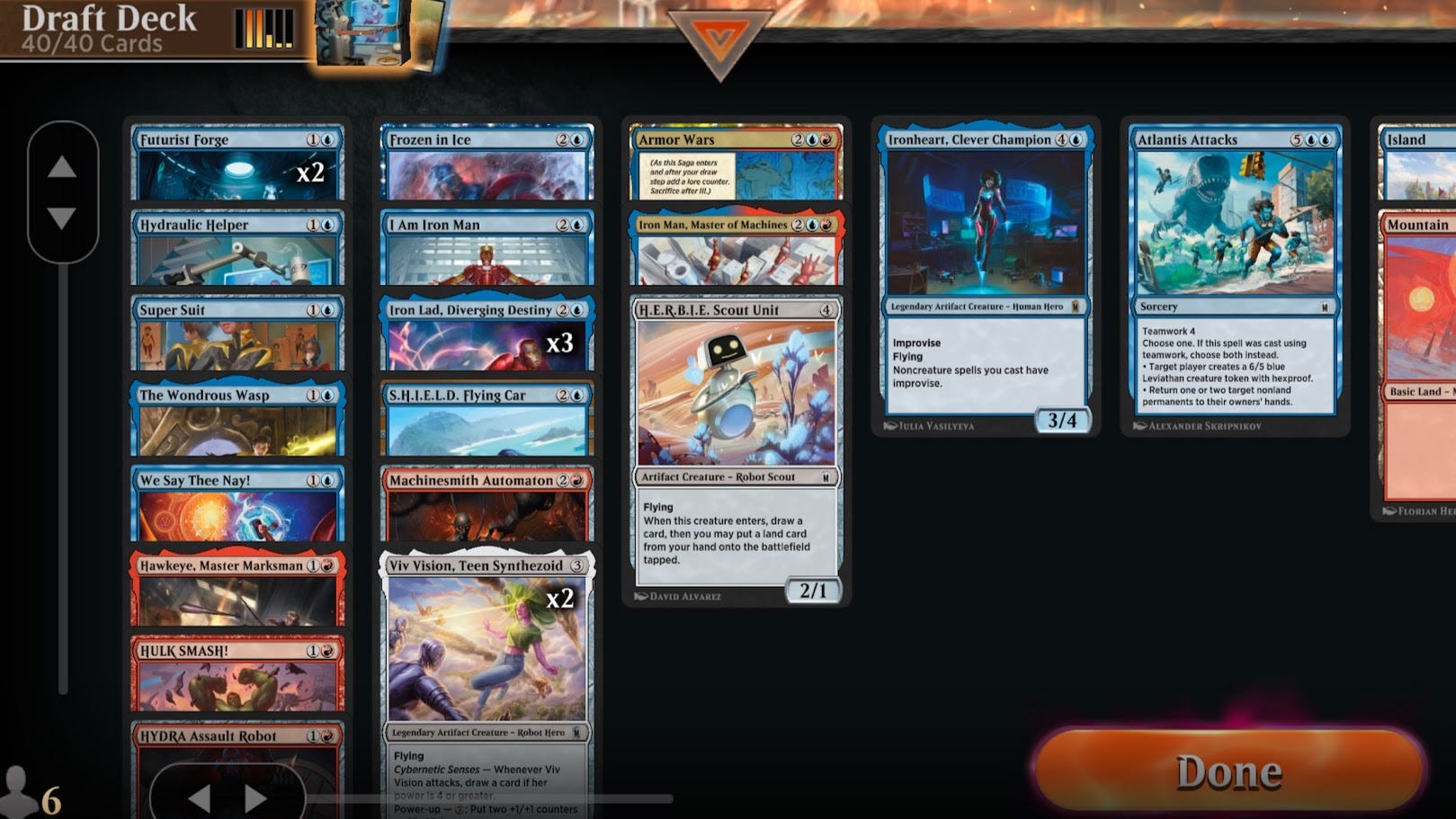
This heady swirl of mechanics lends itself to drawn-out games. All my aggressive White-Black decks floundered while my slower, value-driven decks — typically focused in Blue or Green — won at least as many matches as they lost. I learned to prioritize removal more than efficient, cheap creatures, from counterspells like We Say Thee Nay! to expensive bounce spells like Atlantis Attacks.
When I lose myself in the details of the set, I can muster some enthusiasm. But when I step back and take the whole product in, I find myself dispirited by the direction it signals for Magic. It’s still fun, but the game’s diluting its unique worldbuilding and rapidly advancing its power creep. I can only hope future Marvel sets (we’ll get at least one more) retain this level of mechanical sophistication, because they sure won’t get me in the door any other way.
‘The Story of Michael and Tanya’: The War and Treaty release new Juneteenth album — lovely interview with lovely people and an opportunity for me squeeze as much music into a piece as possible!
Wisconsin swing voters disapprove of Trump’s handling of the economy, Iran war
New podcast ‘Are We Doomed?’ tackles humanity’s biggest threats and how to solve them
Was the White House justified in banning Anthropic’s latest AI models?
U.S. and Iran announce agreement to end hostilities and reopen Strait of Hormuz
No posts
Comments
Nothing yet. Say the first thing.
Sign in to join the conversation.