

This article’s going to be a little different, folks. I’ve long believed that a review should only be written by a critic who has experienced the work in its entirety; how else can the audience trust that they truly understand it? Obviously this means that I don’t review a game I haven’t beaten, but it also means that I haven’t reviewed games which are still in early access or other comparable, pre-release states.
However, my two most recent single-player gaming experiences have been July 28th’s Halo: Campaign Evolved, whose technical and artistic issues frustrated me into making my first ever Steam refund request, and Fallen Aces, an early-access immersive simulator which released the second of its three planned episodes just two days before Halo. My experiences with these games have led me to reconsider the value of critical work that exists somewhere between a formal review and casual commentary. For the former, there is something significant to be found in my reasons for abandoning the experience. For the latter, I find that criticism for a work in progress takes a different shape but is especially crucial. More importantly, I find that these two experiences have a lot to say about each other.
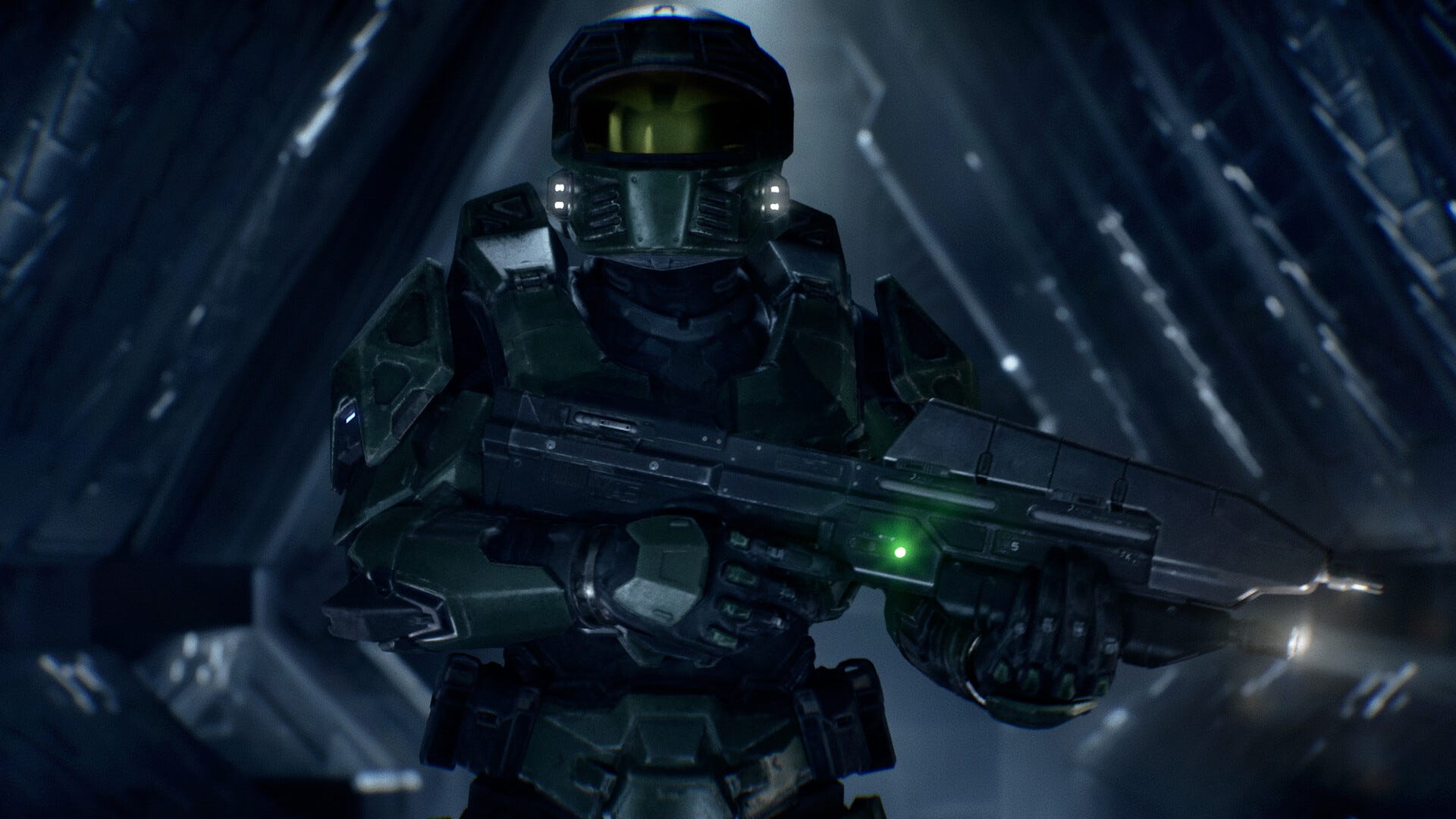
If there’s a phrase that sums up Halo Studios (formerly 343 Industries) in a nutshell, it’s “half in the bag.” Ever since they were created to handle the Halo franchise in the wake of Bungie’s departure, their Halo titles have been uneven, to say the least. Halo 4’s effective narrative direction was held back by trend-chasing gameplay additions which marred its multiplayer. Conversely, Halo 5: Guardians’ different but genuinely entertaining multiplayer was grossly overshadowed by the campaign’s awful story and subpar co-op mechanics. Finally, Halo Infinite managed to design gameplay that felt like a true step forward for the classic Halo formula, but placed it into an obviously unfinished, uneven campaign that ends right when it feels like it’s getting started. With their track record leaving Halo fans disgruntled, their decision to remake the first game came across as an easy way to regain some trust. All they were doing was adding some of the fun new toys the later games had, bringing the visuals up to modern standards, and smoothing out some of the worst moments from the original game. “Even Halo Studios can’t possibly mess this up,” I said to myself at least once a week in the months leading up to Halo: Campaign Evolved. Unfortunately, I should have known better.
I’ve played games that didn’t run so great on my computer before, but Campaign Evolved’s hardware issues are truly baffling. AAA gaming’s overreliance on DLSS frame generation is on full display with this title; it was the only way for me to get a consistently decent framerate with settings ranging from medium to low on my two-year-old machine. However, the game’s prerendered, 30fps-locked cutscenes don’t handle DLSS properly. DLSS is normally fine because it doesn’t noticeably detract from the quality of the image, but during this game’s cutscenes, it introduces serious ghosting that smears the image and desyncs the sound effects. If that wasn’t sloppy enough, frame generation introduces a small but ever-present amount of input lag which makes the game feel a little heavy and unresponsive, especially when aiming. Last but not least, many post-processing effects like some ugly film grain can’t be disabled, which adds unnecessary performance tax. I can deal with lower framerates or less pretty graphics, but Halo: Campaign Evolved’s performance issues genuinely made it worse to play.
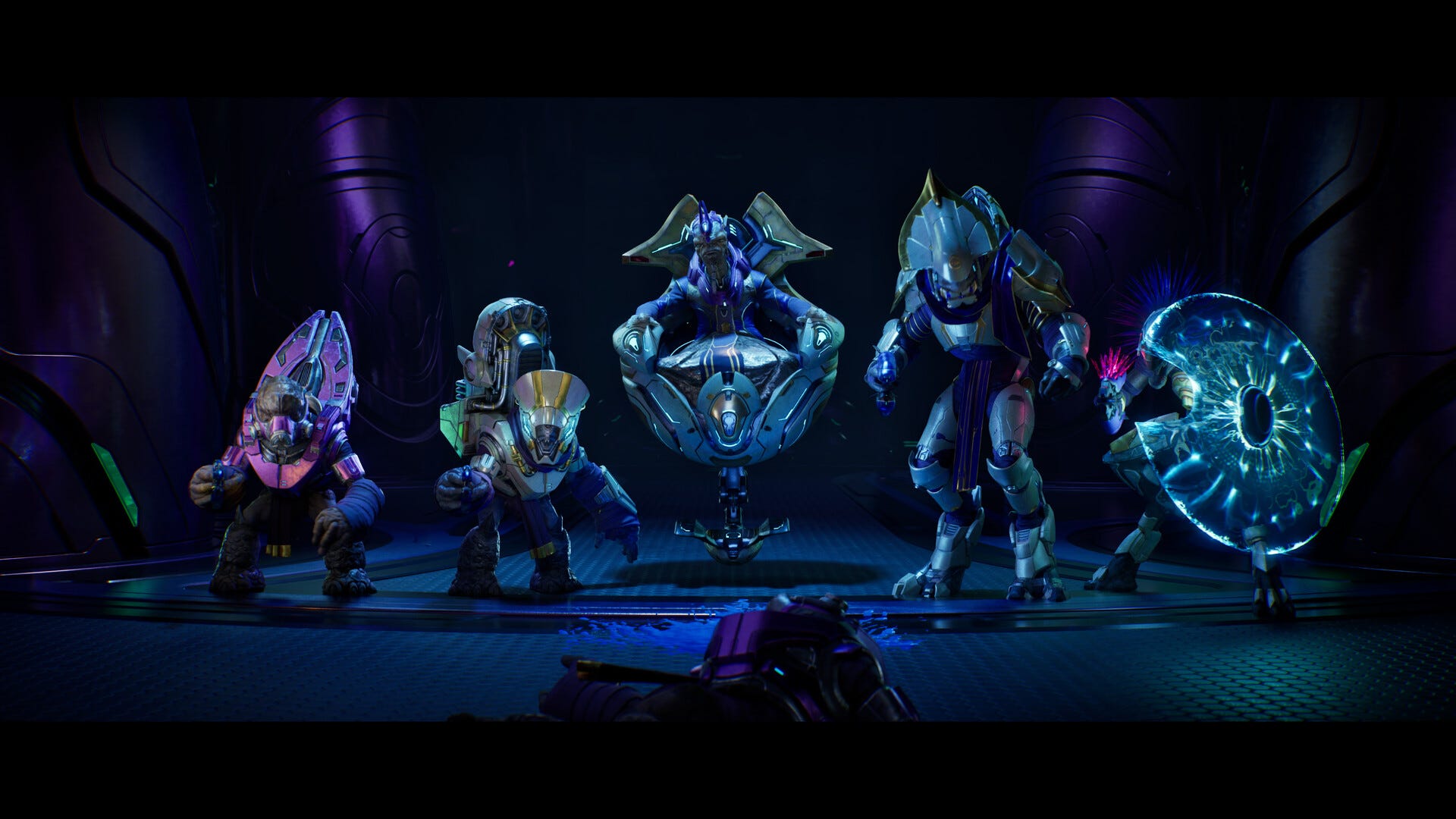
When I really want to experience something, I can deal with performance issues. I didn’t even mention my struggles to get Indiana Jones and the Great Circle to reach 60fps in my review. However, Campaign Evolved never motivated me to tough it out. The game includes a brand new three-level story; having already experienced the original, I started there. The new story is about Master Chief and Sergeant Johnson storming a Covenant ship in search of the location of High Charity, the Covenant homeworld. As an intentionally-superfluous prequel, this story is seriously bottlenecked, contributing to a fanfiction-esque feeling. Johnson seems almost self-aware about reappearing for the first time since his death in Halo 3, toting a ridiculous custom gun the player can never acquire. “Woo, Chief and Johnson, just like old times, huh?” the game seems to say to me. This stuff would bother me less if the dialogue was anything but cliches and clumsy exposition; characters pretty much just tell you everything about themselves and how they’re feeling with no tact or realism. Halo’s stories have never been groundbreaking, but they’ve always been carried by snappy, solid dialogue. None of that was present in what I saw.

The gameplay was, thankfully, where things felt the most Halo. Returning weapons like the legendary Magnum felt just like they should, and I’m not the type to complain about some old favorite weapons like the Battle Rifle and Sentinel Beam making a return. It’s great to be able to wield the iconic Energy Sword which was previously exclusive to the enemy in Combat Evolved, although its lunging range is pitifully small. Gameplay features from later games such as sprinting and vehicle hijacking fit in seamlessly. Campaign Evolved also introduces the Brutes first seen in Halo 2, making them significantly bulkier than in previous games. This lends them a niche beyond what Elites already fill as a tough and smart infantry foe. Halo Studios has had a lot of missteps over the years, but their games do at least consistently manage to have gameplay that feels good at a basic level.
This brings me to the real problem at the core of Halo: Campaign Evolved, though. Halo Studios might have viewed this as an easy win, but I think remaking a timeless classic which has aged gracefully is pretty dangerous territory. Many remakes exist to uplift a game from an era where the technology behind it actually held it back in some way. Even this year’s Star Fox, a remake of an N64 classic whose gameplay hasn’t aged a day, had room for significant visual and narrative upgrades that made it feel worth the effort. Halo: Combat Evolved, by contrast, looks a bit dated but has otherwise ageless presentation concerning its performances and music. Its gameplay remains the foundation for modern shooters, and everything that’s a little weird about it like the weapon balance just gives it character. Remakes have to work hard to justify themselves to players, especially when the original game is so easily accessible in the excellent Master Chief Collection on most platforms.
Campaign Evolved’s additions don’t give it a real chance of overshadowing the original. A wider arsenal is nice, but it’s not something which Combat Evolved ever needed to feel fun or complete. Three new levels would be a better selling point if the story weren’t so trite and the gameplay so standard. Script rewrites are roundly downgrades and some of the new quality of life features are utterly patronizing. Watching the game put objective markers over camouflaged Stealth Elites seemed almost like a parody of itself. Apparently the original game’s infamous worst level, The Library, has been redone, but I didn’t make it far enough to evaluate that myself. The original game may not look as smooth and detailed as games today, but at least there’s no pointless film grain and the cutscenes never smear around on themselves. In an era of pop culture that increasingly looks backwards, Halo: Campaign Evolved fails to do so with any finesse or reverence. The game unwittingly forced Halo Studios into exactly what they were trying to escape; unfavorable comparisons with Bungie’s work. If it were an original title, I might have powered through and finished it, mediocre or not. As it stands now, this isn’t worth the fifty bucks from someone who already has - and cherishes - the original game.

The perfect palate cleanser for a disappointing sci-fi shooter was an immersive dip into Fallen Aces’ gritty world of pulp fiction. Caught in the crosshairs of a gang and stuck in the middle of a conspiracy against the long-disbanded superhero group The A.C.E.S., Detective Mike Thane has to sneak, sleuth and scrap his way from one lead to the next. First released into early access in 2024 from dependable publisher of niche ‘90s PC game genres New Blood Interactive, Fallen Aces is the first commercial work from indie developer duo Trey Powell and Jason Bond. You wouldn’t be able to tell these guys are amateurs just by playing the game, though; Fallen Aces is an immersive sim, and nobody who actually cares to make one of those ever half-asses it. Carrying on the legacy of games like Thief and Bioshock, Powell and Bond have clearly worked hard to create a lived-in world down to the last interactive detail - no matter how long it takes them. With two years between the early access release and Episode Two, they’re taking their time on this labor of love, and it’s looking all the better for it.
Immersive sims are a delicate balance. Their strength lies in two aspects of games which are quite difficult to execute properly: an open-ended approach to problem solving and highly interactive, detailed environments. Even though all immersive sims have these characteristics, some of them prioritize certain aspects more or less. System Shock is a combat-heavy game, whereas Thief emphasizes stealth so much that killing enemies is typically not allowed on harder difficulties. What makes Fallen Aces so special is that it’s one of the only immersive sims I’ve played where all of your possible approaches feel like they have a real seat at the table. Sneaking is more than just crouch-walking and smacking goons in the back of the head, with the ability to hide in shadowed areas and throw objects to distract foes. When it’s time to put up your dukes, brawling feels good as you duck and weave around mooks, kick palookas away or off of ledges, and wind up big punches to send foes to Mr. Sandman. Some situations call for subtlety and guile, while others call for a more direct approach; it feels good to try out lots of different strategies with the help of the quicksave feature.
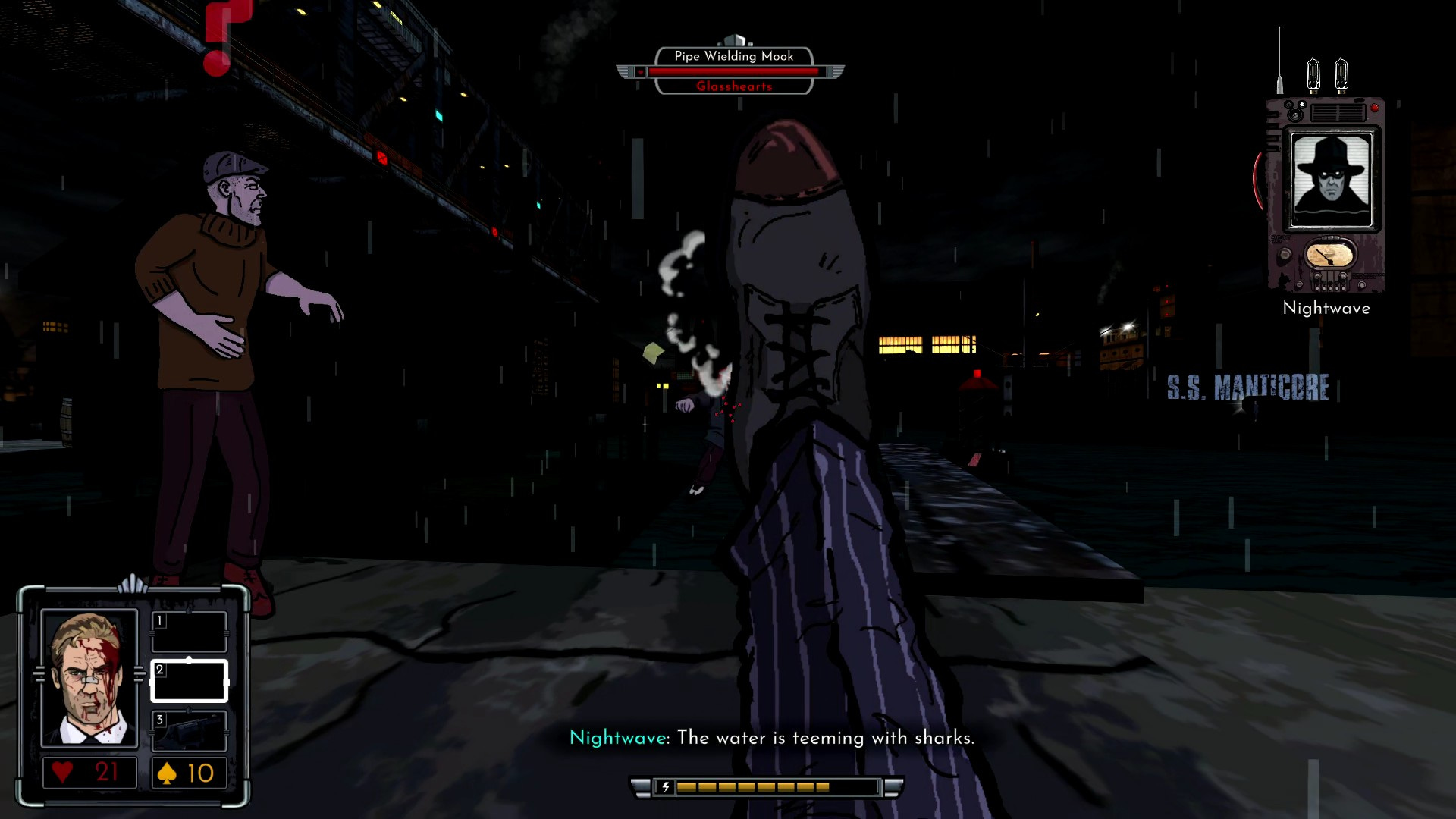
As with any immersive sim, the levels are doing the majority of the legwork in Fallen Aces’ deeply varied gameplay. Each level has a few main and side objectives, all of which accommodate at least two or three different ways to clear them. Levels greatly range in size and scope, and each is structured with a different balance of stealth and combat in mind. Far from straightforward marches from point A to B, you’re encouraged to investigate everything you see - and quite often rewarded for it. The second level, “Water Under the Bridge,” is a great example. Thane must cross to the other side of the docks and lower a drawbridge to make his escape. Skulk through shipping containers and warehouses to take a cable car across, where keen-eyed players can follow hints about a secret shipment with a tommy gun and more. Sneak over to a shack by the dockside and grab a speargun to ward off sharks - or mooks - as you swim across. Spy a propane tank through a crack in the wall and blow it open to reveal a path to the rooftops and across the drawbridge’s own scaffolding, taking a rifle off of one of the snipers perched there. Most levels in this game match this impressively layered, deeply replayable standard. Design like this takes a lot of time, of course; thankfully, it also makes the levels that we have for now significantly more replayable.
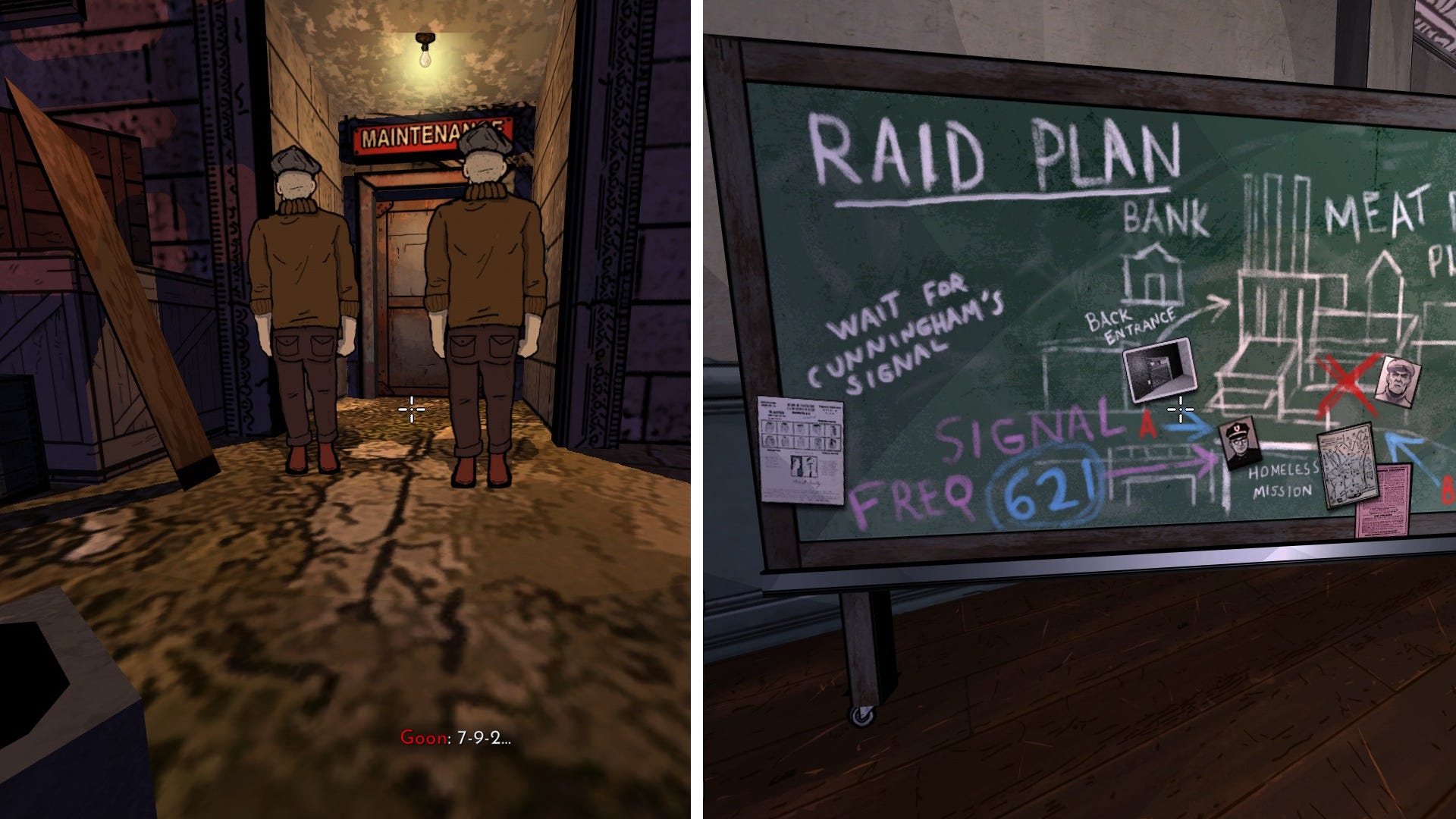
The best part about these levels isn’t just how much there is to do, though; it’s all the awesome ways you can do it. There’s a host of weapons to pick up, from your conventional firearms and lead pipes to whatever’s lying around like trash cans and baseballs. A resourceful player can throw everything and the kitchen sink at their foes or use their environment in even more creative ways. A bar filled with gangsters might be tough to shoot through, but there’s nothing they can do about lighting up the alcohol stock right under them and blowing out the floor! A trashcan lid isn’t the best weapon, but it makes a solid shield from knives and pipes. Find the right transmission code to call in a police raid on a local mob front, then inspect the aftermath. Unlike some games where you play as a detective, some investigation definitely factors into the gameplay; the plot and puzzles are largely unraveled via diegetic clues like notes, signs, and mobster chatter. Everything you can do feels rewarding - except perhaps for sticking your finger into electrical outlets, which you can do if taking 2 damage is something you’re into. With a limited inventory of just three slots (plus one extra slot each for food and ammo which can be purchased later on), you’ll be thinking carefully about everything at your disposal.
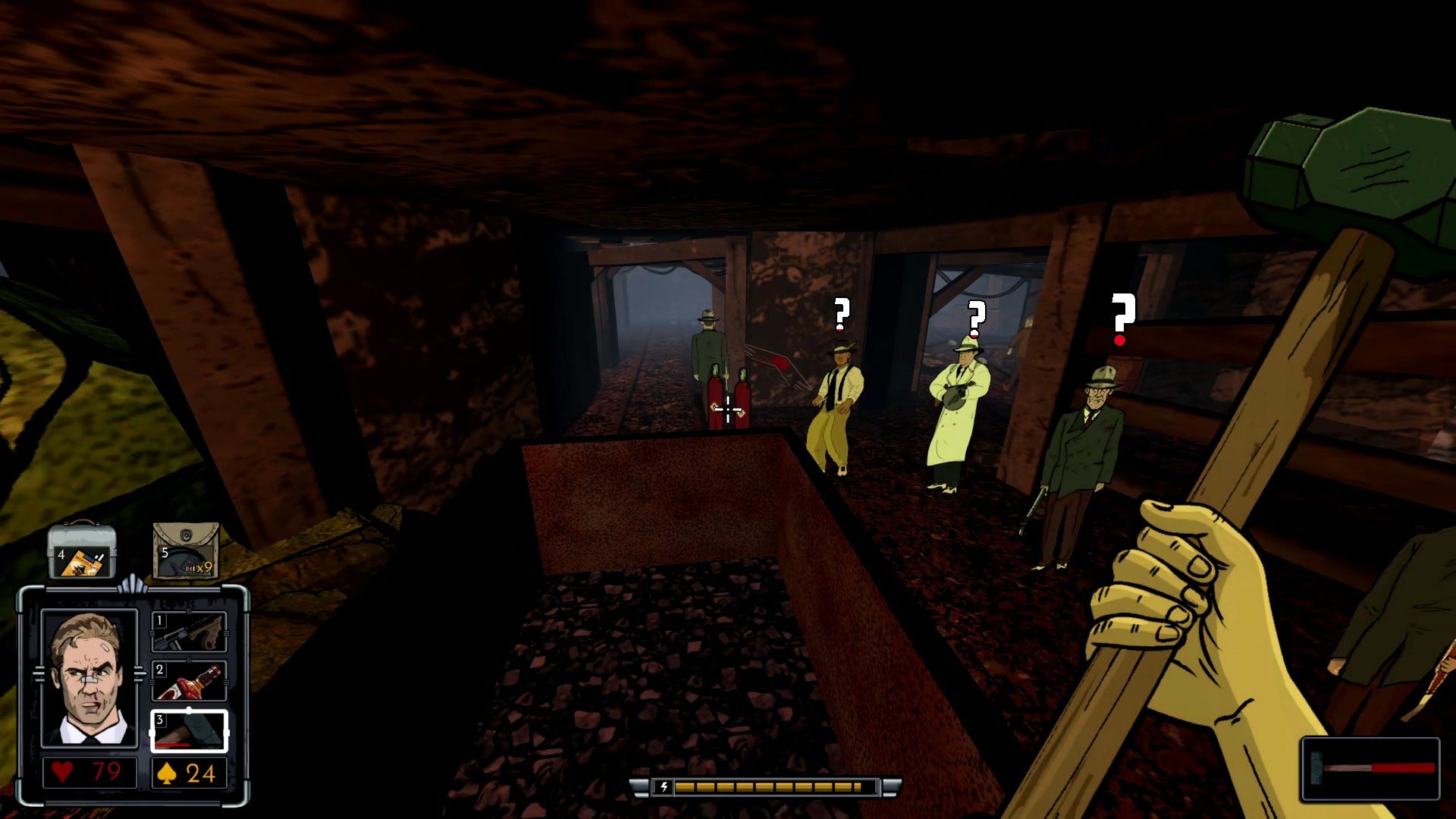
All of these aspects were present in the first episode of Fallen Aces, but the second episode dials them up to eleven. The rival Glassheart and Benedetto gangs are joined by the corrupt police, a third faction that won’t get in your way unless you act too suspicious around them. The exceptional first level of Episode Two, “Friends in High Places” sees Thane outmaneuvering all three groups in a sprawling slum. “Bare Threads” allows you to drive around a huge country road, stopping at points of interest and facing down mobsters in some fresh locales like the forest and an abandoned mine. Most of the stages in Episode 2 also feature companion characters who can help you in combat. They carry both lethal and silent, nonlethal weaponry to match your approach, and you can tell them to wait in one spot if you don’t want them getting in the way. I had a couple issues with the levels in Episode Two, namely some texturing and modeling errors and difficulties with the flow and clarity of certain objectives, but a patch came out shortly after I finished it which fixes everything I noticed and then some. They were merely the kinds of problems I expect from early access games, and they’re already fixed! Gotta love it.
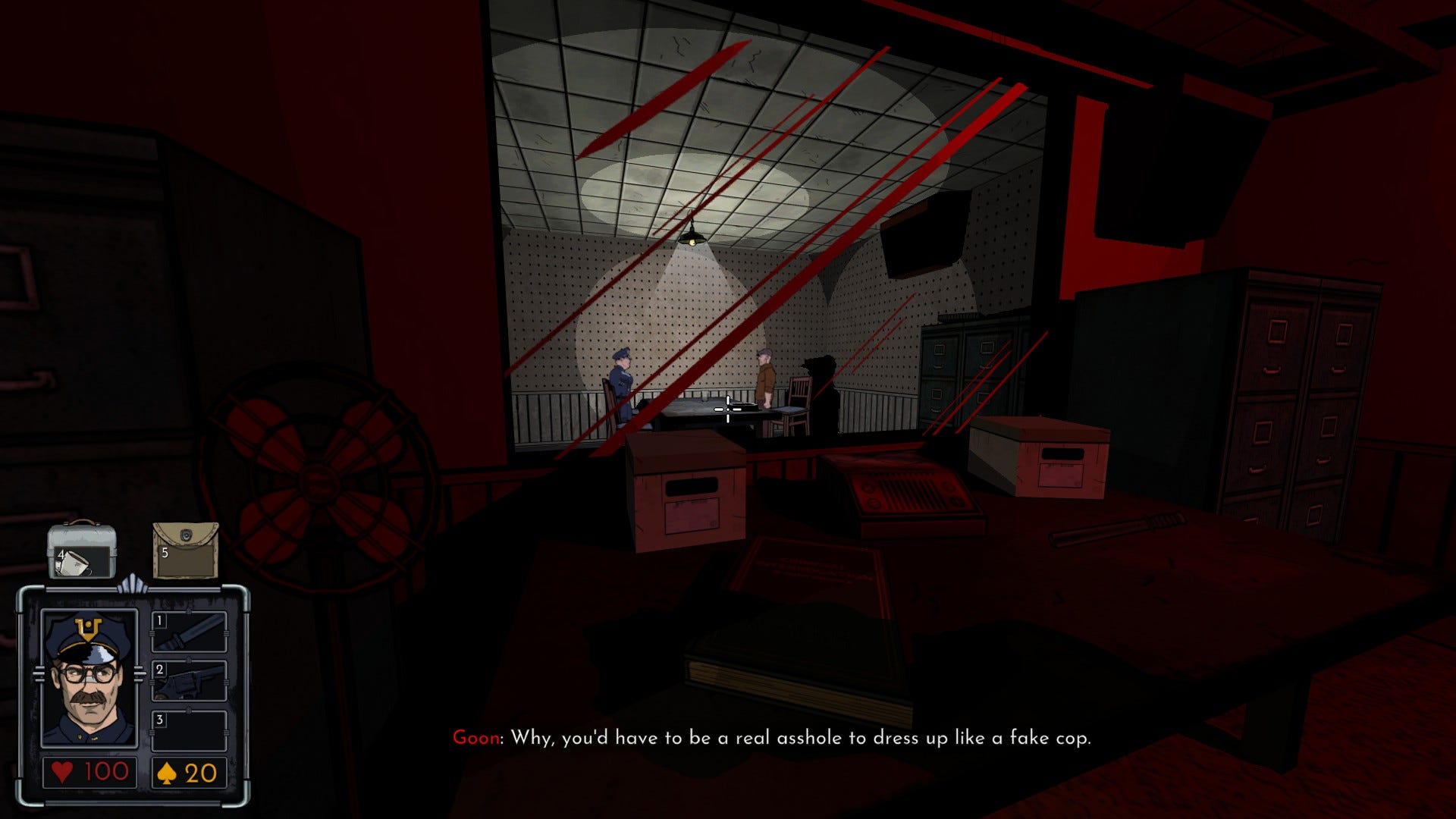
Last, but certainly not least, is the story. Immersive sims are known for strong worldbuilding and narrative, and Fallen Aces is no different. It’s the sort of hard-boiled crime thriller which wears its influences on its sleeve, with an effective visual blend of 3D environments and 2D objects and characters evocative of old pulp comics. This classic aesthetic is baked deep into Fallen Aces, complimented not only by the stylistic visuals but also by the flavorful performances and excellent soundtrack. Josh Barron’s score is dripping with noir-style smooth jazz and dramatic atmosphere, and the vocal theme introduced in Episode Two, “Heart of Glass,” feels like something straight out of a Bond movie. The game doesn’t just talk the talk, too; the conspiracy against the former A.C.E.S. is a juicy one filled with interesting characters and secrets.
Fallen Aces does a good job balancing a tongue-in-cheek reverence for the crime classics and its own strong characters and story, carried effectively by the performances. Mike Thane (River Kanoff) is the archetype of the cynical P.I., a consummate wise-ass and functional alcoholic with just the right amount of guile to make it in a dirty city like Umburgh. Delia Price (Marissa Lenti) contrasts nicely with him as someone who’s plenty tough but not quite so beaten down by it all, and former A.C.E.S. member Nightwave (Kamran Nikhad) keeps a tight grip on the glory days while the world tries to leave him behind. Even the common thugs you face are entertaining thanks to Gianni Matragrano, an up-and-coming voice actor who made a name for himself dubbing boomer shooter memes. His Italian mobster accent is perfect, and there’s countless hilarious lines for every situation the goons can find themselves in. I’d throw in some examples, but this article’s got to end at some point.
So, why talk about these games at the same time? As I mentioned before, neither of these really constitute a normal “review,” but they also strike me as a particularly evocative example of the divide in the video game industry today. Released within a few days of each other, Halo: Campaign Evolved and the second episode of Fallen Aces represent complete opposite ends of the spectrum. Campaign Evolved is a franchise remake made by one of the richest companies in the world, and Fallen Aces is an indie passion project carried by the tireless efforts of a couple guys and a publishing company whose Steam page can be reached via the URL wehate.money. With significantly more resources, more manpower, and the template of an existing classic to work off of, Halo Studios was only able to create something that felt lazy, unrefined, and redundant. All Trey Powell and Jason Bond really have is a publisher, patience, and each other, yet the only things I’m left wanting from their game are bug fixes and, well, more of it.
I’m sure it’s no news to the vast majority of my readership that the people who deserve the most are rarely the ones who have it. What I want to emphasize, as always, is that games are art, and art thrives when the artists come first. When Bungie made Halo: Combat Evolved, it had been years since Jason Jones and Alex Seropian first founded the studio. Their staff knew each other well and shared a common goal. Halo Studios’ goal was merely to try and keep their established franchise popular, cycling contractors through a revolving door and rushing development in the process. Games aren’t as closely associated with their authors as books or even movies, but if it’s anything I’ve learned from the classics and modern games which inspire me like Fallen Aces, it’s that the authors are no less important here. A good game can come from big studios, one person programming in their spare time, and everywhere in between, but they’ve all got one thing in common; they’re made by people with genuine inspiration who were given the space to make it a reality.
No posts
Comments
Nothing yet. Say the first thing.
Sign in to join the conversation.