
We are living through a structural reset in the games industry (yes, even I’m going to discuss about it; with presenting solutions for industry sustainability, of course).
Budgets have inflated. Production cycles have slowed. Content pipelines have become heavier and less predictable. Science-based optimization has been optimized for squeeze that churn users. Players are spreading time among multiple medias more, and many claim “AI is going to kill our jobs”, and such. While this all is cumulating, at the same time, player expectations have shifted toward something entirely different, e.g., living, evolving, and social experiences that persist over time, or just towards wanting, well, better games and experiences.
Growth is no longer driven by acquisition alone. It is driven by retention, depth, and long-tail engagement. Similarly, the industry is no longer rewarded for producing just more content and squeeze over it. It is rewarded for producing better games, and, as I get to discuss this topic here more, better systems around them.
This creates a fundamental shift in how games should be designed, built, and scaled.
The old model:
Build a game
Ship content
Maintain via live ops
Move to the next project
The better model:
Build systems, and launch “an experience engine” platform
Experiment rapidly for optimizing performance in smart way, even when building just the first game
Through one game (or more games), scale across multiple games, genres, and audiences
Expand through modular extensions
This is where experience systemization becomes critical for the better model. Not only as an optimization mean, but as the core strategy and mindset model.
When you are as a reader exploring this topic, please note that lots of the examples lie around games and genres I like to blog about, e.g., Shooters. This doesn’t say, though, that Shooters are best benefitting from experience systemization alone. As I see it, there are multitude of genres and experiences these same principles and models can be used for, e.g., even for simulation / tycoon games / idle games, puzzle games, 4X / strategy, MMORPGs, and such.
The key lies in understanding a market, and its near-by markets deeply, and using experience systemization as the main anchoring method for pulling things together the way this article discusses about experience systemization.
Note: This is a topic I’ve developed with a lot of care and passion. It’s something I return to often, because I believe it sits at the core of building a more sustainable future for our industry.
This is also an area where deep, cross-disciplinary experience matters. Systemizing experiences at this level requires a rare combination of systems design, game economy thinking, product leadership, and business understanding. It’s a space I’ve been operating in, and one I feel strongly positioned to help push forward.
Very few people in the industry are currently equipped to operate at this level when it comes to experience systemization. My hope is that through this post and effort of others, more can switch their world perception to right tune for achieving same.
Also, I’m open for opportunities as they come, if someone wants to arm me for building sustainability for their studio(s) through experience systemization.
Experience systemization in a nutshell means that you are no longer designing a single game. You are designing an experience engine, which builds sustainability and scalability for your business in smart way.
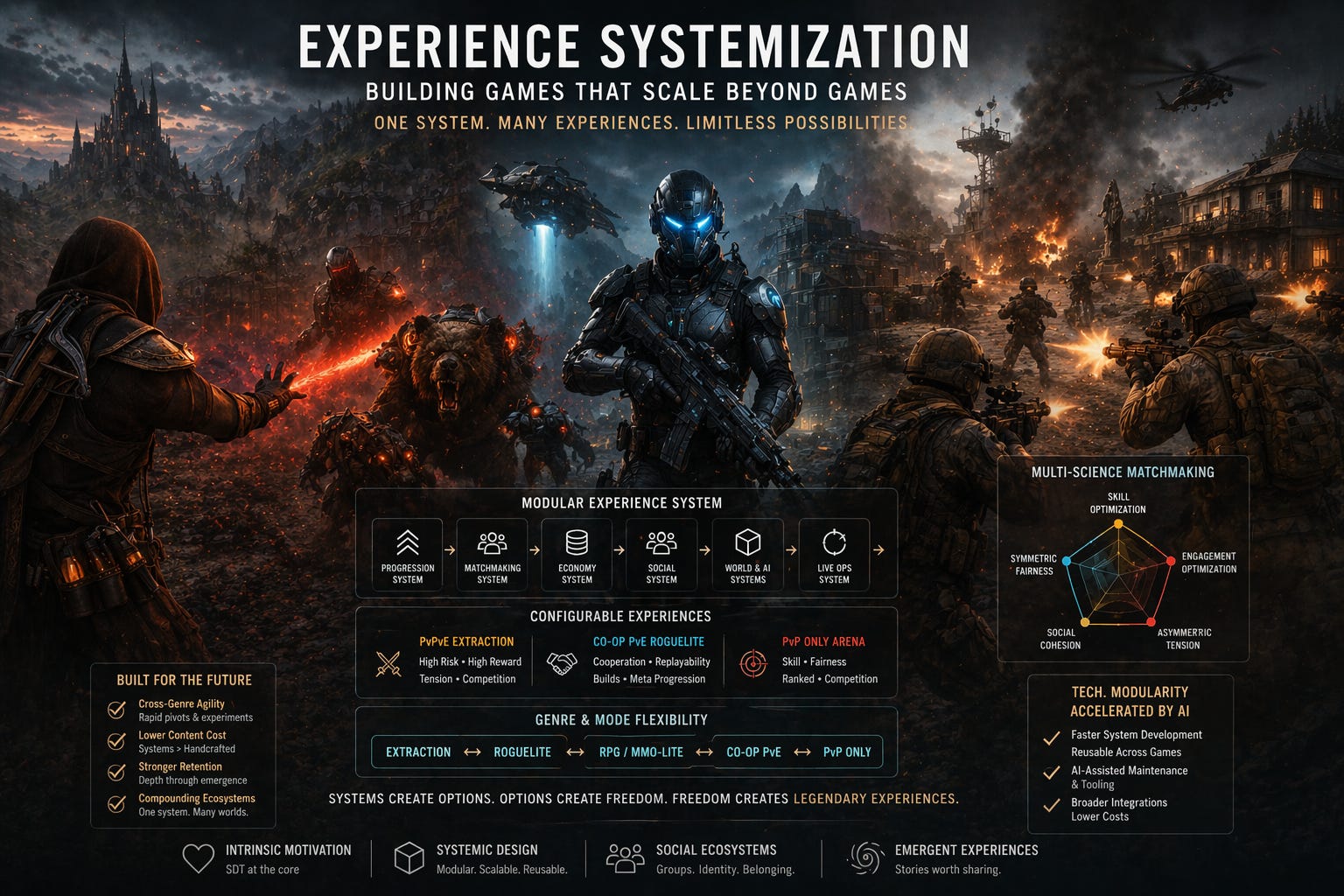
This engine consists of reusable, interconnected systems, such as:
progression
matchmaking
game mode(s)
economy / monetization
social structures / systems
world / environment simulation
live ops systems
When it comes to experience systemization, these are not just features. They are primitives / foundations as well as base systems that carry over not just one game but multitude of games, on top of which even for one game they allow adjustments between science bases, modes, genres, and, well, experiences combined.
When designed correctly, they allow you to e.g.,:
create multiple game modes smarter
mix and switch between game modes
experiment with monetization models
adapt games to player behavior without rebuilding the product
shift between genres for one or more games
scale from one foundational game base to new experiences faster
The result is a system that produces experiences and new games instead of building content and games again, and again, and again in an infinite loop. Simultaneously, I would say your genre-mastery accumulates on a much greater scale than previously, as it comes from a foundational layer that allows you to experiment between sciences and experience bases. Instead of just deepening one vector knowledge, you deepen your knowledge in parallel around a multitude of vectors.
Traditional design is often content-first. It focuses on e.g., levels, missions, and handcrafted sequences.
Systemic design is rule-first, and it focuses on:
mechanics
interactions
emergent outcomes
Instead of asking:
“What content do we build next?”
You can ask:
“What system(s) produce(s) the next thousand experiences?”
This is where e.g., mechanics → dynamics → aesthetics become “operational”. You build mechanics that scale and shift dynamically through configurations. In a simple way, you enable dynamics that vary, and you allow aesthetics to emerge.
The outcome:
higher replayability
lower content cost
stronger player agency
One of the most important principles in experience systemization is this:
Every system should be built on multiple scientific bases.
Let’s look, for example, into matchmaking. A traditional implementation optimizes for one variable, for skill-based matchmaking.
A systemic implementation optimizes for multiple sciences, e.g.,:
geo-based matchmaking
skill-based matchmaking
engagement-based matchmaking
symmetric matchmaking
asymmetric matchmaking
social cohesion
core gameplay data
server data
This transforms matchmaking from a static system into a configurable layer. You can switch between logics, combine models, run experiments, and adapt to player data and feedback.
With this, even something like matchmaking becomes a control system for experience design, and not just a backend utility. And, through this approach, you would have a revolutionary matchmaking system ready for not just one game but multitude of games.
Note: Interested about matchmaking systems? Read what I’ve wrote about them here:
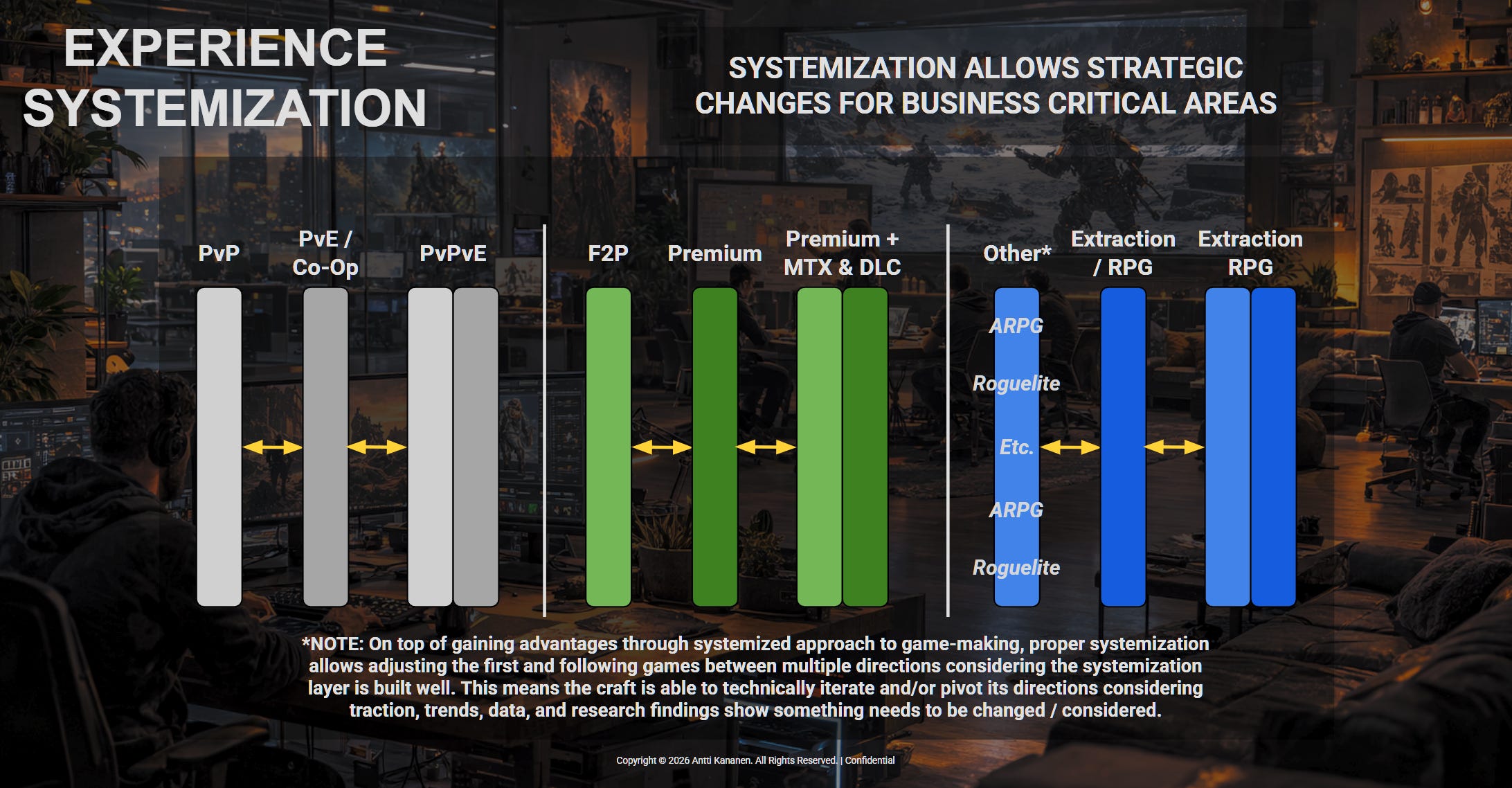
When systems are modular, genre is no longer fixed. It becomes a configuration.
A well-designed experience system allows transitions such as:
PvPvE → PvE-only → PvP-only
Extraction → Roguelite → RPG/MMO
Solo → Co-op → PvP
This is not about making everything flexible. It is about designing systems that support controlled transformation.
If AI systems, rewards, environments, and matchmaking are modular:
PvP pressure can be reduced or removed
AI presence, behavior, and difficulty can be scaled
rewards can be redistributed, and repositioned
The result is a fully different experience built on the same foundation. Of course, the foundation might require some finer tweaks, like for level design, but there are also ways how you could do all this within larger open maps and/or evolving biome-based maps.
Both, Extraction and Roguelite, share core primitives:
run-based loops
risk vs reward
progression layers
The difference lies in e.g., persistence and reset structures. With this in mind, you can build and experience, in a smart systemized way, how you can even go that far that you switch between genres.
If foundations in your systems for both genre directions are supported:
you can pivot or mix based on data
you can test player preferences
you can evolve the product post-launch
This allows you in one systemic shot to not just test and iterate a game to market wisely, but also over time spin new products out from same base, e.g., you could have an Extraction game acting as a spin-off base for your Roguelite game.
Switches between PvP, Co-op, and PvPvE can be also included in this mix, if you build things just the right way.
Note: Interested about what I’ve wrote about Extraction Shooters and Roguelites? Find more from these articles:
System design for experience systemization is not about unlimited flexibility. It is about choosing the right constraints early.
Meaning, which I acknowledge well here, that there are certain limits for the flexibility and switches between experiences. Like for those Shooter examples, you cannot make them to something extreme like to puzzle games without spending money expensively.
Key decisions for this matter include e.g.,:
environment / map / level scale and its emergency
world density and emergency
session structure
social depth
progression systems
Large-scale maps:
long-term tension
slower pacing
high-stakes extraction
Biome-based maps:
faster iteration
controlled variability
high replayability
Both support Extraction and Roguelite systems when it comes to Shooters. But they shape the experience differently.
With this in mind, system design for experience systemization is about selecting constraints that maximize future optionality rather than aiming for building a base for unlimited choices.
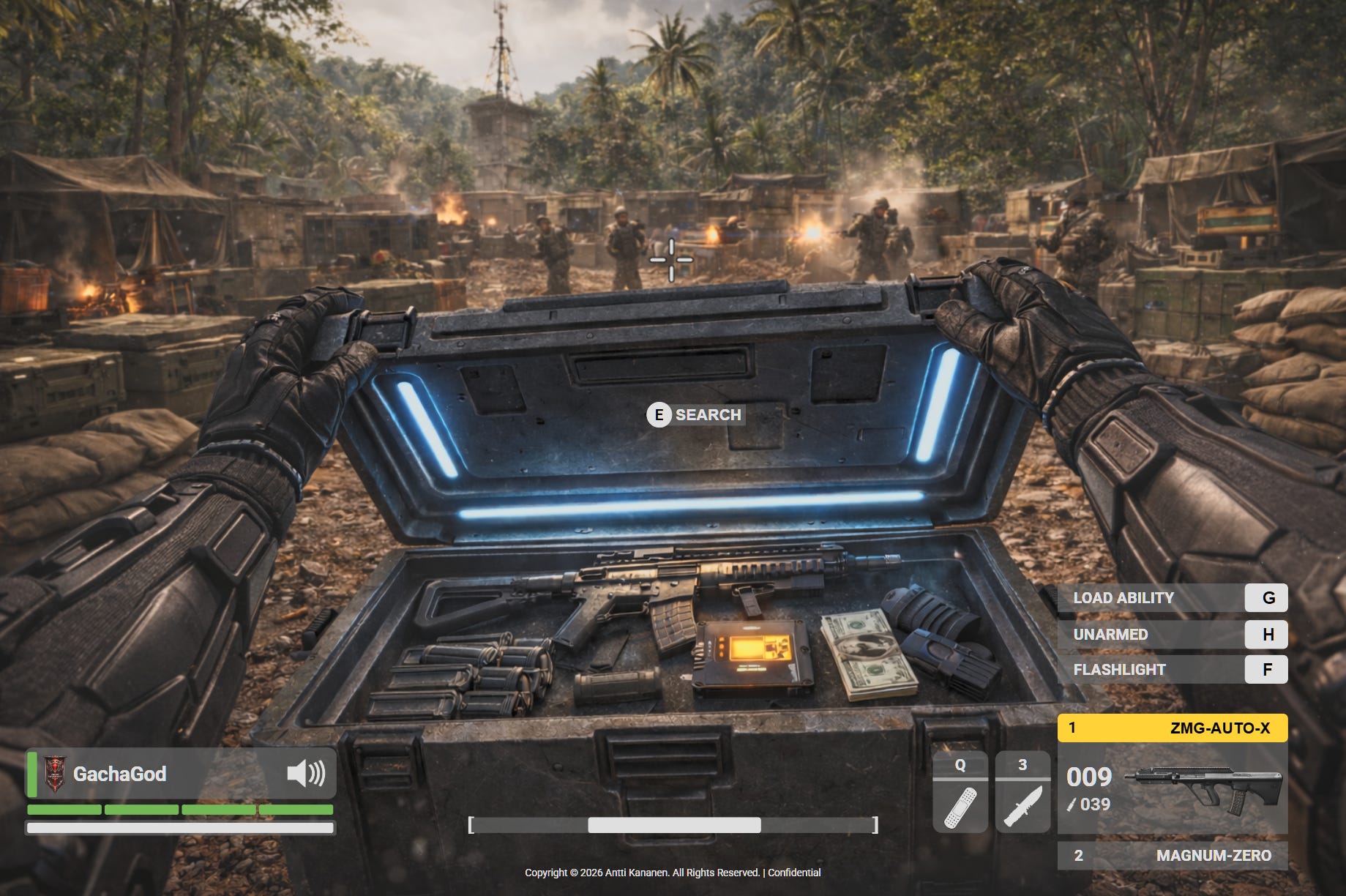
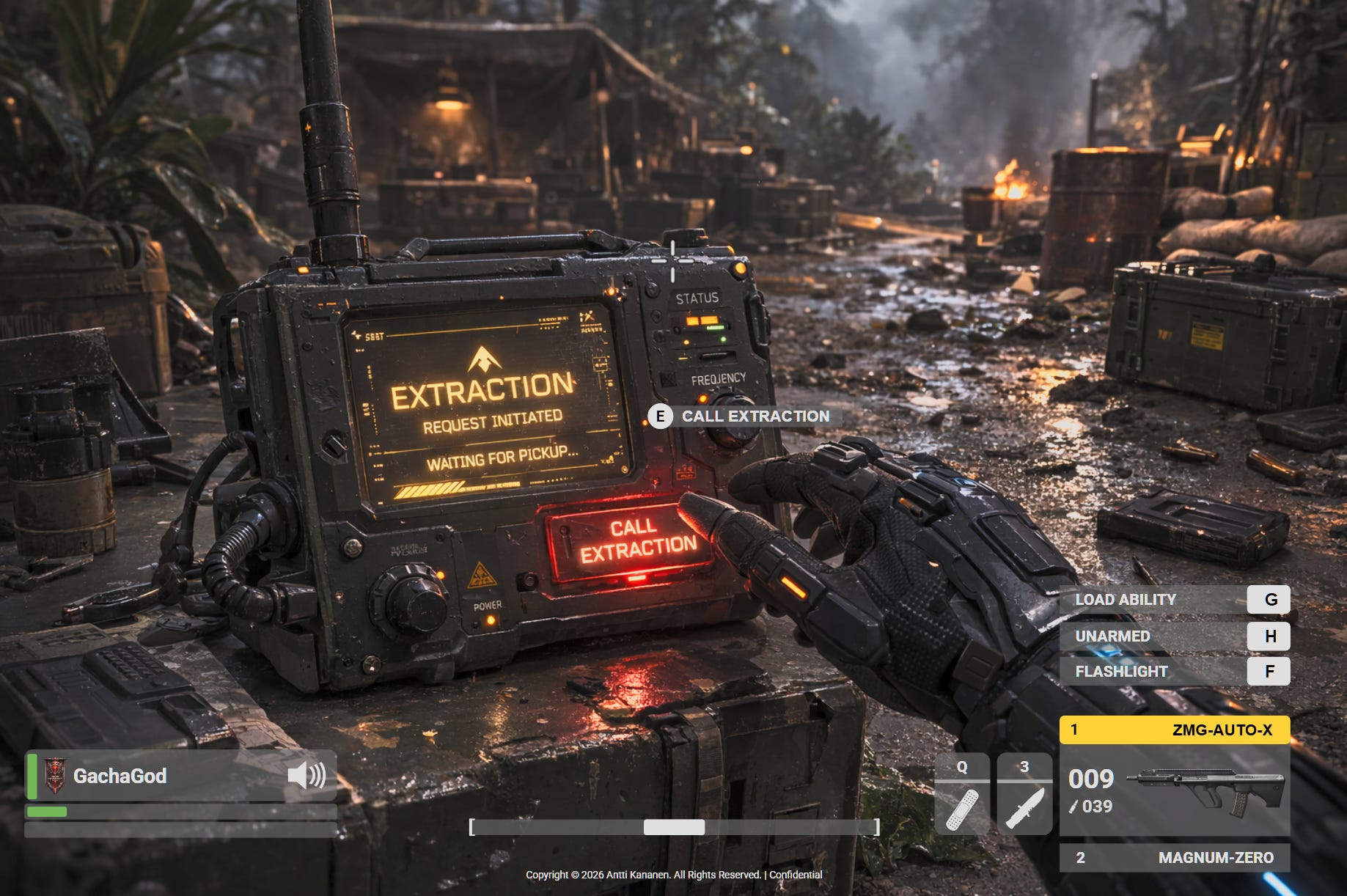
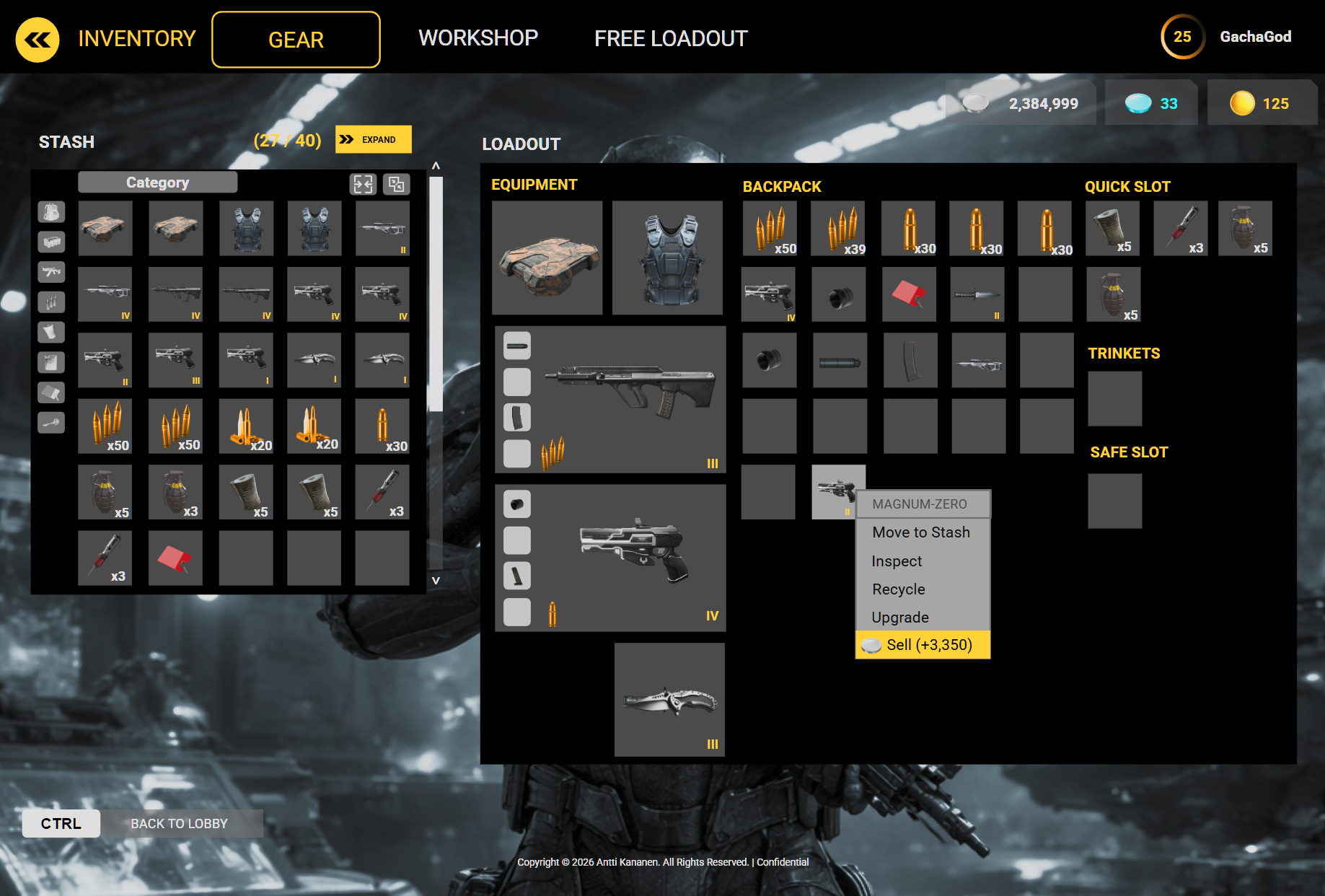
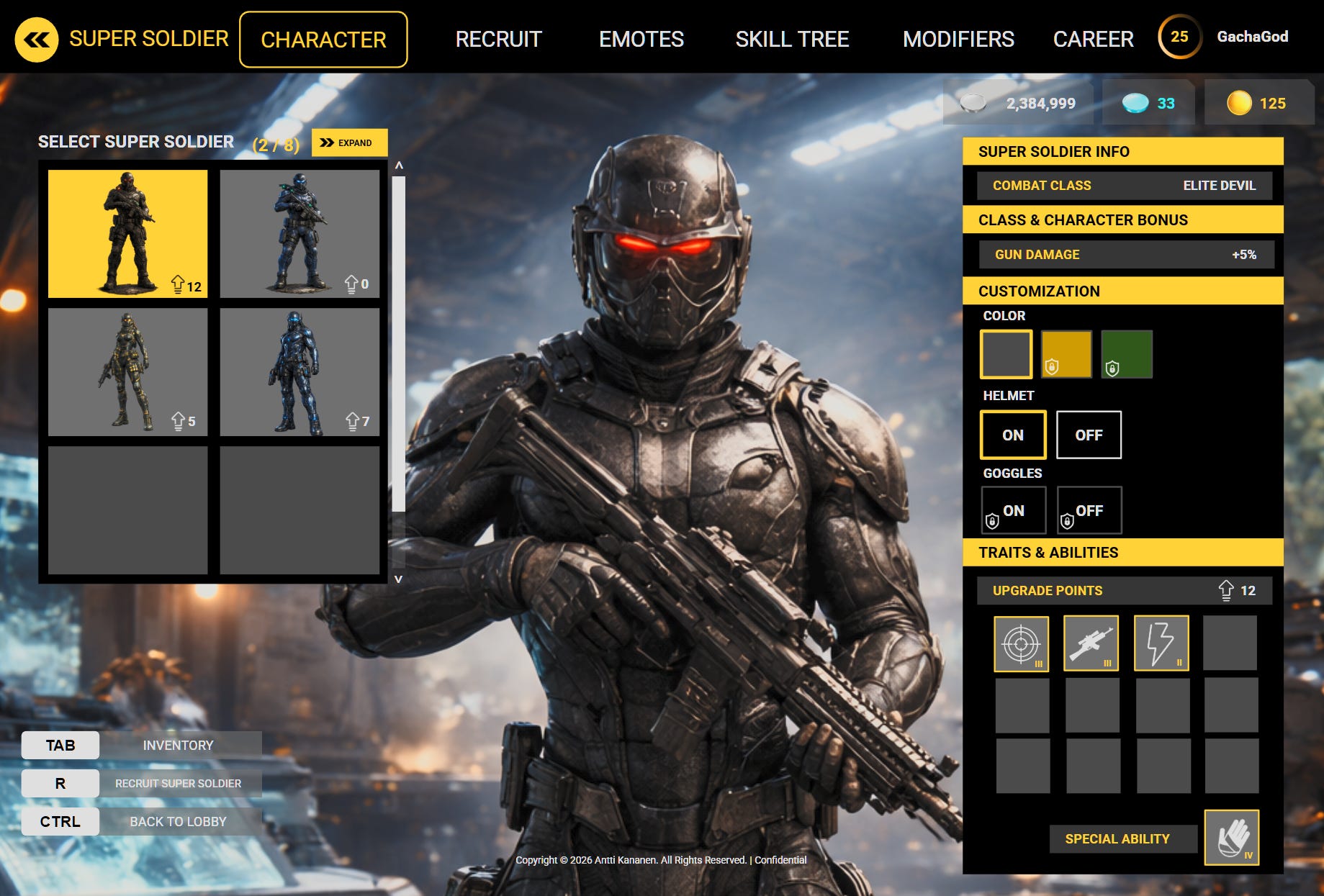
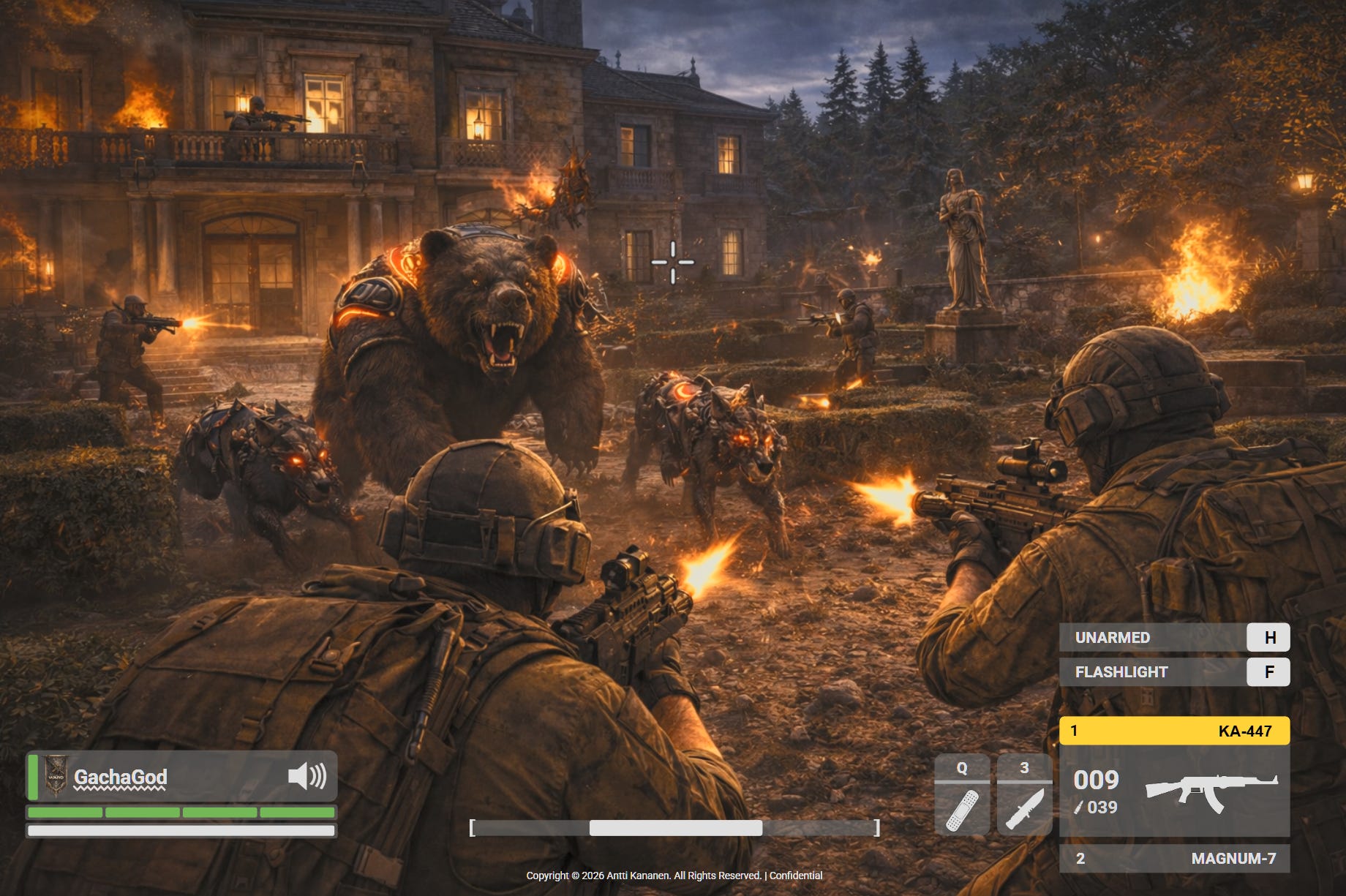
This game concept example, I’ve made myself withing couple evenings, can be understood, from experience systemization’s point of view, not as a single game but as a system configuration.
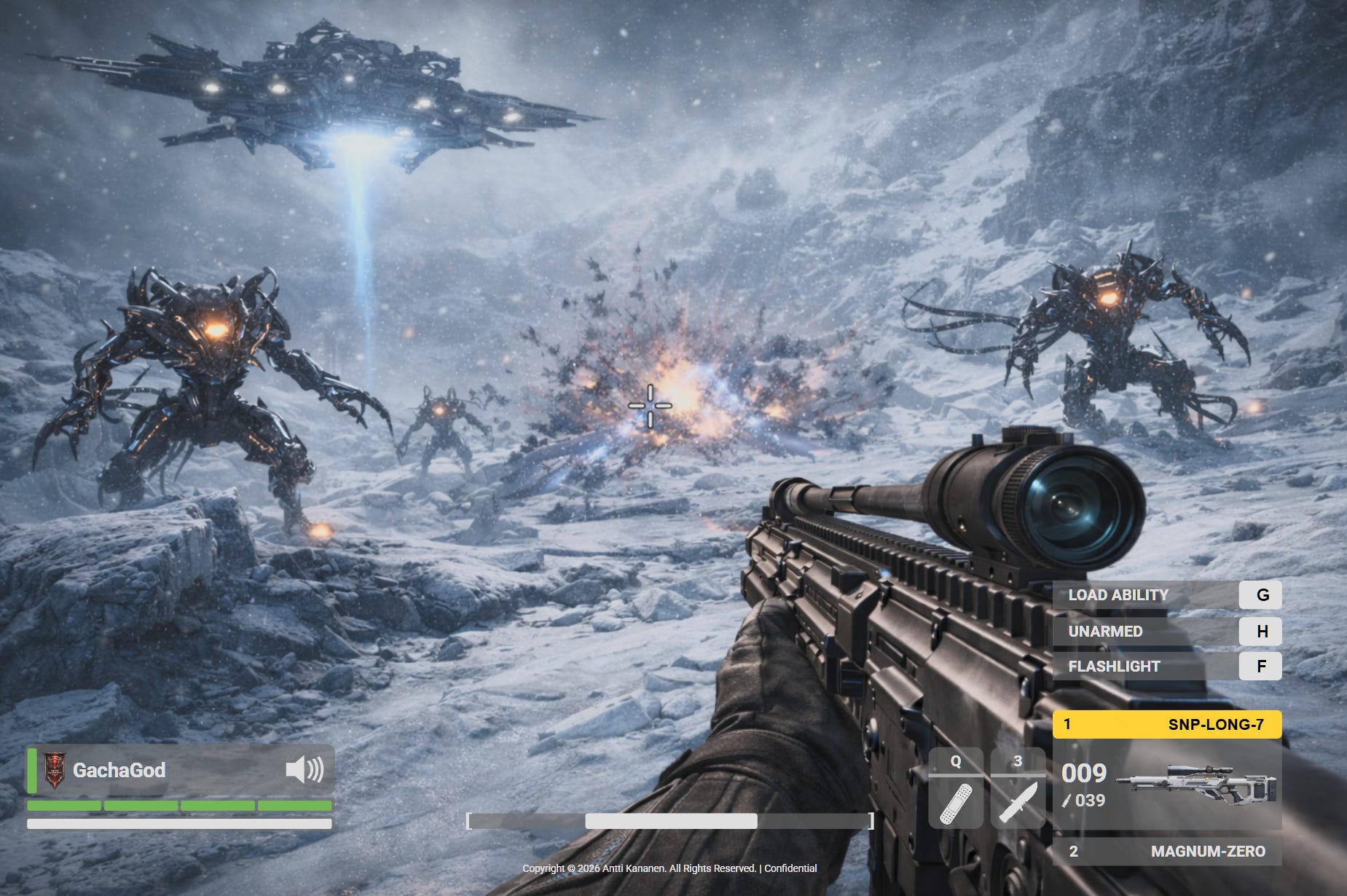
Deploy → Engage:
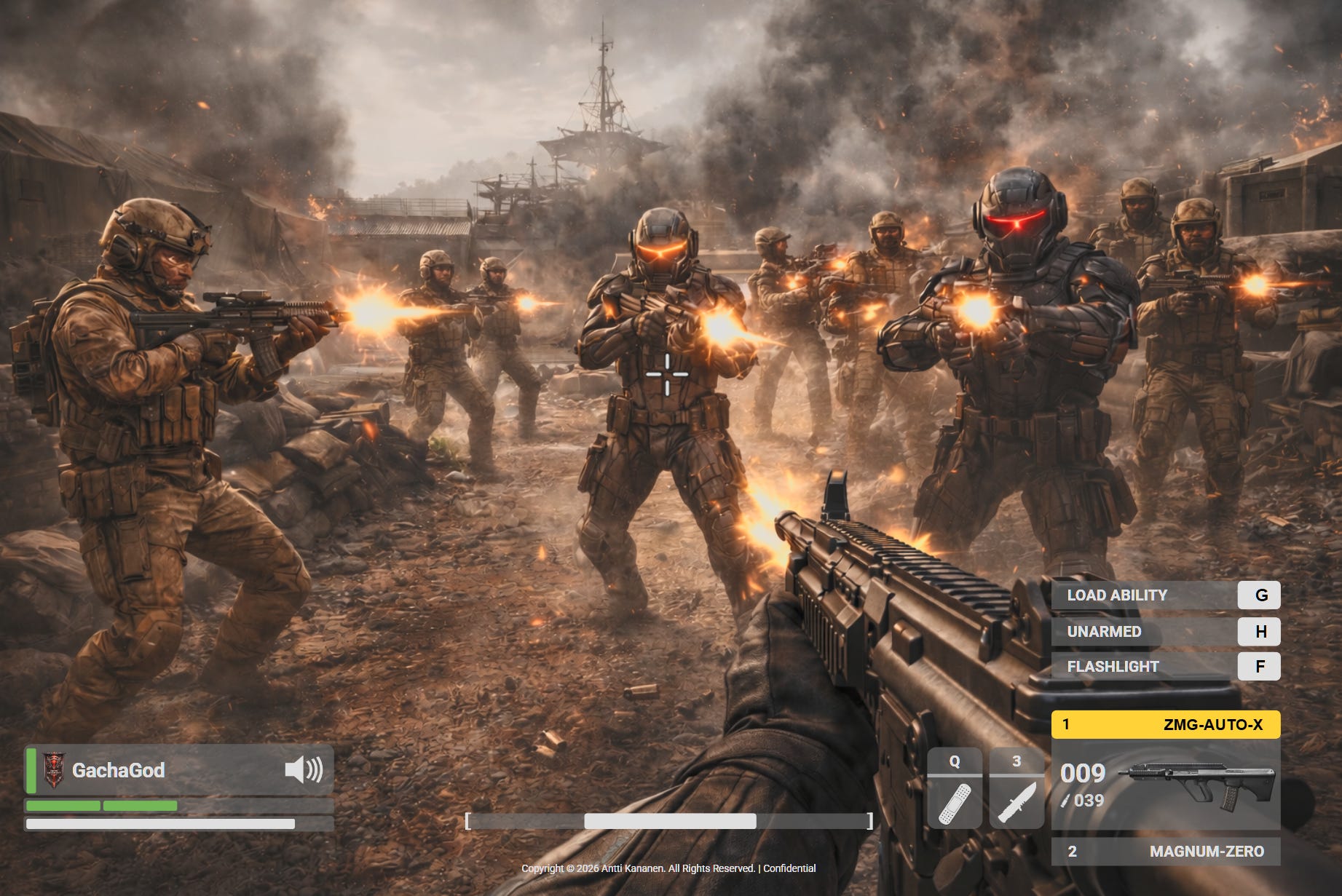
Loot:
Extract:
Upgrade / Maintain:
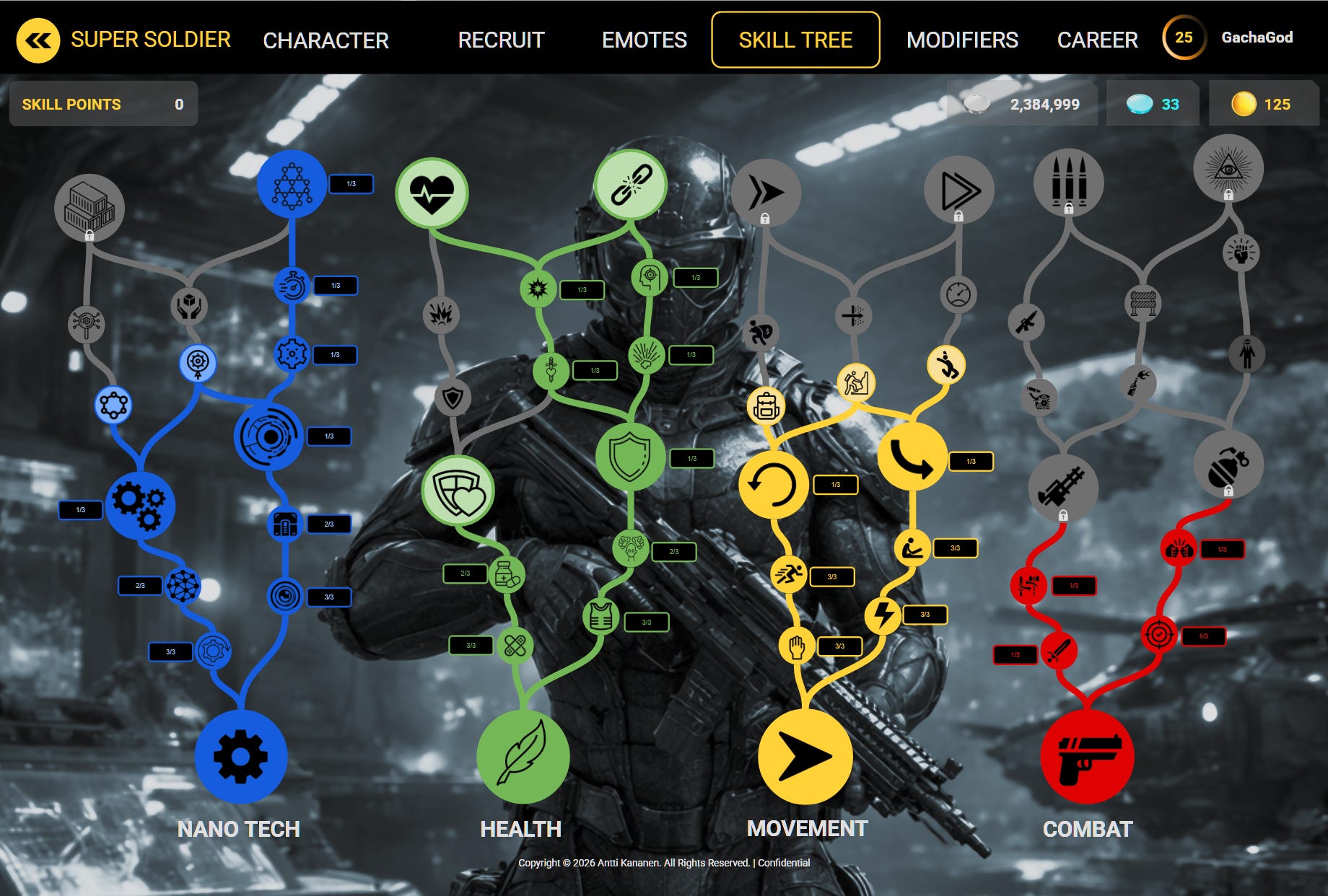
With adding e.g., Class and Roguelite systems, you get e.g.,:
temporary power growth, lost at character dead
combinatorial builds and fantasy explorations
deep economy, which allows also later DLC / microtransactions-based monetization opportunities, if wanted
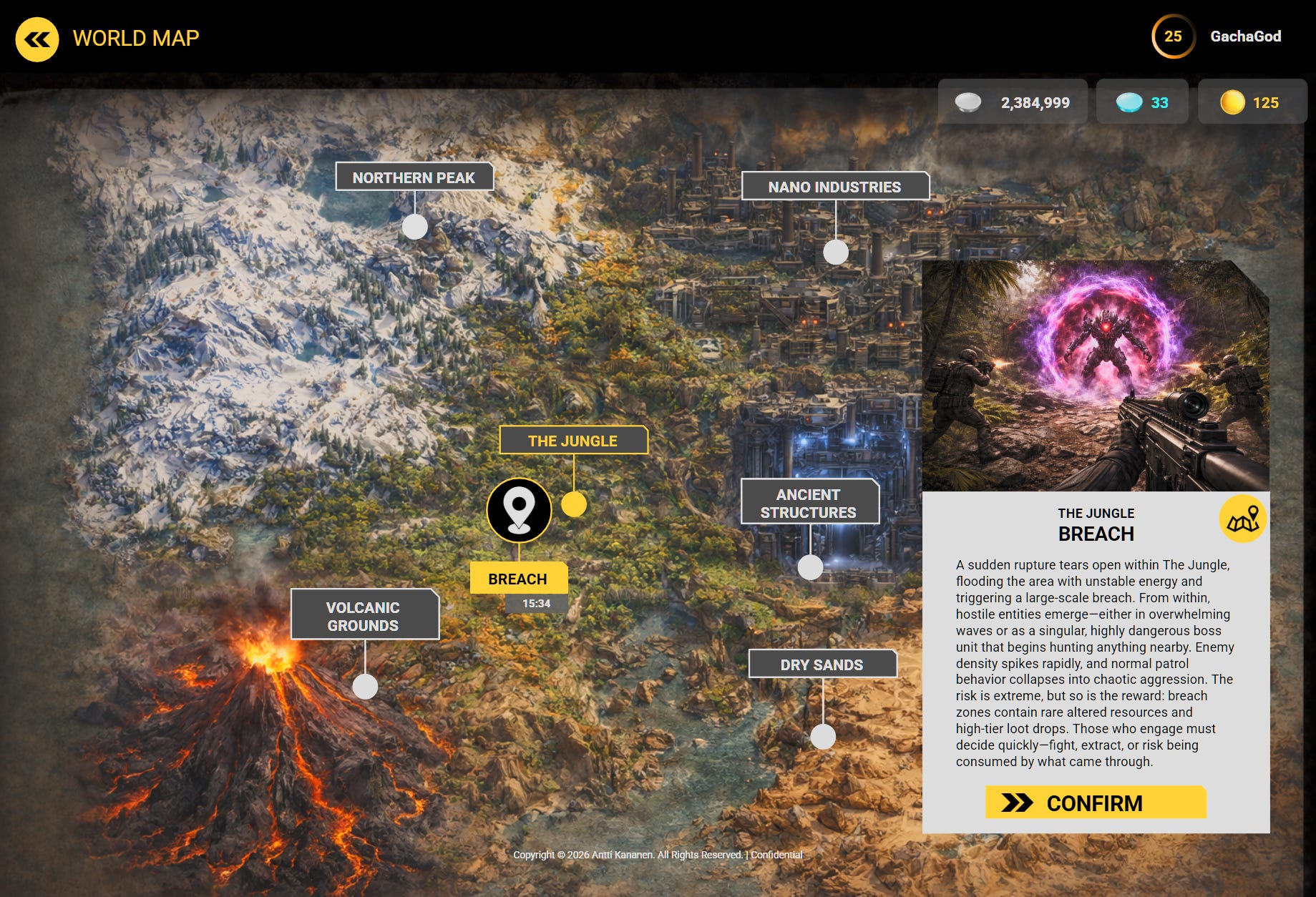
Well planned environments bring lots of dept, which suit for Extraction Shooters, Roguelites, and/or their mixes.
For example:
multiple environments / biomes
dynamic events (e.g., night, breach)
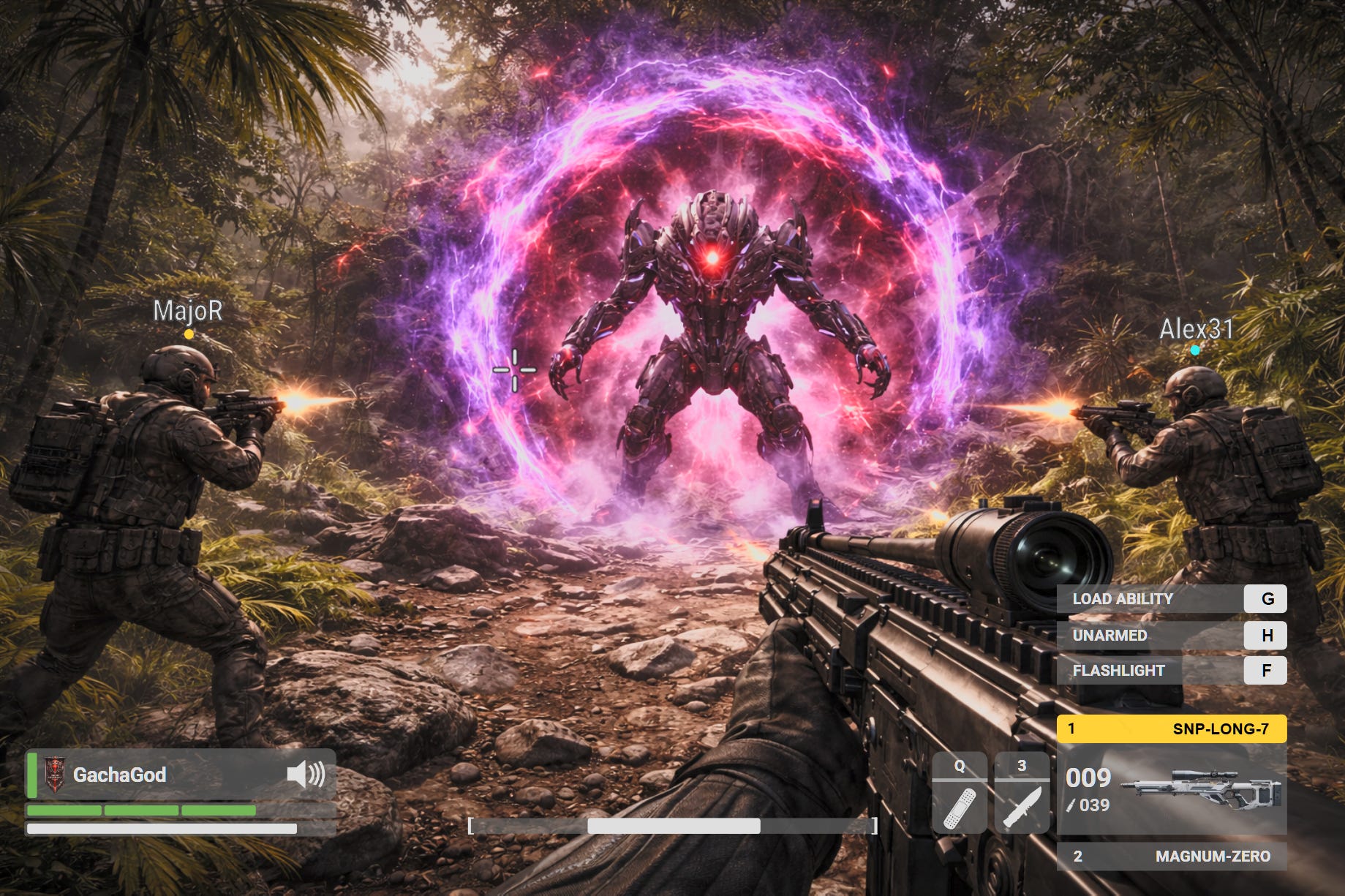
Smart design enables:
All solo, co-op, and group play allowed, AND/OR
one of these allowed / focused into, as/if wanted
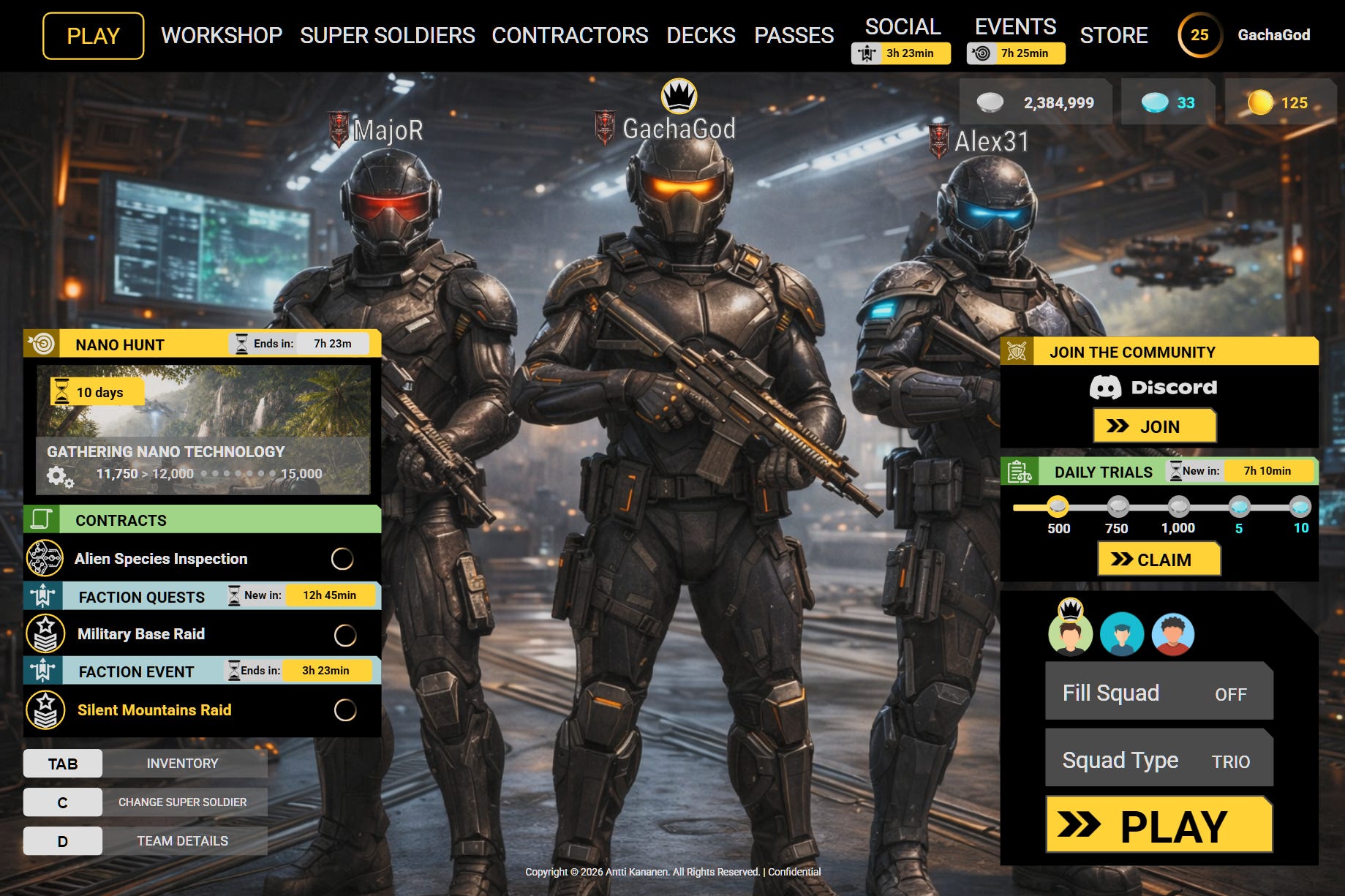
PvPvE extraction
Co-op PvE roguelite
PvE-only
Social raid structures
The important insight:
The game is not the product, the system is.
From futuristic setting to e.g., modern techy setting, using same “experience” / game (systems) base:
Potentially, if your tech. choices allow, multi-platform exploration becomes a possibility to some extent, e.g., same systems but for mobile:
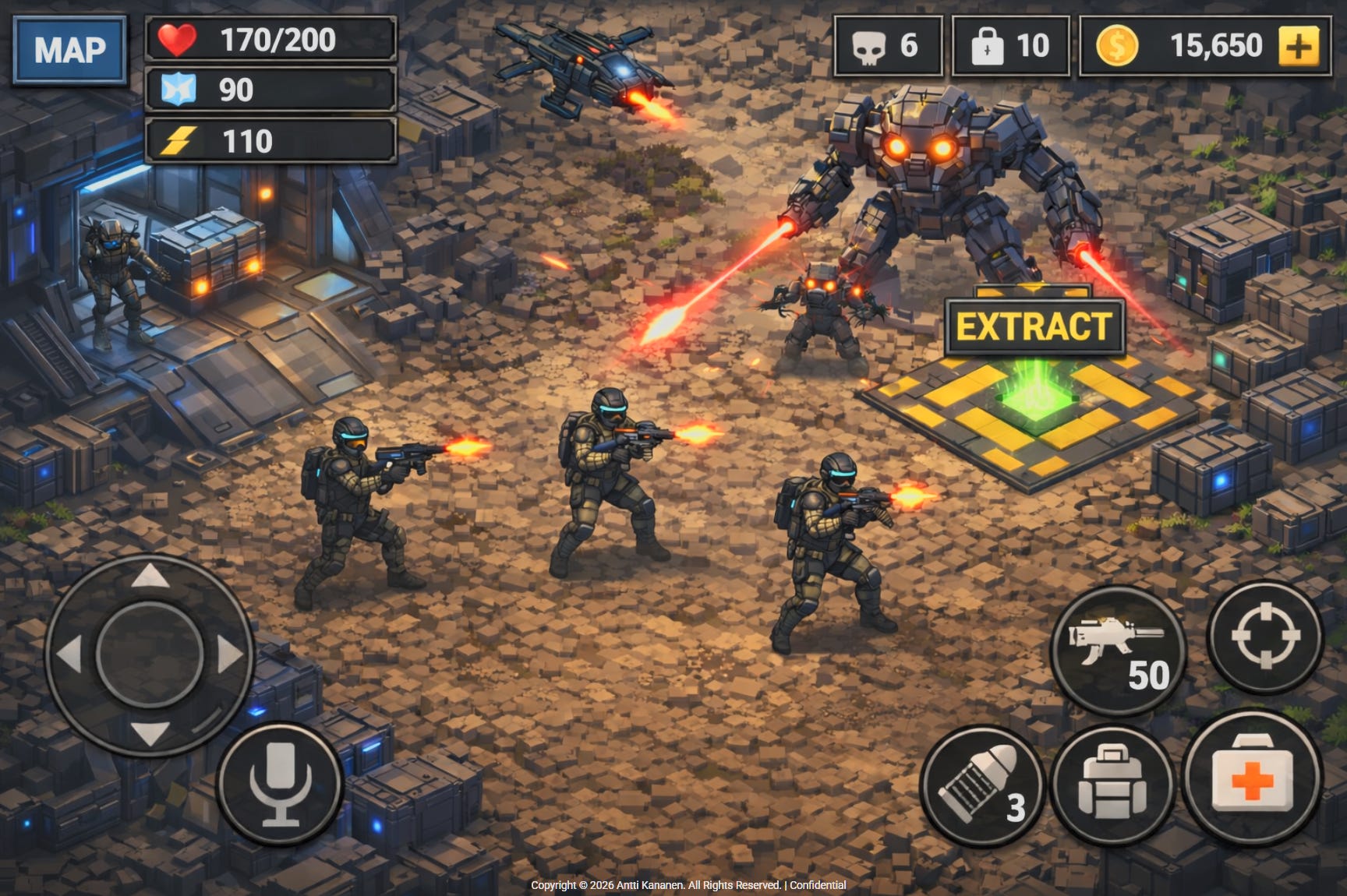
Historically, this level of systemization was extremely difficult. Like when we talk about modularity, I believe it’s something that has been tried to crack properly since 80s. It’s slow, costly, and time-consuming.
Building modular systems has so far required:
large engineering teams
long development cycles
heavy upfront investment
complex maintenance overhead
As a result, most studios defaulted to building one-off solutions tied to a single game.
This is now very likely changing. AI could be fundamentally shifting the cost structure of modularity under the hood. I’m not talking vibe coding your whole stack but rather than putting AI under the hood of these components, while you would be in control of the architecture. Also, just to put it out here as well, I’m not talking about replacing people by AI on this, as instead you can just amplify them and sustain proper dynamics culturally.
As someone pointed for me, the belief is that AI allows you to:
generate and maintain system variations
support multiple configurations simultaneously
reduce engineering overhead for system updates
automate balancing and tuning processes
Instead of building rigid systems, you can build adaptive ones faster. Instead of maintaining one game, you can maintain a system layer across multiple experiences more efficiently.
Tech modularity becomes:
faster to build
cheaper to maintain
scalable across multiple games
This might be the first time in the industry where true experience systemization is not only possible, but somewhat practical.
balancing economies
tuning matchmaking
generating events
adapting difficulty
supporting live ops experimentation
This allows the system to evolve / be maintained continuously without requiring full manual intervention.
The biggest impact of experience systemization is economic.
Traditional model:
each game is a new investment
each feature is rebuilt
Systemized model:
each system is reused
each improvement compounds
each game becomes cheaper to build
This creates:
faster production
lower risk
scalable portfolios
A studio becomes a system that produces great games, instead of a team that builds them one by one with high risk-profile through traditional optimization means and methods. This way, again, genre-mastery compounds in a way no-one probably haven’t experienced it “the smart way”.
The most powerful aspect of experience systemization is not efficiency. It is adaptability. You are not designing for a fixed outcome.
You are designing for:
unknown player behavior
unknown genre evolution
unknown monetization shifts
Instead of reacting to change, you are prepared for it.
Experience systemization is the bridge between:
creativity and scalability
design and economics
games and platforms
It is how you:
reduce cost
increase speed
unlock innovation
And most importantly:
It is how you build games that do not just succeed. You evolve along with that.
Comments
Nothing yet. Say the first thing.
Sign in to join the conversation.