


Publisher: Jay Rooney
Author, Graphics, Research: Jay Rooney
Logo: Jarnest Media
Summary & Housekeeping
Feature: “Sympathy for the Diablo” (~73 minute read)
Food for Talk: Discussion Prompts
Further Reading
Game & Word-of-Mouth
Footnotes
There’s a moment in the original Diablo (the 1996 original, the one that ate so much of my middle school years) when you realize that the music’s changed.
You’ve clicked through skeletons and fallen demons for hours, the Tristram guitar theme forever burned into your auditory cortex, and somewhere around level 12 or 13 (I forget exactly where… it’s been a long time, forgive me), the ambient sounds shift, and it’s damned unsettling. Chanting and distant baby screams overlaid on dissonant drones. You get the feeling that you’ve gone somewhere you weren’t supposed to. And worse still, you sense that the game itself knows this, and it’s not going to help you return.
I was… 10 years old? Maybe 11? Either way, I was playing on a Pentium that wheezed like an asthmatic lung whenever more than three enemies appeared on screen. I didn’t know anything about Zoroastrianism, or Gnostic cosmology, or the infamous Ars Goetia. I just knew I was scared out of my mind, yet I couldn’t stop playing. Somewhere, deep in my lizard brain, a question started bubbling that’d take me decades to fully articulate:
Why does this feel like it means something?
This issue is my attempt at the answer. Or at least an answer.
As usual, we’re diving real deep here. We’ll pull on the threads that connect Blizzard’s demon-infested corridors to millennia of philosophical and metaphysical attempts to map the territories of good and evil, and to categorize, navigate, and even command the angels on our shoulders and the devils at our heels. We’ll look at ancient celestial taxonomies, how Greek daimones turned into Christian demons, why Satan is everyone’s favorite character in Paradise Lost, and what that says about us. We’ll also look at the Satanic Panic (that wacky time in the wacky 80s when America decided that devil worshippers were using D&D as to recruit kids), and how the gaming industry is still navigating that cultural scar tissue, over four decades later.
And yes, we’ll talk about what actual Satanists might make of all this. (TL;DR: it’s complicated, and not quite what you’d expect.)
But underneath all that theological interrogation, there’s a simpler question I’ll try to get at:
Why do we keep telling stories about the war between Heaven and Hell? And why does each culture seem to conjure up some version of angels and demons, higher selves and shadow selves, the light we aspire to and the darkness we fear we already are?
Diablo doesn’t (directly) answer that question, unfortunately. I doubt any game could. But it does give us a space to inhabit and ask the question, as we descend through the layers beneath a corrupted cathedral and discover what’s waiting at the bottom. Sometimes, it’s a Lord of Terror. But sometimes, it’s just our own reflection, holding a mouse and wondering why we can’t stop clicking.
Anyway, grab your health potions. It’s a long way down.
~Jay
PS—Oh, and paid subscribers: be on the lookout for a supplemental Bonus Quest segment, hitting your inbox sometime within the next week or two, where I’ll take you on a journey to the theologically spicy and contentuous Book of Enoch, and its influence on games like Diablo! If this sounds up your alley, be sure to upgrade your subscription today:
On New Year’s Eve, I posed a question to all you wonderful people: what theme should Game & Word tackle for Volume 6? I proposed no less than ten topics, and had my subscribers vote for their favorites:
It was a fairly close vote, but there was, indeed, a clear winner:
Pixel Perfect: Beauty, Aesthetics, Art, and Design in Video Games
In this upcoming Volume, we’ll be examining everything what, exactly, makes games beautiful. Graphics, yes. But also everything from art direction, architecture, fashion, and design. We’ll examine the shared and evolving visual language of video games (including visual trends and “movements” in gaming, such as pixel art and cel shading), the psychology of character creation, the fundamentals of environmental storytelling, and more! Oh, and you’d better believe we’ll be looking at kawaii culture as well.
We’ve still got quite a bit left on the docket for Volume 5, so all of this is still a ways away. But hopefully, it’ll give you something to look forward to as we start wrapping up our mystical journey through gaming’s arcane side. More details to come as everything congeals!
(Oh, and if your preferred topic didn’t win, don’t fret! Again, it was a close vote, and all these topics are ripe for exploration. There’s a good chance I’ll get to your preferred topic, in due time.)
Game & Word’s most recent issues (currently, all of Volume 5) are available to all, free of charge.
Older issues are currently archived and only accessible to paid subscribers. To access the full archive, upgrade to a paid subscription:
Volume 1 (The Name of the Game): Issue 1 ● Issue 2 ● Issue 3 ● Issue 4
Volume 2 (Yo Ho Ho, It’s a Gamer’s Life for Me): Issue 1 ● Issue 2 ● Issue 3● Bonus 1 ● Issue 4 ● Issue 5 ● Issue 6 ● Issue 7 ● Bonus 2 ● Issue 8 ● Bonus 3
Volume 3 (Game Over Matter): Intro ● Issue 1 ● Issue 2 ● Issue 3 ● Podcast 1 ● Issue 4 ● Video Podcast 1 ● Bonus 1 ● Issue 5 ● Podcast 2 ● Issue 6 ● Issue 7 ● Issue 8 ● Issue 9 ● Podcast 3 ● Bonus 2
Volume 4 (Tempus Ludos): Intro ● Issue 1 ● Video Podcast 1 ● Video Podcast 2 ● Issue 2 ● Issue 3 ● Issue 4 ● Issue 5 ● Podcast 1 ● Issue 6 ● Issue 7 ● Issue 8 ● Issue 9 ● Issue 10
Volume 5 (AbraCODEabra!): Intro ● Issue 1 ● Issue 2 ● Issue 3 ● Issue 4 ● Issue 5 ● Issue 6 ● Issue 7 ● Issue 8 ● Issue 9
🚨🚨🚨 SPOILER ALERT 🚨🚨🚨
This post contains SPOILERS for the Diablo series, including the recently released Diablo IV. These games are incredibly dense and rich in lore and worldbuilding, so if you’re at all interested in experiencing them someday, it might be a good idea to play through them before diving in here.
🔥🔥🔥 STATEMENT OF NEUTRALITY 🔥🔥🔥
This series contains discussions of Spirituality, Philosophy, Religion (including “Fringe” Religious Movements, including literal Satanism) and the Occult. Game & Word makes zero claims on the veracity (or lack thereof) of any of the religious or spiritual beliefs, opinions, and practices discussed in this article.
Our coverage of these topics is purely academic, and our goal is to simply present the facts along with any important nuance, debate, or other relevant background info. What you do with or how you interpret this information is not our concern. As the Garo Tribe famously declared, belief or disbelief rests with you.
💡💡💡 POINT OF CLARIFICATION 💡💡💡
To more easily distinguish between “stage” magic and “for realsies” magic, some practitioners spell the latter with a “k” at the end, as “magick.” I prefer to spell it as just “magic.” So if you’re used to spelling it as “magick” or are unclear if I’m referring to the stage or supernatural variety, remember that I’m talking about the latter, unless otherwise noted.
⚠️⚠️⚠️ WARNING: INVOKE AT YOUR OWN RISK ⚠️⚠️⚠️
Please DO NOT try to summon demons, devils, or other infernal entities unless you really know what you’re doing. And even then, a sanity check and/or cost-benefit analysis might be in order beforehand. Game & Word assumes no responsibility for curses, attachments, demonic possession, or other nasty side-effects incurred from messing with spiritual forces beyond your comprehension.
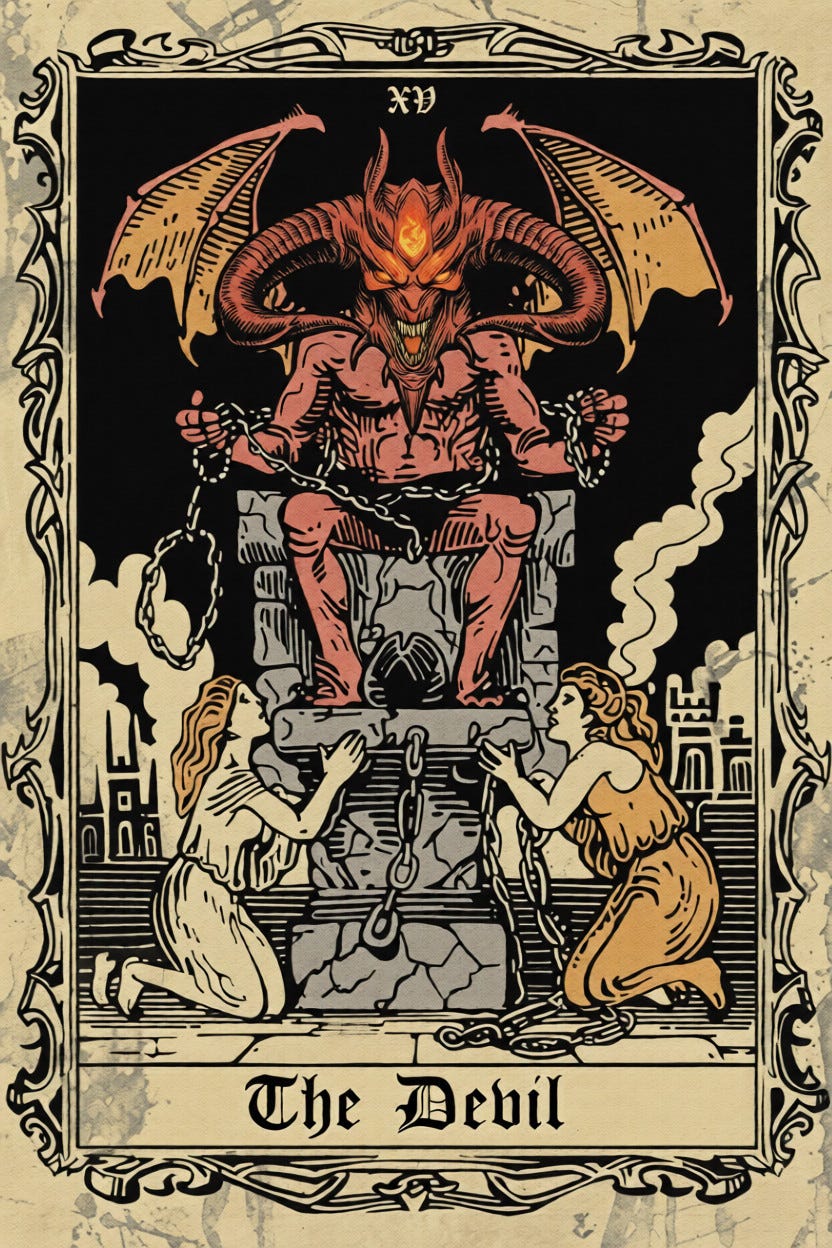
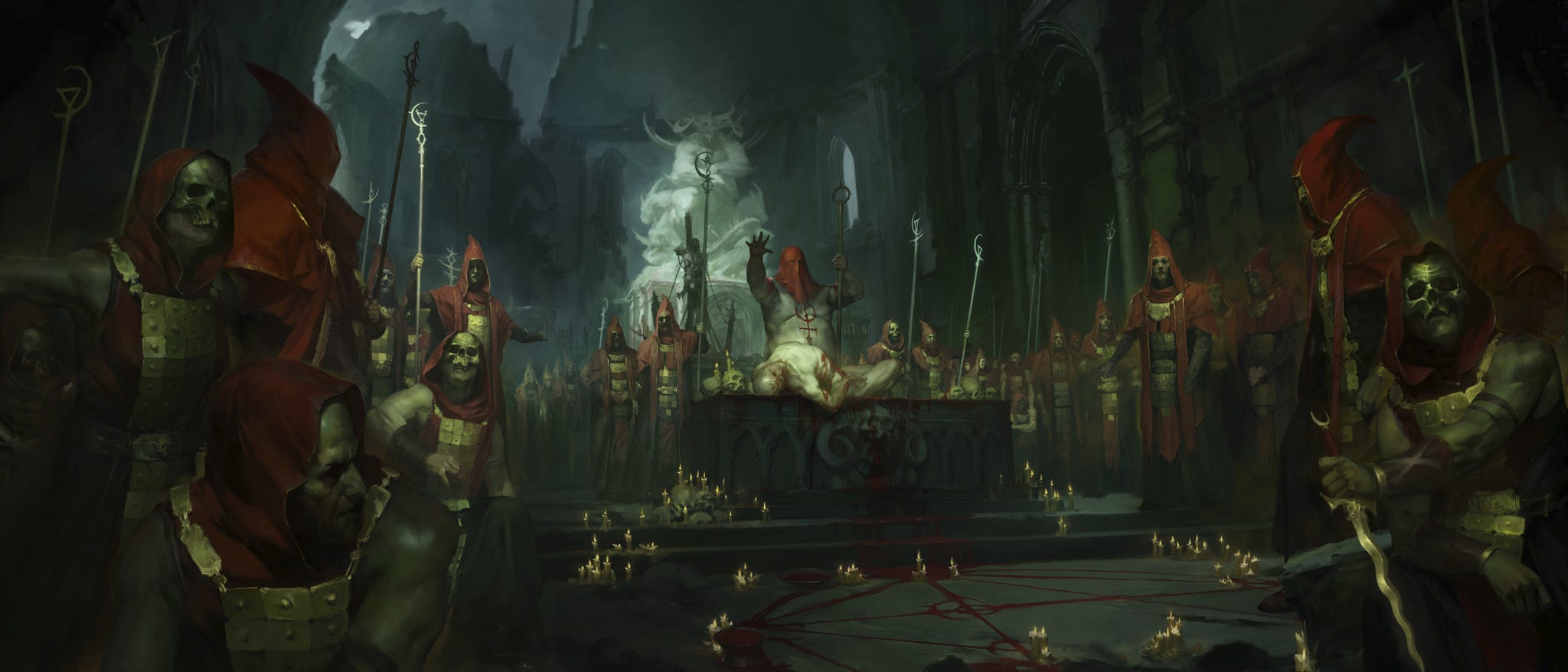
“Stay a while, and listen!”
~Deckard Cain
The dungeon is darker than you remember.
Not different dark—the same dark, exactly the same, which is why it’s darker. Your torch flickers against walls of cathedral stone gone wrong, and somewhere below you, something screams. Or laughs. The distinction has stopped mattering.
You’ve been here before: Tristram, where the music sounds like someone teaching a twelve-string guitar to weep. Deckard Cain mutters his warnings and Griswold hammers demon-twisted metal back into something resembling (at least somewhat) a sword. Where a cathedral that once held services now holds something else entirely—and the only direction is down.
And you, foolhardy brave adventurer that you are, decide the best course of action is to plunge headfirst into the dark, ominous hole in the ground. So you click on the staircase and begin your descent.
Click. Click. Click. Your character descends through catacombs, into caves, then finally into the architectural impossibilities of Hell itself, and with each level, the game asks a question it never fully voices aloud:
How far will you go?
For an entire generation of players, the answer was all the way. Through 16 levels of increasingly grotesque infernal real estate. Through butchers and skeleton kings and a guy named Lazarus who isn’t quite what you remembered from the Bible, through piles of loot that made the descent feel less like damnation and more like Christmas morning at a charnel house (certainly, the clink of gold alone was more than enough to entice you go keep going!), through a gruesome progression from desecrated Gothic cathedral to living corridors of flesh and bone, scored by a dissonant soundscape of unsettling drones, wails, and echoing baby cries that sounds less like a spooky dungeon and more like a Gregorian funeral for a god who died screaming. All the way to a throne room at the very bottom, where a big red guy with horns has been waiting to do to you what big red guys with horns have always done in games like this.
And then… you won. Well, sort of. You jammed a soulstone into your own forehead and walked off into the sunset, which—spoiler alert for a game released in 1996!—was maybe not the genius move it seemed like at the time.1
The game may be called Diablo (which, just in case you didn’t know, means “devil”), but it isn’t really about Satan. It’s not about Hell, either, at least not in any Sunday School sense. It’s about the architecture of moral cosmology. Put another way: it’s about how humanity has always imagined the forces that pull us toward light and toward shadow, and what it means that we get to choose in which direction we walk.
Or, to put it even more simply: it’s about the space between angels and demons.
Which is to say: it’s about us.
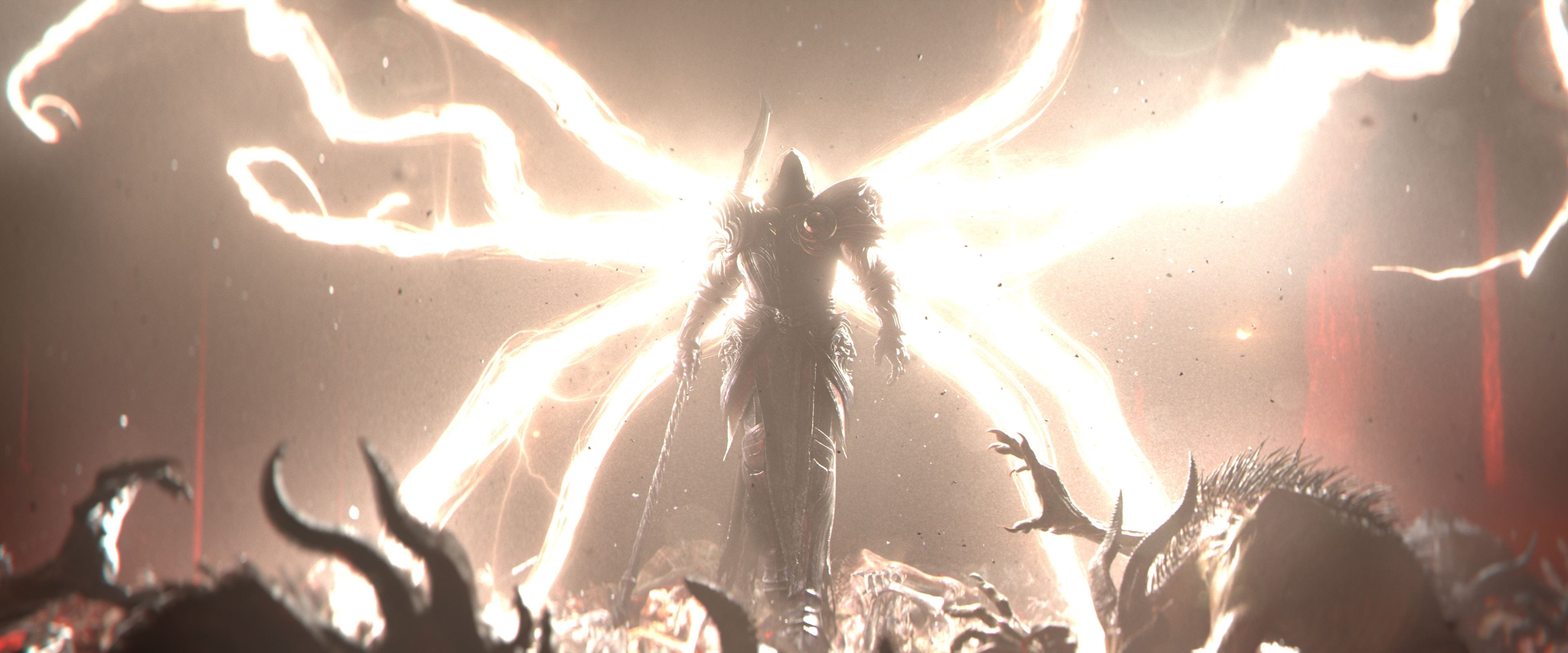
Let’s get theological for a moment. Don’t worry, I’ll make it fun.
Virtually every human culture has developed some concept of spiritual beings arranged in a hierarchy above and below the mortal plane. Celestial messengers. Infernal tempters. Entities that embody the best and worst impulses we struggle to understand in ourselves.
In the Western tradition—which, lest we forget, is the tradition that video games have most heavily drawn from—these beings crystallize into angels and demons. And the interesting thing isn’t just that we imagined them. It’s how we imagined them.
The popular image of an angel is pretty standardized by now: luminous humanoid beings in white robes, feathery wings, harps, halos, the whole shebang. They're messengers of God (the word "angel" literally derives from the Greek angelos, meaning "messenger"), and they spend their time delivering divine proclamations, protecting the righteous, and generally looking extremely photogenic in Renaissance paintings.
But actual angels, in the Abrahamic traditions, aren’t the pudgy cherubs of Valentine’s Day cards or the gentle spirits of Hallmark card grief. They are terrifying. The first thing biblical angels say to people is almost always “Be not afraid”—which is precisely what you say when your appearance has just induced cardiac arrest in a Bronze Age shepherd. The Prophet Ezekiel describes creatures covered in eyes and wings and wheels, spinning with fire and defying every expectation of anthropomorphic constitution.
They are also, critically, not free. Traditional angelology holds that angels lack the full capacity for choice that defines human souls. They serve. They obey. Their prime directive, their purpose for even existing, is to execute the will of the divine with perfect fidelity… which sounds nice until you realize that includes things like destroying cities and unleashing plagues.
Demons, meanwhile, get the opposite treatment. They are the photonegative. Horned monstrosities with dragon wings, pointy tails, and pitchforks, lurking in sulfurous pits, tempting mortals toward sin and damnation. They're the bad guys, essentially. The Cosmic Opposition.
Where angels represent hierarchy and obedience, demons embody appetite and rebellion. They want. They tempt. They promise shortcuts to the things you desire most, extracting payment in currencies you didn’t realize you were spending.
Simple enough, right?
Except it isn’t.
For starters, “demons” didn’t even start off as evil! The English word comes from the Greek daimon, which originally meant something closer to “spirit” or “divine power”. They were morally neutral entities, and could be helpful or harmful depending on the context. Socrates famously claimed to have a personal daimonion that warned him away from bad decisions (not that it stopped him from drinking that hemlock, but that’s neither here nor there). Anyway, not exactly the stuff of exorcist films.
But these daimones gradually, over the course of several centuries, transformed into capital “D” Demons (ie, malevolent beings opposed to God and humanity) as Greek philosophy slowly fused with Abrahamic cosmologies, particularly Jewish apocalypticism and, eventually, Christian theology.
But you didn’t really think it’d be that simple, did you? Consider that in Judaism, for instance, demons aren’t inherently evil; they’re more like celestial quality assurance testers, subjecting humans to temptation and adversity to gauge their moral development.2 The Adversary (ha-Satan in Hebrew) started as a job title, not a proper name: the prosecuting attorney in God’s heavenly court. Christianity would later promote him to Big Bad status, but his original role was significantly more bureaucratic and quite a bit less “Prince of Darkness”-coded.
Meanwhile, in Islamic tradition, demons (and angels!) lack free will altogether. They simply do what they were created to do. Iblis, the Islamic devil, didn’t rebel because he thought he could do better than God; he was basically making a principled objection to prostrating before humans, whom he considered inferior.3
By contrast, in traditional Christian demonology, demons are fallen angels: beings who exercised the one choice they had (rebellion), and were transformed by it.4 This is what makes Lucifer such a fascinating figure in the Western imagination: he’s the angel who wanted more, who preferred “to reign in Hell than serve in Heaven,” and became the template for every anti-authoritarian villain and misunderstood anti-hero in the libraries of fiction that followed.
By the medieval period, all this mystical and religious intermixing had birthed highly complex demonological systems. These culminated in grimoires like the Ars Goetia, which catalogs 72 demons by name, rank, sigil, and specialty… and even by this era, when demons were unambiguously malevolent, the enterprising (or insane) summoner could still call on them for morally neutral or even benevolent purposes (like protection).
The point is: our modern conception of angels as unambiguously good and demons as unambiguously evil is actually a fairly recent simplification of traditions that used to be far messier. In the original source material, celestial and infernal beings alike came in all flavors of moral complexity.
Which brings is to the most interesting bit, and the part that matters most (at least for our purposes): in the Western spiritual tradition, humanity sits in between these cosmic poles.
Just like Earth sits in between Heaven and Hell, humans occupy a unique middle position on the celestial hierarchy. We have enough spiritual weight to command angels and demons (under the right circumstances), but not enough to boss around God. We possess what angels supposedly lack: the freedom to choose evil. And we possess what demons supposedly forfeited: the capacity to choose good.
This means our decisions carry extraordinary moral weight. An angel’s righteous act is what angels do. A demon’s corruption is what demons are. But when a human chooses virtue over vice (or vice over virtue), something genuinely new enters the cosmic ledger. That choice means something, precisely because it could have gone the other way.
This is why so many religious and mystical traditions place humanity at the very center of the spiritual drama. Not because we’re the most powerful (we’re definitely not) or the most beautiful (jury’s still out) or even the most interesting (like wtf are we even talking about? angels have, like, four faces), but because we’re the only ones for whom the outcome is truly, actually, genuinely uncertain.
We are contested terrain, in other words. This is THE central drama of most Western religious thought: the human soul, pulled between heaven and hell, torn between light and darkness, with free will as both our greatest gift and our most dangerous liability.
And that, dear reader, is exactly what video games discovered when they started building dungeons for us to crawl through. And video games, as it turns out, are exceptionally well-suited to exploring this tension. After all, what is a game but a series of choices? And what better setting for meaningful choices than a cosmos where your decisions literally determine whether you become an angel, a demon, or something else entirely?
😇🤷♂️😈 SIDE QUEST: The Spirits That Won’t Pick a Side
The Western angel/demon binary isn’t the only game in town. And, in fact, learning about how other traditions conceptualize spirits shows us just how specific (and recent!) that binary really is.
In Shinto, Japan’s homegrown spiritual tradition, there are no “demons” in the Christian sense. The kami are spirits that inhabit all things: mountains, rivers, trees, and even man-made objects that have been around long enough to develop personalities. Kami aren’t inherently good or evil; they can be friendly when respected, or destructive when offended or neglected. Traditional belief holds that kami possess two souls: the nigi-mitama (gentle) and ara-mitama (assertive). A single spirit might bless you one day and curse you the next, depending on how you’ve treated it.
So, you know… you better watch out, you better not pout.
Meanwhile, the oni of Japanese folklore—often translated as “demon”—are more accurately understood as ogres or malevolent spirits, but even they can be placated, befriended, or otherwise become protectors. The famous Setsubun ritual of throwing beans while chanting “Oni wa soto! Fuku wa uchi!” (”Demons out! Good fortune in!”) is actually closer to spring cleaning, sweeping out bad luck to make room for good, than actual spiritual warfare.
Now, let’s head to the Indian Subcontinent, where Hindu and Buddhist cosmologies give us even more nuanced pictures. The devas (celestial beings) and asuras (anti-gods, titans) do wage an eternal conflict against each other, but with a twist: in early Vedic literature, asura wasn’t a negative term at all! Both Agni and Indra were called asuras, meaning “lords” of their domains. Only later did the term shift to designate beings opposed to the devas—and even then, asuras aren’t simply “evil.” You could more accurately say that they’re powerful, proud, and often victims of their own ambitions, trapped in cycles of conflict they can’t escape. Much like human lords, if you think about it!
The Buddhist six realms of existence include both a deva realm and an asura realm, but neither is permanent. Beings are born and reborn into these states based on their karma; even the mightiest deva will eventually die and be reborn elsewhere. The asura realm is marked by jealousy and constant warfare, but it’s also one of the “higher” realms where rebirth is possible, suggesting that these beings aren’t irredeemably evil so much as spiritually stuck.
Pre-Christian European traditions similarly resist the angel/demon dichotomy. The daimones of Ancient Greece, as we’ve noted, were morally neutral. The Norse, meanwhile, had their jötnar (giants), which to be fair were often enemies of the Asgardian gods, but still not uniformly malevolent—in fact, several gods have jötnar ancestry, jötnar lovers, or both! Finally, Celtic traditions featured the Sídhe (fairy folk), terrifying beings of otherworldly power who could either help or harm depending on how you treated them, as well as the Fomorians, primordial chaos beings who opposed the Tuatha Dé Danann (basically, the original Irishmen) but still weren’t simply “demons” in any recognizable sense.
All these traditions share a reluctance to sort all spirits into two neat boxes labeled “good” and “evil.” Spirits have personalities, foibles, histories, and agendas. Some can be bargained with; others must be avoided at all costs; still others might become allies under the right circumstances. The Christian angel/demon dichotomy (absolute good versus absolute evil, with nothing in between) is, from a historical perspective, actually quite unusual—a specific product of specific theological developments in Late Antiquity.
Games that draw on these alternative traditions often produce more interesting spirit worlds. The Shin Megami Tensei series famously treats its “demons” (which include gods, angels, and mythological creatures from just about every culture) as recruitable allies with distinct personalities and codes of ethics. Then there’s Okami, which gives us Shinto-inspired spirits who can be malevolent or benevolent depending on circumstance.
But it’s not just Japanese studios who engage in this; even Western games increasingly recognize that “angel good, demon bad” is a bit simplistic, and ultimately quite boring in comparison—hence the recent proliferation of fallen angels, redeemed demons, and morally grey celestial beings across the medium.
Diablo itself, as we’ll see, eventually complicates its own cosmic binary, suggesting that maybe the ancient traditions were onto something and the beings wearing “angel” and “demon” labels are more complex than those labels might suggest.
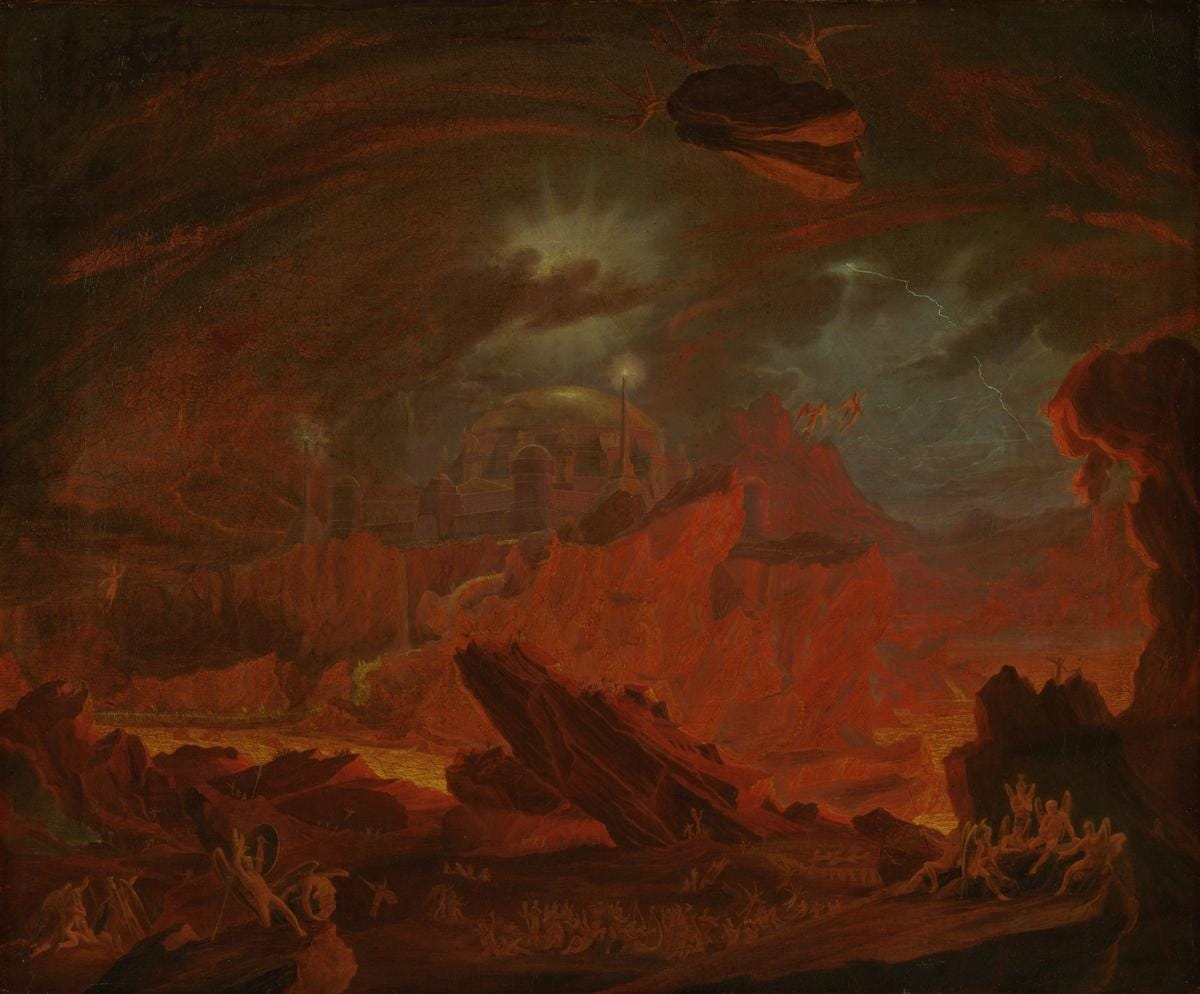
Before Diablo could exist, someone had to invent the vocabulary it spoke. And that vocabulary came from many sources: some ancient, and some surprisingly recent.
The ancient sources include everything we’ve already discussed: millennia of religious and mythological speculation about the nature of good and evil, the structure of the afterlife, and the taxonomy of beings who populate the spiritual realms. This material saturates Western culture so thoroughly that most people absorb it without thinking; even hardcore Reddit atheists know what a demon is supposed to look like.
But I want to call attention to two crucial literary texts that took the biblical and canonical building blocks and shaped them into archetypal imagery that Western cultures and their media—including, eventually, video games—draw upon when imagining Heaven, Hell, and its legions.
John Milton’s highly influential Paradise Lost (1667) gave us the Satan we actually think about—not the serpent of Genesis or the adversary of Job, but the magnificent rebel, the tragic anti-hero who makes damnation look like a principled stand. Milton’s Satan has interiority, and motivations we can almost sympathize with. “Better to reign in Hell than serve in Heaven” didn’t come from the Bible, but from Milton.
And it’s been living rent-free in the Western imagineation ever since—this Miltonic Satan echoes through every video game devil who’s more than a simple boss monster. When Devil May Cry‘s Sparda rebels against his demon brethren to protect humanity, he’s following Milton’s template. Likewise, when Diablo IV‘s Lilith articulates heartfelt grievances against the cosmic order, she’s speaking in Milton’s voice. The idea that a demon might have reasons, be tragic, and even (gasp!) be right about some things is Milton’s gift to popular culture. And games have used it extensively.5
The second text, Dante Alighieri’s seminal Divine Comedy (primarily Inferno, 1320), gave us Hell’s geography and organizational chart. Nine concentric circles descending towards the center of the Earth, each punishing specific sins with deliciously ironic torments: contrapasso, the punishment fitting the crime. Eternal winds blowing about the lustful, the wrathful fighting each other in a river of blood, Cerberus (Greek mythology’s three-headed infernal canine) gnawing on the gluttonous, the treacherous frozen in ice until the end of time... a bureaucracy of suffering so precisely structured that readers have been mapping it for 700 years yet still show no sign of slowing down. And at the very bottom of the wretched pit, lies Satan himself—not as a tempter or schemer, but as a mindless beast, frozen to the waist, weeping from his six eyes while his three mouths eternally chew on the archetypal traitors Judas, Brutus, and Cassius.
This architectural Hell became the template for virtually every depiction that followed. The Dante’s Inferno video game (2010) literally adapted it level by level, but even games that don’t explicitly reference Dante still use his structural innovations: the descent into ever-worse punishment, the categorization (and ironic punishment) of sin, the journey through perdition toward confrontation with ultimate evil… you’ve seen it a thousand times by now. So even if you can’t name it, you still intuitively understand how Diablo‘s sixteen-level descent into increasingly corrupted environs follows the Dantean model, even without invoking Dante’s name once.
Between them, Milton and Dante established the grammar for imagining Hell as a place: a location with rules, inhabitants, and explorable space. This matters enormously for video games, which are fundamentally spatial media. You can’t make a level out of “the absence of God’s grace.” But you can make a level out of burning pits and twisted architecture.
Add in a century of Gothic horror (Dracula, Frankenstein, Poe), the Satanic imagery of heavy metal album covers, the visual vocabulary of artists like Hieronymus Bosch and Pieter Bruegel, and by the time computers were powerful enough to render demons, the demons were more than ready to be rendered.
But before even that could happen, a crucial intermediary had to translate between the archetypal, visual, and literary imagery of hell and the ludo-methodology of video game design.
That intermediary, of course, was tabletop gaming.
In 1974, Gary Gygax and Dave Arneson released Dungeons & Dragons, and in doing so, they created a shared ludic language that would shape video games for decades to come. Now, D&D didn’t invent the idea of fighting monsters for treasure—that’s as old as Beowulf. But it systematized that idea and made it programmable.
Suddenly, there were hit points and armor classes, experience levels and character classes, explicit mechanics for resolving combat and clear progressions for becoming more powerful. D&D was a framework for collaborative storytelling that could accommodate almost any narrative genre, though it particularly and enthusiastically favored dark fantasy.
And D&D brought its own cosmology. The game’s “Outer Planes” organized afterlives by alignment—Lawful Good in one direction, Chaotic Evil in another, with gradients between. Devils (lawful evil) occupied the Nine Hells. Demons (chaotic evil) swarmed the Abyss. Meanwhile, angels and archons populated the Upper Planes.
This systematization was (and please pardon the tired and overworn cliché, but it really is literally and perfectly apt here) game-changing. It took the sprawling, contradictory mess that is Western demonology and gave it stat blocks. This is what let Diablo III turn Asmodeus Azmodan into a boss fight.
Indeed, Diablo's mechanical DNA is pure D&D. For starters, the original game’s class system (warrior, rogue, sorcerer) maps directly to the fighter/thief/mage trinity. Then there’s the randomized dungeons, the monster variety, the loot drops, the experience points, the gear progression, the whole system for turning demon slaying into gameplay… all of it descends from the tabletop traditions that Gygax helped establish. Diablo IS an RPG, after all!
But I want to call special attention to D&D’s alignment system, which (as we just touched on) famously categorized all beings on axes of Good/Evil and Law/Chaos.
This alignment system remains enormously influential to this day, even breaching nerd containment to achieve some (relatively small, but still noticeable) degree of mainstream recognition, and players still stubbornly cling to it despite Wizards of the Coast’s repeated attempts to downplay, de-emphasize, and even outright ditch it (I don’t know why they keep trying, considering these attempts don’t ever seem to stick… but I digress).
Through character alignment, D&D formalized the mechanization of morality—the idea that beings might be Lawful Evil or Chaotic Good as fundamental characteristics rather than mere choices. So when games distinguish between angels as “forces of order” and demons as “forces of chaos,” they’re often following D&D’s framework.
D&D also introduced another idea that still echoes through gaming: the idea that demons and devils were dangerous to name. The 1980s “Satanic Panic” led TSR (the original owners of D&D before WotC) to temporarily rename demons “tanar’ri” and devils “baatezu” in D&D’s 2nd Edition… but more importantly, it established that this was contentious cultural territory. Media (including games) depicting Hell were no longer just using cool imagery; they were making heavy statements that some people took very seriously indeed. That tension, between demons as fun monsters and demons as theological claims, persists to this day.
🎲👺😱 SIDE QUEST: The Devil’s Playthings (A Brief History of the Satanic Panic)
If you’re under 35 or so, the Satanic Panic might sound like ancient history—a weird thing your parents’ generation got worked up about, like New Coke or leg warmers. But understanding it is crucial for realizing why games depict demons the way they do, and why some of those depictions still carry faint traces of cultural scar tissue.
The short version: from roughly 1980 to the early 1990s, a significant portion of America became unironically convinced that organized Satanic cults had infiltrated every level of society. These cults were allegedly abusing children in daycare centers, recruiting teenagers through rock music, and using tabletop games as indoctrination tools. Yes, parents actually believed that cults of devil worshippers were recruiting their kids through games about fighting imaginary goblins. It sounds ridiculous (mostly because it was ridiculous), but law enforcement took it very seriously: prosecutors filed charges, and actual people went to actual prison. Countless lives were destroyed.
And almost none of it was real.
The panic had multiple ignition points, but Dungeons & Dragons became one of its most visible targets. In 1979, a gifted but troubled 16-year-old named James Dallas Egbert III disappeared from Michigan State University. A private investigator, unfamiliar with the game, theorized (incorrectly, as it turned out) that Egbert had gotten lost in the steam tunnels beneath campus while LARPing a D&D session, and the media ran with it. When Egbert later died by suicide, D&D took the blame despite having nothing to do with his actual struggles (which mostly involved depression, pressure, schizophrenia, and his closeted sexuality… but the D&D angle made for better copy).
The floodgates of moral panic had swung wide open. In 1982, the TV movie Mazes and Monsters (starring a young Tom Hanks, of all people) dramatized a thinly veiled version of the Egbert case, portraying tabletop RPGs as gateways to psychotic breaks. 60 Minutes dedicated a full hour to the supposed connection between D&D and violent crime. Moral crusader and Elite Karen Patricia Pulling, whose own son had died by suicide, founded Bothered About Dungeons & Dragons (BADD) and spent years crusading against the game, claiming it “taught children how to perfect the art of premeditated murder.” Her 1989 book The Devil’s Web: Who Is Stalking Your Children for Satan? made assertions so wild that even other anti-occult activists looked away in embarrassment.6
And you’d better believe that Jack Chick got in on the fun.
If you’ve never encountered a Chick tract (and if that’s the case, be sure to thank the good Lord for giving you such a blessed life), imagine a tiny comic book designed to scare you into accepting Jesus Christ as your lord and savior through sheer evangelical fever dream intensity. His 1984 tract “Dark Dungeons” depicted D&D as a literal cult recruitment vehicle: the Dungeon Master teaches players real magic, a girl hangs herself after her character dies, and the protagonist only escapes by burning her D&D books while a helpful Christian explains that she’d been practicing actual witchcraft. It’s so over the top that it was eventually adapted into a film by fans who played it completely straight and somehow made it even funnier.7
The games industry responded with what you could charitably call “strategic cowardice.” TSR (D&D’s original publisher) scrubbed demons and devils from the 2nd Edition of Advanced Dungeons & Dragons in 1989—demons became “tanar’ri,” while devils became “baatezu.” The words themselves were treated as dangerous, as if calling a monster a “demon” might attract actual infernal attention, but calling it a “tanar’ri” was just fine because... well, reasons.
They later added an almost endearingly desperate in-universe justification: “Devils are by nature deceptive. They call themselves by many names to confuse mortals.”
Sure, guys. That’s definitely why you did it.
The whole thing was darkly ironic, but you know what the most darkly ironic layer of them all was? D&D was created by devout Christians! Gary Gygax was a Jehovah’s Witness for much of his life, while Dave Arneson was a practicing Lutheran. Also, the game’s moral framework is explicitly about fighting evil: paladins smite demons, clerics turn the undead, and good triumphs over darkness. The people screaming about Satanic content had apparently never noticed that D&D characters spend most of their time killing the things the panic accused the game of promoting.
But moral panics almost never involve logic. Instead, they’re almost always about anxiety seeking a target.
And the broader Satanic Panic extended far beyond gaming. The McMartin preschool trial (1983-1990) saw innocent daycare workers accused of ritualistic Satanic abuse, based on children’s testimony that (as we now know) was coerced through leading questions and incompetent or unscrupulous therapists with either shoddy training, a broader agenda, or both (either way, this was clearly therapeutic malpractice). Again, none of it was real; no physical evidence ever materialized.
Similar cases erupted nationwide. Heavy metal music faced actual congressional hearings, with Tipper Gore and her Parents Music Resource Center successfully pushing for warning labels. Backward masking (the idea that Satanic messages were hidden in songs played in reverse) became an urgent concern for people who’d apparently never considered how hard it’d be to record intelligible backward messages that also worked as forward music.
The panic eventually burned itself out, largely because (again, say it with me now…) none of its predictions came true. The “Satanic underground” never materialized, and all those “recovered” memories proved (at best) unreliable. The CDC, the American Association of Suicidology, and Health and Welfare Canada all investigated and published statements confirming that D&D was safe; no correlation between the game and harmful behavior was ever established. The imprisoned daycare workers were eventually exonerated and released (though some had served several years first, and their livelihoods and reputations were already in tatters; by and large, the damage was already done). By the mid-1990s, the cultural mood had decidedly shifted from “AAAIIYEE, demons everywhere!!!” to “…wow, we really overreacted, didn’t we?”
But the effects lingered, particularly in gaming. When Diablo launched in 1996, it did so in a strange cultural moment. We were still processing the panic’s aftermath, and the game was drenched in demonic imagery (inverted pentagrams, hellfire, literal Satan-adjacent boss monsters)—Blizzard was keenly aware they were working in fraught territory. Yet the game somehow escaped controversy.
Why? Partially timing (the panic had crested), partially framing (you were clearly killing the demons, not potentially worshipping them), partially the shift from tabletop to video games (which were seen as more “mainstream” and slightly less associated with the weird kids in the basement), and partially because Diablo launched on PC (at the time, PC games were considered more “adult” or “mature” than console games, which were targeted at kids… and which, funnily enough, were then embroiled in a moral panic of their own—this one centered on video game violence).
Diablo III (2012) notably toned down some of the franchise’s religious imagery. According to developer commentary, Blizzard removed pentagrams and explicit crosses to avoid offending anyone. But this wasn’t Satanic Panic 2: Electric Boogaloo, and had more to do with global markets and not wanting to alienate religious players of different faiths. Still, it’s hard not to see the specter of the 1980s in that decision. After all, “once bitten, twice shy”—even several decades later.
(And still, the fact remains that an entire generation of game developers learned the visual and mechanical vocabulary of angels and demons under conditions of moral siege. And something about being told your hobby was Satanic seems to have given many of them a mischievous interest in exploring exactly why those images hold such power. But that’s a topic for another day.)
In any case, the Satanic Panic’s most enduring legacy is actually far subtler than just censored monster names, for it established a template for moral panics about media that we’ve seen recycled ever since:
A new medium emerges.
Young/weird/countercultural people embrace it.
Older/normie/mainstream people don’t understand it.
Something bad happens that can be loosely associated with or attributed to the medium.
Moral entrepreneurs discover there’s money and attention in sounding the alarm, so they do exactly that.
The panic builds—destroying reputations and lives in the process—until it collapses under the weight of its own ridiculousness (or just its lack of evidence).
Lather, rinse, and repeat, ad infinitum.
We’re arguably living through several such panics right now, though cataloguing and examining them all would make this sidebar even longer than it already is. Still, here are a few off the top of my head: video games cause violence, the internet enables predators, social media destroys children’s minds, AI is destroying art/labor/the environment, etc.
In each case, the specific devil changes, but the overall structure remains.
The games industry learned something from the Satanic Panic era, though I’d argue it wasn’t the right lesson. It learned that one could avoid controversy by enacting superficial changes: rename the demons, remove the pentagrams, add a content warning, and boom—problem averted. But it didn’t necessarily learn that moral panics are irrational, and that capitulating to them only encourages the next one. Every time a game company preemptively censors content because someone might complain, the ghost of Patricia Pulling adds a notch to her kill count.
And ultimately, the panic failed to achieve its main stated objective: it actually boosted D&D sales (you had one job, Satanic Panic!). Teenagers who’d never heard of D&D suddenly became quite curious about this game that was supposedly so dangerous. The forbidden fruit effect is real, and so is the Streisand Effect; the Satanic Panic handed D&D the most effective marketing campaign imaginable: parental disapproval.
And now, 40 years later, Dungeons & Dragons has never been more popular. The game’s 5th Edition brought demons and devils back under their proper names, while Stranger Things made D&D nostalgically cool. The kids who were warned that role-playing games would damn their souls to Hell grew up to be parents who now play with their own children.
Sometimes the devil doesn’t get his due. Often, it turns out that the moral guardians were just wrong, and the weird kids in the basement were fine all along.
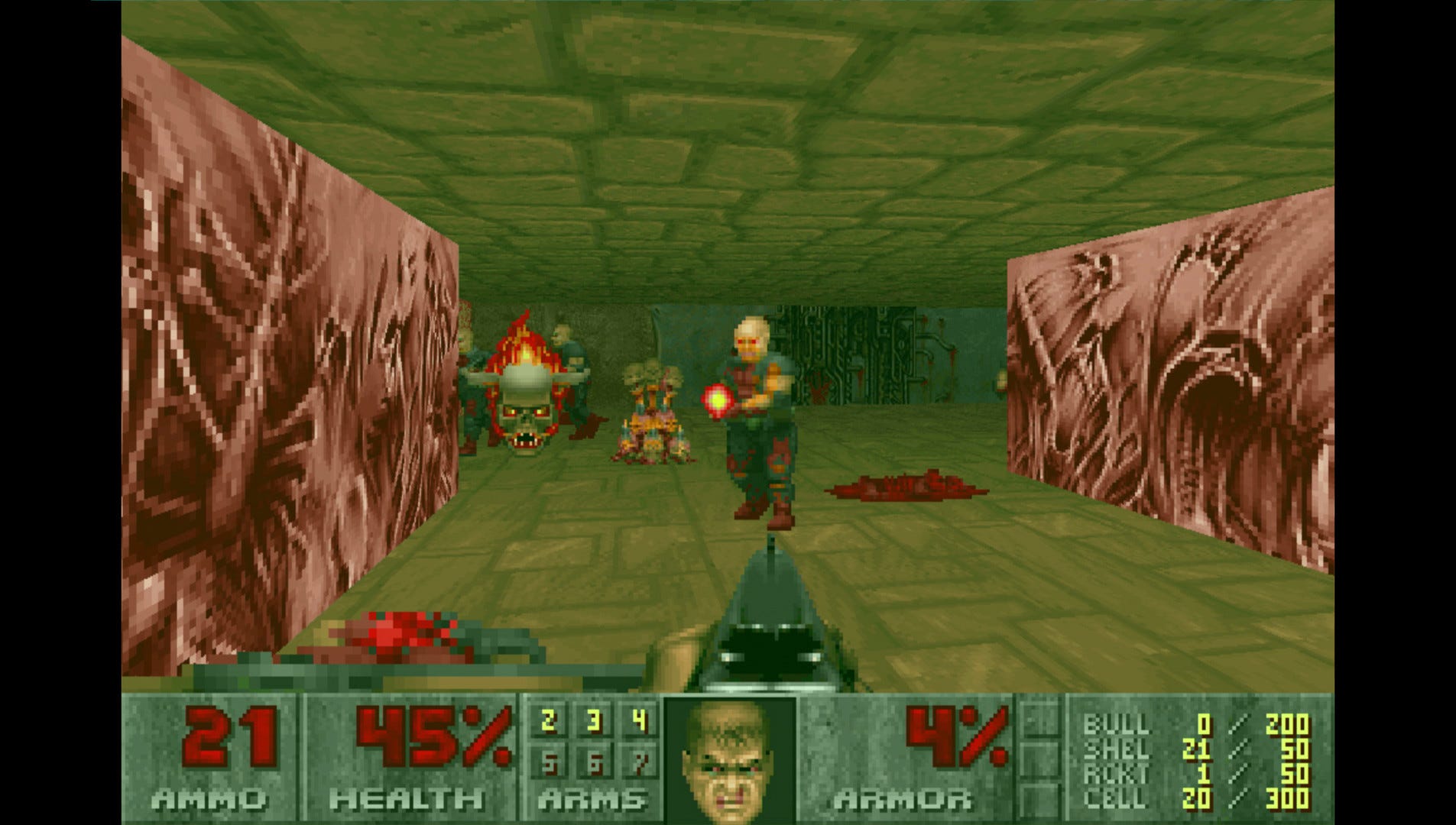
The history of angels and demons in video games tracks pretty closely with technological capacity. Come, let’s take a (very quick) loot look!
Early hardware couldn’t render terror; at best, it could suggest it. Ultima and Wizardry (late 1970s–1980s) built elaborate fantasy cosmologies, but their demons existed primarily in text descriptions and crude tile graphics. Gauntlet (1985) let you fight ghosts and demons in procedurally generated dungeons, but they were tiny sprites with limited animation. The horror was more abstract, and your imagination did the heavy lifting.
Then came DOOM (1993).
id Software’s masterpiece didn’t invent the first-person shooter, but it sure as hell (pun abso-friggin-lutely intended) popularized it. It also invented Hell as a video game destination. Its Hell was spatial: a place you could walk through, with things like architecture and geography. The game’s plot (such as it was) involved demonic invasion via teleportation experiments gone wrong. Mars bases gave way to something something Phobos moons gave way to literally fighting your way through the infernal realm.
And DOOM’s demons, at long last, actually looked like demons. The Cacodemon, floating with its single eye, is about as iconic and representative of the game as you can get. Same with the Baron of Hell’s goat legs and huge ram horns (highly reminiscent of a certain other demonic mastermind from a few years later, come to think of it). And, of course, how could I not mention the Spider Mastermind, horrifying and distinctly “metal album cover” in its aesthetic. id’s artists (particularly Adrian Carmack) actually built clay models and photographed them from multiple angles! This attention to detail led to them creating sprites that felt present in ways that earlier games hadn’t managed.
But DOOM also flattened things somewhat: its demons were nothing more than targets. No narrative complications, no moral quandaries, no theology, and no nuance… just pure, sweet digital catharsis, delivered at high velocity through the barrel of a shotgun. The game’s gleeful ultraviolence positioned Hell’s legions as pure obstacles. They weren’t tempting, seducing, or possessing anyone; they were just trying to kill you, and you were going to kill them first. Even the Cyberdemon and the aforementioned Spider Mastermind, nominally the lords of Hell, were just bigger things to shoot.
This was a deliberate simplification, mind. Legendary id co-founder John Carmack famously said, “Story in a game is like story in a porn movie. It’s expected to be there, but it’s not that important.” DOOM’s Hell was a setting, not a statement—it provided the atmosphere, without argument, and set players loose to run and shoot around in.
Still, DOOM’s seeds would eventually bear strange fruit. Later entries in the franchise would flesh this paper-thin excuse plot out into a proper cosmology: both the 2016 reboot and DOOM Eternal (2020) established Hell as an ancient dimension feeding on the suffering of souls, created by the angelic Maykrs (who were complicit in demonic schemes), and positioned the Doom Slayer as something closer to a messianic figure than a mere soldier. So even the franchise that began with demons as pixelated targets eventually learned to take its premise quite seriously. But I’m getting ahead of myself here.
*ahem* Anyway… three years later, along came Diablo.
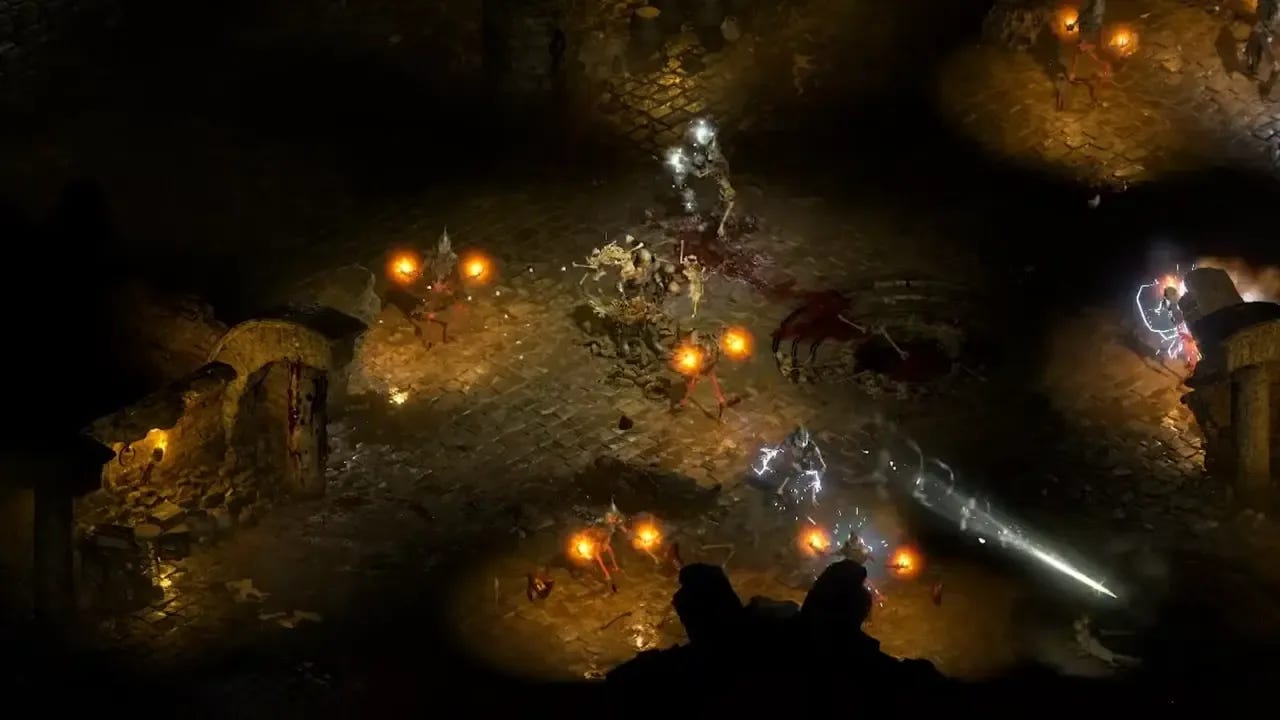
DOOM may have been the first to commit Hell to code and let players run around in it, but Blizzard North’s Diablo (1996) actually gave the place a story.
Not a complex story, mind you—the original game’s plot fits on a cocktail napkin. There’s a cathedral in Tristram with something evil beneath it; you descend, you fight, you win (sort of). But despite the barebones plot, the game clearly cared about its mythology in ways that DOOM studiously avoided. It had in-game tomes to read, and lore to absorb. A fallen hero-king named Leoric, a traitorous undead archbishop called Lazarus (any resemblance to the biblical resurectee of the same name is purely coincidental)... and at the very bottom, not just another demon, but the Demon: Diablo, the Lord of Terror, himself.
David Brevik and the Schaefer brothers built Diablo from a simple insight: you could simplify the dungeon crawl without dumbing it down. Earlier RPGs involved hours of character creation, pages of instructions, and turn-based combat that turned every encounter into a chess match. Diablo stripped all that away, and the end result was a devilishly addictive (pun again intended) gameplay loop:
Click to move.
Click to attack.
Watch the loot fountain flow.
Go deeper.
The game was a bonafide phenomenon, selling over three million copies and essentially creating the “Action RPG” (ARPG) genre as a commercial category. Battle.net let players cooperate (or betray each other) online. The game’s Gothic atmosphere—dark churches, corrupted priests, demonic sigils—also felt mature in ways that gaming hadn’t quite achieved before.
Diablo II (2000) expanded on all of this. Four acts instead of one, comprising a sprawling journey across deserts and jungles and the fiery hellscape of Pandemonium Fortress, paired with five character classes that would eventually become gaming archetypes in their own right, each with its own skill tree system that let players customize their characters more flexibly, and in ways that gave their choices more weight in how their characters developed and progressed.
But most significantly for our purposes, it had a story that actually went somewhere: you follow the first game’s corrupted hero as he releases Diablo’s brothers, Mephisto and Baal, to threaten all of Sanctuary. It introduced key background lore on the broader cosmic conflict between Heaven and Hell, which later games would build and expand upon even further. Tyrael first appeared, starting his arc toward becoming the franchise’s most beloved character. And other lore that would drive the story forward for decades—such as the Worldstone, Mount Arreat, and the Horadrim—debuted here.
The expansion, Lord of Destruction (2001), added an entire new act (set in the Barbarian Highlands and Mount Arreat), a compelling antagonist in the form of Baal (the eponymous Lord of Destruction), and two new classes. It concluded with one of gaming’s most consequential moments: the destruction of the Worldstone, an artifact that had—unbeknownst to most of Sanctuary’s inhabitants—been suppressing humanity’s latent power for generations.
But perhaps most importantly, the expansion introduced runewords: powerful item combinations that gave players concrete goals beyond pure randomness. The game now had legs; people could (and would) play Diablo II and its expansion for over a decade.
And just as well, because then started the long wait.
Blizzard North fell apart. Key developers left, then the studio was shuttered and folded into Blizzard proper in 2005. An earlier version of Diablo III was developed and then scrapped. The franchise, for a while, seemed dead.
But (plot twist!) it wasn’t.
Diablo III finally emerged in May 2012, developed by Blizzard’s main campus rather than the now-defunct Blizzard North. It sold over three million copies in its first 24 hours… which is when the complaints started.
And they were legion. The game had an always-online requirement, leading to the infamous “Error 37” disaster as Battle.net’s servers buckled under launch demand. It also had an auction house that let players buy items for real money, fundamentally altering the game’s reward structure and breaking the in-game economy. Its brighter, more “cartoony” art style seemed to soften Diablo’s trademark Gothic horror aesthetic. And its story, while ambitious, leaned into some players’ least favorite Blizzard tendencies—namely, turning the protagonist into a prophesied Chosen One instead of a random adventurer who got in over their head.
But Diablo III eventually found its footing. The Reaper of Souls expansion (2014) added a compelling villain in Malthael, removed the auction house, and introduced the endgame systems that would keep players engaged for years. It also finally broke PC containment, eventually releasing on all major consoles (and the console versions were actually better than the PC original in some ways). In the end? It was a good game, sir.
Diablo Immortal (2022), however, was a different story. A free-to-play spinoff co-developed with Chinese mobile behemoth NetEase, it was announced to a chorus of boos at BlizzCon 2018 (”Do you guys not have phones?”) and released to intense criticism over its insanely aggressive monetization. The game itself was perfectly competent, as Diablo’s core loop translated reasonably well to mobile. But the business model felt predatory in ways that alienated longtime fans.8
Diablo IV (2023) constituted a deliberate course correction. Darker art direction, with a more open world, and Lilith—the Daughter of Hatred, and Mother of Sanctuary—as the game’s central antagonist. It was received reasonably well, though the community remains soured on the game’s seasonal model, monetization, and balance issues.
The game’s first expansion, Vessel of Hatred (2024), added the Spiritborn class and the jungle region of Nahantu, continuing Neyrelle’s story as she struggles against the imprisoned Mephisto. It launched to generally positive reception, with critics praising the new class’s flexibility and the expansion’s many quality of life improvements. But some players found the campaign too short, and the live-service treadmill continues to divide the community.
And the upcoming Lord of Hatred expansion (releasing April 2026) promises an epic confrontation with Mephisto himself, and will re-introduce the Paladin alongside an unannounced second class. Blizzard’s president has described 2026 as potentially “the biggest year yet” for the company.
This is where Diablo stands today: a franchise at a crossroads. Beloved for its core appeal (click, kill, loot, repeat), burdened by three decades’ worth of fan expectations, facing stiffer competition from Path of Exile 2 and other ARPGs, and navigating the challenging economics of live-service gaming in an industry increasingly at odds with its consumers. Whether Diablo IV can recapture its predecessors’ decades-long cultural dominance, or remain just one quality game among many in an increasingly crowded genre, remains to be seen.
To be fair, this is a tough position for any franchise to be in. The original Diablo succeeded partly because of its simplicity—you could install it and be playing in minutes. But modern games require patches, accounts, season passes, and always-on connections. The type of friction that the first Diablo removed has been systematically reintroduced in recent years by contemporary gaming infrastructure.
And yet, people keep going back to Tristram. They keep descending those stairs, wondering what’s at the bottom.
Maybe that’s because Diablo, at its best, isn’t really about the loot or the builds or the season passes.
It’s about something far older.
🧙♀️🧛🏻♂️🧝 SIDE QUEST: Class & Craft
Diablo’s archetypal character classes draws from thousands of years of IRL magical and martial traditions, and understanding these sources vastly enriches the game’s power fantasy. So let’s have a quick look!
Let’s start with the Necromancer, perhaps the Diablo franchise’s most iconic class. Historical necromancy (nekromanteia—communion with the dead) was serious business in the ancient world; it was very much the forbidden art. The biblical Witch of Endor summoned the Prophet Samuel’s ghost for King Saul, and the text makes it very clear this was Not Okay (though I should mention that this condemnation wasn’t quite universal; Greek oracle sites like the Necromanteion of Acheron even offered institutional necromancy, séances were all the rage in the Victorian Era, and spirit mediums like John Edward continue to carry the torch today). The taboo really stuck; thousands of years later, medieval necromancers (who were often rogue clergy, interestingly) were often accused of basically the worst crimes imaginable, which I’m hesitant to even reprint here. Just take my word for it that it’s pretty bad.
But Diablo’s Priests of Rathma reframe this forbidden art as basically ecology: “All that grows must also wither and die. All dies and rots, and will then nourish the living.” The necromancers simply… facilitate this process. The Great Cycle of Being thus transforms necromancy’s rising skeletons and exploding corpses from transgression into cosmic compost management, and gives a universally condemned practice a veneer of philosophical discipline.
Meanwhile, the Paladin and Crusader channel the checkered history of the infamous Knights Templar. The Zakarum faith parallels the Templars so directly—warrior monks who combine religious devotion with martial prowess, their prime purpose of protecting pilgrims, their distinctive cross imagery, and the order’s ultimate destruction on heresy charges, spawning inquisitions and holy wars—that it’s almost Medieval Church historical fan fiction. Mephisto’s corruption of the Zakarum hierarchy (while being imprisoned beneath their holiest site) even resembles accusations leveled against the actual Templars!
The split between Paladins (who saw the corruption and walked away) and Crusaders (who believed they could purify the faith from within) also mirrors real Reformation-era debates. Do you abandon a corrupted institution, or try to fix it? As of press time, Diablo doesn’t answer that question, though it does let you play both sides across different games, which is at least more fun that way.
The Sorceress embodies Hermetic and Western Ceremonial Magic traditions. The Zann Esu Clan’s focus on elemental magic (fire, lightning, cold) reflects the classical element system derived from Empedocles (fire, water, earth, air). Heinrich Cornelius Agrippa’s Three Books of Occult Philosophy (1533) organized all magic into Natural (elemental), Celestial (astrological), and Ceremonial (divine) categories, and Diablo’s spellcasters (roughly) follow this taxonomy.
Moving onto the Druid, who seamlessly blends historical accounts with myth and legend. Julius Caesar, our main historical source for IRL druids (who, admittedly, had his own reasons for making them seem exotic), documents them as priest-judge-philosophers responsible for worship, sacrifice, and legal matters, and who trained for over 20 years. They did not, as far as we know, turn into werewolves. That bit comes from entirely separate European folklore traditions, bear-warrior cults, and lycanthropy legends that have nothing to do with Celtic religion.
Diablo just... kind of mashes all of this together. Druidic nature philosophy plus shapeshifting plus authentic Gaelic terminology (Caoi Dúlra, or the “Way of Nature”) equals a class that feels mythologically coherent, even though it draws from entirely disparate historic components. It’s a really well-executed exemple of synthetic mythology—which, when you think about it, is what most “ancient traditions” actually are, anyway.
Moving on!
The Barbarian echoes Norse berserkers—members of Odinic warrior cults who entered berserkergang (berserker rage) and totally mauled out on the battlefield. The Ynglinga Saga describes warriors “as crazed as dogs or wolves and as strong as bears or bulls,” which any Barbarian main can tell you totally tracks. The Barbarians’ sacred charge—protecting Mount Arreat—also mirrors Germanic sacred mountain traditions. And similarly, when Mount Arreat is destroyed and the Barbarians lose their purpose, it echoes the berserker cults’ historical decline after Christianity outlawed them in the 11th Century.
Finally, the Witch Doctor, hailing from the reclusive Umbaru tribe, engages Haitian Vodou and similar West African shamanic practices. The Mbwiru Eikura (”Unformed Land”) parallels Vodou cosmology’s invisible spirit realm, while the character class’ zombie-summoning abilities connect to the Kikongo word nzambi (god/spirit) and beliefs about souls captured by bokors (sorcerers).
As you can see, there’s a thesis statement about magic, faith, and power hidden inside every class—and to think you only picked yours because you liked the skill animations!
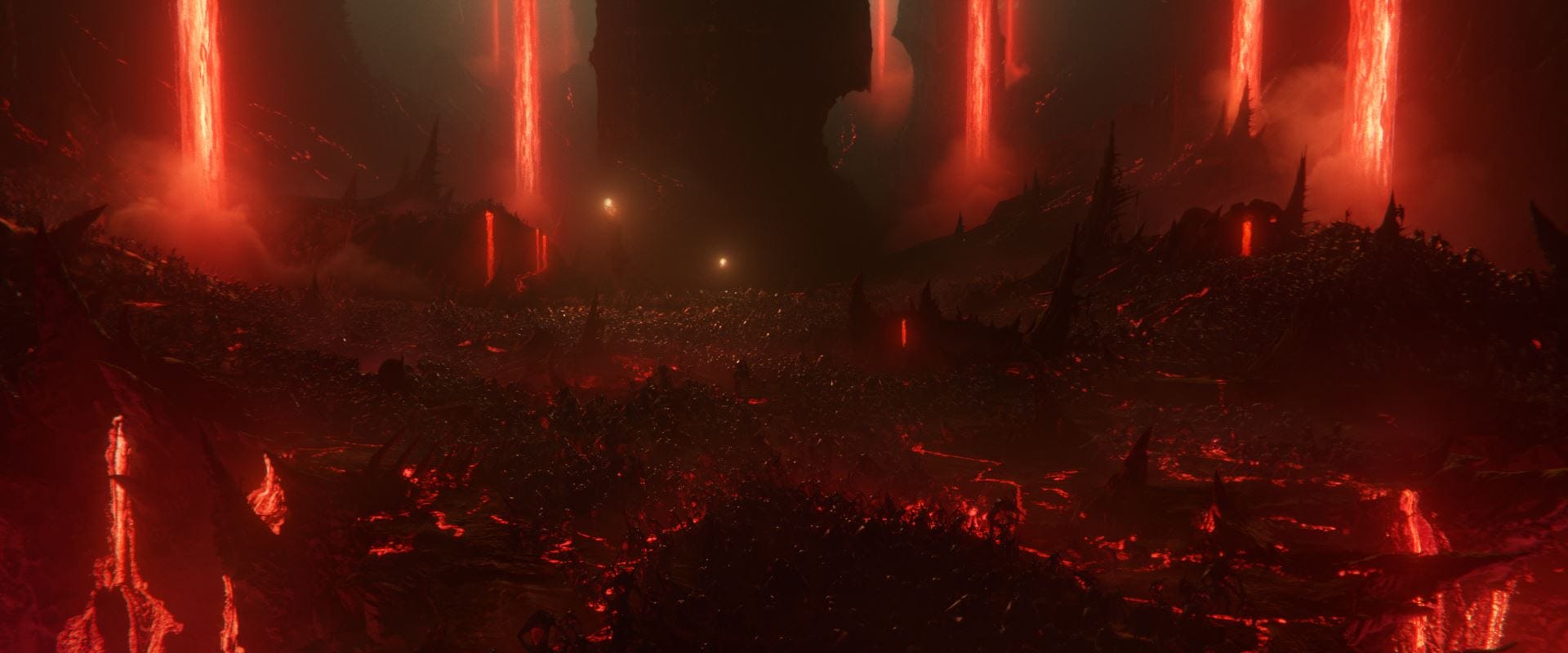
Ok, now that we’ve got all that background out of the way, it’s time to go deep.
Diablo’s cosmology adeptly blends several real-world religious and occult traditions to tell a highly compelling dark fantasy story. Once you learn more about these sources, you’ll not only appreciate the games themselves more, you’ll also realize how thoroughly Blizzard engaged with humanity’s oldest questions about good, evil, and our place in the cosmic order.
So, shall we begin?
Diablo’s foundational myth—the Eternal Conflict, an endless war between the High Heavens and the Burning Hells—draws directly from Zoroastrianism, the world’s oldest explicitly dualistic theology.
In Zoroastrianism, reality is a battleground between Ahura Mazda (the Wise Lord, representing light and truth) and Angra Mainyu (the Destructive Spirit, representing darkness and deception). These two primordial forces are locked in Kosmic Kombat, and humanity must choose sides.
Diablo almost directly lifts this myth’s structure: Anu (pure light/order) and Tathamet (a seven-headed dragon of chaos) represent the same primordial duality. Their conflict created the universe, and their deaths created the realms and the beings within them that vie for supremacy (the High Heavens’ angels from Anu’s spine, and the Burning Hells’ demons from Tathamet’s seven heads).
Blizzard, however, introduces a key twist.
Zoroastrianism promises that Ahura Mazda will ultimately triumph: the good guys will win. Diablo, on the other hand, offers no such assurance. The Eternal Conflict is truly eternal—an irresolvable stalemate where neither side can claim permanent victory. This pessimistic inversion transforms a religious promise into a fertile narrative engine; after all, if either side could decisively win, there’d be no more stories to tell!
Meanwhile, the creation of Sanctuary—the mortal world where the games take place—mirrors Gnostic cosmology.
In Gnosticism, the material world was created by a demiurge (a flawed or malevolent divine being) who trapped sparks of divine light in matter. Salvation comes not through faith nor works, but through gnosis: hidden knowledge that reveals your true divine nature and allows you to escape the prison and torment of physical existence.
Sanctuary’s creation myth (mostly) hits these notes:
The angel Inarius and the demon Lilith, sick and tired and weary and totally over the Eternal Conflict, steal the Worldstone and create a hidden world where they could take refuge from the war. Their offspring, the Nephalem, are literal angel-demon hybrids whose power potentially exceeds both their parent races.
But Inarius fears this power, and uses the Worldstone to suppress humanity’s divine potential across generations. So just as the Gnostic demiurge traps divine sparks in matter, Inarius traps the Nephalem’s potential in ignorant mortality.
And just as Gnostic salvation comes through knowledge, Diablo’s humans (the comparatively weak and mortal descendants of the Nephalem) awaken their power when the Worldstone is destroyed, revealing to them the truth of their heritage.
The Worldstone functions as what religious scholars call an axis mundi—a sacred “center” that connects cosmic realms. Housed within Mount Arreat and guarded by Barbarian tribes fulfilling a sacred charge, it mirrors how various traditions imagine both sacred mountains and holy objects.
Mount Arreat parallels Zoroastrianism’s Mount Haraberazaiti, the Hindu Mount Meru (both sacred mountains at the world’s center), and Norse Yggdrasil (the world tree connecting realms), whereas the Worldstone itself parallels the Ark of the Covenant (guarded artifact of immense power),
It also parallels the alchemical Philosopher’s Stone: an object of immense transformative power sought by opposing forces, capable of reshaping reality, and ultimately corrupted when misused. When Baal corrupts the Worldstone, he’s playing the role of the failed alchemist whose hubris turns gold into lead (instead of the other way around).
The term “Nephalem” directly references the biblical Nephilim—mysterious beings mentioned in Genesis 6:4 as “heroes of old, warriors of renown,” born from unions between “sons of God” and “daughters of humans.”
Then, about a handful of centuries later, the Book of Enoch expands this with the lore of the Watchers—angels who descended to Earth, taught humanity forbidden knowledge, and fathered giant offspring (the aforementioned Nephilim). The Nephilim were abominations, destroyed by God in the Flood for their transgressive existence.9
Blizzard, of course, puts its own spin on the myth; whereas biblical Nephilim result from angel-human unions, Diablo’s Nephalem are angel-demon hybrids—combining two eternally opposed forces rather than merely mixing divine and mortal. This makes the Nephalem potentially superior to both their parent races: they inherit power from both Heaven and Hell, while being bound to neither. They are “heirs to the power of the creator god Anu itself”; not abominations to be destroyed, but the true inheritors of cosmic legacy. Instead of the sad middle ground between Heaven and Hell, humanity is the synthesis that might one day transcend both.
This theological position, by the way, would have been outright heresy through most of Christian history: the idea that humans—specifically, bastard hybrids of cosmic good and evil—might be spiritually superior to angels would’ve been liable to get you burned at the stake. It democratizes divinity in ways that traditional ecclesiastical hierarchies explicitly forbade.
And yet, it also resonates with several mystical traditions for precisely those reasons, from Gnosticism itself (which, as we’ve just gone over, taught that every human has an inner divine spark, waiting to be awakened) to Kabbalah (where mystics ascend the Tree of Life toward divine reunion) to Hermeticism (where the practitioner’s ultimate goal is to commune with their Holy Guardian Angel, an idealized celestial self).
This is Diablo’s central theological innovation: humanity’s mixed heritage isn’t a curse, but a superpower.
Meanwhile, the Angiris Council (the five archangels who govern the High Heavens) constitutes another one of Blizzard’s more sophisticated theological adaptations.
In traditional angelology, the Archangels explicitly and unquestionably serve God. There’s no doubt about this; it’s ironclad. Even their Hebrew names encode this relationship, through the suffix -el (meaning “of God”):
Michael (”Who is like God?”),
Gabriel (”Strength of God”),
Raphael (”God heals”),
Uriel (”Light of God”).
They exist solely to enact divine will, not to exercise independent judgment.
By contrast, Diablo‘s archangels serve no supreme deity (although their names, in many cases, preserve the -el suffix). They instead embody aspects of the deceased Anu:
Valor (Imperius)
Justice (Tyrael)
Hope (Auriel)
Wisdom (Malthael)
Fate (Itherael)
They are the manifestations of cosmic principles, not servants of a higher power. Heaven, in Diablo, operates less like the Kingdom of Heaven from our own cosmology, and more like a kind of celestial council democracy. Major decisions require a majority vote. Angels can, and often do, disagree with each other. But even more significantly, Angels can be wrong.
And they frequently are!
Now, I know what you’re thinking, so let me just stop you right there: no, it’s not because they’re “fallen.” They’re not. They’re also not corrupted, nor are they being manipulated by some greater evil.
They’re just... kind of assholes.
Take Imperius, the Archangel of Valor. This guy is technically your ally, fighting against Hell, on the side of Heaven. But he’s also a warmonger, and a total celestial chauvinist who voted to exterminate humanity when we were still in our cosmic cradle. He ven threatens to kill the Nephalem player character, multiple times, throughout Diablo III. His response to most problems is “stab it repeatedly with my big shiny spear.”
Imperius isn’t corrupted by demonic influence, nor does he have a sympathetic tragic backstory that explains his behavior. He’s just an angel whose defining virtue (Valor) has curdled into something uglier: martial supremacy as an end in itself. Bravery, bereft of wisdom or compassion.
Now consider Malthael, the Archangel of Wisdom. In Diablo III’s expansion, Reaper of Souls, Malthael becomes the primary antagonist—again, not through demonic corruption, but through following his nature to its logical conclusion. As the embodiment of Wisdom, Malthael eventually reasoned his way to a terrible conclusion: the Eternal Conflict between Heaven and Hell can only end if everything with demonic heritage is destroyed. And since humans carry demonic ancestry through their Nephalem bloodlines... well, you see where this is going.
Malthael’s genocide sounds insane and irrational, from our perspective. But from his perspective, it’s actually the only rational solution. Wisdom without hope, it turns out, becomes nihilism.
Meanwhile, consider Tyrael, the one and only angel who consistently sides with humanity. And what does he have to do? Give up being an angel entirely. In Diablo III, Tyrael tears off his own wings before the Angiris Council, falls to earth as a mortal, and declares, in one of the most badass cinematics in all of gaming:
“You cannot judge me. I am justice itself!”
Tyrael then becomes the “Fallen Star” that opens Diablo III, both invoking and inverting the falling star imagery traditionally associated with Lucifer. Where Lucifer fell through pride and rebellion against God, Tyrael falls through compassion for humanity. And while Lucifer’s fall was punishment from above, Tyrael’s is self-chosen sacrifice—indeed, in contrast with the traditional fallen angel narrative (they become evil), Tyrael becomes more heroic by abandoning his angelic nature. He may have physically fallen downward, but he morally fell upward precisely because he chose sacrifice.
Think about how theologically subversive this really is! In traditional angelology, angels who leave Heaven are corrupted by the fall. In Diablo, the only good angel is the one who quits.
And the demons?
Blizzard actually gets quite clever here. The demons in Diablo are evil, yes… but they’re comprehensibly evil. Their motivations make sense. Mephisto (Lord of Hatred) spreads hatred because… well, because that’s his nature; Baal (Lord of Destruction), meanwhile, destroys because destruction is his domain (I wonder what could’ve possibly hinted at that?).
So they’re not gratuitously cruel, in ways that serve no purpose. They’re functionally evil—which, paradoxically, makes them more relatable than angels whose “virtue” produces outcomes just as destructive but with far more inscrutable motivations.
Indeed, consider Lilith, who becomes the primary antagonist of Diablo IV. In traditional mythology, Lilith is Adam’s rebellious first wife who refused submission and was cast out to become a demon. In Diablo, she’s a far more morally complex character: the Daughter of Hatred who truly loves her children (the Nephalem, and by extension, humanity). She’s absolutely ruthless, and her goals are morally questionable, but her motivation—protecting and empowering her offspring against both Heaven and Hell—is quintessentially maternal in nature, instantly relatable to anyone who’s raised children.
A demon who loves. Angels who hate. This is another one of Diablo‘s biggest theological innovations: Heaven and Hell are both wrong, and both tyrannical in their own ways. Humanity’s only hope, therefore, lies in rejecting them both entirely.
👼⚖️❌ SIDE QUEST: When Angels Deserve to Die
“The forces of good” and “the forces of order” are used almost interchangeably in fantasy fiction, but they’re not the same thing. In fact, some of the most interesting games ever made explore what happens when they diverge.
The Shin Megami Tensei series has built its entire identity around this tension. Rather than “good vs evil,” SMT presents a cosmic conflict between Law (embodied by YHVH and his angels) and Chaos (likewise by Lucifer and his demons).
Law promises peace, harmony, and security… but at the cost of free will, creativity, and everything that makes existence interesting. Chaos offers freedom and self-determination… but also endless conflict, and the strong preying on the weak. Neither side is “good” in any conventional sense.
YHVH, in these games, is a tyrannical deity who demands absolute worship and will happily annihilate anyone who defies him. He’s “evil,” not because he’s secretly a demon or anything, but because absolute authority is inherently corrupt, even (especially?) when wielded by a god. The angels who serve him, meanwhile, aren’t fallen or corrupted—they’re just doing exactly what angels are supposed to do, which is enforcing divine order. That’s the problem.
Bayonetta takes a similar stance. The angels of Paradiso wholeheartedly believe they’re serving cosmic good, but their “good” consists entirely of maintaining the tyrannical Jubileus’ power structure. When humans exercise free will in ways that threaten that structure, angels descend to correct them… violently. The witch protagonist fights not against corrupted angels or rebellious angels, but against angels doing exactly what angels do, and the game asks whether that’s something worth fighting.10
Even games with more traditional good/evil frameworks often complicate things when you examine them closely. In Final Fantasy Tactics, the corrupt Church of Glabados manipulates wars to maintain power, complete with fallen church leaders under the thrall of angelic beings called Lucavi. Here, the critique extends beyond “demons bad” to “institutions that claim divine authority are dangerous.” The Lucavi are terrible, but they succeeded because the church was already compromised by its hunger for control.
And let’s not forget Safer Sephiroth, Final Fantasy VII’s Big Bad’s iconic final form. His angelic appearance and heavenly battle arena are not coincidental, and not without meaning.
Diablo itself eventually embraces this critique. Imperius, the Archangel of Valor—who, again, is not fallen or corrupted—repeatedly advocates for humanity’s destruction because he truly believes that the cosmic order would be better served without the unpredictable Nephalem muddying the waters. His “valor” manifests as zealotry, and his “righteousness” as contempt for anyone outside Heaven’s purview. He’s a perfectly “good” angel, in the sense that he perfectly embodies angelic nature… and that’s precisely what makes him dangerous.
All of this is pointing towards a subtle, but highly significant, theological point: “Good,” defined as obedience to authority, isn’t actually good—it’s just submission dressed up in moral drag. True virtue requires choice, and choice requires the possibility of disobedience. An angel who cannot disobey isn’t actually virtuous; it’s simply programmed properly. But a human (or Nephalem) who chooses good, despite having the option of choosing evil, achieves something that angels cannot.
This is why many games find angels so compelling as villains. Not out of anti-religious animus (at least not usually, or not entirely), but because they recognize that “doing what you’re told” is not the same as “doing what’s right,” and that beings defined entirely by obedience to higher authority make surprisingly good antagonists.
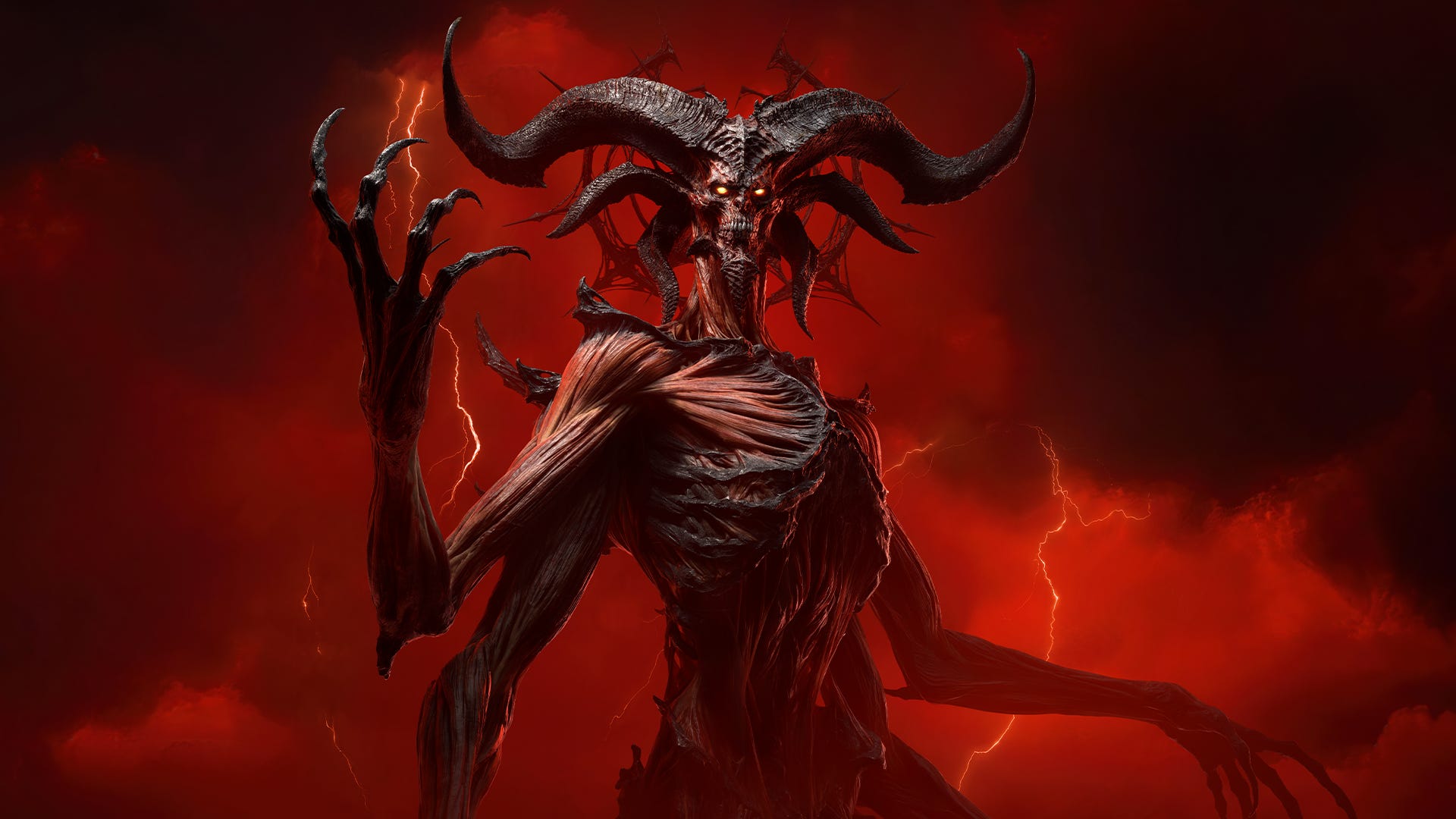
Hey, while we’re talking about Diablo’s demons, let’s take a deeper look at their mythological and literary pedigrees. Unlike the franchise’s angels (which mostly subvert our expectations), its demons actually quite faithfully embrace the traditions they’re drawn from. In fact, each major demon’s name traces to specific religious and literary sources—Blizzard quite clearly did its homework here.
Let’s start with the Prime Evils.
Baal (Lord of Destruction) derives from Ba’al, the Canaanite storm god. “Ba’al” simply means “lord” or “master” in Proto-Semitic—it was a title before it became a demon’s name. The transformation happened through Hebrew Bible polemic (i.e., literally demonizing your rival’s god): Ba’al was the chief rival to the worship of Yahweh, so Ba’al-Zebub (”Lord of Flies”) became a deliberate mockery and corruption of the original Ba’al-Zebul (”Lord of the Heavenly Dwelling”). By the time the New Testament came about, Beelzebub was the “prince of demons,” and in the Ars Goetia, Bael commands 66 legions of Hell. Diablo inherits this entire cultural history every time Baal stomps into frame.
Mephisto (Lord of Hatred) comes from Mephistopheles, which actually isn’t ancient at all! Unlike Baal or Belial, Mephistopheles has no ancient mythological roots whatsoever—he was invented for the German Faustbuch of 1587. He was Renaissance literary creation, not a figure from traditional demonology, who proved so compelling he eventually became canonical; through Cristopher Marlowe’s Doctor Faustus and Goethe’s Faust, this relatively young demon became the archetype of the cunning tempter. Blizzard reached past the medieval grimoires to grab a literary villain, then placed him alongside genuine biblical demons—his presence in Diablo thus explicitly connects the franchise to demonology’s European literary tradition, alongside its more biblical sources.
Diablo (Lord of Terror) himself takes the simplest path: Spanish/Latin for “devil,” from the Greek root diabolos (”accuser” or “slanderer”), which translated the Hebrew satan (”adversary”) in the Septuagint, calling back to Satan’s original role as a moral prosecuter (which we touched on earlier in this piece). As the Lord of Terror, Diablo‘s eponymous devil weaponizes fear rather than hatred or destruction, making him perhaps the most psychologically insidious of the Prime Evils and (fittingly) the one the player faces most frequently.
The Lesser Evils, meanwhile, show us how Blizzard sometimes adapts its source materials more selectively.
Belial (Lord of Lies) has the deepest biblical roots, appearing twenty-seven times in the Hebrew Bible. The Dead Sea Scrolls personify him as the leader of the “Sons of Darkness,” while Milton’s Paradise Lost calls him “the vilest demon, embodiment of impurity and lies” (which could pretty much be a direct quote for his Diablo incarnation).
Azmodan (Lord of Sin) adapts Asmodeus, whose name derives from the Avestan root aēšma-daēva (”wrath-demon”)—showing how Zoroastrian demonology influenced Jewish traditions. In the apocryphal Book of Tobit, Asmodeus is “the worst of demons,” killing seven of Sarah’s husbands, out of nothing but jealousy, before she even consummates her marriages (damn… that’s cold, bruh), and later Talmudic legends make him a trickster who briefly usurped King Solomon’s throne. Finally, the Ars Goetia lists him as commander of 72 legions and, significantly, the demon of lust in Peter Binsfeld’s classification (which creates interesting resonances with his “Lord of Sin” title, hinting at broader wickedness).
Notably, Andariel (Maiden of Anguish) and Duriel (Prince of Pain) have no historical, religious, or literary precedent at all. They’re entirely original Blizzard creations, which proves that the game’s designers selectively adapted tradition rather than transcribed demonological encyclopediae wholesale. This franchise knows when to borrow, and when to invent.
Which brings us, finally to Lilith.
Lilith is by far the franchise’s most complex demonological adaptation. Her origins trace to Sumerian/Akkadian storm demons (lilītu), but the Midrashim (Jewish folklore)—particularly the Alphabet of Ben Sira (c. 700–1000 CE)—transformed her into Adam’s first wife, created from the same clay (and not from Adam’s rib, unlike Eve), who refused subservience: “We are equal to each other inasmuch as we were both created from the earth.”
When Adam insisted on his authority, Lilith spoke God’s ineffable name and flew away to the Red Sea, where she cavorted with demons and spawned monsters. God sent three angels to retrieve her, but she still refused to return, after which God just kind of shrugged and created Eve from one of Adam’s ribs, putting the whole spat to rest and restoring domestic harmony to Eden (until the serpent showed up, at least… perhaps at Lilith’s behest?). But I’m getting sidetracked here.
Anyway, through this folklore, Lilith became mother of demons, associated with infant mortality and nocturnal seduction. Kabbalistic texts also describe her as consort to Samael (the angel of death), while modern feminism has reclaimed her as a symbol of independence and equality.
Diablo IV elevates Lilith from demoness to Mother of Sanctuary—a morally complex figure who clearly deeply loves her children (humanity), but is absolutely ruthless in protecting and guiding them. She’s trying to save the world, not destroy it like an ordinary villain; albeit through unquestionably villainous means that horrify everyone who learns what they cost.
She believes love justifies any cruelty… and she deeply loves her offspring. She wants humanity to embrace its Nephalem heritage and overthrow both Heaven and Hell—a goal that’s not obviously wrong, given what we’ve seen of both angelic arrogance and demonic malice. But in the service of her goal, she manipulates, murders, and otherwise coldly disposes of anyone who stands in her way. She’s a mother who would burn the world to save her children, which can be either heroic or monstrous depending on where you stand.
👹🗡️🤔 SIDE QUEST: What Would Satan Think [WWST]?
Christian preachers and televangelists have made it quite clear what they think about games like Diablo. But has it ever occured to you (perhaps while deep into farming Greater Rift Keystones) what an actual Satanist would make of Diablo?
I can already hear some of you: “Wait… like, people who worship THE DEVIL?!”
Well... sort of. And also, not at all. It’s… complicated. So let me explain.
Video game “Satanism” (demons to fight, pentagrams on floors, vaguely infernal aesthetics) has almost nothing to do with IRL Satanic movements, of which there are several, each with very different goals.
LaVeyan Satanism, founded in 1966 by Anton Szandor LaVey (real name: Howard Stanton Levey, because even the founder of the Church of Satan gave himself an edgier stage name), is essentially Theater Kid Satanism. It is thoroughly atheistic. There’s no literal Satan to worship. “Satan,” in this context, is a symbol: a middle finger raised at arbitrary authority, and a celebration of pride, carnality, and individual will. LaVey’s Satanic Bible reads less like a grimoire and more like Nietzsche or Ayn Rand with darker and edgier window dressing. The Nine Satanic Statements include gems like:
“Satan represents indulgence instead of abstinence!”, and
“Satan represents all of the so-called sins, as they all lead to physical, mental, or emotional gratification!”
But no, LaVeyan Satanists don’t worship demons, because they don’t believe demons exist. Their rituals are pure psychodrama; no invocations here. And their aesthetic is deliberately provocative—designed to push back against what LaVey saw as life-denying Christian morality.
Another strain of Atheistic Satanism, the Satanic Temple (founded 2013), is explicitly political and non-supernatural in nature. They use Satanic imagery to advocate (usually in court, whether of law or public opinion) for religious pluralism and separation of church and state—if a courthouse displays the Ten Commandments, they argue, it should also allow a statue of Baphomet. Their “Seven Tenets” are basically humanistic ethics: compassion, justice, bodily autonomy, the freedom to offend.
A LaVeyan Satanist or member of the Satanic Temple watching you play Diablo would probably be mildly amused. On one hand, the game’s power fantasy (one human ascending, through sheer determination, to surpass angels and demons alike) actually tracks with their philosophy pretty well.
But on the other hand, the game’s literal demons, as well as the idea that “Hell” is a place with geography and a CEO structure, are the kind of superstitious thinking that Atheistic Satanism explicitly rejects. According to these guys, the real demons are your internal drives that Christianity taught you to be ashamed of… and you should be embracing those, not clicking on them until they drop legendary loot.
Theistic Satanism, on the other hand, is a different beast (no pun intended… no, really!), and more akin to what people usually think when they hear “Satanism.” These creeds do believe Satan (or Lucifer, or various demons) actually exists as a spiritual being worthy of reverence, and they encompass individual practitioners and organized groups—with theologies as varied as Christian denominations. Some view Satan as a liberator or bringer of knowledge, while others pursue more straightforwardly malevolent interpretations. But even here, their Satan usually bears little resemblance to Diablo‘s boss monsters.
Many theistic Satanists view Satan as a Promethean figure: the first liberator who gave humanity knowledge and autonomy against a tyrannical Creator who wanted to keep us ignorant and subservient. In this reading, the serpent in Eden (already linked to Satan in Christian mythos) is the hero of the story.
But beyond this, there’s quite a bit of divergence even amongst Theistic Satanists. Some work with demons as individual spirits with their own personalities and domains, approaching them through ritual much like ceremonial magicians approach angels. The Temple of Set, founded by former Church of Satan member Michael Aquino, focuses on the Egyptian deity Set (whose domains include storms and violence) as an embodiment of individual consciousness opposing cosmic entropy. And the Order of Nine Angles (controversial even among Satanists, and for good reason) presents Satan as a cosmic force of change and evolution, neither good nor evil in a conventional sense, though their broader ideology and practice veers into territory most people would find abhorrent.11
Diablo‘s demons (screaming masses of claws and hatred, serving abstractions like “Terror” and “Destruction”) don’t really map onto any of this. They’re basically fantasy monsters with theological name tags, and don’t really represent or symbolize anything most theistic Satanists would actually venerate (though I’m sure some of them actually do have an Andariel vinyl figurine on their black altar).
Luciferianism takes yet another angle. “Lucifer” (lux ferre) means “light-bringer,” and Luciferians typically emphasize enlightenment, wisdom, and self-actualization over the carnal indulgence that LaVeyan Satanism celebrates. Michael W. Ford, probably the most prominent contemporary Luciferian author, describes Lucifer as “the archetype of the awakened and independent mind seeking freedom through knowledge.”
This is actually closer to Gnosticism than to heavy metal album covers. The Luciferian Lucifer is the figure who illuminates, encourages questioning, and represents the spark of divine consciousness within humanity, struggling to free itself from material illusion; quite distinct from the adversarial “Satan” of Christian demonology. If anything, Diablo‘s Tyrael—the angel who defies Heaven out of compassion and chooses mortality to stand with humanity—embodies Luciferian ideals far more than any of the game’s actual demons do.
Finally, the broader Left-Hand Path (an umbrella term for magical and spiritual traditions that emphasize self-deification and individual will over surrender to either external authority or some abstract notion of a “greater good”) would probably have complicated feelings about Diablo.
On one hand (pun intended), the Nephalem are extremely Left-Hand Path: beings who reject both Heaven and Hell to transcend imposed categories and forge their own destiny through personal power. The franchise’s critique of angelic absolutism, and its suggestion that “good” defined by authority isn’t really good, comes straight out of LHP philosophy.
On the other hand, you spend the whole game killing beings called “demons.” It’s actually quite ironic: the game’s theological message says “question authority, transcend categorical thinking, embrace your shadow self and your divine potential”, while its mechanical message says “demons bad, stab demons, get loot from demons.”
But maybe that irony is instructive; media that explicitly traffic in “demon slaying” often end up articulating values more aligned with self-proclaimed Satanic philosophy than with traditional Christianity. Besides, Diablo‘s demons aren’t really “demons” in any meaningful theological sense—they’re obstacles and challenges, which represent everything that prevents human flourishing. And overcoming obstacles through will and power is a very Left-Hand Path-coded value, too.
So, there you have it! The game where you fight and kill demons may well articulate a more nuanced demonology than other media that just try to be “edgy” with inverted pentagrams and backward Latin. Something to ponder next time you skewer Azmodan for the umpteenth time.
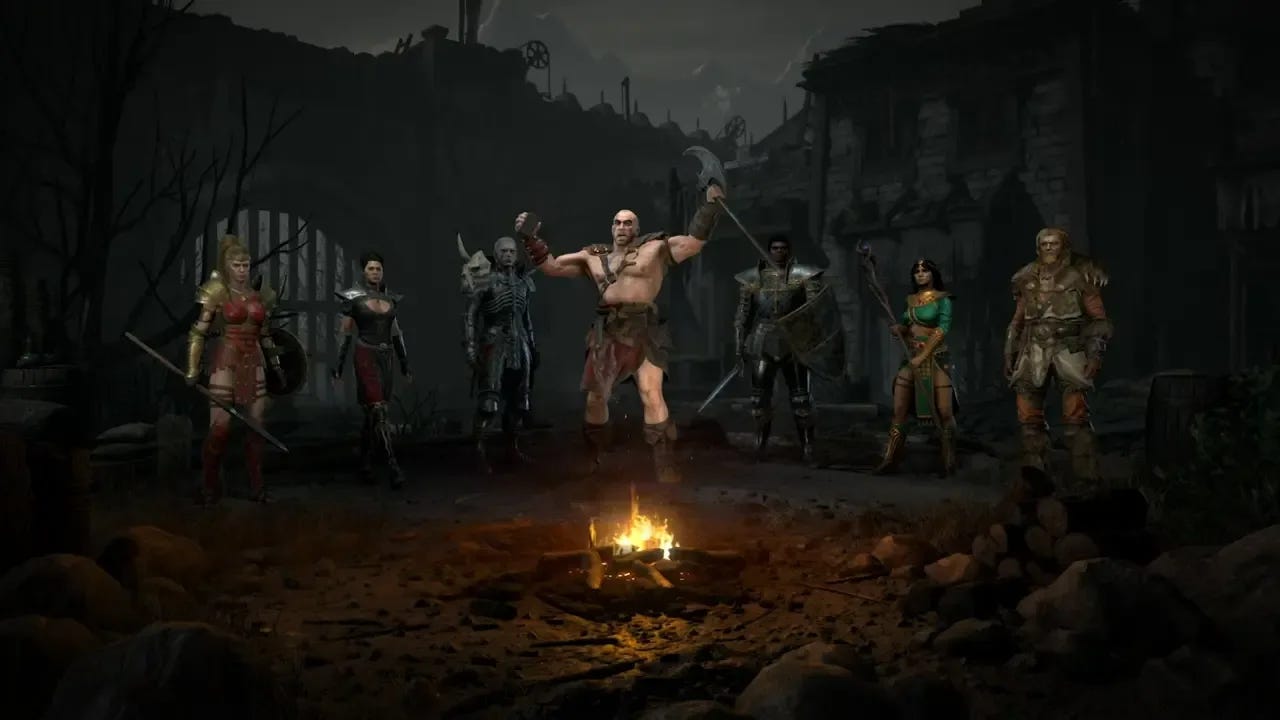
Now, let’s return to the thesis.
Diablo’s central innovation lies not in its demons (there are lots of demon games) or its loot systems (there are lots of loot games) or even its atmosphere (there are lots of dark games), but rather the position it carves out for humanity in its cosmic architecture.
In traditional religious cosmologies, the war between good and evil has a predetermined outcome. God wins, Ahura Mazda triumphs, the arc of the moral universe bends toward justice. These are comforting narratives, but they’re also deterministic; the outcome is never really in doubt, and individual human choices matter only within a frame that’s already been decided.
Diablo, on the other hand, inverts this. The Eternal Conflict has no predetermined end, because Heaven and Hell are evenly matched, and thus locked in an irresolvable stalemate. Neither side can declare permanent victory.
But humanity—those pesky Nephalem—inherit power from both sides while being bound to neither. Our mixed heritage gives us access to abilities that neither angels nor demons alone possess. By the end of Diablo III, the player character is explicitly the most powerful being in all of creation, having become strong enough to kill ancient demons who’ve terrorized the cosmos for eons, to invade Heaven itself, and to destroy the Prime Evil in its ultimate form.
Think about it for a second: isn’t this quite profound? In Diablo, human choice doesn’t only matter within a predetermined frame—human choice decides the frame itself. The player thus makes destiny, instead of just fulfilling it.
This infuses an otherwise ordinary hack-and-slash loot grind with something akin to existentialist philosophy. You aren’t the good guy and the hero because angels said so or because prophecy foretold it. Rather, you’re the person who chose to descend into Hell and didn’t stop until the job was done.
The Nephalem, therefore, represent a “third way” beyond absolute good and evil—a position that questions simplistic moral frameworks while also using them as dramatic scaffolding. Heaven can be wrong, demons can love (Lilith’s affection for humanity is real, even if it manifests horrifically), and humans can (and, indeed, should) surpass both.
🧙♂️🕯️👹 SIDE QUEST: So You Want to Summon a Demon
The Horadrim—the order of mages first charged with binding and containing the Prime Evils—make use of binding techniques that actually track quite well with IRL grimoire traditions.
Solomonic magic, also known as Goetic magic—the legendary power to bind demons—provides the template. The Testament of Solomon (1st–5th Century CE pseudepigrapha) establishes the foundational myth: King Solomon, widely revered today as the wisest king of Ancient Israel, received a ring from the Archangel Michael that allowed him to “stamp” (ie, seal) demons with divine seals and compel their obedience. He interrogated each demon, learning their names, weaknesses, and the angels who thwart them, then put them to work building the sacred Temple (the foundation of which still stands today).
The Lesser Key of Solomon (Lemegeton, 17th Century CE), and specifically the (in)famous Ars Goetia, catalogs 72 demons, each with their own individual summoning sigils, along with the “Secret Seal of Solomon” used to bind spirits in brass vessels.
Diablo’s Soulstones function the same way: as containment artifacts empowered by divine authority (provided by Tyrael) and requiring ritual preparation.
Anyway, we’ve been dancing around the Ars Goetia long enough, so let’s finally talk about what’s actually in Western occultism’s most famous demon-summoning manual… and it’ll become instantly clear to you why Diablo‘s Horadrim are basically Goetic summoners.
As mentioned, the Ars Goetia catalogs the 72 demons supposedly bound by King Solomon, providing for each:
A name and rank (King, Duke, President, etc.)
A sigil (a unique symbolic signature)
A description of appearance (often monstrous, but sometimes surprisingly mundane)
A list of abilities and specialties (teaching sciences, revealing hidden things, causing love or hatred, etc.)
The number of legions they command
Any special conditions or dangers associated with summoning them
So, let’s assume you’ve decided you’re going to summon a demon, you’ve already picked one out from the list, and now you just need to know the proper procedure for calling on it. Well, it’s all highly complex and meticulous, and it varies a bit for each demon, but here’s the TL;DR:
Construct a magic circle,
Inscribe the demon’s sigil on a metal disc,
Perform invocations using divine names, and finally…
Command the spirit to appear within a triangle of manifestation, placed outside the circle (very important! The triangle constrains the demon, and the circle protects the magician).
If you did everything correctly, the demon will appear and either answer your questions or perform whatever services you ask of it, after which you give it “license to depart” (a formal dismissal that closes the operation, and is meant to prevent lingering… attachments).
But if you did it incorrectly... well, for being so meticulously detailed about literally everything else in this process, the grimoires (surprisingly) don’t tell you much about what happens when you muck up a ritual. Which, IMO, is somehow even more chilling than if they’d laid it out explicitly.
In other words: do this at your own risk.
Anyhoo, the binding is what really sets this apart from demonolotry or straight-up devil worshipping. Contrary to popular belief, the magician doesn’t worship demons, or make Faustian bargains with them (at least, not in the classical Goetic tradition). Instead, the magician operates with divine authority with the goal of compelling demons to serve against their will. So it’s not quite a “deal with the devil,” because the devil isn’t really getting much out of the arrangement. It’s much more akin to “court-ordered community service for spiritual entities.”
Anyway, tying this back to Diablo: the Horadrim are basically Sanctuary’s Goetic magicians. They identified the Prime Evils, developed binding protocols (the Soulstones), and imprisoned demons that would otherwise be running amok. And, of course, they didn’t destroy Diablo, Mephisto, and Baal… because they couldn’t. The Prime Evils are cosmic forces, and therefore functionally immortal; if they destroyed any of them, they’d eventually respawn back in Hell, only to come back and wreak more havoc. All the Horadrim could do was bind them in a spiritual prison. Which is kind of the better option, as the Prime Evils could conceivably stay locked in there indefinitely… as long as their seals were maintained over time.
Neither the Horadrim nor the Goetic summoners destroy the demons they summon; but they do constrain the demons (whether temporarily or permanently) through an invoked higher authority.
That said, there’s a drawback to this approach: the ever-present danger that the bindings might fail—the demon might find a loophole, the magician’s successors might forget or mess up the proper procedures, or some idiot might wander into the summoning chamber and knock over the wrong candle.
Which is exactly what happens in Diablo. Repeatedly.
Tal Rasha deserves special mention here. When Baal’s Soulstone couldn’t fully contain him, Tal Rasha volunteered his own body as an ad hoc prison by jamming the Soulstone into his chest, reinforcing the binding with his living will. This is a variation on a concept that actually appears in some grimoire traditions: the magician using his own body as a ritual vessel, as a last-ditch containment option when other material constraints fail.
Tal Rasha spent centuries in that cave wrestling with Baal’s consciousness, keeping the Lord of Destruction from breaking free through nothing but sheer willpower. It’s one of Diablo‘s most haunting images: here we have a hero who won so thoroughly that his victory became an eternal prison, his sacrifice invisible to history right up until Marius wandered in and ruined everything.
This points to how Diablo’s Goetic parallels extend even to failure modes. In grimoire tradition, botched or improper summonings release demons from their constraints, often ending in catastrophe. Pretty much every Diablo game follows this structure: a binding fails (or is sabotaged), a Prime Evil escapes, and the heroes must clean up the mess. The games are essentially “what happens when Goetic magic goes wrong” simulators, playing out the grimoires’ implicit warnings (but with more apocalyptic stakes).
[WARNING: I’m describing these traditions academically and analytically. I am not—repeat, NOT—providing instructions for actually attempting any of this. If you want to summon demons, you’re on your own; Game & Word accepts no liability from any infernal experiments you choose to conduct. Also, frankly, you should probably reconsider your life choices.]
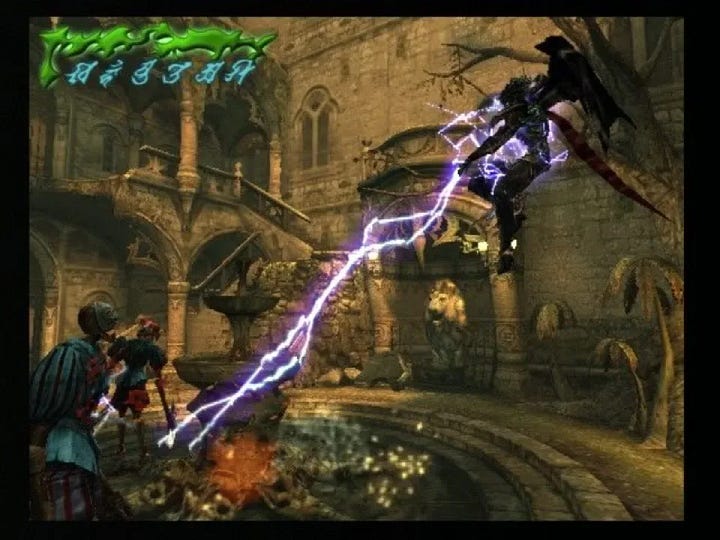
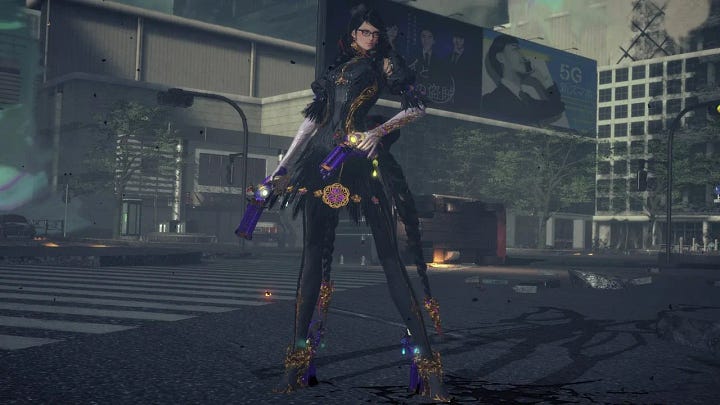
Before we close, let’s acknowledge two other great franchises that built their identity on demonic imagery.
Devil May Cry (2001) emerged from Resident Evil 4’s development and established a different type of relationship with demonhood. Its protagonist, Dante, is half-demon himself—the son of the legendary dark knight Sparda, who betrayed demonkind to protect humanity.
Where Diablo positions humanity between angels and demons, Devil May Cry positions its hero as a demon who chooses humanity. Sparda’s rebellion against Mundus (the demon emperor) mirrors the Luciferian rebellion against Heaven, but inverted—a fall upward into virtue, rather than downward into sin. Dante’s cocky, pizza-loving style also frames demon-hunting as fun, rather than grim duty.
The series asks a different question than Diablo: not “what does it mean to be caught between cosmic forces?” but “what does it mean to inherit power from evil and use it for good?” Dante’s demonic abilities (transforming into devil form, wielding weapons forged from demon souls) are tools for righteousness, and his heritage is empowerment instead of corruption.
Bayonetta (2014) takes this even further. Its protagonist is an Umbra Witch who draws power from demonic contracts to fight angelic enemies. The cosmos is inverted: Heaven is tyranny, Hell is liberation, and a woman who literally uses her hair as both clothing and weapon dances through it all with gleeful irreverence.
These games establish that “demonic” doesn’t necessarily have to mean “evil.” In this view, power itself is neutral, and only its application carries moral weight. It’s a more Nietzschean position than Diablo’s existentialism: beyond good and evil, there is only strength and weakness, and strength in service of freedom is its own justification. As always, how much of this to accept or reject is, ultimately, up to you.
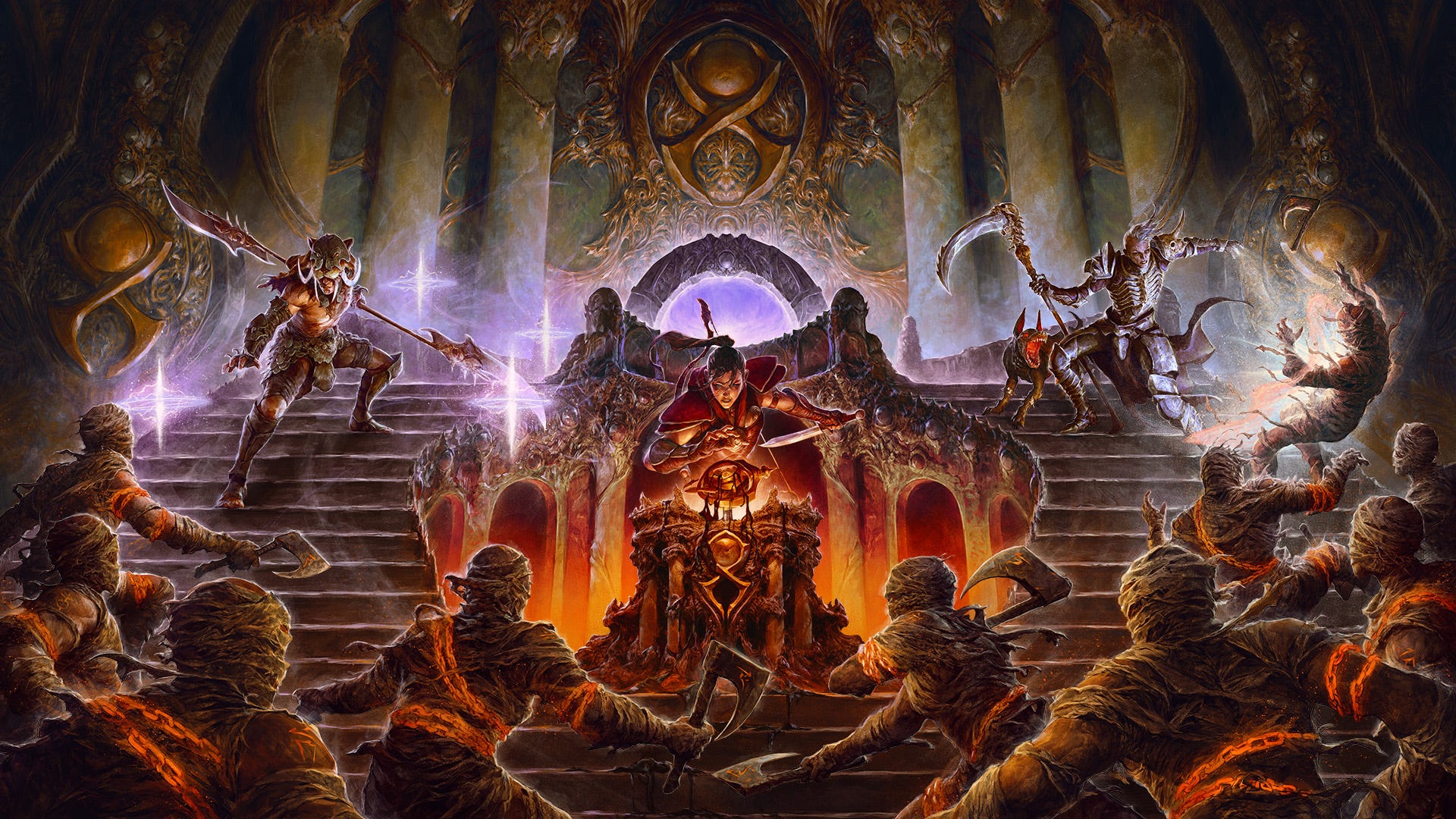
So what have we learned?
Angels and demons endure in video games because they endure in the human imagination. They’re not just monsters to fight or settings to explore; they’re symbols, condensations of everything we fear about ourselves (appetite, cruelty, selfishness) and everything we aspire to (transcendence, justice, love).
The best demonic games get this. They go beyond borrowing the aesthetics (fire and brimstone, wings and halos) to engage with the meanings those aesthetics encode. Diablo’s cosmology works so well because it synthesizes millennia of human theological speculation into a coherent system that rewards both action and reflection.
And at the center of that system: us. The contested terrain, the middle ground between extremes. We are the only beings who can genuinely choose, and whose choices therefore genuinely matter.
The cathedral is dark. The stairs go down. Somewhere below, something terrible waits.
But that’s not why you’re afraid, is it?
No, you’re afraid because you know—you’ve always known—that the real question isn’t whether you can defeat the darkness…
It’s whether defeating it will change you into something you don’t recognize.
Click.
Click.
Click.
Stay awhile and listen.
~Jay
While you wait for the next issue, I invite you to mull over the following discussion prompts. Please reply to this email with your answers, or post them in the comments—I'd love to hear your thoughts!
The Nephalem as theological statement: Diablo proposes that beings born from both angel and demon might be spiritually superior to either parent race… a position that would have been heretical through most of Christian history. Does this resonate with you as a compelling theological premise, or does it feel like empty power fantasy? Are there other games that handle the “transcend the cosmic binary” theme more (or less) effectively?
Sympathy for the devils (and the angels): Lilith makes genuinely compelling arguments about the Eternal Conflict’s pointlessness and humanity’s suppressed potential. Imperius, meanwhile, is kind of a celestial jerk despite being an archangel. How do you feel about media that complicates traditional good/evil assignments? Is there a point where “morally grey” becomes its own cliché?
The order/good conflation: We discussed how “forces of good” and “forces of order” are often treated as synonymous in fantasy, despite being philosophically distinct. Can you think of IRL examples where “maintaining order” was framed as morally good despite causing harm? Conversely, are there cases where chaos or disruption was actually necessary for ethical progress?
The Satanic Panic’s children: The moral panic of the 1980s seems absurd in retrospect (because it was absurd), but similar patterns frequently recur with each new medium. What are the current moral panics about games or digital media? Do you think they’ll look equally absurd in thirty years, or are some concerns more legitimate than others?
Playing the other side: Have you played games like Shin Megami Tensei (where you can side with Law, Chaos, or neither) or made morally ambiguous choices in other RPGs? If so, what draws you to particular alignments or factions? Do you tend to play as yourself, or do you explore positions you’d reject in real life?
On Angels, Demons, and Western Esotericism:
A Dictionary of Angels by Gustav Davidson — The definitive reference work on angelology. Encyclopedic, exhaustively researched, and occasionally unintentionally hilarious, you’ll learn about angels you never knew existed and desperately wish you could forget. [Amazon]
The Origin of Satan by Elaine Pagels — Learn how the figure of Satan evolved from a Jewish legal term (”the adversary”) into Christianity’s cosmic villain. Essential for understanding why demons became what they became. [Amazon]
Daemon Voices by Philip Pullman — A collection of essays from the author of His Dark Materials on storytelling, religion, and why he made the Church his antagonist. Not directly about games, but still highly relevant to anyone interested in fiction that engages with theological themes. [Amazon]
On the Satanic Panic:
Satanic Panic: Pop-Cultural Paranoia in the 1980s by Kier-La Janisse and Paul Corupe — A comprehensive cultural history covering everything from D&D to daycare trials to heavy metal. Academic rigor with real affection for the era’s weirdness. [Amazon]
The Dungeon Master by William Dear — The private investigator who searched for James Dallas Egbert III eventually wrote this book clarifying that D&D had nothing to do with the kid’s disappearance. A corrective that came far too late to stop the panic, but remains valuable as primary source. [Amazon]
We Believe the Children by Richard Beck — A harrowing account of the daycare abuse trials. Not at all about gaming, but essential for understanding how the panic destroyed real lives based on nothing. [Amazon]
On General Demonology:
The Book of Enoch (R.H. Charles translation) — The Jewish apocalyptic text that introduced the Watchers, the Nephilim, and much of what became Christian demonology. Weird, visionary, and surprisingly readable for such an ancient text. [Internet Archive]
The Lesser Key of Solomon (various editions) — The most famous grimoire, containing the Ars Goetia‘s catalog of 72 demons. If you want to see what Diablo‘s Horadrim were supposedly working from, start here. WARNING: If you attempt any of these rituals, don’t come crying back to me after. I warned you! [Sacred Texts]
The Divine Comedy by Dante Alghihieri (James Sibbald translation) — Come on, you knew this was coming. The masterpiece behind every Westerner’s conception of damnation, Inferno gave us the idea of a concentrically-layered underworld, poetic punishment, and the guided descent into the abyss that’s become all but archetypal now. After hell, keep on reading for Dante’s further expeditions into Purgatorio and finally Paradiso. [Project Gutenberg]
Paradise Lost by John Milton — You also knew this was coming, as well. The original sympathetic Satan, the template for every charismatic villain since, presenting in all his original glory. It’s also genuinely beautiful poetry, which obviously helps with readability. [Project Gutenberg]
On Left-Hand Path Traditions:
The Satanic Bible by Anton LaVey — Whatever you think of LaVey himself (opinions vary wildly), this is the foundational text for modern Satanism. Shorter than you’d expect, weirder than you’d expect, and more Ayn Rand-ish than you’d expect. [Amazon]
Lords of the Left-Hand Path by Stephen E. Flowers — Academic survey of antinomian spiritual traditions from ancient times to the present. Dense but comprehensive and rewarding. [Amazon]
Documentaries and Videos:
“Dark Dungeons” (2014) — The Chick tract adaptation, played completely straight. Best enjoyed with friends and adult beverages. [Streaming Link]
“Satan Wants You” (2023) — Documentary about the “Michelle Remembers” memoir that helped ignite the Satanic Panic. Infuriating and essential. [IMDB]
Various YouTube deep-dives on Diablo lore — Rhykker and other content creators have produced hours upon hours of lore videos for those who want to grasp the full cosmology without reading every in-game description. [YouTube]
Diablo, developed and published by Activision Blizzard — Battle.net
Diablo II: Resurrected, developed and published by Activision Blizzard — Battle.net | Xbox | PlayStation | Nintendo Switch
Diablo III, developed and published by Activision Blizzard — Battle.net | Xbox | PlayStation | Nintendo Switch
Diablo IV, developed and published by Activision Blizzard — Battle.net | Steam | Xbox | PlayStation
Shin Megami Tensei V: Vengeance, developed by Atlus, published by SEGA — Steam | PlayStation | Xbox | Nintendo Switch
Devil May Cry 5, developed and published by CAPCOM — Steam | PlayStation | Xbox
Bayonetta, developed by PlatinumGames, published by SEGA — Steam | PlayStation | Xbox | Nintendo Switch
Bayonetta 2, developed by PlatinumGames, published by Nintendo — Nintendo Switch
Bayonetta 3, developed by PlatinumGames, published by Nintendo — Nintendo Switch
Blasphemous, developed by The Game Kitchen, published by Team17 — Steam | Xbox | PlayStation | Nintendo Switch
BONUS: This one wasn’t in the main article, but I just couldn’t resist including it because it’s just that good. TL;DR: Spanish Catholic imagery rendered as a brutal Soulslike. If you’ve ever wanted to fight bosses inspired by Goya paintings and flagellant monks, here you go.
Thank you for reading! If you enjoyed this content and would like to read more of it, hit the heart button at the top or bottom of the post—it really helps with my discoverability! You can also show your support by sharing this issue with your social networks and subscribing to Game & Word (if you haven't already).
See you next time!
#philosophy #metaphysics #religion #spirituality #narrative #magic #occult
#AbraCodeAbra
#diablo #bayonetta #shinmegamitensei #devilmaycry
The canonical ending of the first Diablo has your hero become the vessel for Diablo’s essence. This is what we call “winning ugly.”
Think of them as spiritual stress-testers. Nobody likes getting stress-tested, but technically, they’re providing a valuable service.
The theological difference matters: Christian Lucifer is a revolutionary who chose evil. Islamic Iblis is more like a middle manager filing a formal complaint that went extremely sideways.
There are two main “sources” for this: first is the Luciferian myth, where Lucifer convinced 1/3 of the heavenly host to rise up in rebellion with him (who then fell from heaven as demons)> Second is the Book of Enoch, which introduced the Watchers: angels who fell from heaven after mating with mortal women, producing the monstrous Nephilim. More on them later.
Oh, and some bonus trivia: Milton also gave us the word “Pandemonium” (literally “all demons” as Hell’s capital city. So when Diablo II lets you visit storm the Pandemonium Fortress, it’s directly invoking Milton! The visual design even deliberately evokes John Martin‘s 19th Century painting “The Fallen Angels Entering Pandemonium.”
An exact quote from her book: D&D players would become “homosexual satanists who will sacrifice their parents, their sister, and the family cat, then commit suicide in a satanic ritual.” Points for specificity, I guess.
The 2014 Dark Dungeons movie is a masterpiece of deadpan absurdism. The filmmakers even got official permission from Chick Publications, reportedly by convincing them the adaptation would be faithful. And it was! That’s exactly what makes it hilarious.
Some analyses suggested that maxing out a character in Diablo Immortal through microtransactions could cost anywhere from $100,000 to half a million dollars. Whether that constitutes “pay-to-win” or just “pay-to-pay” is left as an exercise for the player.
More on the Book of Enoch in an upcoming bonus supplement for paid subscribers!
Bayonetta’s angels speak Enochian, the “angelic language” described by 16th Century occultists John Dee and Edward Kelley. This is extremely deep-cut design.
The O9A has been linked to neo-Nazi movements (like, actual neo-Nazis, and not just what your average Reddit mod calls anyone to the right of Bill Clinton), not to mention a series of grisly ritual murders throughout the UK. Indeed, according to leaked initiation documents, they quite clearly advocate for violence as “insight roles.” Most Satanist organizations explicitly reject them.
Comments
Nothing yet. Say the first thing.
Sign in to join the conversation.