
One of my goals with Worldwide Underground is to go deep into the art and politics of storytelling. The weekly mixes are one way, the podcast from a few years back was another. Today, I want to do something different and just talk to y’all about a place that’s been heavy on my heart and mind, with the knowledge that there are no invasions that happen without a people first being vilified. I want you all to get to know and love Cuba, with all of it’s complexity. And I want us to do more to protect it.
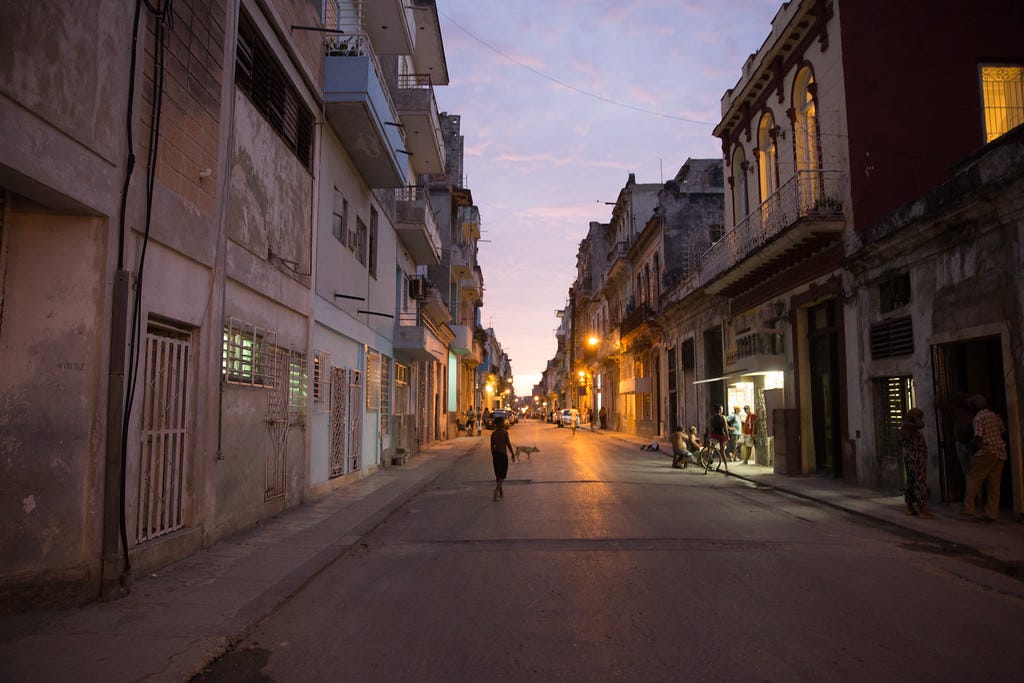
Back in August of 2016, I went to Cuba with an incredible group of artists from Seattle, WA to build with and learn from artists in Havana and Viñales. It was part of the Common Ground Music Project spearheaded by Shontina Vernon, and it’s a trip I will never forget.
This year, as the United States has intensified it’s embargo and effectively blocked all oil from entering Cuba since January, which has led to a total power grid failure putting millions of lives at risk - all while the US is making new threats of invading and taking over the country - I’ve been thinking about the people we met, and what I learned from Cuba, every single day.
The soundtrack for today is this mix I made last year in honor of Assata Shakur:
For a majority of my life, Cuba was one of two places on Earth I wanted to travel to the most. I wanted to see the place where Assata Shakur could dance free, years after breaking out of prison in the United States. I had multiple friends in the late ‘90s and early ‘00s that had traveled to Cuba and met Assata. They literally danced with her and came back with stories about how much she loved music. I always knew there was some part of the story of our continued struggle for Black liberation that felt incomplete, some things that haven’t been published, some things I needed to learn from Cuba… even if I couldn’t yet name them.
The other place I wanted to travel to the most in life was my mother’s homeland, Ethiopia, which I was able to do back in 2011. The connections made on that trip brought a few of us to South Africa in 2012, and I feel like it’s important to mention that both of those journeys happened first, because when I say arriving in Cuba in 2016 felt like arriving in an African nation, I mean it.
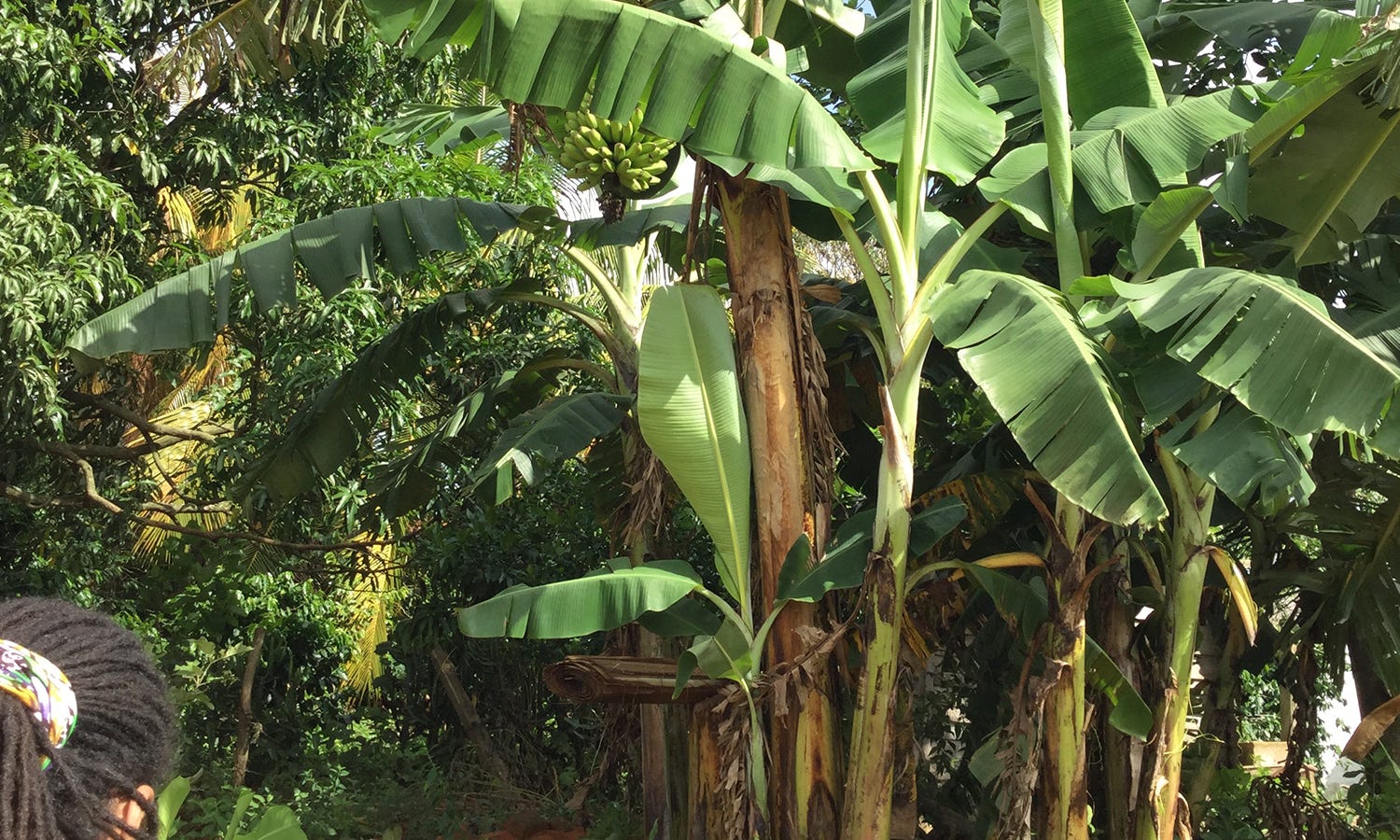
The first thing I noticed before our plane even landed was how lush the land was. You know when you’re flying over the United States how so much of the land just looks like squares? Flying over Cuba was a glimpse of seeing what I think forests are supposed to look like. I learned that forests cover over 30% of the island, and are incredibly diverse, with thousands of plants and animals that are endemic - meaning you will only find them in Cuba.
The second thing I noticed was a majority of the people I saw were Afro-Cuban. I know their census tells a different story, but I’m just telling y’all how it felt.
The third thing that stood out to me, was that there was no advertising, anywhere. This sounds simple until you experience it, but we don’t realize the constant noise that advertising has in our lives. We left the airport and saw billboards that just had ideas on them. No products. Just thoughts and images of revolutionary figures, at most. I think it was Shontina who pointed at one of those billboards on that ride from the airport and said “They are being punished for an idea. For making an attempt at being free.”
I still think about this statement whenever I think about the cruel embargo the US has imposed on Cuba for so many decades.
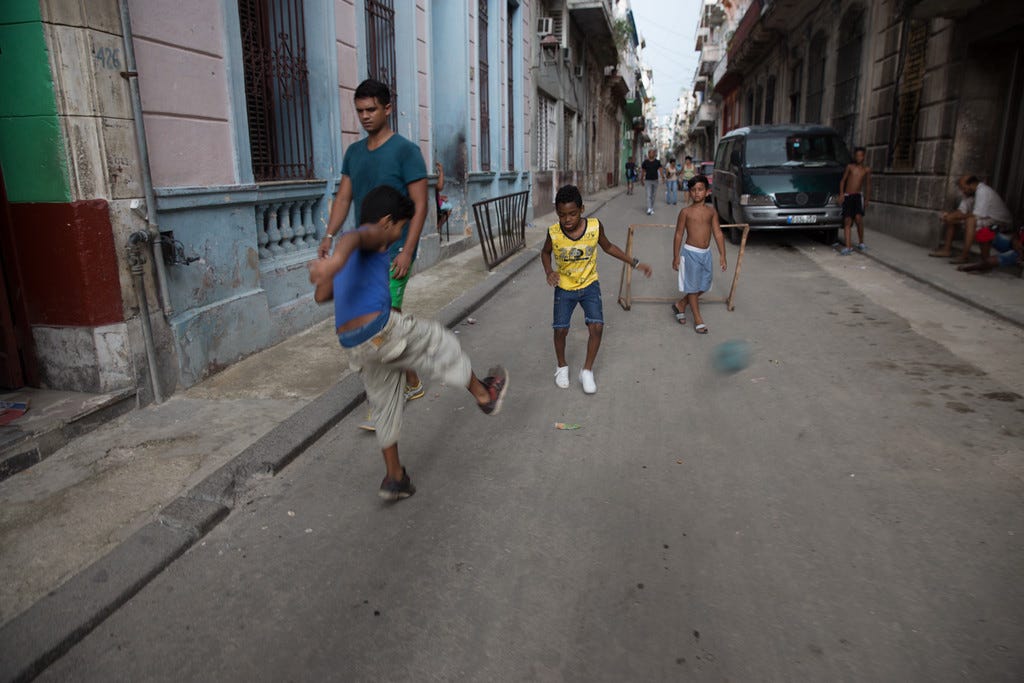
Some of the pictures you see from the streets of Havana are true. There are ways that it does look like a place frozen in time, with every car and every building a relic from the 1950’s. But what the pictures don’t tell you is how it’s all delicately held together by everyday people with the smallest of resources.
When something breaks, there’s often no store you can go to for supplies to fix it. The amount of electrical work I saw young people doing blew my mind. We were blessed to do a few performances in Viñales, and one of the shows had a DJ who was running modern DJ software using only the bottom half of a laptop, connected to a desktop monitor that looked like it was from the 1990’s. He had the whole place moving too! Here’s a picture of what I mean:
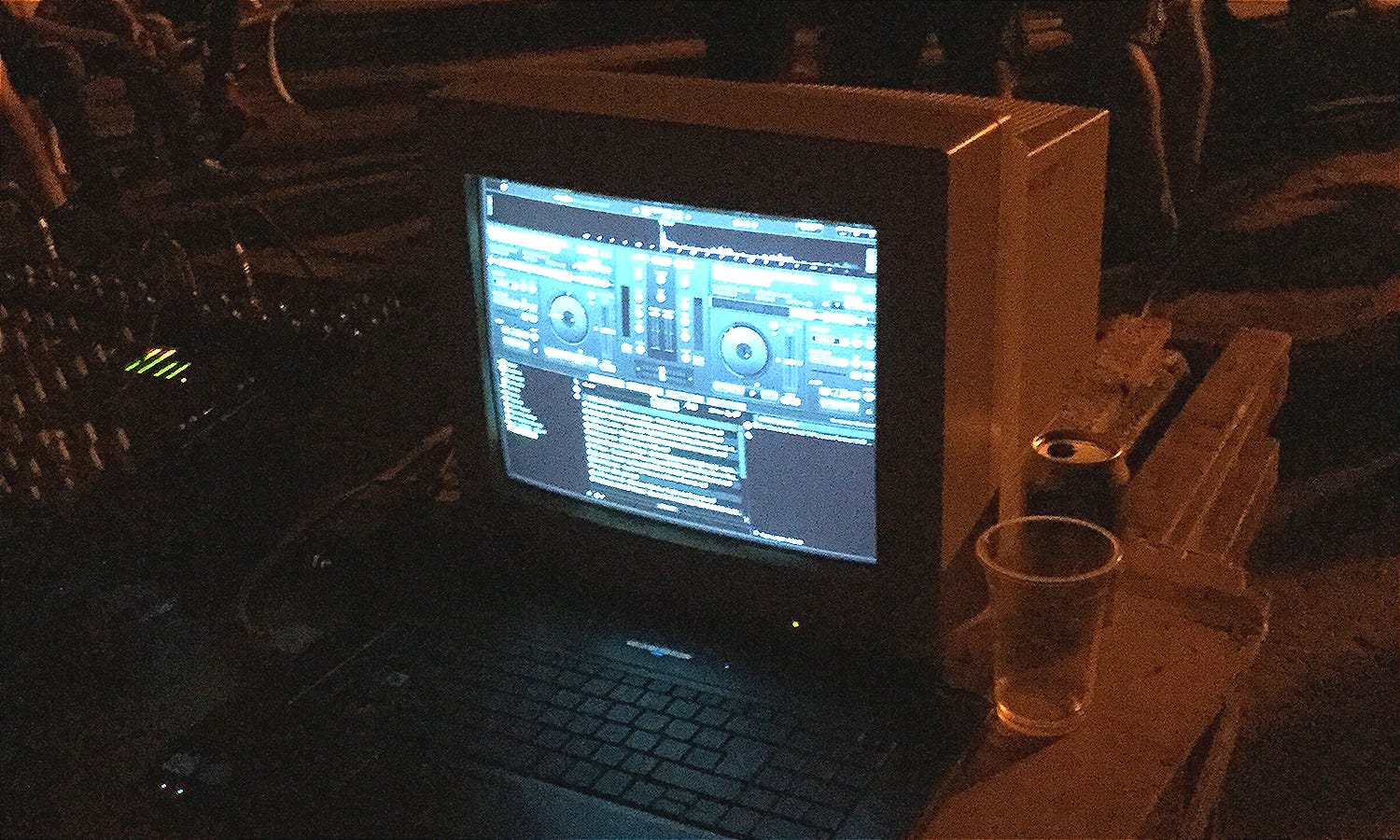
This was the Cuban way. When things break, you get together, pool whatever resources you have, and try to fix it. The spirit of the Cuban people felt unbreakable. I don’t mean to romanticize it, I’m just telling y’all how it felt.
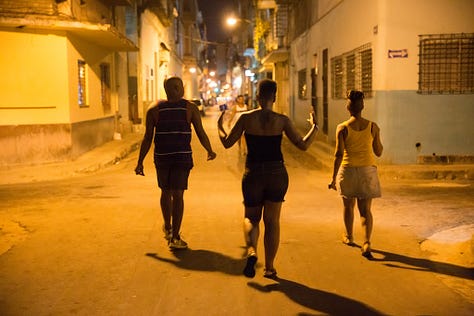
Havana is a city with over two million people living in it. Not only did I feel safe the entire time we were there, I’ve never been to a city that size and witnessed everyone else feeling just as safe. It was August when we were there, so the heat was intense during the day and people were outside at night. I saw women and young people walking alone, looking relaxed, everywhere we went.
It does something to you when you experience life in a place with no class differences. I really don’t want to romanticize this, but let’s just say the problems people experience in Cuba are different. I never saw anyone that didn’t have housing. People who needed wheelchairs had them. Everyone was fed, but no one had much.
“Whether you win or lose, each struggle brings forth new contradictions, new and more challenging questions.” - Grace Lee Boggs
At one point in our journey, we met a brother who told us he believed Cuba was the best country in the world, but at the same time, living in Cuba was like being an animal in a zoo. He said that animals in a zoo never have to worry about where they are going to sleep, what they are going to eat, or if they have healthcare. And everyone in the world goes to visit. But when you are an animal in a zoo, you can never leave.
The dichotomy of being a socialist country with a bustling tourist industry gives birth to new contradictions. Cuba is the only country I’ve been to that had two completely different forms of currency. There’s a tourist dollar (CUC) which was equivalent to the US dollar, and a local dollar (CUP) which is valued at about .04 of a US dollar. I believe the rules and the dollars have changed now, but when we were there, tourists weren’t allowed to spend CUPs. Since a tourist dollar was worth so much more than a Cuban peso, the only hustle on the island was to hustle tourists. There was no financial incentive for any other occupation. If you became a doctor, you did that because you wanted to help people. The cost of getting visas and airplane tickets was also so high, that for many Cuban people to travel outside of the country themselves, they had to have a stone cold hustle usually involving making money off the tourists coming in.
I have no idea how close the Cuban government was clocking those tourist dollars, but I do know they were watching what we said as musicians.
Before we were allowed to perform in the country, we had to do our entire set for government agents who approved the performance. I’ve heard stories of artists who had to write down every lyric of their songs for the government to review, and that at times the Cuban government will then make suggestions of what to edit if there’s something they don’t like.
They didn’t have any edits for us, and performing in Cuba was like a dream.
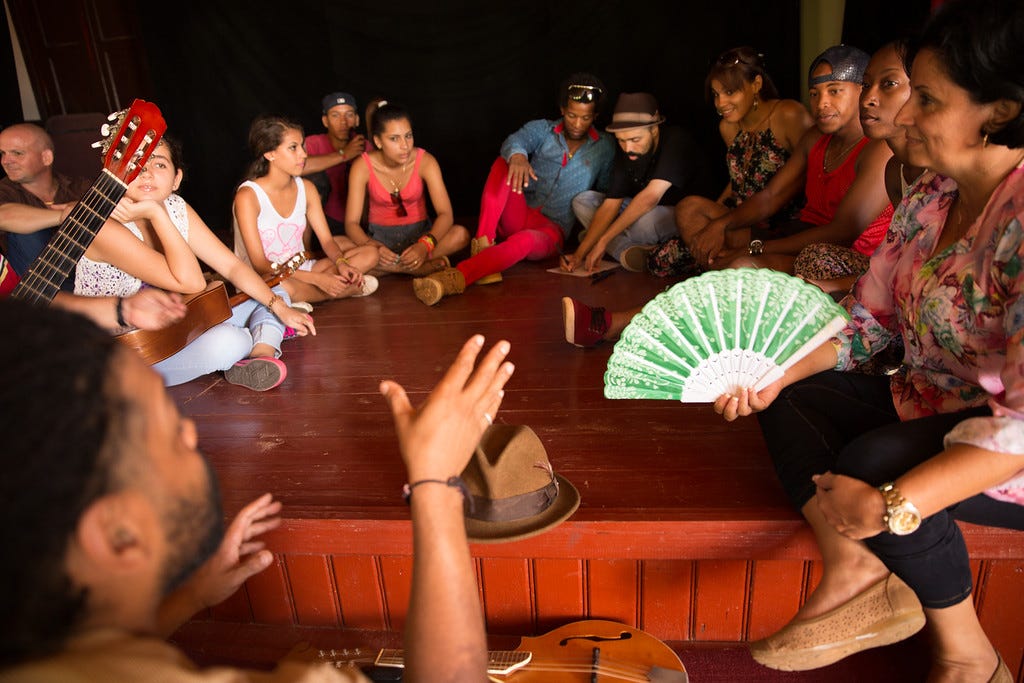
In Viñales, we collaborated with a dance school, and since we had two incredible dancers with us (Jade Solomon Curtis and Dani Tirrell) that collaboration came so natural. One of the dancers we met was also an emcee, so I got to spend time with him working on a track that we would perform a few times in the main square.
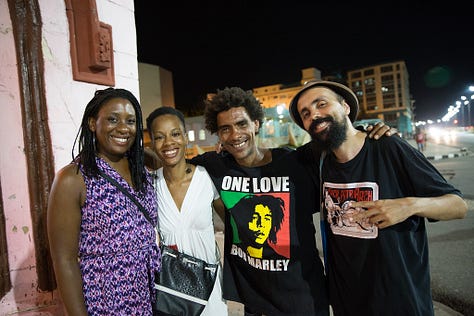
After a few days in Viñales, we went back to Havana where we met a whole crew of Hip-Hop artists including La Fina, Renovacion Urbana, Afibola, El Brujo, and La Cimarrona Sin Cadenas, may she rest in peace.
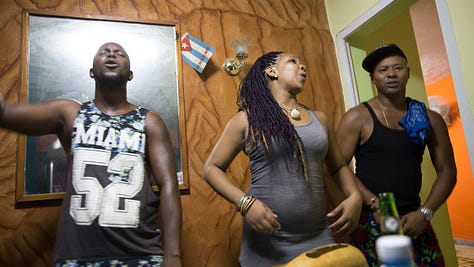
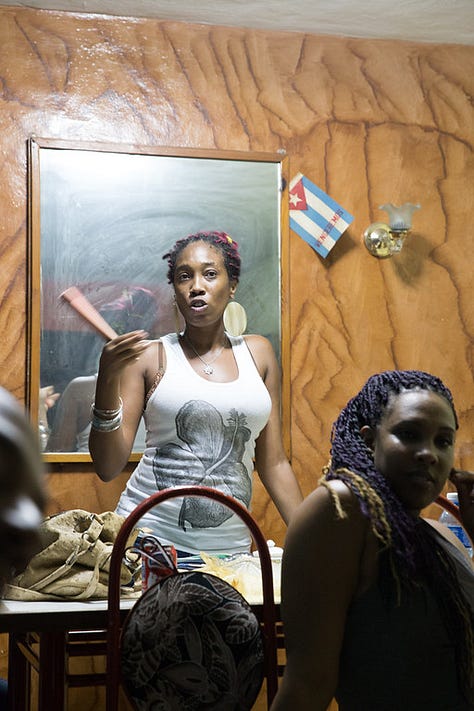
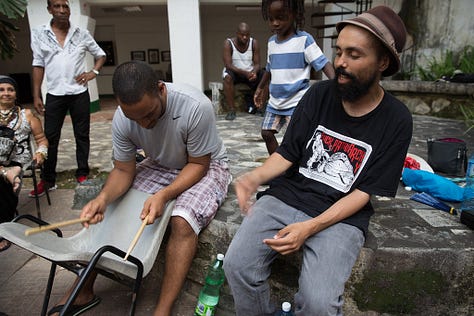
With this crew, it felt like the language barrier started to disappear. The way we understood each other started with the music we loved, and it connected us to shared people and experiences. They took us to a neighborhood called Alamar, where Hip-Hop in Cuba was born. We all performed for each other in an apartment complex there, and just talked for hours. I heard about how amazing the Black August Hip-Hop Project was for them on their side, what the struggles are like for independent musicians in Cuba today, and so much more. By the time we had to go, I felt like the trip had just started, and I didn’t want to leave.
I never got to meet Assata Shakur, or Nehanda Abiodun, but their impact and influence was felt nonetheless. These Black liberation fighters who lived in exile in Cuba had a huge impact on the musicians we did meet. They were spoken of as Godmothers of a generation, and because of that connection, I wish every Black person could see the Cuba that we saw those last few days.
How our struggles are so intertwined.
In that spirit, I want to share with y’all a statement that AfricanFeminism.com put out: Africans in Defense of Cuba, that speaks to these historical connections, along with a list of educational resources Vic Mensa just put up on his Substack:
Appreciate y’all reading. Will get back to the mixes next week.

Comments
Nothing yet. Say the first thing.
Sign in to join the conversation.