
Excerpt from a recent email:
"Dear Zach,
[…]
I actually have a rule in my design process to avoid looking at any other data visualizations for inspiration. Here's why: When we look directly at other data viz work, we often end up creating derivative designs that don't fully serve our specific context and goals (think copying a little too close). Instead, I find it more valuable to draw inspiration from the broader visual culture and environment we're trying to evoke.”
I get it.
When faced with a blank canvas and complex data, it's natural to want to see how others have solved similar challenges. But let’s not conflate inspiration with learning.
There's a crucial distinction we need to make:
Learning fundamentals is invaluable. Copying the masters is the best way to understand composition and form, to study color theory, typography, visual perception, and cognitive psychology. In fact, if I had one piece of advice for young data visualization designers, especially those without a design background, it would be to study and practice by copying designs. Not for final output, but as a learning tool.
Looking for direct inspiration, however, is where we limit ourselves. The problem is when you start by looking at other dataviz work, you're orienting yourself toward the output rather than the need. In replicating someone else’s work, you inherit their brief, their constraints, their context. And we skip the vital process of wrestling with our unique problem.
Let’s acknowledge that the urge to look at other work comes from a very human place.
Starting from scratch feels scary.
Looking at existing solutions feels safe.
The deeper issue isn't about references. It's about trusting our creative process.
There's a compelling but false narrative that certain human beings were pure geniuses, highly creative minds that produced masterpieces effortlessly.
Hemingway is my favorite example. He wrote masterpieces that we teach in school today. He also wrote a whole bunch of crap. In his own words:
I rewrote A Farewell to Arms at least fifty times. You've got to work it over.
The first draft of anything is shit.
Creativity isn’t an act of brilliance. It isn’t some god-given “talent”.
It’s pure practice.
You can spend your life watching the London marathon on TV, but that goal only becomes realistic once you buy that first pair of trainers and start jogging down your runway.
For inspiration to strike, we need to train ourselves, the same way we would for a marathon, to:
Build our own strength and endurance
Develop our unique stride and our own ritual: what will we eat that day, which shorts will we wear, how will we hydrate?
The race itself is just the culmination of months of preparation.
So when and where does inspiration come into play?
Well, Every day. Everywhere. The patterns in nature. The rhythm of city streets. The way light falls through trees. For me, it’s the painting on my grandparents’ walls, the impressionist touches that surrounded my childhood in a historical town and the title sequences of crappy tv shows like The Resident.
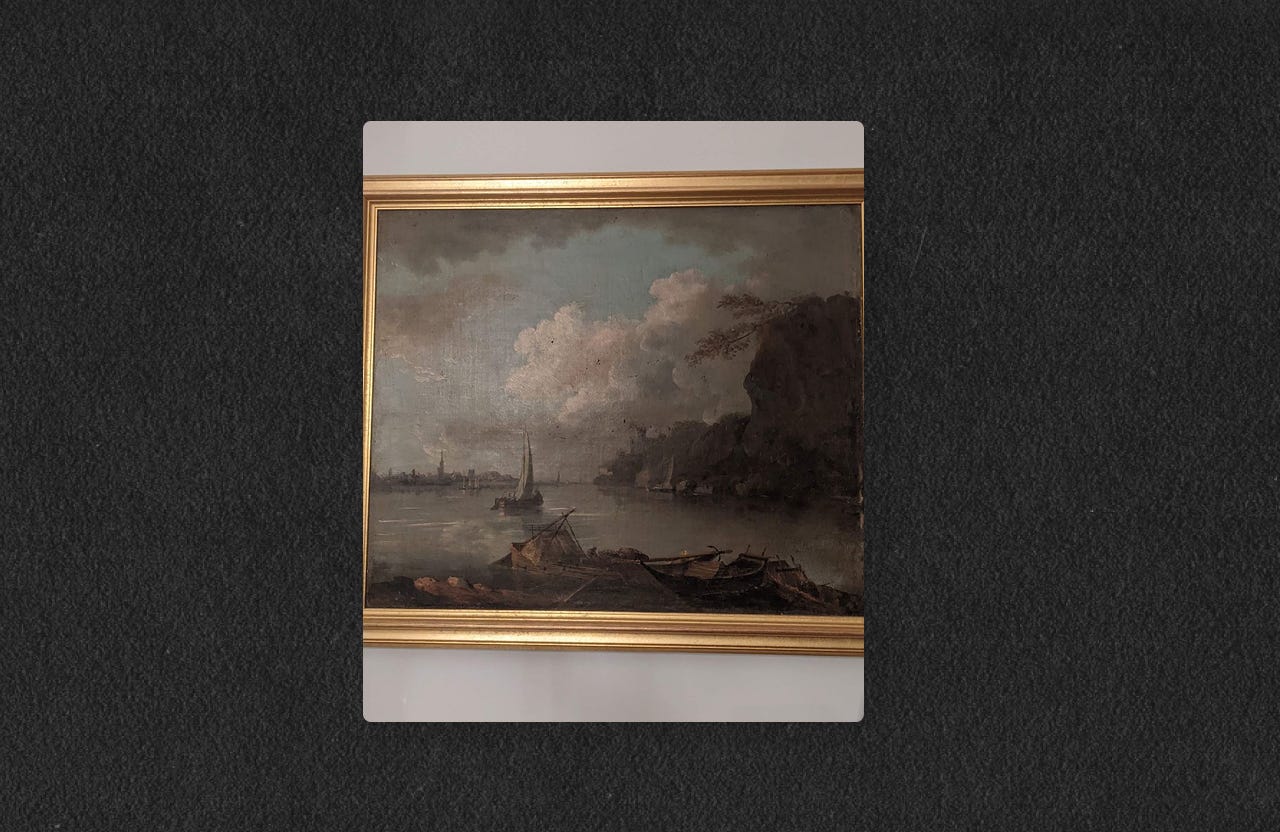
But noticing isn’t enough. It must become a practice. Start collecting what catches your eye, with a notepad, camera, Google Drive folder, or a Pinterest board. Take notes. Why do those visuals feel right to you? Is it the texture? The colors? The layout?
This is step 1: Build your own visual library, unique to you.
And let me be clear: This visual library is what makes your creative… style. And in a world where AI can generate technically competent visualizations in seconds, when it comes to aesthetic, your own style will be a great differentiator. It's what machines cannot replicate. Your personal filter is born from lived experience, from culture and it’s your defense against algorithmic mediocrity.
Now, you will no longer show up at the marathon start line without having ever run a mile. And you’ll never have to type "best charts for financial data” ever again.
Next step, how to build your own creative process. A topic for another letter.
Comments
Nothing yet. Say the first thing.
Sign in to join the conversation.